A wine drinkers dream come true!

He is a wine drinkers dream come true.


A good magician is the master of sleight of hand and distraction while having a charismatic personality. However, a master magician can do all of that, plus show you something you haven’t seen before. This magician may seem like the worst you’ve seen, but that is all an act…

We must invite this individual to become a member of Club del Vino!

Posted in TV, Video, Film on wine, Wine - Vino - Vinho | Tagged , , | Leave a comment

Tasting No. 171 – October 26, 2015 – Wines from The Rhône

Club del Vino

Wikimedia.org

The Rhône – Source: Wikimedia.org


Capri Ristorante, McLean VA

 1. Presenters and Participants

Wines presenters: Orlando Mason

Participants:

Members: Mario Aguilar, Clara Estrada, Emilio Labrada, Peter Lapera, Alvaro Lopez, Orlando Mason, Ítalo Mirkow,  Jorge Requena, Alfonso Sanchez, Jairo Sanchez, Ginger Smart, Ricardo Zavaleta.

Non members:  John Redwood, Lucía Redwood.

Type of Tasting: Blind

2. The Wines

  1. 2013  JT Chateau de Nages Joseph Torres Blanc
  2. 2013  JT Chateau de Nages Rouge
  3. 2012 JV Fleury Crozes-Hermitage
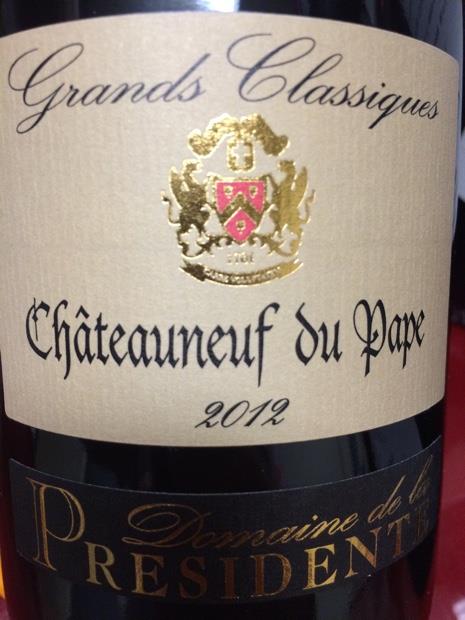
  4. 2012 Domaine de la Presidente Chateauneuf du Pape

3. The Menu

  1. -Grilled Portobello Mushroom
  2. -Smoked beef sausage with fettuccine al aceite de olive
  3. -Salad
  4. -Grilled lamb with potatoes and zucchini. Sauce on the side
  5. Desert and coffe

 4. Information on the Wines

(The information below has been compiled from varios internet sources) .

2013 JT Chateau de Nages Joseph Torres Blanc

jtblanc.jpgThe Winery.  Much of the 70-hectares of Château de Nages is planted with Syrah, which excels in our soil and bears color-drenched, concentrated, tannic grapes. Grenache is reserved for the poorer soils which temper its exuberance. In small doses, Mourvèdre confers an original, spicy complexity. After several trials, we discovered that certain parcels of our terroir had a predilection for Roussanne. Its tiny honey-colored berries release their aromatic richness in the wine. Grenache Blanc rounds the blends with its unique mineral note. Read more at: http://www.michelgassier.com/en/home.html

The Wine:   This is a blend of 80% Roussanne 20% Viognier.  Wines and Spirits describes the wine as :”A blend of 60percent barrel-fermented roussanne with marsanne and voignier, all pulled from his oldest vines, its smells of warm stone, nuts and earth; it tastes of clementines and lemons, with a light, savory spice.”

Alcohol: % ;  Price: $ TBA

Experts Ratings: W&S 90 pts.

2013 JT Chateau de Nages Rouge 

JT Red

The Wine : This wine is a Syrah (93%) with a 7% of Mourvedre. – Parker:  “Offers classic Syrah notes of powdered rock, pepper and dark berry fruit. Firm and tight on the palate, its medium-bodied, with integrate acidity and plenty of tannin.”

  • Alcohol: % ;  Price: $

Experts Ratings: WA 92 Pts.

2012 JV Fleury Crozes-Hermitage

Cozens Hermitage

The Wine: This is a 100% Syrah. Wine Spectator:  “Focused, with a plum skin and anise frame around the core of dark cherry and raspberry fruit. Subtle mesquite and sanguine notes line the fine-grained finish.” Fresh . Black Currant . Violet  . Medium-bodied.


Alcohol: 13% ;  Price: $

Experts Ratings: WS 90 Pts.

2012 Domaine de la Presidente Chateauneuf de Pape 

Domain de la P

The Wine : Displays mineral-tinged aromas of black cherry, underbrush, leather and spring flowers to go with a medium-bodied, fresh and edgy profile on the palate. It should benefit from short-term cellaring and have a decade of longevity.


Alcohol:  % ;  Price: $

Experts Ratings: WA 90 Pts.

4. Club del Vino Members Rating : TBA

Criterio para calificar:

Excepcional: 96-100 puntos; Excelente: 90-95 puntos; Muy Bueno: 86-89 puntos; Bueno: 81-85 puntos; Aceptable: 75-80 puntos.

El vino Blanco, calificado de Excelente con promedio de 90 puntos. El primer Tinto, también Excelente con calificación Media de 91 puntos; el segundo Tinto, también Excelente con calificación Media de 91 puntos. El tercer Tinto, también recibió una calificación de Excelente con 91 puntos. Esta degustación  Abierta, según las notas del grupo asistente, resulto muy buena por ser todos los vinos degustados Excelentes.

Vinos degustados:

2013 JT Chateau de Nages Joseph Torres Blanc

Media: 90

Desviación Estándar: 0.9

Mediana: 90

Moda: 90

2013 JT Chateau de Nages Rouge

Media: 91

Desviacion Estandar: 1.7

Mediana: 91

Moda: 91

2012 Domaine de la Presidente Chateauneuf du Pape Media: 91

Desviacion Estandar:  1.7

Mediana:  91

Moda:   91

2012 JV Fleury Crozes- Hermitage

Media:  91

Desviación Estándar:  0.8

Mediana: 91

Moda:  90

NOTA FINAL: Según las calificaciones y la opinión de los asistentes, el vino que se consideró mejor o de mayor preferencia, fue el Domaine de la Presidente Chateauneuf du Pape con una Moda de 91 puntos.


5. Regional Notes

 There is a good information on the Rhône wine región at this site:

http://winefolly.com/review/cotes-du-rhone-wine-with-maps/

There is also e summary prepared by Jairo Sánchez (taken from The Essential Guide to Wine cuyos autores son de Madeline Puckette y Justin Hammack y publishedby Wine Folly) here:

The Rhone Valley Wines


Posted in Meeting Abstract | Tagged , , , | Leave a comment

Tasting No. 170 – August 31, 2015 – Wines from Eastern Mediterranean and North Africa

Club del Vino


Capri Ristorante, McLean VA

Turkey

Sorce: Winesofturkey.org

 1. Presenters and Participants

Wines presenters: Ruth Connoly and Ginger Smast

ParticipantsSocios: Mario Aguilar, Marcello Averburg,  Ruth Connolly, Clara Estrada, Jaime Estupiñan, Jorge Garcia-Garcia, Emilio Labrada, Ítalo Mirkow, Jorge Requena, Jairo Sanchez, Pedro Turina, German Zincke.

Type of Tasting: Open

2. The Wines

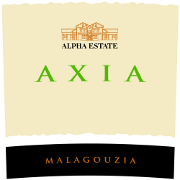
  1. AXIA Alpha Estate Malagouzia 
  2. Naoussa Xinomavro – Xinomavro
  3. Prestige Okuzgozu
  4. Chateau Musar by Gaston Hochar 2009

3. The Menu

  1. Antipasto
  2.  Corvina on the pesto
  3. Lasagna
  4. Beef with vegetables
  5. Desert and coffe

 4. Information on the Wines

(The information below has been compiled from varios internet sources) .

2013 AXIA Alpha Estate Malagouzia 

Alpha

The Wine: Lively, simple white with citrus and dill herbal finish.  Well made medium bodied white made to be consumed young.  Malagouzia is an aromatic white variety grown in Central Greece and Greece Macedonia.  The variety was rescued from near extinction in 1983 by the winemaker Evangelos Gerovassiliou.  The grape is best known for its citrus and peach characteristics often showing various melon flavors on the palate.  It is often used as a blending agent with Assyrtico, to which it adds a medium body weight. 

Alcohol: 13% ;  Price: $20

Experts Ratings: TBA

2012 Naoussa Xinomavro – Xinomavro  

Xinomavro

The Wine : Xinomavro literally means “sour black”.  It could be described as a raspberry with spice box and cinnamon aromas.  Lively acidity and a good tannic structure balance the cherry fruit.  It is one of Greece’s better indigenous reds.  It shows a spicy nose of black pepper, coffee and red fruit.

  • Alcohol: 13.5  % ;  Price: $19

Experts Ratings: TBA

2009 Prestige Okuzgozu 

Prestige

The Wine: In this Turkish wine there is a clean fruity, very pure nose with real sweetness in this wine.  It is well balanced.  It has a Damson (sour plum) fruit that is round with good freshness


Alcohol: 14 % ;  Price: $23

Experts Ratings: NA

2007 Chateau Musar by Gaston Hochar 2009  

Musar

The Wine : Elegant with a long finish.  Plummy fruit shows on the finish.  Think Bordeaux blend when you taste this wine.  The wine winemakers were classically trained in France. Most winemakers are thinking of cash flow and try to get their wine sold as soon as possible.  This is not true with the Hochers.  They let their millions of bottles of wine age gracefully for years before their release.  Also, they hold back 100,000+ for research on their wine.  This family saved their vineyards during 20 years of civil war in their country which is a remarkable fete in itself


Alcohol:  13.5 % ;  Price: $40

Experts Ratings: TBA

4. Club del Vino Members Rating : 

Criterio para calificar:

Excepcional: 96-100 puntos; Excelente: 90-95 puntos; Muy Bueno: 86-89 puntos; Bueno: 81-85 puntos; Aceptable: 75-80 puntos.

El  vino Blanco, fue calificado  como  Muy Bueno con promedio de 88 puntos. El primer Tinto,  como  Bueno con una calificación  Media de 83 puntos; el segundo Tinto, como Excelente con calificación  Media de 90 puntos. El tercer Tinto, también recibió una calificación de Excelente con 91 puntos.  Esta degustación Abierta, según las notas del grupo asistente, resulto muy buena e interesante por los tipos de vinos consumidos, Excelentes y Muy Buenos.

Vinos degustados:

2013 Axia Alpha, Estate Malagouzia

Media: 88

Desviacion Estandar: 2.6

Mediana: 88

Moda: 87

2012 Naoussa Xinomavro-Xinomauvro

Media: 83

Desviación Estandar: 3.3

Mediana: 82

Moda: 80

2009 Prestige Okuzgoza

Media: 90

Desviacion Estandar:  2.2

Mediana:  89

Moda:   89

2007 Chateau Musar by Gaston Hochar

Media: 91

Desviacion Estandar: 1.8

Moda: 90

Mediana: 91

NOTA FINAL: Segun las calificaciones y  la opinion de los asistentes, el vino que se consideró mejor o de mayor preferencia, fue el Chateau Mussar con una Moda de 90 puntos.


5. Regional Notes

Jairo Sanchez prepared these notes from various sources includung Internet – Click the link to see the note

EasternMediterraneanWines

Ginger Smaart and Ruth Connolly prepared these additional notes

 Presentation Wines August 2015 Mediterranean wines


Posted in Meeting Abstract | Tagged , , , | Leave a comment

Tasting No. 169 – July 27, 2015 – Reds Festival

Club del Vino


Capri Ristorante, McLean VA


OLYMPUS DIGITAL CAMERA

Red Wine


 1. Presenters and Participants

Wines presenter: Ricardo Zavaleta

ParticipantsSocios Mario Aguilar, Marcello Averburg,   Ruth Connolly,    Jorge Garcia-Garcia, Emilio Labrada,  Peter Lapera, Orlando Mason, Ítalo Mirkow, Jorge Requena,  Alfonso Sánchez, Jairo Sánchez,  Ginger Smart,  Pedro Turina, Ricardo Zavaleta, German Zincke.

Type of Tasting: Closed

2. The Wines

The objective of this tasting is to determine the grape variety of each wine .  There will be four wines.  The names will be added later.

  1. 2013  Santa Carolina Carmenere Reserva- Chile
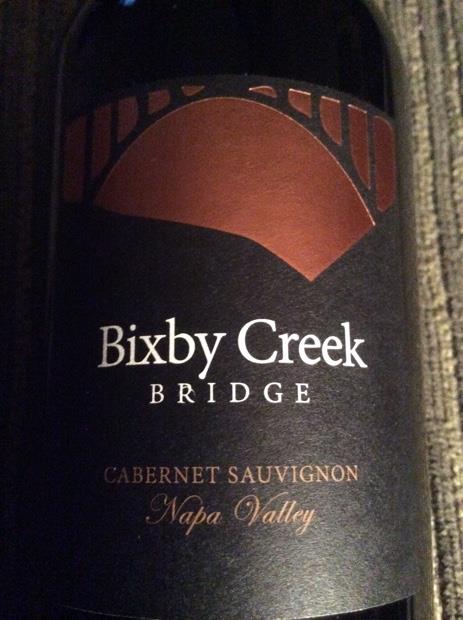
  2. 2013 Bixby Creek Bridge,  Cabernet Sauvignon , Napa Valley
  3. 2011 Don Miguel Gascon, Malbec , Mendoza Argentina
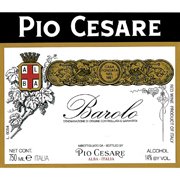
  4. 2009 Barolo Pio Cesare , Alba Italia

3. The Menu

  1. Antipasto
  2. Risotto con hongos y longanisa
  3. Raviolis con salsa Aurora
  4. Veal milanesa con vegetales
  5. Postre y café

 4. Information on the Wines

(The information below has been compiled from varios internet sources) .

2013  Santa Carolina Carmenere Reserva- Chile  

Carolina

The Wine: Color: Deep fuchsia. Aroma: Plum and laurel leaf, spices, red currants and blackberries. Palate: Marked weight and silky tannins, spicy overtones of red currants that remain to the finish. Pairing: Ideal with Indian curry or tandoori chicken. 

Alcohol:13.5% Price: $9

Experts Ratings: Wine Enthusiast     ;Meaty, earthy aromas of mixed berry fruits show a fair amount of wood. The palate is ripe and blocky, with black-fruit flavors, primarily blackberry and plum, accented by a noticeable herbal element. Toasty and spicy on the finish, this is a commendable value-priced Carmenère. Score: 89. —Michael Schachner, March 01, 2015.

Wine Spectator: Shows good typicity, with appealing green herb and leafy notes to the dried berry and stewed plum flavors. Chewy finish. Drink now. Score: 86. —Kim Marcus, 2015.        

 2013 Bixby Creek Bridge,  Cabernet Sauvignon, Napa Valley

bixy

The Wine : Bixby Creek Bridge Cabernet is from the Napa Valley region of California. The fragrant cassis, black cherry and cocoa notes tantalize the nose and has fleshy ripe tannins with blackberry, dark chocolate and tobacco flavors. Pairs with steak, hamburger and lamb.

Alcohol:  13.9%% ;  Price: $15

Experts Ratings: NA

2011 Kikland,  Malbec , Mendoza Argentina


Kirkland MalbecThe Wine:  Kirkland Signature is a private label collection of wine, spirits and beer from the Costco warehouse club chain. The offerings are only available to members of the Costco club and not sold in other retail stores or bars and restaurants. These items are sourced from around the world, with selections that span a range of styles for all palates.

Read more: http://www.snooth.com/wine/kirkland-malbec-mendoza-argentina-2011/#ixzz3j6wcNQ2t

The 2011 Kirkland Signature Series Malbec comes from single vineyard, old vine grapes grown at 4,000 feet above sea level and spends 12 months in 100% new French oak. It has only 2.4 g/L of residual sugar which makes it a very dry (not sweet) wine. Eigthy six pecent Mlabec and 14% Cabernet Sauvignon.  It opens with very pleasant aromas of ripe plum, black cherry and dark berry fruit along with a little vanilla and spice. Tasting reveals a big, rich, smooth and tasty wine full of ripe juicy fruit and plenty of vanilla and caramel notes. Spice and black pepper notes come to the forefront on the long, dry, dusty finish.

Alcohol:  14.5% ;  Price: $19

Experts Ratings: NA

2009 Barolo Pio Cesare , Alba Italia

Barolo pio

The Wine : Winemaker’s Notes-This is a classic Barolo, with excellent structure and harmony, mild tannins and balanced fruit. It is immediately approachable, but it also has a very long ageing potential. 

Alcohol:  14.5% ;  Price: $56

Experts Ratings: The Wine AdvocateRobert Parker 93 pts “Pio Cesare offers two very distinct expressions of Barolo. The first, the 2009 Barolo, shows classic lines and elegant characteristics of mild spice and forest berry backed by dried ginger, blue flower and anise seed. Its tight, crisp and finely textured mouthfeel appeal to those with a preference for traditional Barolo. Again, this producer has done a good job managing the warmer vintage conditions. Anticipated maturity: 2015-2028.”

James Suckling –  92 Pts“. There’s an impressive purity of fruit with strawberry character and hints of cream and flowers. White pepper too. Full body, with polished, integrated tannins and a long flavorful finish. Beautiful fruit. Nougat with fruit. Orange peel. Polished and refined. Better in 2015.”

4. Club del Vino Members Rating : TBA

Criterio para calificar:

Excepcional: 96-100 puntos; Excelente: 90-95 puntos; Muy Bueno: 86-89 puntos; Bueno: 81-85 puntos; Aceptable: 75-80 puntos.

Síntesis.Todos los vinos recibieron calificaciones medias de 88 y 87 puntos o sea que están en el rango de muy buenos. Esta degustación de tipo ciega, según las notas del grupo asistente, resulto muy buena e interesante por la aceptación de la calidad de vinos consumidos y la novedad del tipo de degustación.

Vinos degustados

2013 Carmenere, Chile Santa Carolina Reserva , Valle del Cachapoal

Calificacion Media: 88

Desviacion Estandar: 2.7

Mediana: 88

Moda: 89

Impresión General: Vino Muy Bueno, color rojo bastante acentuado, poco aroma pero muy agradable, buen sabor Impresión General con un final un poco largo y persistente, muy bien balanceado y elegante.

2013 Bixby Creek Bridge Cabernet Sauvignon, Napa Valley California USA

Calificación Media: 88

Desviación Estándar: 2.8

Mediana: 88

Moda: 88

Impresión General: Un vino Muy Bueno, con un color rojo muy típico, sabor frutoso y moderado así como su final, agradable y de un aroma intenso.

2011 Kirkland Malbec, Mendoza Argentina.

Media: 87

Desviación Estandar: 3.6

Mediana: 88

Moda:   88

Impresión General: Este vino Muy Bueno color rojo muy llamativo, con un aroma muy fuerte y un final, largo y agradable, con mucho cuerpo. En general un vino muy aceptable como lo es un clásico Malbec.

2009 Barolo Italia, Pio Cesare Piedmont

Calificación Media: 88

Desviación Estándar: 3.1

Mediana: 89

Moda: 91

Impresión General: Rojo oscuro Muy Bueno clasificado con una Moda de 91 puntos, aroma a frutas agradable, bien balanceado, con un final largo. Con mucho cuerpo y gran sabor de esta clase de vino.

5. Varietal Notes

Carmenere.

It is a red wine grape with intense, inky violet color very similar to merlot and is planted mainly in Chile. The wine aromas most often associated with Carmenere are tobacco, tar, leather, bell pepper, dark fruit, coffee and chocolate. The palate profile can echo the nose, but is largely dominated by cassis, cherry, blackberry, blueberry, plum, pepper, earthy nuances, vanilla and spice. It is typically a medium-bodied wine that is best enjoyed in its younger years. The wines are all over the place stylistically, from simple and even rustic to polished and sophisticated. Some of the wines are characterized by dark, plummy flavors while others are more floral. Many wines have an attractive spicy quality likened to roasted chili peppers. This is not to be confused with an unpleasant bell pepper aroma that characterizes carmenère made from underripe grapes.

Cabernet Sauvignon

Cabernet Sauvignon grapes make medium- to full-bodied types of red wines.  They are high in tannin, which is a natural preservative that comes from the skin, stems and seeds of the grape and the oak wood in which the wine is aged.

Typical taste in varietal wine: full-bodied, but firm and gripping when Young.  With age, polyphenols polymerize: the grip fades away. The rich currant qualities of the Cabernet Sauvignon wine change to that of pencil box. Bell pepper notes remain.

The Napa style is dense, purple-black, jammy and tasting of currants and black cherries. Thick and ripe, layered with expensive new oak scents and flavors, it has almost single-handedly created the phenomenon of the cult wineries.

Malbec

Malbec has risen to prominence in Argentina, where it makes spicy, tart red wines that take well to aging in new oak barrels. Malbec has a deep red color, with full-bodied flavors of berries and tannins.

Typical taste in varietal wine: malbec’s characteristics vary greatly depending on where it is grown and how it is transformed. Generally it produces a fruity and easy-drinking style, well colored wine that tastes of plums, berries, and spice.

Nebbiolo

The flavors and aromas of Nebbiolo wines are of fruit and spices. They tend to have lots of tannins and high alcohol content as well. So what does Nebbiolo at its best taste like? It’s one of the few grapes you can sometimes identify simply by its colour alone, for it tends to take on a brick-orange tinge at the rim of its blackish ruby relatively early in its often-long life.

The wine is typically intensely aromatic, developing the most extraordinarily haunting bouquet in which, variously, roses, autumn undergrowth, woodsmoke, violets and tar can often be found – together with a greater variety of other ingredients than most other grapes. On the palate, the wine is typically high in acidity and, until after many years in bottle, tannins.


Posted in Meeting Abstract | Tagged , , , , , | Leave a comment

Tasting No. 168 – June 29, 2015 – Wines from Oregon

Club del Vino


Capri Ristorante, McLean VA


1280px-Wvatbethel1

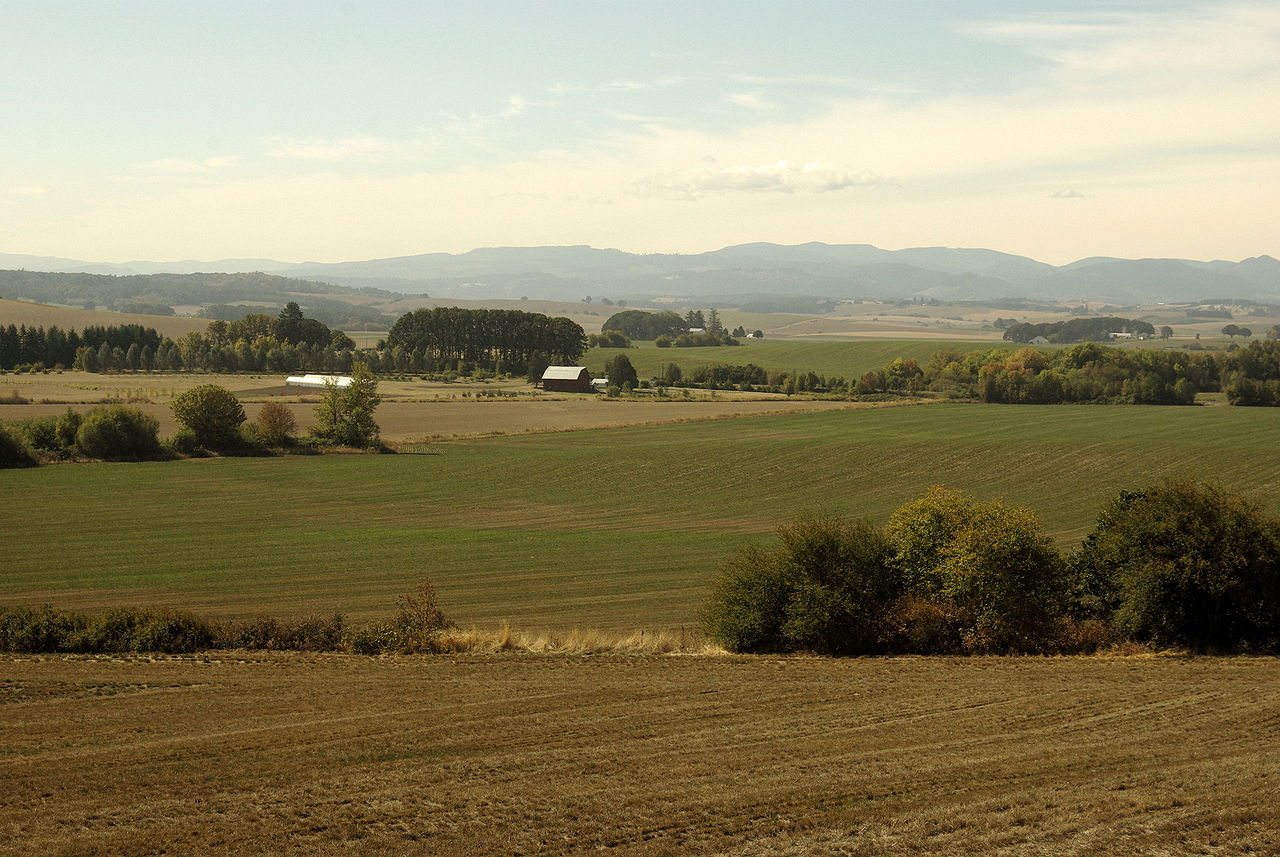
Willamette Valley


Source: “Wvatbethel1” by Rvannatta at the English language Wikipedia. Licensed under CC BY-SA 3.0 via Wikimedia Commons – https://commons.wikimedia.org/wiki/File:Wvatbethel1.jpg#/media/File:Wvatbethel1.jpg

 1. Presenters and Participants

Wines presenter: Italo Mirkow

ParticipantsSocios Marcello Averburg,   Ruth Connolly, Clara Estrada, Jaime Estupiñan,  Jorge Garcia-Garcia, Emilio Labrada, Alvaro Lopez, Orlando Mason, Ítalo Mirkow, Jorge Requena,  Alfonso Sanchez, Jairo Sanchez,  Raúl Sanguinetti, Ginger Smart,  Ricardo Zavaleta, German Zincke.

Invitados: Peter Lapera, John Redwood

Type of Tasting: Open

2. The Wines

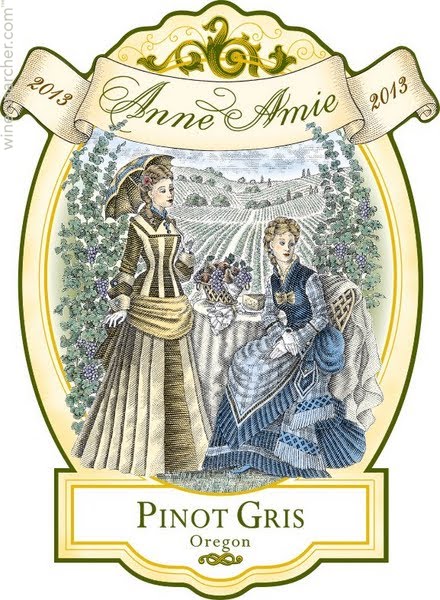
  1. 2014 Annie Amie Viveyards – Pinot Gris – Willamete Valley, Oregon
  2. 2012 Firesteed -Pinot Noir -Oregon
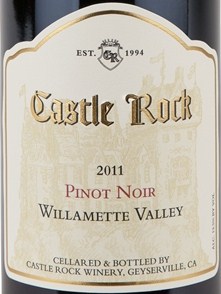
  3. 2011 Catle Rock Winery – Pinot Noir -Willamete Valley, Oregon
  4. 2012 Holloran -Pinot Noir – Willamete Valley – West Linn -Oregon


3. The Menu

  1. Langostinos al ajillo
  2. Gnochis en salsa de tomate
  3. Chorizo y ensalada de papas
  4. Steak
  5. Postre y café

 4. Information on the Wines

(The information below has been compiled from varios internet sources) .

2014 Annie Amie Viveyards – Pinot Gris – Willamete Valley, Oregon

anne-amie-vineyards-pinot-gris-willamette-valley-usa-10634585

The Wine:

Our Willamette Valley Pinot Gris is an elegant expression of this versatile varietal. Intensely aromatic powdery floral notes give way to a palate of Asian pear, Meyer lemon and rose petal. Balanced and crisp, this wine is a great match for many dishes from chicken paella or moules-frites to pork roast.  Read more about Annie Amie Vinerads at: http://anneamie.com/


Alcohol: Price: TBA

Experts Ratings: TBA

2012 Firesteed -Pinot Noir -Oregon

Firesteed

The Wine : Firesteed 2012 Pinot Noir continues the Firesteed tradition of a consistent fruity style, achieved with gentle techniques in the cellar and imagination in the vineyard. The grapes were fermented in stainless steel tanks with selected yeasts propagated from cellars in Burgundy, pressed during the last days of fermentation, and racked as soon as the wine finished malolactic fermentation. A touch of barrel-aged wine was included in the blend to round out the flavors and enhance complexity.  Read more at http://www.firesteed.com/our-place/firesteed-vineyards/

  • Alcohol:  % ;  Price: TBA

Experts Ratings: TBA

 2011 Catle Rock Winery – Pinot Noir -Willamete Valley, Oregon

Castle rock

The Wine: Castle Rock Pinot Noir is produced from grapes grown in Oregon’s Willamette Valley. Sheltered by the Cascade Mountains, this area is on the same latitude as France’s Burgundy region, and in the past thirty years it has gained international recognition as one of the most prestigious appellations for this cool climate varietal.

This elegant medium-bodied wine offers aromas of cherry and spice. On the palate the wine give flavors of berries, cinnamon, black cherry, sweet vanilla oak, and floral notes, with a long velvety finish. This versatile wine pairs well with lamb, chicken, veal, salmon and light pasta dishes 

Alcohol:  % ;  Price: TBA

Experts Ratings: NA

2012 Holloran -Pinot Noir – Willamete Valley – West Linn -Oregon 

Holloran

The Wine : HVW produces small quantities of hand crafted wine from premium vineyard sites in Oregon’s Willamette Valley. We emphasize low yields and careful hands-on management of the vines to produce wines that express the unique characteristics of our vineyard sites. Read more and watch interesting video  at: http://www.holloranvineyardwines.com/home.html


Alcohol:  % ;  Price: TBA

Experts Ratings: TBA

4. Club del Vino Members Rating : TBA

Criterio para calificar:

Excepcional: 96-100 puntos; Excelente: 90-95 puntos; Muy Bueno: 86-89 puntos; Bueno: 81-85 puntos; Aceptable: 75-80 puntos.

Síntesis.  El vino Blanco, fue calificado como Muy Bueno con promedio de 88 puntos. El primer tinto, también como Muy Bueno con una calificación Media de 87 puntos; el segundo tinto, tuvo una calificación media de Bueno con un promedio de 85 puntos. El tercero y último de los tintos, recibió una calificación de Excelente con un puntaje medio de 90. En resumen, esta degustación, según las notas del grupo asistente, resulto muy buena por la aceptación de la calidad de vinos consumidos.

Vinos degustados

2014 Pinot Gris, Annie Amie Viveyards – Willamete Valley Oregon

Media: 88

Desviación Estándar: 3.6

Mediana: 89

Moda: 89

Impresión General: Vino Muy Bueno, color Amarillo pálido, poco aroma y sabor agradable con un final un poco largo y persistente, muy bien balanceado y elegante.

2011 Pinot Noir, Willamete Valley – Castle Rock Winery.

Media: 87

Desviación Estándar: 3.9

Mediana: 88

Moda: 84

Impresión General: Un vino Muy Bueno, con un color rojo claro muy típico, sabor frutado moderado así como su final, agradable y de un aroma intenso.

2012 Pinot Noir, Firesteed – Oregon.

Media: 85

Desviación Estándar: 4.5

Mediana: 86

Moda:   87

Impresión General: Vino Bueno color rojo claro, con un aroma muy fuerte, aterciopelado con un final largo y agradable.. En general un vino muy agradable.


2012 Holloran, Oregon Pinot Noir Willamete ValleyWest Lynn Oregon.

Media: 90

Desviación Estándar: 2.4

Mediana: 90

Moda: 90

Impresión General: Rojo oscuro excelente aroma a frutas agradable, bien balanceado, con un final muy largo. Muy Bueno con mucho cuerpo y agradable sabor.

5. Regional Notes

Jairo Sanchez compiled the following note on the Oregon wine región (click on the link):  Oregon wine regions


Posted in Meeting Abstract | Tagged , , | Leave a comment

Tasting No. 167 – May 26, 2015 – Wines from the Americas – Non Traditional Countries

Calificación Media: 89Moda:  90

Club del Vino


Capri Ristorante, McLean VA


precolumbian


 1. Presenters and Participants

Wines presenters: Pedro Turina, Germán Zinke

ParticipantsSocios: Marcello Averburg, Ruth Connolly,  Alvaro Lopez, Orlando Mason,  Jorge Requena, Alfonso Sánchez, Jairo Sánchez, Pedro Turina,   Ricardo Zavaleta,  German Zincke.

Invitados: Alfonso Caycedo, Lucia Redwood, John Redwood,  

Type of Tasting: Open

2. The Wines

  1. Salton Virtude Chardonnay, 2011   Serra Gaucha, Brasil
  2. L. A. Cetto, Zinfandel 2009, Valle de Guadalupe Baja California, México
  3. Tacama, Gran tinto (Malbec, Petit Verdot, Tannat) 2012, Valle de Ica, Peru 
  4. Cave Spring Pinot Noir VQA Niagara Peninsula 2010,   Canada

3. The Menu

  1. Ensalada Caprese
  2. Gnocchi au Gratin
  3. Filete de Res a la Plancha en reducción de vino con papas doradas y habichuelas
  4. Postre/Café

 4. Information on the Wines

(The information below has been compiled from varios internet sources) .

Salton Virtude Chardonnay, 2011   Serra Gaucha, Brasil


Virtude 2The Wine:  Oaky mineral nose. Complex, restrained fruit. Mouth-watering fresh structure. Complex finish.

Campanha is Brazil’s most southerly wine-producing region, located along the country’s border with Uruguay. While not quite as well known as the neighboring region of Serra Gaucha, Campanha – sometimes known as Fronteira – is beginning to attract attention for the quality of its wines. Soft, fruit-driven reds and rustic, full-bodied whites are made here from grape varieties such as Cabernet Sauvignon, Tannat and Chardonnay,  Read more at   http://www.wine-searcher.com/wine-283814-2011-salton-virtude-chardonnay-serra-gaucha-brazil

Alcohol: 13% ;  Price: TBA

Experts Ratings: TBA

 L.A. Cetto, Zinfandel 2009, Valle de Guadalupe Baja California, México 


la cetto zinfandel1The Wine : Color rojo vivo rubí; intensos aromas frutales a frambuesa, moras y casís; en boca, resalta su carácter frutal, intenso y equilibrado.  Añejamiento de 12 meses.

A couple of hours from downtown San Diego, just across the Mexican border, lies the Valle de Guadalupe, a place of green valleys and boulder-covered hills. Its dry, hot summers and cooler, damper winters, combined with porous soil and cooling sea breezes, are ideal for grape growing. This northern end of the Baja California peninsula is, in fact, one of the New World’s oldest wine-growing areas. Jesuit priests cultivated vines here in the 18th century, and the first commercial winery, Bodegas de Santo Tomas (santo-tomas.com), opened in 1888.

 Irrigation is the lifeblood of the vines here, a basic tenet of desert agriculture. Just about all the world’s warm-climate grape varieties are grown, including Cabernet Sauvignon, Cabernet Franc, Merlot, Zinfandel, Nebbiolo, Syrah, Tempranillo, Malbec, Carignan and Grenache among red grapes. The wines tend to be full-bodied and high in alcohol, with lusty black-fruit flavors and an occasional blast of heat and/or saltiness derived from saline-rich water used for irrigation. Among white wines, look to early harvested, oak-free Chardonnay, Sauvignon Blanc, Sémillon and Viognier as best bets. Read more at:http://www.theguardian.com/travel/2014/jan/31/mexico-wine-trail-valle-de-guadaloupe-baja-california

  • Alcohol:  14 % ;  Price: TBA

Experts Ratings: TBA

Tacama, Gran tinto (Malbec, Petit Verdot, Tannat) 2012, Valle de Ica, Peru

Tacama-gran-tinto1

The Wine: 

Winemaker’s comments “An elegant blend of Malbec, Tannat and Petit Verdot, shows a glistening red colour. On the nose, aromas of red cherry and berry fruits with smokey herbal notes, supported by very soft and gentle tannins. A light and smooth texture, elegant fruit flavours with hints of spice.”

The Tacama Vineyard has an area of about 200 hectares (494 acres) and is located in the Valley of Ica, a fertile oasis surrounded by desert. It is situated 300 kilometers from Lima the capital of Perú, and 50 kilometers from the coast, it is 400 meters above sea level. Tacama uses both French technology and receives advice from French experts. Tacama has won several awards in international shows.  International Experts have classified Tacama’s wines as being of worldclass quality. Read more at: http://www.tacama.com/english/portada.htmad 

Alcohol:  13.5% ;  Price: TBA

Experts Ratings: NA

Cave Spring Pinot Noir VQA Niagara Peninsula 2010, Canada 

cave-spring

The Wine : Juicy, aromas and flavours of tart cherries and fresh-turned earth! Lovely balance and appeal in the glass with one of Niagara’s signature grapes and flagship producers. This wine would be perfect for holiday dinners, whether you’re serving the turkey or bringing the hostess gift.

Niagara Peninsula is the largest and most productive viticultural area in Canada, located on the southern shores of Lake Ontario. More ice wine is made on the Niagara Peninsula than anywhere else on Earth, to the point where the region is synonymous with lusciously sweet wine, although many varieties of quality dry wine are also produced. Riesling is something of a local darling and has a loyal following of enthusiasts. The ubiquitous Chardonnay is also prominent and its Burgundian partner, Pinot Noir, is becoming more common. Read more at:  http://www.wine-searcher.com/regions-niagara+peninsula

Alcohol:  % ;  Price: TBA

Experts Ratings: TBA

4. Club del Vino Members Rating : TBA

Criterio para calificar:

Excepcional: 96-100 puntos; Excelente: 90-95 puntos; Muy Bueno: 86-89 puntos; Bueno: 81-85 puntos; Aceptable: 75-80 puntos.


El  vino Blanco, fue calificado  como  Bueno con promedio de 85 puntos. El primer tinto, también como  Bueno con una calificación Media de 85 puntos; el segundo tinto, tuvo una calificación media de Muy Bueno con un promedio de 88 puntos. El tercero y último de los tintos, recibió una calificación de Muy Bueno con un puntaje medio de 89. En resumen,  esta  degustación de mayo 2015, según las notas del grupo asistente, resulto muy interesante por la variedad y calidad de vinos de distintos países degustados.

2011 Salton Virtude – Chardonnay, Serra Gaucha, Brasil

Calificación Media: 85

Desviación Estándar: 3.4

Mediana: 87

Moda: 88

Impresión General:   Un vino  Bueno, color Amarillo Dorado, mineralidad y un poco de acidez, aroma y sabor agradable con un final largo y persistente, muy bien balanceado y elegante.

2009 L. A. Cetto, Zinfandel, Valle de Guadalupe, Baja California, México.

Calificación Media: 85

Desviación Estándar: 4.1

Mediana: 87

Moda: 87

Impresión General: Un vino especial, con un color rubí, sabor frutoso y taninos moderados así como su final, agradable y de una estructura balanceada.

2010 Cava Sprint Pinot Noir, VQA Niagara Peninsula,      Canada  

Media: 88

Deviation Estándar: 4.1

Mediana: 89

Moda:  90

Impresión General: Intenso aroma frutal agradable, bien balanceado, con una estructura solida taninos moderados y un excelente final.

2012 Tacama, Gran Tinto Blend, Valle de Ica, Peru

Calificación Media: 89

Desviación Estándar: 3.5

Mediana: 89

Media: 89

Impresión General: Intenso aroma frutal agradable, bien balanceado, con una estructura solida taninos moderados y un excelente final.

5. Regional Notes

Please click below to see the maps and read about the regions included in this tasting.  Jairo Sanchez prepared the note.

Preu- mexico-canada- brazil 


Posted in Meeting Abstract | Tagged , , , , | Leave a comment

Tasting No. 166 – April 27, 2015 – Wines from Western Australia


Club del Vino


Capri Ristorante, McLean VA

 1. Presenters and Participants

Wines presenters: Carlos Velez, Jorge García

Participants:

Mario Aguilar, Marcello Averburg,  Alfonso Caycedo,  Ruth Connolly, Clara Estrada, Jaime Estupiñan,  Jorge Garcia-Garcia, Emilio Labrada, Alvaro Lopez, Orlando Mason, Ítalo Mirkow, Joerge Requena, Jorge Omar Rodríguez, Pedro Turina, Ginger Smart, Carlos E. Velez, Ricardo Zavaleta, German Zincke, Andrés Prieto (invitado de Pedro Turina)

Type of Tasting: Open

2. The Wines

  1. Vasse Felix – Chardonnay 2012 – Margaret River
  2. Picardy 2005 – (blend merlot 54%, cabernet sauvignon 24%, y cabernet franc 23%  )
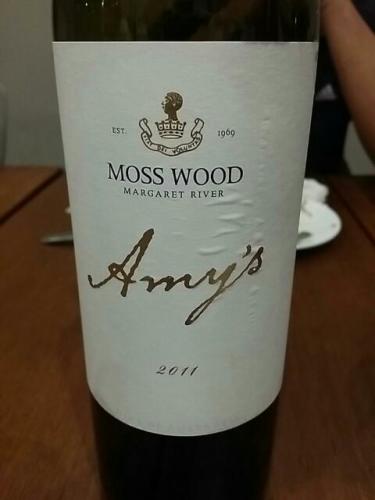
  3. Moss Wood – Amy’s Blend 2011 – Margaret River
  4. Vinaceous – Raconteur Cabernet Sauvignon 2012 Margaret River


3. The Menu

1.             Antipasto 

2.             Ravioli con hongos rellenos y con salsa de tomate delicada 

3.            Ensalada de fenel, naranja, walnut y aceite de oliva extra virgen 

4.            Ternera a la milanesa

5.         Postre/Café

 4. Information on the Wines

(The information below has been compiled from varios internet sources) .

Vasse Felix – Chardonnay 2012

Vase

The Wine:  A Chardonnay of extraordinary freshness, vibrant lifted fruit intensity, solid structure, balance and finesse. Vasse Felix create a complex, softly textured wine through a regimen of partial wild yeast fermentation in French oak barriques. The final effort is distinct, elegant in style and true to Margaret River. Typified by its bright, delicate fruit and tight, underlying acidity throughout, a reflection of the purity to be found in Margaret River, a Chardonnay of compelling primary fruit flavours and sound structure.

Alcohol: 12.5 % ;  Price: TBA

Experts Ratings: Decanter 92 pts.

Picardy 2005 – Merlot, Cabernet Sauvignon- Cabernet Franc 

Picardy

The Wine : This is a really enjoyable and versatile Bordeaux blend. The 2005 offers a lovely mixture of ripe-berry, plum and woodsy scents, harmonised with just the right amount of quality oak.  It is smooth, well structured, fruit driven and not too assertive in the tannins. The palate is medium-bodied and has the leanness and attractive angularity of a cool climate merlot. The percentages are 65% Merlot, 18% Cabernet Sauvignon and 17% Cabernet Franc. The palate also offers pleasantly overt Merlot fruit characters and the tell-tale underlying berry notes of the two cabernets. Very approachable now but will also cellar for at least 15 years. This wine would benefit with at least 3 years in the cellar and should cellar well for up to 20 years.

The fruit is destemmed and pumped to overhead small fermenters. The fermentation is carried out at around 25 degrees Celsius to ensure purity of fruit without excess extraction. During fermentation the wine is hand plunged 3 times per day. The wine and skins are run directly from the fermenter into the airbag press.

After pressing, the different ferments and varieties are then blended as early as possible to give maximum integration. We also attempt to co-ferment the Cabernet Franc either with the Merlot or Cabernet Sauvignon, to further enhance integration.

After blending and settling the wine is then matured in new to four year old French oak barriques. While in oak the wine undergoes malo-lactic fermentation and each barrel is checked and topped up weekly. This wine is usually racked twice during its oak maturation.

After twelve months in oak the wine is racked out of barrel to a tank and given a light filtration on its way to bottle.

Alcohol:  % ;  Price: TBA

Experts Ratings: TBA

Moss Wood – Amy’s Blend 2011

moss wood

The Wine:  Made of a blend of  a blend cabernet sauvignon 50%, petit verdot 31%, malbec 12%, and merlot 7%.  Inky purple. Expressive scents of blueberry, boysenberry and cassis, with a floral accent that gains strength with air. Broad, deep and nicely concentrated, offering sappy dark fruit flavors complemented by an exotic array of lavender pastille, allspice and bitter chocolate notes. Silky tannins come up late, adding shape to a long, floral-dominated finish. Score – 92. (Josh Raynolds, International Wine Cellar, July/Aug. 2013).

Combines the blueberry and blackcurrant fruit characters of Yallingup with violets and redcurrant from Cowaramup, generous fruit depth with soft oak influence providing a toasty, spicy background.  ( read more about Moss wines here: http://www.mosswood.com.au/wines/amys/

Alcohol:  % ;  Price: TBA

Experts Ratings: TBA

Vinaceous – Raconteur Cabernet Sauvignon 2012

Vivaceous raconteur

The Wine : The 2012 Raconteur is sourced from mature vines located in Willyabrup, Margaret River; these old vines are hand harvested and made using traditional techniques by Vinaceous winemakers. The wine is matured in oak and selected by Vinaceous Winemakers Mike Kerrigan and Nick Stacy for finishing, fining, blending and bottling by Vinaceous.

The Raconteur typifies classic Margaret River cabernet; lush, rich and deep purple in colour with bright hues, the aroma leaps from the glass with violets and black berry and mocha notes. Not unlike a Rorschach Image, people will see different flavors across the palate; some will find ripe fleshy black currants and cassis, others will find crunchy sour cherries; but both complement the overall palate with intensity, weight, structure and texture. Along with lip-smacking tannins and fine oak nuances, the 2012 Raconteur can easily be enjoyed on immediate opening or be cellared for up to 10 years and is absolutely a must with roast lamb, char-grilled rib-eye and/or array of cheeses; whatever your choice, the Raconteur will always entertain and command attention!

Alcohol:  14.2% ;  Price: TBA

Experts Ratings: TBA

4. Club del Vino Members Rating : TBA

Criterio para calificar:

Excepcional: 96-100 puntos; Excelente: 90-95 puntos; Muy Bueno: 86-89 puntos; Bueno: 81-85 puntos; Aceptable: 75-80 puntos.

El  vino blanco, fue calificado  como  excelente con promedio de 90 puntos. El primer tinto, como  bueno con una calificación media de 85 puntos; el segundo tinto tuvo una calificación media de muy bueno con un promedio de 87 puntos. El tercero y último de los tintos, recibió una calificación de muy bueno con un puntaje medio de 89. En resumen, esta  degustación, según las notas del grupo asistente, resulto muy buena dada la calidad y variedad de los vinos degustados. Los datos de las calificaciones individuales se detallan a continuación

2012 Vasse Felix – Chardonnay Margaret River

Media: 90

Deviation Standard: 2.7

Mediana: 90

Moda: 90

Impresión General:   Un vino muy bueno, color amarillo cítrico, aroma y sabor mineral, con un final mediano, muy bien balanceado y agradable.

2005 Picardy (Blend)

Media: 85

Desviación Estándar: 4.1

Mediana: 85

Moda: 85

Impresión General: Un vino de corte, con un color rojo rubí que tiene sabor frutoso y dulzón, un final largo, agradable y de muy buena estructura.

2011 Moss Wood – Amy’s Blend Margaret River

Media: 87

Desviación Estándar:  6.3

Mediana:  88

Moda:   87

Impresión General: Un color rojo intenso, con un aroma muy débil a frutas, sabor achocolatado y una estructura bastante fuerte. Un buen balance con alto contenido de alcohol. En general un vino muy agradable.

2012 Vinaceous – Racounter Cabernet Sauvingnon Margaret River

Media:  89

Desviación Estándar: 2.7

Mediana: 90

Moda:  91

Calificación Media: 89

Impresión General: Un buen vino cabernet bastante agradable, con especiales características y sabor, tiene un llamativo color rubí y en resumen es un vino elegante y muy acceptable.


5. Regional Notes

(Map taken from: http://www.genxywines.com/regions/wa_regions/img_maps_wa/wa_sm.jpg)
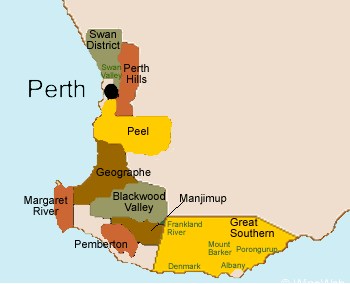
regions_map4Western Australian wine refers to wine produced in Australia’s largest state, Western Australia. Although the state extends across the western third of the continent, its wine regions are almost entirely situated in the cooler climate of its southwestern tip. Western Australia produces less than 5% of the country’s wine output, but in quality terms it is very much near the top. 

Western Australia’s several wine districts, which includes Margaret River, Great Southern Region, Pemberton, Perth Hills, and Swan Valley, stretch out from the coastal city of Perth. Vines were planted in this area in 1829, some years before the first planting in either South Australia or Victoria. But the state isolation and limited population hampered the industry’s growth and scope until 1970.

The Swan Valley, north of Perth, was Western Australia’s first wine district. It became known for table grapes as well as wine grapes, and the leading wines were mostly sweet and/or fortified and sold in bulk. It was here that Houghton‘s White Burgundy was originally a rustic, powerfully alcoholic made from chenin blanc, muscadet and chardonnay.

Of all the wine districts in Western Australia, the most renowned and ambitious is Margaret River, a windswept district jutting out like an elbow into the Indian Ocean.  Originally known for its timber, Margaret River came to world attention in the 1980s for the elegance, richness and clarity of its cabernet sauvignons- specially those from three of the leading wineries, Cape Mentelle, Leeuwin Estate and Cullens. 

The combination of the district’s maritime location and gravelly soil reminded several vintners of Bordeaux and inspired them to plant not only red Bordeaux grapes such as cabernet sauvignon and merlot, but also Bordeaux whites, Semillon and sauvignon blanc. Both white grapes, which are often blended, turned out to make wines shockingly full of personality.

On the other hand, when chardonnay was first planted in Margaret River, it seemed to be something of a gamble. As it turned out, chardonnay has almost magical affinity for the region. Leeuwin Estate, in particular, make chardonnays of breathtaking elegance that, with several years aging, grow even ricer and more expansive. They are among the best produced in all of Australia. 

One of the most curious grapes grown in western Australia is Verdelho. It was originally brought to the Swan Valley in 1829 by one of Western Australia’s first colonist, a botanist named Thomas Waters, who took cuttings from he island of Madeira off the African coast (a stopping point to pick-up provisions on the long voyage out). Two of the best Verdelhos to try are Moondah Brook and Willespie.

Today much of the excitement in Western Australia centers around the cool subdistricts within Great Southern Regions and the southwest coast. Wineries to watch from these areas include Howard Park, Plantagenet, Goundrey, and Capel Vale, known in the USA as Sheldrake.

Some Wines to Know:

Howard Park, Riesling, Western Australia, 100% Riesling,

Leeuwin Estate, Chardonnay, Art Series, Margaret River, 100% Chardonnay

Wine regions 

Great Southern Wine Region

The Great Southern is Australia’s largest wine region a rectangle 200 kilometres from east to west and over 100 kilometres from north to south. It has five nominated subregions for wine, namely the Porongurups, Mount Barker, Albany, Denmark, and Frankland River under the Geographical indications legislation as determined by the Australian Wine and Brandy Corporation. The vineyards spread throughout the area have significant variations of terroir and climate dictated in part by the distance however the region is the coolest of Western Australia’s viticultural areas; with a similar maritime influenced Mediterranean climate to Margaret River although with slightly less rainfall. This diverse region is known for Riesling, Chardonnay, Cabernet Sauvignon, Pinot noir, Shiraz, and Malbec. 

Great Southern Wine Region

Western Australia’s Great Southern region comprises a rectangle 200 kilometres from east to west and over 100 kilometres from north to south, and is Australia’s largest wine region.

It has five nominated subregions for wine, the Porongurups, Mount Barker, Albany, Denmark and Frankland River under the Geographical indications legislation as determined by the Australian Wine and Brandy Corporation. The vineyards spread throughout the area known for production of high quality vines have significant variations of terroir and climate dictated in part by the distance however the region is the coolest of Western Australia’s viticultural areas; with a similar maritime influenced Mediterranean climate to Margaret River although with slightly less rainfall. This diverse region is known for Riesling, Chardonnay, Cabernet Sauvignon, Pinot noir, Shiraz, and Malbec. 

Subregions

  • Albany is a subregion of the Great Southern region of Western Australia. Albany’s climate is maritime, strongly shaped and moderated by the Southern Ocean; the standard description is that it is Mediterranean, with moist, cool winters and warm, dry summers. Diurnal temperature range is minimal, and moderate humidity in summer assists ripening by reducing stress on the vines. Soil types of the region are either lateritic gravelly, sandy loams or sandy loams derived directly from granite and gneissic rocks.
  • Denmark the coastal neighbor of Albany is one of the five subregions of Great Southern. Marginally wetter and cooler than Albany, although the differences are not of significant magnitude. The climate is broadly similar to Albany; the varieties being grown and the wine styles are also similar.
  • Frankland River is one of the five subregions of the Great Southern in Western Australia. It is situated in the northwestern corner of the region, its western boundary touching the eastern side of Manjimup. It is the most northerly, inland subregion of Great Southern, still Mediterranean in terms of dominant winter-spring rainfall, but with greater continentality. The soils are chiefly derived from lateric gravelly sandy loams or sandy loams derived from granite or gneissic rocks, and so are typically rich, red in color and of uniform depth with some areas carrying marri and karri loams. The climatic influences for the area favor medium-bodied, Bordeaux style red varieties, and with the excellent adaptation of slightly earlier-maturing Shiraz.
  • Mount Barker this cool subregion is generally regarded as the most important subregion of the Great Southern. Ripening month and average temperatures in the established Mount Barker vineyards are significantly lower than in the Médoc, and significantly lower than in the lower warmer Bordeaux appellations such as Saint Emilion and Pomerol. Average ripening period sunshine hours at Mount Barker together with the whole season measure of sunshine hours are nearly identical with those of Bordeaux. Situated in the middle of the Great Southern, with strong continental aspects together with marri soils and lateritic gravely and sandy loams provided from the granite rock backdrop the region is suited to Riesling, Shiraz, Cabernet Sauvignon, and Pinot noir.
  • Porongurup is the fifth of the subregions of the Great Southern, just East of Mount Barker; and especially, the slopes facing north and north-east. The Porongorups are a small, isolated range of intrusive granite, of which slopes enjoy outstanding air drainage. The climate is Mediterranean with cool to mild winters and warm, sunny summers. While conditions are cooler and more humid higher up in the ranges with occasional snow on the taller peaks for short periods during winter and spring.The soils are ancient, deep karri loams derived from weathered granite. Porongurup is strongly indicated for all high quality white wine varieties such as Riesling, Traminer, Chardonnay, and red wine varieties such as Pinot noir, and Pinot Meunier.
  • Margaret River is the major geographical indication wine region in southwest Western Australia, with 5,017 hectares under vine and 215 wineries as at 2012. Margaret River wine region is made up predominately of boutique size wine producers; although winery operations range from the smallest crushing 3.5 tonne per year to the largest around 7000 tonne. The climate of Margaret River is more strongly maritime-influenced than any other major Australian region. It has the lowest mean annual temperature range, of only 7.6C, and for good measure has the most marked Mediterranean climate in terms of rainfall, with only 200 millimetres of the annual 1160 millimetres falling between October and April. The low diurnal and seasonal temperature range means an unusually even accumulation of warmth. Overall the climate is similar to that of Bordeaux in a dry vintage. Although the region produces just three percent of total Australian grape production, it produces over 20 percent of Australia’s premium wine market.The principal grape varieties are fairly evenly split between red and white; Cabernet Sauvignon, Chardonnay, Sauvignon blanc, Sémillon, Shiraz, Merlot, Chenin blanc and Verdelho.
  • The Swan Valley is a region in the upper reaches of the Swan River between Guildford and Bells Rapids, Western Australia. The Swan Valley is noted for its fertile soil, uncommon in the Perth region, and the recent expansion of tourism-based destinations. These include numerous wineries such as the huge complex at Houghtons, the state’s biggest producer, and Sandalfords and also many small though excellent family-owned concerns. During October the annual ‘Spring in the Valley’ weekend takes place; it is one of Australia’s largest wine and food festivals.
  • The Swan District, of which the Swan Valley forms part, is the hottest wine region in Australia, with the grape harvest usually beginning in January. The Swan Valley is among the largest sources of Western Australia’s wine, with grape varieties such as Verdelho, Chenin blanc, and Chardonnay. 


Posted in Meeting Abstract | Tagged , , , , | Leave a comment

Tasting No. 165- March 30, 2015 – Wines from Eastern Europe


Club del Vino


Capri Ristorante, McLean VA

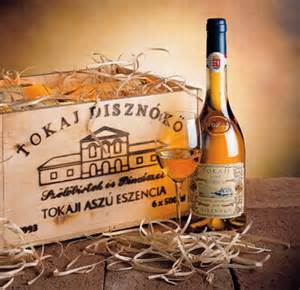
Tokaj Wine

Tokaj Wine


1. Presenter and Participants

Wines presenter: Jairo Sánchez

Participants:  Mario Aguilar, Marcello Averburg,   Ruth Connolly, Emilio Labrada, Alvaro Lopez, Ítalo Mirkow,  Alfonso Sánchez, Jairo Sánchez,  Ginger Smart, Carlos E. Velez, Ricardo Zavaleta, German Zincke, Jorge Requena ( Jairo Sánchez’s guest)

Type of Tasting: Open

2. The Wines

  1. Grüner Veltliner Steinsetz 2012, – Kamptal Reserve Schloss Gobelsburg
  2. Rkatsiteli Amber Wine, 2011 – Pheasant Tears
  3. Blaufrankisch Troken Qulitätswein 2012 – Peter Schandl
  4. 1827 Rara Neagra de Purcari. 2013 – Purcari Chateau
  5. Fermint Late Harvest 2007, Chateau Megyer. Hungría (Jairo’s courtesy)

3. The Menu

  1. Pescado a la Parrilla con Espárragos y Vegetal
  2. Pasta Primavera con aceite de olive
  3. Filete de Res a la Plancha, en reducción de vino, papas doradas y habichuelas
  4. Postre y/o Café

 4. Information on the Wines

(The information below has been compiled from varios internet sources) .

Grüner Veltliner Steinsetz 2012 – Kamptal Reserve Schloss Gobelsburg

Gruner 2

Grüner Veltliner is the signature grape of Austria, and by far the nation’s most widely planted wine grape (36%). As Austria battles its way back to stardom on the international wine market, crisp, spicy Gruner Veltliner has been its flagship wine. The finest expressions of Austrian Gruner come from vineyards above the Danube River, in Wachau, Kremstal and Kamptal. Classic Gruner Veltliner wines show citrus aromas (lemon peel and grapefruit) complemented by fresh vegetal notes and the variety’s trademark hint of white pepper.

There are two key styles of Gruner Veltliner wine. The first – lighter, fresher and citrus-focused – is typical of Weinviertel. It is often bottled with a slight spritz, to lift the wine and emphasize its fresh, fruity notes. The second style – spicier, weightier and more complex – is embodied by the top wines from the warmer Wachau, Kremstal and Kamptal regions. These wines are richly textured and well structured, and require several years in bottle before reaching developed maturity. With time they soften and take in honeyed, marmalade-like characteristics that match their attractive, deep golden hue.

The Wine.  Apple pips and peach kernel piquancy as well as a decidedly stony note and a firm if fine-grained feel lend a certain austerity to the Gobelsburg 2012 Gruner Veltliner Steinsetz, but there is ample primary juiciness of mint-infused apple and melon through which seems to shimmer a diversity of mineral matter. Ester-rich, high-toned aromas here encompass kirsch and mirabelle distillates, which reprise as shadows to a lingering finish. Plan to follow this through at least 2018.

Aromatic and gastronomic inspiration from Schloss Gobelsburg with this. Apricot notes mix with white spice, dill, green pepper and acacia flowers, while the palate sports flavours of melon and pears, minerals and spice.

Alcohol:  13 %;  Price: $ TBA

Food Pairing:  Tomatoes. Australasia/Oceania: Tuna tartare and wasabi and peppercorn mayo; pan-fried snapper with asparagus spears. Americas: Waldorf salad; zucchini tarta (quiche)

Expert Ratings: WA 90 pts.  SWA/Sommelier Wine Awards: Gold Medal

Rkatsiteli Amber Wine 2011-Pheasant Tears

Pheasant tears

 Rkatsiteli Grape. Traditional Georgian grape varieties are little known in the West. Now that the wines of Eastern and Central Europe are coming to international awareness, grapes from this region are becoming better known. Although there are nearly 400 to choose from, only 38 varieties are officially grown for commercial viticulture in Georgia.

  • The ancient white grape Rkatsiteli originates in Georgia and is one of the oldest grape varieties. In Georgia, clay vessels were found with seeds of Rkatsiteli grapes which date back to 3000 BC. Rkatsiteli was popular in the Soviet Union prior to its fall and at one point was responsible for more the 18% of all Soviet wine production. There it was used to make everything from table wine to liqueurs to Sherry-like fortified wine. The variety’s stronghold region, Kakheti, is particularly affected by sub-zero temperatures and snow fall; its inland location, halfway between the Black and Caspian seas, gives it a more continental climate than the rest of Georgia. And while winter poses challenges to the vine organism itself, hot summers hold their own challenges, more oenological than biological. Long, hot summers such as those experienced in Georgia would cause many grape varieties to lose acidity, making for structureless, “flat” wines. Rkatsiteli, however, has naturally robust acids and sugars in equal measure. Rkatsiteli’s only obvious drawback as a variety is its lack of aromatic complexity.  The grape is mostly planted in its ancestral home of Georgia though there are still sizable plantings in other Eastern European countries like Russia, Bulgaria, Moldova, Romania, Macedonia, Azerbaijan and Ukraine.  .

The typical Rkatsiteli wine is best described as restrained and refreshing, with crisp green-apple flavors and hints of quince and white peach. It might be compared to good-quality Petit Chablis, or perhaps Pinot Grigio from northern Italy. Recently, it has been employed with great success in orange wines, where the grapes are left to macerate on their skins for longer, giving more complexity and texture to the wine.

Producer notes.  We use only traditional Georgian varietals and vinification methods. Our naturally grown grapes are pressed into qvevri, clay vessels lined with bees wax, where they undergo primary and malolactic fermentation spontaneously with native yeasts and where they are aged to perfection with long skin maceration until bottling. We believe that Georgian wine has something vibrant, essential and unique to offer the world.

Rkatsiteli 2011 Bodviskhevi village is home to our special east Alazani Valley Rkatsiteli vineyard. This rich varietal expresses an aroma of honey and dried apricots, surprisingly dry with a mixture of ripe goosenberries and walnut on the palate, made full bunch clusters gently crushed in qvevri and prolongued maceration on the skins.

Alcohol: 12.5  %;  Price:  $ TBA

Expert Ratings: 89 Pts.

Blaufrankisch Troken Qulitätswein 2012 – Peter Schandl

balufrnkich.jpg

Blaufränkisch. The blaufränkisch grape is grown mostly in Austria, where it makes a spicy red wine that can be graceful yet intense, complex yet tangy and refreshing. Blaufränkisch is made as well in Germany, where it is often called Lemberger.  Blaufränkisch is a late ripening red wine grape variety, common in Northern Burgenland. Legend has it that Carl the Great appreciated Blaufränkisch and recommended its proliferation. This variety is referred to as Pinot Noir of the East. The wines are of fine texture and fruity bouquet, best to drink between the second and the fourth storage year.

 The greatest improvements in Austrian wine have come in the red wine category, mainly because they were for the most part: thin, green, weedy, or crushed by excessive oak and over-extraction.  Now Austrian vintners, at least the top tier, have moved past this developmental phase to the point where terroirs and native varieties have been embraced with confidence. The recent tastings, including wines from the excellent 2011 and 2012 vintages, underscore the point of Austrian winemakers spending more time looking at their vineyards rather than outside the country and comfortable in the knowledge that with both their native grapes and their varied terroirs they are able to produce distinctive and qualitative wines.

The Wine. Winemaker Paul Schandl joins together heritage of his more than 270-years-old family wine state with the strength of native terroir to produce uniquely expressive vintage wines.   Moderate maroon coloration. Full, gamey nose of meat and an almost yeasty, doughy scent. Smooth but full palate with good balance of fruit, acidity and tannin. Pronounced aroma, spicily elegant, velvety tannins, cherry notes.

Alcohol:   12.5%;  Price: $TBA

Expert Ratings: TBA

1827 Rara Neagra de Purcari, 2013 – Purcari Chateau

negara

Rara neagră is a red variety traditionally used mostly for blending with other varieties, e.g. the famous Negru de Purcari. Responsible for the fame of the Purcari wines in the 18th century, before Cabernet Sauvignon was introduced. Total area planted – 170 hectares mostly in the Purcari regionMoldova may be the Galapagos of wine. For centuries, this region has evolved virtually undisturbed by the West. To sip Rara Neagră is to discover a distinctive, low-tannin, high-acid gem that feels as at-home in the Rhone or Sardinia.  Rara Neagră is the culmination of grace and elegance.  Purcari wines are harvested by hand and created under the strict cannons of Moldovan winemaking tradition.

The wine has an aristocratic ruby red color with a pomegranate tint.  The rich, velvety taste with notes of dried fruits and vanilla slowly evolves into an aftertaste with subtle oak tints.

Alcohol:  % ;  Price: TBA

Experts Ratings: TBA

4. Club del Vino Members Rating : 

Criterio para calificar:

Excepcional: 96-100 puntos; Excelente: 90-95 puntos; Muy Bueno: 86-89 puntos; Bueno: 81-85 puntos; Aceptable: 75-80 puntos.

Tipo de Degustacion: Abierta

El  primer vino Blanco, fue calificado  como  Muy Bueno con promedio de 89 puntos y el segundo vino Blanco (color Ambar), como  Bueno con una Media de 83 puntos; el primer tinto fue calificado  de Muy Bueno con un promedio de 86 puntos y  el segundo tinto, con un promedio de 91 puntos, fue  calificado como Excelenta.  En resumen, en esta  degustacion de marzo 2015 , segun las notas del grupo, se obtuvieron calificaciones de Muy Buenos para los tres primeros vinos, que se degustaron, y de Excelente para el ultimo vino.

Vinos degustados

Gruner Veltriner Steinsetz 2012. Kamptal Reserve S. G.

Media: 89

Desviacion Estandar: 3.7

Mediana: 90

Moda: 90

Impresion General:   Un vino bueno de Austria, elaborado con una de sus mejores uvas. Con mucho aroma a citricos, notas de apricot mezcladas con especies blancas, muestra caracteristicas especiales.

Rkatsiteli Amber Wine, 2011. Pheasant Tears.

Media: 83

Desviacion Estandar: 6.8

Mediana: 85

Moda: 85

Impresion General: Un vino muy especial elaborado con la   tradicional Georgian uva. Muy sabroso y misterioso sabor y color ambar. Tiene un complejo aroma  a manzanas verdes y miel muy agradable.

Blaufrankisch Troken Qulitatswein, 2012. Peter Schandl.

Impresion General: Este vino tinto es elaborado con uvas originarias de Austria, refrescante sabor y color marron. Tiene un buen balance de frutas acidas y taninos y un pronunciado y elegante aroma con notas de cherry. En general un vino muy agradable.

Media: 86

Desviacion Estandar: 3.5

Mediana: 86

Moda:   86


1827 Rara Neagra de Purcari, 2013. Purcari Chateau.

Media: 91

Desviación Estandar: 2.8

Moda: 88

Mediana: 91

Impresion General: Un excelente vino con especiales caracteristicas y sabor, tiene un llamativo color rubi con notas a frutas secas, vainilla y en resumen, un elegante e impresionante sabor.

5. Regional Notes

For purposes of this tasting Eastern Europe region includes Austria, Hungary,  Bulgaria, Romania, Moldova, Czech Republic and Slovakia, Slovenia, Croatia, and Montenegro.  Even though more wines from this countries are becoming available in the US markets, it is still hard to find high quality wines locally,  with the exception of wines from Austria.  Austria has developed by far the most sophisticated quality wines amongst the countries in the region in recent years.  The rest of the countries in the region, despite their long tradition in wine making (for example Croatia is mentioned as being the cradle of the most ancient grape varieties of Europe and of the world), suffered the consequences of the commodity approach to wine and of anti-drinking regulations  under the Soviet system.  During that time the approach was to produce in bulk to meet the quotas assigned by the government and to supply Russian markets under the planned production markets.  Under the state monopoly for wine sales and distribution, the focus was on quantity rather than quality, the vineyards were not tended as needed, many were abandoned to wild growth and overall production used primitive methods often lacking hygiene and quality control.  This situation however started to change with the fall of the Soviet Union in the late 80’s when these countries began restructuring the wine industry with the inflow of private capital,  the pressure of declining  demand for their product in Russia, and very competitive market in the west.

The redevelopment of the wine industry in Eastern Europe is still under way and there is a long way to go.  One of the most important changes in the region was the planting and production of grape varieties more known in the West (i.e. Cabernet Sauvignon, Merlot, Chardonnay, Sauvignon Blanc, etc.) that came to substitute the native varieties less popular in the new markets.  Success in this respect is emerging and one can get very pleasant and decent wines (western varietal and blends) at low prices.  Hungary, Georgia and Moldova seem to be ahead of the others in producing more and more good wines at very affordable prices.  In any event, this is a region worth exploring by the wine aficionado not only for the western varietals but for the native ones. The following is a bullet overview of some of the countries in the region extracted from Jancis Robinson’s  Wine Course book (Austria not included but you can read more at: http://www.wine-searcher.com/regions-austria ):

Hungary: Complex and full bodied whites (Furmine, Harslevelü and Leánika), reds (mostly Kadarka) and western varieties.  They have the coveted and world famous sweet Tokaj or Tokaji with different degrees of sweetness and prices.  This mainly, but not exclusively from the Furmine grape the skin of which thins as the grape ripens allowing the sun heat to enter the grape and evaporate the liquid inside which results in a high concentration of sugar (different form the late harvest sweet wines elsewhere).  The wine is fermented and aged in mold covered caves. You can read more about this incredible wine here:  http://en.wikipedia.org/wiki/Tokaji

Bulgaria: Low price western style wines and good white Rkatsiteli (most planted in and original from Georgia)

Romania:  Still underdeveloped industry but some very good whites and cabernets.

Moldova: Excellent growing conditions for western-style wines. Trade affected by local political and logistical issues (transport, cork availability, etc.).

Confederation of Independent States: In this group comprising Georgia, Azerbaijan , Kazakhstan and Uzbekistan, the first one has the oldest wine culture and produces really good wines of western style.  They also have good reds based on the Saperavi grape.


Posted in Meeting Abstract | Tagged , , , , | Leave a comment

Coffee and Wine

Coffee and Wine

coffeandWine

Posted in Humor | Tagged , , | Leave a comment

Oito razões para beber vinho tinto. A sua saúde agradece

VinoLogo4Oito razões para beber vinho tinto.

A sua saúde agradece


É um fato demonstrado por vários estudos: o vinho tinto, tomado de forma moderada, faz bem à saúde. Mas a Time decidiu compilar, de uma vez por todas, todos os benefícios que se podem encontrar na ingestão desta bebida. Saiba quais são as oito razões listadas pela reputada publicação.

Beber um copo de vinho é uma boa maneira de terminar um cansativo dia de trabalho, se ingerido sem exageros. Mas, se é bom para nos ajudar a descontrair, também é sabido que nos faz bem à saúde. A revista Time decidiu compilar os benefícios da ingestão moderada deste líquido para homens (2 copos) e mulheres (1 copo).

1 – Promove a longevidade. Investigadores da Harvard Medical School confirmaram que o resveratrol, um componente encontrado na pele das uvas negras, estimula a produção de uma proteína que tem benefícios anti envelhecimento.

2 – Melhora as capacidades de memorização. Novamente o resveratrol. Um estudo concluiu que as pessoas que ingeriam um suplemento desta substância evidenciavam mais capacidades para reter novas palavras e tinham melhor desempenho do hipocampo, parte do cérebro que está associada à formação de novas memórias, aprendizagens e emoções.

3 – Reduz o risco de doenças cardíacas. Um estudo de 2007 sugere que procyanidins, um composto encontrado no vinho tinto, ajuda a promover a saúde cardiovascular. O vinho produzido no sul de França e Sardenha, onde as pessoas tendem a viver até mais tarde, tem elevadas concentrações deste composto.

4 – Promove a saúde ocular. Um estudo desenvolvido na Islândia descobriu que os apreciadores de vinho, que ingeriam a bebida de forma moderada, tinham menos 32% de hipóteses de desenvolver cataratas do que os que não bebiam vinho tinto.

5 – Reduz o risco de cancro. Uma proteína na pele da uva pode ajudar a destruir as células cancerígenas, reportam investigadores da Universidade de Virginia. O resveratrol ajuda a bloquear o desenvolvimento de uma proteína que ‘alimenta’ as células cancerosas.

6 – Melhora a saúde dentária. Pesquisas recentes, de acordo com a Time, concluíram que os antioxidantes presentes no vinho podem atenuar o crescimento de bactérias da boca e potencialmente prevenir cáries. Para provar a sua teoria, os investigadores trataram um conjunto de bactérias responsáveis por doenças dentárias com diversos líquidos, verificando que o vinho tinto era o mais eficaz na sua erradicação.

7 – Ajuda a reduzir o colesterol. Algumas variedades de vinho poderão ajudar a baixar o colesterol. Participantes saudáveis a quem foi dado um suplemento de uma substância encontrada no vinho viram o seu nível de ‘mau colesterol’ baixar 9%. Os que já tinham uma elevada taxa registaram uma queda de 12%.

8 – Ajuda a defender-se da gripe comum. Graças aos antioxidantes presentes no vinho, investigadores descobriram que as pessoas que bebiam mais de 14 copos deste líquido por semana tinha menos 40% de probabilidade de contrair o vírus da gripe.

wouldyoulike

Posted in Humor, Wine - Vino - Vinho | Leave a comment