Wines from Montenegro and Morocco Tasting No 294 – October 27, 2026
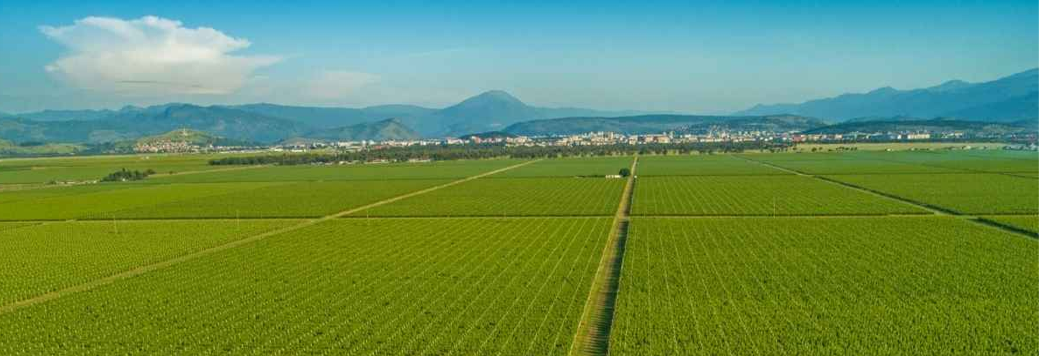
Plantaže 13. Jul Winery, Montenegro
-
Tasting Overview
This tasting explores the wines available for exportation from Montenegro’s Lake Skadar/Podgorica wine country and Morocco’s Atlantic-influenced vineyards.
Type of tasting: open
Presenters: Ginger Smart, Ruth Connolly, Michelle Fryer
Participants: TBA
These are the wines:
- Raspopovic Winery, ‘Vranac Barrique’, Podgorica, Montenegro, 2018.
- Domaine des Ouled Thaleb Imperiale, Zenata, Morocco, 2022
- Domaine des Ouled Thaleb, ‘Syrocco’ Syrah, Zenata, Morocco, 2023
- Plantaze, ‘Pro Corde’ Vranac Reserve, Podgorica, Montenegro, 2021
The Menu
- Prosciutto with sheep cheese and fig
- Pasta with tomato-based meat ragu
- Lamb chops with brown sauce and potatoes
- Dessert, coffee and tea
-
Montenegro
A Long, Interrupted History
The vine has been grown on Montenegro’s coast and around Lake Skadar since antiquity. Illyrians, Greeks and Romans all made wine here, and a 4th-century BC necropolis at Budva shows wine was already a valued trade good. Ottoman rule destroyed many vineyards. Under Prince (later King) Nikola I (1860–1918) winemaking was partly restored, and the wines of Crmnica, on the shore of Lake Skadar, won prizes in London (1907) and Belgrade (1928). Phylloxera then devastated the vineyards. Before it struck, the grape Kratošija made up about 90% of plantings; but replanting favored its offspring–Vranac.
Plantaže and the Modern Industry
In 1959 Montenegro had only about 1,010 ha of vines. The turning point was the founding of the state company Plantaže in 1963, which added 226 ha of vines, and produced 3,200 hectoliters of wine and 170 hectoliters of grape brandy. Over the next two decades, Plantaže expanded slowly to 377 ha; however, it was not until the implementation of the Ćemovsko Polje project, Europe’s largest viticultural project at the time, that the company entered its most significant development phase. Between 1977-1982, Plantaže cleared the stony, sunbaked Ćemovsko Polje plain south of Podgorica and planted a single block of over 2000 ha of grape vines–establishing a reliable base for Vranac (which comprises about 70% of the vineyards) and laying the foundation for the company’s future growth. Today, with over 11 million vines, harvests of about 18 million kg of grapes, sales of roughly 14 million bottles a year, and exports to more than 40 countries, Plantaže accounts for about 80% of Montenegrin wine production and is one of the largest producers of grapes, wine, and grape brandy in Europe.
Plantaže has two wine cellars with a total capacity of 33 million liters. The “Old (original) Cellar” has a capacity of 5 million liters and serves as the starting point for the production of premium wines. Šipčanik — located in a former military facility, in the heart of the vineyard and at a depth of more than 30 meters, currently holds more than two million liters of wine for aging. Since 2000 a wave of small, private family wineries—Raspopović among them—has added diversity, along with wine tourism around Podgorica, Crmnica, and the coast.
Regions and Scale
By global standards, Montenegro’s wine industry is small (approx. 2,581 ha of vines). The native variety Vranac, is planted on approximately 51% of total vineyard area and provides a distinctive national identity and an export calling card; Chardonnay and Cardinal follow with 12% and 5%. A 2017 government decision, aligned with EU rules, defines four wine regions and 15 sub-regions. Nonetheless, unlike Morocco’s formal AOG/AOC system, Montenegro’s system does not establish a comparable detailed appellation framework; regional descriptions are therefore used rather than unverified appellation claims.
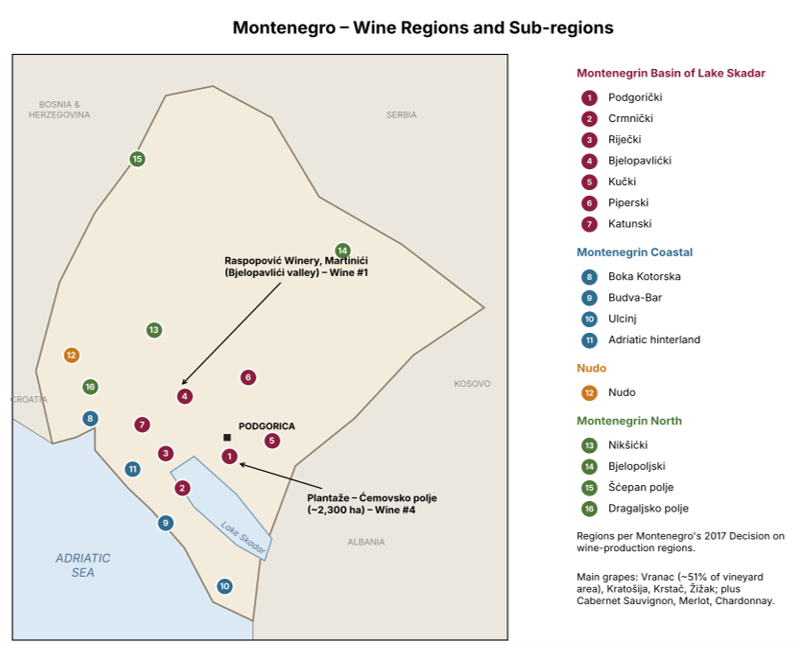
The Skadar Lake Basin is not just a wine region; it is the foundation of Montenegro’s wine culture. With nearly 92% of grape producers and 99.54% of total vineyard area in the country concentrated here, it is the primary area for viticulture and winemaking. The Skadar Lake Basin Region lies in the warmer southern and central parts of the country and stretches into Albania. The climate is Mediterranean (between 12.1 °C – 16.5 °C) near the coast and lake, with mountain influences inland. Warm, sunny growing seasons help Vranac ripen fully, while the relatively flat altitude (up to 100 meters) and local site conditions affect acidity, tannin and aromatic freshness. According to the viticulture registry, grape producers in the Podgorica subregion account for 57% of all registered producers in the country and 95% (2,497 ha) of all vineyards. Of these, 2,350 ha belong to Plantaze.
Grape Varietals
Vranac (“strong black” / “black stallion”) is Montenegro’s signature red and its most planted grape. DNA work shows it is a cross of Kratošija and Duljenga. The vine is vigorous and productive, with medium-compact clusters of thin-skinned, deeply colored blue-black berries. It ripens late and likes sunny sites and warm, well-drained soils. Its wines are deep ruby to purple, full-bodied, high in alcohol and tannin with fresh acidity, and taste of blackberry, black cherry, blueberry and dried spice, picking up chocolate and coffee notes from oak.
Kratošija – Montenegro’s oldest grape and the dominant variety before phylloxera. It is genetically the same as Croatia’s Tribidrag, Italy’s Primitivo and California’s Zinfandel. Krstač is the leading native white, giving pale, floral wines with citrus and green-apple notes, and now also used to make sparkling wine. Žižak, Bioka and Čubrica are other rare native varieties. International grapes include Cabernet Sauvignon, Merlot, Marselan (grown at Raspopović), Chardonnay, Sauvignon Blanc.
Relevance to Today’s Wines
The wines in this tasting are both Vranac reds: Raspopovic’s Barrique and Plantaže’s Pro Corde Reserve. Both wines are dry red wines, 100% Vranac, and originate in the Lake Skadar Valley: Plantaže from Ćemovsko polje (Podgorica sub-region) and Raspopović from the Bjelopavlići valley, about 18 km northwest of Podgorica. The climate is a mix of Mediterranean and continental. The Adriatic and the lake moderate winters, but summers around Podgorica are among the hottest in the Balkans, and soils are largely calcareous, stony and well-drained. These are ideal conditions for the late-ripening Vranac, which accumulates high sugar (and therefore high alcohol) while keeping firm tannins and fresh acidity which give deep-colored, full-bodied wines that take well to oak and bottle ageing.
-
Morocco

From Antiquity to the Protectorate
Grape growing in Morocco is usually credited to Phoenician traders around 1,000 BC, and vine remains have been found at the Roman city of Volubilis near Meknès. After the arrival of Islam in the 7th century, wine production declined but never fully disappeared. The modern industry is a colonial creation. Under the French protectorate (1912–1956), settlers planted vineyards on a large scale, mainly to supply high-color, high-alcohol blending wine to France. By independence in 1956 Morocco had about 55,000 ha of vines, and in the 1950s output exceeded 3 million hectoliters a year.
Collapse and Revival
Independence removed both the French winemakers and their market. In 1967, France ended Morocco’s duty-free quota of one million hectoliters and exports collapsed. The state took over the vineyards in the 1970s, and fixed grape prices that ignored quality, which made things worse. Many vineyards were replaced with cereals. The turnaround came in the 1990s, when King Hassan II – a graduate of the University of Bordeaux and friend of several producers there – opened state-owned vineyards to long-term leases. Renewed investment by the French and local families such as the Znibers (Celliers de Meknès, Château Roslane) brought capital and technical expertise, which helped establish quality-focused production and restart the industry.
Regions and Appellations (AOG and AOC)
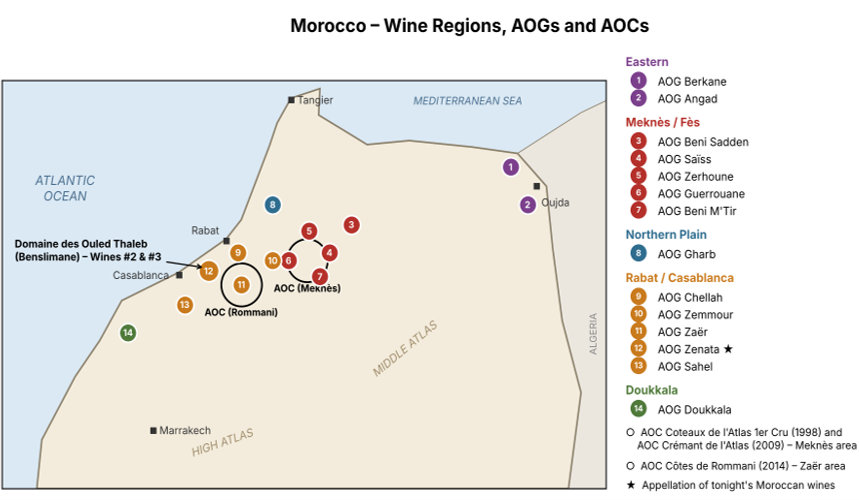 With its high mountains (Atlas) and maritime influence, Morocco is a great area for growing grapes. The country’s main wine-growing areas extend from the Atlantic-facing plains near Rabat and Casablanca to the inland Meknès–Fès area, the foothills of the Atlas, and eastern districts. Morocco’s appellation system dates from 1977. The country is divided into five main wine regions containing 14 Appellations d’Origine Garantie (AOG), the basic tier that guarantees origin and minimum production standards. Above the AOGs sit three Appellations d’Origine Contrôlée (AOC) with stricter rules on terroir, varieties and winemaking.
Industry and Scale
Morocco has about 42,000 ha of vineyards, but most are table grapes; only around 10,000–11,000 ha are wine grapes. Since 2000, the industry is slowly regaining some of its splendor and is back to producing 43 million bottles a year, making Morocco Africa’s second-largest producer after South Africa. The industry is highly concentrated: Celliers de Meknès is reported to make about 85% of the country’s wine, and Thalvin (which runs Domaine des Ouled Thaleb) produces around 8 million bottles. Only about 1.5% is exported; most wine is drunk locally, by tourists and in hotels and restaurants.
Grape Varietals
Red grapes are central to Moroccan wine production and make up more than 75% of output. Common varieties include Carignan, Cinsault, Grenache, Syrah, Cabernet Sauvignon and Merlot, with Tempranillo also present. These varieties produce styles from fresh, fruit-forward blends to structured, oak-aged reds. The two Moroccan wines in this tasting show the use of international varieties: a Cabernet Sauvignon–Grenache blend and a varietal Syrah.
Rosé is another recognizable Moroccan style. Pale “vin gris” represents approximately 25% of total production and is typically made from red grapes with very brief skin contact, yielding a light pink or salmon hue and delicate fruit. White wines are made in smaller quantities (only 3% of total production) and may include Chardonnay, Sauvignon Blanc and other Mediterranean or international varieties.
Relevance to Today’s Wines
Both Moroccan wines come from the AOG Zenata, in the Benslimane area between Casablanca and Rabat. The Atlantic is the decisive influence. Cool ocean winds lower the afternoon and night temperatures, so these reds keep more acidity and freshness than wines from further inland. Rainfall is low (roughly 200–400 mm, mostly in winter), and the dry summers mean little disease pressure, which makes organic farming practical. Soils are mainly sandy clay-marl known locally as tirs, over limestone and gravelly sand; the free-draining gravels have been compared to the Médoc.
-
Information on the Wines
Wine #1. Raspopovic Winery, VRANAC Barrique, Podgorica, Montenegro, 2018.
The Producer: Vinarija Raspopović is a small family winery in the village of Martinići, in the Montenegrin basin of Lake Skadar. The property has been the Raspopović family’s country home for more than 200 years, and the winery opened in December 2013. The family grows more than 5,000 vines of Vranac, Kratošija, Marselan and Cabernet Sauvignon. Its philosophy is deliberately traditional and local—local people, local grape varieties and local values. The wines are imported to the U.S. by LAV Imports.
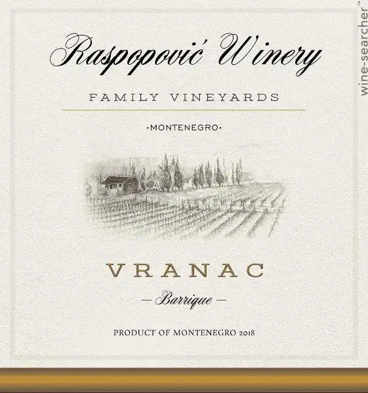 The wine:
- Year – Vintage: 2018.
- Composition: 100% Vranac.
- Viticulture: Estate-grown Vranac from the family vineyard in the Bjelopavlići valley, where calcareous soils and a hot Mediterranean–continental climate ripen this late-maturing grape fully.
- Fermentation / vinification: Vranac Barrique is a dry red wine, made from 100% Vranac in a traditional style without the use of herbicides.
- Aging: Matured for more than a year in Slavonian oak barrels (hence “Barrique”).
- Alcohol by volume: 12.1%.
Tasting notes / winemaker notes: Multi-layered aromas of black fruit, blackcurrant and blackberry. The palate is concentrated with well-integrated oak and an intense, persistent finish.
Pairing: Pairs with steak, roast lamb, game, duck or goose, spiced goulash, grilled tuna and aged hard cheeses.
Wine #2. Domaine des Ouled Thaleb, Imperiale, Zenata, Morocco, 2022
The Producer: Domaine des Ouled Thaled is 50km northeast of Casablanca in the region of Benslimane, AOG Zeneta. It is Morocco’s oldest winery still in use. The terroir has 2,500 years of winemaking history; Belgian investors planted the estate in 1923, and the first harvest was in 1926–27, so it celebrated its centenary in 2023. The Domaine, run by the company Thalvin, has about 220 ha of vines within a much larger farm. It also buys grapes from more than 20 contracted growers in Meknès, Gharb, Boulaouane and Marrakech. Syrah is its leading red grape. French winemaker Stéphane Mariot has run the cellar since 2010, and the estate has worked with Rhône winemaker Alain Graillot since the early 2000s. The estate produces elegant wines with structure and great freshness. The vines are gobelet trained to protect from the heat. Although the temperatures are high during the day, the Atlantic Ocean provides a cooling breeze and it is much cooler than in Meknes (which is further inland), with lower temperature at night. Thalvin was created in 1968 to manage the Ouled Thaleb winery and today covers over 500 hectares. It works on a cooperative model and is operated by a Berber tribe.
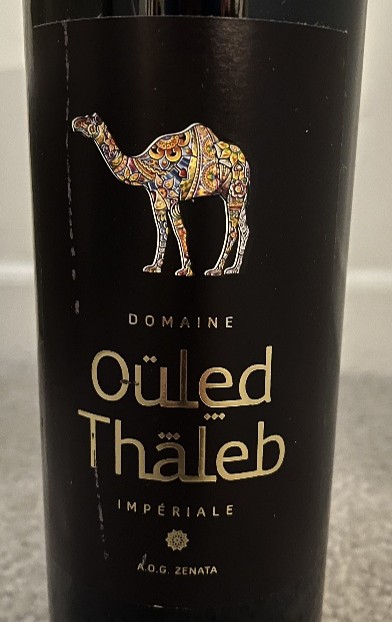 The wine:
- Vintage: 2022.
- Region/appellation: AOG Zenata
- Composition: Blend 70% Cabernet Sauvignon and 30% Grenache
- Viticulture: Grapes from the estate’s Zenata vineyards grown on red clay soils known locally as “tirs”. The vines are bush-trained (gobelet) against the heat and cooled by Atlantic breezes. Sustainable farming.
- Vinification: Traditional red vinification.
- Aging: Matured in French oak barrels, about one-third new, then given further bottle ageing in the Domaine’s cellar before release.
- Alcohol by volume: 12.5%
Tasting notes / winemaker notes: Ruby red with a purple sheen. Nose of blackcurrant, blackberry and coffee/mocha. The palate is full and spicy, with plenty of dark fruit, firm but rounded tannins and a long finish. Importer note: soft tannins, black cherry, cassis and subtle spice with a juicy finish.
Pairing: A versatile partner for grilled lamb, beef, tomato-based dishes or semi-hard cheeses.
Wine #3. Domaine des Ouled Thaleb, ‘Syrocco’ Syrah, Zenata, Morocco, 2023
The wine: From the same producer Domain des Ouled Thaleb, Syrocco, named after the winds that originate in the Sahara Desert, is the brainchild of superstar Alain Graillot of Crozes-Hermitage (Northern Rhône, France). The idea of Syrocco was born by accident. Some 40 years ago, Graillot and his wife were cycling on holiday in Morocco, when he realized that the Zenata terroir mirrored his own vineyards in the Northern Rhone. Graillot subsequently entered into partnership with Thalvin, which manages the Ouled Thaleb Winery. The fanciful label, which depicts Alain and his wife riding a bicycle, ties into his story of discovering the land while vacationing. Since his death in 2022 the project has been continued by his sons Maxime and Antoine. Syrocco is widely regarded as Morocco’s benchmark Syrah and is a perennial retailer “staff pick” in the U.S.
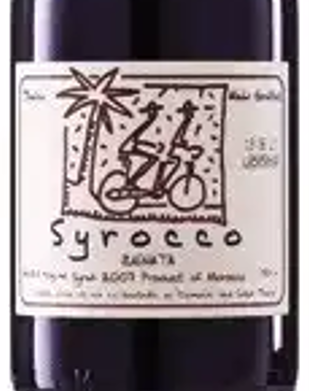 The wine:
- Vintage: 2023;
- Region/appellation: AOG Zenata
- Composition: 100% Syrah, Medium/full bodied.
- Viticulture: Certified organic, old-vine Syrah (25+ years) from selected parcels in Zenata on the Atlantic coast between Casablanca and Rabat. Soils are sandy shale and gravel, and cold Atlantic winds create a cool microclimate with warm days and cool nights. Grown without synthetic pesticides, fertilizers or herbicides.
- Fermentation: made in a Northern Rhône, Old-World style with soft, moderate extraction; fermented in concrete tanks to preserve fruit and terroir character.
- Aging: 15 months in large, older barrels (used François Frères Burgundy casks), so the oak frames rather than flavors the wine.
- Alcohol by volume: About 13.5%.
Tasting notes: Ripe blackberry, dark cherry and dried red cherry with hints of sandalwood, herbs, white pepper and spice. Balanced acidity, fine tannins and a dry, persistent finish in classic Mediterranean-Syrah style. A fruit-forward but elegant red.
Winemaker notes: The 2023 Syrocco is black-ruby in color with a compelling nose featuring complex aromatics and excellent balance. Lots of ripe purple-black fruits and dried red cherry swathed in hints of sandalwood, herbs, and spices. The long finish is dry and reminiscent of classic Mediterranean Syrah. It’s an excellent medium to full-bodied wine for a rich, wintry braise. Fruit forward, yet with classic Old World style.
Pairing: Ideal with braised beef, lamb, mushrooms or other rich winter dishes.
Wine #4: Plantaže, ‘Pro Corde’ Vranac Reserve, Podgorica, Montenegro, 2021
The Producer: Plantaže, founded in 1963 and based in Podgorica, is Montenegro’s largest wine producer and one of the biggest in the Balkans. It is a joint-stock company with majority state ownership, listed on the Montenegro Stock Exchange. Its showpiece Šipčanik cellar, a former military underground hangar, is now a major wine-tourism attraction.
The wine: “Pro Corde” is Latin for “for the heart.” The wine grew out of a collaboration begun in 1986, with French viticulture researcher Michel Bourzeix, and inspired by Serge Renaud’s “French paradox” — research linking moderate red-wine drinking to lower heart disease. After about seven years of trials, Plantaže developed a vinification technique that raises the natural content of procyanidins–grape polyphenols associated with vascular health. The wine was launched in 1993 as “Za srce” (“For the heart”), with no additives and is only produced during favorable harvests. Later research by Prof. Roger Corder (Nature, 2006) found procyanidins to be the key heart-protective compounds in red wine.
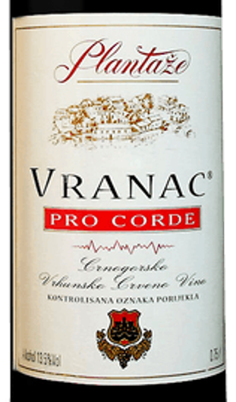 The wine:
- Vintage: 2021 (250,000 cases)
- Region/appellation: Vranac Controlled origin/Lake Skadar Valley.
- Composition: 100% Vranac
- Viticulture: Estate Vranac from Plantaže’s Ćemovsko polje (Podgorica sub-region)—a flat, sunny, stony plain with hot summers moderated by Lake Skadar and the Adriatic. Hand-harvested in September.
- Fermentation/vinification: Traditional maceration and fermentation, plus Plantaže’s special process designed to extract and concentrate procyanidins from the skins and seeds.
- Aging: Three years total: about 35% in French oak barrels and 65% in stainless steel tanks.
- Alcohol by volume: 14%.
- Tasting notes / winemaker notes: Dry, robust, full-bodied red with high tannins, smoky notes, and aromas of blackberry and black fruit, dried fruit, discreet aromatic herbs and coffee. The finish is intense, long, and offers a pleasant mild bitterness like Primitivo. Serve at 15–18 °C.
- Pairing: Pairs best with rich, savory, and protein-heavy dishes that can match its concentration and soften its tannins, including: red meats; lamb and game; barbecue and smoked meats; braised and slow cooked dishes; aged cheeses and Balkan specialties such as grilled minced-meat rolls ćevapi or rich meat-and-tomato pasta ragù
- Critical acclaim/awards: 95 points + Gold medal – Decanter World Wine Awards 2025 (2021 varietal); Grand Trophy (Best Wine of the Balkans) + Best Red Wine of the Balkans + Double Gold – Balkans International Wine Competition 2025; Gold – Mundus Vini. One of the most decorated Montenegrin wines of recent years.
5. Club del Vino Palate: How Members Rated the Wines
It will be presented after the tasting
6. References:
https://en.wikipedia.org/wiki/Moroccan_wine
https://www.moroccoworldnews.com/2024/12/367107/
https://www.winewithseth.com/winewiki/casablanca-benslimane-wine-region/
https://www.winewithseth.com/winewiki/alain-graillot-ait-souala-moroccos-rhone-inspired-renaissance/
https://www.lavieeco.com/au-royaume/domaine-ouled-thaleb-100-ans-deja/
https://theonlinesommelier.nl/product/domaine-ouled-thaleb-imperiale-red/
https://skurnik.com/sku/syrah-du-morocco-syrocco-thalvin-alain-graillot-3-2-2-2-2-2-2-2-2-2
https://perrineswine.com/products/2023-alain-graillot-syrocco-syrah-zenata-morocco
https://astorwines.com/item/34617
https://en.wikipedia.org/wiki/Montenegrin_wine
https://en.wikipedia.org/wiki/Vranac
https://en.wikipedia.org/wiki/Plantaže
https://magazine.wein.plus/wine-between-the-adriatic-and-the-black-mountains-wine-flight-montenegro
https://www.lavimports.com/raspopovic-winery/
https://www.plantaze.com/?p=6498
https://vreme.com/mozaik/vino-srca/
.o0o.
Laughing matter:

.o0o.


