

Tasting No 290 – June 30, 2026
Wines of Greece and Cyprus: A Historical and Contemporary Overview
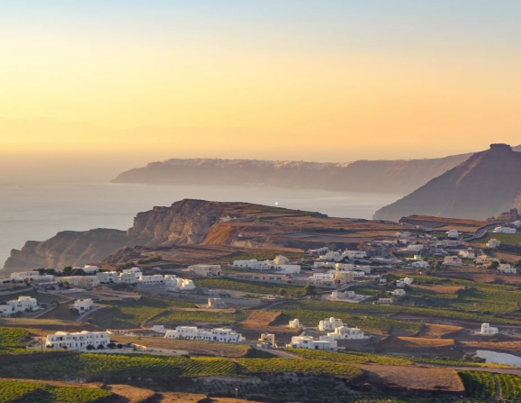
-
Tasting Overview
For more than 5,000 years, the wine cultures of Greece and Cyprus have evolved side by side, helping shape the history of Mediterranean viticulture. This tasting explores their shared heritage through five emblematic indigenous wines. Assyrtiko and Xynisteri reveal the freshness, vitality and regional distinctiveness of Aegean and Cypriot white wines, while Xinomavro and Maratheftiko highlight the complexity, structure and character of two notable native red varieties. The journey concludes with Commandaria, Cyprus’s historic sweet wine and the world’s oldest continuously produced named wine. Together, these selections trace a path from antiquity to the present, showcasing the revival of indigenous grape varieties, terroir-driven winemaking, and the ongoing renaissance of two of the world’s oldest and most enduring wine cultures.
♦ Presenters: Cristian Santelices, Jorge Claro y Luis Uechi
♦ Participants: S. Ardila; R. Arroio; J. Brakarz; J. Claro; R. Connolly; Y. Cutler; C. Estrada; C. Falconi; M. Fryer; G. García; E and N. Gochicoa; R. Gutierrez; J. Leon; N. Marzella; O. Mason; A. and C. Perazza; J. Redwood; G. Smart; L. Uechi; and G. Zincke.
These are the wines:
- Gavalas ‘Santorini’ Assyrtiko, Santorini PDO, 2024 (Greece)
- Makarounas ‘Aerides’ Xynisteri, Paphos PGI, 2024 (Cyprus)
- Alpha Estate, ‘Hedgehog Vineyard’ Xinomavro, Amyndeon PDO, 2022 (Greece)
- Zambartas, Maratheftiko, Limassol PGI, 2023 (Cyprus)
- Keo St John Commandaria – PDO (Fortified dessert wine, Cyprus).
The Menu
- Greek style salad
- Linguine with calamari
- Grilled lamb chops w/brown sauce and vegetables
- Dessert, coffee and tea.
-
A Historical and Contemporary Overview
The Mediterranean region is central to understanding the origins and development of modern civilization. Often regarded as the “cradle of Western civilization”, it was home to some of humanity’s earliest and most influential societies, including those of the Fertile Crescent, where settled agriculture first emerged. Among its most enduring cultural achievements is wine, a beverage that has accompanied humanity for thousands of years and has played a vital role in religion, trade, agriculture, and social life. Few countries illustrate this heritage more clearly than Greece and Cyprus, whose intertwined wine histories span more than four millennia and represent one of the world’s oldest continuous viticultural traditions.
The origins of wine. Archaeological evidence indicates that the earliest known winemaking took place more than 8,000 years ago in present-day Georgia before spreading throughout Mesopotamia, the Near East and across the Mediterranean, reaching Cyprus, Greece, and other regions. Early peoples discovered that wild grapevines (Vitis vinifera-sylvestris), native to the region stretching from the Caucasus to the Fertile Crescent, could be fermented into an intoxicating beverage. The deliberate production of wine required innovation so, over time, the various ancient civilizations gradually refined the process turning it into an art form that has stood the test of time. As trade networks expanded, grape cultivation spread across Europe, Asia, and North Africa, giving rise to diverse grape varieties and regional winemaking traditions that shaped the wines we know today (see Map of trade networks for details).
Without modern technologies such as stainless steel tanks, temperature control, or advanced filtration, early winemakers relied on natural, minimal-intervention methods. Grapes were harvested by hand and often crushed by foot, while ambient wild yeasts present on grape skins initiated spontaneous fermentation in clay jars, stone basins, or wooden vessels. Wines were commonly stored in containers sealed with resin or wax to aid preservation and were sometimes infused with herbs, honey, or spices to enhance their flavor. While wine in ancient Egyptian and Persian societies was typically reserved for religious ceremonies and elite banquets, the Greeks and Romans incorporated it into everyday life, often diluting it with water before consumption.
Ancient wine’s legacy in modern winemaking. Although modern technology has transformed wine production, many primordial methods survive today. Amphora fermentation, minimal-intervention practices, and Georgia’s qvevri tradition continue to heavily influence contemporary boutique wine producers around the world. These enduring techniques remind us that wine is not merely an agricultural product but also a living connection to history, culture, and human ingenuity.
The intertwined wine histories of Greece and Cyprus.
The history of wine is not a collection of isolated stories, but a grand mosaic assembled across the Mediterranean. Nowhere is this truer than in Greece and Cyprus, whose wine worlds are among the most closely intertwined. Rather than developing independently, the two regions evolved through centuries of maritime trade, cultural exchange, religious connections, and shared viticultural and winemaking knowledge. Together, they represent one of the world’s oldest continuous wine civilizations.
Ancient Eastern Mediterranean foundations. This relationship dates back over 4,000 years. Archaeological evidence shows organized wine production in Cyprus by 2000 BCE, coinciding with the period in which the Minoan and Mycenaean civilizations were developing sophisticated agricultural systems and viticultural practices (what we now recognize as the foundations of Greek wine culture), as well as maritime trade networks in the Aegean. Strategically positioned between Greece, the Levant, and Egypt, Cyprus became a pivotal commercial intermediary, facilitating the exchange of goods, technologies (e.g. ceramic amphorae production technology used in transport and storage of wine), and winemaking knowledge.
Wine, ritual, and the Greek world. By the late Bronze Age and early Iron Age (c. 1100 BCE), sustained maritime contact had linked Cypriot and Greek societies, and by the 8th century BCE, wine was central to Greek ritual, philosophy, and social life. Cypriot sweet wines called Nama were highly esteemed—praised by authors like Hesiod and Euripides—and are considered precursors to modern Commandaria.
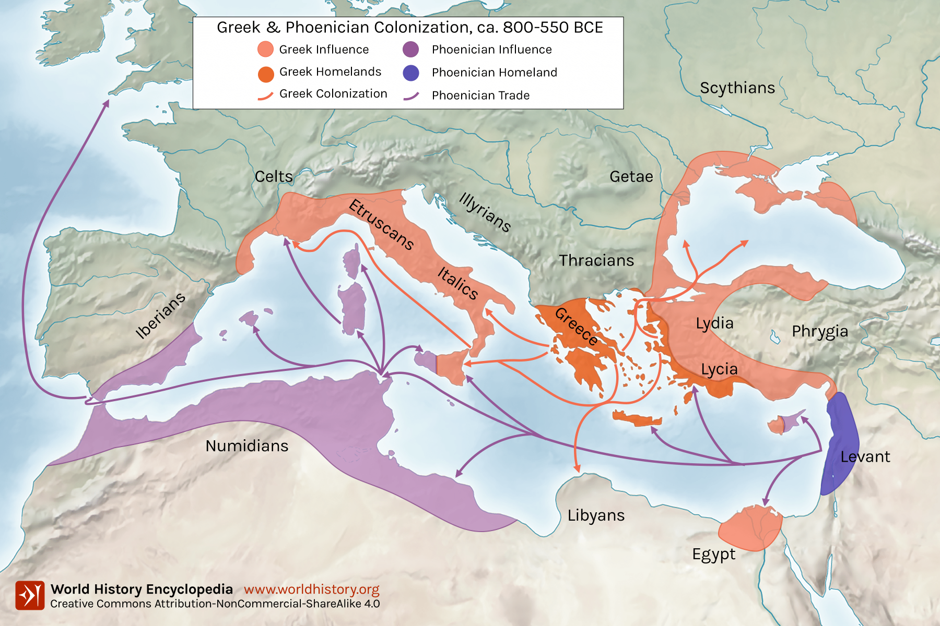
Greek colonization between the 8th and 4th centuries BCE further strengthened cultural ties between Greece and Cyprus, embedding Greek language, religion, and customs into Cypriot society. Wine played a central role in this exchange, particularly through the cult of Dionysus—the god of wine, fertility, and celebration—and the symposium, an elite gathering where wine accompanied poetry, philosophical discussion, and social bonding.
Empires, Christianity, and continuity. After Alexander the Great’s conquests, Cyprus became fully integrated into the Hellenistic world, participating in a large, organized maritime wine trade exemplified by the Kyrenia shipwreck loaded with amphorae. Under the Roman and Byzantine empires, Christianity strengthened wine’s religious and economic importance, with monasteries preserving vineyards and indigenous grapes through centuries of instability. Throughout these eras, wine served as both a major trade commodity and a symbol of cultural continuity linking Greeks and Cypriots. Cyprus became especially known for its concentrated, long‑lasting sweet wines, prized across the Mediterranean for their stability and suitability for long‑distance transport.
Commandaria and the Medieval Mediterranean. In 1191 King Richard I of England conquered Cyprus while on route to the Holy Land and famously praised its sweet wine as “the wine of kings and the king of wines.” Under Venetian rule in the 15th and 16th centuries, this wine was rebranded as Commandaria, named after the crusader commandery at Kolossi Castle, and became one of Europe’s most sought-after luxury exports. While uniquely Cypriot, its production closely mirrored the ancient Greek liastos technique of sun-drying grapes. Wine production declined significantly after Cyprus and Greece were incorporated into the Ottoman Empire from the 15th century onward, due to heavy taxation and restrictions on alcohol consumption.Despite this obstacle, isolated villages and resilient Orthodox monasteries successfully preserved these viticultural traditions.
Indigenous grapes and a modern renaissance. Greece and Cyprus share deep genetic and cultural ties in their grape varieties. Cypriot Mavro shares ancestral roots with the Greek Mavroudi, while Cyprus white variety Xynisteri shows stylistic and structural parallels to Greek Aegean whites like Assyrtiko. Both countries are now experiencing a quality focused renaissance centered on indigenous grapes, terroir expression, and lower yields and terroir-driven winemaking.
Greece has gained international recognition for grapes such as Assyrtiko and Xinomavro, while Cyprus holds a unique advantage: its vineyards remain phylloxera free, allowing ancient, ungrafted vines to survive on original rootstocks. Modern producers in both regions are reviving historic varieties and adapting them to climate challenges, continuing one of the world’s oldest continuous wine cultures. Modern Greek and Cypriot wines are undergoing a major revival driven by improved viticulture and winemaking, renewed interest in regional identity, and collaboration between producers. Winemakers are focusing on indigenous grape varieties that naturally withstand hot, dry climates and climate‑change pressures. Rather than creating something new, this movement represents a modern continuation of ancient traditions, helping preserve one of the world’s oldest interconnected viticultural civilizations.
-
Contemporary wines of Greece and Cyprus
Today, both countries are experiencing a remarkable wine renaissance driven by technological modernization and a new generation of producers. From the volcanic vineyards of the Aegean to the sun-drenched mountains of Cyprus, winemakers are transforming these ancient landscapes into some of the modern wine world’s most compelling destinations. The indigenous grape varieties form the foundation of both countries’ wine industries, while international grapes remain limited to blending roles.
Today, the wines of Greece and Cyprus compete confidently on the world stage while offering distinctive expressions rooted in indigenous grape varieties, unique terroirs, and uninterrupted viticultural traditions. What makes these wines particularly compelling is their profound sense of place: saline whites shaped by volcanic islands, mountain-grown reds infused with herbal and earthy complexity, and sweet wines whose origins stretch back to antiquity. As a result, Greece and Cyprus are among the world’s most exciting wine regions, offering authenticity, originality, and a living connection to one of humanity’s oldest wine cultures.\

Hellenic Republic (Greece)
Greece’s wine industry is defined by its exceptional diversity, with over 300 indigenous grape varieties spread across volcanic islands, mountains, and varied terroirs. About 90% of its 64,000 hectares of vineyards are planted with native grapes. White wines make up 65% of production, led by Assyrtiko, Savatiano, Roditis, and Muscat of Hamburg, while key red varieties include Xinomavro, Agiorgitiko, and Liatiko.
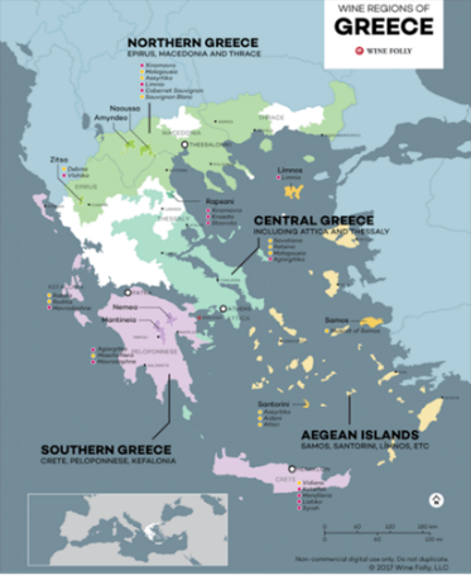
Although small globally, Greece produces 1.5–2.5 million hectoliters annually and is increasingly focused on premium, terroir‑driven wines—especially from Assyrtiko, Xinomavro, and Agiorgitiko. Most Greek wine (~90%) is consumed domestically, so exports remain limited, representing only 0.3% of global wine exports. Of Greece’s roughly 1,500 wineries, about 200 export, with the EU accounting for 55% of export value and the U.S., Canada, and the U.K. serving as key growth markets.
Wine quality is regulated under the EU’s PDO (Protected Designation of Origin) and PGI (Protected Geographical Indication) systems. Greece’s 33-PDO zones represent its historical, high-quality appellations, which mandate the use of native grapes. Although overall production has declined in recent years due to vineyard abandonment and climate pressures, the proportion of PDO- and PGI-designated wines continues to rise, currently accounting for roughly 37% of total wine production (see previous blogs for more details).
Republic of Cyprus
Cyprus and Greece share deep cultural, religious, linguistic, and historical ties. Approximately 78% of Cyprus’s population of 1.1 million is Greek Cypriot, and the majority adheres to the Greek Orthodox faith. Despite these close connections, Cyprus has always remained a distinct political entity and has never been part of the modern Greek state. Since 1974, the island has been divided between the internationally recognized Republic of Cyprus in the south and the Turkish-controlled north, separated by a United Nations buffer zone known as the Green Line. The division followed a coup aimed at unification with Greece and a subsequent Turkish military intervention. The self-declared Turkish Republic of Northern Cyprus, established in 1983, is recognized only by Turkey. Greek and Turkish are the island’s official languages, and strong educational and cultural exchanges continue between Cyprus and Greece, including the attendance of many Cypriot students at Greek universities. Cyprus remained under Ottoman rule for more than three centuries before becoming a British colony in 1914, gaining independence in 1960, and joining the EU in 2004. Today, Cyprus combines Mediterranean traditions, European institutions, and a resilient national identity that continues to shape its culture, cuisine, and wine.
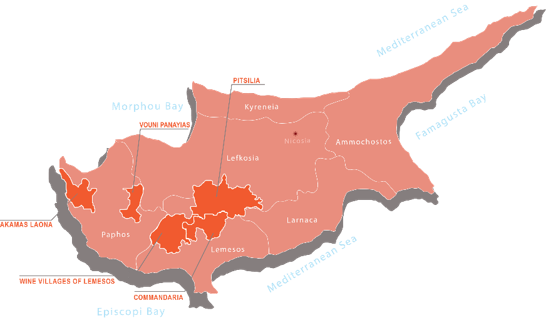
Cyprus wine production. Cyprus’s 5,000‑year wine tradition has undergone a major modern revival after a long period of decline in the 20th century. Vineyard area has shrunk to about 7,000 hectares, but nearly 90% is now planted with indigenous grapes, and around 50 small wineries are leading a shift from bulk production to premium, terroir‑driven wines. The country’s wine renaissance is driven by several factors: i) a focus on quality over quantity, ii) renewed commitment to native, phylloxera‑free varieties, iii) high‑altitude viticulture (400–1,500 m), iv) ungrafted old vines, providing pure expressions of terroir; and v) experimental winemaking, blending ancient techniques (amphora, foot‑treading, skin contact) with modern minimal‑intervention winemaking.
Cyprus produces about 108,000 hectoliters (14.4 million bottles) annually, with 55–60% white and rosé and 40–45% red. Key indigenous grapes include Xynisteri, Promara, and Spourtiko for whites, and Maratheftiko, Mavro, and Yiannoudi for reds. Xynisteri and Mavro dominate plantings and are central to producing Commandaria, the island’s iconic fortified sweet wine.
Cyprus’s modern wine classification system, created in 2007 under EU regulation and the Cypriot Wine Products Council, includes 7 PDO zones and 4 broader PGI regions. The PDOs highlight the island’s most distinctive terroirs: Commandaria (historic sweet wine from 14 villages in the Troodos Mountains); Krasochoria Lemesou with its two sub‑zones Afames and Laona; Laona‑Akamas in northwest Paphos; Vouni Panayia‑Ampelitis in the high western mountains; and Pitsilia across the Madari–Papoutsa–Macheras peaks. The PGI regions correspond to the island’s administrative districts – Nicosia, Limassol, Larnaca, and Paphos – requiring at least 85% of grapes to come from the named district.
Wine grapes for this tasting
The White Grapes. Assyrtiko and Xynisteri rank among the region’s most distinctive and resilient indigenous white grape varieties within the broader context of Eastern Mediterranean viticulture. Both boast rare, ungrafted roots untouched by Phylloxera and both evolved under intense sunlight, limited rainfall, strong maritime influences, and rugged island landscapes, enabling them to retain freshness and balance despite extreme heat. Assyrtiko, cultivated primarily on Santorini, is renowned for its striking acidity, saline minerality, and aging potential. Its wines typically exhibit citrus, stone, smoke, and sea-spray characteristics shaped by the island’s volcanic soils and maritime climate. Xynisteri, Cyprus’s flagship white grape, thrives in high-altitude vineyards and produces fresh, aromatic wines marked by citrus blossom, orchard fruit, herbal notes, and a softer, more approachable texture. Although stylistically distinct, both varieties exemplify the defining qualities of Eastern Mediterranean island viticulture: resilience to heat and drought, a strong expression of terroir, and a deep connection to regional history.
The Red Grapes: Xinomavro and Maratheftiko are two of the most compelling expressions of the contemporary indigenous wine renaissance in Greece and Cyprus. Both varieties nearly disappeared during the 20th century due to low yields and demanding viticultural characteristics but, today, are widely regarded as the flagship age-worthy red grapes of their respective countries that express strong regional identity. Xinomavro, grown mainly in northern Greece, is known for high acidity, firm tannins, and long aging potential, with complex aromas of red fruit, tomato leaf, olive, herbs, and spice. Maratheftiko, Cyprus’s premier red grape, produces deeper‑colored, more fruit‑driven wines with blackberry, plum, violet, and pepper notes. It grows best at higher elevations and offers richness and freshness. Unusually, Maratheftiko only possesses functionally female flowers and requires pollination from nearby grape varieties (e.g. Spourtiko) to achieve reliable fruit set. As a result, the variety is difficult to cultivate and prone to low, unpredictable yields, but improved vineyard management and a better understanding of pollination and millerandage have since enabled its revival.
Once underappreciated and at risk of extinction, both grapes have become symbols of indigenous grape preservation and the growing international recognition of Eastern Mediterranean wines.
Commandaria wine: This wine is crafted exclusively from Cyprus’s indigenous Xynisteri and Mavro grape varieties grown within the Commandaria PDO, a designated region since 1973 comprising 14 specific villages on the southern foothills of the Troodos Mountains, where high‑altitude, terraced, unirrigated vineyards yield naturally low quantities of concentrated fruit. Annual production is small, typically 2,000–3,000 hectoliters. Commandaria is produced through a highly traditional method that is recognized by UNESCO as Intangible Cultural Heritage. It begins with overripening and sun‑drying Xynisteri and Mavro grapes, concentrating their sugars to very high levels. The slow, months‑long fermentation stops naturally at around 9.5% alcohol, after which the wine is fortified to 15–18% and aged in oak—often using the historic Manna (Solera‑style) system that blends younger wines with older reserves. The result is a richly sweet yet balanced wine with flavors of dried fruits, caramel, coffee, nuts, and warm spice. More than a dessert wine, Commandaria represents a living continuation of ancient Eastern Mediterranean winemaking and one of Cyprus’s most enduring cultural traditions.
-
Information on the Wines
Wine #1. Gavalas, ‘Santorini’, Santorini PDO, 2024
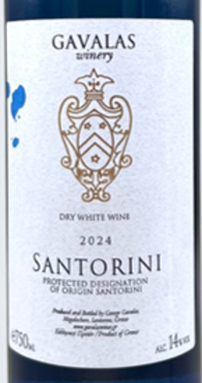 The producer: Based in the traditional village of Megalochori, Gavalas Winery pairs centuries of winemaking heritage with modern precision. From its founding until the 1920s, the family produced wine from its own vineyards to distribute locally and export to Alexandria, Egypt. By the 1930s, distribution expanded to Athens and Piraeus. In those early days, wine was transported from the island’s traditional kanavas (wine cellars) by mule in goatskin sacks, transferred into massive 600-kg barrels (called bombs) at the port of Fira, and shipped across the Aegean on small wooden boats (caiques). Today, with an annual production of approximately 80,000 bottles, Gavalas continues focusing on rare indigenous varieties that faithfully reflect Santorini’s distinctive character. Their portfolio features some of the island’s finest expressions of Assyrtiko, which accounts for approximately 70% of the winery’s 7.3 hectares vineyard within the Santorini PDO.
The wine: This spontaneously fermented white wine showcases the striking mineral intensity and vibrant acidity that define PDO Santorini wines. By letting the fruit and terroir to speak authentically, the natural fermentation process adds complexity and textural depth, beautifully reflecting both the pristine maritime influence of the Aegean and the Gavalas family’s commitment to expressing pure, unadulterated terroir in every bottle.
Vintage: 2024 Grape Variety: 100% Assyrtiko
Region/Appellation: Aegean Islands, Santorini PDO, Greece
Alcohol: 13,5% ABV
Viticulture: rooted in volcanic soils—composed of ash, pumice, lava, and basalt — the vines are cultivated using the traditional kouloura (basket) training method to protect them from fierce Aegean winds and intense summer sun.
Vinification: grapes are harvested from early to mid-August, and carefully placed in crates and baskets, never completely filled; after gentle pressing, only a portion of the juice (~25%) is selected and clarified at low temperatures before fermentation in stainless-steel tanks at approximately 18°C. Natural fermentation using indigenous yeasts.
Structure: Medium-bodied with a subtle creamy texture balanced by vibrant acidity and pronounced mineral character.
Tasting profile: A most distinctive, dry white wine, characterized by a pale yellow color. On the nose it displays delicate aromas of pear, lemon, pineapple, citrus blossom, and flinty minerality. On the palate, it is medium-bodied with a subtle creamy texture balanced by vibrant acidity and pronounced mineral character. Notes of citrus and orchard fruit are complemented by the saline freshness that has become a hallmark of Assyrtiko. The wine finishes long, crisp, and refreshing. It is best served chilled at 8-10°C. Its lively acidity and mineral backbone make it exceptionally versatile with food, pairing particularly well with seafood, sushi, fresh salads, goat cheese, or aromatic herb-forward dishes.
Wine #2. Makarounas, Aerides Xynisteri Pafos PGI, 2024
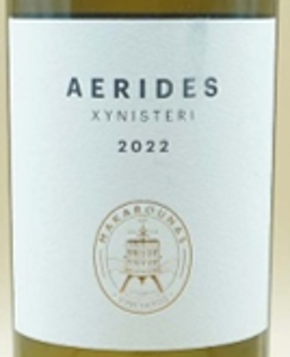 The producer: Founded in 2016 by Theodoros Makarounas after completing his studies in Viticulture and Enology at UC Davis, Makarounas Winery is a family-owned estate that has quickly become one of the leading voices in Cyprus’s modern wine renaissance. Located in the village of Letymbou, in the foothills of the Troodos Mountains within a region locals call the “Paphos vine-villages” due to its deeply rooted winemaking traditions. The family organically farms approximately 28 hectares of 100% ungrafted vineyards, primarily of indigenous Cypriot grape varieties—including Xynisteri, Maratheftiko, Spourtiko, Yiannoudi, Promara, and Vasilissa, planted on a complex mix of gypsum, limestone, and clay soils. Makarounas is one of the few wineries in Cyprus to produce wine exclusively from its privately owned estate vineyards, which allows complete control over vineyard management, and the production of highly distinctive, terroir-driven wines. They also supply high-quality fruit to several other notable Cypriot wineries.
The wine: While Xynisteri is often compared to Assyrtiko for its ability to retain freshness in warm climates, it offers a softer, more approachable profile characterized by elegance rather than power. The result is a balanced and highly drinkable wine that captures both the maritime influence and mountain freshness of western Cyprus. Organic, sustainable, and vegan.
Vintage: 2024
Grape Variety: 100% Xynisteri
Region/Appellation: Letymbou, Pafos– PGI, Cyprus
Viticulture: 100% ungrafted bush vines 20-90 years of age
Alcohol: 12% ABV
Winemaking: grapes undergo a short pre-fermentation maceration at low temperatures before spontaneous fermentation using indigenous yeasts in temperature-controlled stainless steel tanks. To build texture and complexity, the wine remains in contact with its fine lees for approximately 4 months, accompanied by twice-weekly battonage.
Structure: Xynisteri delivers a light-bodied profile defined by saline minerality and a citrus-driven tension that echoes both the power of Assyrtiko and the breezy ease of Vermentino.
Tasting profile: Characterized by a pale yellow in appearance, on the nose and palate this dry white wine is fresh, expressive, and beautifully balanced. It offers bright aromas of citrus and green apple, underpinned by subtle Mediterranean herbs and floral notes. Crisp and mineral-driven on the palate, combining bright acidity with a gentle saline character and a refined texture derived from extended lees contact, this elegant, refreshing vintage is highly versatile, pairing beautifully with fresh cheeses, a wide range of seafood dishes, and light Mediterranean cuisine.
Wine #3. Alpha Estate, ‘Hedgehog Vineyard’, Xinomavro, Amyndeon PDO, Greece, 2022
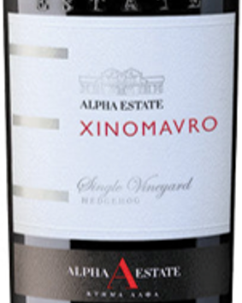 The producer: Founded in 1997 by viticulturist Makis Mavridis and chemist-oenologist Angelos Iatridis, Alpha Estate is one of Greece’s most respected wineries and a leading producer in the Amyndeon PDO of northwestern Macedonia. The estate manages approximately 220 hectares of vineyards situated between 620 and 710 meters above sea level. The vineyards feature a highly uniform topography with gentle, northwest-facing slopes of 5% to 15%. As one of Greece’s coolest wine regions, Amyndeon is characterized by a semi-continental climate. Cold, snowy winters naturally supply the soil with enough water to sustain the vines through dry summers. Two nearby lakes buffer extreme weather. The soil consists of low-fertility, well-draining sandy-clay loam. A distinct limestone subsoil contains traces of ancient lakes, which impart signature minerality to the wines. Combined with precise vineyard management, these conditions are well suited to Xinomavro and yield well-structured, balanced wines with complex aromas and excellent finesse.
To preserve the grapes’ optimal organoleptic properties, harvesting occurs during the coolest hours of the day, and the fruit is moved using specialized refrigerated transport. The winery’s architectural design utilizes gravity-fed processing to minimize physical stress on the raw materials. The facility is constructed entirely from inert, neutral materials, ensuring a pristine internal environment that completely protects the quality of the grapes, must, and wine throughout production.
The wine:
Vintage: 2022
Grape Variety: 100% Xinomavro
Region/Appellation: Macedonia, Amyndeon – PDO, Greece
Alcohol: 14% ABV
Viticulture: “Hedgehog” Single Vineyard (69 hectares) is located at 690 m elevation with northern exposure overlooking Lake Petron. Vines density of 5,900 per hectare, and controlled yields of 0.9-1.1 kilograms per vine to maximize concentration and balance.
Vinification and aging: Minimal intervention winemaking practices that prioritize sustainability. Hand-harvested in mid-September, followed by destemming, gentle crushing, and a period of cold maceration before fermentation at gradually increasing temperatures. The wine remains on its lees for 8 months with regular stirring, then aged for 12 months in French oak barrels followed by 12 months of bottle maturation prior to release.
Structure: Medium to full-bodied, rounded tannins, balanced acidity and well integrated wood tones.
Tasting profile: Deep ruby-purple color, it reveals a complex, typical Xinomavro bouquet of red fruits, berries, dried herbs, leather and spices (vanilla, pepper, clove). Full mouth on the palate, combining vibrant acidity with polished tannins and seamlessly integrated oak. Long aftertaste marked by quince, spice, and mineral undertones. Elegant yet powerful, this wine offers a refined and contemporary expression of Xinomavro (a compelling example of modern Greek winemaking), will continue to gain complexity and nuance with additional bottle age. Best served at 16-18°C, it pairs beautifully with grilled red meats, lamb, and aged semi-hard cheeses.
Wine #4. Zambartas, Maratheftiko, Limassol PGI, Cyprus, 2023
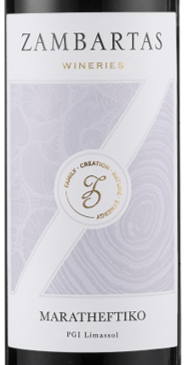 The producer: Founded in 2006 by Akis Zambartas, Cyprus’s first university-trained oenologist, Zambartas Winery has played a pivotal role in the revival of the island’s indigenous grape varieties. Akis spent 35 years shaping the modern Cypriot wine industry, including serving as chief winemaker at KEO. His pioneering research in the 1980s identified and documented 13 largely forgotten native grape varieties, laying the foundation for their contemporary resurgence. In recognition of his enormous achievements, he was made a member of the Académie Internationale du Vin. In 2014, the winery passed to his son Marcos.
Today the family manages more than 27 hectares of vineyards (72% of which are certified organic) on the southern slopes of the Troodos Mountains, at elevations ranging from 600 to 1,000 meters. Farmed according to organic and sustainable principles, including careful water management, limited irrigation for young vines, and dry farming for established vineyards, these high-altitude vineyards benefit from cooler temperatures that help preserve freshness, balance, and aromatic complexity. It combines modern viticulture with traditional practices, including gobelet-trained vines in older vineyards. Biodiversity is encouraged through the preservation of natural habitats and the restoration of traditional stone terraces, creating a healthy vineyard ecosystem while preserving the region’s viticultural heritage. Producing approximately 150,000 bottles annually, the winery remains dedicated to authenticity, connection, and shared experiences around wine.
The wine:
Vintage: 2023
Grape Variety: 100% Maratheftiko
Region/Appellation: Limassol – PGI, Cyprus
Alcohol: 15% ABV
Viticulture: ungrafted, dry-farmed vines farmed according to organic and sustainable principles.
Vinification and aging: The grapes are hand-harvested and carefully sorted on the picking table to select the very best grapes before fermentation in stainless-steel tanks. The wine is then matured for 12 months in a combination of new and seasoned 400-liter French oak barrels, enhancing its bouquet and complexity, while preserving varietal character.
Structure: It’s a rich body, structured wine with depth, freshness, ripe silky tannins, layered dark fruit and a long lasting finish.
Tasting profile: This wine offers an expressive bouquet of black and red berries, rose petal, sweet spice, and the distinctive floral violet notes often associated with Maratheftiko, unusual for a grape grown in such a warm Mediterranean climate. On the palate, it is full-bodied yet balanced, combining ripe fruit with freshness, silky tannins, and well-integrated oak. Layers of blackberry, plum, and subtle savory notes lead to a long, persistent finish. It pairs beautifully with grilled lamb, pork, and beef, especially traditional souvla, the Cypriot and Greek method of slowly roasting large cuts of meat over charcoal. Powerful yet elegant, this Maratheftiko is a compelling expression of modern Cypriot winemaking and the ongoing renaissance of the island’s native grapes. While already approachable, the youthful 2023 vintage will benefit from decanting and has the structure to evolve gracefully over the next 7–8 years.
Wine #5. KEO, ‘St John’ Commandaria PDO, Cyprus
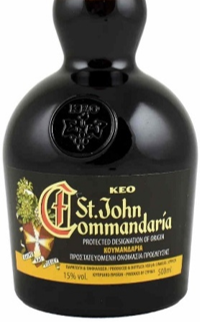 The producer: KEO is Cyprus’s most influential historic wine producer and one of the island’s most internationally recognized wineries. Founded in 1927, it played a central role in preserving and commercializing Cyprus’s traditional wines, especially Commandaria. The wine is a non-vintage, fortified dessert wine crafted from the indigenous varieties Mavro and Xynisteri grown on ungrafted, unirrigated bush vines in the volcanic soils of the Commandaria PDO region near Limassol. KEO produces more than 130,000 liters of St. John Commandaria annually. While the exact yield varies based on grape availability, the winery maintains a rolling stock of approximately 400,000 liters in its extensive, historic barrel vaults.
The wine: The winery’s flagship wine, St. John Commandaria PDO is made using a traditional process that embodies a viticultural continuity extending from classical antiquity into the present day. It is a contemporary expression of Cyprus’s ancient, fortified wine tradition. To pour a glass of this wine is to taste a living fragment of Mediterranean history.
Vintage: Non-Vintage.
Grape Variety: Mavro and Xynisteri
Region/Appellation: Limassol, Commandaria – PDO, Cyprus
Alcohol: 15% ABV
Viticulture: grapes from ungrafted, unirrigated bush vines with low yields.
Vinification: The overripe grapes are harvested at the beginning of September and laid out to sun-dry to concentrate their sugars and flavors. After pressing, the juice ferments naturally in traditional wooden vats.
Aging: In old oak barrels in climate controlled cellars for at least 2 years, that are never fully emptied, utilizing a fractional blending solera-like method that imparts extraordinary depth and longevity. Bottled at 15% ABV. This approach creates continuity between vintages and contributes to the wine’s remarkable complexity and virtually unlimited aging potential.
Structure: It’s full-bodied and richly textured. This wine has a long shelf life when sealed and can also be enjoyed for a long time when refrigerated after opening.
Tasting profile: A sweet wine with a deep amber hue and a powerful aromatic profile of dried fruits, mocha, roasted coffee and warm spices. On the full-bodied palate, with a rich, smooth texture it is enticingly sweet – but not cloying-, complex, delicate fruit notes of ripe dates with a hint of smokiness, a delightful interplay of sweetness and acidity and a persistent, fresh, harmonious, and long-lasting finish. Pairs perfectly with robust blue cheese and with desserts (e.g. particularly those containing dark chocolate and nuts, fruit tarts, and traditional pastries like baklava). Is best served chilled, ideally between 12–14°C (54–57°F) or slightly cooler at (8–10°C (46–50°F) if preferred as a fresh, pre-dinner aperitif.
6. CV Members Rating
The wine tasting took place before revealing their prices. 17 participants rated the first four wines tasted individually from Good to Excellent. The combined scores determined the ranking order as shown in the following Table.
In the final results, Zambartas, Maratheftiko, Limassol PGI, 2023 was the Best Wine and Alpha Estate ‘Hedgehog Vineyard’ Xinomavro, Amyndeon PDO, 2022 was the Best Buy.
Although not rated by most participants, the dessert wine Keo St. John Commandaria was highly appreciated by the group.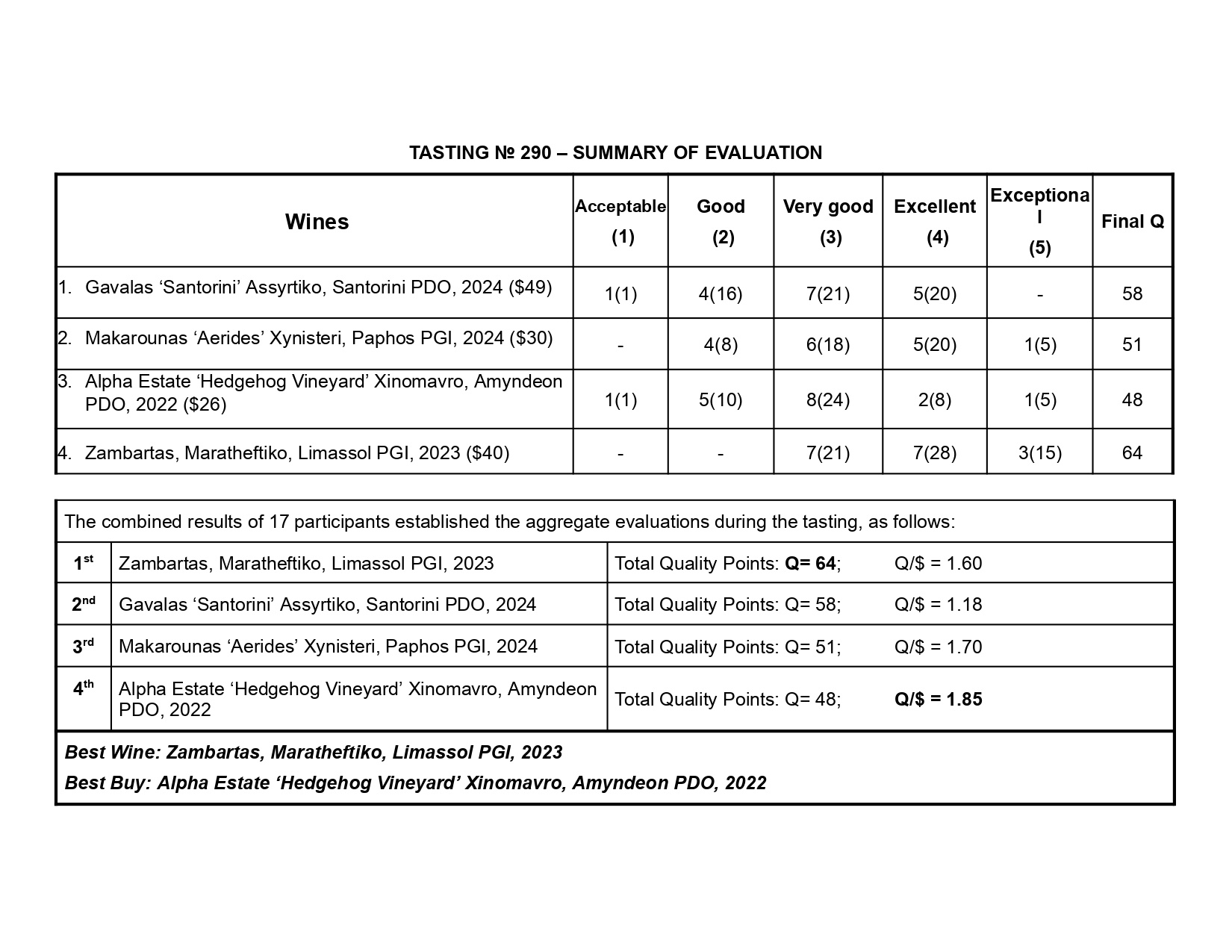
References
Early Neolithic wine of Georgia in the South Caucasus, Nov. 13, 2017
https://clubvino1.com/2025/10/20/tasting-282-october-28-2025-wines-from-greece/
https://clubvino1.com/2015/09/04/tasting-no-170
https://clubvino1.com/156-june-30-2014-wines-from-greece
https://clubvino1.com/2011/10/07
https://web.cocc.edu/cagatucci/classes/hum213/Maps/Maps2HistoryAncient.htm
https://en.wikipedia.org/wiki/History_of_the_Mediterranean_region
https://en.wikipedia.org/wiki/Western_culture
https://en.wikipedia.org/wiki/Caucasus
https://en.wikipedia.org/wiki/Fertile_Crescent
https://en.wikipedia.org/wiki/Cypriot_wine
https://en.wikipedia.org/wiki/Commandaria
https://www.worldhistory.org/uploads/images/14421.png?v=1777804408-1777804438
https://v1.vinous.com/articles/greece-from-ancient-roots-to-modern-glory-dec-2025
https://www.winebow.com/knowledge/wine/greece
https://wineguide.wein.plus/wine-regions/cyprus /
https://magazine.wein.plus/cyprus-treasure-island
https://glossary.wein.plus/commandaria
https://ich.unesco.org/en/RL/commandaria-wine-02288
https://www.guinnessworldrecords.com/world-records/oldest-manufactured-wine
.o0o.
Laughing matter:

.o0o.


