Localização Privilegiada or Location, Location, Location
– No momento o andar térreo tem uma freguesia mais assídua.
– At this time the ground floor has more customers


Contribuición de Ricardo Zavaleta
 Tasting #147 — The 100 Best of 2012 according Wine Spectator — 1:00 pm September 30th, 2013 Capri Restaurant
Contents of this Post
Every year Wine Spectator lists the best 100 wines of the year. After a very careful research our fellow presenters came up with a short list of this one hundred best.
Presenters of the best of the best of 2012 according Wine Spectator are: Juan Luis Colaiacovo, Alfonso Sanchez, Jorge Garcia, Albertina Frenkel. (as of September 24).

Albertina Frenkel

J.L. Colaiacovo

Alfonso Sanchez

Birthdays of September: Orlando Mason – 20, Rolando Castaneda – 21, Italo Mirkov – 24, Marcello Averbug – 25, Jaime Estupinan – 26.
1.-Emilio Lusteau, Amontillado Jerez Seco, Los Arcos.Solera
2.-Concha y Toro, Chardonais-Valle del Limari -Marques de Casa Concha
3.-Morgan Pinot Noir 2010 – Santa Lucia Highlands-California
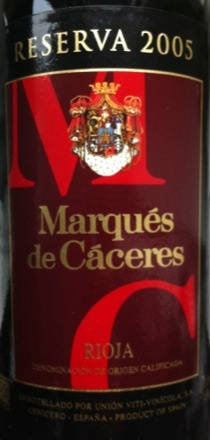
4 – Marques de Caceres Rioja Reserva 2005
5 – Veramonte Primus -Blend 2009, Valle de Colchagua -Chile
MENÚ Y MARIDAJE
Vino de aperitivo: 1. Emilio Lastau, Amontillado Jerez, Los Arcos, Solera Reserva,
Appetizer: Mozarella con Pimientos
Vino 2: Concha y Toro, Chardonnay, Limarí Valley, Marqués de Casa Concha 2010
Primer Plato: Ravioli de Fungi con salsa Aurora
Vino 3: Morgan Pinot Noir 2010
Segundo Plato: Vitello Parmigiana
Vino 4: 2005 Marqués de Cáceres Rioja Reserva
Vino 5: 2009 Veramonte Primus Blend
Postre a elegir
All prices indicative only, they do not reflect taxes, shipping and other incidentals. Prices obtained by the presenters may be other than those shown.
This wines information was prepared by the presenters of the wines for this tasting.
Se trata de una versión más seca del tradicional Jerez amontillado producido utilizando el “Sistema Solera”, método tradicional de la región de Jerez de la Frontera , municipio de la 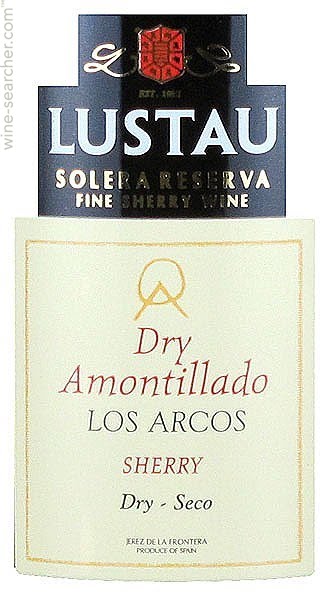 provincia de Cádiz y comunidad autónoma de Andalucía que produce un estilo consistente y parejo en cuanto calidad. Este Jerez se produce en el establecimiento LUSTAU, de propiedad de Luis Caballero Florido, de una extensión de 540 acres de viñedos de donde proviene la uva Palomino, utilizada 100 % en este vino. Este JEREZ ha sido envejecido en barriles de roble Americano de 50 litros.
INFORMACIÓN ADICIONAL. El Jerez (en inglés Sherry) es una amplia gama de vinos españoles que se produce en las ciudades andaluzas de Jerez de la Frontera, El Puerto de Santa Maria y Sanlúcar de Barrameda, todas pertenecientes a la provincial de Cádiz. El conjunto geográfico formado por la zona de producción y la zona de crianza del jerez se conoce con el nombre de MARCO DE JEREZ. Su situación geográfica bajo la influencia climática del Atlántico y del Mediterráneo y con una media de 30 días de precipitaciones intensas, hace que el desarrollo de sus caldos tenga características especiales. Otros elementos diferenciales son la tierra ALBARIZA que es una tierra de color blancuzco, que se compacta formando pedruscos que permiten que el agua procedente de las cortas pero intensas lluvias de la región se quede en el subsuelo a varios metros de profundidad durante todo el año, permitiendo la producción de las uvas PALOMINO, PEDRO XIMENEZ Y MOSCATEL cómo también LEVADURAS DE VARIOS TIPOS Y EL SISTEMA DE CRIANZAS Y SOLERAS.
SOLERA: El Sistema de Solera se basa en el uso de vasijas (llamadas botas) hechas de roble americano con una capacidad de entre 250 y 600 litros. Se suele disponer las botas en tres alturas, Periódicamente se saca un porcentaje de cada una de las botas para rellenar las otras. De las botas inferiores se saca aproximadamente un ¼ de su contenido para consumo inmediato. De la bota intermedia se transfiere esa misma cantidad a la bota inferior y de igual modo se saca la misma cantidad de la bota superior para mantener el nivel de la intermedia. La bota superior se llena con vino nuevo. Este Sistema permite que la calidad sea alta y homogénea. El nombre SOLERA proviene del hecho que el primer consumo viene de la bota que esta más cerca del suelo
AMONTILLADO: El amontillado es una variedad de Jerez caracterizado por ser más oscuro que el Fino y de mayor contenido alcohólico. Su nombre proviene de la región de Montilla en España. Un jerez amontillado comienza como el Fino pero fortificado con aproximadamente 13.5% de alcohol y una capa de levadura que limita su exposición al aire. Sin la capa de levadura el amontillado debe fortificarse con aproximadamente 17.5% de alcohol para evitar que se oxide rápidamente. Después de la fortificación alcohólica adicional, el Amontillado oxida lentamente, expuesto al oxígeno en cascos americanos o Canadienses que son levemente porosos. Así se obtiene un color más oscuro y un sabor más rico que el Fino.
CULTURA POPULAR. El Jerez Amontillado es conocido fuera de los círculos vitivinícolas por el uso de su nombre en un cuento corto de Edgar Allan Poe titulado “The Cask of Amontillado.” También en la película Babette’s Feast se sirve sopa de Tortuga con Amontillado.
Bajo el liderazgo de Marcelo Papa, la bodega Concha y Toro ha ganado desde 1998 la
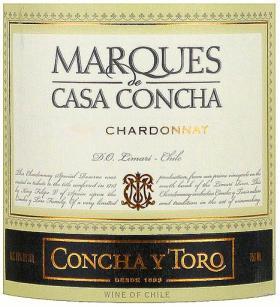 reputación de poner en el mercado algunos de los mejores vinos a muy buen precio. El vino Chardonnay proviene del cálido y soleado Valle Limarí donde recibe la influencia templada del Océano Pacifico lo que permite una lenta y balanceada maduración. Los viñedos poseen una tierra rica en minerales, que imparten un sabor especial mientras que el año que pasan en barriles de roble francés le da un sabor a especias. La producción ha sido de 8.000 cajas.
Este es un vino fresco con aromas a piña, cítricos y especies con una excelente acidez y una textura cremosa. Tiene un final frutoso y minera. Ha sido envejecido 12 meses en barricas de roble francés.
INFORMACIÓN ADICIONAL
El Valle de Limarí es parte junto con Elqui de la Región de Coquimbo y está situada 600 km al norte de Santiago y a unos 20 km de la costa pacífica. Es la región vitivinícola más nueva de Chile. Históricamente fue productora de uvas de mesa y de Pisco. Los primeros vinos de calidad se empezaron a producir en los 90s. La región está a 30 grados de latitud sur, lo que la hace muy cercana al trópico y por lo tanto es casi lo opuesto a Bio Bio, o sea muy al norte, en el límite para producción de uvas de calidad. En 1995 había 230 acres de viñedos y hoy hay más de 4000. Concha y Toro, San Pedro y Santa Rita han hecho importantes inversiones en la zona en vista de su importante potencial.
Los suelos son calcáreos como resultado de la elevación tectónica de antiguos lagos (una rareza en Chile) cubiertos por aluviones de grava y arcilla del río Limarí. O sea que hay buen drenaje. Además la pobreza del suelo hace que las parras concentren su vigor en la fruta y no en las hojas. Adicionalmente hay suficiente variación en suelos y microclimas para adaptar variedades de uvas.
El clima es extremadamente árido, cálido y seco. Muy cerca del desierto de Atacama (el más seco del mundo). No hay lluvias por 9 o 10 meses, así que se utiliza riego por goteo para el cultivo pero las brisas frías de Pacífico hacen el clima muy propicio para los viñedos y las variaciones de temperatura entre el día y la noche son amplias lo que resulta en vinos de aromas y sabor concentrados.
En esta región predominan los cultivos de las variedades de los tintos: Cabernet Sauvignon, Merlot, Carmenere y Syrah aunque también se produce Chardonnay y en menor medida el Sauvignon Blanc. La superficie dedicada a los viñedos ocupa unas 1680 hectáreas.
El propietario Dan Lee y el vinicultor Gianni Abate producen este vino en las laderas de las
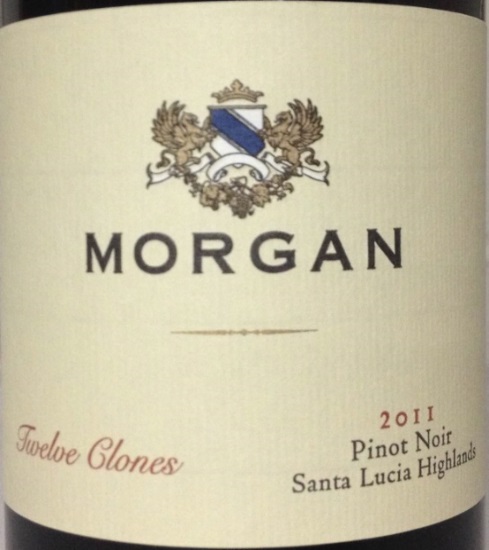 montañas Santa Lucia que forman parte del Área Viticultural Americana (AVA) de Monterrey. Aproximadamente 2300 acres (931 hectáreas) de viñedos están plantados a 1200 pies (366 metros) sobre el nivel del mar, de los cuales la mitad son de uvas Pinot Noir. La región recibe sol durante el día mientras fuertes brizas provenientes del Pacifico traen como consecuencia atardeceres fríos. El vino se produce fermentando uvas enteras en tanques abiertos, usando levaduras locales.
Este vino ha sido envejecido durante 10 meses en barriles de roble francés, de los cuales un tercio son nuevos. La producción ha sido de 10.000 cajas.
El “Twelve Clones” Pinot Noir se produce con las mejores cepas de Pinot Noir de la appellation Highlands en Santa Lucía que incluye el viñedo “Double L” de manejo orgánico. El 56% de las uvas para la producción del Morgan 2010 proceden de ese viñedo. Los viñedos están sembrados en laderas del valle del río Salinas que miran al oriente y capturan mucho sol durante las mañanas pero que se refrescan con los vientos de la tarde y la neblina del Pacífico en las noches. Estas condiciones favorecen la maduración lenta de la uva y un grado de acidez deseable en los Pinot Noir.
La estación del 2010 fue un poco más larga de lo normal favoreciendo una maduración tardía de unas dos semanas (se cosechó entre fines de septiembre y principios de noviembre) lo que produjo una excelente concentración de sabores. Las uvas se cosecharon y seleccionaron manualmente. La fermentación se hizo con levaduras nativ $as en tanques abiertos. Después de fermentado se almacenó en barriles de roble francés por casi un año de los cuales el 36% eran nuevos y los demás de uno o dos años.
Marqués de Cáceres asegura el suministro de alta calidad de sus uvas mediante relaciones
 estrechas de colaboración con grupos de agricultores, pequeños propietarios de un viñedo muy fragmentado que se extiende por los mejores terruños de Rioja, en las zonas ancestrales de producción de los vinos más emblemáticos de la región. Un equipo de profesionales de la Bodega controla y asesora a los propietarios durante todo el año para garantizar los mejores cuidados de la vid y el rigor en el mantenimiento de políticas de cultivo adecuadas para obtener el mejor fruto.
La variedad de uvas tintas más extendida en Rioja es el Tempranillo, al que acompañan algunos viñedos de Garnacha y Graciano. Se trata de una cepa típicamente española que se encuentra con diferentes nombres por toda su geografía. Las características climatológicas peculiares de Rioja y la idoneidad de sus terruños hacen que en esta tierra el Tempranillo alcance sus más altos niveles de autenticidad y elegancia, base principal de los excelentes vinos de la región.
El Reserva 2005 es un tempranillo con corte de graciano y garnacha que también se cultivan en Rioja. Su denominación requiere al menos tres años de envejecimiento en la bodega de los cuales al menos uno debe ser en barricas de roble. El vino se entrega al mercado a partir de cuarto año. Este vino se puede guardar todavía hasta el 2018.
Agustín Huneus, de nacionalidad chilena, cuya familia posee propiedades en California que incluyen “Quintessa” y la marca “The Prisoner”, fundó LA BODEGA VERAMONTE en 1990 en El Valle Casablanca en Chile.
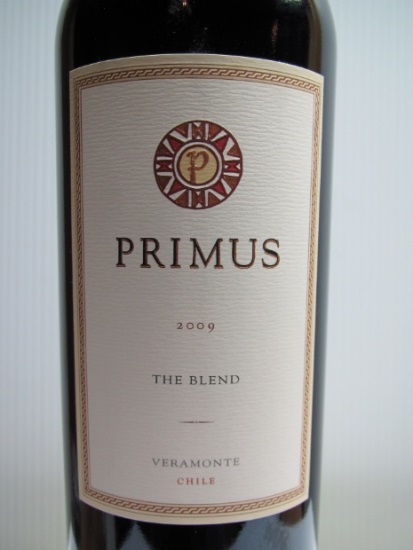 Primus The Blend fue uno de los primeros ensamblajes producidos en Chile por Agustín Huneeus, quien también ha producido importantes mezclas californianas tales como Franciscan Magnificat, Estancia Meritage y Quintessa.
Primus 2009 es una mezcla tipo Burdeos de 29% Cabernet Sauvignon, 28% Syrah, 25% Carmenere y 18% Merlot. Se ha envejecido catorce meses, 90% en barricas de roble francés y 10% de roble americano. El 25% de ellos son nuevas. Para este vino, el vinicultor Cristian Aliaga mezcló estas variedades todas provenientes de los propios viñedos del Valle de Colchagua, donde un clima cálido y un suelo oscuro arcilloso producen vinos tintos con mucho cuerpo. Las uvas son cosechadas a mano, doblemente seleccionadas, fermentadas y conservan su piel después de la fermentación para extraer intensos colores y sabores. El envejecimiento del vino en barriles de roble francés (un cuarto de los cuales son nuevos) agrega sabores de especias a un vino típicamente aromático. The Blend posee aromas y sabores a frutos rojos y negros maduros acompañados de especies exóticas. Un vino con cuerpo y persistente final.
Maridaje: Carnes y pollo asados o a la parrilla, platos con aceitunas, arrúgala, lentejas y especias.aspberry, Pepper, Medium-bodied.
_________________________________________
Have you seen the complete list of the best wines of 2012 according Wine Spectator? Click bellow and take a peek:
___________________________________
6. Next meeting
Octubre – USA, Washington State A. Caycedo y R. Zavaleta
___________________________________________

.o0o.o0o.o0o.
Tasting #146 – 26 August 2013 – Vines from Oregon – Capri RestaurantContents of this Post

6. Video clip by Expertvillage (2 minutes)
Presenters of Wines from Oregon: Italo Mirkov and Jorge Garcia-Garcia

Italo Mirkov
Jorge Garcia-Garcia
Participants: Cecílio-Augusto Berndsen, Italo Mirkov, Jorge Garcia-Garcia, Marcello Averbug, Jairo Sanchez, Hugo Benito, Ginger Smart, Clarita Estrada, Orlando Mason, Rolando Castaneda, Alfonso Caycedo, Jairo Sanchez, Mario Aguilar, Alvaro Lopez, Ricardo Zavaleta, Emilio Labrada, Leonor Barreto, German Zincke(as of August 23).
Birthdays of August: Alfonso Caycedo (3rd.), Ginger Smart (6th.) and Juan Luis Colaiacovo (9th.).
Hugo Benito presenta la encuesta: Se repartieron 15 formularios de evaluación y se recibieron 15. Como es norma en el cálculo de los valores medios se eliminan los valores muy extremos.
Vino 1 – Pinot Gris 2011-Ertah Winery Dundee. Evaluaron este vino 13 personas con un promedio de 88.2 puntos. Siete personas le dieron 89 puntos.
Vino 2 – Kudos Pinot Noir Villiamette Valley 2011. Evaluaron este vino 14 personas con un promedio de 87.7 puntos. Cinco personas le dieron 88 puntos.
Vino 3 – Corvallis Pinot Noir 2011. Villiamette Valley. Evaluaron este vino 13 personas con un promedio de 87.5 puntos. En ese caso hubo una dispersión muy marcada entre 80 y 92 puntos.
Vino 4 – Villiamette Valley Domaine Loubejac – Pinot Noir 2011. Evaluaron este vino 14 personas con un promedio de 88.9 puntos Hubo una concentración entre 88 y 90 puntos (10 personas) con un promedio similar 88.8.
3.1. Antipasto: Cold cuts y porciones de queso sharp
3.2. Ravioles Rellenos de Hongos y Salsa de Tomate
3.3. Sallisbury Steak con Salsa de Rosmary
3.4. Postre a elegir
 Enticingly fragranced with honeydew melon, rose petals and bread dough, this wine could not be a lovelier example of one of Oregon’s favorite varietals. Flavors of green apple, Meyer lemon and a hint of banana offer a mouth-watering juicy palate. The clean, brisk finish begs another luscious fruit-filled sip.
Cooking Suggestions: Beautiful with all kinds of seafood (especially shell fish, mollusks and trout), turkey, pork, Asian cuisine, and light to medium spicy foods.
Points: 91, Wine & Spirits, 2011 vintage. Best Buy 89, Wine Spectator, 2011 vintage Smart Buy
Tart cherries, little bit of earthy minerals. Short finish
 “Rich carmine color. Bold dark cherry nose with a peppery overlay. A slight cola aroma riding underneath. Easy entry on the front opening into a full bodied silky wine mid palate with a nice flinty pepper. Smooth long finish.”
Elegant, Black Cherry, Herb, Medium-bodied
Willamette Valley, OR- Reminiscent of a French wine, this Pinot Noir has aromas and flavors of black cherry, raspberry, sweet herbs and rose petals with a finish that is lively and vibrant. Pairs well with salmon, lamb, pork or filet mignon. totalwine.com
.
Wine Enthusiast: 91 points.
Elegant, Cherry, Red Plum, Medium-Bodied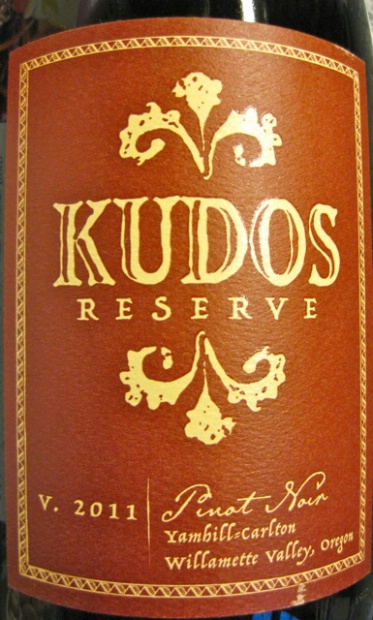
Made from select vineyard sites, this is a hand crafted blend that celebrates the bounty of Oregon. This wine starts with the taste of bright cherry preserves followed by red plums and ends with a complex and round finish. Enjoy with all kinds of food!
Reviews:
• I have been drinking this for the past six months, and find it absolutely wonderful. It is a very nice pinot noir that goes with just about anything, including certain salmon dishes. It is also great for just an after-dinner drink. Great table wine.
• Special! Very special bottle of wine. Wine does not have to be $50.00 , $100.00 or more to be of good quality and taste.
• Drinkable. I was slightly disappointed because I enjoyed the Kudos Pinot Gris so much. Nothing really special about this wine, but is still enjoyable as a everyday wine.

Fresh, Raspberry, Pepper, Medium-bodied
This silky fruit-forward, medium-bodied wine features aromas of raspberries and florals followed by flavors of black cherry and spice. This wine is rich, layered and oaky. Compliments a wide variety of foods. http://www.totalwine.com
This wine is star bright with its garnet color and fresh fruit aromas. One the palate cherries and raspberries swirl around a core tobacco, clove and crushed leaves, round out by dusty tannins and a mouthwatering, lingering finish.
.
All wines come from someplace, but the best wines can only come from an extraordinary place. Oregon is a world-class wine region with 17 approved winegrowing regions and more than 450 wineries producing 72 varieties of grapes.
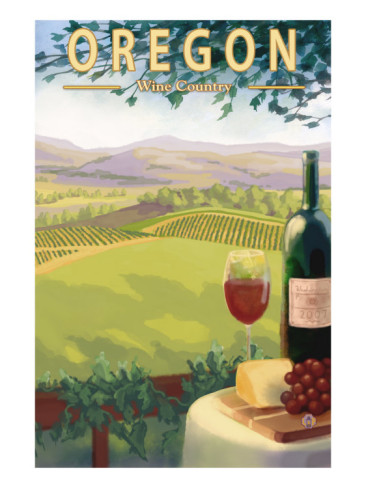 When Oregon’s wine pioneers looked out across the state’s varied landscape they saw what others didn’t; a perfect place for wine.
They understood that Oregon’s northerly latitude meant grapes would get extra growing season sunlight for long, even ripening, and that our crisp, cool nights would help grapes retain their freshening acidity. Such a combination meant Oregon grapes would naturally achieve mature, balanced flavors and full varietal character. The resulting wines, they surmised, could be sustainably grown and made without dramatic manipulation to be naturally fresh, lively, and have true-to-the-fruit flavors.
In the marine-influenced Willamette Valley, cool-adapted grapes such as Pinot noir, Pinot Gris, Riesling, and Chardonnay ripen to perfection, producing elegant wines with a global reputation. In the warm, high-elevation vineyards of Southern Oregon and the Walla Walla Valley, heat-loving varieties including Cabernet Sauvignon, Tempranillo, Syrah, and Viognier are crafted into head-turning wines earning top scores from national critics. And in the Columbia Gorge and Eastern Oregon, varied microclimates allow winemakers and growers the luxury of working with the widest range of grape varieties of anywhere in the state. If you were a wine grape, you’d want to be planted in Oregon.
Great wine made by artisan producers
Oregon’s vineyards grow 72 grape varieties for 450 wineries located in 16 approved appellations within four wine country regions. You can travel from the rolling green hills of the Willamette Valley to the granite-crusted ridges of Southern Oregon; from the basalt bluffs of the Columbia Gorge to the sandy soils of Walla Walla Valley, and you’ll experience a common linking thread throughout the state: great wine made by artisan producers.
For nearly 50 years Oregon wine has been hand-made by individual craftspeople (many 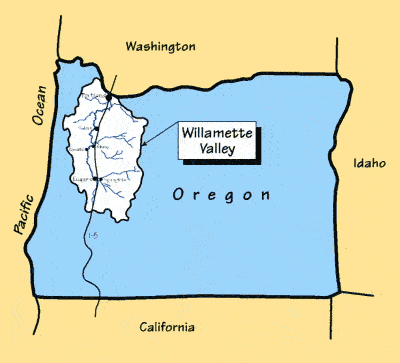 second-generation) who pursue two things above all else: quality and sustainability. It is testament to their commitment that Oregon is today the third largest producer of fine wine in North America.
Oregon’s vineyards grow 72 grape varieties for 450 wineries located in 16 approved appellations within four wine country regions. You can travel from the rolling green hills of the Willamette Valley to the granite-crusted ridges of Southern Oregon; from the basalt bluffs of the Columbia Gorge to the sandy soils of Walla Walla Valley, and you’ll experience a common linking thread throughout the state: great wine made by artisan producers.
For nearly 50 years Oregon wine has been hand-made by individual craftspeople (many second-generation) who pursue two things above all else: quality and sustainability. It is testament to their commitment that Oregon is today the third largest producer of fine wine in North America.
Oregon vintners pioneered innovative land-use laws
Oregon got there by having the strictest wine-labeling laws in the U.S. (even more rigid than the Federal law) in order to assure wine quality and integrity for consumers. Oregon’s vintners helped pioneer innovative land-use laws that preserved the countryside for agricultural use, not view-lot condominium development. And Oregon’s winemakers and farmers have been committed to keeping the land natural and productive for generations to come. Nearly 40% of the state’s vineyard acreage is certified sustainable, whether by LIVE (Low Input Viticulture and Enology), Oregon Tilth, Demeter Biodynamic®, or OCSW (Oregon Certified Sustainable Wine).
Willamette Valley
Location: The Willamette Valley is 150 miles long and up to 60 miles wide making it Oregon’s largest AVA. It runs from the Columbia River in Portland south through Salem to  the Calapooya Mountains outside Eugene. Named for the river that flows through it, the Willamette Valley has the largest concentration of wineries and vineyards in Oregon and includes six sub-appellations: Dundee Hills, Eola-Amity Hills, McMinnville, Ribbon Ridge, Yamhill-Carlton and the recently approved Chehalem Mountains.
Wine history: Modern winemaking in the Willamette Valley dates back 50 years with the genius of three University of California Davis refugees who believed that Oregon was an ideal place to grow cool-climate varieties. Between 1965 and 1968, David Lett, Charles Coury, and Dick Erath separately forged their way to the north Willamette Valley despite negative rumblings from their UC Davis cohorts who told them it was impossible to grow wine grapes in Oregon. They were the first to plant Pinot Noir in the Willamette Valley. They also planted small amounts of related varieties, including Pinot Gris, Chardonnay, and Riesling. These wine pioneers whole-heartedly believed that Oregon would one day become an important wine-growing region. Other believers were not far behind. Within the next decade, David and Ginny Adelsheim, Ronald and Marjorie Vuylsteke, Richard and Nancy Ponzi, Joe and Pat Campbell, Susan and Bill Sokol Blosser and Myron Redford all planted vineyards in the Willamette Valley. These families worked in a collaborative spirit, sharing advice, humor and encouragement, as they began writing history by producing superior wines in Oregon. Though, it wasn’t until David Lett entered his Oregon Pinot noir in the 1979 Gault-Millau French Wine Olympiades and won top Pinot noir honors against France’s best labels that the world started to take notice of Oregon as a serious winemaking region. The Willamette Valley became an official AVA in 1984. Today, it is recognized as one of the premier wine producing areas in the world. It is most widely known for its award winning Pinot Noir, but consistently earns top honors for other such cool-climate varieties as Pinot Gris, Dijon clone Chardonnay and Pinot Blanc.
Climate: The Willamette Valley is relatively mild throughout the year, with cool, wet winters and warm, dry summers. While moisture is abundant, most of the rainfall occurs in the winter, not during growing season. This temperate climate, combined with coastal marine influences, make the gentle growing conditions within the Valley ideal for cool climate grapes, including Pinot noir. The Valley enjoys more daylight hours during the growing season than in any other area of the state. During this longer growing season, the Willamette Valley enjoys warm days and cool nights, a diurnal temperature swing that allows the wine grapes to develop their flavor and complexity while retaining their natural acidity.
Soils: The Willamette Valley is an old volcanic and sedimentary seabed that has been overlaid with gravel, silt, rock and boulders brought by the Missoula Floods from Montana and Washington between 10,000 and 15,000 years ago. The most common of the volcanic type is red Jory soil, which is found above 300 feet elevation (as it had escaped the Missoula Floods deposits) and is between four and six feet deep and provides excellent drainage for superior quality wine grapes. Anything below 300 feet elevation is primarily sedimentary-based soil.
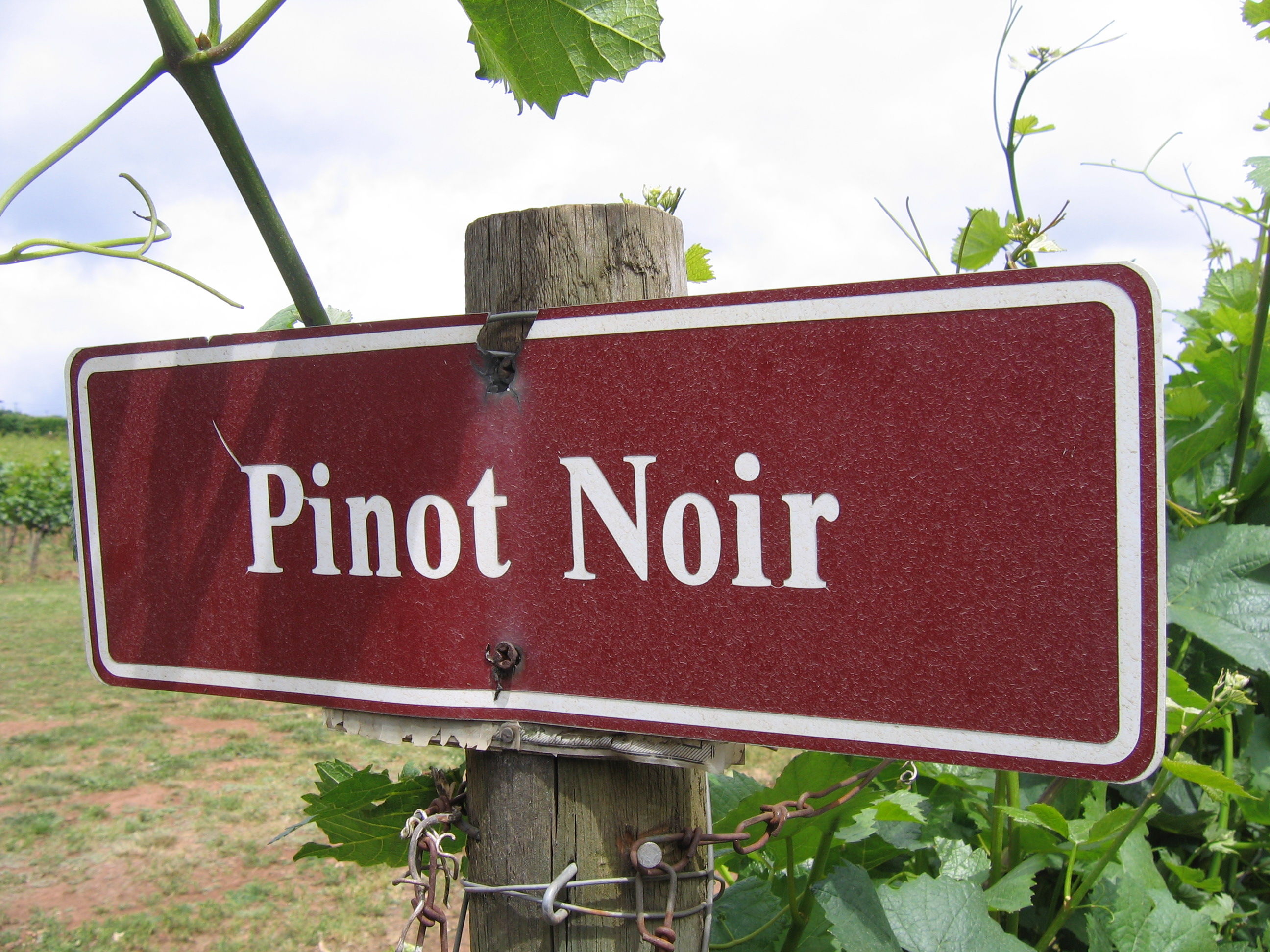 Pinot Noir Facts
• Recommended Growing Regions: Burgundy (France); Carneros, Santa Barbara, Sonoma (California), Oregon, New Zealand.
• Flavor Profile: Bright red fruit flavors with substantial minerality and earthiness.
• Food Pairings: Roast chicken, salmon, game birds.
• Other Notes: Since Pinot Noir is an especially finicky grape, pay careful attention to the specific vintage.
Expertvillage presents a short video on Pinot Noir. If you have a couple of minutes check it out!
Top 100 Vines. Presenters: Juan Luis Colaiacovo and Alfonso Sanchez.

.o0o.o0o.o0o.
Alcoholic? Help available!


Contents of this post:
IV. Degustaciones de Agosto a Dicienbre del 2013
__________________________________________________

I. Presenters and Parcipants
Presenters: Mario Aguilar and Jairo Sanchez
Participants:
Orlando Mason, Carlos Garcia, Alfonso Sanchez, Wilson Moreira, Ginger Smart, Luis Carlos (Lula) Danin Lobo, Jaime Estupinan, Marcello averbug, Hugo Benito, Alvaro Lopez, Albertina Frenkel, Ruth Connolly, Mario Aguilar, Alfonso Caycedo, Cecílio-Augusto Berndsen, Italo Mirkov, Ricardo Zavaleta, German Zincke, Raul Sanguinetti, Jorge Omar Rodriguez, Julia Diaz Asper (invitada de Albertina)
 Note: All the information on the Wines was taken from several websites. The information on the wines was selected and prepared by Mario Aguilar and Jairo Sanchez
1. 2011 William Hill, Chardonnay, William Hill Estate Winery. California, Valley, Silverado Bench
APV: 14.5% $ 20

Jairo Sanchez
2. 2009 SIN ZIN, Zinfandel 98%, Petit Syrah 2%, Alexander Valley Vineyards. California, Sonoma, Alexander Valley . APV: 14.4% $ 22
3. Beringer 2009 Knights Valley Meritage 2008, blend: Merlot 52%, Cab Sauvignon 36%, Petit Verdot 6%, Cabernet Franc 5%, Malbec 1%. California, No. Sonoma, Knighs Valley. APV: 14.2% $ 27.
4. Simi Alexander Valley 2008 Cabernet Sauvignon, Cab. Sauvignon 84%, Cab. Franc 7%, Merlot 5%, Petit Verdot 2%, 1.5% Malbec and .5% Tannat. Landslide Vineyard. California, Sonoma, Alexander Valley. APV: 13.5% from $ 15 to $ 26
________________________
Winemaker’s notes (2010):
Our 2010 Napa Valley Chardonnay reflects a transition to a new contemporary style by revealing elegant ripe tree fruit flavors of baked apple, supported by layered notes of  toasty oak, caramel, and brown spice. The wine has a moderate mouthfeel and sweetness balanced by refined, juicy acidity.
The 2010 growing season in Napa Valley can be described in one word: uneven. A cooler and wetter summer delayed harvest, and an August heat wave drove temperatures from the temperate 70s to a scorching 110°F or higher in some areas. To cap off the irregular nature of the vintage, unexpected heavy rains blanketed the valley in late October. Chardonnay grapes were largely protected from the excessive rainfall because they were harvested prior to the unusual downpour. Despite the challenges, wines from this vintage are displaying great quality and refined structure.
Wine details
Alcohol by volume: 14.5% Price $20.70
Year 2011 Date profiled Nov. 3, 2010
Region California
Sub Region Napa Valley, Silverado Bench
Varietal: Chardonnay 100%
Napa Valley Wine Sub Region
California’s Napa Valley wine region is located immediately north of San Pablo Bay, in the north-eastern corner of the San Francisco Bay Area. Formed by the Napa river as it flows between the Vacas Mountains (to the east) and the Mayacamas (to the west), the valley runs roughly north-west to south-east for approximately 35 miles (57km). The scenic 40-minute drive between Napa and Calistoga passes through some of the most valuable viticultural real estate on Earth.
The Napa Valley is one of the world’s most famous wine regions, unchallenged by any region in the Americas or indeed the New World. There are several reasons for this global renown, one being the ease with which Napa can be reached by visitors travelling from San Francisco city. Several million wine tourists pass through the valley each year to sample its wines and the world-class gastronomy that has developed alongside them. Napa’s triumph over Bordeaux and Burgundy in the 1976 Paris Judgment is unquestionably another factor, as it propelled the valley and its wines into the international spotlight. The remarkable endurance of Napa’s fame is partly due to the persistently high quality of its wine, but also the number of wines labeled as Napa Valley, whether alone or in conjunction with a more location-specific AVA.
Wine has been made here since the 19th century, but it is only since the 1960s that wine of any particular quality has been produced. The founding pioneers of Napa Valley winemaking were George C Yount (after whom Yountville is named), and John Patchett and his winemaker Charles Krug, founder of the eponymous winery in St Helena. Napa is home to Beringer Vineyards, one of California’s oldest continuously operated wineries. Established in 1875 by Jacob Beringer and his brother Frederick, the Beringer site has been added to the National Register of Historic Places.
The range of grape varieties grown in the Napa Valley has evolved steadily over the 150 years since Yount planted his first vines. Cabernet Sauvignon has risen to be Napa’s star performer and signature variety. It is the most widely planted grape in almost all of the valley’s sub-regions, with the notable exception of Carneros, where Pinot Noir and Chardonnay make the most of the cool, breezy meso-climate. Merlot is also prominent here, although since its fall from favor in the 1990s it is now used mostly as a blending component for Napa’s Bordeaux blend and Meritage wines.
Although it makes up a small proportion of plantings here, Zinfandel has a strong impact on the Napa wine portfolio. The hillside sites above the Napa Valley floor provide just the warm, dry environment that California’s signature variety prefers, particularly when complemented by rocky, free-draining, infertile slopes. White wines are strongly outnumbered in Napa, but are nonetheless present. While Riesling was once the variety of choice, it has now been almost completely replaced by Sauvignon Blanc and Chardonnay.
Another key factor in Napa’s phenomenal success as a wine region is its weather patterns. The hydrography of the wider Bay Area, plus the topography (specifically, the orientation) of the North Coast Ranges, are behind the unique Napa Valley mesoclimate: one creates fog, the other channels it inland. Without the fog that rolls in from the bays, the valley would be substantially warmer than it is, and its wines less structured and balanced. Furthermore, Napa’s quality wine production would be limited to the cooler climes higher up in the hills, which would increase the cost of production and dramatically reduce the area suitable for viticulture.
Winemaker’s notes:
In 1978 Hank Wetzel produced the very first vintage of Sin Zin. The wine was an immediate hit with spicy, jammy, elegant fruit flavors and an unforgettable label. Thirty  two years later, Sin Zin is one of the most recognizable wines in the country. From the beginning Sin Zin has been a more elegant style of Zinfandel due to both the region and winemaking style. We harvest the grapes from throughout the Alexander Valley – including the valley floor, hillsides and bench lands to get a wide range of complex red fruit flavors in the glass. Since 1999 winemaker Kevin Hall has carried on the tradition looking for a balance of ripeness and acidity in each lot to showcase the elegance of the region. This balance explains Sin Zin’s restaurant popularity; it is always a food friendly style of Zinfandel.
2009 was a cooler vintage with fewer heat spikes than in the past few years, allowing for uniform ripening in the Alexander Valley which led to wines with good structure, balance and complexity. Overall, the vintage is more elegant than in many recent years. Kevin blended in a small amount of Petite Syrah to broaden the mouthfeel on the wine and add a little more dark fruit to the palate.
There are aromas of raspberry, plum, black cherry, and a touch of citrus. Flavors of plum, black cherry, black pepper, spice and pomegranate fills the glass. Sin Zin has been a true American original for three decades, the 2009 continues the legacy.
Wine details
Alcohol by volume: 14.4% Price $22.33
Year 2009
Region California AVA Alexander Valley
Vineyards Alexander Valley
Varietal Zinfandel 98% clone, Petit Syrah 2%
Filtered No Oak aging 10 Months
The Sin Zin label was one of the first whimsical labels approved by the ATF and at the time was considered rather risqué. When tasting samples of the first vintage, Katie Wetzel Murphy wanted to find an image that matched the lush flavors. Leafing through an old art history book, she came upon a captivating illustration, a seventeenth-century German etching, completed by Moritz von Schwind c. 1840 titled “Des Knabben Wunderhorn”, meaning “The Horn of Plenty”. The image looked perfect for a wine label, and its bacchanalian character inspired her to name our rich and lush wine – Sin Zin.” The label was used on the first vintage in 1978 and the wine was given to friends and family.
 Alexander Valley Wine
The Alexander Valley, one of California’s bigger and better-known wine districts, is located in the north-eastern corner of Sonoma County. It runs north-west to south-east for slightly more than 20 miles (33km), following the course of the Russian river (of Russian River Valley fame) from the county border with Mendocino to just east of Healdsburg, where the river converges with Franz and Redwood creeks.
The importance of cooling, moderating influences in the Alexander Valley is hard to overstate. Although only 25 miles (40km) from the coast, it is separated from the cool waters of the Pacific by coastal mountain ranges which rise to almost 2700ft (820m). The fog which drifts up the Napa and Sonoma valleys from San Francisco Bay rarely reaches this far north in any quantity, depriving the area of the cool, moist afternoon air enjoyed by the likes of Carneros and the Stags Leap District. Alexander Valley’s vines depend on other climatic and topographical features (cool nights, altitude, winds, increased diurnal temperature variation) to cool them down and help them retain acidity in their grapes.
Most of the soils in the valley are rich and fertile, a natural consequence of being located in a river valley. Alluvial and colluvial soils are found here: the former around ancient and current riverbeds, the latter on the valley’s lower slopes. With warm temperatures and fertile soils, Alexander Valley wineries striving for high-quality fruit invest a great deal of time and effort in reducing their yields. Alexander Valley winemakers are known for producing quality, value-for-money Cabernet Sauvignon. These are often made in elegant, fruit-driven styles with less of an earthy feel than their Napa Valley counterparts. Cabernet is by far the most widely planted grape, followed by a medley of warm-climate red-wine varieties including Zinfandel and the Bordeaux varieties Merlot, Cabernet Franc, Malbec and Petit Verdot. Very few white wines are made here, although the ubiquitous Chardonnay has retained a certain foothold, as has Sauvignon Blanc to a lesser extent.
Famous wineries of wildly different sizes have put down roots in the Alexander Valley. Giants such as Kendall-Jackson and E&J Gallo planted substantial vineyard areas here in the 1980s and 1990s, bringing considerable economic stability to the valley as a wine region. The prestige of the Alexander Valley name, however, is more often attributed to the smaller-production wines of Murphy-Goode, Clos du Bois and Geyser Peak. Some of the best-known names in Californian wine (Ridge Vineyards, Seghesio, Francis Ford Coppola) maintain a balance between scale and artisanal winemaking; each of these outfits has vineyards in the valley and produces Alexander Valley wines. Several have built their winemaking facilities there, mostly in the lower-lying southern half close to Healdsburg.The famous Lytton Springs vineyard, source of some of California’s top Zinfandel wines, straddles the boundary between the Alexander Valley and Dry Creek Valley AVAs. Located immediately north of Healdsburg, this site is refreshed by cross-winds flowing between the two valleys, and the gentle cooling effects brought about by a slight increase in altitude. Right across the valley, the equally respected Alexander Mountain Estate vineyard site sprawls over the western flanks of the lower Mayacamas ranges, again cooled by its elevation but also by the Sausal Creek, on whose banks it is located.
Beringer Vineyards has owned and farmed its Knights Valley vineyards since the mid-1960s, when the Beringer family recognized that the cobbley, rocky alluvial soils were a great place to grow high quality wine grapes. The Knights Valley designation was first used on a Beringer label in 1974. Beringer’s Knights Valley Cabernet has been a staple of their portfolio for over three decades. Earning American Viticulture Area (AVA) designation  status in 1983, Knights Valley in the northeastern Sonoma has proven to be an ideal spot for lush Cabernet and Beringer has taken advantage of that fact to produce this winner year after year. This Meritage is a Bordeaux blend containing 52% merlot, 36% cabernet sauvignon, 6% petit Verdot, 5% cabernet franc and 1% malbec. It was formerly called Alluvium. Its main characteristics are: Good deep red-ruby; crushed berries and licorice on the nose, it begins a bit porty but freshening minerality emerges with aeration. It is sweet, lush and concentrated, with dark berry and chocolate flavors dominating. According to the review of 2011 the wine’s building, tongue-coating tannins call for a year or two of patience. This means it should be ready to drink in 2013.
Terroir, Vintage & Vineyard
Located 17 miles northwest of the winery, Knights Valley vineyard is approximately 600 acres, and has volcanic, well-drained soils that are perfectly suited to Cabernet Sauvignon, Sauvignon Blanc, Sémillon, Merlot, Cabernet Franc and Petit Verdot.
The Knights Valley AVA in Northern Sonoma County cuts through several miles of mountainous countryside, linking the Russian River Valley (and thus Sonoma Valley) with the northernmost reaches of the Napa Valley.
The view from Knights Valley
© George Rose
Its inland, sheltered location makes Knights Valley one of the warmest areas in Sonoma County. The vineyards are protected from the Pacific Ocean’s cooling influences by the Coastal Ranges and the Mayacamas Mountains, and are too far north to benefit from the cool air and fog which roll up the valleys from San Francisco and San Pablo bays.
Knights Valley is surrounded by some of America’s most prestigious viticultural real estate. Along its western side it abuts the Alexander Valley AVA, and its southern neighbor is Russian River Valley AVA. In fact, millions of years ago the Russian river ran straight through what is now Knights Valley, but its course was diverted by a massive Mount Saint Helena eruption. This left volcanic deposits and alluvial gravel soils on the valley floor, making it well suited to quality viniculture.
Well-drained soils, warm temperatures and high sunshine levels ensure Knights Valley is a prolific wine region, and that its most widely planted grape variety, Cabernet Sauvignon, achieves the full-bodied, ripe, chocolate flavors for which Knights Valley wines have become known. Beringer, one of California’s oldest and most-respected wineries, has a significant presence in the Knights Valley AVA, and has made quality Cabernet Sauvignon since the early 1970s. The winery’s Knights Valley Alluvium and Alluvium Blanc are two proprietary blends named after the alluvial soils here.
Although Cabernet Sauvignon is the undisputed king of Knights Valley, accounting for about two-thirds of the wine produced there, other full-bodied reds are also produced locally. These include Merlot, Syrah, Zinfandel and a small quantity of Mourvedre. Very little white wine is made in the valley, but a small quantity of Chardonnay, Semillon and Sauvignon Blanc is produced under the AVA title.
Winemaking
To maintain the unique characteristics of the different lots from varying areas of the vineyard, they are kept all separate through vinification and aging. Extended maceration creates larger tannins to enhance the lush mouthfeel of the blend and extracted a maximum of color, aromas and flavors. The wines are normally aged in small French Nevers oak barrels, partly new, for fifteen months and undergo malolactic fermentation for further development of texture and mouthfeel. After aging, comes the blending of the lots of Cabernet Sauvignon to highlight Knights Valley’s characteristically bright black cherry fruit.
Wine details
Alcohol by volume: 14.2% Price $27.49
Year 2008 Region Northern Sonoma, California
AVA Knights Valley Blend: Merlot 52%, Cab Sauvignon 36%, Petit Verdot 6%, Cabernet Franc 5%, Malbec 1%
Aging Fifteen months in French Nevers oak barrels, partly new
Blending After aging
When Giuseppe Simi left his home in Tuscany, in 1849, to pan for gold in California, his fall-back plan was winemaking, which his family had done since…well, forever. When it became obvious that gold was not to be Giuseppe’s future, he and brother Pietro planted grapes and went to work. In 1876, they released the first wine under their own name and Simi 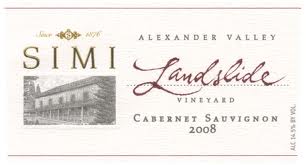 Winery was born, becoming officially recognized in 1890. Tragically, both Simi brothers would die in 1904 and Giuseppe’s daughter, Isabella, took over the winery, turning it into one of Sonoma’s premier wineries before retiring in 1970.
Throughout its history, Simi has never become irrelevant, as many older wineries do. With the hiring, in 2003, of Steve Reeder, the winery simply shifted gears and reclaimed their place at the top of the Sonoma heap. Simi is a high-quality winery with an edgy sensibility, supreme expertise, and a tremendous eye toward bang for buck.
Twenty-six years after his first harvest at Alexander Valley Vineyards, Steve Reeder returned to his winemaking roots, becoming Vice President of Winemaking for Simi Winery in August 2003. Reeder, an internationally recognized winemaker, has received wide acclaim throughout the wine industry for many varieties, especially the Bordeaux-varietal wines. Among his accomplishments was securing the number one and number two places on Wine Spectator’s prestigious Top 100 Wines.
Alexander Valley was shaped by dramatic geologic activity-from an ancient landslide that changed the course of the Russian River, to earthquake upheavals that redistributed whole sections of land. The incredible diversity of soil types and microclimates produces wines with velvety textures and bright, luscious flavors. Simi Alexander Valley Cabernet Sauvignon reflects the best of Alexander Valley, with the bright fruit character and elegance that made this world-class growing region famous.
Winemaker’s notes:
Simi 2008 Alexander Valley Cabernet Sauvignon is a rich, deep garnet color with a ruby edge. Enticing aromas of baking spices, hints of cedar, chocolate, and toasty oak notes frame bright fruit of red cherry, black plum, and cranberry. These aromas carry forward to flavors of red plum, cassis, blackberry, and cherry preserves gently spiced with lively cedar and clove. This medium- to full-bodied nicely structured wine finishes with rich, dark chocolate tannins.
Opens with enticing aromas of red cherry, blackberry, licorice, toasty oak, fresh herbs and baking spices. The generous palate offers cherry, blackberry fruit, vanilla, a hint of caramel and a dark, roasted finish.
Taste: currant, blackberry, cherry, bell pepper, olive, asparagus, spice, ginger, oak, vanilla, pepper, earth, green, plum, mocha, black cherry, smoke, toast, and tar
Nose: currant, blackberry, cherry, cedar, cigar box, spice, earth, violet, rose, truffle, coffee, and leather.
Other comments
“A lot of great depth and promiscuity here, what with the mixture of chocolate, ripe blueberries, and some light spicy oak. Sexy!”
“This is a sexy one…great ripe blueberries, racy oak and deep chocolate tones. Dusty on the nose but full and complex on the palette. Would be great with some strong cheeses and dried fruit.”
Read more: http://www.snooth.com/wine/simi-winery-cabernet-sauvignon-alexander-valley-2007/#ixzz2Zh8jfgYy
Pair This Wine: With wine with Steak au Poivre, Marinated London Broil, Braised Bison Short Ribs, Elk with Jalapeño Sausage, Lentil and Wild Mushroom Stew, Cowboy Steak, Kobe Beef Burgers, Veal Parmesan. This Alexander Valley Cabernet is also irresistible with wild mushroom pasta, snapper Puttanesca, and duck confit with lentils.
Wine Details:
Appellation: Alexander Valley (Sonoma County, California) Vineyard: Landslide Vineyard, a Simi property
Varietal: 84% Cabernet Sauvignon, 7% Cabernet Franc, 5% Merlot, 2% Petit Verdot, 1.5% , Malbec, 0.5% Tannat
Alcohol by volume: 13.5%
Aging: 100% oak-aged for 26 months in French oak barrels, 64% new.
Winemaker: Steve Reeder, Susan Lueker, Megan Schofield
Vintage Notes 86 Pts. Wine Enthusiast: This is a nice, everyday Cabernet. It’s soft, gentle in the mouth and dry, with tasty flavors of blackberries, cherries and smoky oak. Drink now.
The Alexander Valley, one of California’s bigger and better-known wine districts, is located in the north-eastern corner of Sonoma County. It runs north-west to south-east for slightly more than 20 miles (33km), following the course of the Russian river (of Russian River Valley fame) from the county border with Mendocino to just east of Healdsburg, where the river converges with Franz and Redwood creeks.
The importance of cooling, moderating influences in the Alexander Valley is hard to overstate. Although only 25 miles (40km) from the coast, it is separated from the cool waters of the Pacific by coastal mountain ranges which rise to almost 2700ft (820m). The  fog which drifts up the Napa and Sonoma valleys from San Francisco Bay rarely reaches this far north in any quantity, depriving the area of the cool, moist afternoon air enjoyed by the likes of Carneros and the Stags Leap District. Alexander Valley’s vines depend on other climatic and topographical features (cool nights, altitude, winds, increased diurnal temperature variation) to cool them down and help them retain acidity in their grapes.
Most of the soils in the valley are rich and fertile, a natural consequence of being located in a river valley. Alluvial and co-alluvial soils are found here: the former around ancient and current riverbeds, the latter on the valley’s lower slopes. With warm temperatures and fertile soils, Alexander Valley wineries striving for high-quality fruit invest a great deal of time and effort in reducing their yields.
Alexander Valley winemakers are known for producing quality, value-for-money Cabernet Sauvignon. These are often made in elegant, fruit-driven styles with less of an earthy feel than their Napa Valley counterparts. Cabernet is by far the most widely planted grape, followed by a medley of warm-climate red-wine varieties including Zinfandel and the Bordeaux varieties Merlot, Cabernet Franc, Malbec and Petit Verdot. Very few white wines are made here, although the ubiquitous Chardonnay has retained a certain foothold, as has Sauvignon Blanc to a lesser extent.
Famous wineries of wildly different sizes have put down roots in the Alexander Valley. Giants such as Kendall-Jackson and E&J Gallo planted substantial vineyard areas here in the 1980s and 1990s, bringing considerable economic stability to the valley as a wine region. The prestige of the Alexander Valley name, however, is more often attributed to the smaller-production wines of Murphy-Goode, Ois and Geyser Peak. Some of the best-known names in Californian wine (Ridge Vineyards, Seghesio, Francis Ford Coppola) maintain a balance between scale and artisanal winemaking; each of these outfits has vineyards in the valley and produces Alexander Valley wines. Several have built their winemaking facilities there, mostly in the lower-lying southern half close to Healdsburg.
The famous Lytton Springs vineyard, source of some of California’s top Zinfandel wines, straddles the boundary between the Alexander Valley and Dry Creek Valley AVAs. Located immediately north of Healdsburg, this site is refreshed by cross-winds flowing between the two valleys, and the gentle cooling effects brought about by a slight increase in altitude. Right across the valley, the equally respected Alexander Mountain Estate vineyard site sprawls over the western flanks of the lower Mayacamas ranges, again cooled by its elevation but also by the Sausal Creek, on whose banks it is located.
______________________________
La Region de California
notas preparadas por Alfonso Sanchez
Alfonso Sanchez
Produce más del 90% del vino de USA. Solo Gallo produce casi lo que produce Chile.
Tiene mucha tierra con clima cálido para cultivo de uvas pero menos de clima frío y suelos áridos para vinos de larga maduración y concentración.
Pero tiene la influencia de las brisas frescas de pacífico y de la neblina (al norte de San Francisco) que protege de la radiación solar a las vides en los valles. De 11 a 4pm hay neblinas. Por debajo de ellas Pino Noir y blancas (más acidez) por encima Zinfandel y Syrah (más fruta).
En el sur no hay neblina pero el clima es más suave tipo mediterráneo. Inviernos suaves y veranos más frescos que da larga maduración y mucha concentración. Vinos de color 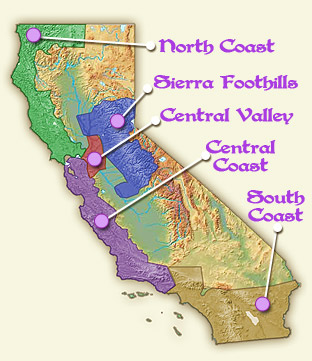 profundo y robustos.
Cuatro subregiones:
No llueve durante la cosecha pero hay que irrigar y hay riesgo de sequías.
Los misioneros franciscanos fueron los primeros en plantar uvas traídas de México en 1770. Se expandió mucho el cultivo durante la fiebre del oro (1847) pero la phyloxera, prohibición hizo que se destruyeran muchos viñedos y se cambiara a hortalizas y frutas.
Hasta los 70 los vinos eran mediocres o malos (jug wines) resurgió en los 70’s con vinos de mejor calidad (R. Mondavi fue uno de los pioneros) y después vinieron las grandes corporaciones y R. Parker.
Diferente del viejo mundo, el énfasis ha sido en los varietales dejando al enólogo el papel de producir el vino que de más puntaje (fuerte intervención – Davis) con la materia prima que se consiga. En el viejo mundo la elaboración está integrada con el manejo del viñedo y se acentúa el terroir. Esto está cambiando.
La influencia de Parker y Wine Spectator ha hecho que la uva se deje colgada mucho tiempo (más de 15% de alcohol) buscando máxima madurez. Por eso los tintos tienen taninos perceptibles pero suaves, mucha fruta y alto alcohol. Los Chardonnay tienden a tener mucho roble y dulce. Esto también está cambiando
Los vinos tienden a ser costosos pero hay muchos excelentes.
Emblemáticas: Chardonnay y Sauvignon Blanc, Cabernet Sauvignon y Zinfandel y Pinot Noir, pero ahora hay casi de todo (Ródano, Burdeos, Loire, Alsacia, Italia, España, Alemania, etc.).
___________________________
2008 The story of the early days of California wine making featuring the now infamous, blind Paris wine tasting of 1976 that has come to be known as “Judgment of Paris”. Links to:
IMDB or
Youtube: The Official Bottle Shock Trailer- Sundance 2008. or
This film is available for instant view at Netflix. It is also available on DVD.
.o0o.

J.L. Colaiacovo suggests: check these 2 small videos out. The rumors about the existence of wine production in Brazil get more and more frequent!
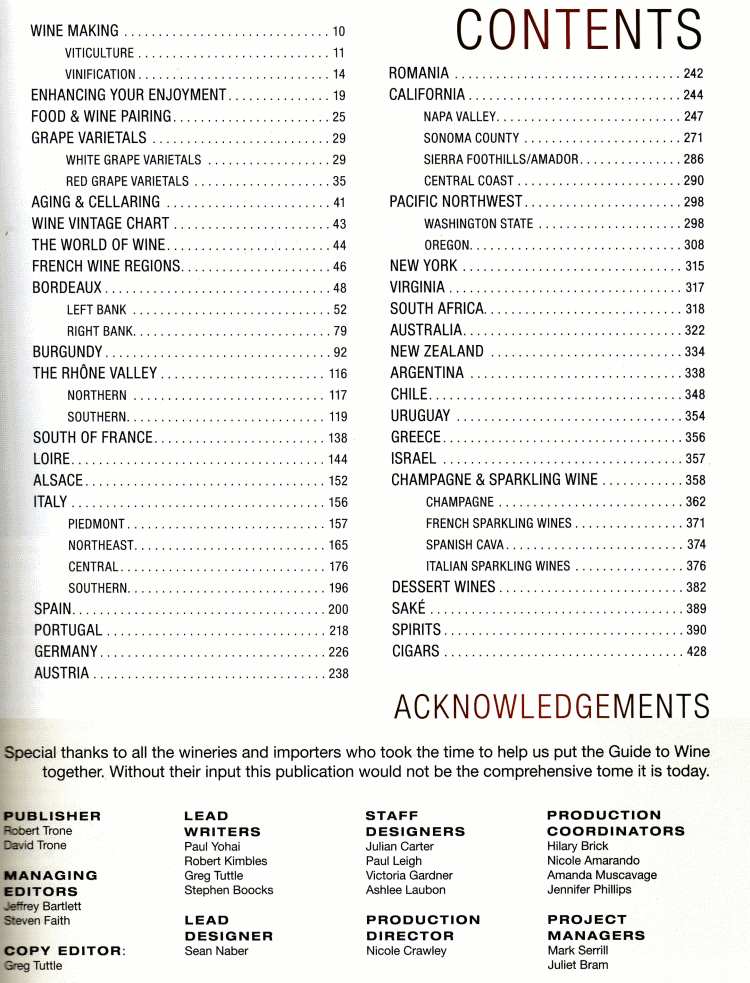
2013-2014 Total Wine Guide to Wine is HERE!
Tasting 144 -Vinos de Italia septentrional 24 June 2013 Capri Ristorante Presenters: Alvaro Lopes e Hugo Benito
Participants: Jorge Garcia Garcia, Alberto Musalem (invitado de J.Garcia)
Alfonso Sanchez, Jairo Sanchez, Albertina Frenkel, Rolando Castaneda, Wilson Moreira, Hugo Benito, Alvaro Lopez, Ruth Connoly, Luis Carlos Danin LULA Lobo.
Birthdays of June: Alfonso Sanchez (7) and Miguel Segovia (27). Happy birthday young gentlemen!
___________________________________________
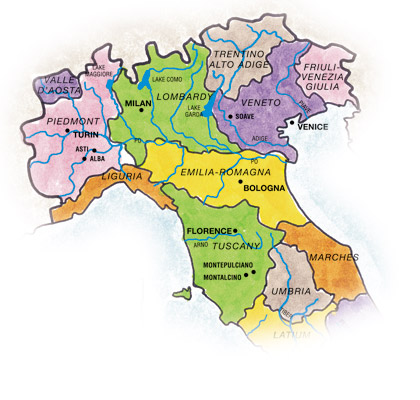
Abstract prepared by Alfonso Sanchez
Variedades y vinos:
Tintas: Nebiolo: Barolos y Brabaresco
Barbera: Barbera de Asti o de Alba
Dolcetto: Doceto de Asti o de Alba
Blancas: Gavi
 Toscana
 Tintas: Sangiovese. La más común pero hay otras.
Los vinos son Chianti Classico, Brunellos y Rossos de Montalcino; Nobile de
Montepulciano y Super–Toscanos (cortes con variedades de Burdeos).
 Veneto
 Tintas: Corvina, Molinara, Roninella.
Los vinos son los Amarone (uvas pasas fermentadas), Bardolino
Blancas: Trebbiano, Gargenaga, Tocai.
El vino es Soave
Principalmente uvas y vinos blancos y Prosecco. Pinot Grigio, Pinot Blanc, Chardonnay y Sauvignon Blanc.
Principalmente uvas y vinos blancos y Prosecco. Pinot Grigio, Pinot Blanc, Chardonnay y Sauvignon Blanc.
____________________________________
Hay muchas variedades de uvas, se resumen las principales – Todos los vinos son mejores con comida
Los vinos de nebiolos de gran cuerpo y taninos beberlos con al menos de 7 años de envejecimiento
Los Barbarescos se pueden beber más jóvenes y son más livianos y baratos que un Barolo joven (imbebible).
El Docetto no es dulce. Se parece a un Bujolais mientras el Barolo se parece a los Borgoña
Los Barbera salen muy bien con platos que tienen tomate (el de Asti es más liviano y el de alba tiene más cuerpo.
Los Gattinara (hechos con Nebiolo) son más baratos que los Barolos y los hay muy buenos.
_____________________________________________________

May 28, 2013, 1 PM , Wine Tasting # 143
Capri Restaurant, McLean VA 22101
Wines from Chile
Contents:
V. Evaluacíon de los vinos por los socios
Presenters: Pedro Turina and German Zincke
 German Zincke |
 Pedro Turina |
Participants: Rolando Castaneda, Alfonso Sanchez, Hugo Benito, Luis C.Danin Lobo(Lula), Ginger Smart, Juan Luis Colaiacovo, Marcello Averbug, Ruth Connolly, Mario Aguiar, Jorge Garcia-Garcia, Pedro Turina, German Zincke, Orlando Mason, Alvaro Lopez, Guillermo Granham. invitado de Pedro Turina, Jaime Estupinan (condicional a un viaje).

Information Provided by Pedro Turina and German Zincke presenters of wines for this tasting.
 2011 Sauvignon Blanc VistaMar Sepia Reserva, Sauvignon Blanc. Vistamar, Casablanca Valey, Central Valey, Chile. APV: 13.4%, $ 10 at Total Wine
This is a brilliant wine, pale yellow in colour with highlights of green. It has intense, exuberant aromas of fresh fruit, such as grapefruit, pineapple, guava and passion fruit, against a background of fine mineral tones and fresh herbs. In the mouth it is fresh and delicate in texture, with juicy acidity accompanied by intense flavours of tropical fruits.
Winemaker Director: Irene Paiva

Irene Paiva
Harvest and vinification information: Alcohol: 13.5% pH: 3.4 Total Acidity:: 5.9 g/L tartaric acid Residual Sugar: 9.5 g/L Analysis 2012 vintage Appellation of Origin Casablanca
Here the soils are granitic on the plains and clayey on the hillsides. The climate characteristically presents the strong maritime influence of the Pacific Ocean, which ensures slow ripening and high-quality grapes.
Colour: pale yellow with greenish highlights.
Aroma: tropical and citrus fruits, white flowers and hints of minerals.
Flavour: fresh fruits, herbs and flowers, enveloping the mouth, with exquisite acidity.
Serving temperature: 12-14°C
Food match: sashimi, oysters, ceviche, goat cheese and fish.
The 2011-2012 season was hotter than that of a normal year, so the harvest was brought forward by two weeks with a view to achieving white wines with a fresher, more aromatic nose, but an enveloping mouth.
2011 vintage – 91 points Wine &Spirits, Jun 2012 (USA)
2009 vintage– 90 points The Wine Advocate, Nov 2010 (USA)
The Wall Street Journal about Apalta Vineyards
When Aurelio Montes first visited a remote part of Chile’s Colchagua Valley called Apalta in 1972 to buy grapes for his employer, he was struck by the dramatic beauty of the place, by the quality of the light, which seems to pool in the bowl of a five-mile-wide amphitheater framed by a crescent outcrop of the Pangalillo hills. Although grapes had been planted here since the time of the Spanish conquistadors, the Colchagua Valley was a remote region little known to outsiders. Twenty years later, Aurelio and his partners bought up 500 hectares (1,236 acres) of Apalta for their fledgling winery, called Montes. “We felt there was music in the air,” Aurelio told me many years later, “but no one else was hearing the music from the market.”
Aurelio Montes
Alexandra Lapostolle
Meanwhile, Alexandra Marnier-Lapostolle, whose great-grandfather created Grand Marnier, had been scouting Chile with the oenologist Michel Rolland. She, too, concluded that Apalta was the perfect spot to create a world-class Chilean red, buying an adjacent slice of the amphitheater. Today, less than 20 years of harvests later, it seems safe to say that Apalta could be considered Chile’s first grand cru. The Colchagua Valley, some 80 miles south of Santiago, is a subregion of Chile’s Central Valley, located, appropriately enough, in the middle of this long, skinny country. The climate, moderated by the Andes to the east and the Pacific to the west, is sometimes described as being a cross between Napa and Bordeaux. The vinifera vine arrived in the 16th century with the Spanish, and after phylloxera hit Europe in the 19th century, French refugees arrived to tend these uninfected vineyards.
Thanks to its geographic isolation, Chile is believed to be the only country in the world untouched by the nasty little root louse that devastated world wine production. Today, it’s the only place where European vitis vinifera vines are planted on their own roots—elsewhere, vines are grafted on American rootstock, which is resistant to phylloxera, a necessary but not necessarily ideal practice. That fact, combined with its climate, make central Chile a viticultural Eden.
Region Colchagua Valley, Chile. Lapostolle Apalta Vineyard.
Grape 88% Cabernet Sauvignon; 7% Cabernet Franc and 5% Syrah certified Organic by CERES..
Tasting Color: Deep red with dark purple hints.
Nose: Dense nose full of tobacco and coffee aromas, but yet very elegant with red fruit aromas such as plums and cherries.
Palate: Delicate attack and a broad structure of fine tannins towards the mid palate and finish. A concentrated body, which will enable a long bottle ageing.
Service and Food Pairing: Cellar for several years or decant and serve at 16° C (60° F). Ideal companion for meats and elaborate dishes.
Harvest Winter 2010 brought a cold July and delayed the bud break by approximately 10 days, and that delay was maintained during spring. Summer was colder than normal with limited sunlight and December and January brought some rainfall which was unusual but beneficial for the vineyard after the dry winter and spring conditions. The cloudy summer resulted in decreased lightening, so maturity came at regular but slow pace and we didn’t have the excess of sun that can occur sometimes. February was, on the contrary, hot and sunny as usual. Fall brought threatening clouds so it was very important to harvest fast, considering the risk of rain.
Vinification Our Cabernet Sauvignon comes from an old block of Cabernet: planted in 1920 with high density in special soil and geographic conditions. Our winemaking philosophy remains very natural and we adhere to minimal intervention. Our key points are 100% hand harvesting, strict fruit selection by 77% optical state of the art grape selection and 23% hand de-stemming of the grapes at our Clos Apalta
Winery. All fermentations were made with wild yeast.
Finis Terrae es un claro reflejo del terroir del Valle del Maipo, expresado a través de la mejor selección de Cabernet Sauvignon, Merlot y Syrah de Cousiño Macul. Es una mezcla creada por cientos de combinaciones que encontró el balance ideal de fruta, acidez, taninos, alcohol y encina francesa.
NOTAS DEL ENÓLOGO
La temporada 2008 – 2009 presentó condiciones óptimas para la maduración de las variedades tintas en el Valle del Maipo, específicamente en el Alto Maipo. Un frío invierno dio paso a un seco y cálido verano en donde la madurez de las uvas fue desarrollándose lentamente y en excelente estado sanitario. Comenzamos con la cosecha del Merlot el 24 de marzo y luego seguimos con el Syrah y el Cabernet Sauvignon a mediados de Abril.
VINIFICACIÓN
Luego de una minuciosa cosecha a mano en pequeñas cajas de 10 kilos, se realizó una selección de racimos y luego una selección de bayas para asegurarnos que sólo granos de uva entraran a la cuba. Se maceró en frío a 7°C (45°F) por una semana y posteriormente se inoculó con levaduras. La fermentación se realizó a una temperatura controlada entre 26°C y 27°C, lo que tardó alrededor de 10 días. La maceración post fermentativa duró cerca de 2 semanas y luego el vino fue trasegado a barricas nuevas donde maduró durante 18 meses.
NOTAS DE CATA
De color rojo cereza intenso con ligeros reflejos rubíes, este ensamblaje de Cabernet Sauvignon, Merlot y Syrah es un vino elegante y aromático. Con una nariz frutal, tiene intensos aromas a guindas y frutilla roja. Destacan los aromas de clavo de olor mezclados con notas especiadas. En boca, taninos redondos y de buena estructura, vuelven a aparecer las notas a frutas maduras como guinda, arándano y canela. Con una acidez agradable que le da un excelente equilibrio en su estructura de ensamblaje y hacen que sea un vino fácil de beber.
ARMONÍAS
Es un vino para disfrutar a temperatura 18 ° a 20° C , va perfecto con filete de res con hongos, carpaccio de wayú, selección de quesos franceses, suprema de ave con salsa de arándanos. Es bastante versátil a la hora de armonizar con preparaciones de condimentación media-alta.
DATOS TECNICOS
Composición Varietal: Cabernet Sauvignon, Merlot, Syrah
Denominación: 100% Valle del Maipo
Acidez total: 5.78 gr/L pH: 3.5 Alcohol: 14 %
Hugo Benito, Scretario del Club del Vino presenta la evalución de los vinos degustados nesta reunión:
A con tinuacion se transcribe el resultado de la degustacion 143 del 28 de mayo del 2013. En esta oportunidad Pedro Turina, Orlando Mason y German Zincke presentaron Vinos de Chile. Se repartieron 16 formularios y se recibieron 12. Como aperitivo Pedro y German llevaron Pisco con lo que prepararon en el mismo restaurant un PISCO SAUER que fue muy del agrado de todos los comensales. Por ello en la degustacion presentaron tres vino, un blanco y 2 tintos.
Vino Numero 1.- Sauvignon Blanc Vistamar Sepia.- Alcohol 13.5.
Este vino fue evaluado por 12 personas pero solo se consideraron 11 entre 88 y 90 puntos ocn un promedio de 89.2
Vino Numero 2.-Casa Lapostolle Cabernet Sauvignon Cuvee Alexandre20011 Blend de 85% Cabernet Sauvignon , 7% Cabernet Franc,5% Syrah. Calificaron estevino 12 personas, solo se consideraron 10 entre 87 y 91 puntos con un promedio de 89.2.
Vino Numero 3.-Cousino Macul Finis Terrae 2008 Maipo Valley. Alcohol 14%. Calificaron este vino 12 personas, se consideraron 11 entre 89 y 92 puntos con un promedio de 90.5. Cinco personas le dieron 91 puntos.
_______________oo0oo______________

