Juan Luis finds an interesting place, let’s check it out and feedback
You most certainly have seen the message from Juan Luiz Colaiacovo (6/Jan/12) on the Northside Social a place at 3211 Wilson Boulvard, Arlington VA. Telephone 703-4650145.
New York Wine and Food Experience Thursday January 12th 7:00 pm
Brooklyn Oenology (EN-ology, or simply ‘BOE’) is a woman-owned winery based in Williamsburg, Brooklyn founded by winemaker Alie Shaper in 2006. BrooklynOenology works to present the flavor of our region by sourcing grapes exclusivelyfrom local New York State vineyards and by placing the exciting work of NewYork City artists on our labels. BOE works with local restaurants, markets, food producers and art organizations, and has become an exciting part of the Brooklynand New York City culinary scene.
Join Winemaker Alie Sharper and Sommelier Alison Christ Wine Bar at Northsidefor this fun wine tasting.$40 per person including five wines and New York influenced small plates.
Gracias al buen trabajo de Cecilio con el Blog fue posible desarrollar la tabla adjunta con los vinos que los socios del club claificaron en promedio como los mejores en cada reunión. Aún faltan los informes de evaluación de los tres mese finales del año. Los comentarios sobre cada vino provienen de los resumenes que tan diligentemente prepararon Hugo y Germán. Hasta ahora va ganando un tinto (Sangiovese italiano) que tomamos en enero que fue calificado con 92.4 puntos – Viticcio 2006 Riserva Chianti Classico. Como en cuestión gustos no hay disputas ni puede haber uniformidad (menos en el vino), esta tabla refleja el promedio del grupo y no necesariamente las preferencias de cada uno de nosotros (p.e. sé que a Juan Luis no lo impresionan los vinos italianos con algunas excepciones). Los vinos mejor calificados cuestan todos por encima de $20 con excepción del Kemblefield Zinfandel de Nueva Zelanda ($13) y el Mont Gras Cabernet Sirah 2008 de Chile ($10)
Me parece que en el 2011 hicimos un recorrido extenso y representativo por regiones notables por sus vinos en todo el mundo. Creo que por falta de tiempo no incluimos Australia.
El Plan es completar la tabla una vez tengamos todos los informes del año. Un abrazo
Recommended by Ricardo Zabaleta here we have a smart collection of historic aphorisms on the consumption of wine. Click the link to see the slide show.
Una colección de aforismos a cerca del vino con bellas ilustraciones alusivas al tema.
Reunión 128-Diciembre 12 2011- 12:30 ………… Vinos de Sicilia …… Da Domenico Ristorante Italiano
Contents of this post:
I – Members participating in the tasting and guests
II – List and brief description of wines
III – Menu of the tasting #128
IV – Opinión de los miembros acerca de los vinos catados
V – La Región Productora: Sicilia, Italia
VI – History and More of Sicilian Wine
VII – List of Members with Birthday in December
VIII – Very Merry Christmas – Songs with wishes of a Great Season for you and your family!
I – Members participating in the tasting and special invited guests:
Alfonso Munevar, Clarita Estrada, Juan Luis Colaiacovo, Rolando Castaneda, Pedro Turina, Albertina Frenkel, Alfonso Sanchez, Alvaro Lopez, Cecílio A. Berndsen, Jairo Sanchez, Italo Mirkow, Mario Aguilar, Orlando Mason, Marcello Averbug, Hugo Benito, Jaime Estupiñan, Ricardo Zavaleta, Alfonso Caycedo, Rene Meza, Wilson Moreira.
Special Invited Guests: Rosa Eugenia Mesa, Guadalupe Mayorga Vda de Rodriguez, Esther Diamond.
II – Wines from Sicilia presented by: Ítalo Mirkow & Jairo Sanchez,
Mr. Mirkow presents wines 1, 2 and 3; Mr. Sanchez presents wines 4 and 5. These wines will be tasted in the order to be determined by the presenters.
1 – Lamuri Nero D’Avola 2009 Tasca D’Almerita
Category: Red Wine Varietal Nero d’Avola
Region Italy: Sicily Producer: Tasca d’Almerita
Description by Tasca d’Almerita
Intense ruby-red in color, Lamùri offers lush aromas of blackberry, mulberry and cherry. On the palate, this wine is incredibly rich, with velvety tannins and a refreshing acidity. Recommended with Mediterranean fare, such as pasta, roasted lamb and barbecued kebabs or ribs. Wine Advocate assessment: The 2009 Lamuri is Tasca’s mid-range Nero d’Avola, although it is a wine that regularly overdelivers for its price. Sweet candied fruit, herbs and flowers meld together nicely in this polished, mid-weight red. The 2009 is a somewhat firm Lamuri that will require at least 6-12 further months in bottle. I especially like the intensity and drive of the finish. Anticipated maturity: 2012-2019. Score: 91. —Antonio Galloni, June 2011
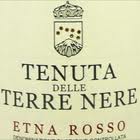
2 – Tenuta Delle Terre Nere Etna Rosso 2010
Vintage: 2010 Type: Red Producer: Tenuta delle Terre Nere Variety: Nerello Mascalese Designation: Rosso Region: Sicily, Italy Appellation: Etna DOC
This little beauty comes to us from Etna, the active volcano in Sicily, from vineyards that sit at their lowest 2,100 feet to their highest of 3,200 feet above sea level. It’s made up of 98% Nerello Mascalese and 2% Nerello Capuccino. The vineyard has begun to undergo changes to organic viticulture starting in 2007 and by 2010 will have its certification. The vines vary in age from 40 to 100 years old.
Tenuta delle Terre Nere makes the rosso as a blend of their youngest vines from their 3 “cru” vineyard sites: Guardiola, Calderara and Feudo di Mezzo on Etna. Unlike the rather rustic scene you think of when conjuring up what vines might look like on the side of a volcano, the wine is elegant, beautiful and fruity, yet perfumed. Comparisons to Burgundy and Barolo are not uncommon.
The 2009 Rosso is mid-weight and elegant, not heavy, but lush. The nose is full of fresh raspberries and strawberries with a hint of minerals. It also extends a perfume-y quality that lends to a more complex nose than it should at this price. The palate is just the same – fresh fruits that have lots of lush flavor.
It’s just mid-weight and almost weightless. NOT light or flimsy, just subtle. Unfortunately, it’s limited, so get in here and take some home! (www.centralbottle.com)
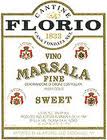
3 – Marsala Fine I. P. Ambra Sweet – Dessert Wine
Every new vintage evokes a new emotion. The goal of any vintner should be to describe, interpret, and enhance the peculiarities of the territory, even if it is but one hectare, or one grape. That’s the belief of the Paladino family, owner of the Alcesti brand and of 30 hectares (around 74 acres) of vineyards located between the cities of Marsala, Mazara and Salemi. These vineyards express the typical Sicilian terroir, thanks to the respect paid to the land and the non-invasive cultivation. The cellar represents a dream come true for the Paladino family and was built in 2003 just a few kilometers from Marsala. The family mission statement is to combine innovative and traditional winemaking in total respect for the environment. The decision to allocate the family vineyards to the cultivation of native grapes, allowed Gianfranco Paladino, the brand manager of the estate, to become the ambassador of “Sicilianism”, producing wines that are tightly related to a territory, or to a family. Gianfranco, his sister Valeria, and his father Leonardo are convinced that in today’s wine world there is no need to “surprise,” but rather “bring to mind” true sensations, as only a good quality wine can do. Information on this wine to be posted soon. From Xwine Site Additional information on the producer may be found in its website: Alcesti Wineri, Italy
The label is not the Marsala Ambra Sweet – Alcesti that we are tasting. This is of another dessert wine by Florio of the same Sicilian region.
Jairo Sanchez presents these wines:
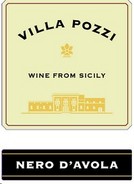
4 – Pozzi Sicilia Rosso 2009 Nero d’Aveda
Grape type: Nero d’Avola Sicily, Italy, Winery: Pozzi Alcohol: 13.5% about $ 13 Total Wine
This 2009 Sicilian Rosso, made from just one typical Sicilian grape Sicilian Nero d’Avola IGT, matures in large oak casks. A gentle floral nose is followed by a softly muted palate of ripe plums and big cherries culminating in a delicious tannic leather and asphalt finish. It exhibits far more balance, body and structure than most Italian Regional Reds. The color is intense ruby, mild aroma and fruity soft taste with gentle tannins and a long aftertaste. It’s an ideal partner for tasty dishes and mature cheeses, as well as with light party fare and typical Southern Italian and Sicilian Cuisine. Can be cellared for a few years.
5 Stars Delicious anytime By Newlen14173564, November 18, 2011: This wine is great to sip, to have with dinner, or cheese and crackers. It is so good. Only problem is I have a hard time accessing it at my local wine store for it is usually out of stock.
5 Stars Best everyday red I’ve tasted so far By Wine11897680, December 18, 2005: Growing up Italian I have tasted many red wines, homemade and store bought. Pozzi Sicilia Rosso has a mild fruity taste, lite tannins, nice mild aroma and just plain and simple good everyday drinking wine. Sure I tasted more expensive wines that were GREAT but for the money and everyday Pozzi Sicilia has 5 stars in my book.
This medium body blend of indigenous grapes offers notes of lemon rind, orange skin and apples On the palate it is crisp, medium-body, fresh fruity and ripe.
Grillo is a Sicilian varietal that once was the base of Marsala. It delivers citrus flavors, body and earthiness
Reviewed by ABCWineReviews Deep gold in color, this wine exhibits aromas of peach and melon with distinct notes of honey and spice. Rich and full-bodied on the palate, the expressive fruit flavors have considerable complexity and depth. The finish is long; with characteristics of oak cellaring (though according to the winemaker none was used).
Our rating: This is a most interesting wine. The grapes are native to Sicily and produce a wine that is likely quite unfamiliar to American palates. Pair this wine with roasted chicken and potatoes, as we did, or dishes that have richly flavored sauces, and serve just barely chilled. We rate it Above Average, nearly Excellent.
Taste profile from the winemaker: “Colore: Giallo paglierino, con riflessi dorati (straw yellow with golden reflections). Sapore: Equilibrato ed armonico, sapido, fruttato. Tipici sentori delle uve di provenienza (balanced and harmonious, full-bodied, fruity; typical aromas of the varietal grapes).”
III – Menu to be served at the tasting
Aperitivo: Cozze Napolitano (mussels in white wine, garlic , olive oil ,parsley)
Primer Plato: Eggplant Parmigiana (layers of eggplant with musarella, marinara sauce served with pasta)
Segundo Plato: Pork Chops-Mash Potatoes (brown sauce with port wine and fresh herbs)
Postre: Tiramisu o Mixed Berries with Zabaglione
___________________________
IV – Opinión de los miembros acerca de los vinos catados
Hugo Benito
Contestaron la hoja de evaluiacion 19 personas.Como es norma no se consideraron los valores exremos.
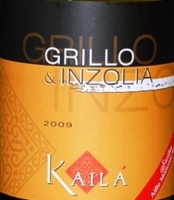
Vino Numero 1 – Kaila Sicilia 2010,Grillo & Inzolia – Alcohol Precio $14.0. Este vino fue evaluado por 17 personas con un promedio de 87.7 puntos. Hubo una concentracion (14 pers.) entre 87 y 90 con un promedio de 88,2 puntos. Buen aroma, color amarillo palido muy bonito, sabor a citricos y a manzana verde, balanceado entre la acidez y el azucar, final largo ligeramente amargo. Buen aperitivo
Vino Numero 2 – Pozzi Sicilia Rosso Nero D’Avola – Alcohol 13.5% Precio $13.65 . Evaluaron este vino16 personas con un promedio de 88.2 puntos. . Hubo una concentracion (15 pers) entre 87 y 90 puntos con un promedio similar 88.4. Color rubi brillante (burgundy) aroma a frutas, sabor a frutos rojos y negros,hierbas, especias; Balanceado aunque con azucar residual alto. Taninos suaves aunque algo astringente Good finish, long afertaste.
Vino Numero 3 – Lamuri Nero D’Avola 2009 Tasca D’Almerita. – Evaluaron ese vino 15 personas con un promedio de 88.3 puntos. Hubo una concentracion (12 Pers.) entre 88 y 90 con un promedio de 88.9 puntos. Siete personas le dieron 89 puntos. Aromas a tabaco y cuero, color rubi claro (light plum color),sabor a frutas, black berries, buen cuerpo ligeramente tanico, balanceado, alcohol explicito,sabor residual medio. Sabor muy parecido al Cabernet Sauvignon. Bueno para tomar entre el 2012 y el 2019.
Vino Numero 4 – Tenuta Delle Terre Etna Rosso 2010 – Evaluaron este vino 14 personas con un promedio de 86.8 puntos. No hay una zona de concentracion marcada, por ejemplo cuatro personas le dieron 85 puntos y otras cuatro le dieron 89 puntos. Color rubi claro transparente ,aromas limitados, poco cuerpo .Presencia de taninos y acidez en su largo final.
Vino Numero 5 – Marsala Fine I.P.Ambra Sweet-Dessert Wine. Ese vino solo fue evaluado por 4 personas con un promedio de 89 puntos. Buen aroma, multiplicidad de sabores y a ciruelas y chocolate. Excelente vino de postre., mucho cuerpo.
__________________________________________
V – La Región Productora: Sicilia, Italia
Alfonso Sánchez
Sicilia produce unos 930 millones de botellas al año (Burdeos produce 850 millones), sin embargo este volumen es un 70 por ciento de lo que se producía en 1990. La reducción se debe a que los sicilianos se han concentrado en los últimos años a producir más calidad y menos cantidad. Mientras en los 80s se producían vinos caseros de calidad baja y mostos para exportación principalmente al norte de Italia para cortar los vinos de esa región, ahora se producen vinos con calidad de exportación, la que ha crecido considerablemente en los últimos años.
Sicilia cuenta con una gran variedad de uvas y suelos y un clima muy seco y cálido lo que favorece las variedades que producen vinos con alto contenido de azúcar y mucho cuerpo (de allí su uso para vinos fortificados y como mostos de corte para las variedades del norte). Por otro lado los sicilianos se han concentrado en mejorar la calidad de las cepas nativas y menos en la de adaptación de cepas importadas. Se sabe que desde al menos el siglo V AC los griegos fabricaban vino en Sicilia, sin embargo a pesar de que la isla era un centro de comercio y de llegada de los barcos mercantes en el Mediterráneo, no llegaron cepas foráneas en cantidades apreciables. No obstante que hubo algunas influencias importantes extranjeras. Por ejemplo, los árabes (que ocuparon a Sicilia desde 823 hasta 1123 DC), introdujeron en la isla de Pantelleria la Moscatel de Alejandría e introdujeron la técnica de pasificación de las uvas. Esta variedad se conserva con el nombre Zibibbo y es usada para vinos secos o de postre. Se sabe que esta uva es también la progenitora de la Torrontés mediante el cruce con otras variedades.
El noventa por ciento de la producción de Sicilia son vinos dulces. El más famoso es el Marsala que se hizo muy famosa a partir de 1700 cuando un comerciante inglés, John Woodhouse, probó junto con su tripulación el vino local, fuerte y robusto, y lo encontró de su gusto. Woodhouse expidió el vino en 50 barricas hacia Inglaterra, pero añadiendo a cada recipiente aguardiente de vino para evitar que se oxidase durante el trayecto por mar. El Marsala tuvo un gran éxito. Sin embargo su calidad decayó y hacia los 1950 estaba relegado a un vino de cocina. En 1986 el gobierno italiano produjo unas nuevas normas para el Marsala parecidas a las que tiene Portugal para sus Oportos y hoy se producen excelentes Marsalas dulces para postre, aperitivos así como secos.
La tierra del Marsala (Trapani) al oeste es la que más vino produce pero es en Catania al este donde se encuentran la mayoría de las AOCs (denominaciones de origen). Los sicilianos no son muy apegados a las AOC y la mayoría de los vinos se producen por fuera de ellas.
Las Variedades
Las variedades más importantes nativas de Sicilia son:
Las blancas Grillo, Inzoila y Catarratto;
Las tintas Nero D’Abola (38 5 de la superficie cultivada) llamada también Calabrese (calabrese) que da vinos de color intenso y fuertes taninos parecidos a los del Syrah y las variedades, Nerello Mascalese (laderas del Aetna), Nerello Cappuccio, Frappato di Vittoria.
Las Moscatel: Moscato di Notto, Moscatto di Siracuso, Zibibbo, Mocatto de Alexandria, Moscatto de Pantellera.
Las Importadas: Pinot Grigio , Pinot Blanc and Sauvignon Blanc, Malvasía, Merlot, Cabernet Sauvignon, Malbec y Tanat.
Marsala. El más famos de Sicilia. Vino fortificado hecho de Inzoila, Catarratto ó Grillo. Se produce en los tipos dorado (oro), ámbar (ambra) y rojo (rubino) y dependiendo del añejamiento es superiore (2 años), superiore riserva (3 años) o vergine( 5 años).
Zibbibo. Hecho con la variedad Moscatto de Pantelleira que también sirve para producir vinos secos y Grappas
Nero D’Avola: Vinos atractivamente oscuros, suaves pero robustos, y que envejecen bien con roble.
Frappato Nero: Suave, bajo en taninos, frecuentemente cortados con con la Nero d’Avola, Nerello y Nocera
Moscatos de Pantelleira, de Siracusa y de Notto. Vinos fortificados de postre, aromáticos y licorosos.
Malvasía de Lipari. Producido cerca de Messina en las modalidades de mesa (según el proceso para vino blanco) o el passito con base en uvas pasas de vendimia tardía.
_________________________________
VI – History and more of Sicily Wine
Jairo Sanchez
Jairo Sanchez
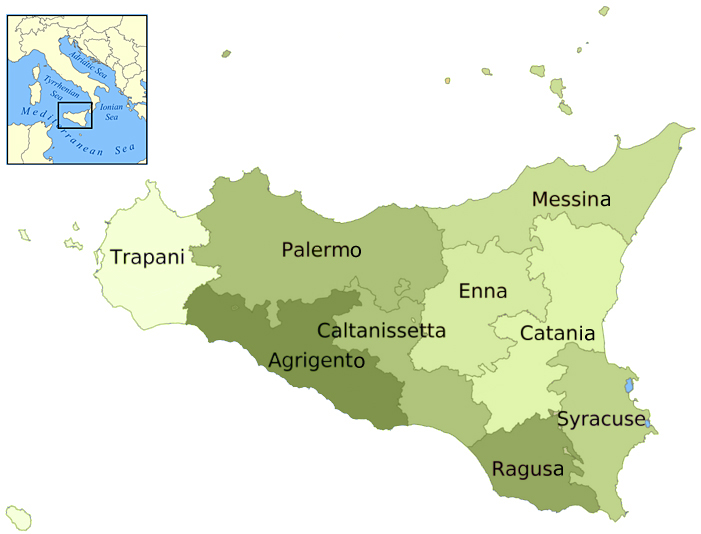
Sicily (Sicilia to its Italian-speaking population) is an autonomous region of Italy, and the largest island in the Mediterranean Sea. At its widest point, between Messina and Marsala, the island measures 175 miles (280km) east to west, and about one third that distance north to south. Its roughly triangular shape led the island to be dubbed Trinacria (the triangle) during the Middle Ages, and is reflected in the triskelion at the center of the regional flag.
For more than 2500 years Sicily has been a significant centre of viticulture in the Mediterranean, although its reputation is not as immaculate and widespread today as it once was. Blessed with consistently bright sunshine and reliably moderate rainfall, the classic Mediterranean climate here is ideally suited to the needs of wine-bearing grape vines. Add to that the paucity of the island’s soils and the hilly landscape in which they sit, and the resulting terroir is almost perfect for growing not just vines but also the cereals, olives and citrus fruits which remain the island’s key exports today.
The apparent perfection described above has played an ironic role in diminishing the luster once worn by Sicilian wines, as it facilitated government-driven schemes pushing for higher productivity on the island during the late 20th century. Where once Sicily’s wines came from traditional goblet-trained vines, they now come mostly from the higher yielding tendone or guyot training methods, the costs of the transition being heavily subsidized by central government. Higher yields led to over-production and lower quality wines, which have in turn led to low consumer confidence, even lower revenues and a reputation so tarnished it may take decades to fully restore its shine. Fortunately the dramatic surges which have taken place in wine consumption since the 1980s, and the changing quality-focused attitudes of wine consumers, have led to glimmerings of Sicily’s potential which are now just beginning to be noticed.
The soils, and the mountains from which they came, are of particular interest when it comes to studying Sicilian viticulture. Mount Etna, Europe’s tallest active volcano at 10,930ft (3,330m), dominates the island’s eastern skyline and is responsible for the mineral-rich, dark soils which characterize the Etna DOC. Vineyards are now being planted higher up on the volcanic slopes, the idea being to capitalize on the cooler air and richer soils there. 50 miles (80km) south of this, the Iblei Mountains have also had their say in eastern Sicilian wine. On their lower slopes, and on the coastal plains below them, the DOCs of Siracusa, Noto, Eloro and Vittoria sweep from east to west, forming a crescent which mirrors the arcing coastline here. In the western Sicily, the volcanic hills are less individually dramatic, but are just as important to the soil types there. The western fifth of the island is covered by the Marsala DOC, and also within this area also fall the DOCs Alcamo, Contessa Entellina, Delia Nivolelli, Erice, Menfi, Monreale, Salaparuta, Santa Margherita di Belice, and Sciacca. Also of note is the small Sambuca di Sicilia DOC, whose wines are not to be confused with the potent anise-flavored liqueur with which they share their name.
The key grape varieties used in Sicilian viticulture are a combination of ‘native’ varieties (those which have historically been cultivated on the island) and newer, more fashionable imports. Nero d’Avola and Catarratto are the most important natives, occupying about 16 per cent and 32 per cent of Sicily’s vineyard area respectively in 2008. The sheer volume of Catarratto juice created each year means that much of the juice is shipped to cooler Italian wine regions, where it is used to increase the body and weight of otherwise thin, over-acidic wines; chaptalization is prohibited under Italian wine law. A large proportion of what remains on the island is used to make Marsala, for which it is joined by two other white varieties Grillo and Inzolia. Although less famous than Marsala, another sweet wine of significance to the island is Moscato di Pantelleria, the Moscato grape in question being Muscat of Alexandria. In terms of red wine varieties, next most common after Nero d’Avola is Grecanico, accompanied by small quantities of Alicante (Grenache Noir), Perricone, Nocera, and Frappato, the latter being the key ingredient in Sicily’s only DOCG wine Cerasuolo di Vittoria. Sibling varieties Nerello Mascalese and Nerello Cappuccio (aka Nerello Mantellato) are also small players in terms of volume, but are of vital importance around Mount Etna. Syrah has been brought here from its home in southern France, where hot summer sunshine and sandy, rocky soils are also key components of the terroir. The robust red Rhone Valley variety shows every sign of adapting well to the Sicilian heat, and certainly better than Chardonnay, which has proved less able to produce balanced wines here. Trebbiano, the ubiquitous, high-yielding white variety found all over Italy, is also present in the wines of Sicily, although it has no role of particular distinction among them.
The island’s topography has affected more than just how, and where, Sicilian wines are created; it has also had a significant impact on the way commerce and customs have developed on the island. In the late Middle Ages Palermo was one of the largest city populations in Europe, and had a correspondingly voracious wine appetite. Despite large quantities of wine being made in the east of Sicily, Palermo’s wine supplies came as much from Campania and Lazio as they did from the other end of the island, so mountainous is the landscape which surrounds the port city. Given the frequent contact Palermo had with the central western coast of Italy, and the proximity of Messina to southern Italy (it is separated from southern Calabria by the Strait of Messina, just 2 miles wide), these two key Sicilian cities were more influenced by the mainland at this time than they were by one another. And while Palermo was importing Italian wines, Messina was actually exporting eastern Sicilian wines to Africa and the eastern Mediterranean. Modern transportation and communication technologies mean that Sicily’s dramatic, volcanic landscape has less of an impact on the region’s social and cultural structures. They remain, however, a vital part of its viticulture and winemaking, and may prove to be its unique selling point in the modern wine world.
_______________________________________________
VII – Happy Birthday! Members with Birthday on the Month of December
Emilio Bernal-Labrada 6, Ruth Connolly 13, Ricardo Zavaleta 17, Jairo Sanchez 21, and Cecílio Augusto Berndsen 31.
VIII – Season Greetings Boas Festas Buenísimas Fiestas
Jose Feliciano, Nat King Cole, Dean Martin, Bing Crosby and many other are here to whish you a Very Merry Christmas and a Super 2012 for you and your family!
There are so many great Christmas songs, but these are the top 15 that I think best capture the essence of this joyous season. Sit back and enjoy the wonderful music of Christmas. Which Christmas song is your favorite? The Top 15 Christmas Songs by PrincessFiana. Press the arrow in the center of the box, increase the volume, sit back and enjoy!
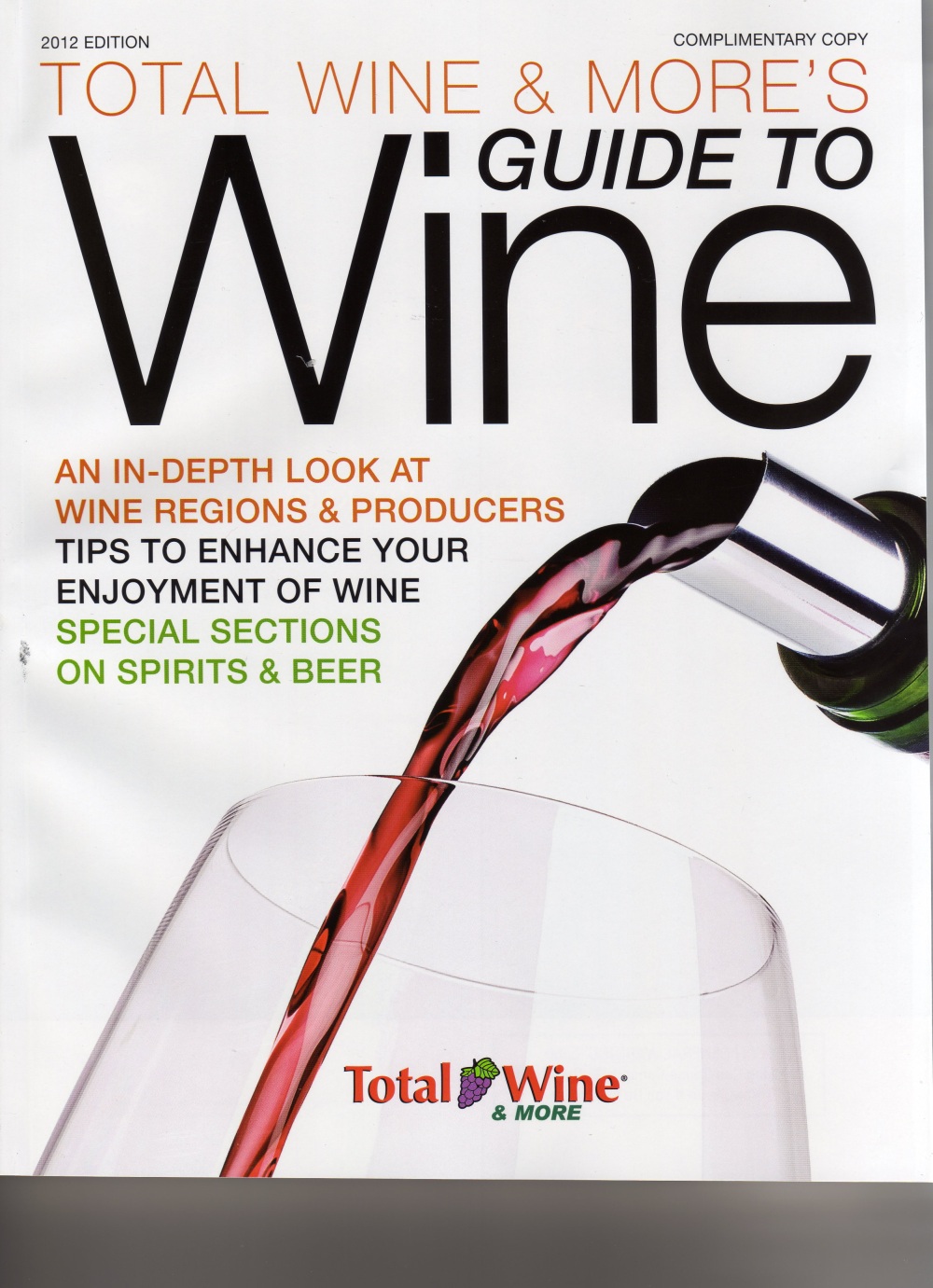
Guide to Wine: The 2012 edition of the Total Wine & More Guide has arrived
Fresh of the presses the new 2012 Guide to Wine by the Total Wine & More is available. We can not complain about its cost. It’s better hurry up before it is sold out. You may browse the McLean Virginia Store available stock of wine and beer on-line catalog here MCLEAN, Virginia ← click here
Besides brief descriptions of thousand of wines and beers they sell the guide has many interesting sections. The guide presents articles on Winemaking, food and wine pairing, aging and cellaring among others. The guide has 472 pages of relevant wine lover information beautifully illustrated.
These corkscrews will ease the task of drawing out the cork.
POSTED ON NOVEMBER 18, 2011, AT 11:17 AM
Peugeot Elis Electric Corkscrew
Open your next bottle of wine “one-handed, with eyes closed.” This device requires only that you sit it on top of the bottle and occasionally recharge the batteries.
$120, chefsresource.com
Source: Wall Street Journal
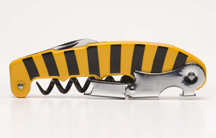
Fashion Animals Corkscrew
We like waiter’s-style corkscrews that come with a “double-jointed arm for good leverage.” This one also has a thin worm, or wire.
$11.50, corkpops.com
Source: Every Day With Rachael Ray
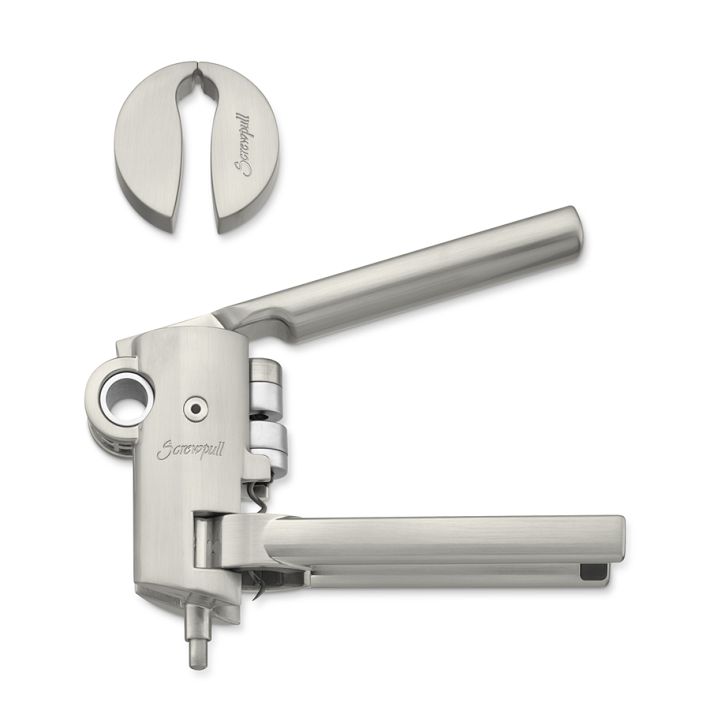
Screwpull Advanced Leverpull Wine Opener
Fit for a museum, this lever-style corkscrew perfectly combines “simplicity, functionality, and form.” While the price is high, the Advanced Leverpull is “built to last.”
$150, lecreuset.com
Source: Wall Street Journal
Screwpull Original Corkscrew
Despite this tool’s “somewhat flimsy plastic construction,” many wine lovers appreciate the way its long spiral gently draws a cork.
$20, lecreuset.com
Source: Every Day With Rachael Ray
Peugeot Mathus Blade-Style Corkscrew
Since brittle corks are prevalent in older bottles, a blade-style pull can be a true oenophile’s “best friend.” It’s the “perfect solution” for salvaging a broken cork.
Best buy Shiraz and Zinfandel just in time for the parties of the season. All $10 or less. It may be worthy to check them out:
Shiraz (Syrah):
Alice White $7 Mix of jammy black fruit with spicy licorice and caramelized notes on finish. A trace of bitterness, leather and brown sugar adds interest.
The Little Penguin $7 Strong wood and char flavors followed by jammy black-fruit flavors on finish.
Yellow Tail $7 Tasty red and black fruit with prominent vanilla and hint of cinanamon flavor.
Zinfandel:
Dancing Bull $10 Tasty from beginning to end: good structure and well-balanced, with a soft fruity finish.
Old Moon (Trader Joe’s exclusive) $6 Nice, easy drinking, jammy. Light on structure but lost of fruit.
Bogle $10 Supple, easy easy drinking, with red and black fruit and soft wood flavors. Traces of alcohol and bitterness.