

Tasting #241 May 31, 2022, 12:30pm Priorat and Penedès, Catalonia Wine Region
Presenters:
Jorge Requena, Jairo Sanchez y Alberto Gomez
Menu
1st. Seafood salad
2nd. Prociutto and Melone
3rd. Three mature cheeses from Spain and Italy:
Manchego, sheep, Spain
Idiazabal, Cow, Spain, and
Pecorino Romano, sheep Italy
4th Grilled tenderloin with wine sauce, and grilled vegetables, mainly sparagus.
Wines:
- 2018 Clos Mogador Vinya Classificada Gratallops. DOQ Priorat
- 2017 Ferrer Bobet, Vinyes Velles DOQ Priorat
- 2018 Mas Martinet – Bru DOQ Priorat
- Villa Conchi Cava, Brut Selección
Participants:
TBA
Objective:
To get acquainted with Catalonian Wine Region, main grapes, wines and styles in the Priorat and Penedès “Denominaciones de Origen Protegido” (DOP).
The Region was selected for having international recognition for Spain wine quality, diversity and tradition in grape production and wine-making. Wines were selected with criteria for local availability in Washington DC area and representing Catalonia’s Priorat and Penedès DOPs. Tasting will be blind to wine costs and serving order, to enhance identification of wine quality and attributes.
Catalonia Region
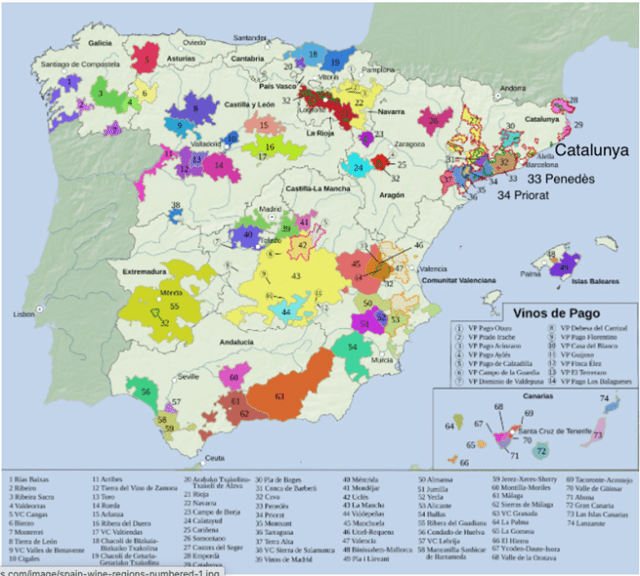 Location. The Catalan wine region is located along the Mediterranean coast in northeastern Spain and is strongly influenced by its Mediterranean climate. Along the coast temperatures are warm with moderate rainfall but conditions become progressively more arid further inland. The majority DOPs lie to the south of the distinctive peaks of the Montserrat Massif, while smaller plantations lie to the north of Barcelona and south of the French border at the Pyrenees.
Climate. The region is marked by warm climates along the coast and cooler temperatures through the foothills up to plateaus of more than 610 m. above sea level. The area has a diversity of soil types, mostly calcareous sediments mixed with alluvium and clay. Some of the most acclaimed vineyards in the region are found on scattered limestone deposits in the area.
Catalonia grapes and Wines. The wines of the Catalan wine region include sparkling Cava, dry white wines and powerful reds. The grapes of the region include the Cava and white wine grapes of Macabeo, Parellada and Xarel·lo and the red wine grapes of Garnacha, Cariñena, Monastrell and Tempranillo. The production of sparkling white wine is the largest contributor to the Catalan wine industry, followed by production of still red and white wines. While the majority of the region’s wines are the Cava blends, many varietal wines are also produced.
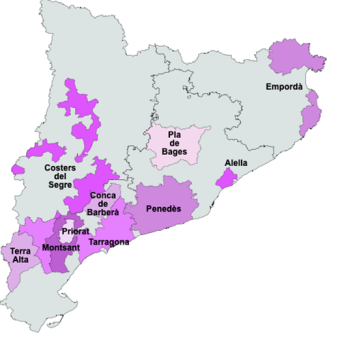 DOs in Catalonia. The Catalan wine region includes 10 DOPs (Denominación de Origen Protegida), of which one, the Priorat, is a Denominació d’Origen Qualificada (DOCa or DOQ): (Alella, Conca de Barberà, Costers del Segre, Empordà, Montsant, Penedès, Pla de Bages, Priorat, Tarragona,and Terra Alta. The Catalunya DOP is an umbrella appellation that covers the entire region for wines that do not fall under any other DOP designation.
Priorat wine DOP
The Priorat wine DOP is located in the Catalonia region, just inland from the Mediterranean port city of Tarragona. The Montsant mountain chain dominates the region, with vineyards situated between 330 feet above sea level in the valleys of Bellmunt del Priorat and el Molar up to 2,500 feet above sea level on the slopes of La Morera de Montsant and Porrera. This small, geographically inhospitable wine region produces some of the country’s most powerful red wines.
Many vineyards are located on costers (Catalan for “steep slope”) with a typical gradient of 15 and up to 60 percent, so terracing is common, and vineyards are often too steep and narrow for machine-harvesting. The slate soil on the slopes is known as llicorella due to its dark color and is the main feature of the soil’s terroir and the success of its native grapes.
History. The Priorat wine region has a long history, and it first began producing wine over 900 years ago. Priorat’s winemaking history begins in the twelfth century, when Carthusian monks from Provence established their priory, Cartoixa d’Escaladei in the region’s center. In 1980, the Clos, small walled-in vineyard spots meant for producing high-quality wines were introduced. These typically wines are labeled with the names of the individual mini-vineyards, such as Clos Erasmus, Clos Mogador, Clos de l’Obac, Clos Dofi (now Finca Dofi) and Clos Martinet. In the years 2000s Priorat became the second region in Spain, after Rioja, to receive the designation DOCa.
Climate. The climate here is remarkably continental, given its relative proximity to the Mediterranean. The official Priorat viticultural area covers 11 parishes located just inland from the city of Tarragona. Summers are long, hot and dry, and annual rainfall averages 500mm. The particular combination of geographical factors makes this one of Spain’s warmest, driest areas.
Topography and soil. A tiny mountainous region, rugged and dry, pretty much unsuitable for any other crop, except for wine grapes and olives. Soil is of paramount importance to winemakers in Priorat as this is reputed to impart much of the minerality associated with the region’s wines. Priorat’s flagship soil type is “llicorella” – a free-draining, nutrient-poor soil made up of partially-decomposed slate and quartz.
Priorat grapes. Red grape varieties are by far the most popular in Priorat, accounting for 93 percent of plantings: Garnacha (41%) is rich and juicy, it adds body and density to red blends and holds its own as a varietal wine; Cariñena (23%) adds depth, intensity, and fruit flavors to red blends; Cabernet Sauvignon (10%) is permitted in Priorat blends, it can add structure; Syrah (10%) is permitted for blending, it makes for a full-bodied wine and adds earthiness; Merlot (6%) is also permitted in Priorat red blends, it adds a certain roundness; Garnacha Blanca (5%) while white wines aren’t common in Priorat, they do exist, and most come from this light-skinned version of Garnacha; Macabeo (1%) is the second most planted white wine grape in northern Spain, its mild flavor makes it a useful blending grape for cavas and rosés; Pedro Ximénez (0.5%) used in sweet, fortified wines.
Tasting of Priorat wines. Sun-dried red and black plum, black cherry, and cassis (red and black currant) dominate the aroma profile of high-quality Priorat red wine. Beyond the fruit, you’ll notice a distinct, “black stone” or “hard rock” minerality that some experts relate to the iconic llicorella slate soils of the region. The typical structure of Priorat offers soft, moderate acidity matched with big, brawny tannins, and relatively high alcohol (usually in the 14% and up ABV). Additional flavors might include some smoked salt, and spiced notes (cinnamon, cardamom, molasses), often with a somewhat herbal-minty or licorice-anisette finish. The finer the Priorat, the more harmoniously intense and polychromatic the taste profile will be, often traveling through several different stages of flavor (i.e., fruit, to savory, to spiced).
Wine regulations. Current Priorat production laws only recognize a so-called “Vino de guarda” in which a red wine must spend a minimum of 12 months in oak prior to bottling. Most red Priorat wines conform to this standard. Fermentado en Barrica or Barrica indicate the wine has been fermented or aged in barrels of 600 liters or less. The term Roble is often accompanied by the length of time (in months or years) the wine has spent in barrels of 600 liters or less.
DOQ Priorat is pushing a new qualification of wines produced in their wineries.
Introduced in 2019, “Los Nombres de la Tierra” is Priorat’s unique classification system. It has five tiers: 1.-DOQ. 2.-Vins de Vila.3.-Paratge. 4.-Vinnia Classificada. 5.-Gran Vinia Classificada
DOQ Priorat has just over 2.000 hectares of vineyards, grown by 535 producers and 109 wineries. Vine cultivation and wine making are the main economic activities of the appellation’s villages.
Best years: Outstanding (2010, 2004), Good (2013, 2012, 2009, 2008, 2005)
Penedès wine DOP
The most important viticultural area in Catalonia, northeastern Spain, in terms of both volumes produced and the diversity of wine styles. Its Penedès DO title covers dry, sweet and sparkling styles (red, white and rosé). Its vineyards also generate vast quantities of Spain’s flagship sparkling wine, Cava.
Penedès is a former administrative district in the coastal hills between Barcelona and Tarragona. It lies just a few miles down the Mediterranean coastline from Barcelona. Such proximity to Spain’s second-largest city provides the wine industry with a significant local market. It also offers a gateway to export destinations via its busy port.
History. The region’s long viticultural history began when the Romans arrived in the area. The region’s wines attracted little attention, and were rarely exported. It wasn’t until the 20th Century that they began attracting attention on export markets. In 1960 the Penedès DO was introduced, followed almost immediately by sweeping changes in the region’s approach to quality wine production. The introduction of stainless-steel tanks and temperature-controlled fermentations ushered in a new era of cleaner winemaking, complemented by experimentation with non-traditional grape varieties such as Merlot and Cabernet Sauvignon.
Climate. The climate is Mediterranean, with warm summers, mild winters and moderate rainfall concentrated mostly in spring and autumn. Due to the complex topography of the coastal hills, however, there is notable climatic variation from site to site, allowing winemakers to generate a relatively wide range of wine types.
Broadly speaking, Penedès can be divided into three climatic sub-zones: Baix Penedès, lower-lying, warmer areas, and specializes in the production of full-bodied red wines. Medio Penedès is the transitional area between the two. Alt Penedès lies higher up in the hills, between 500 and 800 meters. In the cooler conditions here, the freshest white wine styles are produced
Topography and soil. The region has a highly varied geology characterized by very poor-quality, well-drained soils. The sandy, clay-like soil is poor in organic matter and rocky in the main, the pre-litoral upland. Coastal mountains are mostly limestone.
Penedès grapes. Red Penedès wines have traditionally been made from such classic Spanish grape varieties as Garnacha, Cariñena, Monastrell and Tempranillo but the local winemakers are increasingly turning to the “international” Bordeaux varieties Merlot and Cabernet Sauvignon. The white wines are made from the varieties otherwise used for Cava: Macabeo, Parellada, Xarel-lo, and more recently Chardonnay.
Cava grape varieties. Macabeo makes up around half of a typical Cava blend – not because of its flavor (quite bland), but because it represents a viticultural insurance policy. Macabeo vines bud relatively late in the spring, ensuring that their flowers and grapes are safe from early frosts.
The interesting, slightly earthy flavors that distinguish Cava from most Champagnes are generally attributed to Xarel-lo grapes. Pinot Noir and Monastrell are used to bring red pigment and depth of flavor to Cava Rosado, which may also be labeled as Cava Rosé. Grenache, Malvasia (sometimes called Subirat) and Trepat are also authorized for use in Cava by the Consejo Regulador wine authority, although the latter is allowed only in rosado wines.
Cava sweetness level begins with Brut Nature (0-3 grams/lt of residual sugar, no sugar added), and continue with Extra Brut, Brut, Extra Seco, Seco, Semiseco, and Dulce (more than 50 grams/lt)
Wines
Wine selection. We selected a cava from Penedès and three red wines from Priorat. Cava is core to the success of the Penedès area and red Priorat wine is exceptional for several reasons. First, it is one of very few world-class wine styles to be based on Grenache – a category in which it is joined only by red Châteauneuf-du-Pape and the top-end wines from California’s Sine Qua Non. Second, it is one of only two styles to hold Spain’s top-tier DOCa (Denominación de Origen Calificada) classification. And third, it has risen from being almost unheard-of on the international wine market to being one of the world’s most expensive wines.
♣ 2018 Clos Mogador Vinya Classificada Gratallops. DOQ Priorat
14.5% Vol. Garnacha (45%), Cariñena (29%), Syrah (16%) and Cabernet Sauvignon (10%)
 Clos Mogador is a vast amphitheatre of crumbling slate. The vines are surrounded by mountains up to 1.200 metres. For the first time in Spain, Clos Mogador, was awarded the prestigious qualification of «Vi de Finca», an additional qualification to the D.O.Ca. Priorat certification. It certifies that all grapes used to make this wine over at least the last five years have been sourced from the Clos Mogador single vineyard.
Wine Advocate (98). Fermented with natural yeasts, slow fermentations with long maceration and long aging. It matured for 18 months in 2,000-liter oak vats and 30% in 300-liter oak barrels. There was a lot of rain in 2018, and it was an atypical year:
Vinous (96). Inky ruby. An exotically perfumed bouquet presents an array of mineral-driven dark fruit liqueur, spice and floral qualities, along with hints of vanilla and pipe tobacco that build as the wine opens up. Sweet and densely packed on the palate, offering intense blueberry, cassis, cherry compote and violet pastille flavors and a touch of cola. Rich yet energetic in character, displaying superb definition, building tannins and outstanding, smoky persistence.
♣ 2017 Ferrer Bobet, Vinyes Velles DOQ Priorat
14.5% Vol. Cariñena (74%) and Garnacha (26%)
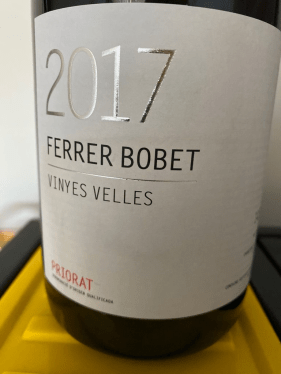 Grapes from steep slate hillsides and terraces picked by hand. Selected berry by berry and then transferred to tanks by gravity. Fermentation in 15 and 30 Hl wooden and stainless-steel tanks. Malolactic conversion and aging in fine-grained, medium and lightly-toasted French oak barrels for 15 months. Bottled unfined and unfiltered. Bottle aged for a minimum of 11 months.
Robert Parker’s Wine Advocate (95). In a warmer year, the high percentage of Cariñena has worked wonders; it has herbal and floral aromas and a rustic side but is mostly elegant. It’s beautifully textured, and the tannins are very fine; there is no sense of heat at all, and it has amazing balance and a very tasty finish. The oak is perfectly integrated.
Wine Spectator (94). The medley of black cherry, currant and plum is focused and lively and flanked with tar, smoke and spice undertones. This has depth, freshness and harmony of flavors.
♣ 2018 Mas Martinet – Bru DOQ Priorat
14.5% Vol. Garnacha (28%), Syrah (26%), Cariñena (23%), Merlot (16%), Cabernet Sauvignon (7%)
 Martinet Bru is mainly sourced from a single vineyard, known as Mas Seró. The soil is stony but the vineyard is cool in terms of climate. It faces the cooling sea breeze and the quality of the soil means this wine is more drinkable and easier to understand than most Priorat wines, affording it hint of licorice, blackberries, rosemary and tannins.
It’s a blend of grapes from three organically farmed. The grapes are picked early but at different times, fermented with some full clusters and, when possible, with indigenous yeasts in concrete vats. It matured in a combination of 4,500-liter oak vats, used 300-liter barrels, amphorae and glass demijohns.
Forward and elegant wine, lovely fresh nose of integrated black fruits and oak, overlaid with minerals and hints of spices in a warm deliciously smooth, fresh, friendly wine, marked tannins and licorice notes on its long lingering finish.
Robert Parker’s Wine Advocate (93). Elegant and fresh, nuanced and clean. It’s very harmonious and feels very balanced, with fresh flavors and very fine tannins. It’s one of the finest vintages for this bottling.
Jeb Dunnuck (91). A juicy, upfront style carrying lots of ripe black cherry and mulberry fruits as well as notes of brambly herbs, licorice, and earth. It’s nicely textured and balanced, has silky tannins.
♣ Villa Conchi Cava, Brut Selección
11.5% Vol. Macabeo (30%), Parellada (30%), Xarel.Lo (30%), Chardonnay (10%)
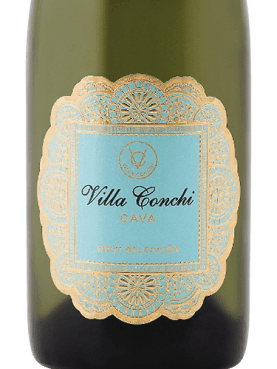 Bodega Villa Conchi is located in Penedès, Catalonia. The grapes are harvested manually and pressed directly on arrival at the winery. Each variety is fermented separately, then the must is blended and bottled together with the base wine, to which yeast and sugar are added to create the second fermentation. The bottles are kept in underground cellars at constant temperature, in contact with their lees. The Cava is then aged for minimum 12 months in bottle. After this period, the sediments are removed and the liqueur d’expédition is added in order to obtain a Brut style
This cava is balanced and elegant with a refreshing quality. It has pronounced flavors of ripe fruit and citrus notes. Lingering behind on the palate are hints of apple, pear and citrus.
James Suckling (91). Sliced apples and pears with some dried biscuits and minerals. Full-bodied. Layered. Dry finish.
Guía Penin (89). Colour: bright yellow. Nose: ripe fruit, fine lees, balanced, dried herbs. Palate: good acidity, tasty, ripe fruit, long.
References
-MacNeil, Karen, 2015, The Wine Bible, Second Revised Edition, New York, Workman Publishing
-Robinson, Jancis and Julia Harding, 2015, Oxford Companion to Wine, Fourth Edition, Oxford University Press
https://winefolly.com/deep-dive/in-search-of-the-best-wines-from-priorat/
https://www.wine-searcher.com/regions-priorat
https://www.cardsofwine.com/red_priorat.asp
https://www.winetraveler.com/spain/wine-tasting-penedes-wine-region-spain-cava/
http://www.closmogador.com/asp/vi.asp?prod=vi&idioma=EN
https://ferrerbobet.com/our-wines/ferrer-bobetbrvinyes-velles-2017-en.html
Club del Vino members assessment of the tasted wines and theirs prices:
.o0o.
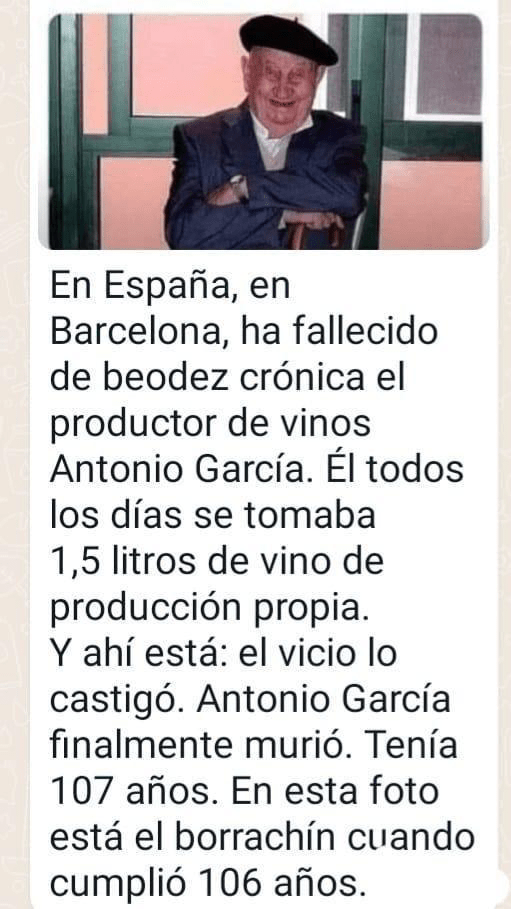
Laughing matter:
Best Fitness Tracker and Watch

.o0o.
 Tasting #240 April 26, 2022 12:30 pm
 Source: Wine Scholar Guild
 Winemaker notes. Reto has a lovely expression of lemon, pineapple, and lychee, with hints of passion fruit in the background. Lively, fruity, and elegant attack, with notes of tropical fruits, perfectly balanced by citrus and a lovely acidity in the finish.
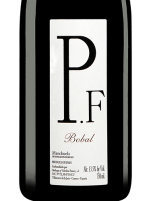 Winemaker notes: Deep ruby color with violet hues and impressive aromas of cherry, sour cherry, raspberry, plum, vanilla, pepper, tea, lavender, licorice, and bitter chocolate. On the palate, it has a medium body, medium tannins, and refreshing acidity. Juicy red and black fruits are mixed with notes of sweet spices, violet, cocoa, and dried herbs.
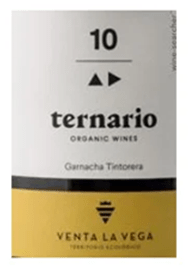 Winemaker notes. Intense and fruity on the nose, well integrated wood gives prominence to the variety. Over time, balsamic and mineral notes develop. Elegant mouthfeel with a long, persistent finish. This wine represents the maximum expression of the wines of Venta La Vega.100% organic, Garnacha Tintorera with vines of 40 + years of age.Robert Parker. The 2017 Ternario 10 is also Garnacha Tintorera from a specific plot within the same vineyard that produces the Ternario 2. It fermented with 100% full clusters in 5,000-liter oak vats for one month and matured in 400- and 500-liter oak barrels for 11 months. This is clearly a riper year than 2018 and 2019, and the wine shows it, but without excess. It has aromas of black olives, Mediterranean herbs and ripe black fruit, juicy and tasty. 10,000 bottles produced. It was bottled in November 2019.
 Winemaker notes. Cherry red color with violet reflections. Intense aromas of fresh red fruit and flowers, graphite minerality and sweet baking spices.
 Yecla, Bullas) mainly but not exclusively for bulk wine production. Its reputation has been improving over the years as some producers in high-altitude vineyards have managed to produce velvety wines from it. Vicente García, owner of Pago de Tharsys vineyards, says that “The answer to success with Bobal lies in the old vines”(sommjournal.com). Around 61,500 has were planted in 2015, making it the second most common red grape variety planted in Spain. It is native of the Utiel-Requena region in Valencia, and its presence was documented in the 15th century. The wine is low in alcohol, generous in tannins and full of antioxidants. derived from it retains its acidity better than Monastrell and is notably lower in alcohol. (Robinson 2006, p. 84).
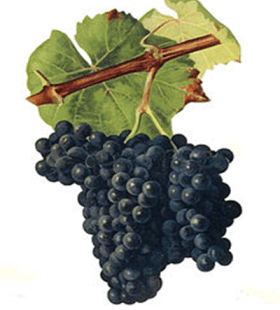 of the few teinturier varities that belong to the Vitis vinifera Henri Bouschet bred it between 1865 and 1885 from his father’s crossing of Petit Bouschet with the popular Grenache, then also known as Alicante. It was an immediate success. Its high yields and easy maintenance made it popular among French wine growers, especially in the years following the Phylloxera epidemic. Its thick skin makes it resistant to rot during the transportation process, a characteristic especially useful during Prohibition in California for export to the East Coast. Its deep reed flesh produces wines that are 15 times as red as that of the productive and rapidly spreading Aramon and twice the darkness of the Grand Noir de la Calmette. Its deep color makes it useful for blending with light red wine. It is also high yielding and on fertile soils it can easily produce more than 200hl/ha (12 ton/acre) of wine with 12 percent of alcohol if little character (Robinson 2006, p. 13).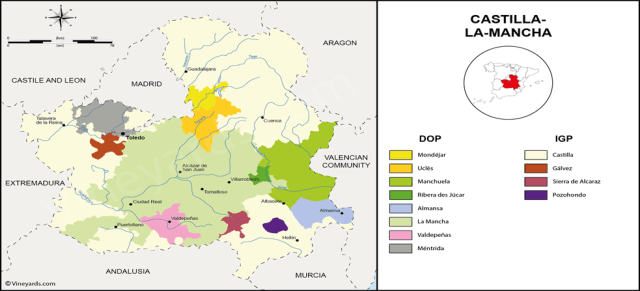





 Tasting #238 February 22, 2022, 12:30 PM Wines from ‘Triángulo del Jerez en Andalucía’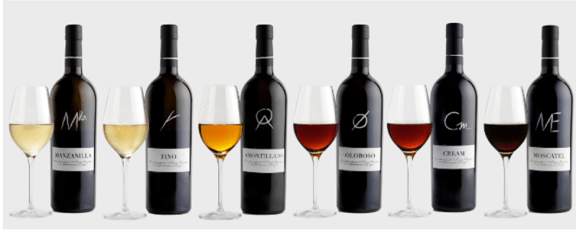

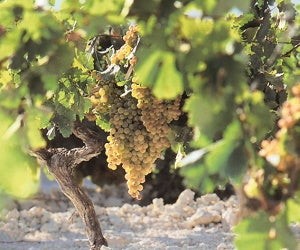 Palomino Fino is an indigenous grape variety that is the principal variety, used for Fino, Manzanilla, Amontillado and Palo Cortado wines. The must (mosto) tends to oxidate rapidly. Even in Sherry where oxidative aging occurs, the grapes are pressed very quickly after harvest.
 Pedro Ximénez (PX) grape is used in the principal sweet style of Sherry, dark, sticky, and syrupy. Pedro Ximénez varietal is predominantly grown in Montilla-Morilles, where the grape accounts for some 70% of total vineyard plantings. Plantings of PX within the Sherry zone have declined greatly, so the Consejo Regulador allows producers to import grapes from the nearby Montilla-Moriles DO. Almost all PX aged in the Sherry Triangle originates from Montilla-Morilles DOP, as the climate is better suited to the grape.
 As they age the wines develop a film or veil of flor (velo de flor) — specific indigenous ambient yeast growth that helps protect it from excessive oxidation (biological aging process). This is a completely natural phenomenon that originates in the white albariza soils that dominate the vineyards in Jerez and develops successfully thanks to the special conditions of temperature and humidity inside the cellars.
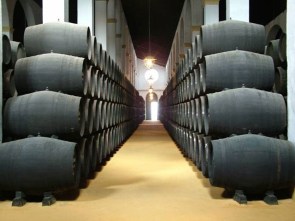 The essential feature of this unique process is that the wine to be bottled is taken from the butts (barrels) situated at floor level – the solera – which contain the oldest wines. The amount taken out is substituted by an equivalent amount of younger wine from the row above – the first criadera – and this, in turn, is substituted by the same amount from the row just above – the second criadera – which contains an even younger wine, and so on. This work must be performed with great skill and care so to homogenize the butts’ content without disturbing the vail of flor. Maintaining the veil of flor for years requires essential micronutrients which are provided by adding small quantities of “younger” wines, in a successive “refreshing” process. The result is exceptional wines which maintain the same quality, year after year.
 This dynamic method allows the wines produced to undergo an exceptionally lengthy ageing process. In fact, they are amongst the oldest wines in the world, and can be matured for more than 20 or 30 years. The ageing process for any type of Sherry must be at least two years, although most varieties are aged for much longer. Because the wine is aged and blended this way before bottling, bottles of sherry will not usually carry a specific vintage year and can contain a small proportion of very old wine.
 This is It is 100% Palomino Fino grapes, biologically aged for at least 4 years in American oak barrels, following the traditional criaderas and solera system.
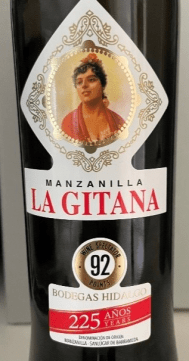 It is made from 100% Palomino Fino grapes that are carefully cultivated in highly prized white albariza soils, (+80% Calcium carbonate) to obtain very fine high-quality musts. The grapes come from the “El Cuadrado” estate located in the historic Balbaina Alta estate. It is considered one of the pagos with the greatest Atlantic influence of all of Jerez Superior.
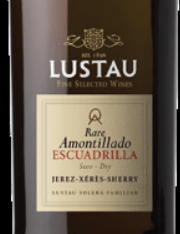 Aged following a biological ageing the first part of its life, then passing on to a longer period under oxidative ageing, inside the Bodega Emperatriz Eugenia in Jerez de la Frontera. This Amontillado is a tribute to friendship in the Air Force wing (“Escuadrilla” in Spanish) of which Emilio Lustau was a member.
 Pedro Ximénez grapes are laid out in the sun after picking until they are practically raisins. After that the fermentation starts slowly and it is halted to maintain all the natural sugars. The resulting wine ages in for 12 years in contact with the air in Jerez de la Frontera.
 Mahogany in color, its aroma reminds of noble woods in which it was aged and boasts evident nutty notes. Unctuous and dry on the palate.
 Tasting No 237 – February 1st, 2022 – Wines from Galicia, Spain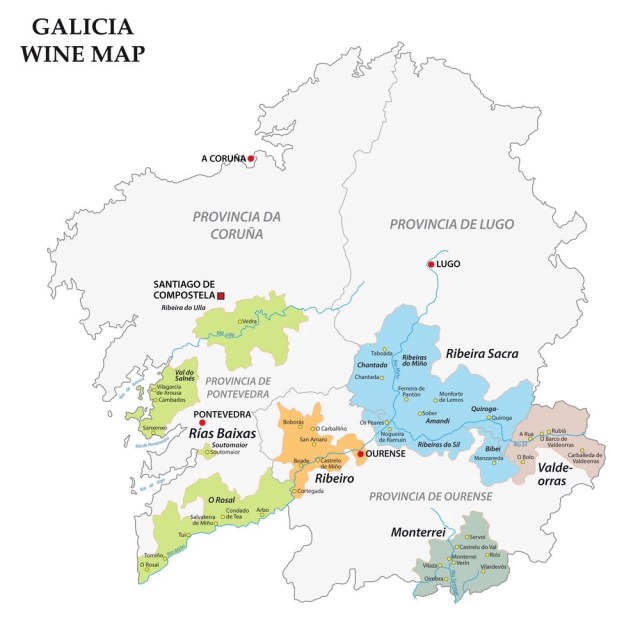
 The Atalier is a joint endeavor between Raul Perez – the famous rock star winemaker in northwestern Spain – and his longtime friend, Rodri Méndez of Rias Baixas DOP. The wine comes from the Val do Salnés sub-region within the DOP, where Albariño has always been the principal grape. The sub-region’s sandy soils mean that vines there were resistant to the Phylloxera that ravaged most of Europe’s vineyards in the late 19th century. The result is that there are some very old vines in Val do Salnés. In any given vintage, Atelier comes from either two or three of such vineyards (one managed by Rodri and the others managed by his friends).
 During many vintages—perhaps most—the grapes from this very old vineyard are processed with grapes from their other old vineyards in their primary wine released as Do Ferreiro Albariño. But in exceptional vintages, those grapes are processed and bottled separately—a very limited production known as Albariño Do Ferreiro ‘Cepas Vellas’ (Old Vines). The wines are exceptional.
 The 2020 Guímaro Vino Tinto is 100% Mencia from Ribeira Sacra DOC. The grapes all come from family-owned vineyards terraced into 50-to-70-degree slopes. It has intense aromas of red and dark fruit with notes of florals, herbs and balsamic and good acidity and silky tannins. It was aged in stainless steel to emphasize the freshness and fruit. Alcohol is moderate at 13.5%. It was rated 91 points. Sourced from Chain Bridge Cellars in McLean and also available at shops in DC.
 The 2017 Dominio do Bibei Lalama is 90% Mencia with 7% Brancellao and traces of Garnacha and Mouraton. It was aged for 12 months in oak barrels of different sizes—primarily neutral, though it tastes like there’s a bit of new. The 2017 rings in at 14.0% abv so it may seem a tad fuller than the Guímaro. The 2017 was an excellent vintage for Lalama—in fact Decanter magazine selected it as one of their Wines of the Year for 2021. Aromas jump from the glass, with red and black fruit, herbs and peppery elements. The fruits show again on the palate, with savory notes that emerge on the long finish. Decanter scored it 94 points.
 task force. Once retired from the Air Force, he spent 12 years with Northrop Grumman Aerospace, serving as vice president for international and president of the international subsidiary.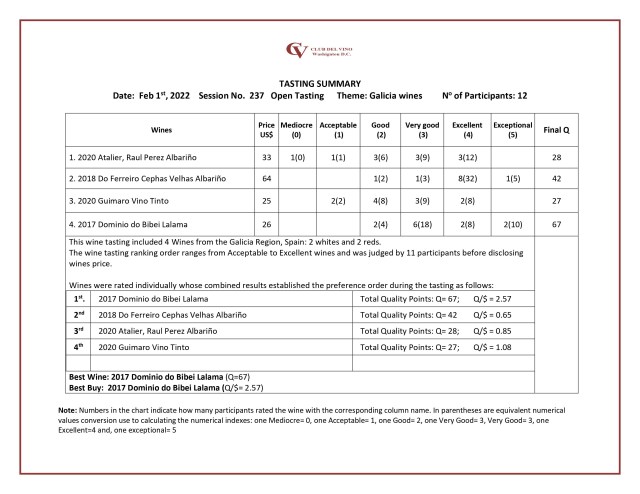

 From the label: Casal Garcia (literally “Garcia Couple”) was first launched in 1939 by Roberto Guedes (1899-1966), father and grandfather of the generations who presently run the winery. The Japanese postal service created a special edition of the stamp with the Casal Garcia label. The first winemaker who produced Casal Garcia was Eugene Helisse, a French winemaker who introduced innovative winemaking techniques to the Vinho Verde Region.
 100% Touriga Nacional; 12 months in oak barrels. Described as medium bodied and as: “a classic Portuguese varietal makes this wine both rustic and pronounced. Offering aromas of blackberry, coffee, cinnamon, and vanilla, the palate quickly follows with similar flavors, and the addition of fresh blueberry.”
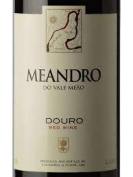 According to the label, “produced and bottled at Vale Meão, a famous estate contoured by a vast meander of the Douro River from a blend composed of Touriga Nacional (45%), Touriga Franca (33%), Tinta Roriz (15%), Tinta Barroca (5%), and Alicante Bouschet (2%).
 The backbone of some of the best Spanish wines, Tempranillo is a red grape variety grown throughout Spain and Portugal. Tempranillo produces red wines with red fruit and leather aromas, high tannins, moderate to low acidity, and moderate alcohol. In 2020, Tempranillo was the third most-planted grape variety in the world, with the majority of plantings being in the Iberian peninsula.
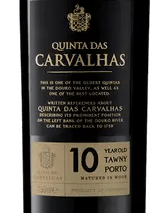 Over a hundred varieties of grapes are sanctioned for port production, although only five (
 Programa de Degustaciones de 2022
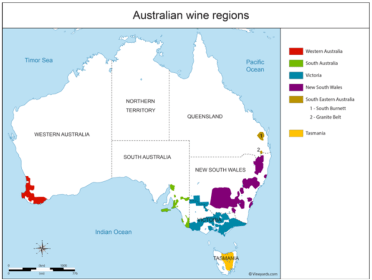 The objective of this tasting is to expand the knowledge about the wines from Australia, selecting two very different regions in terms of climate and location, which are Southern and Western Australia. This tasting is a small sample of Australia’s excellent wines, the 5th most extensive wine-producing country and wine exporter globally.
 The wine. Critics have scored this wine between 89 to 93 points. Users have rated this wine 4 out of 5 stars. A graceful nose of grapefruit and orange starts off this wine and melds with salt, smoke, toast, and crushed stone. The palate slithers along with a slick textured but crackling with crunchy acidity and a long, oyster shell finish (
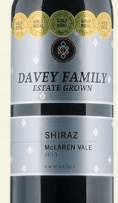 A curtain of toasty vanilla, cedar & bourbon oak at this nascent stage. The florals and dark fruit accents, anise & spice beyond, however, are dense and pure. This rich red simply needs patience, a vigorous decant or robust food. James Halliday – 94 points
 This Cabernet Sauvignon comes from select parcels of Cabernet grown on both red and black soils of limestone on the Davey Estate Vineyard, matured for 15 months in a combination of new and used French oak.
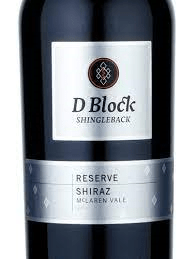 The ‘D Bock’ is a small niche of the Davey Estate Vineyard that showcases the best Shiraz and Cabernet from the property, with the wines extensively matured in French and American oak hogsheads.
 Alfonso Sanchez Cadavid – Semblanza


 Club del Vino - Washington DC area