Tasting No 246 – October 25, 2022 –12:30 pm Wines from Northern Spain
Capri Ristorante, McLean VA
Tasting Overview
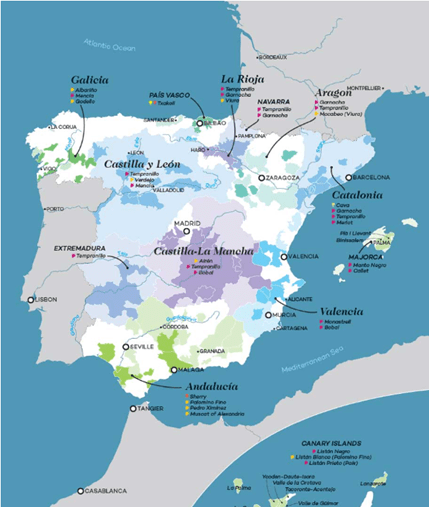
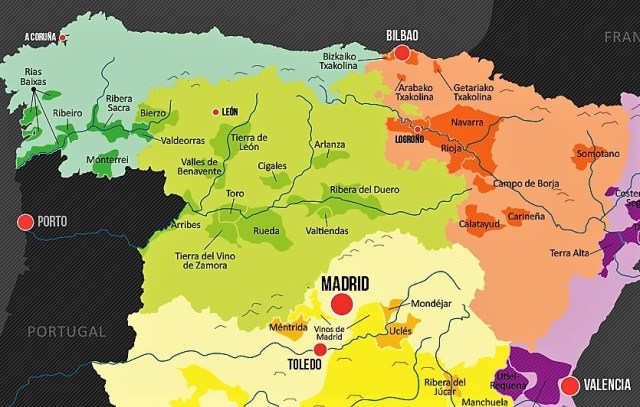
The purpose of this tasting is to explore wines from four regions in Northern Spain – Getaria in the Basque Country, Ribera Baja in Navarra, Campo de Borja in Aragon, and Toro in Castilla y Leon.
We will have the opportunity to taste and explore one white Txakoli wine and three reds from distinct appellations.
Tasting: Open
Presenters: Lucia and John Redwood
The wines:
- Txomin Etxanix 2021 (Getaria, Basque Country) –Txakoli
- Vina Rubican 2021 (Baja Ribera, Navarra) – 100% Tempranillo
- Borsao Tres Picos 2019 (Campo de Borja) – 100% Garnacha
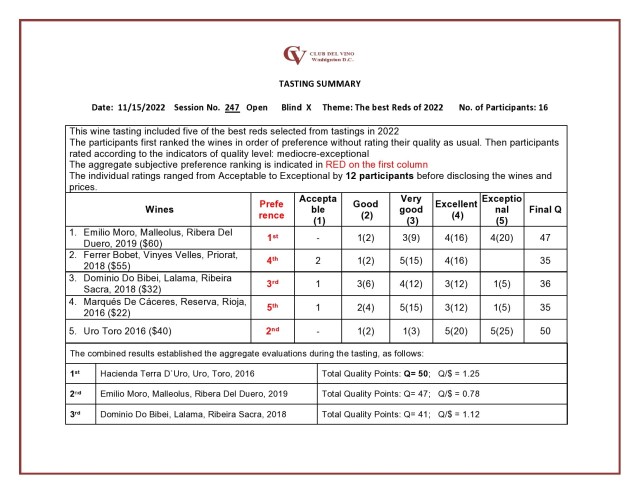
- Uro Toro 2016 (Toro) –100% Tinto de Toro
♣ Notes on the Wines and their production regions by John Redwood .pdf format
Menu:
- Butternut squash soup
- Arugula salad with Parmesan cheese
- Veal ravioli with tomato sauce
- Beef medallion with potatoes and vegetables
Participants:
Marcello Averbug; José Brakarz; Jorge Requena; Ruth Connolly; Clara Estrada; Jorge Garcia; Claudia Perazza; John Redwood; Lucía Redwood; Ricardo Santiago; Érico Silva; Cecilio Berndsen; Alfredo Gutierrez; Raimundo Arroio invited by José Brakarz; and two friends invited by Ruth Connoly.
Places and DOs
-
The Basque Country: Getaria
 Txakoli de Getaria is a DO wine zone located within the province of Gipukoa of the País Basco, between Bilbao and San Sebastian in the northern coast of Spain. In Getaria, nearly all the land situated between the Garate mountain, and the coast is covered in vineyards, due to the microclimate that this area generates. Getaria’s main sources of income are fishing, tourism, and the viticulture of the Txakolina (in Basque, or Txakoli or Chacolí in Spanish).
Txakoli is a slightly sparking, very dry white wine with high acidity and low alcohol produced in the Spanish Basque Country, and also in Cantabria, and northern Burgos. The most common white variety has a pale green color, but there are also red and rosé varieties. Most txakoli grapes are grown in the Atlantic region of the Basque Country, in areas with high rainfall (between 1000 mm and 1600 mm per year) and average temperatures between 7.5o C and 18.7o C, occasionally suffering from frost.
Txakoli from Getaria was the first variety to receive the DO certification in 1989. The cultivated area has increased from 60 ha to 177 ha since certification. Annually, some 900,000 liters (240,000 gallons) are produced in this area, mostly on south-east facing slopes to protect the vines from the harsh Atlantic weather. The grapes for this Txakoli are grown according to the trellis system, in which the vines are cultivated at a greater height above the ground with the foliage forming a contiguous canopy to improve the microclimate. The white grape variety used in Txakoli from Getaria is Hondarribi Zuria.
-
Navarra Region
 Camped along the northeastern boundary of Rioja, the wine region of Navarra was long been in competition with it (and indeed part of France), until the Bordeaux merchants chose to place their post-phylloxera trade in Rioja. For most of the 20th century, Navarra’s scattered vineyards were dedicated chiefly to Garnacha and the useful rosados, and strong, deep red blends that it produced. Then, came a revolution in the form of Cabernet Sauvignon, Merlot, Chardonnay, and Tempranillo, which overtook Garnacha in the total area.
Yet, curiously, few Navarra wines from these newer varieties have experienced commercial success. It is red blends that make the running, while wines such as Chivite’s Gran Feudo Viñas Viejas Reserva show just how good old-vine Navarra Garnacha can be. The best producers turned to older vineyards planted with Navarra’s traditional varieties – Garnacha and Moscatel de Grano Menudo – to make either single variety examples or to increase the percentage of them in ambitious blends.
In Navarra, there is a world of difference between the hot, dry, flat Ribeira Baja and Ribeira Alta subzones in the south, which lie on the banks of the river Ebro, and the less-planted cooler climate and more varied soils of the north. Ribeira Alta is measurably warmer and more exposed to the influence of the Mediterranean than Ribeira Baja, which is protected by the Sierra del Moncayo to the south. The best Garnacha wines in Ribeira Baja come from Fitero because its poor, Chateauneuf-like soils are open to Mediterranean warmth.
-
Campo de Borja
 Campo de Borja is a Denominación de Origen (DO) wine zone in the Aragon region, northwest of of Zaragoza. It encompasses the Campo de Borja comarca consisting of 16 municipalities. The DO is located in a transition zone between the plains of the river Ebro and the mountains of the Sistema Ibérico. The Moncayo mountain range is the dominant feature that creates a microclimate which gives the wines a special character.
It is assumed that the ancient Romans introduced and developed grape-growing in this region, but the first written reference is a document in the archives of the Cistercian Monastery of Veruela, which refers to donations of vineyards in the year 1203. The Veruela Monastery was very influential in the development of wine production right up to the 19th century and was responsible for the replanting and grafting of the entire area after the Phylloxera plague. The area was finally recognized as a DO in 1980.
The climate is continental, with Atlantic influences during the winter, notably a cold, dry wind from the northwest, while in summer, there is a Mediterranean influence. The temperature varies a great deal, both on a daily and seasonal basis. Annual rainfall is very low, only about 350 mm in the low-lying areas and 450 mm in higher areas. The soils are mainly dark lime-bearing soils, of average rockiness, good drainage, average level of organic matter and rich in nutrients.
Grape growing conditions are affected by altitude: the vineyards are planted on a series of high plateaus at heights ranging between 350 m and 750m above sea level. There are currently about 6,300 ha under vines which produce between 20 and 25 million kg of grapes. The vines are cultivated both as low bushes (en vaso) and also on trellises (en espaldera). The authorized grape red varieties besides Garnacha, are Tempranillo, Mazuela, Cabernet Sauvignon, Merlot, Syrah; young reds are made both as 100% Garnacha and also in combination with Tempranillo and Cabernet Sauvignon.
-
Toro
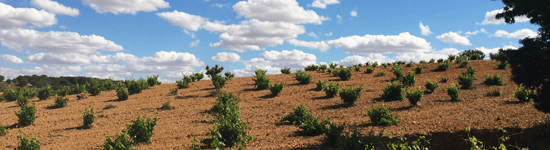 The wine region of Toro is a predominantly red-wine appellation in Castilla y León wine region in north-western Spain. Toro is situated in the province of Zamora, west of the Rueda and Ribera del Duero wine appellations, near the Portuguese border. It is becoming increasingly well known for its powerful, full bodied red wines made from Tinta de Toro. This Spanish grape variety grown in the Toro DO is a strand of Tempranillo that dates back to the Roman times, around the 2nd century B.C. Some of the vines around today are hundreds of years old, having survived the phylloxera plague. Very small amounts of white wine are also made in Toro.
The quality of the wine was recognized by the granting of DO status in 1933, one of the first Spanish regions to achieve it. However, the area has suffered during and after the Spanish Civil War and, consequently, the original DO became obsolete. The modern version of it was created in 1987.
The region lies at the very heart of Castilla y Leon, on the vast, high plateau that separates the Cordillera Cantábrica and mountain ranges of Sistema Central. Altitude is the key to Toro’s wine quality, as so often in Spain, and plays an important role in Toro’s terroir: at 1,970 to 2,460 ft (600-750 m) above sea level, the region’s growers can depend on cool nights to “fix” the color and flavor in the grapes ripened during the torrid summer days on the region’s various red clays and sandy soils. Temperatures range from –11°C to 36°C (12°F to 97°F) and annual rainfall averages just 350mm (14in). The Duero River provides a much-needed source of water, and vineyards stray very little from its path.
To be a Tinta de Toro wine, it must be at least 75% Tinta de Toro, blended with small amounts of Grenache when permitted.
The Wines
-
Txomín Etxanix 2021 – Txakoli — Basque Country/Getaria (alcohol: 11%)
The winery: The winery is owned and was founded by the Txeuka family, one of the oldest and most historic families in this region. There is primary source documentation proving that the family has been producing wine near the town of Getaria since 1649, around the time the town was founded.
 The Txueka family currently works exclusively with the indigenous varieties of Hondarrabi Zuri and Hondarrabi Beltza, planted between 1915 and 2000 on pergolas and terraced trellises. The slopes that the vines are planted on are incredibly steep, so where pergolas cannot be used, the family plants on trellis. The winery and vineyards are only located 100m from the Atlantic, so precipitation levels are extremely high. The must is fermented in stainless steel with indigenous yeast at very low temperatures to retain a small quantity of dissolved CO2. The resulting wines are beautifully refreshing, high acid white wines that pair flawlessly with seafood.
The wine: according to the winemaker notes, this wine is greenish yellow, bright with fine natural bubble. Citrus and fresh apple aromas, and mineral notes. In the mouth, it is fresh and fruity, with characteristic acidity and light carbon (Wine.com).
Tasting Notes: This wine exhibits bright aromas and flavors of brine, lemon peel, and a hint of chalkiness. 92 points (Wilfred Wong of Wine.com).
Limpid, green-hued straw. Taut and sharply focused on the nose, displaying vibrant citrus zest, quince and floral scents and a chalky mineral overtone. Dry and nervy on the palate, offering juicy lemon, green apple and honeysuckle flavors and a spicy touch of ginger. Displays firm tension and spicy cut on the finish, which hangs on with strong, mineral-driven tenacity. 92 points (Vinous).
-
Viña Rubican 2021, Tempranillo, Navarra (alcohol: 14.2%)
The winery: Bodegas Correllanas has been in operation since 1900. It is from the small municipality of Corella in the Ribeira Baja in southwest Navarra, bordering on La Rioja to the west and the larger town of Tudela to the east. Due to high demand its initial installation was first expanded in 1920 and in 1980 a project began to rebuild the wine cellar with high technology and the introduction of modern machinery. In 1940, the Viña Rubican label was introduced. In 2015, under new ownership, a new plant was built to treat the grapes better, while maintaining the traditional methods and natural processes for which the winery was famous. Their vineyards include Tempranillo, Garnacha, Sauvignon Blanc, and Petit Grain.
 According to the owners, “their vineyards are present in the best locations in the region and spread around 60 hectares of land” and that “the soil, unique microclimate, and optimum rainfall make the region perfect for the cultivation of vines”. Also, “their best grapes are used to make their famous award-winning red, white, rosé and dessert wines”.
The wine: Viña Rubican, having fresh fruit with ripe tannins, this simple red is made from partially pressed 100% Tempranillo grapes. Aged in American oaks for 3 months, the result is an easy drinking, well-rounded wine with a complex nose, and a soft mouthfeel. A great food wine, it has a “cherry, spice” taste and is “medium-bodied (Total Wine).
-
Borsao Tres Picos 2019 – Granacha, Campo de Borja (alcohol: 15%)
The winery: Bodegas Borsao is situated in Borja in the northwest of the province of Zaragoza, considered to be a subunit with its own characteristics within the Moncayo region in the western part of the province. It has been the origin and engine of the D.O. “Campo de Borja” in Aragón, northeastern Spain, also known as the “Empire of Garnacha”. It is an internationally recognized wine producer and one of the world’s leading Garnacha producers. It has won numerous awards and recognitions.
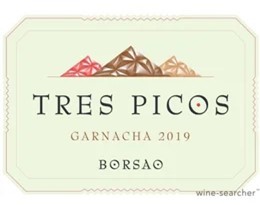 Bodegas Borsao originated in 1958, when the Borja cooperative was founded with the mission of establishing the benchmark for premium Garnacha wines. It consists of some 350 growers stretching over some 2,260 ha with altitudes ranging from 350-800 m. Harvest is carried out manually in key vineyards and transported in 20-kg cases.
The wine: Borsao Tres Picos is the flagship wine, the first 100% Garnacha produced in Spain, back in 2000. Grapes are handpicked in 300 kg boxes. At the winery, a manual cluster selection is sorted. A cold maceration during 1-2 days in steel tanks with controlled temperatures of 22-30o C. The wine is aged for 5 to 6 months in new bordelaise barrels of French oak. 150,000 bottles produced.
Tasting Notes: Very intense red color with tones of purple. Presents in the nose a great concentration of aromas of ripe red fruit with floral nuances. In the mouth, it is a well-structured rich wine that evokes tastes of blackberry, plum, and tones of leather and vanilla, with a soft and silky tannin.
It pairs well with barbecue, vegetables, beef, and pork; rice and pasta-based dishes. Goes well with cheese and hearty meals, such as Chili, Shepard’s Pie, and Lasagna.
The grapes for this exceptional wine were harvested from old vine Garnacha vineyards that cling to rugged terrain on the slopes of the famous Moncayo mountain. Low Yields of less than two tons per acre produce a rich deeply colored and aromatic wine with concentrated flavors of blackberries, strawberries and nuances of leather, vanilla, and plums (description on the bottle).
This is a rich, flavorful Grenache that won’t break the bank. Big characteristic flavors of raspberry with complex herbal spice blend punctuating the finish.” It is also described as “medium-bodied” but of “intense” style (Total Wine).
-
Uro Toro 2016 – Tinta de Toro (alcohol: 14.5%)
Tinta de Toro wines are full-bodied, mildly acidic, and have an intense ruby color. The wines aroma consists of berries, and the taste resembles dark fruit, black cherry, cassis fruit, smoke, and black pepper. A key tasting characteristic of Tinta de Toro is the powerful tannic flavor that come from the thick dark skins of the grapes. The best Tinta de Toro wines hold a balanced blend of oak, tannins, and fruit flavors. Wines that have extra degrees of oak and tannins can become overbearing and sometimes unappealing.
The winery: At the Hacienda Terra D’ Uro winery, the grapes are only from  pre-phylloxera vines, about 140 years of age, which grow on a unique “terroir” situated in the historic Pago “Bardales” at about 750 meters above the sea level. The majority of the work is done manually, like pruning, hoeing around the vines, the treatment with Sulphur or powder of stinting nettle. Only for ploughing mechanical means are applied. For the harvest, small cases of 10 kg are used. Destemming is also done manually, and fermentation takes place in oak barrels. To respect the natural qualities of the wines, no filtration or fining technique is applied. Powerful but velvety. Respecting the ripe fruit with the right touch of wood. The grapes come from their three vineyard fincas destined for their high-quality wines. For the Uro Toro 2016 The grapes come from the pre-phylloxera Finca La Coscojosa vineyard, which is more than 90 years old with the vines planted in bush growing 100% Tinto de Toro grapes.
The wine: The wine is made in the traditional methods, was fermented in 500L oak barrels with manual daily punching down and aged for 20 months in new French oak casks. The best food pairings are robust meals.
The wine is described as “full-bodied, mildly acidic, and has an intense ruby color.” Its aroma consists of berries and the taste resembles dark fruit, black cherry, cassis, smoke, and black pepper. Its “powerful tannic flavor” comes from the dark skin of the grapes. Also described as a “serious, powerful and full-bodied red wine with lots of fruit and a juicy palate that nicely balances the abundant, fine-grained, chalky tannins, it ends very tasty, with a supple, almost salty note.”
Lots of plum, floral, and light vanilla aromas follow through to a full body with round, polished tannins, and excellent intensity. Needs time to come together, but already very enticing (James Suckling-Castilla y Leon, Spain).
Rated 94 points by James Suckling.
CV Members Rating
Individual ratings ranged from Mediocre to Exceptional by 16 participants before disclosing their prices. The combined results are as follows:
Best Rated Wine: Uro Toro 2016
Best Buy: Borsao Tres Picos 2019 and Txomin Etxanix 2021.

♣ View a printer friendly Tasting Summary in .pdf format
♣ Notes on the Wines and their production regions by John Redwood .pdf format
References:
Hugh Johnson & Jancis Robinson, The World Atlas of Wine, 7th edition, 2013.
Wine.com
Total Wine
Wine searcher
Hacienda Terra D’ Uro
.o0o.
Laughing time:

.o0o.
 How bold is your favorite red wine?


 Situated 500 km South of Santiago, the first vineyards were planted in the 16th century.
 Stretches from the coast to the Andes. Vineyards planted in all three geographical designations (Costa, Entre Cordilleras, and Andes).
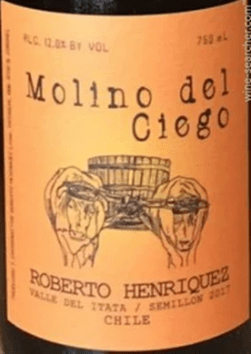 The Producer: Roberto Henriques, a leading winemaker in Bio Bio and Itata, has a small winery focusing on making natural wine on an artisanal scale. It produces distinctive natural wines from old vines and often helps resuscitate abandoned vineyards.
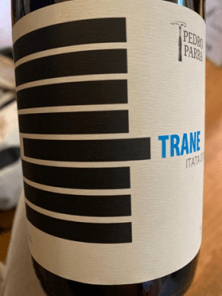 The Producer: Pedro Parra y Family is the boutique, family winery of renowned terroir expert Pedro Parra, focusing on an artisanal production of natural wines made from old vines of Pais and Cinsault in Itata and Bio Bio. Pedro Parra produces a series of Cinsault wines to show his interpretation of the granitic soils of Itata.
 The Producer: Two people – Leonardo Erazo and Justin Decker – started Rogue Vine in 2011, in a one-car garage in Concepción with a project to make natural wines from ‘the forgotten old bush vines almost falling out of steep granitic hills in Itata.’
 The Producer: Viña Seña: Single-estate, single-wine operation joint venture in the Aconcagua Valley founded by Robert Mondavi and Eduardo Chadwick of Errazuriz in 1995. Their aim was to make a wine that would demonstrate the full potential of Chile and that would be welcomed among the world’s First Growth.
 Tasting No 250 – February 28, 2023 – 12:30pm Wines from Mendoza, Argentina
 Tasting notes: Deeply aromatic with expressive citrus and peach with a rich and mineral finish. Pairs well with vegetables, pasta and grilled white meat (Catena).
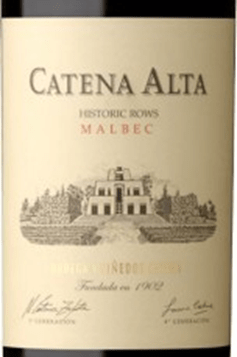 Winemaker notes: after many years of research and experimentation, Nicolas and his daughter identified their best vineyard rows of Cabernet Sauvignon, Chardonnay and Malbec and made the first vintages of the Catena Alta wines in very small quantities. Catena Alta continues to be a limited production of single varietal wines made from the selected few rows in the Catena family’s vineyards. These special barrels undergo a rigorous second selection at the winery. The Catena Alta wines can usually be enjoyed starting three years after harvest and into the following one to two decades.
 Winemaker notes: In the 1950s, Don Domingo Catena began sourcing Malbec from the Vineyards of La Consulta. The combination of intense sunlight and cool nights yielded a wine that Domingo prized for its deep purple color, black fruit aromatics and rich velvety tannins.
  Winemaker notes. In the 1950s, Don Domingo Catena began sourcing Malbec from the Vineyards of Paraje Altamira in the Uco Valley. The combination of intense sunlight and cool nights yielded an elegant, mineral, slightly spicy Malbec with a deep texture and flavors. tannins. It is an elegant, mineral, slightly spicy Malbec with a deep texture and flavors born of the combination of intense sunlight and cool nights. Perfect paired with meat, fish, fowl and vegetarian dishes.

 Tasting #249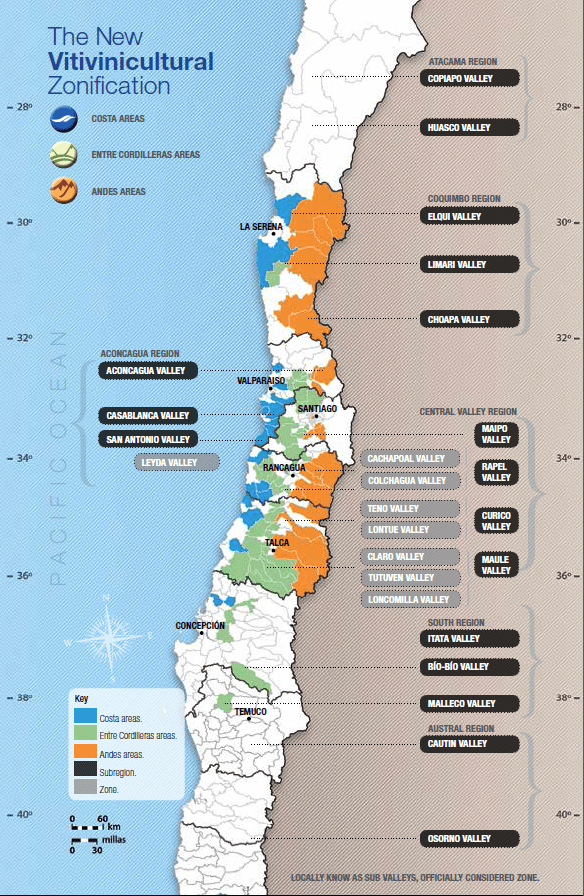
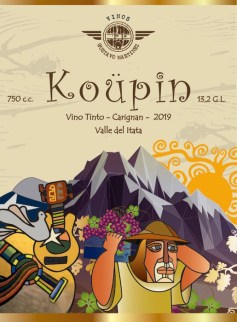
 Notes from Producer: De color amarillo brillante. Muy intenso en la nariz, sus aromas recuerdan frutas como manzanas verdes, melón verde (tuna), algo de espárrago, olivas y avellanas tostadas, con notas minerales. En boca presenta fresca acidez, gran volumen y concentración. Su persistencia al final de la degustación es frutal y mineral, complementado con el sabor de la encina francesa. Gran equilibrio entre el alcohol y la acidez natural que le da frescor, persistencia y potencial de envejecimiento, algo difícil de obtener en un vino blanco chileno.
 Sol de Sol has really changed the reputation of
 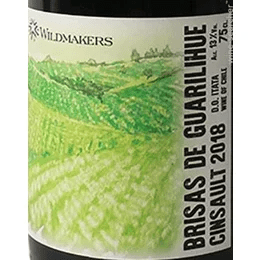 General description: Los viñedos utilizado para la elaboración de nuestros Brisas Cinsault se encuentran ubicados en Guarilihue Alto, sector El Huaro a unos 30 km del mar. Son viñedos de más de 40 años, manejados a la usanza tradicional de la zona. Es decir, manejo del suelo a caballo, sin aplicación de pesticidas. Nos enfocamos en realizar una vinificación enfocada a preservar toda la fruta y las características varietales que nos aporta la variedad Cinsault, sin crianza en madera.
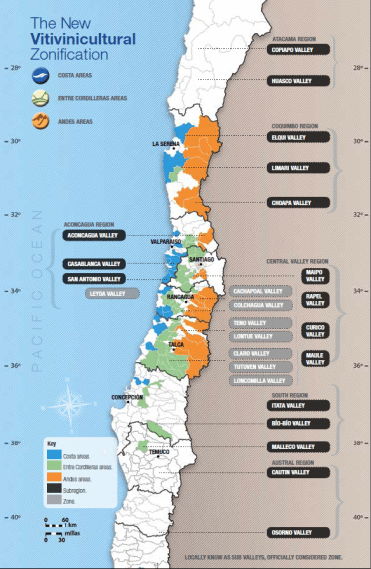 ltata Valley


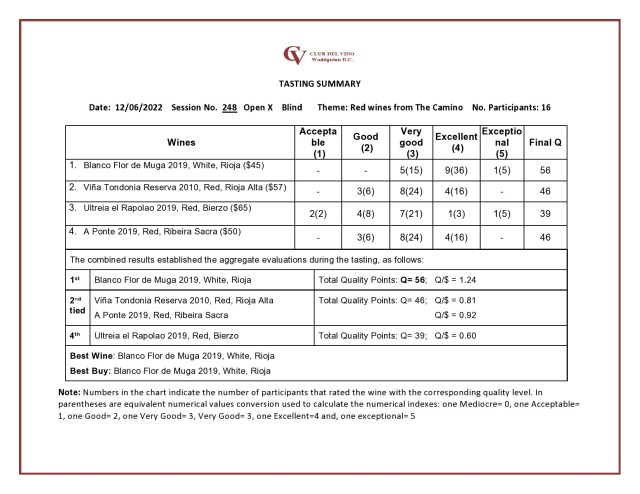
 Tasting #248 December 6, 2022 – 12:30 Wines from the “Camino de Santiago” “The Way of Saint James”
 Yearly, hundreds of thousands of people of various backgrounds walk the Camino de Santiago either on their own or in organized groups. People who want to have peace of mind will benefit from
 Bierzo is a Spanish Denominación de Origen Protegida (DOP) for wines located in the northwest of the province of León (Castile and León, Spain) and covers about 3,000 km². It borders on the provinces of Ourense, Lugo and Asturias in the north and in the south on areas of La Montaña, la Cabrera and La Meseta, in Léon. The area consists of numerous small valleys in the mountainous part (Alto Bierzo) and of a wide, flat plain (Bajo Bierzo).
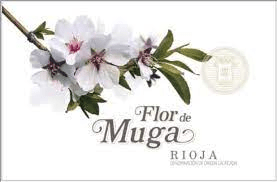 The second vintage of their top white is the 2019 Flor de Muga Blanco, produced with a blend of 40% Viura from red limestone and clay soils, 30% Garnacha Blanca from classical clay and limestone and 30% Maturana Blanca planted on sandy soils. It fermented in small barrels with indigenous yeasts and then matured in concrete eggs for three months and new barriques built in their own cooperage for six months. The wine is 13.2% alcohol and has a pH of 3.2 with very good acidity. There are only 37 hectares of Maturana Blanca in Rioja, of which they have eight.
 Producer: R. Lopez de Heredia, Haro, Spain
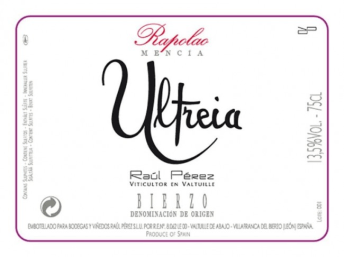 Producer: Bodegas y Vinedos Raul Perez, Valtuille de Abajo, León, Spain
 Producer: Adegas Guímaro, Sober, Galicia, Spain