The objective of this tasting is to revisit the best wines from this year. We will enjoy the best white wine and will be able to compare the three best reds selected from the tastings of 2023.
Type of tasting: Semi blind
Presenter: John and Lucia Redwood
Participants: the list will be added after the tasting
Participants: S. Ardila; R. Arroio; M. Averbug; J. Claro; C. Estrada; M. Fryer; J. García; N. Marzella; A.&C. Perazza; J.&L. Redwood; C. Santelices; R. Santiago; G. Smart; P. Turina; L. Uechi; R. Zavaleta; and G. Zincke
The Menu
Asparagus soup
Spinach and white cheese agnolotti with tomato sauce
Beef medallion with brown sauce and roasted potatoes
Coffee, tea and dessert
Wines Selection and Tasting Procedure
The methodology to select the wines was very simple: among the more than 40 wines tasted during 2023, all but those presented in May were rated in quantitative terms by the participants, regarding their quality (“best wine”). The numerical quality ratings for all the wines (whites and reds) sampled on 10 monthly tasting events during the year were ranked; the white wine with the highest rating and the three red wines with the highest ratings were selected. An interesting common feature of the “best of the best” wines selected is that, while they were evenly divided between Argentina and Chile, all four wines are blends rather than single varietals.
The tasting will follow the following procedure:
Blind tasting of the 3 reds in random order.
Participants may try to identify the red wines and will rank the wines by order of preference (subjective ranking).
The preferences will be aggregated and informed to the participants
The wines are revealed, and prices are disclosed.
Participants select ‘best value’ wine.
The Wines
The following wines were selected from the best wines in 10 tastings. The vintages may be different from the wines originally tasted because of availability in the market.
♦ Catena – Appellation White Clay, 2022 (2020 no longer available) – February 2023
The Producer: Bodega Catena Zapata located in Mendoza, Argentina.
Year – 2020
Varietal: White blend Semillon 60%; Chenin Blanc 40%.
Region: Luján de Cuyo, Mendoza
Aging: Eight months in French oak barrels
13% APV
Tasting notes: Deeply aromatic with expressive citrus and peach with a rich and mineral finish. Pairs well with vegetables, pasta and grilled white meat.
“The grapes were harvested quite early and then fermented in stainless steel, managing to keep the alcohol to 13.5% in this warm and dry year. It’s balsamic and medicinal, with notes of yellow fruit and some spicy smokiness, as 35% of the wine matured in new barrels for seven to eight months. It’s soft and creamy without excess, combining volume and tasty flavors and a bitter twist in the finish” (Wine Advocate).
♦ Seña, Aconcagua Valley, 2020 (2019 no longer available) – March & April 2023
Vineyard: Close to the sea with the benefit of coastal winds and long hanging period.
Farming: Biodynamic and hand harvested.
Ageing: 22 months in 90% French oak barrels (80% new) and 10% foudres.
5% APV
Tasting notes: A deep and beautiful garnet-red color with violet hues, the 2020 Seña presents complexity on the nose with multiple layers of fresh red-fruit aromas such as cherries and raspberries accompanied by violets and pleasing touches of dill and rosemary, all framed by light notes of sweet spices. The palate shows young fruits, more sweet spices, and smooth balsamic tones. It is fresh and juicy with elegant fine-grained tannins that create a silky and pleasing sensation. The 2020 vintage shows elegance and balance with an ample and profound finish.
The 2020 Seña is a blend from grapes harvested early, the second week of March, and fermented mostly in stainless steel and 10% in concrete eggs. It has a moderate 13.5% alcohol and good freshness. It’s subtle and layered, not only fruit but with more spice; it has polished tannins and very integrated oak after 22 months in barrique, 78% new, and with 10% of the volume in large Stockinger barrels. …This wine has intensity and complexity, with no herbal or mint notes; it is spicy and juicy, with energy and depth. It has structure, color, stuffing, and acidity to develop nicely in bottle (Robert Parker’s Wine Advocate).
♦ Salentein Numina Gran Corte 2019 – Valle de Uco, Argentina – June 2023
The producer: The Bodega Salentien, located in the Uco Valley, Chile.
Vintage: 2019
Varietal Composition: 65% Malbec, 14% Cabernet Sauvignon, 8% Petit Verdot, 8% Merlot and 5% Cabernet
Region: Tunuyán, Valle de Uco, Mendoza
Vinification: Hand harvested, fermentation in 7,000L oak casks. The varieties of this blend were made separately and after 6 months aged in barrels, the barrels were emptied and the blend was made, which came back to the oak barrel to finish the ageing process. The total ageing time was 16 months.
5%APV
Tasting notes: It displays a bright, intense and deep purplish color. The aroma is complex and elegant with notes of tobacco, cassis, blueberries, spices as well as notes of vanilla and caramel. In the mouth, it is a wide and intense wine with full body and tannic structure and a long finish.
Purple in the glass. The complex nose offers clearly defined notes of cigar box, vanilla, fresh plum, blackcurrant and bay leaf with hints of ash. Lean and juicy in the mouth with refined tannins, the flavors are driven by the oak (Vinous).
♦ Clos Apalta, 2018, Colchagua Valley, Chile – August 2023
Fermentation Type: 75% in 75hL French oak vats, 25% in new French oak barrels
Ageing: 25 Months in French oak barrels. 87% new French oak barrels, 13% in second use.
Tasting notes. Deep and inky purple red robe with dark blue edges. Intense, spicy with layers of red and black fruit on the nose, with cedar notes. Elegant tannins open towards a mid-palate that combines finesse and concentration, round and fresh. Exceptionally long finish.
CV Members Rating
The tasting took place before revealing the wines and their prices. 14 participants rated them from to Exceptional. The combined results established the preference order during the tasting.
Clos Apalta, 2018 was rated the Best Wine and Salentein ‘Numina Gran Corte, 2019 the Best Buy. The following Table presents the details of individual ratings and combined results.
The Canelones wine region of Uruguay may be one of the lesser-known gems in the world of wine, but its growing recognition is well-deserved. With its unique terroir, diverse grape varieties, innovative viticulture practices, and unique maritime influence, Canelones is in the forefront of the Uruguayan wine industry. In this tasting, we’ll explore the Canelones wine region of Uruguay, delving into its history, climate, grape varieties, and the thriving wine culture that has emerged in recent years.
Type of tasting: Open
Presenter: Michelle Fryer
Participants: R. Arroio; M. Averbug; L. Boccalandro; J. Brakarz; C. Estrada; M. Fryer; J. Garcia; N. Marzella; C. Perazza; L. and J. Redwood; R. Santiago; E. Silva; G. Smart; P. Turina; L. Uechi and P. Meduña (invited).
These are the Wines:
Bouza ‘Albarino’, 2022
Pizzorno ‘Tannat Maceración Carbónica’, 2020
Bouza ‘Tannat,’ 2019
Bouza ‘Tannat A6 Parcela Unica’, 2018
The Menu:
Calamare sauteed in lemon sauce
Spaghetti Carbonara
Grilled NY Steak with Spinach and brown sauce on the side
Dessert, coffee, tea.
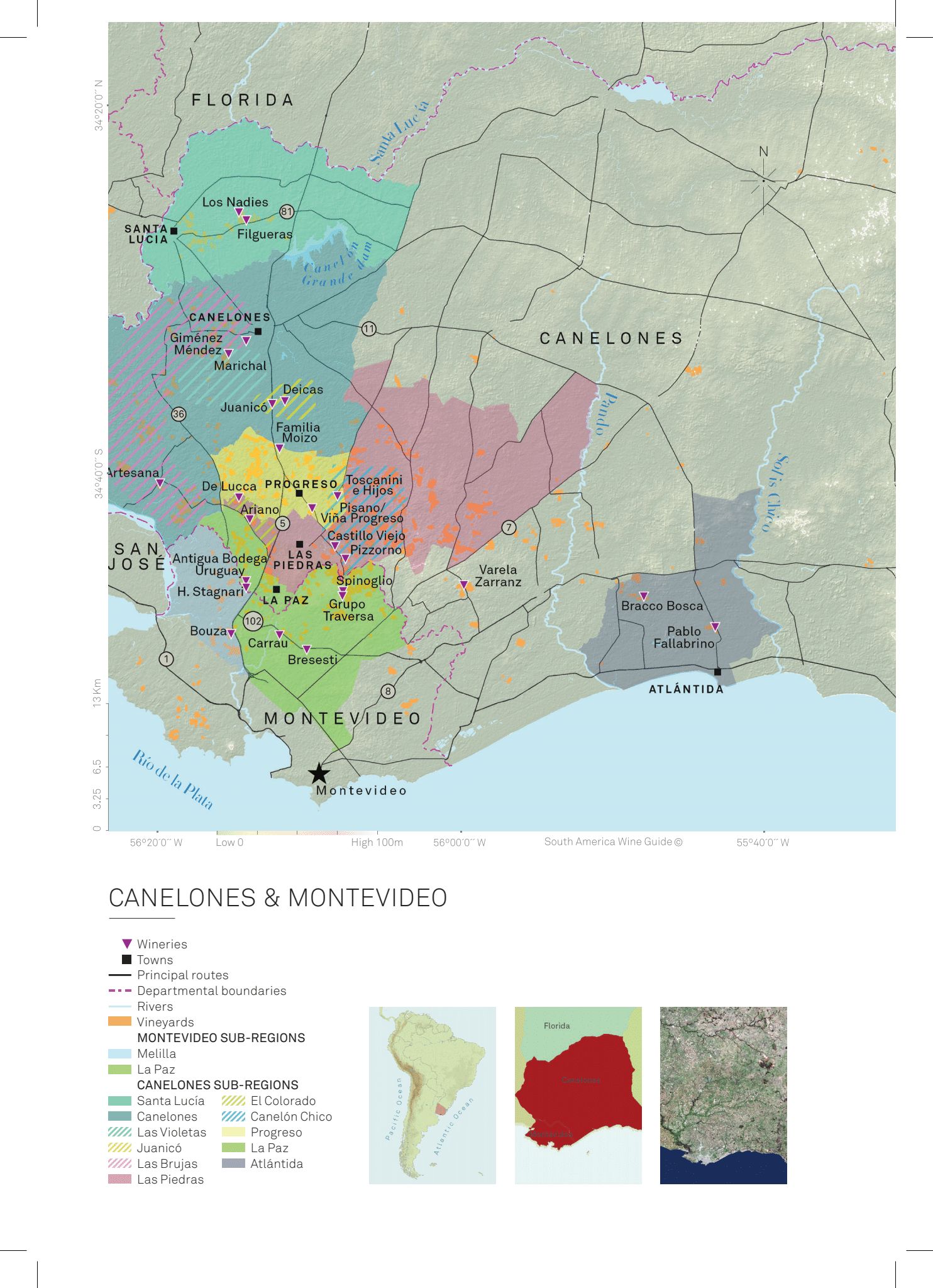
The Canelones Wine Region
Uruguay, often overshadowed by its wine-producing neighbors, Argentina and Chile, is the fourth-largest wine-producing country in South America. The Canelones wine region, located in the southern part of the country, is the epicenter of the country’s wine production and has been steadily gaining recognition for its exceptional wines. Nestled between the Atlantic Ocean and the capital city of Montevideo, Canelones is a region characterized by a temperate maritime climate, rolling hills, and fertile soils that provide an ideal environment for producing world-class wines.
History and Terroir. The Canelones wine region is Uruguay’s oldest and most prominent wine-producing area. Wine grapes have grown here for over 250 years, although commercial viniculture did not begin until the second half of the 19th Century when a wave of European immigrants brought rootstock and vines of different varietals to the country. The original transplants of Tannat were called “Harriague” in honor of the French Basque settler who introduced the varietal. Over the past few decades Uruguayan wine has emerged quietly and steadily onto the world market. In the past, most of the wine was table wine, produced mainly for the domestic market; but from the year 2000 onward, the consumption of table wine has declined year after year, and the production and consumption of high-quality wine has increased. Currently Uruguay is the fourth-largest wine-producing country in South America, however a relatively small share (10%) of its wine is exported.
Canelones is responsible for 60% of the country’s wine production. It is therefore not only the epicenter of the Uruguayan wine industry, but for Tannat as well, with more of the variety planted within the department than anywhere else on Earth. The region owes its success to the combination of favorable climatic conditions, exceptional terroir, and a long growing season with ample sunlight, making it well-suited for the slow ripening of the fruit. It benefits from the temperate maritime climate which is characterized by cool breezes and a significant temperature range between day and night — both essential for the development of complex flavors in the grapes. Proximity to the Atlantic Ocean also results in refreshing acidity and mineral notes in white wines, and a softer tannin structure in red wines. Likewise, the Atlantic breeze plays a role in reducing the risk of pests and diseases in the vineyards; and the thick skin of the Tannat grape is impervious to the mildew that so readily affects more delicate varieties, allowing for sustainable and organic farming practices.
One of the most interesting assets of Uruguay is the wide diversity of soils. Uruguay has 99 classified soil types. The lengthy coastline on three sides of the country moderates the temperature and the absence of mountains exposes the landscape to weathering and erosion that has resulted in a relatively flat topography and formulated a variety of soil types throughout the country. The viticultural areas of the south have the deepest, most fertile soils. The Canelones region is characterized by diverse terroirs, including clay-rich soils, limestone, and sandy loam. The presence of volcanic rock and weathered granite helps to promote drainage. These varied soil types, along with the maritime influence and microclimates, allow winemakers to craft a wide spectrum of wines, from elegant and fruit-forward to structured and powerful.
The grape varietals: No summary of Uruguayan wine is complete without mention of Tannat, the robust, tannic red that has played such a pivotal role in the country’s rising wine status. Just as Chile has its Carmenere and Argentina its Malbec, so Tannat has become Uruguay’s ‘icon’ grape.
Tannat was originally known for its harsh tannins, high acidity and dark fruit that was nearly undrinkable upon release, but in Uruguay, vintners have found methods to soften the tannins and create powerful wines that taste of plums and blackberries. In addition to these fruit flavors, Tannat, when blended with other varieties, or produced in capable winemaking hands, tends to show off more complex notes of herbs, chocolate, leather, earth, and minerals.
Originally from southwest France, Tennat has found a second home in Uruguay and accounts for some 27 percent of the country’s plantings. The grape needs some humidity to balance its tannin, sugar, and acidity, otherwise, the sugars accumulate before the skin ripens; hence it thrives in the country’s favorable maritime climate, producing wines with intense dark red, bluish, and almost black color, often with violet reflections; and aromas of ripe dark fruits, tobacco, and earthy undertones. In the best varietal examples, the tannins are strong but supple. These wines are often characterized by their robust structure and longevity, making them a unique representation of the region as a single varietal or in interesting blends.
While Tannat takes the lead, winemakers in the region have also started experimenting with other grape varieties, resulting in a growing portfolio of varietals that include Albariño, Sauvignon Blanc, and Syrah. These grapes add diversity to the region’s wine offerings, catering to a broader range of palates.
Wineries and Viticulture.Canelones is home to some 900 vineyards, many of which are family owned. These wineries often emphasize sustainable and organic practices, contributing to the region’s reputation for producing environmentally conscious wines. Larger commercial operations and boutique producers also contribute to the region’s dynamic winemaking landscape. Nonetheless, until recently, the world has taken little notice of Uruguayan wine. Very little is exported (up to 10% nationally) and winemaking is largely focused on the domestic market. In contrast to Argentina and Chile, Uruguay has few internationally recognized successes. Top producers such as Bodega Bouza, Garzon, Juanicó, and Pizzorno are newcomers in the international wine scene. These winemakers are investing in better equipment and technology and are known for their distinct winemaking styles and top-quality wines. As a result of better quality, the exports of these producers have increased. Bouza now exports 60% of its production, and Garzon ships out 73%, mainly to the United States.
Producer: Pizzorno Family Estates.Established in 1910, Pizzorno is a key producer in Canelones. Pizzorno’s mission is to produce “grapes of excellent quality, to obtain fine wines in limited series – the result of an acquired winemaking style that combines art and technology”. The winery has one of the most innovative portfolios in the region with Uruguay’s first carbonic maceration Tannat wines and ice wines. This fourth-generation family producer may be groundbreaking in their winemaking, but they also respect the century-long tradition of the family wine business. With 21 hectares of vineyards in Canelones, Pizzorno only uses Estate fruit in their wines. Pizzorno’s vineyards are located on a gentle slope with shallow, clay loam soils and calcareous material, and planted with Tannat, Cabernet Sauvignon, Cabernet Franc, Petit Verdot, Merlot, Pinot Noir, Malbec, Arinarnoa, Marselan, Sauvignon Blanc, Chardonnay and Moscatel de Hamburgo. Vineyard management is focused on green harvesting and careful canopy management to achieve full ripeness and the best quality grapes. All the grapes are hand harvested and the winemakers carefully choose the harvest date based on sensorial and chemical analysis of the grapes.
The Wine:
Vintage: 2020
Variety: 100% Tannat.
Vinification: carbonic maceration; aged in bottle for 2 yrs.
Alcohol 13.5%.
Press and Points: 91 pts., Tim Atkin; 92 Pts., Descorchados.
Winemaker notes: Bright and fresh because of how it’s made, this wine is lean for a Tannat. Carbonic maceration is an ancient vinification technique that has its origin in Greece and Rome. Carbonic maceration keeps the wine’s fruit flavors extra fresh and intense, with less tannin and overall extraction. It works like this: whole grape clusters are harvested and transported to the winery in 10kg boxes to preserve the integrity of the grape. The grape clusters are next placed in a large concrete tank that is sealed for 20 days. The grapes on the bottom get crushed under the weight of those above them, and they start to ferment naturally from the yeast on the skins. As CO2 is released, it pushes out oxygen and keeps the grapes fresh. Eventually, so much CO2 builds up that the rest of the grapes’ skins burst. Hence, carbonic maceration! Pizzorno is the only commercial winery to process the Tannat grape this way. This technique produces a lively, juicy, and subtly herbaceous wine which has a soft palate due to decreased acidity, while increasing the extraction of aromas. Following the fermentation process, the wine is parked in the bottle for 2 years.
Tasting notes: light ruby color with violet reflections and medium intensity. Red fruits such as raspberry or cherry and banana on the nose. On the mouth, balanced, smooth, balanced acidity, low intensity of tannins.
Wine #2. Bouza ‘Albarino’ 2022
Producer: Bodega Bouza. Without a doubt, the leading winery for tourism in this region is Bouza. The Bouza family are true visionaries. They pioneered fine wines in Uruguay, were the first to plant Albariño there, and opened Uruguay’s first fine-dining winery restaurant.
Juan and Eliza Bouza are relatively new to the wine industry, having co-founded the project with renowned Uruguayan winemaker Eduardo Boido in 2000. From the very beginning, Bouza has focused on making premium wines and over the last ten years has established itself as Uruguay’s most critically acclaimed producer.
What’s interesting about Bouza’s story is how, even as new producers, they looked to their ancestors to pave their path in wine. Coming from families of Galician descent, and with some extended family still in Rias Baixas, they asked their family for Galician vines and planted Albariño in Canelones and Montevideo in 2001. This rather inspired move saw them not only make the first Albariño wines in South America, but ignite an important Albariño movement in Uruguay, which is undoubtedly the rising star of Uruguay’s white wines.
The success of Bouza’s Albariño has also encouraged the winery to expand farther afield, planting new vineyards in the rare syenite soils of Pan de Azúcar, and a hilltop vineyard on poor, volcanic soils in Las Espinas in the Maldonado region. But for now, the lion’s share of Bouza’s wines still comes from the traditional wine regions of Canelones and Montevideo, where they have three vineyards, including their prized vineyard in Las Violetas.
To increase biodiversity and reinforce the balance between pests and their natural enemies, Bouza alternates grapes with rows of plant cover composed of herbs characteristic of the Uruguayan natural meadow. The harvest begins in early February with the Pinot Noir variety, followed by our white varieties Albariño, Chardonnay and Riesling; then continues with the Merlot and Tempranillo tints, usually ending in mid-March with the emblematic variety of Uruguay, Tannat.
Vintage: 2022
Variety: 100% Albarino
Appellation: Canelones
Vinification: 90% fermented in stainless steel tanks and 10% in French Oak barrels; aged 4 months over its lees; unfiltered,
Alcohol 13.5%.
Points and Press: 92 Points, James Suckling; 92 Points, Tim Atkin; 95 Points, Descorchados.
Winemaker notes: If you take Rias Baixas in Galicia, Spain – where this grape is from – and transposed it west and south to the coast of South America, you’d end up in Uruguay! For this reason, Albariño does well there. This Albarino is super fresh, with minerals adding extra waxiness in the mid-palate. Gala apple and salinity are the two flavors that define this wine. The recommended serving temperature is 54oF.
Tasting notes: Pale yellow color, with golden highlights. Aromas of peach and white flowers, pineapple, and pear. Moving the glass, pineapple enhances its presence, vanilla and caramel appear. Sweet entrance in the mouth with a slow evolution and a balanced acidity. Long finish.
Wine #3. Bouza Tannat 2019
Vintage: 2019
Variety: 100% Tannat
Viticulture: Grapes are sourced from three maritime influenced sites: Melilla, a fairly cool climate site that surrounds the winery; Las Violetas, a warmer, clay driven site; and Pan de Azucar.
Vinification: fermented for 12 days at 79oF degrees in steel tanks, then aged for 16 months in French and American oak barrels.
Appellation: Canelones
Alcohol 14.5%.
Points and Press: 93 Points, James Suckling; 93 Points, Uncorked.
Winemaker notes: Tannat literally means “Tannic,” but not as a warning. Instead, it signals that wines made from this grape will have a distinctly textural expression, giving the wine more contour and size. Wild dark fruits abound, and the wine also sees oak, adding herbal notes and smoothing the tannins. James Suckling observed that this wine is a “complex, engaging expression of Tannat, showing dark, meaty fruit, black spices, some black earth, tar and hints of cocoa powder and oyster sauce. Medium-to full-bodied and juicy with fine-grained tannins and a lengthy finish. Showing power, natural concentration and good precision.” The grapes were grown in the clay and limestone soils of the Melilla and Las Violetas vineyards and handpicked between March 6-18, 2019. The recommended serving temperature is 60o F.
Tasting notes: Intense red color. Fruit aromas include raspberry and blackberry. Notes of quince and tobacco. Balanced acidity, good volume, and present tannins. Very long finish. Garnet red color with petrol highlights. Very expressive in the nose with black fruits, mulberries, cassis, raisins, over an elegant smoky background. Velvety but marked tannins. Balanced and persistent final bouquet.
Wine # 4. Bouza ‘Tannat A6 Parcela Unica’, 2018
Vintage:2018
Variety: 100% Tannat
Appellation: Canelones
Viticulture: Grapes sourced from single parcel in Melilla. Dry farmed for maximum depth of flavor in the finished wine.
Vinification: Manual selection of the grapes. Controlled fermentation at 26oC, with 2 pump overs and 1 pipeage a day. Total maceration 12 days. 17 months in new French and American oak barrels.
Alcohol: 16%.
Points and Press: 90 Wine Enthusiast, 93 points Descorchados
Winemaker notes: This wine is a single parcel Tannat that Bouza considers one of its masterpieces. The quality of fruit here is exceptional, but it’s the tannins and overall texture of the wine that’s sublime. According to Vivino, the wine is currently the #1 “top Uruguay Tannat wine in the United States.” Sourced from Melilla, the relatively cool-climate vineyard that surrounds the winery, planted rows are uniquely topped with two feet of pink granite from a local quarry to collect and radiate additional heat for these grapes. This bottling showcases the savory/smoky/earthy side of Tannat, and is one of the richest, balanced, most memorable examples of single-vineyard Tannat produced in Uruguay. Wine Enthusiast notes that… “coffee and black fruit aromas shape the nose and lead to flavors of grass and plum. Oak flavors are slightly intense but well integrated. It has a full body, smooth tannins, and a long finish with hints of black olive and nutmeg”. It can be conserved for 12-15 years. The recommended serving temperature is between 16-18o C.
Tasting notes: Intense purple color. Plum raisins aroma. Quince marmalade and toasted notes. Balanced mouth, with big volume and smooth tannins. Long finish.
CV Members rating:
The tasting took place before revealing the wines’ prices. Fifteen participants rated them from Acceptable to Exceptional. The combined results established the preference order during the tasting.
Bouza ‘Tannat’, 2019 was rated the Best Wine and the Best Buy. The following Table presents the details of individual ratings and combined results.
Patagoniais South America’s southernmost wine-producing region. Despite being one of the world’s least-obvious places for quality viticulture, this desert region – with its cool, dry climate – has proved itself well suited to producing elegant red wines from Pinot Noir and Malbec.
The geographical region covers a vast area – around twice the size of California – across southern Argentina and Chile. Patagonia is more closely associated with dinosaurs and desert than with fine wine production.
The total land under vine in Patagonia is less than 10,000 acres or about 4,000 hectares, which represents about 2% of the total planted in Argentina.
However, the viticultural zone stretches 300 kilometers (200 miles) along the Neuquen and Rio Negro rivers, from Anelo in the west to Choele Choel in the east. The zone is closer to the Andes Mountains than to the Atlantic Ocean, but is at a much lower altitude than its northern cousin of Mendoza, averaging about 300 metres (1000 feet) above sea level.
Patagonia is a desert, and viticulture is possible only near the rivers, where meltwater from the Andes is abundant for irrigation. The classic desert climate of warm days and cold nights extends the growing season in the region, slowing ripening in the grapes and letting them develop rich varietal character while retaining acidity.
Patagonia has gained recognition within the wine world due to the two viticultural regions located in its northern section: the more-established Rio Negro and the newer, still developing Neuquen. Wines from these two zones are traditionally more European in style than those from the central and northern regions of Argentina, as a result of the areas’ cooler climate and higher latitude.
There are a number of factors which mean that the wines produced in Patagonia wine region are some of the most complex, characterful and excellent Argentinian wines. These factors include the climate, temperature range, strong winds and long periods of sunshine during the ripening season.
The red wines of the Patagonia wine region are complex with intense colors and excellent typicity. Wine lovers are giving increased attention to the La Pampa area of Patagonia where excellent Cabernet Franc wines are produced. These wines have added to the catalogue of diverse wines produced in Patagonia and have hints of red fruit, elegant tannins, and tasting notes of pepper. The Cabernet Franc and Cabernet Sauvignon red wines of Patagonia are grown at higher altitudes in the region where the soils are stony and irrigation levels are higher. This allows for the production of fruitier wines with intense colors and refined tannins. Patagonian Merlot wines are described as smooth and balanced with intense aromas. The Malbec of the region has an intense ruby color with aromas of black cherries, lavender, biscuits, and spices. The palate of the wine is dry with refreshing acidity, a medium body, balanced flavors, and ripe tannins. While Malbec still plays a central role in Patagonian wine, it is Pinot Noir that has become the region’s iconic grape variety.
Patagonian wines pair well with regional dishes and local ingredients. Given the cool climate, the wines often exhibit freshness and vibrant acidity, making them ideal with grilled lamb, game meats, salmon, trout, and local cheeses.
Patagonia’s location in the southern latitudes and its cool climate contribute to the production of elegant and expressive wines. The region’s temperature variations, longer growing season, and diurnal temperature shifts create favorable conditions for producing wines with freshness, complexity, and vibrant acidity.
Guillermo Barzi Canale“Patagonia is synonymous of mountains, lakes, desert, glaciers, land of dinosaurs, magic, purity and also elegant and sophisticated wines.”
Type of testing: Open
Presenter: Jaime Estupiñán
Participants: S. Ardila; R. Arroio; M. Averbug; R. Connolly; C. Estrada;J. Estupiñan; J. Garcia; N. Marzella; C. and A. Perazza; L. J. Redwood; J. Sanchez; R. Santiago; E. Silva; M. Simões; G. Smart; P. Turina; L. Uechi; G. Vega, and G. Zincke.
The Wines
Wapisa Sauvignon Blanc, 2022. Rio Negro, Patagonia (JS 92)
Humberto Canale Gran Reserva Merlot 2019, Rio Negro Argentina.
Menu
Seafood salad.
Agnolotti with tomato sauce.
Grilled Lamb shops, potatoes and vegetables.
Desert, coffee, tea.
Information on the Wines and the wineries
1 – WAPISA SAUVIGNON BLANC. 2022, Rio Negro, PATAGONIA, Argentina.
Winemaker Notes
With its distinctive, vivid aromas and saline acidity, Wapisa Sauvignon Blanc expresses the complexity of the soil and the sea breezes of the Atlantic Patagonia region. Citrus and white flowers aromas stand out with a delicate touch of ginger. On the palate citrus flavors with pink grapefruit and lime accompanied with the tropical guava. It is a fresh and intense specimen, with a balanced acidity.
James Suckling JS92
A very fresh, reductive sauvignon blanc with gooseberries and some oyster shell minerality. Fresh and dry on the palate with crisp, limey fruit and bright, electric acidity. Gastronomic, mouthwatering finish.
Winemaker notes: With its distinctive, vivid aromas and saline acidity, Wapisa Sauvignon Blanc expresses the complexity of the soil and the sea breezes of the Atlantic Patagonia region.
Citrus and white flowers aromas stand out with a delicate touch of ginger. On the palate citrus flavors with pink grapefruit and lime accompanied with the tropical guava. It is a fresh and intense specimen, with a balanced acidity.
Critical Acclaim
James Suckling JS92
A very fresh, reductive sauvignon blanc with gooseberries and some oyster shell minerality. Fresh and dry on the palate with crisp, limey fruit and bright, electric acidity. Gastronomic, mouthwatering finish.
Revolutionary is the word Patricia Ortiz, owner of Wapisa, uses to describe the winery. Not only is Wapisa the only Coastal Winery in Patagonia, but it is the only winery in Argentina to age wines under the sea. Inspired by the coastal influences, Patricia decided to incorporate the ocean into the aging process. The pressurized atmosphere with its constant temperature provides perfect conditions for aging wines.
“Wapisa” is the indigenous Patagonian word for “whale.” Not only do whales frequent the nearby coast of the winery’s vineyards, but a local legend talks of a wapisa that actually lived on land. The wines, like the Wapisa, are an expression not just of their soils but of the nearby ocean as well.
Located in San Javier, Rio Negro, Patagonia, Argentina, Wapisa is just 25 miles from the Atlantic Ocean and is the only winery that exists in this unique coastal terroir. Our vineyard “Finca Los Acantilados” is an estate that stands out for its lime clay soils, good acidity and little organic matter. The terroir is complemented by the outstanding thermal amplitude, highlighted by cool maritime breezes that sweep over the vineyards at night, leading to balanced and fruity wines with a touch of salinity and a delicate varietal expression. As Master of Wine Tim Atkin stated, this is “the new Argentina.”
Patricia and her winery are dedicated to preserving the land and the sea. The winery is not only follows sustainable practices, but Wapisa is a proud Partner in Conservation of the California Ocean Alliance California Ocean Alliance.
The wines are made by Jean Claude Berrouet the recently-retired winemaker of Chateau Petrus, having presided over 44 vintages at this revered Bordeaux winery. Every wine they produce has gotten huge press from The Wine Advocate, Wine Enthusiast and James Suckling.
Rating Source: James Suckling-Patagonia Argentina, Points: 93: “Notes of cherries, wild strawberries, pomegranate peel and light spices. Fresh and crunchy with medium body and soft tannins. It has a smooth silky texture and a delicious fruit profile, with notes of blue flowers. Flavorful finish.” Vanilla, Floral, Cherry.
Average Rating 3.7 (231 Ratings)
Producer: Koskil Winery
Produced in Neuquén, Patagonia. Estate bottled. Bottled for Group PENAFLOR.
The Group PENAFLOR es el mayor productor y exportador de vinos de Argentina.
Bottle description: The early inhabitants of the remote lands of Patagonia believed in a supreme God named Kooch, whose breath originated strong wind that separated the waters from the earth. That blustery winds weeping across the Patagonia towards the Atlantic was called Koskil, the wind that defines our terroir. It shapes our identity more than any other natural phenomenon. Its presence determine our features, our costumes, our life. Its dryness protect vines and preserve their health. And it gives our wine its name: Koskil.
3 – WAPISA CABERNET SAUVIGNON 2019, Rio Negro, Patagonia, Argentina.
Winemaker Notes: Aromas and flavors of black fruits and plum jam. Its passage through oak gives it flavors of coffee and chocolate.
CRITICAL ACCLAIM
James Suckling – “Intense red color. Aromas and flavors of black fruits and plum jam. Spicy aromas such as eucalyptus and black pepper. Its passage through oak gives it flavors of coffee and chocolate”
Composition: Merlot varietal 100% Origin: Old vineyards in General Roca, Upper Valley of Rio Negro, Patagonia. Alcohol: 14.0% Total acidity: 5.02 gr/L Residual Sugar: 2.05 gr/L
Harvest: At the end of March. Carefully harvested by hand, immediately sent to cellar, distant to 1km from the vineyard, in small containers. Yield: 7,000 Kgs/hectare.
Development: The grapes are received in small containers and a selection of clusters is carried out, after the destemming a cold pre-fermentation maceration is carried out for 48-72 HS, alcoholic fermentation at controlled temperature (25 ° to 27 º C) in cement vessels of 9000 Lts of capacity for a period of 20 days with periodic reassembly and Delestage. Malolactic fermentation and subsequent aging in new French and American oak barrels for a period of 12 months and then bottling. Period of storage in bottle for 6 months before marketing.
Guarda: 8 years.
Winemaker testing notes: Intense ruby red color, fruity and spices aromas. A modern, round, soft and subtle wine. No doubt Merlot is one of the varieties that best adapts to the particular climatic conditions of this region. In this case it is one of the few Argentinian Merlots produced with good concentration and important potential of Guarda. It has a bright and intense purple color. Warm, very intense and enveloping Aroma. It seduces by its complexity, highlighting the notes contributed by its passage in wood, which are mixed well with the red fruits contributed by the variety. In the mouth presents a powerful body, with a lot of concentration and very pleasant fruity flavor. Long end and pleasing remembrance. Its structure and potent tannins reveal an important potential of guard.
Pairing: Red meats such as lamb and Southern deer and pasta stuffed with meat sauces.
Producer: Humberto Canale Winery
Going through the history of the winery Humberto Canale is like traveling throughout the history of the upper valley of the Rio Negro: From its beginnings with the arrival of the railway and the irrigation canals, until the present day, eleven decades and five generations later.
The winery originated in 1909, shortly after the conquest of the Patagonian desert (between 1878 and 1885), when its founder, the engineer Humberto Canale, along with other governmental executives from President Roca’s administration (1898-1904) , went through the place to implement irrigation systems in the region
Humberto Canale Winery is located near General Roca city, in the heart of the Alto Valle of Rio Negro, Patagonia. It is a family company founded by Engineer Humberto Canale in 1909. Four generations later, the founder’s wisdom regarding handmade processes is combined with the most updated techniques, and the result is the production of fine wines of international quality. At present the winery is managed by Engineer Guillermo Barzi Canale. The company owns 150 has. The old vineyards where traditional French varieties are found: Merlot, Pinot Noir, Malbec, Cabernet Franc and Cabernet Sauvignon among the red ones, and Semillón, Sauvignon Blanc Viognier and Torrontés among the white ones.
The grapes generally ripen twenty days later than in the Cuyo region. This happens at the beginning of autumn, when the days are warm and the nights are cold; a slow maturation occurs and the grapes reach an excellent balance between sugar and natural acidity. The combination of these factors produces wines of great intensity of color and character. Finally, we include a quotation by the enologists’ master, Mr. Raul de la Mota: “In Rio Negro, wines as famous as the French ones may be produced. The grapes of that Argentine region are excellent, vigorous and with peculiar features that are different from those of the rest of the country. Among others, I was amazed with the Pinot Noir and the Cabernet varieties. This region has a specific enological personality and a highly valuable viticulture may be developed in it.”
Currently, the Humberto Canale establishment has 5000 hectares, 150 of vineyards and the rest of fruit trees that is sold in the market as an PAI partner
The winery produces 1,500,000 kilograms of grapes per year, has a capacity of more than 1,700.000 bottles per year and storage capacity for 3,200,000 liters. The varietals: Franc, Cabernet, Malbec, Merlot, Petit VerdotPinot Noir, Riesling ,Sauvignon Blanc, Semillón.
Additional information on the Patagonia Argentina.
Guide to the Patagonia Region
Move over Mendoza. Patagonia is the new Malbec producing kid in Argentina. This may seem unlikely, since Patagonia’s wine regions are so far south. In fact, they’re the southernmost regions in the world. Yet since the 1990s, there’s been an explosion of investment here, as it has attracted some of the biggest names in international luxury winemaking.
Patagonia is home to three important sub-regions. Out of this trio, only Río Negro had a viticultural history pre-1990s. Unlike the others, its vineyard area is declining as growers swap quality for quantity. By contrast, vineyard land increased by 82 percent in the Neuquén subregion and by 73 percent in the La Pampa subregion between 2002 and 2012.
Argentina’s signature red grape, Malbec, is Patagonia’s preferred variety and makes up about 40 percent of its more than 4500ha/11,000acres of cultivated vineyards. The area’s vineyards are planted between 300 and 500 meters (985 to 1,640 feet) above sea level, which allows the grapes to be cooled by Andean winds rather than altitude. Patagonia’s wide diurnal temperature swings also make it an inviting region for white varieties.
The Complex and Characterful Wines of Patagonia Wine Region
Travel Guide to Patagonia Wine Region
Patagonia is the southernmost wine-producing wine region in Argentina. This winemaking region spans the provinces of Rio Negro, La Pampa, and Neuquen. Patagonia wine region is often overlooked for viticulture as a result of its desert landscapes and cool, dry climates which do not seem suitable for the cultivation of vines. Despite this, over time Patagonia wineries have become internationally acclaimed for the production of elegant red wines made from Pinot Noir and Malbec grapes. Patagonia wine region is fast becoming one of the most well-recognized wine regions in Argentina thanks to its excellent and high-quality wines and interesting landscapes. This unique and interesting winemaking region is the perfect place to explore the best Argentinean wines.
Rio Negro and Neuquen
The two most well-known areas of viticulture in Patagonia wine region are Rio Negro and Neuquen. The wines produced in these two regions are traditionally European in character. Neuquen is located in the foothills of the Andes Mountains, while Rio Negro is located higher up on Patagonia mountains slopes.
RioNegro Region
Rio Negro is the most southerly wine region in South America, located in the north of the Patagonia region. The climate is cooler than in much of the rest of Argentina and elegant, cool-climate styles of Pinot Noir, Sauvignon Blanc and Malbec are produced here.
The Rio Negro River is formed at the convergence of the Andean meltwater rivers Neuquen and Limay and then flows 530km (310 miles) to the Atlantic Ocean in the east. In the 1820s, British colonists dug irrigation channels into the dry, arid Patagonian desert on both sides of the Negro, forming a green belt along the river that is suitable for agriculture.
While viticulture is a significant part of this, the Rio Negro is most famous for the apple and pear orchards that are found along its banks. The Rio Negro valley is divided roughly into three: the Alto Valle (in the west), the Valle Medio and the Valle Inferior (closest to the ocean).
Most viticulture takes place in the Alto Valle, around the confluence of the Neuquen and Limay, on the edge of the Neuquen province (whose western border sits on the peaks of the Andes). The mountains have little influence on the vineyards here, however; it is the river that contributes the most to the region’s terroir.
The dry climate has proved itself well suited to the growth of Vitis vinifera. Hot summers and cold winters ensure a consistency of climate that allows viticulturists a degree of predictability in the harvest.
While the altitude is very low by Argentinean standards – around 250m (820ft) above sea level – the region is still subject to a pronounced diurnal temperature variation, where warm days are followed by cold nights. This lengthens the growing season and leads to a balance of rich fruit characters and acidity in the wines.
Rio Negro’s soils are mostly alluvial, and are made up of gravel with a considerable limestone component. These are well drained, so growers are able to carefully control the water intake and growth of their vines through irrigation. Slightly parched vines put resources into producing small, concentrated berries rather than luxurious, leafy foliage.
Rio Negro is one of Argentina’s up-and-coming wine regions, and more and more producers are exploring its viticultural potential.
Rio Negro: Patagonia Wine’s Heart and Soul
If there is an epicenter to Patagonia wine, it would have to be Rio Negro, a fertile river valley which has been under vine for more than a century. As a result, Rio Negro is home to some of the oldest vineyards in the region, a feature that has attracted many of Argentina’s brightest winemaking talents.
While wine can be made just about anywhere, fine wine requires a specific set of conditions, and Rio Negro has all of them: Low humidity. Warm, dry summers. Cool nights that allow the grapes to retain acidity. Relatively austere soils poor in organic matter. The list goes on.
Rio Negro has two additional advantages not found in many other fine wine regions.
First, wind is omnipresent. Wind keeps the grapes dry, which reduces the risk of fungal disease. Second, Rio Negro’s latitude — between 38 and 42° South — means that it gets an extra hour of sunshine during the growing season than other wine regions such as Mendoza. Sunshine is critical for color and flavor development, and Rio Negro has it in abundance.
Neuquen Region
Neuquen is a very young wine-producing region on the Patagonian plains of southern Argentina. Wine has been made here on a commercial scale only since the early 2000s, but the region has already shown both significant growth and promise. The region produces wine ranging from good-value to ultra-premium, mostly from Malbec and Cabernet Sauvignon.
Officially, the province of Neuquen covers a large area of northern Patagonia, just to the south of Argentina’s most prolific wine region of Mendoza. The Andes mountain range runs up the western side of the province, separating Argentina from Chile, and the border with Rio Negro covers both the southern and eastern boundaries of Neuquen.
In practice, winemaking is contained to a area of 1,400 hectares (3,500 acres) surrounding the small town of San Patricio del Chana on the Neuquen River. Around 85 percent of grape production from the area is given over to red varieties with Malbec, Cabernet Sauvignon, Merlot, and Pinot Noir best suited to the terroir. Popular white varieties are Chardonnay and Sauvignon Blanc.
The first commercial vineyards in the region were planted as recently as 1999, after wine producers were encouraged by the international success of the wines of Mendoza. A large area of land on the edge of the Neuquen River was developed and planted with vines – the first large-scale vintage being released in 2003.
The pioneering winery that developed the land, Bodega del Fin del Mundo, has since sold off pockets to other premium producers, encouraging the growth of Neuquen as a wine region in the past decade.
The Neuquen viticultural region is markedly different from most of the rest of Argentina. Elevations here reach only about 300 meters (1,000feet) above sea level – relatively low for a country where the highest vineyards are found at altitudes of around 3,000m (10,000ft). The climate is significantly cooler than in Mendoza, and the Andes, 240 kilometers (150 miles) to the west, have little to no effect on viticulture in Neuquen.
Strong desert winds and hot sun combine to provide a climate in Neuquen that is sufficiently temperate for viticulture. Warm, sunny days are followed by brisk desert nights, and the diurnal temperature variation that results extends the growing season. This allows the grapes time to develop fruit complexity without sacrificing acidity, and the wines are well balanced as a result.
This windy part of the desert is fed by the Neuquen River, which brings meltwater from the Andes to hydrate the vineyards. The stony alluvial soils are well drained, and allow root systems to grow deeply into the ground in order to access important minerals and hydration. The healthy vines that result produce high-quality grapes with an excellent concentration of sugars and acids.
6. CV Members Rating
The tasting took place before revealing the wines’ prices. 19 participants rated them from
Acceptable to Exceptional. The combined results established the preference order during the
tasting.
Wapisa ‘Sauvignon Blanc’, Patagonia, 2022; and Humberto Canale ‘Gran Reserva Merlot’,
2019 were rated as Best Wines and Koskil, ‘Pinot Noir’, Patagonia, 2021 the Best Buy. The
following Table presents the details of individual ratings and combined results.
CV Members Rating
The tasting took place before revealing the wines’ prices. 19 participants rated them from
Acceptable to Exceptional. The combined results established the preference order during the tasting.
Wapisa ‘Sauvignon Blanc’, Patagonia, 2022; and Humberto Canale ‘Gran Reserva Merlot’,
2019 were rated as Best Wines and Koskil, ‘Pinot Noir’, Patagonia, 2021 the Best Buy. The
following Table presents the details of individual ratings and combined results.
Casablanca Valley is a small wine-growing region located 75 kilometers northwest of Santiago, only a few miles off the coast in central Chile, and the area falls within the Aconcagua Region. The main objective of the tasting is to explore the main types of wine produced in this area.
Type of tasting: Open
Presenters: Marcello Averbug
Participants: R. Arroio; M. Averbug; L. Boccalandro; R. Connolly; C. Estrada; M. Fryer; J. Garcia; C. & A. Perazza; L. & J. Redwood; J. Sanchez; R. Santiago; E. Silva; M. Simões; P. Turina; and G. Zincke.
These are the wines:
Veramont ‘Ritual’ Chardonnay, 2019.
Montsecano ‘Refugio’ Pinot Noir, 2021.
Montsecano, Pinot Noir, 2018.
Cono Sur, ‘Ocio’ Pinot Noir, 2019.
Menu
Grilled calamari
Eggplant parmegiana
Dark cheken with mashed potato
Dessert, coffee, tea
The Casablanca Valley
View of the Casablanca Valley (@ wine-searcher.com)
Casablanca Valley’s first vineyards were planted in the 1980’s during the revitalization of the Chilean wine industry. The vineyards, then, expanded around the industrial town of Casablanca and vineyards now dominate the valley’s landscape, despite a lack of water for irrigation that has delayed vineyard planting.
The Valley runs for 19 miles east to west from a coastal region 30 km from the Pacific Ocean, to the neighboring region of Valparaiso. This unique geography is what makes the valley’s wines so distinctive. Until the 1980’s most vineyards were planted in warm areas, but the Casablanca Valley have an extremely cool climate.
In recent years, the Casablanca Valley has emerged as a major wine tour destination, given its proximity to the Chilean capital, the Andes Mountains and the Pacific Ocean.
As the region is strongly influenced by the cooling effects of the Humboldt Current, which flows up the west coast of Chile from the Antarctic. Cooling afternoon breezes blow from the ocean towards the mountains in the east, filling the vacuum created by warm air rising in the east. There is plenty of cloud cover, mitigating some of the harsh summer temperatures. Grapes are able to ripen longer, resulting in much more intense and complex wines.
For the last decade Casablanca has became increasingly affected by drought, meaning it’s now more difficult to access water for irrigation. This poses a real threat to producers who are focused on high yield grape growing. The head of Matetic Vineyards says: “massive wine production will be unfeasible in Casablanca; the future lies in small wine production with focus on high quality wines”.
Given that the first vineyards were planted in the Casablanca Valley in the 1980s, the growth of this wine region has been truly spectacular. It is now known as Chile’s top white wine region, producing some of the finest Chardonnay and SauvignonBlanc in the entire country. In addition, Pinot Noir is popular and very good. The high quality in wine production also results from the ability of growers to adhere to sustainable viticultural practices.
This duo of white varieties have given the region recognition as one of Chile’s top quality wine regions. It has attracted considerable investment from wine companies based in other Chilean regions, who were looking to boost their white wine portfolio, as well as from abroad.
It is the cooler climate that makes Casablanca’s white wines stand out from their local rivals. With a longer ripening period, the white grapes have more time to develop greater flavor complexity, while maintaining sugars and acids in balance, resulting in much more intense and complex wines.. This cool climate, while undoubtedly beneficial, is not without its dangers – crops have been seriously damaged in the past by severe frosts in spring.
Chardonnay, Sauvignon Blanc and Pinot Noir account for 90% of grape availability in this region, while several others are produced in very small quantities.
The main vineyards of Casablanca Valley are: Mar Vineyard; Viña House Casa del Vino; Catrala Vineyard; Veramonte Vineyard; Bodega Montsecano; Viña Cono Sur; Indomita Vineyard; Casas del Bosque Vineyard; Emiliana Vineyard; William Cole Vineyard; Matetic Vineyard; Loma Larga Vineyard; Quintay Vineyard; Kingstone Vineyard; El Cuadro Vineyard; and Casa Valle Viñamar.
Information About the Wines
Wine #1. Ritual Chardonnay, 2019
The producer: Viñedos Veramonte was founded in 1992 and dedicated to farming organically. It is one of the pioneers of the Casablanca Valley and has been recognized for over 25 years for its distinctive wines.
In partnership with the Municipality of Casablanca, they carry out a program to benefit small rural farmers in the community, to improve the soils of their vineyards through regeneration, which included selection of beneficiaries, teamwork workshops, plot allotment, constant training in organic agriculture, and assistance with application for public funds and product sales support, among others. From the proceeds of wine sales a percentage is donated to non-profit-organization to promote regenerative agriculture aimed at increasing biodiversity, enrich soils, improve watersheds and enhance ecosystem services.
Veramonte vineyards has four brands: Veramonte and Ritual, from Casablanca, and Primus and Neyen, in Apalta, Colchagua Valley: all examples of quality Chilean wine made from organic grapes grown in their own vineyards.
The wine:
Vintage: 2019
Varietal composition: 100% Chardonnay
Viticulture: Grapes are hand-picked at night, maximizing freshness and vibrancy with whole cluster pressing.
Vinification: 20% concrete eggs, 20% new 400lts barrels, 60% neutral oak. A portion of the fruit is whole cluster fermented in concrete eggs, increasing texture and fruit flavors. The rest ferments in oak barrels, delivering structure, complexity and silkiness. After fermentation, we stir the lees regularly, in order to achieve maximum expression.
Alcohol: 14%
Winemaker Notes: An elegant wine of yellow-green color, with expressive aromas of grapefruit, tangerine, pear and quince, and soft hazelnut notes intertwined with subtle hints of oak and vanilla. Soft, elegant and creamy texture with remarkable roundness and a long finish. Its aging in barrels provides body and complexity, which combine perfectly with its fresh, crisp and vibrant acidity. The careful work with lees gives it a soft and silky texture.
The producer: Bodega Montsecano is a collaboration between Ostertag of the legendary Domaine Ostertag, in Alsace, and Julio Donoso of Chile, which started in 2005. They planted 4 hectares of Pinot Noir in Las Dichas, Casablanca, and built a small winery and cellar on the property. The vineyard is biodynamically farmed and is plowed by horse. The undergound geothermal winery is shaped like an egg, and the wine are vinified exclusively in concrete egg and stainless steel.
Montsecano participate in the community called Raw Wine or ‘natural wine’, who grow/make/sell/drink clean wine cultivated in a clean environment – pure, fermented grape juice with few, if any, additives, grown without synthetic fertilizers, pesticides, herbicides or fungicides. Many believe that they produce two of the most highly regarded expressions of Pinot Noir in all of Chile.
The wine:
Vintage: 2021
Varietal composition: 100% Pinot Noir
Viticulture: single Vineyard Refugio; biodynamic farming practices
Vinification: 100% destemmed; native yeast; organic, élevage in concrete egg then in 5000L concrete tanks; unfiltered/unfined. Aged three months in bottle prior to release.
Alcohol: 12.8%
Winemaker Notes: The wine shows bright raspberry, strawberry jam, with rose petals, violets, and a light component of baking bread. Extremely vibrant with a some green notes and a light, glassy, soft and smooth mid-palate. The light tannin cradles the wine and lends itself to the refreshing acidity with a long, jam influenced finish. Dark ripe cherry and black fruits jump out of the glass with underlying raspberry fruit notes. Rich full fruit, mineral driven, with a long, generous, smooth finish.
Tasting notes: “The 2021 Refugio Pinot Noir has a bright ruby color and an expressive nose, mixing notes of flowers and a meaty touch. It has contained ripeness, good balance and a medium-bodied palate with clean and supple flavors and the granite texture in the mouthfeel. Wild Pinot Noir.” (Robert Parker The Wine Advocate)
A pretty nose of cherries, strawberries, plums, smoke, cedar and violets. Medium-to full-bodied with fine, silky tannins and vibrant acidity. Focused and textured with chiseled character and a flavorful, spicy finish.
Vinification: native yeast; organic, élevage in concrete egg then in 5000L concrete tanks; unfiltered/unfined
Alcohol: 12%
Winemaker Notes: From the same producer Bodega Montsecano, this 100% biodynamic hand harvested, single vineyard Pinot Noir is fermented and aged entirely in stainless steel and concrete eggs. Dark ripe cherry and black fruits jump out of the glass with underlying raspberry fruit notes. A condensed and dark spiraling mid-palate shows layers of minerality and complexity, with hints of wet crushed rock (granite), sage, clove and blueberry . Rich full fruit, mineral driven, with a long, generous, smooth finish.
Tasting notes: ”the wine has a moderate 12% alcohol, reflecting the character of the year and the earlier picking, with red acid berry aromas, a floral touch and depth and complexity. It’s subtle, has detail and elegance and is clean and focused, with very fine tannins and a very balanced palate with integrated acidity. It’s harmonious and elegant.” (Robert Parker’s The Wine Advocate).
The nose is spectacular, a mix of wild herbs, flowers and berries, some rose petals and even a touch of citrus peel, coming through as aromatic and fresh. The palate is perhaps a tad lighter than previous vintages and perhaps a little more “natural.” But it has very good complexity, developing aromas of violets with time in the glass, and it has lots of freshness and balance.
The producer: Viña Cono Sur was founded in 1993 by Viña Concha y Toro in 1993 and is based in Cochagua Valley with the vision of an independent winery with a focus on premium, sustainable wines. Cono Sur prides itself on its pioneering and innovative spirit. It is particularly notable for its wines made from Pinot Noir, and in particular the flagship Ocio, but makes a range of wines from many of Chile’s key grape varieties. The estate has grown considerably since, and now Cono Sur makes wines in most of Chile’s key winegrowing regions. However, Cono Sur’s most important region is arguably the Casablanca Valley, where the Pinot Noir grapes for the Ocio wine are sourced. They were the first in Chile to produce and export Premium Pinot Noir.
The wine:
Vintage: 2019
Varietal composition: 100% Pinot Noir
Viticulture: Vineyards Triángulo (85%) and San Antonio (15%); sandy clay soils, benefit from the cool maritime climate, retaining acidity while developing rich varietal character. Grapes are hand-harvested, hand-selected and crushed.
Vinification: uncrushed grapes underwent a one-week cold soak and then were foot trodden and inoculated with selected yeasts. Grapes are fermented and then put in new French oak barrels for malolactic for 8 months and then spent another 6-8 months- 70% in same barrels and 30% in 2000L foudre. Then wine is rested in stainless steel tanks for 4-8 weeks before being bottled and released.
Alcohol: 14 %
Winemaker Notes: A deep ruby red, this iconic Pinot Noir has great aromatic intensity expressing notes of red fruits and berries, with a touch of spices and tobacco. In mouth it is smooth and elegant, with a refined concentration and acidity. This wine pairs beautifully with red meats, duck, tuna and aged cheeses.
In “Robert Parker’s” opinion it has good freshness and balance. This wine is produced with the advice of French winemaker Martin Prieur from Burgundy. It’s akin to a modern Burgundy, with generous oak, some toasty notes and notes of orange peel and ripe cherries. It has kept vibrant acidity and comes through as medium to full-bodied with fine-grained tannins. It was bottled in June 2020. It has concentration, acidity and freshness to develop nicely in bottle. Best After 2022.
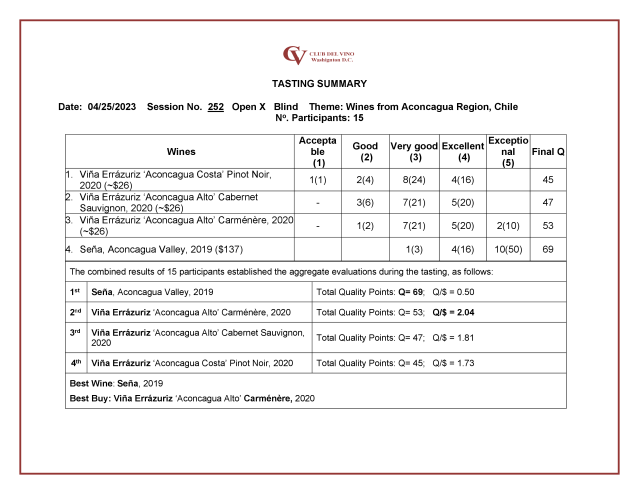
The tasting took place before revealing the wines’ prices. 16 participants rated them from Acceptable to Excellent. The combined results established the preference order during the tasting.
Cono Sur ‘Ocio’ Pinot Noir 2019 was rated as Best Wine and Veramonte ‘Ritual Chardonnay 2019 the Best Buy. The following Table presents the details of individual ratings and combined results.
Al investigar los vinos de Casablanca descubrí que la mayoría de los viñedos de esta región son bastante lujosos y modernos. Por eso, además del blog del Club, pensé que sería importante destacar fotos de algunos de estos viñedos.
The main objective of this tasting is to compare various red wines from the same winery, two varietals and two red blends, but mostly based on the Carnénère grape.
Type of tasting: All wines will be presented and explained, but their prices will only be revealed at the end of the tasting and lunch.
Participants: R. Arroio; J. Brakarz; M. Fryer; O. Mason; C. & A. Perazza; L. & J. Redwood; J. Requena; C. Santelices; R. Santiago; E. Silva; M. Simões; G. Smart; G. Zincke; and L. Uechi (guest).
Menu
Portobello al Forno
Fetuccini con Ragú di Vitelo
Beef Medallions with Brown Sauce
Dessert, coffee, tea
The Colchagua Valley and the Apalta Valley sub-region
The Colchagua Valley is a wine region in central Chile located about 150 miles south of Santiago. It is situated in the southern part of Chile’s Rapel Valley, with many of the best vineyards lying in the foothills of the Coastal Range. The valley is home to over 200 wineries, and it is one of the most important wine regions in Chile. It is well-regarded for exceptionally high-quality red wines.
The valley extends from near the base of the Andes Mountain all the way to the ocean, in a span of about 150 km. It has a mild Mediterranean climate, with marine breezes for cooling the vines. The valley’s slopes are quite steep on the margins of the coastal mountains, which are largely terraced for grape cultivation. The soil is predominantly granitic and well-draining. The valley’s diurnal temperature variance allows grapes to improve their aromatic profile while maintaining the optimum mix of ripeness and acidity. The Tinguiririca River flows along the northern boundary of Colchagua.
The valley was first planted with grapes in the 16th century by Spanish missionaries. The valley’s wine industry began to grow rapidly in the 1980s and 1990s. Heavy French investment and cutting-edge technology in both the vineyard and the winery has been a boon to the local viticultural industry, which already laid claim to ancient vines and a textbook Mediterranean climate. The warm, dry growing season in the Colchagua Valley favors robust reds made from Cabernet Sauvignon, Carménère, Malbec and Syrah—in fact, some of Chile’s very best are made here.
The Colchagua Valley region is known for its Bordeaux varietals, which were introduced in the late 1800s before phylloxera devastated European vineyards. The region is home to wineries that produce the best of Chilean red wines, including high-quality Bordeaux blends.
The Apalta Valley is a sub-region within the Colchagua Valley with a particularly favorable location and soils. It is located between the Tinguiririca River and the Cordillera de la Costa Mountain range forming a narrow valley surrounded by rolling hills, creating a microclimate that is conducive to grape cultivation. The Apalta Valley has a Mediterranean-like climate (warm, dry summers and moderate winters), with ocean breezes helping to smooth out temperature variations, which favors slow and even grape ripening. It is in a North to South position (which is not common in the wine producing regions of Chile), meaning that at sunrise and sunset the cordilleras block the sun’s rays, limiting the exposure of the vine to intense sunshine and heat.
The soil composition consists of alluvial deposits, clay, and sand, providing excellent drainage for the vines and contributing to the wines’ complexity and structure.
All the wines in today’s tasting are from the Apalta Valley area.
Vineyards in Apalta, Colchagua Valle Denomination Region
The Winery: Casa Lapostolle
Casa Lapostolle is a renowned Chilean winery located in the Colchagua Valley, with special high-end facilities in the Apalta Valley. The winery was founded in 1994 by Alexandra Marnier Lapostolle and her husband Cyril de Bournet, members of the French Marnier Lapostolle family, known for producing Grand Marnier liqueur.
Presently the winery owns 300 hectares of prime vineyards in the Rappel and Colchagua Valleys and uses exclusively Carménère, Sauvignon Blanc, Chardonnay, Semillon, Cabernet Sauvignon, Merlot, and Syrah. Experience shows that other grape varieties grow less successfully on Chilean terroir.
Casa Lapostolle’s three main vineyards are located in the Apalta Valley and are planted with Carménère, Merlot, Cabernet Sauvignon, Petit Verdot and Syrah. In 1997 they released the first vintage of the now highly praised Clos Apalta wine.
Here are some additional facts about Casa Lapostolle winery:
The Marnier family’s objective in Chile was to use its French expertise applied to grapes that incorporate the Chilean terroir. Therefore, Casa Lapostolle became known for its high-quality wines which also focus on sustainable and environmentally friendly winemaking practices, which have helped them gain recognition and respect in the wine industry.
Organic and biodynamic practices have been implemented in the Apalta Vineyards, which means that no pesticides are used to fertilize and cultivate crops that are 100% certified organic.
Casa Lapostolle has won numerous awards for its wines, including the Wine Spectator’s “Top 100 Wines of the Year” award, for its “Clos Apalta,” a premium red wine (see specific description ahead)
In addition to Clos Apalta, Casa Lapostolle produces a wide range of other wines, including Sauvignon Blanc, Chardonnay, and Syrah, among others, each expressing the distinct characteristics of the Colchagua Valley and surrounding regions.
Lapostolle Apalta winery’s architecture is also noteworthy, featuring a beautiful and modern design that harmonizes with the stunning natural surroundings of the Colchagua Valley. The winery offers a variety of tours and tastings, and it is a very popular destination for wine tours visiting Chile.
One of the winery buildings at Apalta Valley, with surrounding beams that suggest a barrel shape. There are 24 beams, representing the number of months it takes to produce the Clos Apalta vine.
The Carménère grape variety:
Three of the wines in this tasting are predominantly composed of Carménère grapes. Therefore, some information about this variety is warranted. The name comes from the French word carmín which is the color that the vine leaves get in autumn. Carménère originated from the Bordeaux region of France. Before the 1870s, Carménère was a prevalent blending grape in Bordeaux, found mostly in Graves and the Pessac-Léognan appellations. However, due to the phylloxera infestation, nearly all the Carménère vines – along with most of the vineyards in Bordeaux – were wiped out. When vignerons in Bordeaux replanted however, they opted to plant the easier-to-grow Cabernet Sauvignon and Merlot instead, and Carménère was essentially abandoned.
Around 1850 Carménère plants were transplanted from Bordeaux into Chile, still confused and often planted alongside Merlot vines and blended with other varietals. Then, in 1994, the French ampelographer (grape botany expert), Jean-Michel Boursiquot, noticed how some of the “Merlot” vines took a much longer time to ripen. Boursiquot carried out research to determine that somewhere close to 50% of the Merlot planted in Chile was actually the long lost Carménère variety of Bordeaux. Finally in 1998, Chile officially recognized Carménère as a specific variety.
The grape is a late-ripening variety that requires ample warmth and sunshine to reach its optimal ripeness. The overall production of a Carménère vine is quite low (compared to other easier varieties), which can be considered a positive for highly concentrated, high quality grapes. Overall, the grape is noted to perform promisingly in sandy soils, where it produces more aromatic wines, and clay-based soils, where it makes richer, more structured wines.
Carménère takes up slightly more than 10% of all vineyard plantings in Chile today, with close to 10,000 hectares of vines planted. However, those 10,000 hectares represent 80% of the world’s plantings devoted to Carménère.
Carménère wines often exhibit a deep red color, medium to full body, and flavors of dark fruits (such as blackberry and plum), spice, green pepper, and subtle herbal notes.
Ageing: The blend was aged in 225L French oak for 13 months
Tasting Notes: Intense, deep red color with purple edges. Expressive and intense nose with cassis and black currant aromas. Elegant palate with round and persistent tannins, with fresh cherry along with a light toast flavor.
Ageing: The blend was aged 225L French oak for 13 months
Tasting Notes: Deep purple red. The nose is black fruit such as maqui berry and spices such as red pepper and vanilla. On the palate it is of medium acidity and round tannins with ripe red fruit. Medium to long finish.
Lush and fruit-forward, with hibiscus accents to the raspberry and plum core, adding mineral and spice details around fine tannins. (Wine Spectator)
Pairing: Ideal for dishes such as rabbit roulade with mint and apricot or four-cheese pasta with truffles with truffles. (Wine.Com)
Ageing: 8 Months in French oak barrels. Then another 14 months in 50% new French oak barrels, 50% in second use.
Color: Intense dark green red garnet with purple violet edges.
Nose: Notes of well ripe fruit opening towards well integrated oak.
Palate: The palate opens toward a concentrated structure, with well-defined tannins and good density. Long in the finish.
4. Clos Apalta 2018
D.O.: Apalta Type of Wine: Bordeaux Blend Blend: 64% Carménère, 18% Cabernet Sauvignon, 18% Merlot. Alcohol Content: 15% vol.
Fermentation Type: 75% in 75hL French oak vats, 25% in new French oak barrels
Ageing: 25 Months in French oak barrels. 87% new French oak barrels, 13% in second use.
Color: Deep and inky purple red robe with dark blue edges.
Nose: Intense, spicy with layers of red and black fruit, with cedar notes.
Palate: Elegant tannins open towards a mid-palate that combines finesse and concentration, round and fresh. Exceptionally long finish. (Wine.Com)
This is Casa Lapostolle’s most famous wine. According to the winery’s web page, Clos Apalta is considered an “exceptional wine by world standards”, having won numerous awards, including Wine Spectator’s “wine of the year”, for its 2005 vintage, among other awards.
Ratings for 2019: 98 pts. James Suckling, 96 pts. Wine Advocate
Club del Vino Members Rating after the Tasting:
The tasting took place before revealing the wines’ prices. 15 participants rated them from Good to Exceptional. The combined results established the preference order during the tasting, as follows:
Clos Apalta, 2018 was rated as Best Wine and Lapostolle Couvée Alexandre Carménère, 2021 the Best Buy. The following Table presents the details of individual ratings and combined results.
The main objective of this tasting is to compare and contrast white wine varietals from
Argentina and Uruguay. We endeavored to choose white wines that we believe are distinctive and represent well the regions and varietals. Hence we selected an Albarino from Uruguay and three wines from Mendoza, Argentina, a Semillon, a Chardonnay and a Chardonnay blend.
Type of tasting: Hybrid tasting. All wines presented together but with the identity of the selections unknown until after the tasting and lunch.
Presenters: Nick Marzella and Erico Silva
Participants: M. Averbug; C. Estrada; M. Fryer; J. García; N. Marzella, C and Perazza; L. and J. Redwood; E. Silva; G. Smart; P. Turina; and G. Vega.
Michelini i Mufatto – Certezas – Semillon – Tupungato, Uco Valley, Mendoza, Argentina – 2020
Michellini i Mufatto – Convicciones – Chardonnay – Gualtallary, Tupungato, Uco Valley, Mendoza, Argentina – 2019
Altar Uco – Edad Media – White blend, Chardonnay (90%) and Chenin (10%), Tupungato, Uco Valley, Mendoza, Argentina – 2020
2. Menu:
TEGAMINO E VONGOLE . Clams sautéed in a red or white sauce, served with toasted bread
SPAGHETTI CARBONARA. Prepared with a sauce of egg yolk, parmesan cheese, Italian bacon and a touch of cream sauce
SALMONE ALLA GRIGLIA
Grilled Atlantic salmon with olive oil and lemon sauce
3. Information about the regions of production:
3.a Maldonado Region, Uruguay
The main wine region in Uruguay is in Canelones, the large province that includes the capital Montevideo, with more than two thirds of the country’s wine production.
The Maldonado wine region is located along the Atlantic Ocean in the southeast of Uruguay, the province includes the famous city of Punta del Este. The Maldonado wine region has a maritime climate with mild temperatures and cool breezes that moderate the heat in the summer months. Compared to other wine regions in Uruguay, the Maldonado wine region has a high altitude and great geological diversity. There is a range of interesting soils including crystalline rocks, quarts, alluvial, and gravel soils. The soils are quite soft and have excellent drainage and permeability, making them perfect for viticulture.
Varieties cultivated in the region are red: Tannat, Pinot Noir, Sangiovese, Cabernet Franc and Merlot. White: Albariño, Viognier, Sauvignon Blanc and Riesling.
Producer Bodega Garzón is close to Punta del Este, La Barra and José Ignacio, the Uruguayan paradise with mesmerizing landscapes and the perfect combination of past, present and future. The charm of this sophisticated region, located among sloping hills that meet the sea, is portrayed in the postcards of Garzón, a small town with 600 inhabitants which is home to tourists, farmers and local artists.
This picturesque landscape offers the best environment for their vineyards, orchards and groves. The wines love the terroir of Garzón with its ballast hills, a soft, stony soil and Atlantic breezes flowing over the vines that result in perfect conditions for creating elegant and complex wines. Therefore, Garzon products are the result of a careful selection of terroir which is appropriate for the development of premium wines and a wide range of grape varieties. This allows the best winemakers to experiment with a new environment and create optimal blends for a market increasingly eager for new wines. The resultant winemaking is focused on producing wines of the highest quality with a distinctive identity, strong personality and sense of place. Bodega Garzon is one of the leading producers of Albariño in Uruguay.
Characteristics:
100 % Albarino
Alcohol: 12.5 %
Fermentation: Stainless steel and cement tanks
Aging: 3 to 6 months on the lees
Winemaker Notes:
Of a very elegant pale yellow this Albariño has a fresh and vibrant nose that reminds us of tropical fruit with subtle citrus and floral notes. In the mouth, we find a round and fresh body with a saline and mineral combination that provides a marked notion of terroir.
Wine 2: Michelini i Mufatto – Certezas – Semillon – Tupungato, Uco Valley, Mendoza, Argentina – 2020
Producer Micheliny y Mufatto: Andrea Mufatto and Gerardo Michelini started their winery in 2019 alongside their son Manuel Michelini. They are situated at the foot of the Andes in one of the highest elevations of the Uco Valley where the soil contains some of the richest components of calcium carbonate and granite in all of South America. This particular sub region is at the highest, most western portion of Gualtallary and goes by the name La Cautiva. At Michelini i Mufatto they strive to make some of the most unique wines of Argentina and the wines show tension, elegance and balance. They are currently working with Semillon, Chardonnay, Chenin Blanc, Cabernet Franc and Malbec. The trio also makes wine in Uruguay and Spain.
The wine:
100 % Semillon from single plot in the Uco Valley
Alcohol: 12.8 %
Fermentation: in their skin 1,000-litter oak founders
Aging: 2 winters
Winemaker Notes:
A wine made from select plots from a 120-year-old estate, one of the few which was founded by then and is still operating in Mendoza. Once harvested, grapes are fermented with their peel (50%) in 1000-liter oak foudres, where wine is aged for two winters. The winemaking process concludes with its gentle filtering and bottling.
The nose of ripe apricot, pineapple, orange sherbert, yellow wax beans and candied ginger. The palate shows lemon balm, pineapple, caramel rice candy, sage and wet clay. The wine has beautifully integrated acidity and great texture of fine grape skins.
Reviews:
Robert Parker – 94 rating. The 2020 Certezas is a lot more exotic than the 2019 I tasted next to it, with some tropical notes despite a lot less alcohol (12.8 % vs 13.7 %), but the palate keeps the backbone of freshness and acidity. The Semillon was ready before the Chenin this year, when they harvested early. This is richer, has a more tender mouthfeel and a long finish.
Wine 3: Michelini i Mufatto – Convicciones – Chardonnay – Gualtallary, Tupungato, Uco Valley, Mendoza, Argentina – 2019
Producer Micheliny y Mufatto: See above.
Characteristics:
Chardonnay
Alcohol: 13 %
Fermentation: 1000-litter oak founders.
Aging: Aged for two winters
Winemakers notes: A wine born from select plots from Finca La Cautiva, whose vineyards are 15 years old. Grapes are harvested and subsequently macerated with their peel for five days. They are subsequently pressed and sent to 1000-liter oak foudres where fermentation takes place. After that, wine is aged for two winters, to be later filtered and bottled.
Reviews:
Robert Parker’s Wine Advocate 95 points. The 2019 Convicciones is a pure Chardonnay from the zone known as La Cautiva in Gualtallary at 1,500 meters in altitude in the part that is still informally called Las Tunas of the district (once the IG is approved, the limits should be set formally). It has 13.5% alcohol, very good parameters of acidity and freshness and a medium-bodied palate with a strong chalky sensation. It’s pure, clean, precise, symmetric and austere. This has to be the finest vintage for this bottling. They produced 1,500 bottles of this. It was bottled in June 2021. Best After 2022.
Wine 4: Altar Uco – Edad Media – White blend, Chardonnay (90%) and Chenin (10%), Tupungato, Uco Valley, Mendoza, Argentina – 2020
Producer – Altar Uco is a boutique winery and production founded by winemaker Juan Pablo Michelini, who also serves as the head of his family winery. Focused on making premium wines from the Uco Valley, including white wines aged under flor (one of the few producers of biologically aged wines in South America!) Altar Uno’s wines are made from grapes grown in Gualtallary, a high altitude region known for its limestone soils and cool climate.
Characteristics:
Blend: 90% Chardonnay, 10% Chenin Blanc
Alcohol: 11 %
Fermentation: Co-fermented with native yeasts in concrete tanks.
Aging: biologically aged in 500-liter French oak barrels (50% first-usage and 50% second-use barrels) for a year.
Winemakers notes: This is an elegant, inspiring and intellectual white wine. Even though today it is young, as time goes by, it will become more subtle and complex.
Reviews:
James Suckling: 94 rating. Green apple, pineapple, lime curd, chamomile and smoked almond on the nose. Some clove and white pepper, too. It’s medium-bodied with sharp acidity and a vibrant, fragrant, floral and fresh-fruited palate. Tangy but creamy and lengthy finish.
Robert Parker’s Wine Advocate: 94 rating. The 2020 Edad Media Blanco is serious and nuanced, with moderate ripeness and only 11.2% alcohol, notable for the warmer year. The blend of 90% Chardonnay and 10% Sauvignon Blanc fermented together with indigenous yeasts and matured in 500-liter French oak barrels for 12 months; but the barrels were never topped up, and some developed a thin layer of flor yeasts, which gives it a special spiciness and tastiness. After the élevage, the wine spent five months in stainless steel to let it settle. The nose is complex, subtle and elegant, combining notes of citrus with herbs, spices and a smoky touch. The palate is sharp and very tasty, clean, precise and long. I tasted the 2018 and 2019 next to this 2020 to check the evolution, and despite the warmer year, this keeps the poise and freshness and comes through as a noteworthy followup to the 2019, even a step above. It finishes dry and tasty, with a chalky sensation. It shows very good integration of the oak (better than any previous vintage) and some nuances that appear with time in the glass, like tangerine peel and flowers. It’s a beauty.
6. Participants evaluation of the tasted wines:
The tasting took place before knowing the winesand their prices.Twelve participants rated them fromacceptable to excellent. The combined results established the preference order during the tasting, as follows:
4th–Altar UcoEdadMedia, White Blend, Mendoza AR, 2020
Bodega Garzón, Albariño Reserva, Uruguay, 2022 was rated as Best Wine and the Best Buy. The following Table presents the details of individual ratings and combined results.
Roman ruins reveal how emperors used winemaking in a lavish power play
The Villa of the Quintilii is only the second site in the world known to use wine in this way
By Charlotte Lytton, Washington Post, July 23, 2023 at 6:00 a.m. EDT
ROME — Fights involving exotic cats, chariot races, gladiatorial battles: At the banquets of ancient Rome, there was no skimping on dinnertime entertainment. And, according to a recent study, sport for elite guests included something rarer, too: winemaking as a form of theater.
The findings, published in the journal Antiquity, describe how the Villa of the Quintilii used alcohol production for show in what is now believed to be the among the most lavish wineries in the ancient world. This makes the 2nd-century villa only the second known to have used wine in this way, said lead study author Emlyn Dodd, a lecturer in classical studies at the University of London.
The villa has “this amazing level of decoration and luxurious appointments in it that we never see in ancient wineries,” Dodd said.
The discovery highlights the use of wine as a form of power for the privileged in one of the ancient world’s bloodiest empires.
“The lives of the bad emperors are full of what had always seemed completely unrealistic” behaviors, said Nicholas Purcell, Camden Professor of Ancient History at the University of Oxford, who was not involved in the study. “And then something like [the winery at the Quintilii] turns up, and it actually turns out that it’s all true; that they really were doing this kind of thing, and building special places in order to do it.”
Winemaking as theater
This decorative inlaid marble pavement is in one of the dining rooms overlooking the winery. (S. Castellani, after Dodd et al. 2023)
A pair of wealthy brothers built the Villa of the Quintilii in the 2nd century A.D. on land that sits about eight miles from Rome’s modern-day city center.
The site was so desirable that around 182 A.D., then-Emperor Commodus killed its owners to claim it for himself, kicking off a long period of imperial ownership. Many emperors used the villa over the years, with some making renovations and adding to its opulence. The name Gordianus is stamped into the lead pipes at the facility, which suggests that Emperor Gordian III, who ruled from 238 to 244 A.D., built the winery or at least renovated it.
Formal excavations of the villa ruins have been going on since the late 18th century, but the first evidence of the winery did not emerge until 2017. Archaeologists were originally looking for the entrance to the roughly 60-acre site when they found an “unexpected surprise,” said Dodd, who wrote the paper while working at the British School at Rome.
A bronze bust of Roman Emperor Gordian III. (Universal History Archive/ Universal Images Group/Getty Images)
Unlike the other winemaking facilities that would have been common in the empire, the Quintilii winery was extravagantly decorated with some of the finest materials. The floors were not waterproof concrete but were made of imported red marble. Juice from pressed grapes would have spurted from channels in a marble-lined façade, creating a purely entertaining fountain effect. And the winery is surrounded by dining rooms, once richly appointed, that seem to have nothing to do with the production process.
On the basis of these clues, archaeologists think the Quintilii served as a kind of “imperial toy,” said Alice Poletto, a Rome fellow at the British School at Rome who was not involved in the research.
The experts think enslaved people would have pounded grapes in the winery’s treading area, most likely slipping about on the luxurious red marble while doing so, to the gruesome delight of sloshed guests. Attendees from the era’s highest social circles would look on as the roughage of crushed grapes, or must, made its way down to mechanical presses, which would send juice gushing through fountains set in the courtyard wall and pouring from open channels into dolia, or ceramic storage jars, in the ground to collect the spoils.
By Poletto’s estimations, the dining complex could seat 25 to 27 guests, with the winemaking spectacle taking place perhaps twice a year as “a unique opportunity and an absolutely high honor that served not only as a reward to the invitees, but also, in my opinion, a way for the emperor to highlight [and] reinforce his power.”
Playing at agriculture
The lavish Villa of the Quintilii sprawled across almost 60 acres of land. (AP)
Banquets at the Quintilii might have been organized ahead of political elections, Poletto thinks; a way to manipulate results behind the most regal of doors. For many emperors, extending invitations to such events was “a privilege and a warning,” she said, a way for them to communicate that “your life is in my own hands … be aware that if I decided that you’re going to die tomorrow, you are going to die tomorrow.”
Such was the state of play in ancient Rome, where death could be employed to expand the empire and for post-feast japes alike. Poletto says that Rome’s latter Imperial period included “banquets of the dead,” where actors would dress as demons or afterworld deities and pretend to murder guests for the grim entertainment of others.
In addition, “drinking wine was a very important symbol of status and prestige” for the ancient Romans, said Paulina Komar, an assistant professor at the Institute of Archaeology at the University of Warsaw who has written extensively on wine’s role in ancient empires.
Oxford University’s Purcell said that “the gathering of grapes and the making of wine [was] of course the centerpiece of Greek and Roman upper class,” and that he would be “quite surprised” if the more humdrum olive or grain harvests attracted similar attention.
Still, history is replete with examples of the wealthy toying with the idea of a bucolic lifestyle for sport, Purcell added. In the late 18th century, Marie Antoinette installed a dairy at her castle in Rambouillet that has stunningly ornate décor, designed for its form rather than function. The winery at the Quintilii is a similar example of “the super-rich play[ing] with the fantasy that they might be participating in the romantic life of agricultural production,” he said.
A view from what once was the west dining room shows the winery’s cellar area leading up to the production levels. (Emlyn Dodd)
It is possible that more examples of winemaking as sport will emerge from Roman ruins. The discovery at the Quintilii follows that in 2016 of a similar facility at Villa Magna, a site in central Italy dated to about 100 years earlier. These “thick and fast” findings, as Purcell describes them, offer hope about what might be unearthed next.
“It does make you wonder about other periods of the Roman Empire, perhaps even earlier in the republic,” Dodd said. “Was it a common phenomenon, or are we just seeing a handful of incredibly rare examples that particular emperors or super-elite people built?”
Purcell’s money is on Hadrian’s Villa in Tivoli, 20 miles from Rome, as the spot next likely to reveal such riches. “It wouldn’t astonish me at all,” he said, to find “sumptuous public rooms … [at] the biggest and best Roman Imperial villa that was ever built.”
And back at the Quintilii, there are more discoveries to be made. One dining area has been excavated, but two spots around the wine cellar have yet to be unearthed, as well as a number of spaces attached to the presses and production areas. Finding what lies beneath these is the next step, Dodd said, “to tease apart chronologies and purposes and see where it takes us.”
Valle de Uco is a viticultural region southwest of Mendoza, in Argentina. Situated along the Tunuyán River, the Uco Valley is widely considered one of the top wine regions in Mendoza, and all of Argentina. The main objective of the tasting is to present four of the most significant types of wine produced in Valle de Uco.
Type of tasting: Open
Presenters: Jairo Sanchez and Jorge Requena
Participants: To be announced
These are the wines:
Catena Zapata, Catena Alta, Chardonnay, 2018
Domaine Nico, La Savante, Pinot Noir, 2020
Salentein Numina Gran Corte, Bordeaux Red Blend, 2019
Zuccardi, Jose Zuccardi, Malbec, 2018
The Valle de Uco Region
Argentina is one of the most important wine-producing countries in the New World, and vies with Chile for the position of largest producer of wine in South America. The high altitude deserts of the eastern Andes mountains have given rise to a high quality wine industry.
Mendoza is Argentina’s largest and best-known wine regions, often producing great wines to critical acclaim. Here, desert landscapes and high altitudes combine to make a very stable climate and a terroir that gives rise to aromatic, intensely flavored reds. Three-quarters of Argentinian wine production takes place in Mendoza. Furthermore, Mendoza Malbec accounts for 85 percent of the Malbec made in the country. There is more Malbec planted in Mendoza than anywhere in the world.
Valle de Uco is located 88 km to the south of the City of Mendoza, in the foothills of the Andes, the Uco Valley spans the departments of Tunuyán, Tupungato and San Carlos. The wines from there are often labelled with one of these three place names.
Whereas in 2005 the valley had 16,800ha under vine, today it contains 28,600ha, representing 19% of all the vineyards in Mendoza. Almost one in five bottles produced in Mendoza, comes from the valley.
Because the region is so large, in recent years producers have been carrying out detailed analysis to identify smaller Geographic Indications (GIs). Paraje Altamira, Los Chacayes and San Pablo are some of the most famous, together with Gualtallary, and all contain vineyards set at altitudes of between 900m and 1,500m. Irrigation water comes from the glaciers above, mainly channelled by the Tunuyán and Las Tunas rivers.
The climate is continental: dry with plenty of sun, low rainfall, cold winters and warm summers with a large thermal range. The point of difference is the altitude, which defines the temperature (on average, it drops 1༠C every 150m higher up you go) and the cool climate has lured many producers away from warmer areas further down. All these different factors result in expressive, tense reds and vibrant whites.
The proximity and exposure to the Andes make for alluvial, rocky soils with widely varying mixtures of sand, limestone and clay in unique combinations that produce memorable wines.
Within the 50km (30 miles) Valle de Uco region there are smaller wine regions with slightly different wine styles:
Tupungato is well-known among collectors because of an unofficial growing area called Gualtallary with calcareous soils. You’ll find fresher styles of Malbec, Chardonnay, and Cabernet Franc because vineyards are as high as 5,250 feet (1600 meters).
Tunuyán contains the Vista Flores appellation. The area has sandy soils which produce elegant and aromatic styles of Malbec with minty notes. You’ll also find some Cabernet Franc and even Pinot Noir here.
San Carlos has alluvial soils with more loamy-clay which creates a lush, chocolately palate. The region also sits a bit lower at around 3770 feet (1150 m) which softens the acidity. Expect to find lush, rich styles of Malbec and Cabernet Franc.
Wine selection. The selected wines – Malbec, Red Blend, Chardonnay and Pinot Noir – are representative (about 75%) of the wines produced in the Uco Valley.
Information about the wines
Wine #1. Catena Zapata ‘Catena Alta’ 2018, Chardonnay, Mendoza, Argentina
Producer: Catena Zapata is one of the foremost wine estates in Mendoza, Argentina. Founded in 1902 and still in family hands, it is particularly known for its rich, full-bodied red wines produced from Malbec. The estate is made up of six vineyards in the Luján de Cuyo, Tupungato and San Carlos sub-regions of Mendoza, at altitudes ranging from 3000 to 4750 feet (920 to 1450 meters) above sea level.
The Wine: Vintage: 2018 Varietal: 100% Chardonnay
Regions: Gualtallary District, Tupungato Region, Uco Valley, 1,450m average elevation
Vinification: Hand-harvested. Whole clusters are pressed, and then 100% fermented in 500 L French oak barrels with natural yeasts at low temperatures. Wild yeasts. Aged for 14 months in French oak. 30% does not undergo malolactic fermentation. First, second and third use barrels used.
Alcohol: 13.8% Total Acidity: 7.05 grams/liter pH: 3.25
Tasting notes: This chardonnay’s clonal material often gives way to rot from botrytis (the fungus that produces sweet wines), which is here manifested in that sweetness, although without compromising the wine’s tension and freshness. It also adds tremendous complexity, candied aromas in the midst of ripe fruits, and all accompanied by a very-Gualtallary acidity. Very much a mountain wine. (Patricio Tapia 94)
Rich but fresh aromas of lemon zest, orange and rose blossom. Also smoke and caramel. Rich, viscous and well structured on the palate. Lots of citrus. Elegant spice and a juicy, supporting acidity (Vinum Wine Magazine 17/20).
Wine # 2. Domaine Nico La Savante Pinot Noir 2020
Producer: Domaine Nico lleva el nombre de la hija de Laura Catena, Nicola, que a su vez rinde homenaje a su bisabuelo, Nicola Catena, fundador de la bodega Catena Zapata en el año 1902
The wine: Vintage: 2020 Varietal: 100% Pinot Noir
Vineyard Location: Gualtallary, Tupungato Elevation: 1450 m.s.n.m. (4757 feet) Planted: In 1994, Dijon clones: 115 and 777
Vinification: The fermentation was in roll-fermentor and small stainless-steel tanks. Clone 115 was fermented with 40% whole cluster and clone 777 with 30% whole cluster. Max. Fermentation temperature: 24° C, 7 days maceration. Aged 15 months 30% new barrels, 30% second-use and 40% third-use. All french oak
Alcohol: 13.5% pH: 3.46
Tasting Notes: Red fruit with presence of herbs such as thyme, spices, and clove. Medium-high acidity, low alcohol, slight minerality alongside integrated oak and grainy tannins.
Wild smoky raspberries, brambleberries and oyster shells on the nose. Medium-bodied with vibrant acidity and taut, mineral character. Tense and elegant with a fine frame of tannins. Tightly wound. Drink after 2024. (James Suckling 95)
2020 was a warmer year, and the wine shows it when you taste it next to the 2021, which is cooler. This is a little rounder, with 13.5% alcohol and mellow acidity, with more cherry than flowers, tasty and juicy. It finishes dry and chalky. Best after 2022. (Robert parker 95).
Wine # 3. Salentein Numina Gran Corte 2019
The producer: The Bodega Salentien is located at an elevation of 1.200 meters (4.000 feet), right in the vineyard’s center. More than 49 hectares (121 acres), of native desert habitat were preserved and are a part of the bodega’s everyday landscape. The western horizon is dominated by the close snowy Andes.
The wine: Vintage: 2019
Varietal Composition: 65% Malbec, 14% Cabernet Sauvignon, 8% Petit Verdot, 8% Merlot and 5% Cabernet franc.
Region: Tunuyán, Valle de Uco, Mendoza
Vinification: Hand harvested, fermentation in 7,000-liter oak casks. The varieties of this blended were made separately and after 6 months aged in barrels, the barrels were emptied and the blend was made, which came back to the oak barrel to finish the ageing process. The total ageing time was 16 months.
Alcohol: 14.5% pH: 3.79
Tasting notes: It displays a bright, intense and deep purplish color. Is aroma is complex and elegant with notes of tobacco, cassis, blueberries, spices as well as notes vanilla and caramel. In the mouth, it is a wide and intense wine with full body and tannic structure and a long finish
Salentein Numina Gran Corte displays a bright, intense and deep purplish red color. Its aroma is complex and elegant with notes of tobacco, cassis, blueberries, spices as well as notes of vanilla and caramel. In the mouth, it is a wide and intense wine with full body and tannic structure as well as a long and lingering finish (Winemaker Notes)
Purple in the glass. The complex nose offers clearly defined notes of cigar box, vanilla, fresh plum, blackcurrant and bay leaf with hints of ash. Lean and juicy in the mouth with refined tannins, the flavors are driven by the oak (Vinous 94).
Wine # 4. Zuccardi Jose Zuccardi Malbec 2018
The producer: Familia Zuccardi is a family-run winery based out of the Bodega Santa Julia in the Mendoza region. The company has numerous brands, each with a wide range of wines, covering classic Argentinian varieties as well as numerous styles including sweet and sparkling wines.
Vineyard Location: Malbec from IG Paraje Altamira (San Carlos), Cabernet Sauvignon from IG Gualtallary (Tupungato)
Vinification: Cluster selection, fermentation with native yeasts in concrete tanks. Aging for 24 months in large casks (2500 liters) and barrels (500 liters)
Alcohol: 14.5% pH: 5.69 g/l
Tasting notes: Blackberries, graphite, bla
ck pepper and crushed berries on the nose. Full-bodied, very tight and focused with bolted-down tannins that give it fantastic potential for aging. A little cabernet sauvignon here, too. Try after 2023 (James Suckling 96).
Balances muscle with grace, showing notes of molasses, ripe black cherry and black plum that offer nice richness, while a thread of plumeria picks up the trail midpalate. Reveals stony tannins, peppery elements and notes of espresso and orange peel on the lengthy finish. Drink now (Wine Spectator 94).
The 2018 José Zuccardi mixes Malbec from different regions in the Valle de Uco (today, Altamira and Gualtallary) all with limestone soils. It always has a touch of Cabernet Sauvignon (only 5% to 10%), which is not mentioned on the label, and is now matured in foudre for two years. I tasted this next to the 2019, where there are no differences other than the nuances from the year, with similar alcohol and acidity, but the sensation is of a little wider and powerful in the 2018. The wine feels very stable and harmonious after the long élevage, but there are no traces of oak (Robert Parker’s Wine Advocate 94).
Menu (and wine pairing)
Seafood salad (Chardonnay)
Chicken grilled meat with vegetables (Chardonnay, Pinot Noir)
Grilled sirloin strip steak with cooked potatoes (Malbec, Malbec Blend)
In Argentina, while all the usual suspects are well known (Malbec, Cabernet Sauvignon, Merlot, Chardonnay, Sauvignon Blanc etc.), there are a few lesser-known varieties that have taken on a uniquely Argentinian identity. The main objective of this tasting therefore is to explore wines made with these special grapes: the white Torrontés and the red Bonarda.
Type of tasting: Open
Presenters: Claudia and Agilson Perazza
Participants: R. Arroio; M. Averbug; J. Brakarz; R. Connolly; M. Fryer; J. García; N. Marzella; A. and C. Perazza; L and J. Redwood; J. Requena; J. Sanchez; C. Santelices; R. Santiago; E. Silva; G. Smart; G. Vega; G. Zincke; and S. Ardila (guest).
These are the wines:
Susana Balbo, ‘Torrontés Crios’, Salta, 2019
Altos Las Hormigas ‘Colonia Las Liebres’ Bonarda, Mendoza, 2020
Familia Zuccardi ‘Emma Zuccardi Bonarda’, Mendoza, 2019
The grape varietals and the regions that produce them
TORRONTÉS
“Malbec may be more popular, but Torrontés is Argentina’s special grape” (M. Puckette@Wine Folly)
Torrontés is an aromatic white wine that originated in Argentina. The only native grape variety in South America to really woo its drinkers, Torrontés is the Queen of Argentina.
Torrontés involves a group of three distinct varieties – Torrontés Riojano, Torrontés Sanjuanino and Torrontés Mendocino – all native to South America. They are a natural cross between the mission grape País (a red grape) and the sweet Muscat of Alexandria grape (also known as Zibbibo), and first appeared in the north of Argentina. Of the three varieties, the most popular (and most delicious) is the Torrontés Riojano, which grows dominantly in northern Salta. Other regions such as Mendoza and La Rioja produce a lot of Torrontés wines using the other two varieties of Torrontés, but these tend to be much simpler in aroma and taste and often made in a sweet style. The wine smells sweet but is usually made in a dry style. Albariño and dry styles of Riesling and Muscat Blanc (dry “Moscatel” from Portugal) are similar in aroma and taste to Torrontés.
The Torrontés thrive in Argentina’s high-altitude vineyards, particularly in the Cafayate region of Salta, where T. Riojano is grown. This region, on the edge of the Andes, boasts some of the highest vineyards in the world, reaching up to around 10,000 feet (3,000m) above sea level. Here, dry, desert-like conditions and a significant diurnal temperature shift help bring out the best qualities of Torrontés. The soils in Cafayate consist mostly of free-draining chalky loam and in some areas can be quite rocky. The dry soil causes stress in the vines which causes them to produce less vegetation and not as many grapes. As there are fewer grapes, it means the concentration of flavors within the grapes rises. New plantations in the higher parts of the Uco Valley in Mendoza are promising too.
Tasting notes: Color: pale straw color with silver and green highlights. Primary flavors: Meyer lemon; peach; rose petal; geranium; and citrus zest. “A perfume bomb in the nose, Torrontés is locally known as “the liar”, as its floral, fruity, and tropical notes trick you into thinking you might have a sweet wine, but the mouth is, to the contrary, bone dry and occasionally a little bitter. If you want a sweeter finish, try one of the late harvests (sweet wine) versions. When made well, it’s like the vinous equivalent of a gin and tonic!” (A. Barnes, Wine Folly).
Food pairing notes: Torrontés is an excellent match with fish and shellfish, as well as with the regional cuisine of the northwestern Argentina, especially the empanadas and the typical Locro argentino. Even though Torrontés smells sweet, it’s usually quite dry, making it a great match with savory dishes that feature exotic spices, fruit, and aromatic herbs. With its light aromatic style and cool serving temperature, it is an ideal wine to match with Asian and Indian cuisine due to its sweet floral aromas of rose petals and flavors of white peach and lemon zest.
BONARDA aka Charbono, Corbeau, Douce Noir…
Emblematic variety of Argentina
Bonarda is a stealthy red wine option from Argentina that many experts think is going to make a big splash in the coming years. If País was the most-planted red variety in Chile, Argentina’s equivalent would be Bonarda. Bonarda was the most widely planted red grape before the Malbec boom and suffered a similar historical treatment as País: downgraded to table wine and abandoned as it lost out on the fashion stakes.
About the grape: Bonarda, as it is called in Argentina, is not supposed to be called Bonarda: the actual true Bonarda grapes are a group of at least six distinct Italian grape varieties, the most well-known of them being Bonarda Piemontese.
Instead, the Argentinian grape, when was DNA-profiled, was found to be identical to a rare grape from the alpine vineyards of Savoie in eastern France, known as Douce Noir or Corbeau de Savoie, which is also found in old vineyards in Napa, under the name Charbono.
The Bonarda/Charbono grape is believed to have originated in the Savoie region in the 18th century, when the Savoie was in fact under Italian rule, rather than being part of France as it is today. The grape became a much-maligned variety during the 20th century and almost disappeared in France. In 1958 it was prohibited in France, and all 500 hectares of the Bonarda vines were pulled out, while it was being planted widely in Argentina.
Bonarda is very important viticulturally in Argentina, where it is second only to Malbec in terms of acreage. In all, Bonarda accounts for over 18,000 hectares (45,000 acres) in the country, representing nearly 10 percent of all grapes grown there. Bonarda has been used to make fruity, medium-bodied bulk wines with low tannins. However, more recently some producers began looking more seriously at Bonarda, discovering its great potential as a varietal, especially for its adaptability to warmer areas, and using site selection and winemaking techniques to make more interesting and premium wines. Of the total cultivated in Argentina, 60% is found in Eastern Mendoza, a warm area located at about 700-800 meters above sea level, where it does best, because of its long hang time required to reach phenolic maturation.
How does Bonarda differ from Malbec? Often considered Malbec’s little brother, while Bonarda displays ample color in the glass, just like Malbec, it delivers lower tannins and slightly higher, more juicy-tasting acidity. Most Bonarda wines are made with little to no oak, and rarely carries alcohol above 13.5% ABV.
Tasting notes: Color: deep ruby to deep purple. On the nose: very fruity on the nose at first; notes of black cherry compote, fresh blueberry, and plum. Then, its complexity evolves, giving off nuanced aromas of violets, 5-spice, allspice, and peonies. If the wine was oaked (though most are not), may have slight smoky notes of cigar box, sweet figs, and chocolate. On the palate: initial burst of fruitiness, medium-body, juicy acidity, and smooth, low-tannin finish. The Bonarda wines fall within three styles:
Traditional Bonarda: Historically pipped as Malbec’s little brother, they are vinified in the same way. More traditional Bonarda wines are fruit-forward coming from warmer regions. Key regions are San Juan, La Rioja, and sub-regions San Rafael and Rivadavia in Mendoza.
Fresh, flirty Bonarda: Treated with shorter maceration periods and some whole cluster carbonic maceration, this new clan of Bonarda are lighter, fruitier, and perfect to enjoy chilled over lunch. Key areas are Luján de Cuyo (sub-regions of Vistalba and Ugarteche) and Tupungato, in the Mendoza region.
Serious Bonarda: In recent years, you will find a few new Bonarda plantations popping up on prime vine-estate in the highlands of the Uco Valley in Argentina, which proves just how seriously winemakers are once again taking the variety. Delving into the potential quality of Bonarda, these wines do not come cheap, but they do not taste cheap either. Most producers skip the oak and age wines in cement eggs, resulting in more linear, dark fruit and floral Bonarda with finesse. Key region is Uco Valley, Mendoza.
Pairing notes: Bonarda is a remarkably diverse food pairing wine because of its lower tannin and higher acidity. It will go well with chicken, beef, pork, and even a more steak-like fish (e.g., grilled salmon steaks with hoisin BBQ). Because of its subtle brown spice flavors, it will also pair well with flavors from the South Pacific (think pineapple, mango, teriyaki etc.). Locally inspired fares include mole sauces, curried potatoes, empanadas, and tacos al pastor.
– The Producer: Dominio del Plata is an Argentinian wine company founded and owned by leading winemaker Susana Balbo since 1999. The winery is located in Luján de Cuyo, Mendoza, with vineyard plots in several subregions of the Uco Valley. The Crios label features a wide range of monovarietal and blended wines for everyday consumption, including a Malbec rosé. The winery mainly ferments the wine in stainless steel tanks, though concrete eggs have been introduced for premium wines. The Torrontés grapes are sourced from Cafayate, Salta, and the highest vineyards in Valle de Uco, Mendoza.
– The wine: this wine is crisp, refreshing and aromatic, with a bouquet of citrus fruits, passion fruit, lychee, and white flowers. Lively acidity, a hint of creaminess and a long mineral finish add depth and balance to the palate.
Vintage: 2019
Varietal: 100% Torrontés
Regions: Cafayate (Salta) and Uco Valley (Mendoza); 1700m average elevation
Hand-harvested
Vinification: fermentation in stainless steel tanks at 13oC max. with selected yeasts; conservation over lees for 3 months to improve wine structure.
Tasting notes: “This wine blends grapes from two origins: Altamira in the Uco Valley (Mendoza), and Cafayate (Salta). According to Susana Balbo, the Altamira vineyard contributes with the herbs and citrusy side, while Cafayate’s adds the ripe white fruit aromas. The result is a tremendously fresh wine (something you often don’t find in this variety) that hasn’t lost its varietal character. The texture is smooth and round. An aperitif wine” (Patricio Tapia @ Descorchados).
Classic Bonarda: Bonarda wine to get to grips with the grape.
Wine #2 – Altos Las Hormigas ‘Colonia Las Liebres’ Bonarda, 2021
– The producer: The sister brand of Altos Las Hormigas winery, Colonia Las Liebres was established in Luján de Cuyo, Mendoza to focus solely on the cultivation of Bonarda grapes and was one of the original makers of export-quality single-varietal Bonarda. It makes fresh, juicy and great value Bonarda reds, as well as an excellent traditional method rosé bubbly, and even a sparkling red (named Brusca, in ode to its Italian inspiration).
– The Wine. The winery defines their approachable and very affordable red Colonia Las Liebres Bonarda Clásica as a bistro or trattoria wine. The ‘house style’ is to keep moderate alcohol and good freshness. It is a good example of the fresher, fruitier Bonarda produced in the region. Ideal to pair with pasta Pomodoro dishes, pizza and light meats.
Vintage: 2021
Varietal: 100% Bonarda
Region: Mendoza; 90% organic grapes from Luján de Cuyo and 10% grapes from their new property Jardín de Altamira in the Uco Valley, where the limestone soils and higher altitude add tension to the wine even in a warmer year.
Fermented for 10 days in 3,000-liter stainless steel vats with indigenous yeasts, with daily rack-and-return for gentle extraction.
Tasting notes: “This is a classic in the Altos Las Hormigas catalog and has been made since the early 2000s. The grapes come from old vines in Luján de Cuyo and some grapes from estate-owned vineyards in Paraje Altamira in southern Uco Valley. It’s a juicy Bonarda with firm and friendly tannins and tones of black fruit in jam (as is usual in the variety) but accompanied by refreshing acidity that invites you to keep on drinking.” (Patricio Tapia).
Bonarda with Bite: Serious Bonarda wines for a different expression
– The Producer. El Enemigo is a cult wine producer based in Mendoza. The estate is a joint venture by Adrianna Catena and Alejandro Vigil, the chief winemaker at Bodega Catena Zapata since 2002. The pair created El Enemigo and the “Bodega Aleanna” in 2007. The estate focuses on traditional winemaking techniques and produces two wine ranges: Gran Enemigo and El Enemigo. The El Enemigo range is devoted to varietal wines made from Malbec, Cabernet Franc, Bonarda and Chardonnay, while the Gran Enemigo range includes Bordeaux blends, and a number of single vineyard Cabernet Franc wines.
– The Wine: This Bonarda is a tribute to old Bonarda wines of the Eastern Mendoza, a wine made in a traditional Mendoza style. This wine shows a deep violet color with bluish reflections. The nose is intense and complex. Intense aromas of ripe black fruit, blackberries, raspberries, black cherries, chocolate and liquor, with some spicy notes of fresh herbs provided by the Cabernet Franc. The taste has a sweet impact with silky tannins and aromas of ripe black and red fruits with notes of licorice and vanilla. Its natural acidity is refreshing. Because of its concentration and complexity, the finish is long and persistent.
Tasting notes: An intense and spiky Bonarda. Super aromatic and a more challenging, but fun, mouth feel that is blended with a dash of Cabernet Franc. “The bouquet of this well-crafted wine is loaded with flowers, rosemary, strawberry and cherry aromas. Medium in weight, it delivers plenty of red fruit flavors with a touch of spice and toasted oak. Silky tannins and nice acidity make the wine very enjoyable. It’s a good and delicious example of what Bonarda wines can offer”. (Jésica Vargas @ Wine Enthusiast).
Wine #4 – Familia Zuccardi, ‘Emma Zuccardi Bonarda’, Mendoza, 2019
– The Producer: Familia Zuccardi is a family-run winery based out of the Bodega Santa Julia, built in 1968, in Mendoza by Alberto Zuccardi. The Familia Zuccardi bodega was established in 2013 in the Valle de Uco, by Alberto’s grandson, Sebastián. Today he leads a young team of agricultural engineers and enologists charged with producing the highest quality wines in the Uco Valley.
The wine: Emma Zuccardi is part of the bodega’s ‘winegrowers’ line of wines. Emma Zuccardi, Sebastián’s grandmother, is a charming and sophisticated woman. She is creative and has her own style. This wine is a tribute to her personality. “The 2019 Emma Zuccardi Bonarda was produced with grapes from the zones where they believe the variety behaves better, in this case in the Valle de Uco, more specifically San Pablo and Altamira, in approximately the same proportion. Fermented and matured in concrete and bottled unoaked, like many wines at Zuccardi, to preserve the varietal purity. It’s juicy and has citrus freshness, something 2019 might have in common with 2018, with very good finesse” (Robert Parker’s Wine Advocate).
Vintage: 2019
Variety: 100% Bonarda
Region: IG Paraje Altamira, Uco Valley; 1100 m ASL and IG San Pablo, Uco Valley, 1400 m ASL
Manual harvest
Vinification: spontaneous fermentation with native yeasts, maceration for 20-25 days followed by Malolactic fermentation.
Winemaker notes: Red with black intense purplish tints. Very fresh, red and black fruit aromas reminiscent of strawberries, cherries, blueberries and raspberries. Silky, smooth and juicy entrance, with a lively acidity and elegant tannins that give a great structure.
Club del Vino Members Rating
The tasting took place before the wines’ prices were revealed. The participants rated them according to relative preference, and the Familia Zuccardi ‘Emma Zuccardi Bonarda’, 2019 was rated the as the Best Wine and the Altos Las Hormigas ‘Colonia las Liebres Bonarda’ 2019 as the Best Buy.
The wines of the Aconcagua region, Chile, have a long history and tradition of more than 150 years and are awarded worldwide recognition for their quality. The main objective of the present tasting is to discover the new wines of this region produced by the historic winery Errázuriz. The three red wines presented are from a special edition 2020 vintage, aged in first and second-generation barrels that mitigate the wood influence in smell and taste from older barrels. The fourth red is one of the new ultra-premium wines in Chile created by the winery Seña, located in Ococa, at the center of the Aconcagua Valley. The wines to be tasted come from the coastal Valley and the Andes Mountain, selecting the varietals that most shine in these areas.
Type of tasting: Open
Presenters: Jorge Claro and Cristian Santelices
Participants: M. Averbug; L. Boccalandro; J. Brakarz; J. Claro; C. Estrada; J. García; A. and C. Perazza; L. Redwood; C. Santelices; R. Santiago; E. Silva; P. Turina and J. Entwistle (invited).
These are the wines:
Viña Errázuriz, ‘Aconcagua Costa’ Pinot Noir, Aconcagua Valley, 2020
Viña Errázuriz, ‘Aconcagua Alto’ Cabernet Sauvignon, Aconcagua Valley, 2020
Viña Errázuriz, ‘Aconcagua Alto’ Carmenere, Aconcagua Valley, 2020
Viña Seña, Seña– 25 años, Aconcagua Valley, 2019
The Aconcagua Region
The Aconcagua Valley is a wine-producing region of Chile located 100 kilometers (60 miles) north of the capital, Santiago, and is one of Chile’s four main producing regions. It takes its name from the eponymous river flowing through it, named after the 6,960 meter-high (22,835 ft) Mt. Aconcagua at its eastern end. This is the highest mountain in the Americas and directly contributes to the terroirs in the Valley below. This Valley is part of the Valparaiso Region, which produced 15% of the 2022 national wine production.
The Aconcagua Valley was chosen for this tasting because of its unique viticultural climate. The Mediterranean climate in this valley ensures the warm, dry summers, the bright sunny days, and the cold, rainy winters that the vines love. In addition, the cooling effects of the Pacific Ocean’s Humboldt current and the down-drift winds of the Andes Mountains create unique climate conditions with cooling midday breezes, cold nights, and a broad daily temperature oscillation that also extends the ripening period so that the grapes develop intense fruit flavors, ripe tannins, deep color, and crisp acidity.
Measuring around 100 km (60 miles) in length, the Valley runs between the slopes of the Andes in the east and the Pacific Ocean in the west. Many wine-growing areas are closely linked to the Aconcagua river and follow its course as it brings fresh meltwater (and mineral-laden silt) down from the Andean peaks and provides vineyard irrigation. Vineyard altitude in Aconcagua varies from 1,000 meters (3,300 ft) above sea level in the east to 50 m (160 ft) in the lower-lying regions in the west.
While alluvial soils predominate in the Aconcagua Valley along its river throughout, its east-west flow creates drastically different conditions on each end. Its western seaside vineyards, with clay and stony soils upon gently rolling hills, produce cool-climate varieties such as Sauvignon Blanc, Chardonnay, and Pinot Noir. Its inner region is one of Chile’s hottest and has some of its best red wines. Panquehue in the inner Aconcagua is the site of Chile’s first Syrah vines, planted in 1993.
Red grape varieties dominate the production in the highest part of Aconcagua Valley. Cabernet Sauvignon, Merlot, and Cabernet Franc have a long tradition in the interior of the Valley. However, Chardonnay, Sauvignon Blanc, and Pinot Noir, as cooler climate varieties, are well suited to the coastal zone of the Valley.
Information about the Wineries
Errázuriz Winery and Vineyard
The winery was founded by Maximiano Errázuriz (February 21, 1832 – November 17, 1890), a Chilean politician, industrialist, and winemaker of Basque descent. He chose the Aconcagua Valley to found Viña Errázuriz in 1870, when no one imagined its natural benefits as a terroir.
With 150 years to its name, you might be forgiven for thinking Errázuriz is a historical winery – it is, but it is also one of the most innovative and forward-thinking producers in Chile. The wine portfolio is almost endless, and their treasures include the ‘Aconcagua Costa’ range, from the cooler parts of Aconcagua Valley, and the ‘Las Pizzaras’ Chardonnay and Pinot Noir on slate soils. Their most famous wine is ‘Don Maximiano’, a rich Cabernet-based blend from the warmer Aconcagua Andes.
In 1873, Viña Errázuriz launched its first wine. At this time, Viña Errázuriz had 300 hectares, irrigation canals, and vines imported from France. Together with the winery, Don Maximiano built a villa, baptized as Villa Errázuriz, which had a church, a school, and houses for the worker. Since its foundation, Viña Errázuriz has been dedicated to a philosophy of excellence and innovation. Don Maximiano sent for the finest clones from France and, with tenacity and perseverance, transformed this barren land into a world-class vineyard.
In 1890, Rafael Errázuriz, the son of Don Maximiano, took over the administration of the winery. During this period, the total area of planted vineyards increased to 1,300 hectares, making it the largest vineyard in the world in the hands of a single owner.
On August 16, 1906, the Valparaíso earthquake happened, with an intensity of 7.9° on the Richter scale, which damaged part of the winery’s cellars, including the underground warehouses. During the following decade, intense repair work was carried out, which also meant renovating the bottling room.
Inspired by ‘The Judgement of Paris’ in 1976, Viña Errázuriz decided to carry out a blind tasting, one of the most professional and impartial ways of presenting and qualifying wines. The tasting took place in 2004 in Berlin, with the wine legend Steven Spurrier. Europe’s most respected judges tasted historic vintages of First Growths Super Tuscans from Italy and Grand Crus from Bordeaux, France. The result was surprising. Two wines from the same group won first and second place, and Don Maximiano was listed as one of the ten best wines in the world. The Berlin tasting became a milestone for Viña Errázuriz and the entire Chilean industry, empirically verifying that Chilean wines were up to the standards of prestigious fine wines worldwide, and raising Chile’s image as a world-class producer.
This critical milestone was followed by ten years of blind tastings around the world, with the support of Steven Spurrier. It included 22 events in 18 markets around the world, with more than 1,400 experts from the wine industry. Chile was among the first three places in 20 of the 22 events, reaching an impressive 90% of the preferences, demonstrating enormous consistency.
Viña Errázuriz promoted the new Aconcagua Costa Appellation, and was the first winery to plant vines and develop the coastal area of the Aconcagua Valley. Established into a new Chilean wine appellation, Aconcagua Costa was recognized by Chilean Wine Legislation in 2012. Aconcagua Costa’s new DO appellation is an area with a cool climate, maritime influence, and slate soils.
Errázuriz is recognized as, perhaps, the single top-quality producer of Chilean wines in recent years. As a result of these efforts, a Chilean wine obtained 98 points: Las Pizarras Chardonnay 2017 was awarded best Chilean wine, a milestone for the country’s wine industry. The same year, Robert Parker’s Wine Advocate Extraordinary Winery Awards recognized Viña Errázuriz as the Best Winery in Chile. In addition, Eduardo Chadwick, the current owner, the fifth generation of his family to be involved in the wine business, was named Decanter Man of the Year 2018.
Today, this family tradition continues, exploring new appellations in the Aconcagua Valley and constantly improving its winemaking techniques to keep Chile a world-class wine producer. As an estate winery, Errázuriz strives to produce the finest wines by controlling every stage of the winemaking process with the most natural techniques. An emphasis is placed on the delicate handling of the wines to produce wines of elegance and complexity. This dynamism and passion for wine have made Errázuriz an internationally respected quality wine producer.
Seña Winery and Vineyard
Seña is a stunning, ground-breaking estate located in Ocoa in the Aconcagua Valley. It was created in 1995, as a joint venture between Errázuriz President and owner, Eduardo Chadwick, and the well-known wine businessman Robert Mondavi. Their shared passion for excellence and innovation led to the creation of the first world-class Chilean wine with provenance and a distinct personality. Modeled on a Bordeaux style, it has a Chilean soul given by its Carmenère variety, grown under biodynamic farming principles in the Aconcagua Valley. Their dream was to create a wine that would be welcomed, in time, among the world’s First Growths.
Seña wine is one of Chile’s top Cabernet Sauvignon blends coming from Aconcagua Valley in Chile. Seña 2019, its 25th Anniversary vintage, showcases that full potential in a wine of balance, depth, and elegance. Each year, one Seña wine is made and blends Cabernet Sauvignon, Carmenère, Cabernet Franc, Malbec, Merlot, and Petit Verdot. It champions Chile’s Carmenère grape and showcases the grape, the region, and the nation.
4. Information on the Wines
Wine #1. Errazuriz ‘Aconcagua Costa’, Pinot Noir, Aconcagua Valley, 2020
– Producer: Errázuriz Winery
– The wine: Vintage:2020
Composition: 100% Pinot Noir
Viticulture: the grapes were sourced from the Aconcagua Costa vineyard, 12 kilometers from the Pacific Ocean. Planted by Viña Errázuriz in 2005 and 2009, the soil is composed of a thin layer of loamy texture and placed on clay and metamorphic rock (slate/schist), providing the mineral notes present in the wines that are grown in these vineyards.
Winemaking process: Grapes were handpicked between February 26 and February 28, double sorted, 85% destemmed and crushed, then placed in open-top stainless-steel tanks (15% whole clusters). Before fermentation, the grapes underwent a 3 to 5 days cold soak at 8°C.
Fermentation: was carried out with native yeasts only, by which the wine develops complex and distinctive aromas and flavors. Total skin contact, including post-fermentation maceration, was 12 to 20 days.
Aging: The final blend is aged for 11 months in French oak barrels, 15% new.
Important facts about the wine: the wine has limpid ruby-red color with beautiful violet flashes. On the nose, this Pinot Noir is intense, showing red fruits as raspberries, accompanied by floral notes that remind of rosehip, framed by spices and a smoky note. It also has notes of fresh red fruit with smooth balsamic touches, pleasant tension, fresh with polished, round tannins, and elegance. Fresh red fruits and floral notes with soft balsamic hints dominate the palate. It has excellent structure, tension, and freshness, with polished and rounded tannins that make it a very attractive wine and easy to drink.
Suggested Pairing: Pairing with risotto, pizza/pasta, mild creamy cheeses, and oriental food.
Wine #2. Errazuriz,‘Aconcagua Alto’ Carmenère, Aconcagua Valley, 2020
– Producer: Errázuriz Winery
– Information about the wine:
Year– Vintage: 2020
Composition: 100% Carmenère
Viticulture: The Aconcagua Alto Carmenère primary grapes come from various vineyard blocks in the Aconcagua Valley. Located in the valley’s interior, the vineyard soils have a predominantly silty texture and are of colluvial origin. The unique conditions of nutrition and drainage of the diverse soils help control plant vigor, producing balanced fruit loads with small bunches and berries.
Winemaking process: Grapes were handpicked, double-sorted, and then crushed. Next, the must was deposited into stainless steel tanks for fermentation. Then, the wine was moved directly to French oak barrels, 35% of which new, where it underwent malolactic fermentation and was aged for 14 months.
Important facts about the wine: The 2020 vintage of Aconcagua Alto Carmenère displays a beautiful cherry red color with violet hues. The nose delivers black cherries, cigar box, black olives, roasted red pepper, and a soft hint of ripe blackberries. With an elegant entrance, the palate offers red and black fruits accompanied by delicate notes of tobacco, cloves, and some bitter chocolate. Silky tannins deliver a great sensation of freshness and sound Volume with a long and pleasant finish.
Suggested Pairing: Pair this with grilled and roasted red meat, casseroles/stews, and mature strong cheeses.
Composition: Cabernet sauvignon 88 %, Petit verdot 7 %, Cabernet franc 5 %
Viticulture: The Aconcagua Alto Cabernet Sauvignon grapes are sourced primarily from our Max vineyards in the Aconcagua Valley. Located in the valley’s interior, the vineyard soils have a predominantly silty texture and are of colluvial origin. The unique conditions of nutrition and drainage of the diverse soils help control plant vigor, producing balanced fruit loads with small bunches and berries.
Winemaking process: The grapes were handpicked early in the morning, inspected on a double selection table, crushed, and deposited into stainless steel tanks for fermentation. Total maceration ranged from 8 to 28 days. The wine was aged for 14 months in French oak barrels, 35% of which new.
Important facts about the wine: The 2020 vintage of Aconcagua Alto Cabernet Sauvignon displays a medium-intensity, bright, ruby-red color. The nose shows ripe red and black fruit aromas framed by clove and a soft coffee note. The palate offers a dominant note of cassis, cherry, fresh blueberries, and a hint of cherry tart. It has a medium structure with fine-grained tannins provide excellent support, finishing with great persistence.
Suggested Pairing: grilled and roasted red meat, casseroles/stews, mild creamy cheeses, and portobello mushrooms with garlic butter.
Wine #4. Seña, ‘25 Años’, Aconcagua Valley, 2019
– Producer: Seña Winery
– The wine: Vintage: 2019
Composition: 60% Cabernet Sauvignon, 21% Malbec, 15% Carmenere and 4% Petit Verdot
Viticulture: The Don Maximiano vineyards are located in the Aconcagua Valley, and the oldest among them are Max I, Max II, and Max V blocks. Cabernet Sauvignon and Carmenère vines were planted in 1978 and 1993, respectively, while the Petit Verdot was planted in 1999. The three vineyard blocks contributing grapes are planted on north or northeast-facing hillsides with 5°–25° of a slope. Soils are volcanic, colluvia l, and piedmont (Max I and II) or alluvial (Max V), with good drainage conferring low to moderate vigor. The colluvial and volcanic rocky soils of Max I show a high presence of mica with a clay-silt texture. Max II has deep colluvial grounds of volcanic origin, with loam to sandy-loam texture, and both have 30–40% stone content. Max V has deep gravelly alluvial soils with 50% stone content and excellent drainage.
Winemaking process: After a mild winter and a shortfall of rain, warm temperatures encouraged a fast spring start with a healthy bud break and perfect flowering and fruit set as October to December were warmer than usual. Although 2019 is considered a warm vintage in Chile, the Seña vineyard enjoyed a cooler-than-average summer, resulting in a total heat summation of 1,478 DD, very much in line with our historical records. Being situated close to the sea and with the benefit of coastal winds generated temperatures, fortunately, cooled during January, March, and April, allowing for a long hanging period. This led to a slower accumulation of the sugars needed to balance the gradual softening of tannins and the development of fruit-driven flavors: so the wines’ fruit intensity and bright acidity were preserved. The 2019 harvest started on March 15th, delivering a small crop with complex aromas and ‑flavors. The young wines had a seamless texture, good structure, silky tannins, and great length, elegance, and finesse that shone through them. This is a great vintage of Seña. The wine was aged 22 months, 90% in French oak barrels (80% new) and 10% in foundres.
Alcohol: 13.5 %
Critical Acclaim, awards (optional): 98 pts Robert Parker, 98 James Suckling, and 97 pts Decanter
Important facts about the wine: A deep, bright, ruby red color with purple hues, Seña 2019 shows complexity on the nose with red and black fruit aromas and a distinctive freshness. Several layers of aromatics deliver suggestions of pepper, dill, and rosemary alongside coffee beans, pastries, and vanilla. On the palate, Seña shows notes of blueberry pie and cassis cream whilst brimming with fresh-picked red and black fruits. Seña 2019 is an exquisite wine with great structure, complexity, and depth – with notable freshness and polished tannins.
Suggested Pairing: grilled and roasted red meats, pizza/pasta, casseroles/stews, mild creamy cheeses, and mature strong cheeses.
The tasting took place before knowing the wines’ prices, and 15 participants rated them from acceptable to exceptional. The combined results established the preference order during the tasting, as follows:
Seña, 2019 was rated as Best Wine and ‘Aconcagua Alto’ Carménère, 2020 as Best Buy. The following Table presents the details of individual ratings and combined results.



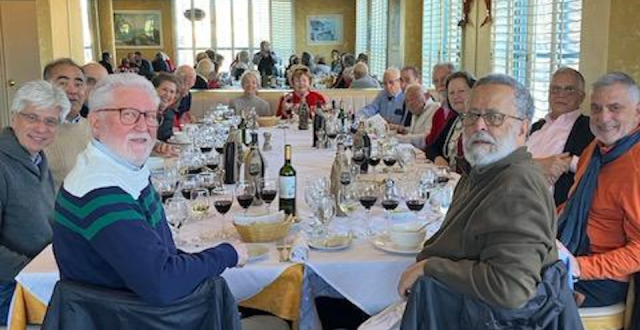 Objective and Overview
 The Producer: Bodega Catena Zapata located in Mendoza, Argentina.


 Tasting No 259 November 28 (previously 14), 2023 12:30pm
 Type of tasting: Open
 Tannat was originally known for its harsh tannins, high acidity and dark fruit that was nearly undrinkable upon release, but in Uruguay, vintners have found methods to soften the tannins and create powerful wines that taste of plums and blackberries. In addition to these fruit flavors, Tannat, when blended with other varieties, or produced in capable winemaking hands, tends to show off more complex notes of herbs, chocolate, leather, earth, and minerals.
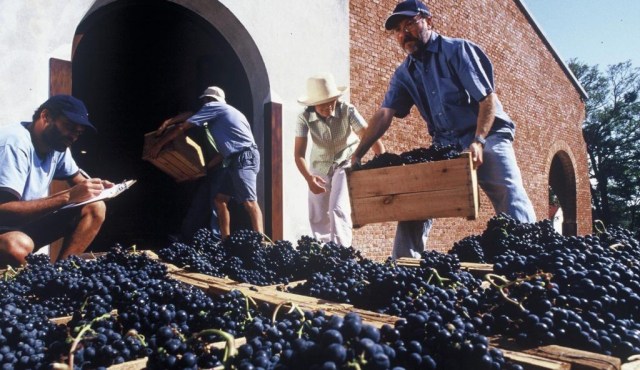 Wineries and Viticulture. Canelones is home to some 900 vineyards, many of which are family owned. These wineries often emphasize sustainable and organic practices, contributing to the region’s reputation for producing environmentally conscious wines. Larger commercial operations and boutique producers also contribute to the region’s dynamic winemaking landscape. Nonetheless, until recently, the world has taken little notice of Uruguayan wine. Very little is exported (up to 10% nationally) and winemaking is largely focused on the domestic market. In contrast to Argentina and Chile, Uruguay has few internationally recognized successes. Top producers such as Bodega Bouza, Garzon, Juanicó, and Pizzorno are newcomers in the international wine scene. These winemakers are investing in better equipment and technology and are known for their distinct winemaking styles and top-quality wines. As a result of better quality, the exports of these producers have increased. Bouza now exports 60% of its production, and Garzon ships out 73%, mainly to the United States.
 Producer: Pizzorno Family Estates.





 The wine production of PATAGONIA, Argentina.
 With its distinctive, vivid aromas and saline acidity, Wapisa Sauvignon Blanc expresses the complexity of the soil and the sea breezes of the Atlantic Patagonia region. Citrus and white flowers aromas stand out with a delicate touch of ginger. On the palate citrus flavors with pink grapefruit and lime accompanied with the tropical guava. It is a fresh and intense specimen, with a balanced acidity.
 Rating Source: James Suckling-Patagonia Argentina, Points: 93: “Notes of cherries, wild strawberries, pomegranate peel and light spices. Fresh and crunchy with medium body and soft tannins. It has a smooth silky texture and a delicious fruit profile, with notes of blue flowers. Flavorful finish.” Vanilla, Floral, Cherry.
 Country: Argentina Region: Patagonia Vintage: 2019 Winery: Wapisa Grape varietals: Cabernet Sauvignon Alcohol: 14.1% Size: 750 ml Organic wine: Yes Natural wine: Yes
 Harvest: At the end of March. Carefully harvested by hand, immediately sent to cellar, distant to 1km from the vineyard, in small containers. Yield: 7,000 Kgs/hectare.
 Tasting No 257– September 26, 2023 – Wines of Casablanca Valley, Chile

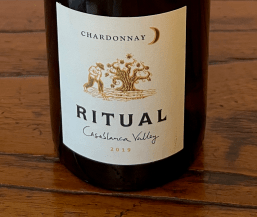 The producer: Viñedos Veramonte was founded in 1992 and dedicated to farming organically. It is one of the pioneers of the Casablanca Valley and has been recognized for over 25 years for its distinctive wines.
 The producer: Bodega Montsecano is a collaboration between Ostertag of the legendary Domaine Ostertag, in Alsace, and Julio Donoso of Chile, which started in 2005. They planted 4 hectares of Pinot Noir in Las Dichas, Casablanca, and built a small winery and cellar on the property. The vineyard is biodynamically farmed and is plowed by horse. The undergound geothermal winery is shaped like an egg, and the wine are vinified exclusively in concrete egg and stainless steel.
 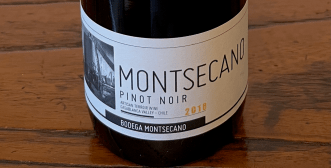 Winemaker Notes: From the same producer Bodega Montsecano, this 100% biodynamic hand harvested, single vineyard Pinot Noir is fermented and aged entirely in stainless steel and concrete eggs. Dark ripe cherry and black fruits jump out of the glass with underlying raspberry fruit notes. A condensed and dark spiraling mid-palate shows layers of minerality and complexity, with hints of wet crushed rock (granite), sage, clove and blueberry . Rich full fruit, mineral driven, with a long, generous, smooth finish.
 The producer: Viña Cono Sur was founded in 1993 by Viña Concha y Toro in 1993 and is based in Cochagua Valley with the vision of an independent winery with a focus on premium, sustainable wines. Cono Sur prides itself on its pioneering and innovative spirit. It is particularly notable for its wines made from Pinot Noir, and in particular the flagship Ocio, but makes a range of wines from many of Chile’s key grape varieties. The estate has grown considerably since, and now Cono Sur makes wines in most of Chile’s key winegrowing regions. However, Cono Sur’s most important region is arguably the Casablanca Valley, where the Pinot Noir grapes for the Ocio wine are sourced. They were the first in Chile to produce and export Premium Pinot Noir.
 Tasting No 256 – August 29, 2023, 12:30 PM
 The valley was first planted with grapes in the 16th century by Spanish missionaries. The valley’s wine industry began to grow rapidly in the 1980s and 1990s. Heavy French investment and cutting-edge technology in both the vineyard and the winery has been a boon to the local viticultural industry, which already laid claim to ancient vines and a textbook Mediterranean climate. The warm, dry growing season in the Colchagua Valley favors robust reds made from Cabernet Sauvignon, Carménère, Malbec and Syrah—in fact, some of Chile’s very best are made here.
 Casa Lapostolle is a renowned Chilean winery located in the Colchagua Valley, with special high-end facilities in the Apalta Valley. The winery was founded in 1994 by Alexandra Marnier Lapostolle and her husband Cyril de Bournet, members of the French Marnier Lapostolle family, known for producing Grand Marnier liqueur.
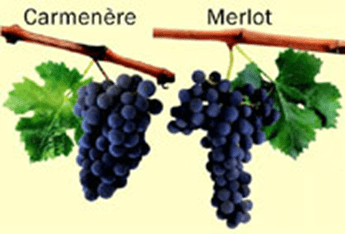 actually the long lost Carménère variety of Bordeaux. Finally in 1998, Chile officially recognized Carménère as a specific variety.
 D.O.: Apalta Blend: 85% Cabernet Sauvignon, 7% Cabernet Franc, 4% Merlot, 4% Petit Verdot
 D.O. Apalta Blend: 97% Carménère, 3% Sirah Alcohol Content: 14.5% vol.
 D.O.: Apalta Blend: 49% Carménère , 30% Merlot, 18% Cabernet Sauvugnon, 3% Petit Verdot Alcohol Content: 14.5% vol.
 D.O.: Apalta Type of Wine: Bordeaux Blend Blend: 64% Carménère, 18% Cabernet Sauvignon, 18% Merlot. Alcohol Content: 15% vol.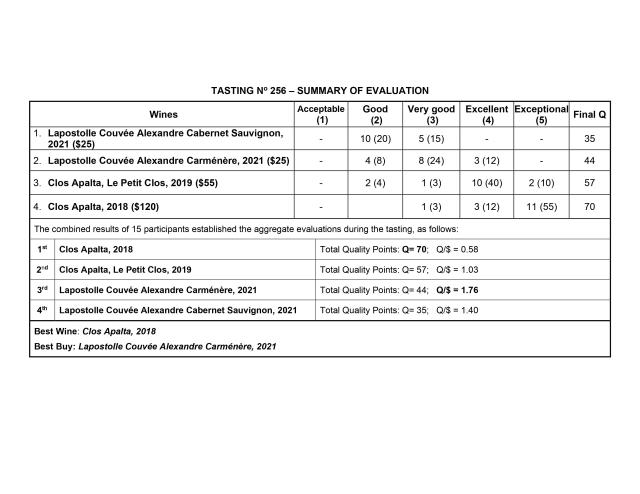
 Argentina and Uruguay. We endeavored to choose white wines that we believe are distinctive and represent well the regions and varietals. Hence we selected an Albarino from Uruguay and three wines from Mendoza, Argentina, a Semillon, a Chardonnay and a Chardonnay blend.
 The Maldonado wine region is located along the Atlantic Ocean in the southeast of Uruguay, the province includes the famous city of Punta del Este. The Maldonado wine region has a maritime climate with mild temperatures and cool breezes that moderate the heat in the summer months. Compared to other wine regions in Uruguay, the Maldonado wine region has a high altitude and great geological diversity. There is a range of interesting soils including crystalline rocks, quarts, alluvial, and gravel soils. The soils are quite soft and have excellent drainage and permeability, making them perfect for viticulture.


 Characteristics:
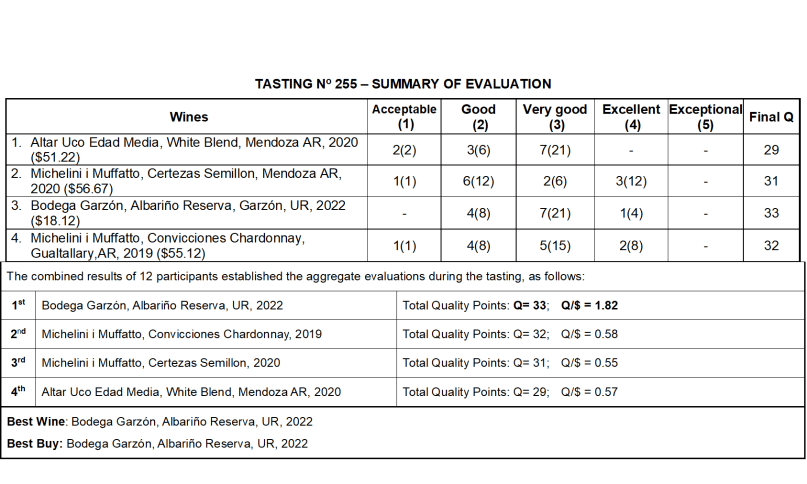



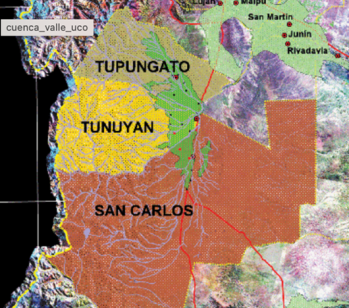
 Wine selection. The selected wines – Malbec, Red Blend, Chardonnay and Pinot Noir – are representative (about 75%) of the wines produced in the Uco Valley.
 Regions: Gualtallary District, Tupungato Region, Uco Valley, 1,450m average elevation
 The wine: Vintage: 2020 Varietal: 100% Pinot Noir
 Varietal Composition: 65% Malbec, 14% Cabernet Sauvignon, 8% Petit Verdot, 8% Merlot and 5% Cabernet franc.
 The wine: Vintage: 2018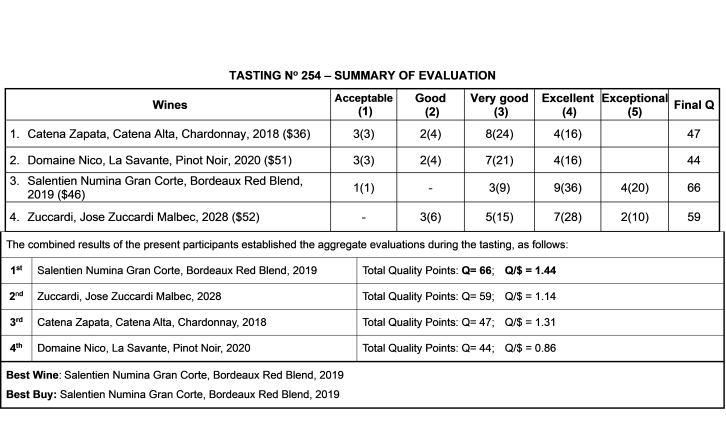
 Tasting No 253 – May 30/2023 – Beyond Malbec: other wines with deep-rooted Argentinian identity
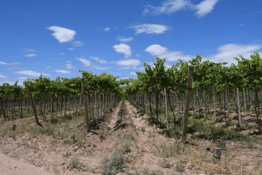
 Torrontés involves a group of three distinct varieties – Torrontés Riojano, Torrontés Sanjuanino and Torrontés Mendocino – all native to South America. They are a natural cross between the mission grape País (a red grape) and the sweet Muscat of Alexandria grape (also known as Zibbibo), and first appeared in the north of Argentina. Of the three varieties, the most popular (and most delicious) is the Torrontés Riojano, which grows dominantly in northern Salta. Other regions such as Mendoza and La Rioja produce a lot of Torrontés wines using the other two varieties of Torrontés, but these tend to be much simpler in aroma and taste and often made in a sweet style. The wine smells sweet but is usually made in a dry style. Albariño and dry styles of Riesling and Muscat Blanc (dry “Moscatel” from Portugal) are similar in aroma and taste to Torrontés.
 The Torrontés thrive in Argentina’s high-altitude vineyards, particularly in the Cafayate region of Salta, where T. Riojano is grown. This region, on the edge of the Andes, boasts some of the highest vineyards in the world, reaching up to around 10,000 feet (3,000m) above sea level. Here, dry, desert-like conditions and a significant diurnal temperature shift help bring out the best qualities of Torrontés. The soils in Cafayate consist mostly of free-draining chalky loam and in some areas can be quite rocky. The dry soil causes stress in the vines which causes them to produce less vegetation and not as many grapes. As there are fewer grapes, it means the concentration of flavors within the grapes rises. New plantations in the higher parts of the Uco Valley in Mendoza are promising too.
 About the grape: Bonarda, as it is called in Argentina, is not supposed to be called Bonarda: the actual true Bonarda grapes are a group of at least six distinct Italian grape varieties, the most well-known of them being Bonarda Piemontese.
 Bonarda is very important viticulturally in Argentina, where it is second only to Malbec in terms of acreage. In all, Bonarda accounts for over 18,000 hectares (45,000 acres) in the country, representing nearly 10 percent of all grapes grown there. Bonarda has been used to make fruity, medium-bodied bulk wines with low tannins. However, more recently some producers began looking more seriously at Bonarda, discovering its great potential as a varietal, especially for its adaptability to warmer areas, and using site selection and winemaking techniques to make more interesting and premium wines. Of the total cultivated in Argentina, 60% is found in Eastern Mendoza, a warm area located at about 700-800 meters above sea level, where it does best, because of its long hang time required to reach phenolic maturation.
 – The Producer: Dominio del Plata is an Argentinian wine company founded and owned by leading winemaker Susana Balbo since 1999. The winery is located in Luján de Cuyo, Mendoza, with vineyard plots in several subregions of the Uco Valley. The Crios label features a wide range of monovarietal and blended wines for everyday consumption, including a Malbec rosé. The winery mainly ferments the wine in stainless steel tanks, though concrete eggs have been introduced for premium wines. The Torrontés grapes are sourced from Cafayate, Salta, and the highest vineyards in Valle de Uco, Mendoza.
 – The producer: The sister brand of Altos Las Hormigas winery, Colonia Las Liebres was established in Luján de Cuyo, Mendoza to focus solely on the cultivation of Bonarda grapes and was one of the original makers of export-quality single-varietal Bonarda. It makes fresh, juicy and great value Bonarda reds, as well as an excellent traditional method rosé bubbly, and even a sparkling red (named Brusca, in ode to its Italian inspiration).
 – The Producer. El Enemigo is a cult wine producer based in Mendoza. The estate is a joint venture by Adrianna Catena and Alejandro Vigil, the chief winemaker at Bodega Catena Zapata since 2002. The pair created El Enemigo and the “Bodega Aleanna” in 2007. The estate focuses on traditional winemaking techniques and produces two wine ranges: Gran Enemigo and El Enemigo. The El Enemigo range is devoted to varietal wines made from Malbec, Cabernet Franc, Bonarda and Chardonnay, while the Gran Enemigo range includes Bordeaux blends, and a number of single vineyard Cabernet Franc wines.
 Bodega Santa Julia, built in 1968, in Mendoza by Alberto Zuccardi. The Familia Zuccardi bodega was established in 2013 in the Valle de Uco, by Alberto’s grandson, Sebastián. Today he leads a young team of agricultural engineers and enologists charged with producing the highest quality wines in the Uco Valley.
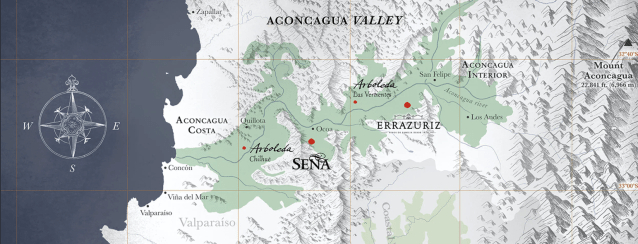
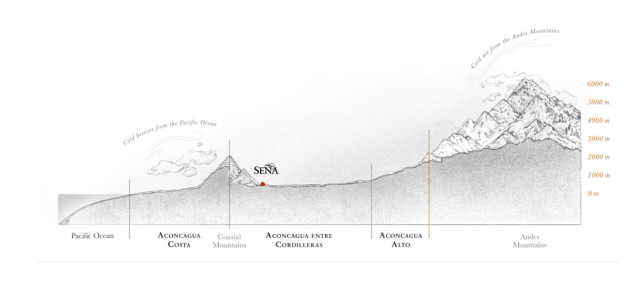 The Aconcagua Valley was chosen for this tasting because of its unique viticultural climate. The Mediterranean climate in this valley ensures the warm, dry summers, the bright sunny days, and the cold, rainy winters that the vines love. In addition, the cooling effects of the Pacific Ocean’s Humboldt current and the down-drift winds of the Andes Mountains create unique climate conditions with cooling midday breezes, cold nights, and a broad daily temperature oscillation that also extends the ripening period so that the grapes develop intense fruit flavors, ripe tannins, deep color, and crisp acidity.
 With 150 years to its name, you might be forgiven for thinking Errázuriz is a historical winery – it is, but it is also one of the most innovative and forward-thinking producers in Chile. The wine portfolio is almost endless, and their treasures include the ‘Aconcagua Costa’ range, from the cooler parts of Aconcagua Valley, and the ‘Las Pizzaras’ Chardonnay and Pinot Noir on slate soils. Their most famous wine is ‘Don Maximiano’, a rich Cabernet-based blend from the warmer Aconcagua Andes.
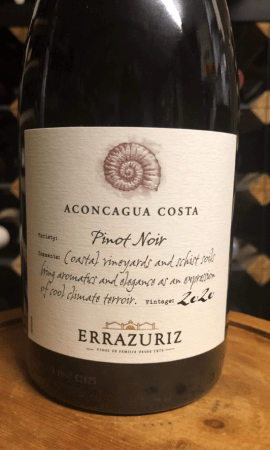 – The wine:
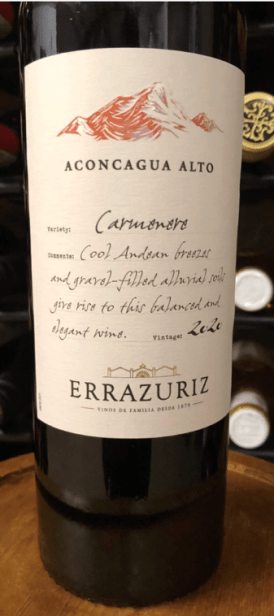 – Information about the wine:
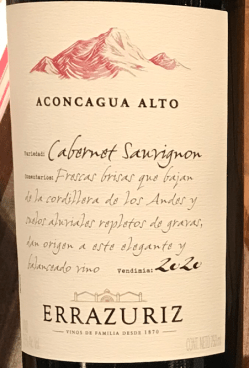 – The wine:
 – The wine: