 Tasting No 295 – November 17, 2026 Austrian Wines: Focus on Wachau and Kremstal Regions
-
Tasting Overview
The objective of this tasting is to explore wines from Austria, with a focus on the Wachau and Kremstal regions. The tasting will include three whites and one red wine.
Type of tasting: open
Presenters: Janet Entwistle and José Brakarz
Participants: TBD
These are the wines:
- Nigl, Freiheit, Gruner Veltliner, 2024
- Rudi Pichler, Grüner Veltliner, 2024
- Domaine Wachau, Wissenkirchen, Riesling, 2024
- St. Severin, Blauer Zweigelt, 2024
The Menu
- Lobster Brisque
- Calamari fritti
- Baked Salmon with roasted potatoes and vegetables
- Dessert, coffee or tea
-
Brief History of Austrian Wine
- Ancient Beginnings (c. 900 BCE): The oldest evidence of cultivated vines in Austria is a pair of grape seeds found in a storage pit at Stillfried, northeast of Vienna, dated to around 900 BCE. Celtic peoples soon developed a real wine culture in what is now Lower Austria and Burgenland.
- Roman Expansion (15 BCE – 5th Century CE): The Romans planted vines on a large scale along the Danube. Emperor Domitian ordered half of the vineyards outside Italy to be uprooted, which interrupted growth for nearly two centuries until Emperor Probus lifted the ban and viticulture resumed. When Roman rule collapsed at the end of the fifth century, Austrian winemaking entered a quiet period.
- Charlemagne and the Monasteries (Middle Ages): After Charlemagne took control of the region in 803, he reinvigorated viticulture and issued one of Europe’s earliest sets of wine regulations. Monasteries then became the engine of quality. Krems alone had 16 monasteries by the end of the 12th century, and the Cistercians brought grape-growing and winemaking knowledge from Burgundy. Stift Klosterneuburg, founded in 1114, is still one of Austria’s largest and oldest wine estates, and where Zweigelt was born.
- The Habsburg Era: The Habsburgs governed from Vienna a large territory that included modern day Slovenia, Croatia, Montenegro and others until the end of World War I. In Austria by the 16th century, vines covered well over 150,000 hectares, vastly more than today. Heavy taxes, export bans, poor harvests and the Thirty Years’ War then shrank the vineyards, and many farmers turned to beer or grain.
- Phylloxera and the Twentieth Century: Phylloxera devastated Austrian vineyards in the late 19th century, and growers replanted on resistant American rootstocks. In the 20th century, the emphasis in the post-war decades was on volume, with a lot of sweet, cheap bulk wine.
- The 1985 Scandal: In 1985 it was revealed that some brokers had added diethylene glycol, a compound found in antifreeze, to give cheap wines sweetness and body. The amounts were not dangerous, and only a small number of middlemen were involved, but exports collapsed and some countries banned Austrian wine altogether. But for a while, West Germany banned all Austrian wines and the scandal caused exports to plummet by 90%.
- The Modern Renaissance: The crisis became the industry’s turning point. Austria introduced some of Europe’s strictest wine laws, with rigorous controls, and founded the Austrian Wine Marketing Board in 1986. From 2002 the DAC (Districtus Austriae Controllatus) system began to define regions by typical wine styles, starting with Weinviertel. A generation of young, family-run estates now farm increasingly organically: about a quarter of Austria’s vineyards are organic.
- Today’s Production and Industry Structure: Austria is a small producer by European standards: a recent harvest was around 2.5 million hectoliters, about 73% white (1.86 million hl) and 27% red (0.70 million hl). Exports reached 60.6 million liters worth about €219 million in 2025. Most estates are family-owned, and many sell a large share of their wine directly to customers and restaurants, which is why Austrian wine can be harder to find abroad than at home.
- Major Wine Regions
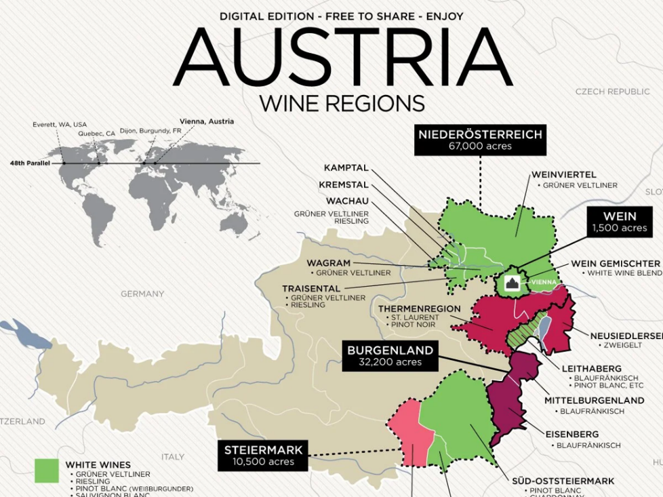
Austria lies in the heart of Central Europe, with the Alps covering the west and south and the Pannonian Plain opening to the east. Only about 0.5% of the country’s land is planted with vines, and almost all of them are in the east, where warm, dry Pannonian air meets cooler influences from the Alps and the Danube. Austria has around 44,000 hectares of vineyards and roughly 10,000 winegrowing enterprises. The four wine-growing states are Lower Austria, Burgenland, Styria and Vienna (a capital city that really does make wine within its limits).
 Lower Austria
The largest wine state, with some 28,000 hectares, it spans the Danube valley and the rolling hills north and east of Vienna. Winters are cold and summers warm, and cool nights preserve freshness. There are four key subregions: Wachau, Kamptal, Kremstal, Wagram – Danube regions famous for Grüner Veltliner and Riesling, with quality Zweigelt as well, particularly in Kamptal and Wagram; and Weinviertel – Austria’s biggest region and the first DAC (2002). Light, fruity Zweigelt thrives here.
The Wachau: is Austria’s most celebrated white-wine district, and the natural counterpoint to the red-wine east. This narrow stretch of the Danube valley in Lower Austria has about 1,350 hectares of vines, much of it planted on steep, hand-worked terraces. Warm air from the east meets cool nights from the Danube gorge, which gives the wines ripe fruit with sharp acidity. Two main grapes in Wachau are: Grüner Veltliner (about 52% of plantings) is the leading grape. It grows best on the loess-rich lower slopes and gives peppery, citrus-and-herb wines that become creamy and long-lived at the top level. Riesling (about 16%) is grown on the highest, steepest gneiss terraces. It is taut, racy and mineral, and ages well.
The Wachau became a DAC with the 2020 vintage. Under it, single-vineyard wines (Riedenwein) may be made only from Grüner Veltliner and Riesling.
The Kremstal: is the district just east of the Wachau along the Danube, with about 2,400 hectares of vines. Grüner Veltliner and Riesling are the main grapes, and it has carried the Kremstal DAC name since the 2007 vintage. Its soils mix loess with primary rock. Kremstal has vineyards on primary rock and clay, and it is the home of two of today’s wines.
-
Main Grapes and Their Characteristics
Austria’s strength lies in a short list of distinctive varieties, grown in a country where more than 70% of the harvest is white.
Austrian whites
Grüner Veltliner – Austria’s signature white varietal: Grüner Veltner covers about 32% of Austria’s vineyards, far ahead of any other variety, and it is Austria’s own. It first rose to prominence in the Weinviertel, which held about two thirds of the country’s vineyards by 1830. Today, it makes everything from light, peppery wines to powerful, age-worthy single-vineyard bottlings in the Wachau, Kremstal and Kamptal.
The signature style is white pepper over green herbs, citrus and green apple, with lively acidity and, in riper wines, a rounder, creamy texture. It is a flexible food wine, good with schnitzel, vegetables and the starters on our menu.
The second most planted white grape is Welschriesling (about 6%), and Riesling, Chardonnay and Sauvignon Blanc complete the picture.
Austrian Riesling has a particular style, considered one of the most powerful, highly structured, and profoundly complex dry white wines in the world. It holds a legendary status, thriving on the steep, primary rock terraces of Lower Austria. Unlike many classic German counterparts that lean toward delicate, lower-alcohol, or off-dry styles, Austrian Riesling is almost exclusively fermented bone-dry. It captures a unique balance: the ripe fruit, rich body, and density, combined with the acidity and structural freshness typically associated with Germany’s rieslings.
Austrian Reds
Zweigelt leads with about 13.4% of all vineyards (roughly 5,900 hectares), ahead of Blaufränkisch (about 5.8%) and St. Laurent, plus Pinot Noir in small, high-quality plantings.
Zweigelt: Austria’s Red Favorite: Zweigelt leads with about 13.4% of all vineyards (roughly 5,900 hectares).
Created in 1922 by Dr. Fritz Zweigelt through a crossing of St. Laurent and Blaufränkisch, Zweigelt was bred to produce reliable yields, good color, and resilience in Austria’s climate. Originally known as Rotburger, it was officially renamed Blauer Zweigelt in 1978, although some producers have returned to the original name because of controversy surrounding its creator’s Nazi-era conduct in Austria.
Today, Zweigelt is Austria’s most widely planted red grape, covering approximately 5,900 hectares. Its popularity reflects its adaptability, frost tolerance, disease resistance, and reliable ripening. Quality, however, depends heavily on yield control: careful cultivation produces concentrated, dark-fruited wines, while overcropping can result in thin, green flavors.
Typically juicy and cherry-driven, Zweigelt offers soft tannins, moderate acidity, and peppery notes. More ambitious versions, often aged in large oak or barriques, develop greater depth, darker fruit, spice, and structure, with the potential to age for several years.
Zweigelt is proof that a modern grape can become a national symbol. Bred in a research station only a century ago, it has become the face of Austrian red wine.
-
Information on the Wines
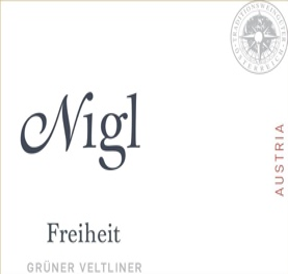
Wine #1 – Nigl Freiheit Grüner Veltliner, 2024
The Producer: Weingut Nigl is based in Senftenberg, in Kremstal. Martin Nigl is a first-generation winemaker who began bottling the family’s own fruit in 1985 instead of selling it to the local cooperative, though the family has farmed here for more than 200 years. In the cellar he works almost exclusively in stainless steel, never destems, uses only ambient yeasts, settles musts by gravity and does not fine before bottling.
The Wine:
- Vintage: 2024
- Grape Variety: 100% Grüner Veltliner.
- Appellation: Kremstal DAC, Lower Austria
- Viticulture: Grapes come from four sites in the hills above Krems, on mostly loess soils, with the steep elevation moderating temperature. The fruit is picked earlier than Nigl’s Senftenberg fruit to preserve freshness. “Freiheit” means “freedom” and is thought to refer to some of the first privately owned vineyard land in the valley, free of Church or feudal control.
- Vinification and Aging: Fermented and aged in stainless steel, then bottled at night when the cellar is at its coolest to protect freshness. Screwcap closure.
- Alcohol: 12.5% ABV (some retailers list 12%).
Tasting Notes: Crisp and expressive, with peach, lemon, celery and pineapple on the nose, plus citrus, white pepper and a fine mineral backbone. Medium-bodied, with excellent freshness and a peachy finish. Serve at 8–10 °C with light starters, salads, poultry or seafood.
Wine #2 – Rudi Pichler Grüner Veltliner, Federspiel, 2024
The Producer: Weingut Rudi Pichler is based in Wösendorf, in the Wachau, where generations of the Pichler family have tended vines since 1731. Rudi Pichler took over the family estate in 1997 and built a modern cellar in 2004. Grüner Veltliner and Riesling make up about 95% of production, and the estate is a member of Vinea Wachau, vinifying under the association’s strict codex. The winery is certified Sustainable Austria.
The Wine:
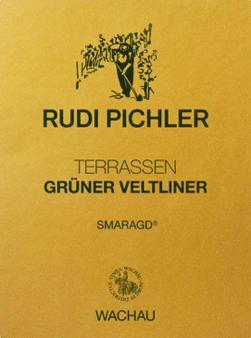
- Vintage: 2024
- Grape Variety: 100% Grüner Veltliner
- Appellation: Wachau DAC, Lower Austria.
- Viticulture: The Wachau’s vineyards are steep terraces of nutrient-poor, fast-draining soil, which suit both Grüner Veltliner and Riesling
- Vinification and Aging: Fermented and aged entirely in stainless steel. The estate avoids malolactic fermentation to keep the wines pure and taut.
- Alcohol: 13.5% ABV.
Tasting Notes: Fresh, medium-weight and dry, in a classic Wachau Federspiel style. Notes of green apple and lemon are joined by the savory, peppery edge typical of the grape, with hints of radish and arugula. Good acidity keeps it lively. Works well as an aperitif or with light seafood dishes.
Wine #3 – Domaine Wachau, Riesling Federspiel Weissenkirchen, 2024
The Producer: Domäne Wachau is a growers’ cooperative based in Dürnstein, in a Baroque cellar palace built over centuries-old cellars. Its roots go back to a church-owned winery documented in the 11th century. The cooperative was founded in 1938 as the Winzergenossenschaft Wachau, when growers bought the former Starhemberg winery, and took the name Domaine Wachau in 2008. Today about 250 grower families farm roughly 440 hectares, about a third of the Wachau’s vineyard area. Since 2004 the winery has been run by Roman Horvath MW (winery director) and Heinz Frischengruber (head winemaker). It was named Falstaff Winemaker of the Year in 2024.
The Wine:
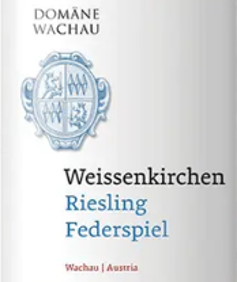
- Vintage: 2024
- Grape Variety: 100% Riesling.
- Appellation: Wachau DAC. This is one of Domäne Wachau’s “village” wines.
- Viticulture: Grapes come from vineyards around the commune of Weissenkirchen. The estate works on sustainable and increasingly organic principles, uses no insecticides or herbicides, and picks by hand. The 2024 season was extreme: a record-warm February and early budding, then late frosts, hail, summer heat and September flooding. A very early harvest, beginning on September, brought in high-quality fruit with crisp acidity.
- Vinification and Aging: Pneumatic pressing, temperature-controlled fermentation, then aging on the fine lees in stainless steel.
- Alcohol: 12.0% ABV.
Tasting Notes: Elegant and aromatic, with juicy nectarine, hints of lemongrass and fresh citrus, in balance with refreshing acidity. A classic, delicate Riesling Federspiel. Serve well chilled. It pairs with bouillabaisse, grilled fish, sushi and sashimi, and with Austrian dishes such as blue trout with a summer salad.
Wine # 4 – Winzer Krems “St. Severin” Blauer Zweigelt, 2024
The Producer: Winzer Krems is a cooperative founded in 1938 by members of the Krems and Stein winegrowers’ guild. It describes itself as Austria’s largest wine producer and is based in Krems, where winegrowing is more than 2,000 years old. The wine is named for Saint Severin, who lived in Krems and Mautern and, according to his Vita, retired “ad vineas” into the vineyards.
The Wine:
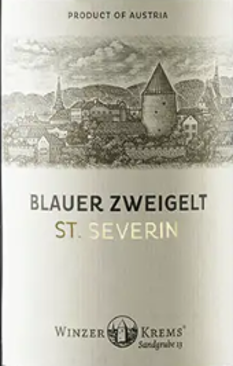
- Vintage: 2024
- Grape Variety: Blauer Zweigelt (also called Rotburger), Austria’s most widely planted red grape.
- Appellation: Lower Austria; dry quality wine.
- Viticulture: Soils are loam overlaid with gravel.
- Aging: The producer does not state an aging regime. It presents the wine as a fresh, uncomplicated red to drink within about three years of harvest.
- Alcohol: 13.0% ABV
Tasting Notes: Delicate, fruity and velvety, with typical aromas of sour cherry, strawberry and cinnamon. Dry, mild and easy-drinking, with a lively, unoaked-style freshness. Serve at 14–16 °C with roast poultry, game, steak or hard cheeses such as Grana or Gouda.
Club de Vino Members Evaluation
To be published after the tasting.
References:
https://en.wikipedia.org/wiki/Zweigelt
https://www.falstaff.com/en/grape-varieties/zweigelt
https://www.austrianwine.com/awmb-partners/austrian-wine-marketing-board&ved
https://en.wikipedia.org/wiki/1985_Austrian_diethylene_glycol_wine_scandal
https://rosemurraybrown.com/category/articles/austria/page/2/
https://www.falstaff.com/en/wines/weingut-rudi-pichler-2024-gruener-veltliner-wachau-dac-federspiel-1https://myrtlewines.myrtlewines.com/wines/Rudi-Pichler-Gruner-Veltliner-Federspiel-Wachau-2024-w8729218xi
https://wineguide.wein.plus/domaene-wachau
.o0o.
Laughing Matter

.o0o.


