Five keys to wine: Acid, Tannin, Alcohol, Sugar and Body – How to detect them?

Jairo Sanchez has selected this relevant article on Wine Tasting. Enjoy!

FIVE KEY WINE COMPONENTS AND HOW TO DETECT THEM

August, 2012 By Nancy Hawks Miller

How often have you run across these phrases when you’re reading a wine review: “highly structured,” “crisp,” “bright,” “firm tannins,” “fine-grained tannins.”

How do they translate into your flavor experiences?

It’s nothing too mysterious. “Structure” is most often used in reference to relative levels of acid (especially whites) and/or tannin (reds). But there are other things that come into play such as alcohol, sweetness and body.

Isolated, none of these components are tasty or interesting. Think of them as the framework of the wine, just waiting to be fleshed out by delicious things like fruitiness, fermentation character, oak, floral character, herbaceousness, minerality, etc.

Fortunately, Mother Nature has made it remarkably easy to detect the relative levels of the main wine components. Grab a glass of red wine and taste as we go and you’ll see what I mean.

Alcohol is the only one of the main components that has an aroma, so you’ll have to rely on your palate to differentiate between the rest. Using the slurping technique will really help.

For the uninitiated: Take a little sip of your wine. Taste good? Now, all you have to do is take another small sip and hold it in your mouth. Purse your lips and pull some air in through your teeth and over the top of the wine (kind of like whistling in reverse). Swish it all around your mouth, like mouthwash, and chew on it a little. Wow – flavor explosion in your head, right? Now, we’re ready to get started.

Important: All of us have different sensitivities, so you might detect alcohol more readily than I do – I’m a cheap date. And, I might notice acid more easily than someone else.

Acid

Let’s start with acid:          Of course, acid has a tart flavor. Incidentally, if you refer to high-acid wine as sour you’re going to get a very sour look from the winemaker. In wine parlance, sour means spoiled, as in gone to vinegar!

If you want to become acquainted with the tart flavor of relatively high-acid wine, some common white examples are sparkling wine, Sauvignon Blanc and Riesling. Northern Italy turns out a lot of lean, zippy reds.

Some wines, especially reds, are so flavorful that it’s difficult to taste the acid. Usually, you can still gauge it. As you taste the wine, notice the way your mouth begins to water, especially along the sides of your tongue and under it. Thus, the birth of the phrase “mouth-watering acidity.” Now that you’ve noticed it, you’ll begin to differentiate the levels as you taste different styles of wine. Generally, white wines are higher in acid than reds. Well-made dessert wines can really turn on the water works in your mouth because the sweetness needs to be balanced by a high level of acidity.

Why do you care? Acid is important because it keeps the wine fresh and lively on the palate. It has a cleansing effect and makes the wine easy to pair with food. Acid is a great, natural preservative! Wines that are high in acid (but balanced) will have fairly long lives and a better chance of retaining their fruitiness and freshness as time goes by.

The source: The grapes, although acid additions are permitted in many wine regions. As the grapes ripen, the sugar increases and the acid decreases. At harvest time, timing is everything!

Descriptions: Crisp, lively, bright, racy, nervy, vitality

Antonyms: Flat, flabby, soft, dull, insipid

Tannin    

Do you have a sudden urge to brush your teeth after tasting red wine? Then you recognize tannin – it’s that simple. It runs around your mouth seeking out protein and then clings to it, which explains the drying sense of grip on your gums – all over your mouth, really – and the furry teeth. The flavor of tannin is extremely bitter, so winemakers try to craft the wine in such a way that you feel it, rather than taste it. As you taste your wine now, you will probably remember other wines you’ve tasted that were more tannic or less tannic, so you’ll begin to recognize relative levels.

Acid accentuates the hardness of tannin, so high-acid wine that’s also tannic can be hard to enjoy when it’s young. As the wine ages, the tannin enlarges with oxidation and gradually falls out of the wine as part of the sediment. So, the wine gradually softens and the texture becomes more velvety over time.

Why do you care? Tannin is an important part of the texture of red wine – when managed properly it gives it a nice chewiness. Like acid, tannin is a natural preservative. It’s part of a group called polyphenols, which are anti-oxidants that prolong the wine’s life. The more tannic the wine, provided it’s well made and well-balanced, the longer its life in the bottle when stored properly.

The source: The biggest source of tannin in wine is the grape skins. Other sources are the seeds, stems and oak (wine barrels contribute wood tannin if they’re relatively new). Red wines are almost always higher in tannin than white because the winemaker must ferment the juice and skins together to get the purple color. Whites receive little or no juice to skin contact.

Descriptions: Astringent, drying, grippy, chalky, chewy, hard, coarse

Antonyms: Soft, smooth, silky, round, velvety, mellow

Alcohol

Isolated, alcohol smells sweet. Give the wine a good swirl for a few seconds and pop your nose in the glass. If you actually smell something sweet that reminds you of rubbing alcohol or feel what seems like a heat-driven tickle in your nose, the alcohol is too high for the style of the wine – it’s not balanced. You’re not supposed to notice the alcohol, it’s just supposed to be there.

The mouth-feel: Do you notice that your mouth feels warmer than it did before you sipped the wine? That’s the alcohol talking and in a very pleasant way. If it’s quite warm, or almost hot, the alcohol content is on the high side. If you actually taste the alcohol or feel like a fire-breathing dragon, it’s too high, not balanced. It seems to be most noticeable in the back of your throat. The alcohol also adds an oily, viscous sensation.

Why do you care? Alcohol gives the wine a great deal of its body or “heft.” A wine that’s meant to be robust in style feels thin and unsatisfying on the palate if the alcohol is too low. Alcohol is yet another preservative, which explains why Port-style wine can live so long in the bottle and actually keeps better than table wine once it’s opened (sugar also helps in that regard). 

The source: The sugar in the grapes at harvest. In many parts of the world adding sugar is permitted. It’s called Chaptalization. During the fermentation the sugar is converted to alcohol.

Descriptions: Warm, hot, weighty, sweet

Sugar

Well, this one’s easy – we all know sweetness, right? And that “dry” is the opposite of sweet? Sweetness also has a pleasant, slippery sort of mouth-feel.

Since sugar is so familiar, this is a good time to talk about perception vs. reality. The level of acidity can really play games with your head in gauging sweetness. It makes the wine seem less sweet than it is. Sparkling wines called “brut,” for instance, are considered dry, but they may actually have as much as 1.5 percent sugar (our threshold for noticing sweetness in wine is most often at about .5 percent). They taste dry because they are so high in acid.

Try making some overly-tart lemonade and give it a taste. Then add a little sugar. Keep tasting and adding sugar until you reach a pleasant balance. Notice how the sugar has softened and rounded out the acid sensation? The acid level hasn’t changed, but your perception of it has.

Fruity flavors can also trick your palate into detecting sugar that isn’t actually there. The phenomenon is called auto-association.

If dry is .5 percent or less, off-dry can be up to about 4 percent sugar, medium sweet up to 10 percent sugar and anything over that is very sweet, indeed. But our perception? That’s another matter.

Why do you care? Who doesn’t love something a little sweet from time to time? Plus, besides its rounding effect on overly tart wine, a bit of sugar can cover a lot of sins in the production of inexpensive wine, and it’s another of Mother Nature’s natural preservatives.

The source: The grapes. In most cases the sugar in wine is residual, unfermented sugar because the fermentation was stopped before the yeast converted all of the sugar to alcohol. In some cases, the winemaker ferments to dryness and adds back grape juice or grape-juice concentrate to sweeten the wine.

Descriptions: Sweet, syrupy, off-dry, cloying, doux, Extra-Dry (sparkling wine), demi-sec (sparkling wine)

Antonyms: Dry, austere, Brut (sparkling wine), Extra Brut (sparkling wine), Brut Nature (sparkling wine), Zero Dosage (sparkling wine)

 Body

It’s all about mouth-feel and weight. Milk products make a good analogy:

•Light = skim milk

*Descriptions: Light, hollow, thin, lean, watery

•Medium = whole milk

•Full-bodied = heavy cream

*Descriptions: Heavy, full, fat, fleshy, lush, unctuous, concentrated, substantial

When the wine is balanced, the flavors, body and the relative level of the components interact harmoniously. Since alcohol gives wine body, a  glass of red Bordeaux from a poor vintage that’s only 10.5 percent alcohol may feel thin and unsatisfying on the palate. Conversely, a Napa Cab from a hot vintage better have plenty of flavor and body to stand up to 15 percent alcohol. Otherwise, you will have spent a lot of money on something that makes you feel like a fire-breathing dragon.

The source: Mainly the alcohol and grape extracts (red); barrel-aging can increase the body due to evaporation.

For more wine tasting information from Nancy, check out her blog: thetastinggroup.com.

________________________

Posted in Magazines and Books wine related, Wine - Vino - Vinho | Tagged , , , , | Leave a comment

Wine Tasting # 136 August 30, 2012 12:00 P.M. Da Domenico

Tasting 136   August  30,  2012   12:00 PM Da Domenico Ristorant Italiano

Contents of this post:
1. Wines from Australia and N. Zealand, Presenters, Birthdays of August and Confirmed Participants.
2. Wines and Menu of the Tasting # 136
3. Wines Descriptors and critique
4. Club Members Evaluation of the Wines, by Hugo Benito
5. The Region of Production of the Wines: Australia and N. Zealand by G. Zincke & L. Barreto

1.      Wines from  Australia:   Coonawarra and Barossa Valley, and  New Zealand:    Marlborough  and Hawkes Bay.

Presenters:  German Zincke and Leonor Barreto

Leonor Barreto

German Zincke

Aniversariantes del mes de Agosto:  Alfonso Caycedo, dia 3, Ginger Smart, dia 6, Juan Luis Colaiacovo, dia 9 y Jorge Beruff, dia 11. Congratulaciones y muchos años de vida!

Participantes confirmados– hasta 26 de agosto:    Mario Aguilar, Italo Mirkow, Orlando Mason, Cecilio-Augusto Berndsen, Alfonso Sanchez, Jorge O. Rodriguez,  German Zincke, Leonor Barreto, Hugo Benito, Juan Luis Colaiacovo, Miguel Segovia, Alfonso Caycedo, Ricardo Zavaleta, Rene Meza, Jairo Sanchez, Emilio Labrada, Ginger Smart, Ruth Connolly,   Raul Sanguinetti, Edwin Armendaris(invitado de Raul Sanguinetti), Clara Estrada, Luis Carlos Danin Lobo (Lula), Marcello Averbug.

2. Wines and Menu

1. Aperitif:  2011 Whitehaven Sauvignon Blanc,   New Zealand, APV:  13%  with

2. Red One:    2010 Craggy Range Gimblett Gravels Merlot (blend), Hawkes Bay, New Zealand,  APV 13.5% with:

Cozze Ligurian Style          Mussel with garlic, Italian parsley and lemon white wine sauce

3. Red Two:   2009 Jim Barry The Cover Drive Cabernet Sauvignon, Coonawarra, Australia, APV 14.1% with:

Gnocchi Pomodoro      Potato Dumpling with olive oil, fresh tomatoes, garlic and basil sauce)

4. Red Three:    2007 Penfolds Bin 138 GSM Grenache – Shiraz – Mourvedre,  Barossa Valley, Australia,  APV % 14.5 with:

Scaloppine di Vitello Porcini      Veal scaloppe with porcini mushrooms brandy cream sauce
or

Petto di Pollo Toscana     Breast of chicken with fresh herbs, balsamic demiglaza sauce

Dessert:    Cream Brulee   or  Cheese Cake

______________________________________

3. The Wines

♦    2011 Whitehaven  Sauvignon Blanc,   Marlborough, New Zealand, APV:  13%, $ 21 Chevy Chase Wine & Spirits, DC.

From the Winemaker website:  Accolades:  Best White Wine Buy of the Year – Michael Cooper’s NZ Guide to Wine 2012,      Blue-Gold Medal and Top 100 Wine – Sydney International Wine Show 2011,     Gold Medal  – Selections Mondiales Des Vins – Canada 2012,     Gold Medal – International Aromatic Wine Competition 2011.                                                                                                           TASTING NOTE:  Colour/Appearance:  Mid-straw, with a bright clarity.    Aroma/Bouquet:  Vibrant white-currant, nettle, and gooseberry aromas, with a grapefruit core, underpinned by some pungent herbaceous and jalapeño flavours.  Palate:  The palate is full and vibrant. Fresh nettle, gooseberry and tropical fruit flavours abound and linger on the long, clean acid finish. Cellaring:    We recommend drinking while young and fresh, but the wine is capable of developing nicely over the next three to five years.    Food Match:    Summer salads, poultry and shellfish, such as Marlborough’s famous green lipped mussels, lobster and white fish.   Serve:   Lightly chilled.

Cellar Tracker: 88.3 from 52 evaluators.

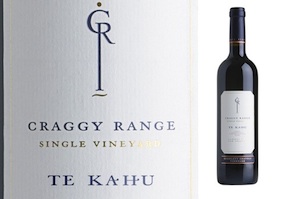
♦    2010 Craggy Range Te Kahu Gimblett Gravels Merlot (blend)    86% Merlot, 8% Cabernet Franc, 4% Cabernet Sauvignon, 2% Malbec,  Hawker Bay, N. Zealand. APV: 13.5% ,  $ 20 Calvert Woodley, DC

Winemaker notes http://www.craiggrange.com:  The warm, gravelly soils are perfect for the production of Merlot and the moderate heat allows the wine to retain freshness and structure without showing over-ripe characters.    The result is a rich, ripe wine with ample ‘dusty’ tannins and a lush, warm texture similar to other wines made in the area.               Tasting Notes: Very dark colour. A brooding bouquet of dark plums and blackberry. Wild thyme, rose-like florals and nutmeg nuances contribute to a lifted complexity. The silken texture unveils an intense fruit core with characters of cocoa and fresh tobacco. This wine is very rich, yet tempered by balanced tannins and fresh acidity.

The Wine Advocate    www.erobertparker.com , November 2011:   90 Points
“Deep garnet-purple colored, it offers aromas of warm plums and blueberries with some spice cake, figs and kirsch in the background. Medium-full bodied and generously fruited in the mouth, it presents firm grainy tannins, invigorating acid and a long finish.”      Lisa Perrotti-Brown MW.

Wine Enthusiast    90: “For a wine that’s akin to a Pomerol in varietal composition, with 80% Merlot and most of the rest Cabernet Franc, this is surprisingly muscular in style, with dusty tannins framing dark fruit and hints of vanilla, mocha and cinnamon. Drink 2013–2018.”

 ♦   2009 Jim Barry The Cover Drive Cabernet Sauvignon, Coonawarra, Australia. APV 14.1%, $ 19 Calvert Woodley

Winemaking notes jimbarry.com:      This wine is bright plum in colour with purple tints. The nose shows intensely complex characters of blackcurrant and cedar spice. This is followed on the palate by an eruption of fruit flavours -primarily dark cherry and blackberry, with a distinctive Coonawarra cassis character.      The tannins are fine grained and supple and the wine has a long, integrated finish.        As with previous releases of ‘The Cover Drive’, the wine displays harmonious balance and can be enjoyed now or will reward cellaring for 2-3 years.

The Wine Advocate:  90 Points     “Deep garnet-purple colored, the 2009 The Cover Drive Cabernet Sauvignon presents intense cassis and blackberries aromas with hints of pencil shavings, cloves and bay leaf. Medium-full bodied, it has a medium level of grainy tannins, lively acidity and mouth-filling, very pure berry flavors, finishing long. Drink it now through 2016. ”

♦  2007 Penfolds Bin 138 GSM Grenache – Shiraz – Mourvedre, (Grenache 66 %, Mourvèdre 21%, Shiraz 13%), Barossa Valley, Australia,  APV % 14.5, $ 26, Calvert  Woodley, DC

Winemaking notes http://www.penfolds.com:      Unusually for Penfolds, all three varieties are matured independently, owing to their tendency to mature at different times on the vine and the need to mature under different conditions in the barrel.

Mourvèdre will often contribute a unique combination of violet-like floral notes and a range of earthy, savoury complexities. Structurally it can be lean and sinewy, providing a worthy frame upon which shiraz and grenache can sit. Grenache is typically lighter in colour and body, presenting the perfume of the wine and is often the first component noticed when the wine is poured. Shiraz provides the body and shape of the wine.            Bin 138 is more of a fruit-driven style than the other Bin wines and displays a chalkier tannin texture. Its rich, earthy nature becomes more nuanced with age.

Ripe, generous and focused, with a veil of fine tannins around a pulsing core of cherry, blackberry and roasted meat flavors that linger easily on the open finish. Drink now through 2015.

90, Wine Spectator (Jun 2010)       88, Jeb Dunnuck, The Rhone Report (Issue # 4 – May 2010)          90, Robert Parker’s Wine Advocate (Dec 2009) that writes this review: Penfold’s Châteauneuf-du-Pape look alike, the 2007 Penfolds Bin 138 is a blend of 66% Grenache, 21% Mourvèdre and 13% Shiraz. It offers up kirsch and blackberry fruit, garrigue, licorice and earthy aromas on the nose. These carry into a medium bodied palate where the wine showcases a soft, flesh style, impressive fruit and a clean, long and surprisingly tannic finish. A touch soft, this is still very enjoyable and a solid bottle of wine.

______________________________________________

4.  Club Members Evaluation of the Wines

By Hugo Benito
HugoBenitoSe repatieron 21 formularios de evaluacion ,uno por cada persona presente, y se recibieron 17.
Como es norma  para los calculos no se consideraron valores muy extremos.

Vino Numero 1- White Haven Sauvignon Blanc 2011 Malborough –  Nueva Zelandia.Alcohol 13% – Precio $31 -Ch.Chase Wine & Spirits-Calificaron este vino 16 personas con un promedio de 89.6 puntos..Hubo una concentracion ( 11 pers.)entre 89 y 90 con un promedio de 89.4.Los valores oscilaron entre 88 y 92 puntos , hubo poca dispersion.  Comentarios:  Color amarillo verdoso brillante, aromas herbaceos y flores, acidez balanceada,buen final, agradable aftertaste, alcohol suave. Elegante .Facil de tomar.

Vino Numero 2- Craggy Range – Hawkes Bay-Nueva Zelandia 2010-Merlot 80%-Cabernet Franc 8%-Cabernet Sauvignon 8%-Malbec 4%-CW . Alcohol 13.5%-Precio $20.Evaluaron este vino  15 personas con un promedio de 87.9. Cuatro personas le diero 90 puntos. Comentarios: Color dark burgundi,aroma afrutas,vainilla,sabor suave sedoso al paladar (glicerina ?),taninos suaves,  buen cuerpo,sobresale el merlot.No hubo uniformidad en la evaluacio con extremos enre 82 y 92 puntos.

Vino Numero 3- The Cover Drive 2009-Cabernet Sauvignon – Conawara-Australia.Alcohol 14.1%- Precio $19- CW.  Evaluaron este vino 16 personas con un promedio de 88.2 puntos.Hubo una concentracion (10 per.) ente 88 y 89 puntos con un promedio de 88.6 Comentarios: Color rojo vivo a purpura,buen aroma , pero no muy marcado, a fruta,franbuesa,menta, sabor frutal, madera chocolate, azucar, poco cuerpo,final corto.

Vino Numero 4- Penfolds Bin 138– Grenache 66%- Mourvedre  21%,Shirah 13%. Alcohol 14.5 – Precio $27 -CW. Evaluaron este vino 16 personas.Hubo una concentracion bien manifiesta ( 12 per.)entre los 89 y 91 puntos con un promedio de 89.8 .Dos socios le dieron 94 y 95 puntos y uno 85. Si consideramos todos los valores se tiene un promedio de 90 puntos.Comentarios: color rojo brillante, atractivo, aroma mediano a frutos rojos, buen sabor y texura, poco cuerpo, taninos suaves, balanceado, long finish , excelente.Baja relacion calidad-precio.

__________________________

5. Information on the Producing Regions

by German Zincke and Leonor Barreto

Selección de Vinos

De acuerdo a la programación anual, en esta oportunidad se degustarán vinos del Australia y de Nueva Zelandia  (o Zelanda) de zonas preseleccionadas. Las regiones de Australia son: Coonawarra y Barrosa Valley. De Nueva Zelandia las regiones son: Marlborough y Hawkes Bay. Leonor Barreto y Germán Zincke son los encargados de la selección  y de la presentación de los vinos.

Nombre del vino

Año

Alcohol %

Precio $

Lugar de compra

1

 Marlborough, Nueva Zelandia  White Haven Sauvignon Blanc

2011

13.0

21.00

Chevy Chase Wine & SpiritsDC

2

Hawkes Bay, Nueva Zelandia Craggy Range (Merlot 80 %, Cabernet Franc 8 %, Cabernet Saugvinon 8%, Malbec 4%)

2010

13.5

19.99

Calvert & Woodley

DC

3

Coonawarra, Australia The Cover Drive (Cabernet Saugvinon)

2009

14.1

18.99

Calvert & Woodley

DC

4

Barossa Valley, Australia Penfolds  BIN 138(Grenache 66 %, Mourveère 21%, Shiraz 13%)

2007

14.5

26.99

Calvert & Woodley

DC


Australia & its Wines


The Australian Wine export market was worth 2.9 billion US dollars  a year in June 2007, and was growing at 9% pa. Of this about US$2.1 billion is accounted for by North America and the UK, and in this key latter market Australia is now the largest supplier of still wines. 2007 statistics for the North American market show that Australian wine accounted for a 17% share of the total value of U.S. imported wine, behind France with 31% and Italy with 28%.

New marketing strategies developed for the key UK market encouraged customers to explore premium Australian brands, while maintaining sales of the lower-margin high-volume brands, following research that indicated a celebratory dinner was more likely to be accompanied by an inferior French wine than a premium Australian wine. This is partly due to exchange rate fluctuations, making Australian wines appear much cheaper than French wines in the UK and hence perceived as being of poorer quality. While this situation may be somewhat mitigated by the continued rise in the Australian dollar during 2010.

Australian Wine Regions

The Australian wine industry is the world’s fourth largest exporter of wine with approximately 750 million liters a year to the international export market with only about 40% of production consumed domestically. The wine industry is a significant contributor to the Australian economy through production, employment, export and tourism. There is a US$2.93 billion domestic market for Australian wines, with Australians consuming over 530 million liters annually with a per capita consumption of about 30 liters – 50% white table wine, 35% red table wine. Norfolk Islanders are the second biggest per capita wine consumers in the world with 54 liters. Only 16.6% of wine sold domestically is imported. Wine is produced in every state, with more than 60 designated wine regions totaling approximately 160,000 hectares; however Australia’s wine regions are mainly in the southern, cooler parts of the country, with vineyards located in South Australia, New South Wales, Victoria, Western Australia, Tasmania and Queensland. The wine regions in each of these states produce different wine varieties and styles that take advantage of the particular terroir such as: climatic differences, topography and soil types. With the major varieties being predominantly Shiraz, Cabernet Sauvignon, Chardonnay, Merlot, Semillon, Pinot Noir, Riesling, and Sauvignon Blanc.

New Zealand and its Wines

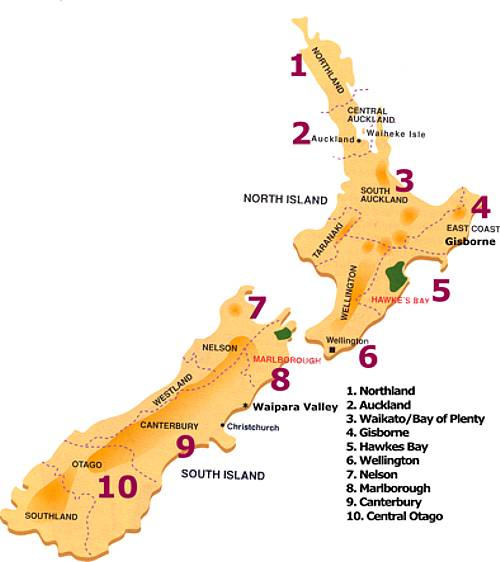
New Zealand Wine Regions

Wine making and vine growing go back to colonial times in New Zealand. In 1851 New Zealand’s oldest existing vineyard was established by French Roman Catholic missionaries at Mission Estate in Hawke’s Bay. Due to economic (the importance of animal agriculture and the protein export industry), legislative (prohibition and the temperance) and cultural
factors (the overwhelming predominance of beer and spirit drinking British immigrants), wine was for many years a marginal activity in terms of economic importance. Dalmatian immigrants arriving in New Zealand at the end of the nineteenth and beginning of the twentieth century brought with them viticultural knowledge and planted vineyards in West and North Auckland. Typically, their vineyards produced sherry and port for the palates of New Zealanders of the time, and table wine for their own community.

The three factors that held back the development of the industry simultaneously underwent subtle but historic changes in the late 1960s and early 1970s. In 1973, Britain entered the European Economic Community, which required the ending of historic trade terms for New Zealand meat and dairy products. This led ultimately to a dramatic restructuring of the agricultural economy. Before this restructuring was fully implemented, diversification away from traditional protein products to products with potentially higher economic returns was explored. Vines, which produce best in low moisture and low soil fertility environments, were seen as suitable for areas that had previously been marginal pasture. The end of the 1960s saw the end of the New Zealand institution of the “six o’clock swill”, where pubs were open for only an hour after the end of the working day and closed all Sunday. The same legislative reform saw the introduction of BYO (bring your own) licences for restaurants. This had a profound and unexpected effect on New Zealanders’ cultural approach to wine.  Finally the late 1960s and early 1970s noted the rise of the “overseas experience,” where young New Zealanders traveled and lived and worked overseas, predominantly in Europe. As a cultural phenomenon, the overseas experience predates the rise of New Zealand’s premium wine industry, but by the 1960s a distinctly Kiwi (New Zealand) identity had developed and the passenger jet made the overseas experience possible for a large numbers of New Zealanders who experienced first-hand the premium wine cultures of Europe.

The wine regions in New Zealand stretch from latitudes 36°S (comparable in latitude to Jerez, Spain), to 45°S (comparable in latitude to Bordeaux, France). The climate in New Zealand is maritime, meaning that the sea moderates the weather producing cooler summers and milder winters than would be expected at similar latitudes in Europe and North America.

New Zealand wine production by grape variety (hectares)

Year                           2003    2004    2005    2006    2007    2008

Sauvignon Blanc         4,516   5,897   7,043   8,860   10,491 13,988

Chardonnay                3,515   3,617   3,731   3,779   3,918   3,881

Pinot Noir                    2,624   3,239   3,623   4,063   4,441   4,650

Merlot                          1,249   1,487   1,492   1,420   1,447   1,363

Riesling                         653      666      806      853      868      917

Cabernet Sauvignon     741      687      678      531      524      516

The Selected Regions

 1.1.   Marlborough, New Zealand

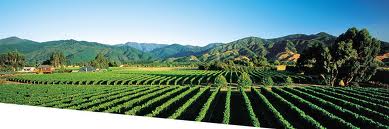
Located on the east coast with mountains to the west, Marlborough is one of New Zealand’s sunniest and driest areas.  In these bright, but relatively ‘cool’ climate conditions, the grapes have the advantage of a long slow, flavour-intensifying ripening period.  The average daily temperature during summer is nearly 24 degrees C but clear cool nights keep acid levels high in the grapes.

Within the region, viticulture has been developed primarily on sites with moderate low fertility and a noticeably stony, sandy loam top soil overlying deep layers of free-draining shingle, as found in the viticulturally developed areas of the Wairau and Awatere Valleys.  These shallow, fast draining, low fertility soils help to produce a lush, aromatic ripe wine because they reduce the vines vigour.

Sauvignon Blanc is a white-wine grape variety from western France which is now successfully grown in emerging and established wine regions all over the world. While the grape may be more readily associated with the Loire Valley it is more likely to have originated from Bordeaux.

Marlborough produced roughly 65% of New Zealand’s total wine output, 75% of which was Sauvignon Blanc.

In the 1970s, Montana in Marlborough started producing wines which were labelled by year of production (vintage) and grape variety (in the style of wine producers in Australia). The first production of a Sauvignon Blanc of great note appears to have occurred in 1977. Also produced in that year were superior quality wines of Muller Thurgau, Riesling and Pinotage.

In the 1980s, wineries in New Zealand, especially in the Marlborough region, began producing outstanding, some critics said unforgettable, Sauvignon Blanc. “New Zealand Sauvignon Blanc is like a child who inherits the best of both parents—exotic aromas found in certain Sauvignon Blancs from the New World and the pungency and limy acidity of an Old World Sauvignon Blanc like Sancerre from the Loire Valley. “No other region in the world can match Marlborough, the northeastern corner of New Zealand’s South Island, which seems to be the best place in the world to grow Sauvignon Blanc grapes”

1. 2.     Hawkes Bay, New Zealand


Gannets at Cape Kidnappers, Hawkes Bay, N. Zealand

Hawke’s Bay, along with Marlborough, is the center of gravity for the New Zealand wine industry; it is New Zealand’s oldest wine producing area and is the country’s second largest wine production region. The premiere area for Bordeaux blend reds in New Zealand and the region is rapidly developing a reputation for quality Syrah. Chardonnay and Sauvignon Blanc are produced and lately Viognier. Specialist high quality small producers include Bilancia and Bridge Pa. Other well-known producers include Brookfields Estate, Clearview Estate, Esk Valley, Villa Maria, Vidal, Trinity Hill, Craggy Range, Newton Forrest Estate, Te Mata Estate, Moana Park Estate, Mission Estate, Sileni, Sacred Hill, CJ Pask, and Babich.

Early success in Hawkes Bay in the 1960s by McWilliams, and in the 1980s by Te Mata Estate, led to red wine grape planting and production concentrating on Cabernet Sauvignon by Corbans, McWilliams, and Mission Estate, among many others. As viticultural techniques were improved and tailored to New Zealand’s maritime climate, more Merlot and other Bordeaux-style grapes were planted, with quality and quantity increasing. This trend continues and can be seen in the New Zealand Wine Institute statistics indicating that plantings of Cabernet Sauvignon, Merlot, Cabernet Franc, Malbec and Syrah now account for 2,496 hectares

 1.3.     Coonawarra, Australia

Coonawarra is a wine region, on the Limestone Coast of South Australia, that is known for the Cabernet Sauvignon wines produced on its “terra rossa” soil. Coonawarra is an Aboriginal word meaning “Honeysuckle”. It is about 380 km southeast of Adelaide, close to the border with Victoria.

Tasting wine in Coonawarra

The first vines were planted by John Riddoch at Yallum, South Australia in 1890. Only the Redman family of Rouge Homme continued to produce table wine during this period, during which Shiraz was the main grape variety grown.

Fortunes changed when Samuel Wynn recognized the potential of the strip of terra rossa soil, and bought the original Riddoch cellars in 1951. Led by Wynns and Penfolds, Coonawarra was to play a leading role in the transformation of the Australian wine industry as it changed from making fortified wines to conventional table wines.

Coonawarra’s terra rossa soil is one of the most famous terroirs in the New World, covering an area of just 15 km x 2 km north of Penola. This special bright red soil is clearly visible on an aerial photo.

Being just 60 km from the sea, Coonawarra has a somewhat maritime climate not dissimilar to Bordeaux. During the growing season, there is just 219mm rainfall (Oct-Apr), out of 585mm annually. Extensive cloud cover keeps the temperature down to 19.1°C in January.

Coonawarra is synonymous with classy Cabernet Sauvignon, full of plum and blackcurrant fruit.

1.4.     Barossa Valley, Australia

The Barossa Valley is one of Australia’s oldest wine regions. Located in South Australia, the Barossa Valley is about 56km (35 miles) northeast of the city of Adelaide. Unlike most of Australia whose wine industry was heavily influenced by the British, the wine industry of the Barossa Valley was founded by German settlers fleeing persecution from the Prussian province of Silesia (in what is now modern day Poland). The hot continental climate of the region promoted the production of very ripe grapes that was the linchpin of the early

Barossa Valley

Australian fortified wine industry. As the modern Australian wine industry shifted towards red table wines (particularly those made by the prestigious Cabernet Sauvignon) in the mid-20th century, the Barossa Valley fell out of favor due to its reputation for being largely a Shiraz producers whose grapes were destined for blending. During this period the name “Barossa Valley” rarely appeared on wine labels. In the 1980s, the emergence of several boutique family specializing in old vine Shiraz wines began to capture international attention for the distinctive style of Barossa Shiraz, a full bodied red wine with rich chocolate and spice notes. This led to a renaissance in the Barossa which catapulted the region to the forefront of the Australian wine industry.

Many of Australia’s largest and most notable wineries are either headquartered or own extensive holdings in the Barossa Valley. These include such wineries as Penfolds, Peter Lehmann, Orlando Wines, Seppeltsfield, Wolf Blass and Yalumba. Many Shiraz vines in the Barossa Valley are several decades old, with some vineyards planted with old vines that are 100-150 years old. Other grape varieties grown in the Barossa include Grenache, Mourvedre, Cabernet Sauvignon, Riesling, Chardonnay and Semillon.

___________________________________

Posted in Meeting Abstract | Tagged , , , , , | Leave a comment

Los encantadores vinos costeros

Alfonso Sanchez recomenda la leitura deste articulo em  elespecator.com:

Los encantadores vinos costeros

Hugo Sabogal       elespectador.com     18-Agosto-2012

En la larga historia del vino, la plantación de viñedos cerca del mar no es una novedad. Por el contrario, ha sido una costumbre milenaria.

Desde la antigüedad, países como Siria, Líbano, Egipto, Creta, Grecia, Turquía y Chipre, o regiones como Sicilia, Cataluña, Cádiz, Jerez (junto con el Puerto de Santa María y Sanlúcar de Barrameda), al igual que el norte de África, han practicado la vitivinicultura de influencia marítima durante siglos.

Es más, las grandes civilizaciones del mundo asociadas con la cultura del vino, como la fenicia, la griega o la romana, tuvieron en la cercanía al mar un gran aliado: no sólo por el tipo de bebida refrescante que obtenían, sino por la facilidad que implicaba el transporte del producto a otros mercados.

Para todos estos pueblos el vino era un medio de trueque con el que obtenían otros productos y mercancías para el diario existir. Fue mucho tiempo después cuando los viñedos se extendieron a franjas continentales.      18/Agosto/2012

Para el resto del articulo haga click HERE


______________________________________________

Posted in General, Magazines and Books wine related | Tagged , | Leave a comment

10 razones para beber 2 copas de vino al día

10 razones para beber 2 copas de vino al día

Recomendado por Rene Meza y Ricardo Zavaleta para los socios del Club del Vino

Hace años que las propiedades del vino son centro de muchas investigaciones por los beneficios que éste tiene en nuestro organismo. Actualmente el vino es una bebida que acompaña muchas de nuestras comidas.

Y aquí la 10 razones que te harán seguir  celebrándolo cada día.

  • Reduce hasta un 30% la arteriosclerosis
  • Previene en un 96% la aparición de colesterol LDL y eleva los niveles sanguíneos de colesterol HDL, colesterol bueno.
  • Favorece la circulación aumentando la elasticidad de las arterias.
  • Disminuye las posibilidades de sufrir infarto de miocardio. Ayuda a evitar y curar enfermedades de corazón.
  • Gracias a su acidez natural, aumenta la secreción salivar, acrecenta la secreción de jugo gástrico facilitando la digestión sobretodo de los prótidos (carnes, pescados…)
  • Sus taninos excitan las fibras de todo el aparato digestivo estimulando las secreciones intestinales, por lo tanto, nos ayuda a contrarrestar el estreñimiento.
  • Es un antiséptico natural y posee propiedades antitóxicas gracias a sus ácidos y al alcohol. ¿Por qué sino, acompañar las ostras o moluscos con vino blanco? O usarlo como agente terapéutico para prevenir contagios como por ejemplo de la gripe?
  • Tiene propiedades anafilácticas. Según el profesor Weissenbach, macerar fresas con vino tinto un cuarto de hora antes de comerlas evita la urticaria que provoca a ciertas personas.
  • Tiene capacidad antioxidante. Previene el daño oxidativo del ADN, ayudando a previnir y curar ciertos tipos de cáncer.
  • El alcohol y los compuestos polifenólicos antioxidantes del vino hacen disminuir el riesgo de desarrollar demencia senil y la enfermedad de Alzheimer.
Se recomienda una ingesta moderada de vino
Artículo redactado por Agnés Melendez Díaz, Ingeniera agroalimentaria Licenciada en Ciencia y Tecnología de los Alimentos, Máster Internacional en Dietética y Nutrición.
www.alimentosysecretos.com
Posted in General, Magazines and Books wine related, Wine - Vino - Vinho | Tagged , , | Leave a comment

Club del Vino Members Favorites Wine Shops – Survey of 2012

Club del Vino Member’s Favorites

Wine Shops      – 2012 Survey

The numbers in the right are the votes each merchant received. Each member could vote for up three stores.  Survey of June 2012. If you click in the name of the store you will open their web site. The results of the survey of November 2011 are in the second column.

Is your favorite shop here?

 Wine Shops 2012 2011
Total Wine  9 17
Calvert Woodley 7 11
Trader Joe’s  4 4
McArthur  Beverages   3 5
Montgomery Co. Dept. Liquor Control    3 1
Cecile’s Chain Bridge   2 2
Pearson’s Wines & Spirits  2 2
Potomac Village Beer-Wine 2 1
Fine Wine & Good Spirits 1 1
Paul’s Wines and Spirits 1 1
Rodman*s   1 3
Arrowine , Arlington VA 1
Fresh & Greens Mkt. DC 1
Chevy Chase  Wines & Spirits     1
El  Patio 1
Fresh Fields 2
International Market 1
Magruder’s Supermarkets 1
Oakton Wine Shop  1
Posted in Restaurants, Wine Shops, Merchants | Leave a comment

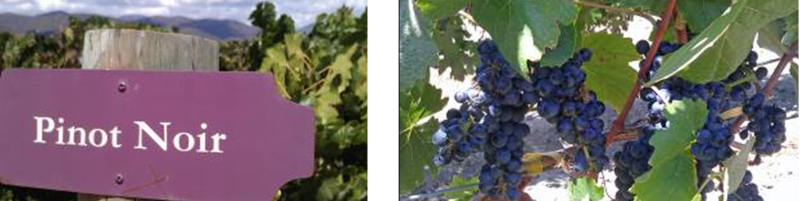
Pinot Noir Anyone? Check out this Guide of Pinot Noir from $ 15 to $ 100

Pinot Noir: Snoot.com Pinot Noir Lovers Buying Guide

SnoothPinotLoversBuyingGuide       < click here

Posted in Wine - Vino - Vinho | Tagged | Leave a comment

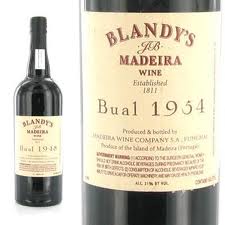
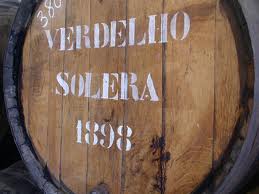
Madeira: One robust tipple – The wine that defies time

Madeira: One robust tipple

The Founding Founders lifted a glass of Madeira to toast the Declaration of Independence.

“Madeira played an important part” in early U.S. history, said Dave McIntyre in The Washington Post. Named for a Portuguese archipelago, this sweet fortified wine served as ballast for many early trans-Atlantic voyages, and the Founding Founders lifted it to toast the Declaration of Independence. Madeira is famed for its “indestructibility.” Cooked at 115 degrees when young, it lasts indefinitely after it’s opened.

1996 Broadbent Madeira Colheita ($50). This aged Madeira is “gorgeous and sweet,” with hints of orange peel and toasted hazelnut.

Broadbent Madeira Reserve 5 Years Old ($25). A wine that’s “richer than the 1996,” and nearly as complex.

1994 Blandy’s Madeira Colheita Malmsey ($48). Flavors of caramel and lots of nuts make this a particularly delightful choice.

________________

Madeira: The wine that defies time

To keep their wines from spoiling, Portugese farmers added a little brandy to the barrel.

There’s a good reason that Madeira is nearly synonymous with old-fashioned reliability, said Elin McCoy in Bloomberg.com. Portuguese farmers have been tilling “steep mountain vineyards on the eponymous volcanic island” off Africa’s coast since the 1700s.

To keep their wines from spoiling during long ocean deliveries to Europe or the Americas, they “fortified” them, dosing each batch with brandy during fermentation. The result was a virtually “indestructible” beverage that could keep seemingly forever.  For a splurge, here are three bottles that prove Madeira can still taste exquisite decades—even centuries—later. You can find a dealer through Wine-searcher.com.

1825 Leacock Seco ($450)
This Madeira starts with a nose of hazelnuts and reveals layers of tangy candied fruit.

1912 D’Oliveira Verdelho ($350)
This “toffee-nosed” Madeira reminded me of “ethereal Kenya coffee.”

1922 D’Oliveira Bual ($350)
This powerful Madeira has sweet notes that taste like “essence of fruitcake.”


From “The Week” postings April 2010 and Mach 2012

__________________________________

Posted in Magazines and Books wine related, Wine - Vino - Vinho | Leave a comment

California’s Albariño

California’s Albariño

The white wine grape has become a “recent darling” of California’s Central Coast.

The Week  August 1, 2012. p. 27

Albariño is best known as a Spanish wine, “but there’s a less-known spate of bottles with American provenance,” said TastingTable.com. The white wine grape has become a “recent darling” of California’s Central Coast, where winemakers are creating wines that are “lively” and “food-friendly” with salads and ceviche.

2010 Bonny Doon Vineyard Albariño ($15). This “zesty” wine from star winemaker Randall Grahm “matches well with the minerality of oysters on the half shell.”

2011 Longoria Albariño ($23). Cultivated from a single vineyard in the Santa Ynez Valley, this wine is “practically designed for butter-drenched lobster rolls.”

2011 Acha Blanca ($23). Idiosyncratic winemaker Mark Herold sources grapes from grower Markus Bokisch, who’s made a name for himself growing Spanish varietals just east of San Francisco.

Posted in Wine - Vino - Vinho | Tagged , | Leave a comment

Watch out Virginia: Maryland wines are coming!

Maryland vineyards are up to the competition

By ,        Published: July 30, 2012    from the Washington Post

Fred Wilson knew he had some winners even before the fruit from the 2010 harvest reached the winery at Elk Run Vineyards in Maryland’s Frederick County. The extremely hot, dry summer ripened the grapes a fortnight earlier than usual, and most of his wines were happily cooling in their fermenters within three weeks.

“The balance between the sugars and acids was just about spot-on to carry the wines through malolactic fermentation, so we didn’t have to adjust the wines at all,” recalls Wilson, who has run the winery with his wife, Carol, since 1983. “You should be able to produce something good out of a vintage like that.”

Wilson produced a few good wines from that vintage. Last month, Elk Run took a surprising four best-of-category awards at the Atlantic Seaboard Wine Competition for its 2010 pinot noir, syrah, merlot and cabernet franc, leading a strong showing by Maryland’s up-and-coming wine industry.

This was the eighth year of the competition, which promotes advances in winemaking in 17 states along the Atlantic coast. This year’s competition included 495 wines and 42 gold medals were awarded.

Four other Maryland wines — one each from Basignani and Bordeleau and two from Knob Hall — also won categories and competed for the best-of-show honor. Maryland wineries claimed 11 gold medals, including two by Port of Leonardtown Winery and one for Sugarloaf Mountain Vineyard.

The competition’s top prize went to Chateau Frank’s 2006 Blanc de Noirs from New York’s Finger Lakes region, the first sparkling wine to win best of show. Virginia wineries also showed well, with nine category winners and 15 gold medals.

Although Virginia’s numbers surpass Maryland’s, remember that Virginia has four times as many wineries, and its modern wine renaissance began earlier than Maryland’s. This strong result shows that Maryland is its neighbor’s equal, at least in vintages when nothing goes wrong.

I was one of 19 judges at the ASWC, held July 14-15 in Haymarket. Over the two days, not every wine was tasted by each judge. But on Sunday, all 19 of us blitzed through the sweepstakes round of 20 best-of-category winners to determine the best of show. It was a don’t-blink-or-you’ll-miss-it tasting; we had about 15 minutes to evaluate 20 wines and rank our top five without giving scores. (I managed to jot down the code numbers of my favorites.) Each already had won a gold medal.

Yet in that brief time I fell in love with that Elk Run syrah and a lovely 2010 petit verdot from Cross Keys winery in Virginia’s Shenandoah Valley.

No competition can truly anoint the best wines of a state or region, if only because not every wine is entered. Black Ankle Vineyards, widely considered one of Maryland’s best wineries, submitted no wines this year. Neither did such leading Virginia wineries as Linden,RdV, Glen Manor and Boxwood. But such competitions are useful snapshots of how wineries and regions are doing. Maryland has a right to be proud of its performance. And I need to get down to Leonardtown.


McIntyre blogs at dmwineline.com. Follow him on Twitter: @dmwine.

Posted in Magazines and Books wine related, Wine - Vino - Vinho | Leave a comment

Emilio Bernal Labrada has a new book: Geting Away with Murder in US Public Life

Emilio Bernal Labrada has a new book: Geting Away with Murder in US Public Life

This gripping page-turner covers a series of murders and felonies in high places,
committed by and against powerful politicians and public figures of all stripes in
collusion with mobsters, spies and henchmen.
Exposed are great unsolved murders: a famous president and his brother, a great
civil rights leader, an FBI Chief, a legendary movie star (“suicide”) and an iconic
politician’s lover (“car accident”). Covered up by the very powers that committed
them were the motives and brains behind them.
Also exposed are the sex lives of the killed and their killers, their Mafia
accomplices and Hollywood lovers, including regular participants in White House
and Las Vegas sex parties.
These unsettling events form a mind-boggling compendium of criminal and
amoral conduct. Even today, media manipulation and continuing official cover-ups
keep the public in the dark, assuming that everything has been done “by the book.”
This chronicle, reflecting possible reality, will awaken Americans to powerful
forces working behind the scenes, capable not only of unimpeached and unpunished
high crimes, misdemeanors and felonies but, more importantly, of covering them
up officially and seamlessly.              ISBN 978-1-47503-110-2

About the Author

A Cuban-Americanliving in the U.S. for a half century,    the author is a linguist who writes prose and poetry in two languages (English, Spanish), and reads in five or  six. He is a member of the North American Academy of the Spanish Language (ANLE), the Real Academia Española (RAE) and the Academy of the History of Cuba (in exile).

A curious, sophisticated world traveler,  he has spent decades researching suspicious public events, reading hundreds of books and interviewing anonymous confidential sources. Refusing to believe official versions, he is setting the record straight by gathering facts and piecing together the jig-saw puzzles masking the truth. While others have pseudonymously evaded consequences, he is keenly aware that this book entails a palpable danger.

But after spending a lifetime writing it, unveiling the story behind momentous events in America’s history is, for him, worth the risk.

 The Club del Vino congratulates the member Emilio Bernal Labrada for the release of his book that will be available in the bookstores very soon. Amazon.com, for instance, will ship the book for those interested.

Asphodelus Luteus

Posted in General | Tagged , , , , , | Leave a comment