Tasting No. 166 – April 27, 2015 – Wines from Western Australia


Club del Vino


Capri Ristorante, McLean VA

 1. Presenters and Participants

Wines presenters: Carlos Velez, Jorge García

Participants:

Mario Aguilar, Marcello Averburg,  Alfonso Caycedo,  Ruth Connolly, Clara Estrada, Jaime Estupiñan,  Jorge Garcia-Garcia, Emilio Labrada, Alvaro Lopez, Orlando Mason, Ítalo Mirkow, Joerge Requena, Jorge Omar Rodríguez, Pedro Turina, Ginger Smart, Carlos E. Velez, Ricardo Zavaleta, German Zincke, Andrés Prieto (invitado de Pedro Turina)

Type of Tasting: Open

2. The Wines

  1. Vasse Felix – Chardonnay 2012 – Margaret River
  2. Picardy 2005 – (blend merlot 54%, cabernet sauvignon 24%, y cabernet franc 23%  )
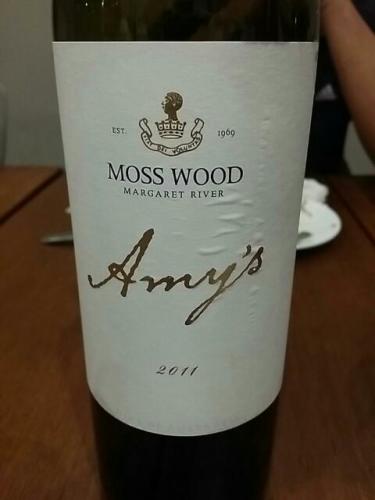
  3. Moss Wood – Amy’s Blend 2011 – Margaret River
  4. Vinaceous – Raconteur Cabernet Sauvignon 2012 Margaret River


3. The Menu

1.             Antipasto 

2.             Ravioli con hongos rellenos y con salsa de tomate delicada 

3.            Ensalada de fenel, naranja, walnut y aceite de oliva extra virgen 

4.            Ternera a la milanesa

5.         Postre/Café

 4. Information on the Wines

(The information below has been compiled from varios internet sources) .

Vasse Felix – Chardonnay 2012

Vase

The Wine:  A Chardonnay of extraordinary freshness, vibrant lifted fruit intensity, solid structure, balance and finesse. Vasse Felix create a complex, softly textured wine through a regimen of partial wild yeast fermentation in French oak barriques. The final effort is distinct, elegant in style and true to Margaret River. Typified by its bright, delicate fruit and tight, underlying acidity throughout, a reflection of the purity to be found in Margaret River, a Chardonnay of compelling primary fruit flavours and sound structure.

Alcohol: 12.5 % ;  Price: TBA

Experts Ratings: Decanter 92 pts.

Picardy 2005 – Merlot, Cabernet Sauvignon- Cabernet Franc 

Picardy

The Wine : This is a really enjoyable and versatile Bordeaux blend. The 2005 offers a lovely mixture of ripe-berry, plum and woodsy scents, harmonised with just the right amount of quality oak.  It is smooth, well structured, fruit driven and not too assertive in the tannins. The palate is medium-bodied and has the leanness and attractive angularity of a cool climate merlot. The percentages are 65% Merlot, 18% Cabernet Sauvignon and 17% Cabernet Franc. The palate also offers pleasantly overt Merlot fruit characters and the tell-tale underlying berry notes of the two cabernets. Very approachable now but will also cellar for at least 15 years. This wine would benefit with at least 3 years in the cellar and should cellar well for up to 20 years.

The fruit is destemmed and pumped to overhead small fermenters. The fermentation is carried out at around 25 degrees Celsius to ensure purity of fruit without excess extraction. During fermentation the wine is hand plunged 3 times per day. The wine and skins are run directly from the fermenter into the airbag press.

After pressing, the different ferments and varieties are then blended as early as possible to give maximum integration. We also attempt to co-ferment the Cabernet Franc either with the Merlot or Cabernet Sauvignon, to further enhance integration.

After blending and settling the wine is then matured in new to four year old French oak barriques. While in oak the wine undergoes malo-lactic fermentation and each barrel is checked and topped up weekly. This wine is usually racked twice during its oak maturation.

After twelve months in oak the wine is racked out of barrel to a tank and given a light filtration on its way to bottle.

Alcohol:  % ;  Price: TBA

Experts Ratings: TBA

Moss Wood – Amy’s Blend 2011

moss wood

The Wine:  Made of a blend of  a blend cabernet sauvignon 50%, petit verdot 31%, malbec 12%, and merlot 7%.  Inky purple. Expressive scents of blueberry, boysenberry and cassis, with a floral accent that gains strength with air. Broad, deep and nicely concentrated, offering sappy dark fruit flavors complemented by an exotic array of lavender pastille, allspice and bitter chocolate notes. Silky tannins come up late, adding shape to a long, floral-dominated finish. Score – 92. (Josh Raynolds, International Wine Cellar, July/Aug. 2013).

Combines the blueberry and blackcurrant fruit characters of Yallingup with violets and redcurrant from Cowaramup, generous fruit depth with soft oak influence providing a toasty, spicy background.  ( read more about Moss wines here: http://www.mosswood.com.au/wines/amys/

Alcohol:  % ;  Price: TBA

Experts Ratings: TBA

Vinaceous – Raconteur Cabernet Sauvignon 2012

Vivaceous raconteur

The Wine : The 2012 Raconteur is sourced from mature vines located in Willyabrup, Margaret River; these old vines are hand harvested and made using traditional techniques by Vinaceous winemakers. The wine is matured in oak and selected by Vinaceous Winemakers Mike Kerrigan and Nick Stacy for finishing, fining, blending and bottling by Vinaceous.

The Raconteur typifies classic Margaret River cabernet; lush, rich and deep purple in colour with bright hues, the aroma leaps from the glass with violets and black berry and mocha notes. Not unlike a Rorschach Image, people will see different flavors across the palate; some will find ripe fleshy black currants and cassis, others will find crunchy sour cherries; but both complement the overall palate with intensity, weight, structure and texture. Along with lip-smacking tannins and fine oak nuances, the 2012 Raconteur can easily be enjoyed on immediate opening or be cellared for up to 10 years and is absolutely a must with roast lamb, char-grilled rib-eye and/or array of cheeses; whatever your choice, the Raconteur will always entertain and command attention!

Alcohol:  14.2% ;  Price: TBA

Experts Ratings: TBA

4. Club del Vino Members Rating : TBA

Criterio para calificar:

Excepcional: 96-100 puntos; Excelente: 90-95 puntos; Muy Bueno: 86-89 puntos; Bueno: 81-85 puntos; Aceptable: 75-80 puntos.

El  vino blanco, fue calificado  como  excelente con promedio de 90 puntos. El primer tinto, como  bueno con una calificación media de 85 puntos; el segundo tinto tuvo una calificación media de muy bueno con un promedio de 87 puntos. El tercero y último de los tintos, recibió una calificación de muy bueno con un puntaje medio de 89. En resumen, esta  degustación, según las notas del grupo asistente, resulto muy buena dada la calidad y variedad de los vinos degustados. Los datos de las calificaciones individuales se detallan a continuación

2012 Vasse Felix – Chardonnay Margaret River

Media: 90

Deviation Standard: 2.7

Mediana: 90

Moda: 90

Impresión General:   Un vino muy bueno, color amarillo cítrico, aroma y sabor mineral, con un final mediano, muy bien balanceado y agradable.

2005 Picardy (Blend)

Media: 85

Desviación Estándar: 4.1

Mediana: 85

Moda: 85

Impresión General: Un vino de corte, con un color rojo rubí que tiene sabor frutoso y dulzón, un final largo, agradable y de muy buena estructura.

2011 Moss Wood – Amy’s Blend Margaret River

Media: 87

Desviación Estándar:  6.3

Mediana:  88

Moda:   87

Impresión General: Un color rojo intenso, con un aroma muy débil a frutas, sabor achocolatado y una estructura bastante fuerte. Un buen balance con alto contenido de alcohol. En general un vino muy agradable.

2012 Vinaceous – Racounter Cabernet Sauvingnon Margaret River

Media:  89

Desviación Estándar: 2.7

Mediana: 90

Moda:  91

Calificación Media: 89

Impresión General: Un buen vino cabernet bastante agradable, con especiales características y sabor, tiene un llamativo color rubí y en resumen es un vino elegante y muy acceptable.


5. Regional Notes

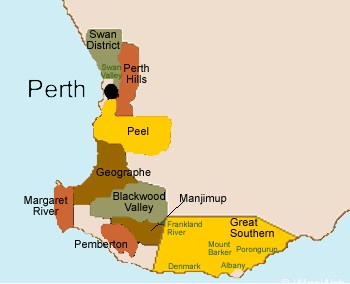
(Map taken from: http://www.genxywines.com/regions/wa_regions/img_maps_wa/wa_sm.jpg)

regions_map4Western Australian wine refers to wine produced in Australia’s largest state, Western Australia. Although the state extends across the western third of the continent, its wine regions are almost entirely situated in the cooler climate of its southwestern tip. Western Australia produces less than 5% of the country’s wine output, but in quality terms it is very much near the top. 

Western Australia’s several wine districts, which includes Margaret River, Great Southern Region, Pemberton, Perth Hills, and Swan Valley, stretch out from the coastal city of Perth. Vines were planted in this area in 1829, some years before the first planting in either South Australia or Victoria. But the state isolation and limited population hampered the industry’s growth and scope until 1970.

The Swan Valley, north of Perth, was Western Australia’s first wine district. It became known for table grapes as well as wine grapes, and the leading wines were mostly sweet and/or fortified and sold in bulk. It was here that Houghton‘s White Burgundy was originally a rustic, powerfully alcoholic made from chenin blanc, muscadet and chardonnay.

Of all the wine districts in Western Australia, the most renowned and ambitious is Margaret River, a windswept district jutting out like an elbow into the Indian Ocean.  Originally known for its timber, Margaret River came to world attention in the 1980s for the elegance, richness and clarity of its cabernet sauvignons- specially those from three of the leading wineries, Cape Mentelle, Leeuwin Estate and Cullens. 

The combination of the district’s maritime location and gravelly soil reminded several vintners of Bordeaux and inspired them to plant not only red Bordeaux grapes such as cabernet sauvignon and merlot, but also Bordeaux whites, Semillon and sauvignon blanc. Both white grapes, which are often blended, turned out to make wines shockingly full of personality.

On the other hand, when chardonnay was first planted in Margaret River, it seemed to be something of a gamble. As it turned out, chardonnay has almost magical affinity for the region. Leeuwin Estate, in particular, make chardonnays of breathtaking elegance that, with several years aging, grow even ricer and more expansive. They are among the best produced in all of Australia. 

One of the most curious grapes grown in western Australia is Verdelho. It was originally brought to the Swan Valley in 1829 by one of Western Australia’s first colonist, a botanist named Thomas Waters, who took cuttings from he island of Madeira off the African coast (a stopping point to pick-up provisions on the long voyage out). Two of the best Verdelhos to try are Moondah Brook and Willespie.

Today much of the excitement in Western Australia centers around the cool subdistricts within Great Southern Regions and the southwest coast. Wineries to watch from these areas include Howard Park, Plantagenet, Goundrey, and Capel Vale, known in the USA as Sheldrake.

Some Wines to Know:

Howard Park, Riesling, Western Australia, 100% Riesling,

Leeuwin Estate, Chardonnay, Art Series, Margaret River, 100% Chardonnay

Wine regions 

Great Southern Wine Region

The Great Southern is Australia’s largest wine region a rectangle 200 kilometres from east to west and over 100 kilometres from north to south. It has five nominated subregions for wine, namely the Porongurups, Mount Barker, Albany, Denmark, and Frankland River under the Geographical indications legislation as determined by the Australian Wine and Brandy Corporation. The vineyards spread throughout the area have significant variations of terroir and climate dictated in part by the distance however the region is the coolest of Western Australia’s viticultural areas; with a similar maritime influenced Mediterranean climate to Margaret River although with slightly less rainfall. This diverse region is known for Riesling, Chardonnay, Cabernet Sauvignon, Pinot noir, Shiraz, and Malbec. 

Great Southern Wine Region

Western Australia’s Great Southern region comprises a rectangle 200 kilometres from east to west and over 100 kilometres from north to south, and is Australia’s largest wine region.

It has five nominated subregions for wine, the Porongurups, Mount Barker, Albany, Denmark and Frankland River under the Geographical indications legislation as determined by the Australian Wine and Brandy Corporation. The vineyards spread throughout the area known for production of high quality vines have significant variations of terroir and climate dictated in part by the distance however the region is the coolest of Western Australia’s viticultural areas; with a similar maritime influenced Mediterranean climate to Margaret River although with slightly less rainfall. This diverse region is known for Riesling, Chardonnay, Cabernet Sauvignon, Pinot noir, Shiraz, and Malbec. 

Subregions

  • Albany is a subregion of the Great Southern region of Western Australia. Albany’s climate is maritime, strongly shaped and moderated by the Southern Ocean; the standard description is that it is Mediterranean, with moist, cool winters and warm, dry summers. Diurnal temperature range is minimal, and moderate humidity in summer assists ripening by reducing stress on the vines. Soil types of the region are either lateritic gravelly, sandy loams or sandy loams derived directly from granite and gneissic rocks.
  • Denmark the coastal neighbor of Albany is one of the five subregions of Great Southern. Marginally wetter and cooler than Albany, although the differences are not of significant magnitude. The climate is broadly similar to Albany; the varieties being grown and the wine styles are also similar.
  • Frankland River is one of the five subregions of the Great Southern in Western Australia. It is situated in the northwestern corner of the region, its western boundary touching the eastern side of Manjimup. It is the most northerly, inland subregion of Great Southern, still Mediterranean in terms of dominant winter-spring rainfall, but with greater continentality. The soils are chiefly derived from lateric gravelly sandy loams or sandy loams derived from granite or gneissic rocks, and so are typically rich, red in color and of uniform depth with some areas carrying marri and karri loams. The climatic influences for the area favor medium-bodied, Bordeaux style red varieties, and with the excellent adaptation of slightly earlier-maturing Shiraz.
  • Mount Barker this cool subregion is generally regarded as the most important subregion of the Great Southern. Ripening month and average temperatures in the established Mount Barker vineyards are significantly lower than in the Médoc, and significantly lower than in the lower warmer Bordeaux appellations such as Saint Emilion and Pomerol. Average ripening period sunshine hours at Mount Barker together with the whole season measure of sunshine hours are nearly identical with those of Bordeaux. Situated in the middle of the Great Southern, with strong continental aspects together with marri soils and lateritic gravely and sandy loams provided from the granite rock backdrop the region is suited to Riesling, Shiraz, Cabernet Sauvignon, and Pinot noir.
  • Porongurup is the fifth of the subregions of the Great Southern, just East of Mount Barker; and especially, the slopes facing north and north-east. The Porongorups are a small, isolated range of intrusive granite, of which slopes enjoy outstanding air drainage. The climate is Mediterranean with cool to mild winters and warm, sunny summers. While conditions are cooler and more humid higher up in the ranges with occasional snow on the taller peaks for short periods during winter and spring.The soils are ancient, deep karri loams derived from weathered granite. Porongurup is strongly indicated for all high quality white wine varieties such as Riesling, Traminer, Chardonnay, and red wine varieties such as Pinot noir, and Pinot Meunier.
  • Margaret River is the major geographical indication wine region in southwest Western Australia, with 5,017 hectares under vine and 215 wineries as at 2012. Margaret River wine region is made up predominately of boutique size wine producers; although winery operations range from the smallest crushing 3.5 tonne per year to the largest around 7000 tonne. The climate of Margaret River is more strongly maritime-influenced than any other major Australian region. It has the lowest mean annual temperature range, of only 7.6C, and for good measure has the most marked Mediterranean climate in terms of rainfall, with only 200 millimetres of the annual 1160 millimetres falling between October and April. The low diurnal and seasonal temperature range means an unusually even accumulation of warmth. Overall the climate is similar to that of Bordeaux in a dry vintage. Although the region produces just three percent of total Australian grape production, it produces over 20 percent of Australia’s premium wine market.The principal grape varieties are fairly evenly split between red and white; Cabernet Sauvignon, Chardonnay, Sauvignon blanc, Sémillon, Shiraz, Merlot, Chenin blanc and Verdelho.
  • The Swan Valley is a region in the upper reaches of the Swan River between Guildford and Bells Rapids, Western Australia. The Swan Valley is noted for its fertile soil, uncommon in the Perth region, and the recent expansion of tourism-based destinations. These include numerous wineries such as the huge complex at Houghtons, the state’s biggest producer, and Sandalfords and also many small though excellent family-owned concerns. During October the annual ‘Spring in the Valley’ weekend takes place; it is one of Australia’s largest wine and food festivals.
  • The Swan District, of which the Swan Valley forms part, is the hottest wine region in Australia, with the grape harvest usually beginning in January. The Swan Valley is among the largest sources of Western Australia’s wine, with grape varieties such as Verdelho, Chenin blanc, and Chardonnay. 


Posted in Meeting Abstract | Tagged , , , , | Leave a comment

Tasting No. 165- March 30, 2015 – Wines from Eastern Europe


Club del Vino


Capri Ristorante, McLean VA

Tokaj Wine

Tokaj Wine


1. Presenter and Participants

Wines presenter: Jairo Sánchez

Participants:  Mario Aguilar, Marcello Averburg,   Ruth Connolly, Emilio Labrada, Alvaro Lopez, Ítalo Mirkow,  Alfonso Sánchez, Jairo Sánchez,  Ginger Smart, Carlos E. Velez, Ricardo Zavaleta, German Zincke, Jorge Requena ( Jairo Sánchez’s guest)

Type of Tasting: Open

2. The Wines

  1. Grüner Veltliner Steinsetz 2012, – Kamptal Reserve Schloss Gobelsburg
  2. Rkatsiteli Amber Wine, 2011 – Pheasant Tears
  3. Blaufrankisch Troken Qulitätswein 2012 – Peter Schandl
  4. 1827 Rara Neagra de Purcari. 2013 – Purcari Chateau
  5. Fermint Late Harvest 2007, Chateau Megyer. Hungría (Jairo’s courtesy)

3. The Menu

  1. Pescado a la Parrilla con Espárragos y Vegetal
  2. Pasta Primavera con aceite de olive
  3. Filete de Res a la Plancha, en reducción de vino, papas doradas y habichuelas
  4. Postre y/o Café

 4. Information on the Wines

(The information below has been compiled from varios internet sources) .

Grüner Veltliner Steinsetz 2012 – Kamptal Reserve Schloss Gobelsburg

Gruner 2

Grüner Veltliner is the signature grape of Austria, and by far the nation’s most widely planted wine grape (36%). As Austria battles its way back to stardom on the international wine market, crisp, spicy Gruner Veltliner has been its flagship wine. The finest expressions of Austrian Gruner come from vineyards above the Danube River, in Wachau, Kremstal and Kamptal. Classic Gruner Veltliner wines show citrus aromas (lemon peel and grapefruit) complemented by fresh vegetal notes and the variety’s trademark hint of white pepper.

There are two key styles of Gruner Veltliner wine. The first – lighter, fresher and citrus-focused – is typical of Weinviertel. It is often bottled with a slight spritz, to lift the wine and emphasize its fresh, fruity notes. The second style – spicier, weightier and more complex – is embodied by the top wines from the warmer Wachau, Kremstal and Kamptal regions. These wines are richly textured and well structured, and require several years in bottle before reaching developed maturity. With time they soften and take in honeyed, marmalade-like characteristics that match their attractive, deep golden hue.

The Wine.  Apple pips and peach kernel piquancy as well as a decidedly stony note and a firm if fine-grained feel lend a certain austerity to the Gobelsburg 2012 Gruner Veltliner Steinsetz, but there is ample primary juiciness of mint-infused apple and melon through which seems to shimmer a diversity of mineral matter. Ester-rich, high-toned aromas here encompass kirsch and mirabelle distillates, which reprise as shadows to a lingering finish. Plan to follow this through at least 2018.

Aromatic and gastronomic inspiration from Schloss Gobelsburg with this. Apricot notes mix with white spice, dill, green pepper and acacia flowers, while the palate sports flavours of melon and pears, minerals and spice.

Alcohol:  13 %;  Price: $ TBA

Food Pairing:  Tomatoes. Australasia/Oceania: Tuna tartare and wasabi and peppercorn mayo; pan-fried snapper with asparagus spears. Americas: Waldorf salad; zucchini tarta (quiche)

Expert Ratings: WA 90 pts.  SWA/Sommelier Wine Awards: Gold Medal

Rkatsiteli Amber Wine 2011-Pheasant Tears

Pheasant tears

 Rkatsiteli Grape. Traditional Georgian grape varieties are little known in the West. Now that the wines of Eastern and Central Europe are coming to international awareness, grapes from this region are becoming better known. Although there are nearly 400 to choose from, only 38 varieties are officially grown for commercial viticulture in Georgia.

  • The ancient white grape Rkatsiteli originates in Georgia and is one of the oldest grape varieties. In Georgia, clay vessels were found with seeds of Rkatsiteli grapes which date back to 3000 BC. Rkatsiteli was popular in the Soviet Union prior to its fall and at one point was responsible for more the 18% of all Soviet wine production. There it was used to make everything from table wine to liqueurs to Sherry-like fortified wine. The variety’s stronghold region, Kakheti, is particularly affected by sub-zero temperatures and snow fall; its inland location, halfway between the Black and Caspian seas, gives it a more continental climate than the rest of Georgia. And while winter poses challenges to the vine organism itself, hot summers hold their own challenges, more oenological than biological. Long, hot summers such as those experienced in Georgia would cause many grape varieties to lose acidity, making for structureless, “flat” wines. Rkatsiteli, however, has naturally robust acids and sugars in equal measure. Rkatsiteli’s only obvious drawback as a variety is its lack of aromatic complexity.  The grape is mostly planted in its ancestral home of Georgia though there are still sizable plantings in other Eastern European countries like Russia, Bulgaria, Moldova, Romania, Macedonia, Azerbaijan and Ukraine.  .

The typical Rkatsiteli wine is best described as restrained and refreshing, with crisp green-apple flavors and hints of quince and white peach. It might be compared to good-quality Petit Chablis, or perhaps Pinot Grigio from northern Italy. Recently, it has been employed with great success in orange wines, where the grapes are left to macerate on their skins for longer, giving more complexity and texture to the wine.

Producer notes.  We use only traditional Georgian varietals and vinification methods. Our naturally grown grapes are pressed into qvevri, clay vessels lined with bees wax, where they undergo primary and malolactic fermentation spontaneously with native yeasts and where they are aged to perfection with long skin maceration until bottling. We believe that Georgian wine has something vibrant, essential and unique to offer the world.

Rkatsiteli 2011 Bodviskhevi village is home to our special east Alazani Valley Rkatsiteli vineyard. This rich varietal expresses an aroma of honey and dried apricots, surprisingly dry with a mixture of ripe goosenberries and walnut on the palate, made full bunch clusters gently crushed in qvevri and prolongued maceration on the skins.

Alcohol: 12.5  %;  Price:  $ TBA

Expert Ratings: 89 Pts.

Blaufrankisch Troken Qulitätswein 2012 – Peter Schandl

balufrnkich.jpg

Blaufränkisch. The blaufränkisch grape is grown mostly in Austria, where it makes a spicy red wine that can be graceful yet intense, complex yet tangy and refreshing. Blaufränkisch is made as well in Germany, where it is often called Lemberger.  Blaufränkisch is a late ripening red wine grape variety, common in Northern Burgenland. Legend has it that Carl the Great appreciated Blaufränkisch and recommended its proliferation. This variety is referred to as Pinot Noir of the East. The wines are of fine texture and fruity bouquet, best to drink between the second and the fourth storage year.

 The greatest improvements in Austrian wine have come in the red wine category, mainly because they were for the most part: thin, green, weedy, or crushed by excessive oak and over-extraction.  Now Austrian vintners, at least the top tier, have moved past this developmental phase to the point where terroirs and native varieties have been embraced with confidence. The recent tastings, including wines from the excellent 2011 and 2012 vintages, underscore the point of Austrian winemakers spending more time looking at their vineyards rather than outside the country and comfortable in the knowledge that with both their native grapes and their varied terroirs they are able to produce distinctive and qualitative wines.

The Wine. Winemaker Paul Schandl joins together heritage of his more than 270-years-old family wine state with the strength of native terroir to produce uniquely expressive vintage wines.   Moderate maroon coloration. Full, gamey nose of meat and an almost yeasty, doughy scent. Smooth but full palate with good balance of fruit, acidity and tannin. Pronounced aroma, spicily elegant, velvety tannins, cherry notes.

Alcohol:   12.5%;  Price: $TBA

Expert Ratings: TBA

1827 Rara Neagra de Purcari, 2013 – Purcari Chateau

negara

Rara neagră is a red variety traditionally used mostly for blending with other varieties, e.g. the famous Negru de Purcari. Responsible for the fame of the Purcari wines in the 18th century, before Cabernet Sauvignon was introduced. Total area planted – 170 hectares mostly in the Purcari regionMoldova may be the Galapagos of wine. For centuries, this region has evolved virtually undisturbed by the West. To sip Rara Neagră is to discover a distinctive, low-tannin, high-acid gem that feels as at-home in the Rhone or Sardinia.  Rara Neagră is the culmination of grace and elegance.  Purcari wines are harvested by hand and created under the strict cannons of Moldovan winemaking tradition.

The wine has an aristocratic ruby red color with a pomegranate tint.  The rich, velvety taste with notes of dried fruits and vanilla slowly evolves into an aftertaste with subtle oak tints.

Alcohol:  % ;  Price: TBA

Experts Ratings: TBA

4. Club del Vino Members Rating : 

Criterio para calificar:

Excepcional: 96-100 puntos; Excelente: 90-95 puntos; Muy Bueno: 86-89 puntos; Bueno: 81-85 puntos; Aceptable: 75-80 puntos.

Tipo de Degustacion: Abierta

El  primer vino Blanco, fue calificado  como  Muy Bueno con promedio de 89 puntos y el segundo vino Blanco (color Ambar), como  Bueno con una Media de 83 puntos; el primer tinto fue calificado  de Muy Bueno con un promedio de 86 puntos y  el segundo tinto, con un promedio de 91 puntos, fue  calificado como Excelenta.  En resumen, en esta  degustacion de marzo 2015 , segun las notas del grupo, se obtuvieron calificaciones de Muy Buenos para los tres primeros vinos, que se degustaron, y de Excelente para el ultimo vino.

Vinos degustados

Gruner Veltriner Steinsetz 2012. Kamptal Reserve S. G.

Media: 89

Desviacion Estandar: 3.7

Mediana: 90

Moda: 90

Impresion General:   Un vino bueno de Austria, elaborado con una de sus mejores uvas. Con mucho aroma a citricos, notas de apricot mezcladas con especies blancas, muestra caracteristicas especiales.

Rkatsiteli Amber Wine, 2011. Pheasant Tears.

Media: 83

Desviacion Estandar: 6.8

Mediana: 85

Moda: 85

Impresion General: Un vino muy especial elaborado con la   tradicional Georgian uva. Muy sabroso y misterioso sabor y color ambar. Tiene un complejo aroma  a manzanas verdes y miel muy agradable.

Blaufrankisch Troken Qulitatswein, 2012. Peter Schandl.

Impresion General: Este vino tinto es elaborado con uvas originarias de Austria, refrescante sabor y color marron. Tiene un buen balance de frutas acidas y taninos y un pronunciado y elegante aroma con notas de cherry. En general un vino muy agradable.

Media: 86

Desviacion Estandar: 3.5

Mediana: 86

Moda:   86


1827 Rara Neagra de Purcari, 2013. Purcari Chateau.

Media: 91

Desviación Estandar: 2.8

Moda: 88

Mediana: 91

Impresion General: Un excelente vino con especiales caracteristicas y sabor, tiene un llamativo color rubi con notas a frutas secas, vainilla y en resumen, un elegante e impresionante sabor.

5. Regional Notes

For purposes of this tasting Eastern Europe region includes Austria, Hungary,  Bulgaria, Romania, Moldova, Czech Republic and Slovakia, Slovenia, Croatia, and Montenegro.  Even though more wines from this countries are becoming available in the US markets, it is still hard to find high quality wines locally,  with the exception of wines from Austria.  Austria has developed by far the most sophisticated quality wines amongst the countries in the region in recent years.  The rest of the countries in the region, despite their long tradition in wine making (for example Croatia is mentioned as being the cradle of the most ancient grape varieties of Europe and of the world), suffered the consequences of the commodity approach to wine and of anti-drinking regulations  under the Soviet system.  During that time the approach was to produce in bulk to meet the quotas assigned by the government and to supply Russian markets under the planned production markets.  Under the state monopoly for wine sales and distribution, the focus was on quantity rather than quality, the vineyards were not tended as needed, many were abandoned to wild growth and overall production used primitive methods often lacking hygiene and quality control.  This situation however started to change with the fall of the Soviet Union in the late 80’s when these countries began restructuring the wine industry with the inflow of private capital,  the pressure of declining  demand for their product in Russia, and very competitive market in the west.

The redevelopment of the wine industry in Eastern Europe is still under way and there is a long way to go.  One of the most important changes in the region was the planting and production of grape varieties more known in the West (i.e. Cabernet Sauvignon, Merlot, Chardonnay, Sauvignon Blanc, etc.) that came to substitute the native varieties less popular in the new markets.  Success in this respect is emerging and one can get very pleasant and decent wines (western varietal and blends) at low prices.  Hungary, Georgia and Moldova seem to be ahead of the others in producing more and more good wines at very affordable prices.  In any event, this is a region worth exploring by the wine aficionado not only for the western varietals but for the native ones. The following is a bullet overview of some of the countries in the region extracted from Jancis Robinson’s  Wine Course book (Austria not included but you can read more at: http://www.wine-searcher.com/regions-austria ):

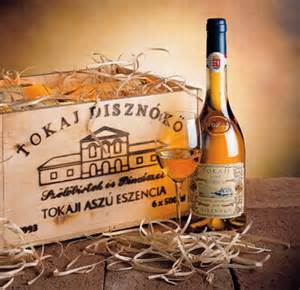
Hungary: Complex and full bodied whites (Furmine, Harslevelü and Leánika), reds (mostly Kadarka) and western varieties.  They have the coveted and world famous sweet Tokaj or Tokaji with different degrees of sweetness and prices.  This mainly, but not exclusively from the Furmine grape the skin of which thins as the grape ripens allowing the sun heat to enter the grape and evaporate the liquid inside which results in a high concentration of sugar (different form the late harvest sweet wines elsewhere).  The wine is fermented and aged in mold covered caves. You can read more about this incredible wine here:  http://en.wikipedia.org/wiki/Tokaji

Bulgaria: Low price western style wines and good white Rkatsiteli (most planted in and original from Georgia)

Romania:  Still underdeveloped industry but some very good whites and cabernets.

Moldova: Excellent growing conditions for western-style wines. Trade affected by local political and logistical issues (transport, cork availability, etc.).

Confederation of Independent States: In this group comprising Georgia, Azerbaijan , Kazakhstan and Uzbekistan, the first one has the oldest wine culture and produces really good wines of western style.  They also have good reds based on the Saperavi grape.


Posted in Meeting Abstract | Tagged , , , , | Leave a comment

Coffee and Wine

Coffee and Wine

coffeandWine

Posted in Humor | Tagged , , | Leave a comment

Oito razões para beber vinho tinto. A sua saúde agradece

VinoLogo4Oito razões para beber vinho tinto.

A sua saúde agradece


É um fato demonstrado por vários estudos: o vinho tinto, tomado de forma moderada, faz bem à saúde. Mas a Time decidiu compilar, de uma vez por todas, todos os benefícios que se podem encontrar na ingestão desta bebida. Saiba quais são as oito razões listadas pela reputada publicação.

Beber um copo de vinho é uma boa maneira de terminar um cansativo dia de trabalho, se ingerido sem exageros. Mas, se é bom para nos ajudar a descontrair, também é sabido que nos faz bem à saúde. A revista Time decidiu compilar os benefícios da ingestão moderada deste líquido para homens (2 copos) e mulheres (1 copo).

1 – Promove a longevidade. Investigadores da Harvard Medical School confirmaram que o resveratrol, um componente encontrado na pele das uvas negras, estimula a produção de uma proteína que tem benefícios anti envelhecimento.

2 – Melhora as capacidades de memorização. Novamente o resveratrol. Um estudo concluiu que as pessoas que ingeriam um suplemento desta substância evidenciavam mais capacidades para reter novas palavras e tinham melhor desempenho do hipocampo, parte do cérebro que está associada à formação de novas memórias, aprendizagens e emoções.

3 – Reduz o risco de doenças cardíacas. Um estudo de 2007 sugere que procyanidins, um composto encontrado no vinho tinto, ajuda a promover a saúde cardiovascular. O vinho produzido no sul de França e Sardenha, onde as pessoas tendem a viver até mais tarde, tem elevadas concentrações deste composto.

4 – Promove a saúde ocular. Um estudo desenvolvido na Islândia descobriu que os apreciadores de vinho, que ingeriam a bebida de forma moderada, tinham menos 32% de hipóteses de desenvolver cataratas do que os que não bebiam vinho tinto.

5 – Reduz o risco de cancro. Uma proteína na pele da uva pode ajudar a destruir as células cancerígenas, reportam investigadores da Universidade de Virginia. O resveratrol ajuda a bloquear o desenvolvimento de uma proteína que ‘alimenta’ as células cancerosas.

6 – Melhora a saúde dentária. Pesquisas recentes, de acordo com a Time, concluíram que os antioxidantes presentes no vinho podem atenuar o crescimento de bactérias da boca e potencialmente prevenir cáries. Para provar a sua teoria, os investigadores trataram um conjunto de bactérias responsáveis por doenças dentárias com diversos líquidos, verificando que o vinho tinto era o mais eficaz na sua erradicação.

7 – Ajuda a reduzir o colesterol. Algumas variedades de vinho poderão ajudar a baixar o colesterol. Participantes saudáveis a quem foi dado um suplemento de uma substância encontrada no vinho viram o seu nível de ‘mau colesterol’ baixar 9%. Os que já tinham uma elevada taxa registaram uma queda de 12%.

8 – Ajuda a defender-se da gripe comum. Graças aos antioxidantes presentes no vinho, investigadores descobriram que as pessoas que bebiam mais de 14 copos deste líquido por semana tinha menos 40% de probabilidade de contrair o vírus da gripe.

wouldyoulike

Posted in Humor, Wine - Vino - Vinho | Leave a comment

Tasting No. 164- February 23, 2015 – Wines from New York State

Club del Vino


Capri Ristorante, McLean VA

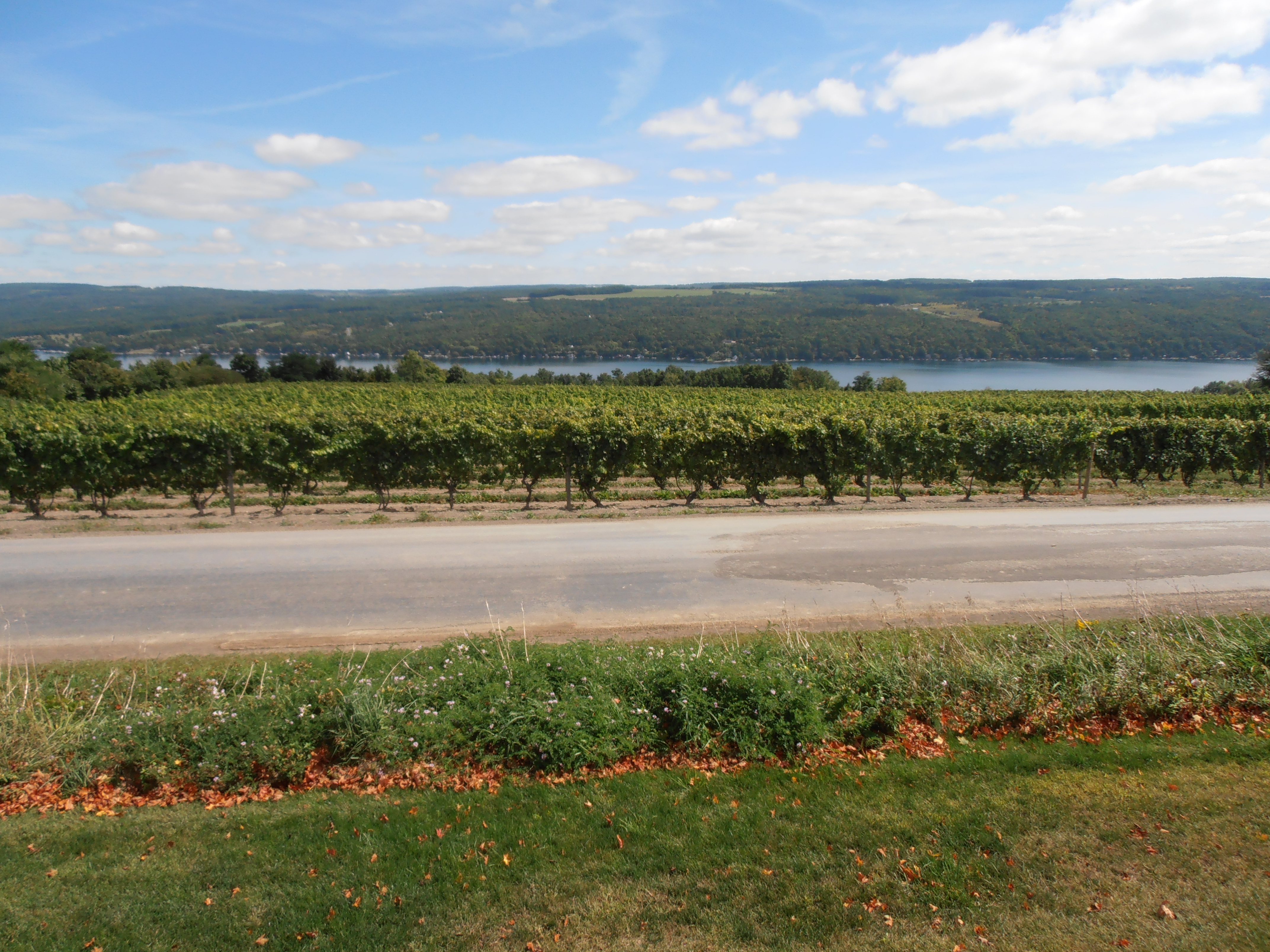
OLYMPUS DIGITAL CAMERA

Vineyards in New York State


1. Presenter and Participants

Wines presenter: Emilio Bernal- Labrada

ParticipantsMario Aguilar , Marcello Averbug, Hugo Benito,  Alfonso Caycedo,  Ruth Connolly, Clara Estrada, Jorge Garcia-Garcia, Emilio Labrada, Alvaro López, Orlando Mason, Ítalo Mirkow,  Jairo Sánchez,  Ginger Smart, Carlos E. Velez, Ricardo Zavaleta, German Zincke.

Type of Tasting: Open

2. The Wines

Clearly, there are very few New York wines available outside of the state of New York (unless one orders on-line).  New York State wineries account for only 4% of wines produced in the USA.  The number of wineries, mostly located in a climate moderated by the Finger Lakes, is rather limited, and production is insufficient to supply stores throughout the whole country.  Fortunately, it was possible to locate some wines so that the Club could sample these few.  They are not too expensive. The quality of wines from this region varies considerably, but considering the investment, it is generally worth the price. Certainly seems like something worth trying from time to time, but will leave that up to the individual members.

  1. Hazlitt Riesling 2012
  2. Wagner Dry Riesling 2012
  3. Salmon Run – Coho Red
  4. Bully Hill Meat Market Red

3. The Menu

  1. Lobster Bisque
  2. Flat spaghetti w shrimp and tomato sauce
  3.  Squid, shrimp, mussels in saffron sauce with garlic bread
  4. Filet Mignon and green vegetables
  5. Dessert, coffee

 4. Information on the Wines

(The information below has been compiled from varios internet sources) .

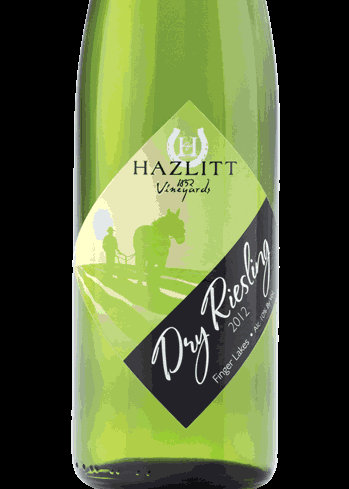
 Hazlitt Riesling 2012

2012DRYRSLING

Hazlitt Riesling is produced in the Finger Lakes region.  It has aromas of spring flowers that harmonize with sweet flavors of honey and the first peaches of summer in this well-made Riesling.  With a palate balanced with fruit, acidity and a mineral finish, this is a great selection for those partial to a sweet style, well-made Riesling.

Characteristics:  Off-dry, Honey, Peach, Mineral, Light-bodied

Hazlitt 1852 Vineyards, located on Seneca Lake, was named one of America’s Top 25 Tasting Rooms in the May 2008 issue of Wine Enthusiast magazine.  Additional information about this winery can be found here http://hazlitt1852.com/about

Alcohol:   %;  Price: $

Expert Ratings: 

Wagner Dry Riesling 2012

Wagner-Caywood-East-Riesling-Dry-2012 B

Wagner Dry Riesling is produced in Finger Lakes, New York.  This Alsatian-style Riesling is crisp and fruit driven, showing delightful notes of apple, peach, and white flowers.  The ripe nose explodes with fresh aromas of stone fruit and apple blossoms, while a crisp acidity balances everything out

Characteristics:  Crisp, Apple, Lemon, Medium bodied.


Alcohol:  %;  Price:  $

Expert Ratings: 

 Salmon Run – Coho Red

Salmon cojo Red

 Coho Red is exquisitely balanced to present an easy to drink, slightly fruity off-dry taste. Flavors of raspberries and cherries are wrapped in a soft full-bodied style making this an ideal everyday wine.

The Salmon Run Coho Red is a product of a winery known mostly as “Dr. Frank’s” established by Konstantin Frank, who came to the USA from Ukraine and set up his business with the help of a French enologist in 1962.  It´s a family-run operation now going into its fourth generation, and has won more awards since 1962 than any other NY State winery.

For further information on the family, history, varieties and awards earned by this winery visit http://www.drfrankwines.com//index.cfm  

Alcohol:   %;  Price: $

Expert Ratings: TBA

Bully Hill Meat Market Red

Buly Hill

An excellent balance of fruit and oak make this full-bodied, dry red ideal with all red meat dishes.

Bully Hill winery is located on the banks of the Keuka Lake in the Finger Lakes Region.. You can read more about the winery here: http://www.bullyhillvineyards.com/

Alcohol:  % ;  Price: TBA

Experts Ratings: TBA

4. Club del Vino Members Rating : 

Criterio para calificar: Excepcional: 96-100 puntos; Excelente: 90-95 puntos; Muy Bueno: 86-89 puntos; Bueno: 81-85 puntos; Aceptable: 75-80 puntos.

El  primer vino Blanco, fue calificado  como  Bueno con promedio de 81 puntos y el segundo vino Blanco como  Aceptable con una Media de 78 puntos; el primer vino tinto fue calificado  como Aceptable con un promedio de 75 puntos y  el segundo tinto, con un promedio de 81 puntos, fue  calificado como Bueno.  En resumen, en esta  degustacion del 2015 , segun las calificaciones del grupo, se observaron calificaciones solamente de vinos Buenos y Aceptables, pues los vinos no llenaron las espectativas esperadas.  Varios participantes indicaron que los vinos no son representativos de los mejores que se producen en el estado ni en el estado ni en la región de los Finger Lakes

Vinos degustados:

  1. 2012 Blanco Hazlitt Riesling.

Calificacion Media: 81

Desviacion Estandar: 10.0

Mediana: 86

Moda: 88

Impresion General:   Un vino acido/dulce con poco aroma y sin caracteristicas especiales.

  1. 2012 Wagner Dry Riesling.
  2.      Calificacion Media: 78

Desviacion Estandar: 8.0

Mediana: 80

Moda: 79

Impresion General:  Un vino sin sabor, sin aroma e incoloro.  Un poco dulce.

  1. 2011 Salmon Run-Coho RedDesviacion Estandar: 10.4Moda:   80
  2. Impresion General: Este vino tinto, presenta caracteristicas de los vinos dulces, es aceptable para los que gustan de tintos dulces. Color rojo bastante acentuado con muy poco aroma.
  3. Mediana: 79
  4. Calificacion Media: 75
  5. Bully Hill Meat Market RedDesviacion Estandar: 6.2Moda: 75
  6. Mediana: 80
  7. Calificacion Media: 81

Impresion General: Se encontró con poco aroma y con un sabor que puede aceptarse como agradable, tambien observa un final muy corto.

5. REGIONAL NOTES – New York Wines

OLYMPUS DIGITAL CAMERA

New York Wines – Riesling of Finger Lakes

(Source: Wkipedia) 

New York wine refers to wine made from grapes grown in the U.S. state of New York. New York ranks third in grape production by volume, after California and Washington. Eighty-three percent of New York’s grape area is Vitis labrusca (native varieties, mostly Concord). The rest is split almost equally between Vitis vinifera form Europe and French hybrids.

NY State has 9 AVAs, (Cayuga Lake AVA, Finger Lakes AVA, Hudson River Region AVA, Lake Erie AVA, Long Island AVA, Niagara Escarpment AVA, North Fork of Long Island AVA, Seneca Lake AVA, The Hamptons, Long Island AVA) and is the second  largest producer of wine in the U.S., boasting 4 wine-growing regions and 8 AVAs. New York is also one of America’s oldest commercial wine states, with a wine history dating to the 1860s. Today, vineyards are found in nearly half of its counties. New York’s wine regions reach from the shores of Lake Erie to the tip of Long Island, encompassing a wide range of terrain, climate and wine styles. Much of this production is still from native American labrusca varieties like Concord and Niagara, grown primarily for kosher wines. The balance is split between wines made from French-American hybrids, and an ever-expanding catalogue of classic vinifera varieties. The largest actual vineyard area is the Lake Erie District AVA, which extends into Pennsylvania and Ohio. 

History 

New York State’s wine production began in the 17th century with Dutch and Huguenot plantings in the Hudson Valley region. Commercial production did not begin until the 19th century. New York is home to the first bonded winery in the United States of America, Pleasant Valley Wine Company, located in Hammondsport. It is also home to America’s oldest continuously operating winery, Brotherhood Winery in the Hudson Valley, which has been making wine for almost 175 years. Furthermore, New York State is home to North America’s oldest dedicated sacramental winery, O-Neh-Da Vineyard, now operated by Eagle Crest Vineyards on Hemlock Lake in the Western Finger Lakes region. 

In 1951 Dr. Konstantin Frank emigrated from the Ukraine to New York, to work at Cornell University’s Geneva Experiment Station. Frank was hired by Cornell as a janitor at the Geneva Experiment Station. Though he was a respected viticulturalist in Ukraine, this was the only position for which his American work experience, which consisted of his being a janitor at Horn & Hardart‘s cafeteria in New York, qualified him at the time. He spent his spare time at Cornell attempting to convince his colleagues that the failures of quality wine production in New York had to do with their choice of vines. He believed that choosing the correct Vitis vinifera vines would yield great wines in the Finger Lakes. With three-hundred years of failure preceding his theory, his colleagues were skeptical. Combined with a language barrier (although Dr. Frank spoke six languages fluently, (English was not one of them) his vision would have to wait for an appropriate ear. 

Dr. Frank continued to promote his beliefs on the potential of the Vitis vinifera in New York until Charles Fournier, a French Champagne maker and president of nearby Gold Seal Vineyards took heed and hired him. The two shared the common language of French as well as a passion to plant Vitis vinifera in the Finger Lakes region. A decade later, Dr. Frank was producing quality wines from such Vitis vinifera vines such as Riesling, Chardonnay, Pinot noir, Gewürztraminer, and Cabernet Sauvignon. This set the stage for further plantings of Vitis vinifera vines in New York, aided by the boost to the New York wine industry given by the New York Farm Winery Act of 1976, which eased the process of opening a farm winery. Wineries have worked to choose the proper varietals that grow well in the unique terroir of the state. The Finger Lakes region would eventually become the central area of New York’s wine industry in the 20th century.

In 2011, the New York wineries were given another boost when Governor Andrew Cuomo signed the Fine Winery Law into law, allowing each farm winery to operate up to 5 tasting rooms as a single entity, rather than requiring a separate license for each. The act also streamlined the paperwork involved in direct shipping wine to customers, and allowed wineries to use custom-crush facilities or rent equipment and space from existing wineries, rather than requiring wineries to own all their own equipment. 

Wine grapes 

Vitis vinifera, Riesling grapes are used to make some of the highest quality wines in New York, others are made from French hybrids, American hybrids and Vitis labrusca

The range of wines made in New York include Riesling, Seyval blanc, Chardonnay, Pinot noir, sparkling wines, and Cabernet Sauvignon. The Vitis vinifera varieties account for less than 10% of the wine produced in New York. Important American hybrid grapes grown in New York include Catawba, Delaware, Niagara, Elvira, Ives and Isabella. French hybrid grapes grown in New York include Aurore, Baco noir, De Chaunac, Seyval blanc, Cayuga, Vidal and Vignoles. Vignoles is particularly used in late harvest wines and ice wines. Wine made from Chardonnay grown in the Finger Lakes AVA is noted to take on characteristics of leaner styled Burgundy white wine. In total there are 34 most known varieties that grow in New York:  Aurore, Baco noir, Cabernet Franc, Cabernet Sauvignon, Catawba, Cayuga, Chambourcin, Chancellor, Chardonnay, Chelois, Chenin blanc, Colobel, Concord, De Chaunac, Delaware, Diamond, Elvira, Frontenac, Gewürztraminer, Isabella, Ives noir, Leon Millot, Marechal Foch, Melody, Merlot, Niagara, Pinot blanc, Pinot gris, Pinot noir, Riesling, Rougeon, Sauvignon blanc, Seyval blanc, St. Vincent, Steuben, Traminette, Vidal blanc, Vignoles, Vincent 

Main Growing Regions 

There are four major wine-growing regions:  Lake Erie AVA on the western end of the state, the Finger Lakes AVA in the west-central area, the Hudson River Region AVA in eastern New York, and the eastern end of the Long Island AVA. In 1976, when the Farm Winery Act was passed, the Finger Lakes and Long Island regions had 19 wineries. By 1985, there were 63 wineries, and now the regions hold approximately 212 wineries.Wine Regions’ Soils and Climate. 

The wine regions’ soils originated from the last glacial advance which left gravel and shale type soils with heavy clay deposits in the Finger Lakes region and sandy soil in the Long Island region. The climate differs amongst the regions based on the Atlantic Gulf Stream and the numerous bodies of water and mountainous regions around the state. The annual precipitation ranges from 30 inches (76 cm) to 50 inches (127 cm). The growing season in the Lake Erie and Finger Lakes regions ranges from 180 to 200 days a year, while on Long Island, the season is extended to 220 days and the humidity is higher and the fall precipitation is somewhat higher as well. 

The Adirondack Coast Wine Trail is New York’s newest wine region. Established in 2013 the region’s wineries successfully argued the regions unique terroir, with unique glacial soils, the weather systems which flow off the Adirondack Mountain range and flow down over Lake Champlain, and the effect of one of the worlds oldest reefs in the Lake itself, make this area deserving of its own designated wine trail. The region was consistently overlooked as a potential grape growing region until one of the budding wineries, Elfs Farm Winery & Cider Mill, came out of no where to win “Specialty Winery of the Year” at New York’s largest wine competition. Receiving rave reviews even though no one in attendance was familiar with this region, the press in attendance gave this startup wine region the legitimacy it was seeking.

Posted in Meeting Abstract | Tagged | Leave a comment

Tasting No. 163- February 2, 2015 – Wines from Victoria and Queensland – Australia

Club del Vino


Capri Ristorante, McLean VA

 Australia Logo

1. Presenter and Participants

Wines presenter: Clarita Estrada y Jorge García

ParticipantsMarcello Averbug, Hugo Benito,  Alfonso Caycedo,  Ruth Connolly, Clara Estrada, Jorge Garcia-Garcia, Emilio Labrada, Orlando Mason, Ítalo Mirkow, Alfonso Sánchez,   Jairo Sánchez,  Ginger Smart, Carlos E. Velez, Ricardo Zavaleta, German Zincke.

Type of Tasting: Open

2. The Wines

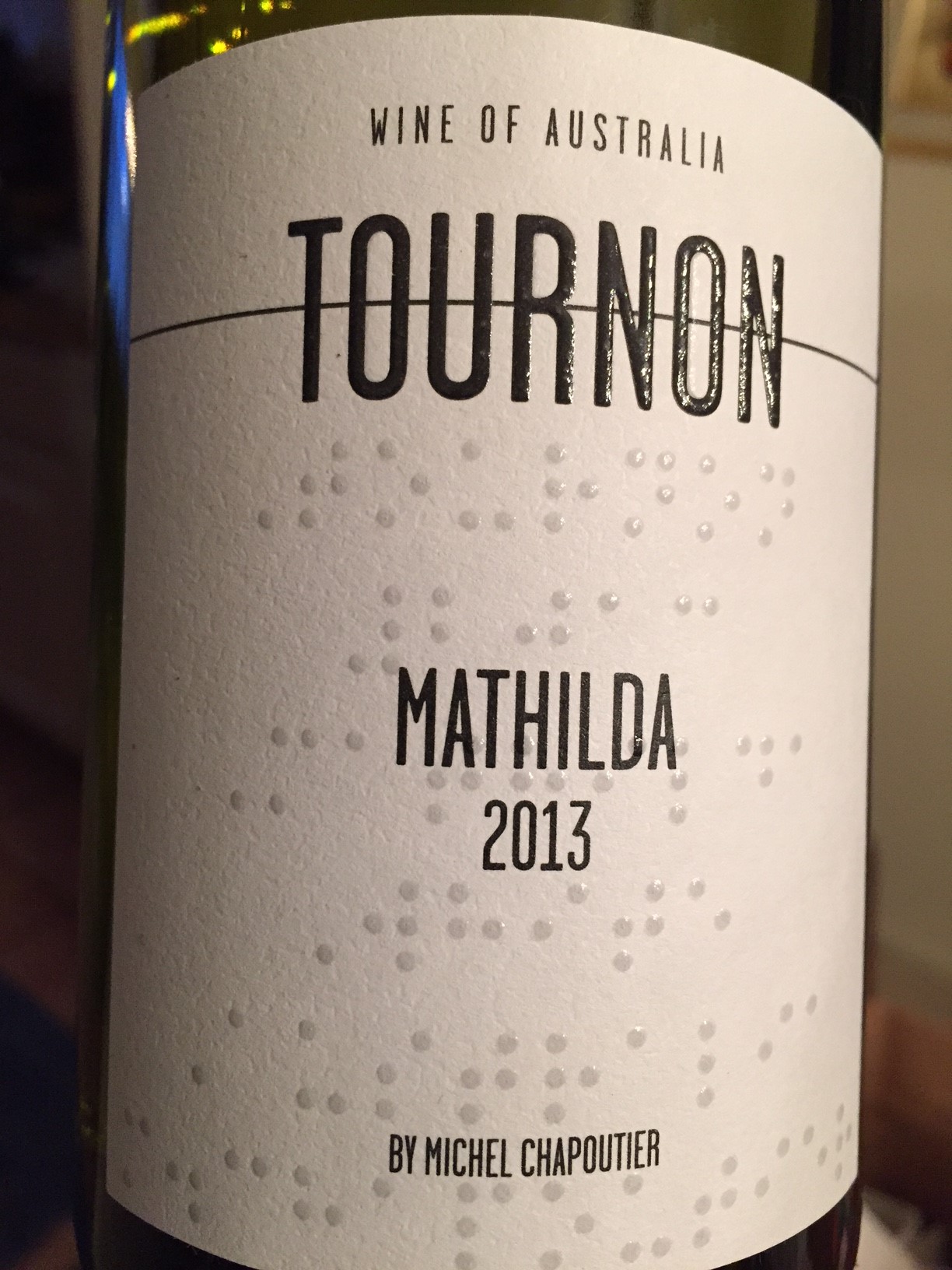
  1. 2013 Chapoutier Tournon Mathilda White, Victoria Pyrenees, – Mostly Viognier with a touch of Marsanne
  2. 2012 Domaine Terlato & Chapoutier Shiraz-Viognier, Central Victoria
  3. 2012 M. Chapoutier Domaine Tournon “Shays Flat Shiraz, Pyrenees, Victoria
  4. 2001 Red Edge Cabernet Sauvignon, Heathcote, Victoria

3. The Menu

  1. Tegamino di Cozze (Mussel’s sautéed in a light tomato sauce served with toasted bread)
  2. Cotechino con Lenticche (Pork Sausages with Lentils)
  3. Medaglioni di Manzo (Beef Medallions)
  4. Desert or Coffee

4. Information on the Wines

(The information below has been compiled from varios internet sources) .

 2013 Tournon Mathilda – White
IMG_2791

Stacks a rich parfait of spicy pear and grapefruit flavors over lively acidity, stretching the structure into a supple wrapping. Impressive for the purity and precision of the flavors. Focusing on the unique terroir of the Victoria Pyrenees, the wines of Domaine Tournon reflect the cooler climate of Victoria and exhibit restraint and nuance in way no often associated with Aussie wine. This beauty is full of expressive flavor and a great pair to many foods. Mostly Viognier [85%] with a touch of Marsanne [15%] for added depth and richness.

.

Alcohol:   15 %;  Price: $

Expert Ratings: 

2012 Domain Terlato &Chapoutier Shiraz- Viognier
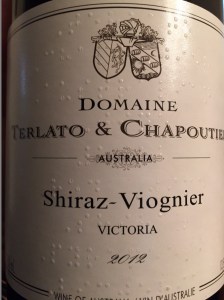
IMG_2780

The Winery. Domaine Terlato & Chapoutier combines the vision of Anthony J. Terlato, the founder of Terlato Wines International, and Michel Chapoutier, the Rhône grower and vintner whose compelling wines have been exalted by critics around the world. The origin of the Terlato & Chapoutier partnership in Australia dates back to 1998, when Chapoutier enthusiastically told Terlato about a top vineyard site in Australia. Located on an eastern-facing slope on the southern edge of the Pyrenees Hills in western Central Victoria, the region’s soil could produce “great wines,” according to Chapoutier. As Terlato recalls at the time, “When Michel asked me to join him, I found it was impossible to say no.”

The result of their collaboration is the Malakoff Vineyard, 500 acres (60 acres planted) located in the Pyrenees region of Victoria, Australia.  The estate wine that comes from there, lieu dit Malakoff Shiraz, is made in the Chapoutier tradition: unfiltered and unfined. When wine critic Robert M. Parker sampled a barrel tasting of the 2004 vintage, he called it a “lusty Australian blockbuster,” and awarded it 90-92 points.

Another impressive offering from the Terlato & Chapoutier union is the Shiraz-Viognier. It’s also uniquely blended, using the Côte Rôtie tradition of combining 5% Viognier with Syrah, which produces a spicy, aromatic wine.

“We are not interested in making wines that are anything less than beautiful and provocative,” Chapoutier says. “The vineyard is young but greatness is possible.”

The Wine.  Syrah and Viognier form an unlikely partnership (a white-wine grape and a red-wine grape), but a highly successful one nonetheless. The blend first appeared in the northern Rhone Valley, and has now spread to various parts of the New World, most obviously California and Australia. In Australia the Shiraz-Viognier blend is now very well established. It is produced widely in both South Australia (Barossa Valley and McLaren Vale) and Victoria (Yarra Valley), and is increasingly common in New South Wales and Western Australia. In these warmer climes, the super-ripe Viognier adds notes of apricot and ripe peach to the spicy, plummy, full-bodied Shiraz.

The grapes are destemmed and fermented in cement or stainless steel tanks. The maceration lasts 3 weeks in order to give the wine the good tannin structure required for good aging and stability. Some of the Viognier grapes were added during fermentation to fully integrate the flavor and tannins.  The wine is aged in tanks with micro-oxygenation. Bottled 10 to 12 months after the harvest.

Winemaker’s Notes  #98 Wine Spectator Top 100 of 2014,  The 2012 Shiraz-Viognier has deep, intense ruby color and opens up to aromas of vibrant red plum and fruit wood smoke. On the palate, m mouthfilling bright plum and red berry fruits, full bodied but smooth. A spicy Shiraz from the vineyards of Central Victoria is brightened by a boost of Viognier for aroma and balance, as is often practiced in France’s most highly regarded appellation of the Northern Rhône Valley, Côte Rôtie. This wine is a collaborative effort between two renowned wine families: Chapoutier from the Rhône Valley in France, and the Terlato family of Napa Valley in California.

Alcohol:  14 %;  Price:  $

Expert Ratings: 

2011 Tournon Perenees Shiraz – Shays Flat Vineyard

IMG_2783-1

The Wine.  Grapes are harvested at maturity, avoiding over maturation Upon harvest rapes are destemmed and fermented in concrete or stainless steel tanks. A long maceration (from 3 to 5 weeks) and a gentle work on the marc allow the extraction of fine and elegant tannins.  The wine is aged in French oak barrels for 12 months. A small proportion of the wine is aged in tanks to preserve the freshness of the flavors.

Dark red color.  Complex nose of black fruits (cherry, blackberry) with hints of tobacco (havana cigar). Taste of black fruits and liquorice with supple and delicate tannins  Ageing potential: 5+ years.

Alcohol:  13.5 %;  Price: $

Expert Ratings: TBA 

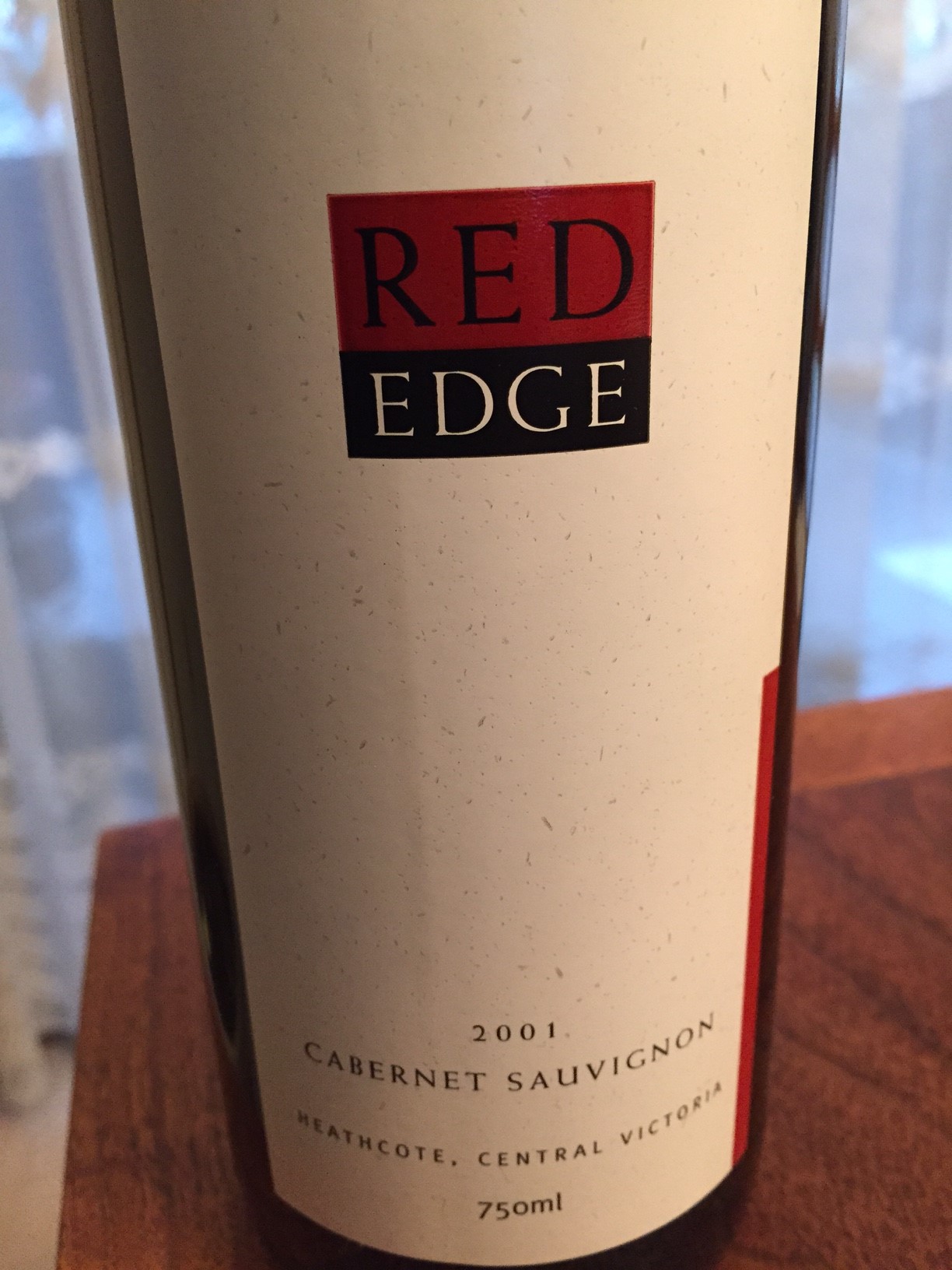
2001 Red Edge Cabernet – Heathcote
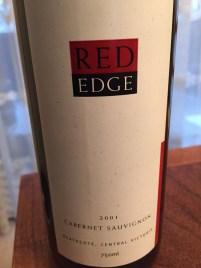
IMG_2772

The Winery.  Heathcote is located in the center of Victoria, Australia’s southernmost mainland state, approximately 100 kilometers north of Melbourne. The climate is continental, with warm to hot and generally (very) dry summers, and cool and (sometimes) wet winters). The normally cold nights of autumn help in the retention of natural acidity as the grapes ripen (important in the winemaking process), and the dry summer/autumn climate ensures healthy grapes naturally free of disease. The vineyards are located on a slope overlooking the town of Heathcote, with a north easterly aspect at an altitude of 260 metres. Eucalypt forests border the vineyard on two sides.

Planted in 1971, the original 2 hectares of Shiraz and Cabernet Sauvignon vines grow on a strip of 500 million year old Cambrian soil- some of the oldest earth on the face of the planet. It’s glorious, vibrantly red, deep, free-draining, mineral rich, eminently favorable to the vine, particularly Shiraz. Further plantings on adjacent blocks have expanded to 14 hectares with some other classic European varieties. The vines are all dry grown with yields of less than 2.5 tonnes per hectare. Individual vineyard wines are made from estate grown fruit only. The vineyards are hand pruned, handpicked, and the wines hand made on site in our dedicated winery.
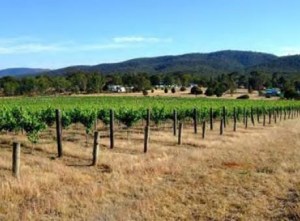
Heathcote

Heathcote vineyrds

The Wine. 

The wines are made with minimal intervention, allowing the wine to proceed through its natural course, making sure it reflects the full expression of terroir, and as such the wines reflect both a place and a time. Partial whole bunch maceration, wild yeast fermentation, hand plunging in small open top fermenters, basket pressing, partial barrel fermentation, racking by gravity, and no fining or filtration, are all very traditional artisan winemaking strategies employed.

After picking in mid-autumn, natural fermentation on skins takes generally 7 to 14 days, after which the must is pressed directly to small oak barrels. The new wine matures in these same barrels for 8 months where it undergoes a natural secondary fermentation, after which time it is racked into clean barrels in late Spring, for a further period of barrel aging. The wines are racked again a couple of times to enhance clarity, before being bottled after 12 months. These techniques continue and build upon our philosophy of creating wines that reflect the unique Cambrian soil, aspect and climate of Heathcote, wines from a single vineyard in a premium area to equal the best of their type in the world.

Very deep red/purple, opaque colour. Bouquet of cassis, dark berries, some mintiness and chocolate. On the palate big, ripe and intense sweet fruit, chewy tannin texture.  Somewhat more restrained than the Shiraz at this stage a wine that will continue to evolve with cellaring for at least a decade.

Alcohol: 14  % ;  Price: TBA

Experts Ratings: TBA

4. Club del Vino Members Rating : 

Criterio para calificar:  Excepcional: 96-100 puntos; Excelente: 90-95 puntos; Muy Bueno: 86-89 puntos; Bueno: 81-85 puntos; Aceptable: 75-80 puntos.

Resumen: El  vino Blanco, fue calificado  como  Muy Bueno con promedio de 88 puntos; el primer tinto también  Muy Bueno con una Media de 88 puntos; el Segundo tinto fue calificado lo mismo, como Muy Bueno con un promedio de 89 puntos, el tercero y ultimo tinto, con un promedio de 92 puntos, fue un Excelente vino.  En resumen, esta primera degustación del 2015 , fue todo un éxito pues todos los vinos fueron muy bien calificados y desde luego toda una buena experiencia, como lo explican los resultados.

Vinos degustados:

2013 Chapoutier Tournon, Mathilda White,.

Calificacion Media: 88

Desviacion Estandar: 2.5

Mediana: 89

Moda: 89

Impresion General:   Este vino fue preparado con un 85% de uvas Viognier y un 15% de Marsanne que le da un profundo y rico sabor. También impresiona mucho su pureza y precisión de sus sabores de especies y pomelo. Considerado como un vino Terroir de Victoria Pyrenees por la perfección y cuidado para su elaboración, que permiten obtener como resultado un delicioso vino, muy bien aceptado , con mucho balance y sabor.

2012 Terlato y Chapoutier Shiraz-Viognier, Domaine Terlato y Chapoutier.

Calificacion Media: 88

Desviacion Estandar: 3.3

Mediana: 88

Moda: 88

 Impresion General:  Presenta un intenso color rubi, con un fuerte aroma a frutas, ademas de aromas a madera quemada, lo mismo que un buen sabor a ciruelas y berrys. Resulta un vino  de elegante y refinado estilo,  balanceado y muy aceptado  por su agradable sabor.

2011 Say’s Flat Shiraz

Impresion General: Este Segundo vino tinto, presenta características especiales respecto a su preparación, fermentando los frutos en tanques de concreto o de acero con una larga maceración por 3 a 5 semanas con lo que, se logra una extracción de finos y elegantes taninos. Presenta un complejo aroma a frutas con un ligero acento a Tabaco y un color rojo oscuro. Bastante agradable y balanceado.

Desviacion Estandar: 1.9

Moda:   90

Mediana: 89

Calificacion Media: 89

2001 Red Edge – Cabernet Sauvignon , HeathcoteDesviacion Estandar: 1.2Moda: 91

Mediana: 91

Calificacion Media: 92

Impresión General: Se califico como Excelente y el mejor vino de esta degustación, prueba de esto son las calificaciones obtenidas.  Es una expresión de Terroir que en su proceso se usa la mas mínima intervención, dejándolo seguir su curso natural y aplicándole una técnica especial. Su impresión es de un sabor muy agradable, aroma especial que lo convierte en un excelente vino, muy bien balanceado y estupendo final muy especial.

5. REGIONAL NOTES

Australian Wines.  Those interested in reding more about Australian wines please click here for Tasting No. 151 and go to the end of it: https://clubvino1.com/?s=151

This section includes information on Domaine Touron as well as an overview of the Victoria and Queensland regions.

Domaine Tournon. 

Pyrenees is an Australian wine region in the south-eastern state of Victoria. Dotted with high-quality boutique wineries, the region is the source of many cooler-climate styles of Shiraz, Cabernet Sauvignon, Pinot Noir, Chardonnay and Sauvignon Blanc. In this way, Pyrenees mirrors the historic Grampians region lying immediately to the west. One topographical difference is that – despite the name ‘Pyrenees’ – the hills here are actually much lower and more gently sloping than those to the west, and certainly nothing like their namesake in southern France and northern Spain. The hills in question are the very western edge of the Great Dividing Range, which runs the length of Australia’s east coast and then veers westwards into Victoria.

The Pyrenees GI (Geographical Indication), created in June 2000, covers a rectangular area between St. Arnaud in the north and Lexton in the south – a distance of about 50 miles (80km). Vines have been planted in the region for more than 150 years, although Pyrenees showed little consistency as a producer of high-quality wines until the mid to late 20th century. The finer vineyards are found among the southern hills, near Mount Avoca, and sit at relatively low elevations – between 655 and 1475ft (200–450m).  See map here http://www.wineaustralia.net.au/en-CA/blog/blog/~/media/0000Apluswines%20site/Canada/VIC%20art.ashx

The climate here is much drier than in the coastal areas to the south, but it does not have the intense heat associated with Victoria’s most northerly vineyards in the Murray Darling wine region. This means that the Pyrenees growing season enjoys high sunshine intensity and duration, but without the summer afternoon burn which can cause vines to shut down entirely. Irrigation is essential as a safeguard against extended periods without rain

In 1997, true to his pioneering spirit, Michel Chapoutier set out to explore the terroirs of the oldest continent. He wanted to meet people, people like him with a passionate interest in bringing out the true character of vines. A matter of convictions, too, prompting discovery and observation. He found land awaiting its revelation. Michel Chapoutier’s aim is to invent properties, not to follow the example of others. Michel Chapoutier buys land and joins forces with major winemaking families, playing on their complementary know-how and experience The result is exceptional Shiraz wines, displaying great elegance and mineral purity. In 2002 he joined forces with Ron and Elva Laughton (Jasper Hill) in central Victoria, and at Heathcote, north of Melbourne, on a very unusual, early Cambrian soil. He has also worked with Rick Kinzbrunner on the Giaconda vineyard at Beechworth, in northeast Victoria, on a granite soil. After a brief experimental joint venture with his US importer (Terlato & Chapoutier), Maison M. Chapoutier bought two other Australian vineyards (Shays Flat and Landsborough) in the Victorian Pyrenees and set up the fully owned Domaine Tournon.

The Qeensland and Victoria Wine Regions – Australia

Queensland australia-wine-regions-map
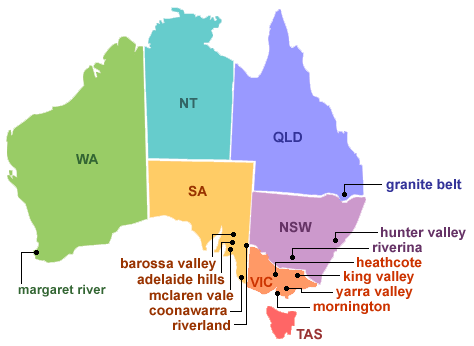
Queensland has about 1500 hectares of vineyards throughout the State. The majority concentrates in the southeast corner of the State. Queensland’s wine industry was not very important until he late 60′s when Ballandean Estate was established in what is now the State’s best known wine growing region, the Granite Belt. The Granite Belt, with altitudes of 700 to 1250 meters above sea level, has a similar temperature range to central Victoria and can produce snow in Queensland. Several Queensland regions producing wines are Brisbane and Scenic Rim, Darling Downs, Gold Coast, Hinterland,   North Burnett,  Somerset Valley,  South Burnett,  Sunshine Coast  and Western Downs and the famous Granite Belt,

 Granite Belt Region. Queensland was considered too close to the tropics and too hot to produce quality wines. But perceptive grape growers and winemakers noted that in the higher altitudes of the ranges running inland, there were cooler climates and rich volcanic soils. The Granite Belt region, being 700 to 1000 meters above sea level does have a significant cooling effect and allows the production of some stunning wines as the grapes of Cabernet Sauvignon, Shiraz, Chardonnay and Viognier grow through warm springs and summers and relatively cool autumns.  The region is called the ‘Granite Belt’ due to the nature of the terrain. Large granite boulders pepper the landscape, sometimes causing problems during planting. The region’s Geographical Indicator as a wine region in Australia was formally registered in 2000. This area encompasses the high plateau of granite based soils in the southern downs of Queensland.

  • The soil is very porous; sandy and grey-brown in colour with light clay at depth.
  • The drainage is good and the soil is reflective due to the quartz content.
  • The Granite Belt altitude creates distinctive seasons with cold frosty winters and warm summers. The Granite Belt is one of the highest vineyard regions in Australia.
  • The area has a mean January temperature of 20.6 degrees Celsius, and a cooler ripening period ideal for the growing of premium grapes.
  • The region’s Heat Degree Days (HDD) reading of 1703 is similar to the Barossa Valley (South Australia), Margaret River (Western Australia) and better/warmer Bordeaux vintages in France, for example 1990 and 2000.

Victoria

In the 1880’s Victoria was Australia’s largest wine producing state. Phylloxera outbreaks put a temporary halt to production in many areas, which subsequently saw a resurgence of interest in the 1970’s. Victoria is the second smallest state but is home to more individual wineries than any other state in Australia. It also has the greatest diversity of regional climate, which allows for the production of virtually every imaginable wine style from fine sparkling wine, high quality Pinot Noir, savoury Shiraz and the historic fortified wines of Rutherglen.

With over 600 wineries, Victoria has more wine producers than any other Australian wine-producing state but ranks third in overall wine production due to the lack of a mass bulk wine-producing area like South Australia’s Riverland and New South Wales‘s Riverina. Viticulture has existed in Victoria since the 19th century and experienced a high point in the 1890s when the region produced more than half of all wine produced in Australia. The phylloxera epidemic that soon followed took a hard toll on the Victoria wine industry which did not fully recover till the 1950s. Single varietal wines produced in the region include the Australian mainstays of Shiraz and Chardonnay as well as Viognier, Pinot Noir, Graciano and Tannat. The style of wine ranges from full body red wine to Madeira-like fortified wines such as Liqueur Muscat.

Early in Victoria’s wine history, most of the wine industry was settled in the cool southern coastal regions around Melbourne. At the turn of the 20th century, focus began to move to the warmer northeastern zone around Rutherglen. The region began to establish a reputation for its sweet, fortified wines made from late harvest grapes that are shriveled to near raisins and then spend several months (or years) aging in oak barrels stored inside a hot tin shed that acts like an oven. The unique nature of these Liqueur Muscat and Liqueur Tokay helped sustain this part of the Victoria wine industry till the country wide wine renaissance of the 1950-1960s. 

Since the 1960s, Australia’s labeling laws have centered on an appellation system that distinguishes the geographic origins of the grape. Under these laws at least 85% of the grapes must be from the region that is designated on the wine label. In the late 1990s more definitive boundaries were established that divided Australia up into Geographic Indications (GI) known as zones, regions and subregions. The wine zones of Victoria are Central Victoria, North East Victoria, North West Victoria, Western Victoria, Port Phillip and Gippsland.

Gippsland. Is one of the newest and least developed wine regions in Victoria. Serious planting did not begin till the late 1970s. Located to the east of the Mornington Peninsula, the region is current dominated with Pinot noir and Chardonnay plantings. Sparkling wine has shown some potential here with the Chardonnay and Pinot noir grapes showing a bit of spiciness that adds complexity to the wine. 

Central Victoria. The region is known primarily for an Australian Shiraz-Viognier made in Victoria through a collaboration with Terlato and Chapoutier. It includes several sub–regions:

  • Heathcote is known for its temperate climate and 500 million year old Cambrian soil that seems particularly well suited for producing deeply colored, rich Shiraz wines with alcohol levels around 14-15%.
  • Goulburn Valley, with its sub region Nagambie Lakes, is the oldest continuously producing Victorian wine region and has been producing Shiraz, most notably at Tahbilk, since 1860. Marsanne, Cabernet Sauvignon and Chardonnay are also widely planted.
  • Strathbogie Ranges is one of Central Victoria’s cooler wine region and more closely resembles the North East Victoria regions of Alpine Valley and Beechworth. The region is known primarily for its Chardonnay, Riesling, Gewürztraminer, Pinot gris and Viognier. 

North East Victoria. Includes several important sub-regions:

  • Glenrowan & Rutherglen are known for their full-bodied red wines made from Shiraz and Durif as well as their sweet fortified wines. The continental climate of the area is marked by very warm summers and moderate evenings. Rainfall is very low and spring frost pose a viticultural hazard. Closer to Mount Buffalo, the vineyards located in nearby Ovens Valley receive more rainfall and cooler temperatures. The first record of plantings in this area date to 1851 and by the 1870s, this was Australia’s largest wine producing area.
  • King Valley is known for its wide range of planted grape varieties including Graciano, Marzemino, Mondeuse, Petit Manseng, Sagrantino, Saperavi and Tannat.The region is located on more mountainous terrain and receives varying degrees of rainfall depending on the location. The Brown Brothers Milawa Vineyard was established here in 1889.North West Victoria. The North West Victoria zone is the most similar Victorian wine region to South Australia’s Riverland in that generous irrigation sources provides for high yielding production. Lindemans Bin 65 Chardonnay was first produced in this region, and it produces some of the grapes for Yellow Tail.

Western Victoria. The geography of Western Victoria covers flat pastures and granite escarpment. With low annual rainfall, the area relies heavily on irrigation. Springtime frost is a significant viticulture hazard as is ripening during the cool summers. Winters are normally cold and wet. The far southwest of the west has more of a maritime climate.

  • Henty has a cooler climate than the Grampians and produces more white wines and a little Pinot noir. The main varieties are Chardonnay, Riesling, Semillon, and Sauvignon blanc.
  •  Grampians, with its sub region Great Western, is generally a cooler climate red wine producing region known for jucy berry fruit Shiraz and Cabernets with distinctive eucalyptus and spice. The area has experienced some success with Riesling and sweet sparkling wine.
  • Pyrenees is known for its Shiraz and Cabernet Sauvignon that are similar to the wines produces in Heathcote and Bendigo. Sauvignon blanc from this region has a distinctive flinty dryness that is found underneath layers of tropical fruits. Sangiovese, Viognier and Pinot gris have started to expand plantings.

Port Phillip.  The Port Phillip zone includes the five regions clustered around Melbourne. The climate of this more closely resembles Bordeaux than in other Australia wine regions yet it is more thoroughly planted with Burgundy wine varieties like a Pinot noir and Chardonnay. Other areas are planted with Shiraz. This region incudes several Goegrafical Indications (GI):

  • Yarra Valley is a cooler climate sub-region and is known primarily for its Chardonnay and Pinot noir. The area has been cultivating a reputation for quality wine for over a century. In recent times, the sparkling wine industry has started to take notice with Moët et Chandon opening up Domaine Chandon Australia and producing wine under the Green Point label.The first vineyards were believed to have been planted here in the late 1830s and by the end of the 19th century, wines from the Yarra Valley were winning gold medals at European wine competitions. In the 1970s, the region experienced it own renaissance and has leveraged its close location to Melbourne to become a tourist destination for wine. The warmer climate of the Valley has shown itself suitable for Shiraz and Cabernet and has shown promise for Roussanne, Marsanne, Sauvignon blanc and Pinot gris. The Yarra Valley is home to more than 80 wineries, ranging from small, family-owned operations to large estates. The region is renowned for producing Australia’s finest pinot noir and sparkling wine, along with a range of other cool-climate wines. It was Victoria’s first planted wine region back in 1838.
  • Macedon Ranges is known for its Cabernet Sauvignon and Merlot wines.The area sits on predominately granite based soils that has shown some promise for the sparkling wine varieties of Pinot noir and Chardonnay. Some Shiraz wines from this region have developed cult status due to their reputation for powerful fruit, spice and soft tannins.
  • Sunbury is located north-west of Melbourne and has been producing Shiraz since 1872. Is known particularly now for its Shiraz-Viognier blends that are more terroir driven than New World.
  • Geelong is heavily influenced by nearby Port Philip Bay and has been achieving international recognition for the quality of its Pinot noir, Chardonnay, Riesling and Viognier. As one of mainland Australia’s most southernly wine regions, vineyards in the Geelong enjoy a long growing season influenced by maritime conditions. This helps the grape develop a complexity of flavors and depth in character for the resulting wines.
  • Mornington Peninsula is located south across Port Philip Bay from Geelong and shares a similar reputation for Pinot noir and Chardonnay but has been developing its plantings of Pinot gris. The area has a marginal climate that is influenced by maritime conditions across the hilly terrain. There are five “unofficial” sub districts on the Peninsula-Dromana, Main Ridge, Merricks, Moorooduc and Red Hill. The region is known for its medium bodied, dry wines and sparkling wines that show structure and complexity. The still wine versions of Chardonnay reflect a diversity of styles, all typically unoaked, from more citrus to more tropical fruit flavors.

Posted in Meeting Abstract | Tagged , , , , | Leave a comment

Keep Calm

_keep-calm-and-drink-wine

Posted in Humor, Wine - Vino - Vinho | Tagged , | Leave a comment

Tasting No. 162- December 15, 2014 – White Wines Only

Club del Vino

Capri Ristorante, McLean VA

Velas Navidad

1. Presenter and Participants

Wines presenter: Hugo Benito

Participants: Mario Aguilar, Marcello Averbug, Hugo Benito, Rolando Castaneda, Alfonso Caycedo,  Ruth Connolly, Clara Estrada,   Jaime Estupiñan, Jorge Garcia-Garcia, Emilio Labrada, Alvaro Lopez, Orlando Mason, Ítalo Mirkow, Alfonso Sanchez,  Raúl Sanginetti, Ginger Smart, Pedro Turina, Carlos E. Velez, Ricardo Zavaleta, German Zincke

Type of Tasting: Blind

2. The Wines

All the wines selected for this tasting are whites as follows:

  1. 2012 – Emmolo  Napa Valley-Sauvignon Blanc
  2. Abadia de San Campio – Rias Baixas – Albariño
  3. Champagne Montaudon Grande Rose

3. The Menu

1- Mussels in saffron sauce

2-Angel hair and lobster sauce

3-Arugula salad

4 -Loin Medallions in mushroom sauce

4- Coffee and dessert

4. Information on the Wines

(The information below has been compiled ferom varios insternet sources)

 Champagne Montaudon Grande Rose  

Montaudon

Winemaker’s Notes

Appearance: Very lively deep soft pink colour with a multitude of fine bubble.
Nose: Expressive note – signature of red fruit (raspberry) and more generally fresh fruit.
Palate: The rounded clear effect is followed by typical red berry flavors (raspberry and redcurrant). Finally, this rose champagne shows its character in a feminine style.

Alcohol:  12.5 %;  Price: $

Expert Ratings: Wine Spectator – 90 pts. “Showing lovely balance, this is fresh and aromatic, with a lightly frothy bead, a smoky undertow and black currant, dried cherry, biscuit and candied ginger flavors. Drink now through 2016.”

2012 Emmolo  Sauvignon Blanc, Napa Valley

emmolo-sauvignon-blancEmmolo’s Rutherford property was originally planted with vines in the 1920’s by winemaker Jenny Wagner’s great-grandfather, and the wines are made in the winery that the family opened in 1934. The 2012 Sauvignon Blanc was vinified partially in seasoned French oak and partially in stainless steel with weekly lees stirring. From the winemaker: “An elegant and refined style of Sauvignon Blanc that is subtle and balanced, with minerality and bright natural acidity. On the nose, aromas of citrus, iron, wet stone and a hint of D’Anjou pear tempt your senses, while a crisp lightness, balanced acidity and underlying notes of fleshy grapefruit and lime zest please the palate. The significant minerality and soft body rounds out the wine. This Sauvignon Blanc was made to pair with food, yet is very versatile.”

Winemaker’s Notes.  An elegant and refined style of Sauvignon Blanc that is subtle and balanced, with minerality and bright natural acidity. On the nose, aromas of citrus, iron, wet stone and a hint of D’Anjou pear temp your senses, while a crisp lightness, balanced acidity and underlying notes of fleshy grapefruit and lime zest please the palate. The significant minerality and soft body rounds out the wine. This Sauvignon Blanc was made to pair with food, yet is very versatile. Bottled using a Guala twist top in lieu of cork.
Jenny Wagner, Winemaker

Read more here: http://emmolowines.com/tn/2012EmmoloSauvBlanc.pdf

Alcohol:  %;  Price: $

Expert Ratings: TBA

Abadia de San Campio Albariño  – Rias Baixas

Abadia de san CAbout the Winery. Founded in 1989, Terras Gauda is a leader in the vinification of premium Albariño grapes in the Rosal valley of DO Rias Baixas in northwest Spain. Albariño is wisely blended with autochthonous varieties such as Loureira and Caiño Blanco, an heirloom white variety that the winery saved from extinction.

Wine Description

This 100% Albariño grapes for the Abadia de San Campio 2010 were selected from the Goian vineyards and picked during the last two weeks of September. The must extracted from these grapes ripened to perfection, giving the wine great varietal strength that is expressed by its breadth and balance of flavors. This wine was sourced from vineyards 150 to 450 feet above sea level with an average annual temperature of 59°F, very little frost, and abundant rainfall.

Tasting Note

Albariño can ripen to peachy, even apricot notes in some of the subregions of Rías Baixas, especially the warmer sites such O Rosal. San Campio offers a citrus- and mineral-focused wine with a delightful, almost fat character, but it never loses the delightful mineral tanginess of the Albariño grape. Drink now or over the next several years.

See more at: http://winesfromspainusa.com/wine/abadia-de-san-campio-albarino#sthash.jNJyPwEA.dpuf

The Wine

Alcohol: 12.5 %;  Price: $30

Expert Ratings: TBA

4. Club del Vino Members Rating : 

Criterio para calificar:

Excepcional: 96-100 puntos; Excelente: 90-95 puntos; Muy Bueno: 86-89 puntos; Bueno: 81-85 puntos; Aceptable: 75-80 puntos.

El primer vino Blanco, fue calificado  como  Muy Bueno con Average de 88 puntos; el Segundo Blanco tambien como Muy Bueno con una Media de 86 puntos. Se degustaron solamente dos vinos Blancos y el Champagne Montaudon Grande Rose el cual no fue calificado pero si,  bien aceptado.  En resumen, este Festival de Blancos permitio para todos, un buen ejercicio para el criterio de calificacion y una buena experiencia, como lo explican los resultados.

Vinos degustados:

  1. 2010 Albarino, Abadia de San Campio – Rias Baixas.

Calificacion Media: 88

Desviacion Estandar: 2.7

Mediana: 88

Moda: 88

Impresion General:  Vineria que fue fundada en 1989 y fue un lider en la preparacion para el premio de uvas Abarino en lel Valle del Rosal en le noroeste de Espana. Este vino fue preparado con 100% de uvas Albarino de la Abadia de San Campio. La perfeccion y cuidado para su elaboracion, permiten obtener como resultado un excelente vino, muy bien aceptado , con mucho balance y sabor.

  1. 2012 Emmolo Sauvignon Blanc, Napa Valley.
  2.      Calificacion Media: 86

Desviacion Estandar: 4.0

Mediana: 87

Moda: 88

         Impresion General:  Estos vinos provienen de una vina que fue plantada inicialmente en el ano 1920, la familia alli establecida empezo a crear estos vinos desde el ano 1934. Este Sauvignon Blanc fue envasado y madurado inicialmente en en barriles Franceses de Oak y luego parcialmente guardados en contenedores de acero.  Son vinos de elegante y refinado estilo,  muy bien balanceados y con una natural acidez y aromas a citricos. Gran versatilidad, buen final y agradable sabor.

Posted in Meeting Abstract | Tagged , , , | Leave a comment

THE WINE SPECTATOR TOP 100 VALUES AND TOP 100 WINES OF 2014

clubVinosmall

THE WINE SPECTATOR TOP 100 VALUES AND TOP 100 WINES OF 2014

By Alfonso Sanchez

The Wine Spectator issue of December 2014-January 2015, lists the Top 100 Best Values of 2104 defined as wines costing $20 or less and rated with 87 points or higher. Remember that wines rated 85 to 89 points are considered very good, those rated 90 to 95 are outstanding and above 95 are classic or exceptional. There are no wines rated above 92 points on the 100 Best Values list.

A quick inspection of the Top 100 Values shows a few remarkable features. The table below summarizes the representation of Top Values by region, by rating score group and by average price.

Region No. of wines 90 pts. or higher Avg. price 87-89 points Avg, price
California 19 2 19.00 17 16.00
Washington/Oregon 10 7 15.00 3 13.70
France 21 6 19.70 15 14.00
Italy 19 5 17.40 14 13.00
Spain-Portugal 11 8 15.40 3 13.00
Argentina-Chile 10 5 17.40 5 13.40
Australia -New Zealand 10 7 15.80 3 15.00

California, France and Italy represent 69 percent of the list. Nothing unlikely or surprising given the volume of production and the large numbers of wineries in these countries. However it is remarkable that a big proportion (7 out of 10) of the wines listed from Washington-Oregon, Spain- Portugal and Australia-NZ are rated 90 points or higher and priced at around $15, compared with $19 for California, $20 for France and $17 for Italy. I do not know whether this could be taken as indicative of the quality to price ratio for different regions but probably it is worthwhile paying close attention to the first three regions mentioned. Portugal in particular is coming up with excellent wines at very affordable prices.

It looks that all regions price their wines in the range of 87 to 89 points at about $13 with the exception of California and Australia-NZ that are 25 percent more expensive ($16). This again probably cannot be taken as representative of the pricing strategies in these regions but might indicate that where there are large markets for that level of quality (the sweet market point), producers can charge a bit more.

Another section of this WS issue lists the Top 100 Wines that includes the highest rated wines regardless of their price. There are some salient points here:

• The costlier wine on the list is the Ornellaia Bolgheri Superiore 2011 from Tuscany (no, it is not a Sangiovese but a Boudreaux-type blend) at $240, and ranked 65 on the list with 96 pts. The least expensive is the Bodegas Montecillo Rioja, Viña Cumbrero Crianza 2010, ranked 62 and priced at $10 with 90 points. The number one on the list is the Dow’s Vintage Port 2011 from Portugal with 99 points at $82.
• There are 33 Value wines (rated 90 points or higher and costing less than $20) on the top 100 list. However, not all the TOP 100 Value Wines (the first list discussed above) rated 90 or higher are on the Top 100 wines. Probably the rating criteria is somewhat different for both lists but the WS does not explain the discrepancy.
• Finally on the Top 100 Wines list there are 19 from Italy, and California each, followed by 14 from France. The new world (Americas, Australia, New Zealand and South Africa) is represented with 45 wines of which there are 4 from Argentina and 6 from Chile. This is drastic reduction from 2013 when the new world had 61 wines on the list. You draw your conclusions.

Overall it is nice to know that one can still drink pretty good wines at reasonable prices and that it is important to look at those regions that can offer the best quality-price ratios. The remaining problem is whether a 90 points cabernet from California is as good as a 90 points from France at about the same prices. And this is very subjective.

Posted in General | Tagged , , , | Leave a comment

Tasting No. 161- November 17, 2014 – USA Western Coast – Meritages

Club del Vino

San Francis Winery - Sonoma

San Francis Winery – Sonoma

 1. Presenter and Participants

Wines presenters: Mario Aguilar, Rolando Castañeda

Participants: Mario Aguilar, Rolando Castaneda, Alfonso Caycedo,  Ruth Connolly, Clara Estrada,   Jorge Garcia-Garcia, Emilio Labrada, Alvaro Lopez, Orlando Mason, Ítalo Mirkow, Alfonso Sanchez, Jairo Sanchez,  Ginger Smart, Carlos E. Velez, Ricardo Zavaleta, German Zincke.

Type of Tasting: Open

2. The Wines

 The wines for this tasting belong to the type “Meritage” and all are from the West Coast of USA. The term stands for USA red or white blends.  In 1988 group of Napa Valley vintners decided to create the Meritage Association to respond to the increasing demand for Bordeax-type wines in the US market and to fill the need to have a brand name for high-quality American blends .  Americans were more used to consume varietals than blends.  Now this is no longer the case.  The existing regulations required that  red wines contain at least 75% of a specific grape to be labeled after that varietal but there was no label for the blends. “Meritage”, — a combination of merit and heritage is meant to fill that vacuum.  It’s a blend made from grapes that come from Bordeaux and there are some well-known varieties : Cabernet Sauvignon, Merlot, Malbec, Sauvignon Blanc, Cabernet Franc, Petit Verdot, Carmenere and Semillon. And, some no so well known varieties: St. Macaire, Gros Verdot (red) and Muscadelle du Bordolais(white). The producer can make a red Meritage or a white one.  The blend rule is that it must include at least two of these varieties and no single variety should make up more than 90% of the blend. These are red Bordeax-type blends subjet to the rules of Meritage .  You can read more about meritage at www.meritagealliance.com .

The wines selected are:

  1. 2012 Conundrum California – White
  2. 2010 Four Sons Napa Valley – Red
  3. 2008 Otis Kenyon Walla Walla Valley – Red

3. The Menu

  1. Entrada:  Pollo ahumado con aguacate y mayonesa
  2. Pasta: Gnocchi con salsa Aurora liviana
  3. Vegetales grillados con reducción de vinagre balsámico
  4. Plato principal: Cordero asado con espárragos y puré
  5. Postre y café

4. Information on the Wines

 2012 Conundrum White – California

Conundrum

Conundrum White was first introduced in 1989.  This unique, non-traditional white wine blend was created to offer full-flavored fruit and enough complexity to match a wide array of cuisines. A varietal combination that includes Sauvignon Blanc, Chardonnay, Muscat Canelli, Semillon and Viognier with a taste profile that is best described as exotic. It is distinctive for its ripe, complex array of flavors, focusing on pear, peach and melon. Picks up notes of citrus on the crisp, yet lush and creamy finish.  Conundrum is a true California wine, with grapes sourced from Napa, Monterey, Santa Barbara and Tulare counties.

Alcohol:  14%;  Price: $20

Expert Ratings: TBA

 2010 Four Sons Napa Valley

foursons

The blend includes Cabernet Sauvignon, Cabernet Franc, Merlot, Syrah and a dash of Malbec. This wine is powerful and filling. Aromas of cinnamon, plum, sweet oak, black olives, cherries and ground coffee entice you and the mouth-watering flavors of cranberries, ripe red fruits, white chocolate and smoky-sweet herbs are wrapped in delicious hints of vanilla from the accent of our 10% new American Oak (the rest of the barrels are French Oak, 40% new). The 2010 Fraternity is approachable and balanced and is the perfect pairing for most foods. 

The 2014 World Wine Championships: “Opaque garnet black color. Resonant aromas of currant jam and honey butter on toast and light menthol tobacco with a silky, dry-yet-fruity medium-to-full body and a tangy, brown spice, earth, and nut skin accented finish with chewy tannins.

Alcohol:  14.5%;  Price: $45

Expert Ratings: TBA

2008 Otis Kenyon Walla Walla Valley

otiskenyonmatchless

The Wine is a blend of Cabernet Sauvignon and Merlot. Aromas of raspberry, cherry, cassis, dried roses and rubbed sage. Flavors reflect the deep, focused Cabernet and minerally, terrior-driven Merlot with notes of licorice, chocolate and French roast.  Cabernet Sauvignon typically provides the blend’s structure, in terms of both tannins and acids. It also brings dark-fruit flavors of blackcurrant and bell pepper. Merlot is generally considered the juicer, “fatter” variety; it has less structure, but is generous with its palate weight and fruit flavors. This is visibly reflected in the vineyard, by Merlot’s larger, plumper berries, whose thinner skins give a lower skin to juice ratio.

Walla Walla is an AVA in the southeastern corner of Washington state, stretching across the border into Oregon. Vineyards can be found on either side of the border in the hills that surround the Walla Walla River, a tributary of the larger Columbia River. The sunny, dry climate of the valley is well suited to the Bordeaux Blend varieties Cabernet Sauvignon and Merlot, as well as Syrah.

Alcohol:  %;  Price: $30

Expert Ratings: TBA

4. Club del Vino Members Rating : (TBA) 

Criterio para calificar:

Excepcional: 96-100 puntos; Excelente: 90-95 puntos; Muy Bueno: 86-89 puntos; Bueno: 81-85 puntos; Aceptable: 75-80 puntos.

Tipo de Degustación:  Abierta

El primer vino Blanco, fue calificado  como  Excelente con Average de 91 puntos; el primer tinto, como Muy Bueno  con una Media de 88 puntos y el segundo (tinto)  ultimo vino,   tambien como excelente  con una calificacion media de 90 puntos.  En resumen todos  fueron muy bien calificados.

Vinos degustados:

2012 Connundrum White. Californiano con uvas de Napa, Monterey, Santa Barbara y Tulare.

Calificacion Media: 91

Desviacion Estandar: 2.3

Mediana: 90

Moda: 90

Impresion General:  Es un Blend muy bien calificado cuya mezcla de las sepas: Sauvignon Blanc, Chardonnay, Muscat Canelli, Semillon y Viognier, termina en un blend algo exotico.  Tiene un complejo sabor a frutas como peras, melocotones y melones. Fue introducido en 1989 y se distingue mucho por su final agradable y muy bien balanceado.

2008 Otis Kenyon – Walla Walla Valley.

  1.      Calificacion Media: 88

Desviacion Estandar: 3.6

Mediana: 88

Moda: 88

         Impresion General:  Muy buen vino, es un sabroso Blend de Cabernet Sauvignon y Merlot, con aromas de raspberry, cherry y rosas secas. El cabernet Sauvignon es muy tipico para establecer la estructura de los blends en terminos de ambos, los taninos y los acidos.  El Cabernet Sauvignon y el Merlot son dos de los mas famosos y de mayores cosechas de uvas para los vinos. Este par forman las fundaciones de muchos de los grandes vinos de Bordeaux, detallan y muestran una agradable sensacion achocolatada.

2010 IV Sons Fraternity – Napa Valley. San Francisco California.

Cificacion Media: 90

Desviacion Estandar: 2.4

Mediana: 90

Moda:  92

Impresion General: Causa gran impresion, es un vino muy acceptado, con un color rojo oscuro un rico sabor y agradable aroma. Entre sus sabores se distinguen las frutas rojas y el chocolate blanco, muy bien balanceado, excelente sabor con un final fuerte y agradable al paladar.

El mejor: Conundrum White Blend

5. Notas Regionales

USA WEST COAST WINES

Information taken from Wikipedia

CALIFORNIA BLENDED WINES

The more liberal wine regulations of the New World don’t stipulate that grapes grown in different regions cannot be blended together. hence the “California” appellation on many bottles. Most of these wines are made by corporations producing large quantities. The smaller producer tends to carefully choose grapes from their estate vineyards, or from their surrounding appellation. So when one of these winemakers decides to make a blend, the grapes at hand are usually different varietals, all from the same region. Inherent to California culture, many winemakers are willing to take it a step further and have a little fun. These wines are all blends – some of traditional varietals that one would find in France, and some combinations that were thought up by ingeniously creative minds. There are small Rhone producers in the Russian River region, some larger more well-known brands of the Napa Valley, and mavericks on the Central Coast making both red and white blends. It’s a trend that is crossing many lines and breaking down boundaries with every vintage.

California is very geologically diverse region and is equally varied in the range of climates and terroirs that can be found. Most of the state’s wine regions are found between the Pacific coast and the Central Valley. The Pacific Ocean and large bays, like San Francisco Bay serve as tempering influences to the wine regions nearby providing cool winds and fog that balance the heat and sunshine. Winters are mild with little threat of frost damage.

While California’s wine regions can be generally classified as having a Mediterranean climate, there are also regions with more continental climates. Proximity to the Pacific or bays as well as unobstructed access to the cool currents that come off them will dictate the relative coolness of the wine region. Areas surrounded by mountain barriers, like some parts of Sonoma and Napa counties will be warmer due to the lack of this cooling influence. The soil types and landforms of California vary greatly, having been influenced by the plate tectonics of the North American and Pacific Plates. In some areas the soils can be so diverse that vineyards will establish blocks of the same vine variety planted on different soils for purpose of identifying different blending components. This diversity is one of the reasons why California has so many different and distinct American Viticultural Areas.

Main Viticulture Regions of California

The wine regions of California are often divided into 4 main regions:

New World wine styles .

The style of California Cabernet Sauvignon that first put California on the world’s wine map at the Judgment of Paris is still a trademark style today. The wines are known for their concentration of fruits, which produces lush, rich wines. Merlot became widely planted in the 1990s due to its wide popularity, and is still the highest selling of all varietal wines in the country. Many sites that were ill suited for the grape began to produce harsh, characterless wines trying to model Cabernet. Until being passed by Cabernet in 1998, Primitivo was the most widely planted red wine grape in California. This was due in part to the wide popularity of White Zinfandel. Despite being made from the same grape, the only similarity between White and Red Zinfandel is the name. Primitivo is a powerful, fruity wine with high levels of acidity and a jammy type flavor. White Zinfandel is a thin, slightly sweet blush wine. While the grape does have European origins, Zinfandel is considered a unique American style grape.

OREGON WINES

Like other wines produced in the United States, Oregon wines are marketed as varietals. Oregon law requires that wines produced in the state must be identified by the grape variety from which it was made, and for most varietals it must contain at least 90% of that variety. The exceptions to the 90% law are the following varietals: Red and White Bordeaux varietals, Red and White Rhône varietals, Sangiovese, Tempranillo, Zinfandel and Tannat. For these wines, they follow the Federal guidelines of 75%. Oregon law has long forbidden use of place names, except as appellations of origin. Oregon is most famous for its Pinot Noir, which is produced throughout the state. Pinot noirs from the Willamette Valley have received much critical acclaim from wine connoisseurs and critics, and Oregon is regarded as one of the premier Pinot-producing regions in the world.

In 2005, the top five varieties planted in Oregon were Pinot noir 7,974 acres, Pinot gris 1,184  acres, Chardonnay 842 acres and Merlot 550 acres.  Other varieties with significant production in Oregon include Cabernet Sauvignon, Gewürztraminer, Müller-Thurgau, Pinot blanc, Sauvignon blanc, Sémillon, and Syrah. V. vinifera based wines produced in smaller quantities include Arneis, Baco noir, Cabernet franc, Chenin blanc, Dolcetto, Gamay noir, Grenache, Marechal Foch, Malbec, Muscat, Nebbiolo, Petite Syrah, Sangiovese, Tempranillo, Viognier, and Zinfandel. The state also produces sparkling wine, late harvest wine, ice wine, and dessert wine.

Major wine-producing regions

There are, loosely speaking, three main wine producing regions with a major presence in the state of Oregon, as defined by non-overlapping American Viticultural Areas. Two of them—the Willamette Valley AVA and the Southern Oregon AVA—are wholly contained within Oregon; a third, the Columbia Gorge AVA straddles the Columbia River and includes territory in both Oregon and Washington; however, this AVA is considered to be an Oregon AVA.

Willamette Valley AVA. The Willamette Valley AVA is the wine growing region which encompasses the Willamette Valley. It stretches from the Columbia River in the north to just south of Eugene in the south, where the Willamette Valley ends; and from the Oregon Coast Range in the West to the Cascade Mountains in the East. At 5,200 square miles it is the largest AVA in the state, and contains most of the state’s wineries, approximately 200 as of 2006.

The climate of Willamette Valley is mild year-round, with cool, wet winters and warm, dry summers; extreme temperatures are uncommon. Most rainfall occurs outside the growing season and the valley gets relatively little snow. The region is best known for its Pinot noir, and also produces large amounts of Pinot Gris, Riesling, and Chardonnay

Southern Oregon

The Southern Oregon AVA, which was formed as the union of two existing AVAs—the Rogue Valley AVA and the Umpqua Valley AVA. This AVA was established in 2004 to allow the two principal regions in Southern Oregon to jointly market themselves.[

WASHINGTON STATE WINES

Washington State ranks second in the United States in the production of wine, behind only California. By 2011, the state had over 43,000 acres  and over 740 wineries located in the state. While there are some viticulture activities in the cooler, wetter western half of the state, the majority (99.9%) of wine grape production takes place in the shrub-steppe eastern half. The rain shadow of the Cascade Range leaves the Columbia River Basin  with around 8 inches (200 mm) of annual rain fall, making irrigation and water rights of paramount interest to the Washington wine industry. Viticulture in the state is also influenced by long sunlight hours (on average, two more hours a day than in California during the growing season) and consistent temperatures.

 Washington has twelve federally defined American Viticultural Areas with all but one located in Eastern Washington. The largest AVA is the Columbia Valley AVA, which extends into a small portion of northern Oregon and encompasses most of the other Washington AVAs. These include the Walla Walla Valley AVA, the Horse Heaven Hills AVA, the Wahluke Slope AVA, Lake Chelan AVA, Naches Heights AVA, and the Yakima Valley AVA, which in turn also encompasses the Rattlesnake Hills AVA, Snipes Mountain AVA and the Red Mountain AVA. The Columbia Gorge AVA is west of the Columbia Valley AVA. Washington’s only AVA located west of the Cascades is the Puget Sound AVA.

Geography and climate

The rain shadow created by the Cascade Mountains keeps the wet, marine influence of the Puget Sound and Pacific Ocean from affecting the dry, desert-like conditions of Eastern Washington.

The Cascade Mountain range serves as a dividing line between the wet, marine influenced climate of the western part of the state and the drier, desert-like climate of the eastern half. The mountains themselves create the arid desert-like conditions with a more continental climate in Eastern Washington and heightens the roles of rivers—most notably the Walla Walla, Yakima, Snake and Columbia River—in the region’s viticulture. In addition to providing vital irrigation sources, the rivers also help to moderate temperatures during the winter.

The state’s northerly location above the 46ºF parallel north allows Washington’s major wine growing regions to experience 17 hours of sunlight in the summer—two more hours of sunlight during the peak of growing season than what California sees further south. During the growing season Eastern Washington experiences a wide diurnal temperature variation which allows the fruit to fully ripen while the cool nights help the vines to shut down, allowing the grape to maintain natural levels of acidity.

Viticulture

Viticulture in Washington State is deeply influenced by the use of irrigation and the water rights associated with suitable vineyard land. Sourced from the major rivers that run through the area, most vineyards in Eastern Washington are irrigated. The ever present threat of severe winter frost has influenced viticulture practices, including the adoption of wind turbines to churn and circulate air in the vineyard. In the late 20th century, many producers began adapting Russian vine-training techniques for fan-training which promotes better air circulation among the vine so cold air doesn’t settle on the vine. Along with many other New World wine regions, viticulture in Washington is highly mechanized with nearly 80% of each years harvest being mechanically harvested.

Geography

Geographically and viticulturally, Washington is divided into sections separated by the Cascade Mountain chain. The cooler and wetter Western Washington is responsible for less than 1% of the state’s wine production and is home to the Puget Sound American Viticultural Area (AVA)-. The warmer, drier eastern part of the state is home to the vast Columbia Valley, which extends south into Oregon. The Columbia Valley AVA is further divided into several smaller AVAs including Yakima Valley, Walla Walla Valley, Red Mountain, Wahluke Slope, Horse Heaven Hills, Rattlesnake Hills and Snipes Mountain. To the north in the larger Columbia Valley AVA is the Lake Chelan AVA and two pending AVAs (the Ancient Lakes AVA in the north central part of the state and one around Wenatchee on the Columbia River). On the westernmost side of the Columbia Valley in central Washington is the newest AVA, Naches Heights. West of the Columbia Valley is the Columbia Gorge AVA which, along with the Walla Walla AVA, is also shared with Oregon.

Grape varieties

The early Washington wine industry focused predominately on white wines but in recent years, led by the “Merlot-craze” of the 1990s have shifted the focus to the state’s red wines. Chardonnay also experienced a surge of interest in the 1990s and along with Riesling are among the most widely planted grape varieties in the state. While the acreage of Riesling has been steadily declining, there has been renewed interest in the grape in recent years. Jancis Robinson have noted that Washington state consistently produces white wines of exceptional quality, specifically mentioning those of the Semillon variety. Merlot was one of the first major vitis vinifera varieties to garner international attention for the state with its distinctive earthiness and structure that can be very different from the softer, plusher styles found in California. However the Merlot vine is very sensitive to frost and after significant damages during major winter freezes in 1996 & 2003, more vintners turned their attention to the hardier Cabernet Sauvignon and Cabernet Franc. This led to interest in Bordeaux-style blends. In the early 21st century, Syrah has emerged on the scene as a major player.
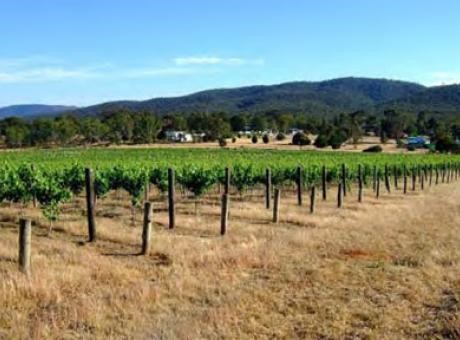

Today there are over 80 grape varieties grown in Washington state, but the primary grapes used in the production of wine are from the Vitis vinifera family of grapes. The main grapes used in wine production in Washington are Cabernet Sauvignon, Riesling, Chardonnay, Merlot, and Syrah. There are also plantings of Cabernet Franc, Grenache, Malbec, Pinot gris, Sauvignon blanc, Semillon, Tempranillo, Viognier, Barbera, Chenin blanc, Gewürztraminer, Nebbiolo, Petite Sirah, Pinot noir, Sangiovese, and Zinfandel. Vineyard acreage dedicated to red varieties was 17,351 acres in 2006. The four most prevalent red varieties were Cabernet Sauvignon at 5,959 acres, Merlot at 5,853 acres, Syrah at 2,831 acres, and Cabernet Franc at 1,157 acres. Vineyard acreage planted to white varieties was 13,649 acres. The four most prevalent white varieties were Chardonnay at 5,992 acres, Riesling at 4,404 acres, Sauvignon blanc at 993, and Gewürztra miner at 632 acres.

Posted in Meeting Abstract | Tagged , , | Leave a comment