Grapes Varietals – a pictorial parade

Grapes Varietals – a pictorial parade

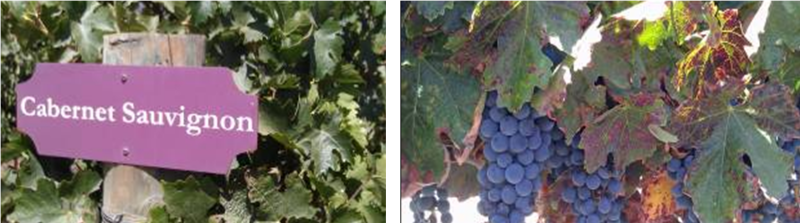
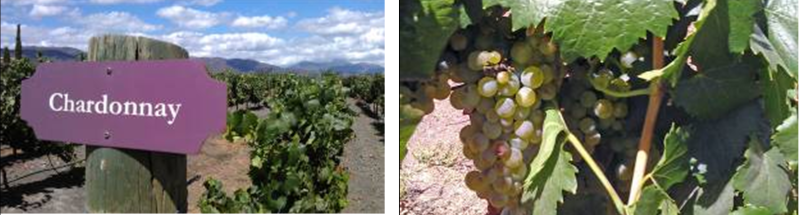
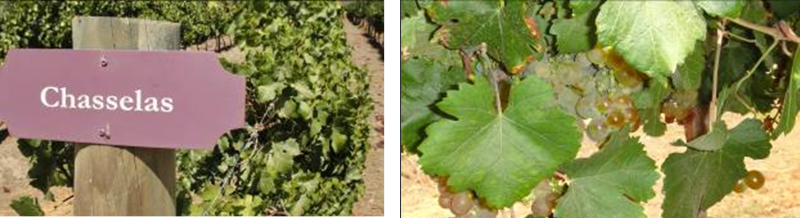
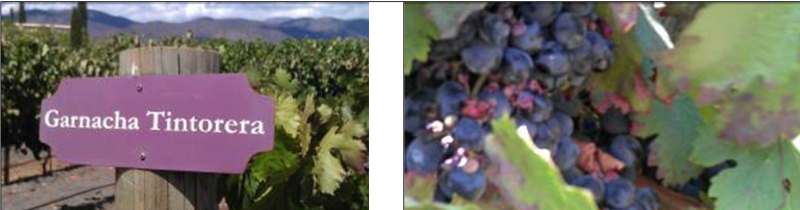
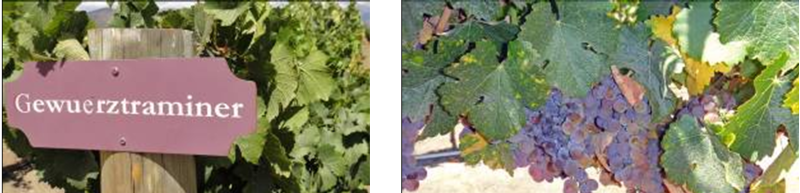
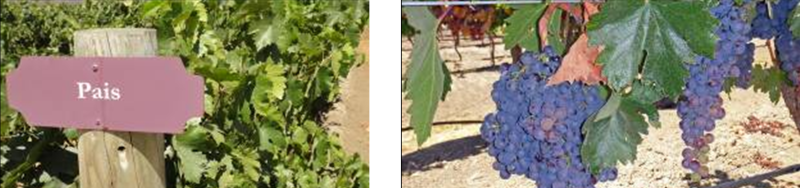
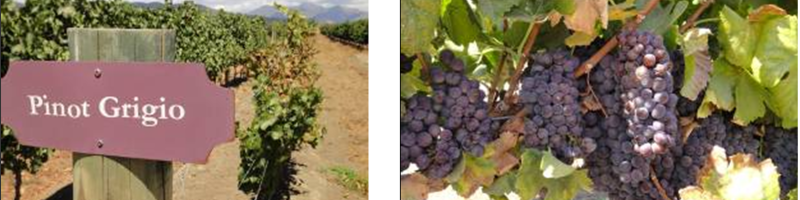
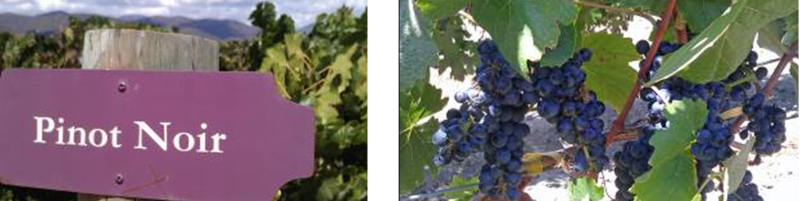
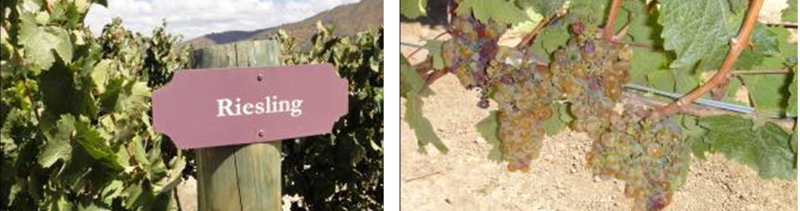
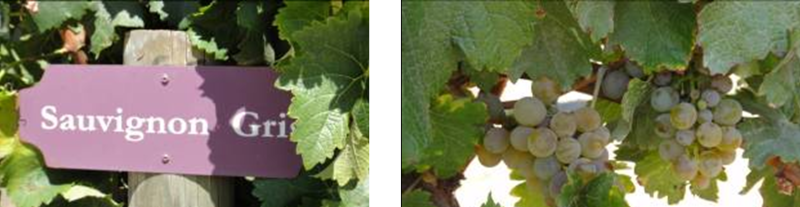
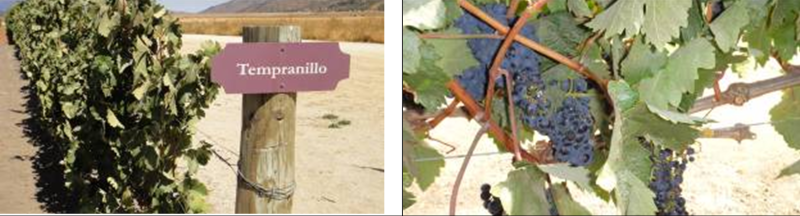
Presentación de 26 cepas vinícolas en la estancia El Cuadro, Casablanca, Chile. La estancia también posee un museo del vino, gran salón para cata, parque, comedores y otras instalaciones y programas para atender a visitantes. Fotografías tomadas en marzo de 2012 y tabla elaborada por Orlando Mason.

Haiga click para el sitio de la ESTANCIA EL CUADRO

Cabernet Franc: A thin-skinned red grape that grows particularly well in cooler climates, and is originally from the Bourdeaux and Loire Valley regions of France. The Cabernet Franc has been grown with success in France, Australia, Chile, Canada, South Africa, California and Washington, producing a fruity wine that is softer and more subdued than its regal relative, Cabernet Sauvignon.   wine.about.com

Cabernet Sauvignon is one of the world’s most widely recognized red wine grape varieties. It is grown in nearly every major wine producing country among a diverse spectrum of climates from Canada’s Okanagan Valley to Lebanon’s Beqaa Valley. Cabernet Sauvignon became internationally recognized through its prominence in Bordeaux wines where it is often blended with Merlot and Cabernet Franc. From France, the grape spread across Europe and to the New World where it found new homes in places like California’s Napa Valley, Australia’s Coonawarra region and Chile’s Maipo Valley. For most of the 20th century, it was the world’s most widely planted premium red wine grape until it was surpassed by Merlot in the 1990s.   wikipedia.org

Carignan: The most widely-planted red wine grape in France is Carignan (sometimes spelled Carignane in the US, a.k.a. Carignano in Italy, and Mazeulo throughout most of Spain). The variety likely originated in the ancient region of Aragon, near Cariñena, Spain, in the province of Zaragoza, where a reputation for winegrowing began to develop with the Romans around the year 50 BC. Today, Grenache dominates most D.O. Cariñena vineyards and less than 10% of the appellation remains planted to Carignane.  http://www.winepros.org

Chardonnay: The best Chardonnays in the world continue to arrive from the region where the grape first emerged: the chalk, clay, and limestone vineyards of Burgundy and Chablis. While the origins of the grape were disputed for many years, with some speculating that the grape came all the way from the Middle East, DNA researchers at the University of California-Davis proved in 1999 that Chardonnay actually developed, most likely, in eastern France, as a cross between a member of the “Pinot” family and an ancient, and nearly extinct variety called Gouais Blanc.

Chardonnay vines are temperamental, as the grapes are relatively small, thin-skinned, fragile, and oxidize easily. Furthermore, harvest time is crucial to winemaking, for the grape loses acidity rapidly once it ripens.  http://www.wineaccess.com     

Chasselas:  Chasselas maintains a very modest acreage in North America. It is most associated with Switzerland, where it is by far that country’s most planted variety. In Switzerland, it has several other regional names, including Fendant, in the Vaud and Valais districts. Here it is usually vinified into technically clean, dry and mildly fruity white wines. In France, this variety is more often identified as a table grape. Although it is responsible for wine production of the lightly regarded ‘Pouilly Sur Loire’ appellation. It also maintains a small acreage under vine in France’s northern region of Alsace.  Read more: www.snooth.com/varietal/chasselas/

Chenin Blanc:  A versatile grape from France’s Loire Valley, also grown with much success in South Africa and California. This white wine can range from dry to very sweet depending on the time of harvest, producing flavors that vary from apple, melon, lime and pear with hints of vanilla and honey. The best Chenin Blanc offers high acidity combined with a touch of viscosity – leaving an oil-like mouth feel.     wine.about.com

Grenache (pronounced gren-aash or gren-ash) is a red grape variety grown primarily for the making of wine. It grows well in hot, dry regions and is grown in southern France, Spain, South America, Australia, and California’s Central Valley. It is usually blended with other varieties, rather than made a varietal wine.  www.encyclowine.org

The vine known as Garnacha Tintorera is a synonym for the teinturier grape Alicante which is a crossing of Grenache and Petite Bouschet.   en.wikipedia.org

Gewürztraminer:  is an aromatic wine grape variety that performs best in cooler climates. It is sometimes referred to colloquially as Gewürz, and in French it is written Gewurztraminer (without the umlaut). Gewürztraminer is a variety with a pink to red skin colour, which makes it a “white wine grape” as opposed to the blue to black-skinned varieties commonly referred to as “red wine grapes”. The variety has high natural sugar and the wines are white and usually off-dry, with a flamboyant bouquet of lychees.        en.wikipedia.org

Grenache (pronounced gren-ash) (Spanish: Garnacha,  Catalan: Garnatxa,) is one of the most widely planted red wine grape varieties in the world. It ripens late, so it needs hot, dry conditions such as those found in Spain, the south of France, and California’s San Joaquin Valley. It is generally spicy, berry-flavored and soft on the palate with a relatively high alcohol content, but it needs careful control of yields for best results. It tends to lack acid, tannin and color, and is usually blended with other varieties such as Syrah, Carignan, Tempranillo and Cinsaut.   en.wikipedia.org

Malbec:  One of the traditional “Bordeaux varietals”, malbec has characteristics that fall somewhere between cabernet sauvignon and merlot. A midseason ripener, it can bring very deep color, ample tannin, and a particular plum-like flavor component to add complexity to claret blends.

Argentines often spell it “Malbeck” and make wines that resemble those made in Europe in flavor, but with softer, lusher structure, more like New World Merlot. Another difference: where French examples are usually considered short-lived, Argentine Malbecs seem to age fairly well.  http://www.winepros.org    

Posted in General, Magazines and Books wine related, Wine - Vino - Vinho, Wine History | Tagged , , , , , | Leave a comment

The Wrath of Grapes by Timothy Egan, New York Times April 21, 2012

The Wrath of Grapes     by Timothy Egan, New York Times   April 21, 2012

Tradução em Português por Terezinha Martinho, O Estado de São Paulo, Quarta-Feira 25 de abril de 2012 logo após texto em Inglês.

Was there a connection between Franklin Roosevelt’s fondness for drink and his accomplishments as president?

Was there a connection between Franklin Roosevelt’s fondness for drink and his accomplishments as president?

We know from a rare personal admission that Mitt Romney experienced a faint whiff of alcohol, a long, long time ago. “I tasted a beer and tried a cigarette once as a wayward teenager,” he said last November, “and never tried it again.”

No doubt, Romney has friends who own multinational breweries. But he would fail the presidential beer test — that is, whom would you most like to sip suds with — simply because his Mormon faith prohibits drinking alcohol. But then, he would also fail the presidential cookie test, as he showed in another awkward appearance with real people last week.

I’ve always thought the beer buddy threshold was nonsense. Still, it’s worth considering what a White House without a tippling tenant would be like. Sobriety, laudable in many respects, does imply rigidity of thought. The best presidents were open-minded, and generally open to a drink. The nondrinkers, at least over the last century or so, were terrible presidents.

The last president to swear off alcohol was George W. Bush, who seems doomed to have his name forever followed by the words, “and we know how that turned out.” During his misspent youth, W. was a heavy drinker and considered quite the cutup, but was also obnoxious, smashing his car into trash cans and challenging his father to go “mano a mano.”

Jimmy Carter was a teetotaler, and he earned his one-term status. Were the two connected? Can’t say. But his temperance (though he now drinks wine) was much harder on White House visitors than the White House occupant.

“You’d arrive at 6 or 6:30 p.m., and the first thing you would be reminded of, in case you needed reminding, was that he and Rosalynn had removed all the liquor from the White House,” Teddy Kennedy lamented in his memoir, “True Compass.”

Carter’s arid receptions give Romney something to consider. Would guests be more inclined to listen while he droned on about the European debt crisis, knowing that the presidential liquor cabinet held hope of a promising end to the evening?

Another Oval Office abstainer was William Howard Taft, who made such a mess of his single term that he came in third when he tried to get re-elected in 1912. Food was Taft’s vice; he ballooned to nearly 350 pounds at one point.

Franklin D. Roosevelt was a martini drinker, much to Eleanor’s displeasure, and an extraordinary president. Again, was there a connection? Solving a Great Depression and crushing the Nazi war machine — aided by the oft-besotted Winston Churchill — is a pretty strong brief.

In his younger days, F.D.R. knew how to plan ahead. He had four cases of Old Reserve delivered to his town house on East 65th Street just before Prohibition went into effect.

Which brings us to the Great Experiment, 1920 to 1933, when fanatics outlawed an accepted public behavior that had existed since well before Jesus changed water into wine to keep a wedding party going at Cana. Prohibition, W. C. Fields recalled, was a time “when I was forced to live for days on nothing but food and water.”

According to Daniel Okrent, author of “Last Call,” Herbert Hoover once had a large wine cellar. His wife gave it all away before Hoover’s disastrous single term. Hmmm.

Okrent also notes that John Adams drank a tankard of hard cider every day, and the occasional beer for breakfast. The founding father and second president lived to be 90.

Mount Rushmore is instructive. George Washington liked Madeira wine, and made his own liquor. By 1799, his rye whiskey distillery was the single most profitable part of the plantation at Mount Vernon.

For Thomas Jefferson, a truth he also held to be self evident was the joy from drinking good wine. He loved Chianti, Burgundy and Bordeaux, and spent almost half his life trying to make wine, without success, on his estate in Virginia.

Teddy Roosevelt was a very light drinker. He sued a small-town newspaperman in 1913 for calling him a drunk, and won. His only indulgence was said to be the occasional mint julep just before going to bed.

Abraham Lincoln had a retail liquor license and also opened a tavern in the 1830s, in Illinois. He was rarely seen with a drink himself. The problem with alcohol, he said, was not that it was a bad thing, but a good thing abused by bad people. A successor, Ulysses S. Grant proved him right.

Romney is certainly a throwback, to what I’m not sure. Don Draper in need of a drink, perhaps. He doesn’t have to share a six-pack with us to prove that he’s human. But given his temperance, he could show a little more of the tolerance of presidents who liked their grape, grain and barley fermented.


Romney não seria mau presidente só por ser abstêmio, mas a história relaciona álcool na Casa Branca a bons governos

TIMOTHY EGAN
THE NEW YORK TIMES

Sabemos, a partir de uma rara admissão pessoal, que Mitt Romney experimentou um bafejo de álcool há muito, muito tempo.
“Experimentei uma cerveja e um cigarro quando era um adolescente teimoso”, ele disse em novembro. “E nunca provei isso de novo”, completou.

Com certeza Romney tem amigos que possuem as próprias cervejarias multinacionais. Mas ele não passaria num teste de cerveja presidencial – ou seja, aquele presidente com quem você gostaria muito de tomar uma cerveja – simplesmente porque sua religião mórmon proíbe a ingestão de álcool. Mas ele também não passaria no teste do chá presidencial, como ele mostrou em outra aparição desastrada com pessoas reais na semana passada.
Sempre achei bobagem dizer que não gostar de cerveja seria uma limitação. Mas vale a pena pensar como seria uma Casa Branca sem um ocupante que gostasse de bebericar. A sobriedade, louvável em muitos aspectos, implica rigidez de pensamento. Os melhores presidentes foram aqueles de mente aberta e, geralmente, apreciadores de um drinque.

Os abstêmios, pelos menos durante o século passado, foram presidentes horríveis. O último presidente a renunciar ao álcool foi George W. Bush, que parece estar fadado a ter seu nome eternamente acompanhado da frase “e sabemos no que deu”. Durante sua juventude desperdiçada, ele foi um beberrão convicto e considerado um tanto turbulento, mas também insuportável, amassando seu carro em latas de lixo e desafiando seu pai a partir para a briga.

Jimmy Carter era abstêmio e acabou se tornando um presidente de um único mandato. As duas coisas estavam relacionadas? Não posso dizer. Mas sua temperança era mais penosa para os visitantes da Casa Branca do que para o ocupante da Casa Brança.
“Você chegava às 18 horas ou 18h30, e a primeira coisa que era lembrado, caso precisasse ser lembrado, era que ele e Rosalynn tinham retirado toda a bebida alcoólica da Casa Branca”, lamentou Teddy Kennedy em seu livro de memórias, True Compass.

As recepções a seco dadas por Jimmy Carter dão a Romney alguma coisa para pensar. Os convidados ficariam mais dispostos a ouvi-lo discursar monotonamente sobre a crise europeia, sabendo que o armário presidencial de bebidas oferecia a esperança de um fim promissor para a noite?

Abstêmio. Um outro abstêmio do Salão Oval foi William Howard Taft, que fez tamanha confusão no seu único mandato que chegou em terceiro lugar ao tentar se reeleger em 1912. Comida era o vício de Taft. Ele engordou tanto que chegou a pesar quase 158 quilos.
Franklin D. Roosevelt apreciava um Martini, para o desprazer de Eleanor, e foi um presidente extraordinário. De novo, havia uma relação? Colocar um fim na Grande Depressão e esmagar a máquina de guerra nazista – ajudado pelo constantemente ébrio Winston Churchill – é um resumo bastante vigoroso. Nos seus anos de juventude, Roosevelt sabia como planejar o futuro. Quatro caixas de Old Reserve foram entregues em sua casa na cidade, na Rua 65 Leste, pouco antes de a Lei Seca entrar em vigor.

O que nos leva ao “grande experimento”, de 1920 a 1933, quando fanáticos proibiram um comportamento público aceito que existia desde antes de Jesus transformar água em vinho para animar uma festa de casamento em Canaã. A proibição, lembrou W.C. Fields, foi a época em que as pessoas “eram obrigadas a viver dias sem nada, apenas com comida e água”.

De acordo com Daniel Okrent, autor de Last Call, Herbert Hoover tinha uma adega enorme de vinhos. Sua mulher deu um fim a todas as garrafas antes de ele assumir seu único, e desastroso, mandato.

Humm…

Okrent também observa que John Adams bebia uma jarra de cidra diariamente e uma cerveja ocasional no café da manhã. O pai fundador e segundo presidente dos EUA viveu até os 90. O Mount Rushmore também é instrutivo. George Washington gostava de vinho madeira e fabricava a própria aguardente. Em 1799, sua destilaria de uísque de centeio era a parte mais lucrativa da propriedade de Mount Vernon.

No caso de Thomas Jefferson, a verdade que sempre deixou evidente era o prazer de beber um bom vinho. Ele adorava vinhos chianti, borgonha e bordeaux, e passou metade da vida tentando produzir vinho, sem sucesso, em sua propriedade na Virgínia.
Teddy Roosevelt foi um apreciador de bebida mais brando. Ele processou o dono de um jornal de uma pequena cidade em 1913 por tê-lo chamado de bêbado e ganhou a ação. Sua única extravagância, era o que se dizia, era um xarope calmante de menta antes de ir para a cama.

Abraham Lincoln tinha uma licença para comercializar bebida alcoólica e também administrou uma taverna nos anos 1830, em Illinois. Raramente era visto com uma bebida na mão. O problema do álcool, afirmava, não era que fosse algo ruim, mas uma coisa boa da qual as pessoas de mau caráter abusavam. Um sucessor dele, Ulysses S. Grant, provou que ele estava certo.

Mitt Romney certamente é um retrógrado, mas não tenho certeza em relação a que. Talvez um Don Draper necessitando de um drinque. Ele não precisa compartilhar algumas cervejas conosco para provar que é humano. Mas diante de sua temperança, ele poderia mostrar um pouco mais da tolerância de presidentes que gostavam da sua uva, grãos e cevada fermentados. 

TRADUÇÃO DE TEREZINHA MARTINO

Posted in General, Humor, TV, Video, Film on wine | Tagged , , , , | Leave a comment

Club del Vino 11 años – Degustación 132 26 de Abril de 2012

Club del Vino 11 años   –  Degustación 132          26 de Abril de 2012  Da Domenico 

Contents of this post:
  • I – Intro
  • II – Assistentes confirmados
  • III – Los Vinos de la Degustación
  • IV  –  Menu del Da Domenico
  • V –  Italia:  Notas de laRegión Productora,  Alfonso Sanchez
  • VI  – Italia: Los Vinos e las Regiones, Italo Mirkov

I –  Intro

El proximo dia 4/26/12 tendrenos la degustacion Numero 132, fecha en quenuestro querido Club del Vino cumplira  los 11 años de vida. La Comision Directiva felicita a todos los socios por su amor al Club y les pide que  continuen asistiendo con  regularidad y que marquen  en sus agendas las fechas de nuestras reuniones mensuales dandoles  suficiente prioridad.
Italo Mirkov
Italo Mirkow y Hugo Benito presentaran vinos del Sur de Italia, especificamente de La Campania, Basilicata y Calabria.

II – Assistentes 

updated to Abril 24, 2012

Alfonso Sanchez
Alvaro Lopez
Miguel Segovia
Rene Meza
Ricardo Zavaleta
Italo Mirkow
Hugo Benito
Mario Aguilar
Ruth Connolly
Orlando Mason
Clarita Estrada
Alfonso Caycedo
Juan Luis Colaiacovo
Jaime Estupiñan
Marcello Averbug

Emilio Labrada
Ginger Smart
Luis C. Danin Lobo

III – Los Vinos de la Degustación

1  –   Du Croppio-Serra Sanghinia- 2005-Cepa Gaglioppo 70% Malvasia Nera 15% y Greco Nero 15%-  Region Calabria.          Aperitivo

.
2  –   Feudi di San Gregorio-Falanghina Sannio 2010  –   Cepa Falanghina (Blanco)-Region Campania.  13%  Alcohol, $ 13 to 17. 

4 stars, Restaurant Wine:   The Falanghina is supple and full bodied, with intense fruitiness (peach, lemon peel, pear, and honeysuckle), good balance, and a long finish. Excellent quality and value.

…………………………………………………………………………..
………………………………………………………………………………………….
…………………………………………………..
.

3   –  Tenuta del PortaleVigne Capano-Cepa Aglianico 2007–Region Campania.  $28
Total Wine description:  Elegant, Blackberry, Spice, Earth, Full-bodied
Aglianico del Vulture, Basilicata, Italy- Made from a tiny old vine single vineyard, aged 18 months in French barrique. Perfumed black berry fruit flavors blend nicely with earthy notes of espresso and anise. Smooth, velvety finish. Enjoy with lamb, grilled meats or hearty stews.

4  –  Bisceglia-Aglianico del Vulture-Terra di Volcano 2008Cepa Aglianico-Region Basilicata,    $ 12
Wine Spectator 88, Cell Tracker 86  90 points Robert Parker: “The 2008 Aglianico del Vulture Terra di Vulcano is a gem. It reveals gorgeous textural richness that belies its elevage in stainless steel. There is plenty of varietal and regional character in this beautifully balanced, stylish Aglianico. Anticipated maturity: 2011-2014.” (06/11).

Steve Greer :   Not just a great holiday party wine, this makes a great “house” wine. In fact, it has become my “steak night” wine. It has rich, dark fruit along with a background of spice on the nose and palate. Aglianico’s typical tannins are there, but the rich fruit keeps them in check.

.
5.   Vino Marsala  cortesía de Italo y Hugo, celebración de los 11 años del Club del Vino.

IV –  Menu de la degustación

Aperitivo: Feudi di San Gregorio Falanghina Sannio Cepa Falanghina

Entrada Salchiche alla San Genaro
Vino : Du Cropio- Cepa Gaglioppo

Primer Plato Pasta:Lasagna ao Forno
Vino: Tenuta del Portale Vigne Capano Cepa Aglianico

Segundo Plato A seleccionar:
Peto di Pollo Parmigiana, o
Cottoleta alla Parmigiana,o
Scaloppini alla Marsala
Vino:Bisceglia-Aglianico del Vulture- Cepa Aglianico

Postre: Helados
Tiramisu
Vino Marsala
El vino Marsala es un obsequio de los presentadores como festejo de los 11 anios del Club.

Club del Vino  11 años!
Now the Club is 11 years old!


V.   Italia: Nota de la Región Productora

Alfonso Sanchez

Los vinos de esta degustación provienen del sur de Italia.  Mas concretamente de tres subregiones a saber Campania, Basilicata y Calabria que forman por decirlo así la parte del empeine de la bota italiana que bordea el mar Tirreno.  Una región poco conocida por sus bajos volúmenes de producción y por la exigua cantidad de vinos con DOC.  Los vinos del sur tienden a ser de mucho cuerpo, con taninos fuertes, contenidos de alcohol altos y un tanto dulzones.  Un marcado contraste con los delicados vinos del Piamonte o de Toscana.  Esta región fue un abastecedor importantísimo de vinos a la antigua Grecia y al imperio romano como lo menciona Plinio en sus escritos.  Se caracteriza por sus suelos volcánicos, topografía de montaña y clima apropiados para el cultivo de la vid.  Hay muchas variedades de uva nativas pero solo unas pocas se utilizan para producir vinos de calidad.  La industria del vino aquí es predominantemente artesanal.

De Campania proviene el famoso Falerno producido con base en las variedades Agliánico y Greco que se cultivaba en el piedemonte del Monte Massico.  Un vino dulce o seco de color ámbar profundo y contenido de alcohol del 15% que se dejaba en tiempos antiguos envejecer hasta por 20 años en tinajas de barro.  La región produce vinos muy atractivos y se cree que algunos viñedos son descendientes de las variedades originales que trajeron los griegos en la antigüedad.  Los productores de la región han tomado como tarea producir vinos modernos a partir de las variedades establecida allí por siglos.  Se destacan el Agliánico (para tintos) que no se logra producir más al norte de la región ya que toma mucho tiempo en madurar (a veces se vendimia en noviembre) y la Falanghina (blanco) que se cree era la responsable por el color café ambarino de los Falerno.  Fiano y Greco son otras variedades de la región que contribuyen a la variedad de vinos blancos.  Sin embargo solo el 2% del área cultivada en vid es calificada como DOC.

De Basilicata provienen el famoso Agliánico de Vulture (variedad originaria de Grecia) tánico y corpulento que mejora con el añejamiento.  Basilicata es la región menos poblada y más pobre de Italia.  De los cerca de 500,000 hl/año que se producen de vinos 10.000 (2%) provienen de la única DOC, Agliánico de Vulture situada en las ladera del extinto volcán que lleva su nombre.  Se producen además la Malvasía blanca y negra y la Moscato.

Calabria que es la punta de la bota Italiana tiene algunos vinos de interés pero no se destaca en el mercado de vinos italianos ya que su extensión de viñedos es muy modesta (5% de la tierra cultivable de la región) con predios que en promedio no exceden media hectárea.  De un total de cerca de un millón de hl producidos anualmente Solo 30.000 hl de vino provienen de cultivos con clasificación DOC (de las cuales la más importante es Ciró al sur de la región).  El 90% de la producción son vinos tintos.  La base del Ciró es la variedad Gaglioppo una tinta nativa que frecuentemente se corta con las variedades Gerco, Trebbiano  y Nerello.  La variedad Greco parcialmente seca se usa para producir vinos de postre en la ciudad de Bianco (Greco di Bianco de Calabria) de buena reputación entre los expertos.

VI  –  Tenuta del Portale Vigne Capano-  Cepa Aglianico –  Region Campania

Notes by Italo MerkovItalo Mirkov

The stunning coastal region of  Campaniais situated in southern Italy  in the ‘shin of the boot’, and anchored by its capital of  Naples. Its name comes from Campaniafelix, a Latin phrase roughly meaning ‘fertile land’, and its strong historical link to the vine (dating back to the 12th century BC) makes it one of the oldest Italian regions. The considerable influence of ancient empires, including the Greeks, Romans and Byzantines, means some of this area’s varieties have historical legends attached. The area is also famous for producing Falerno (Falernum), one of the most ancient wines inItaly.

Campania champions many interesting native varieties, of which there are more than 100. They are the essential ingredients in the region’s three DOCG and 17 DOC wines (Aglianico del Taburno, Aversa, Campi di Flegrei, Capri, Castel San Lorenzo, Cilento, Costa d’Amalfi, Falerno del Massico, Galluccio, Guardia Sanframondi/Guardiolo, Irpinia, Ischia, Penisola Sorrentina, Sannio, Sant’Agata dei Goti, Solopaca and Vesuvio).

The area’s prestige is centered on one red variety that has put the Taurasi DOCG in the spotlight, and three white varieties, of which two give the DOCGs Fiano di Avellino and Greco di Tufo their names. The king of reds is the Aglianico introduced to the area by the Greeks and later cultivated by the Romans. The white protagonists are Greco, which like Aglianico was brought toCampaniaby the Greeks, and Fiano, which dates back more than 2000 years (its name comes from vitis apiana, meaning vine beloved of bees). The white Falanghina is also highly regarded, and is the mainstay of the Falerno del Massico and Galluccio wines. Its honeyed sweetness gained it praise as one of the finest grapes from Pliny the Elder, an ancient philosopher who often mentioned in vino veritas (there is truth in wine) in his writings.

Napoli, Campania, ItaliaAlongside the region’s shining stars is a plethora of little-known gems. A sampling includes Biancolella and Forastera, the backbone of the white wines of Ischia, one of the first areas inItalyto be granted DOC status. Suppezza, Sabato and Sciascinoso (locally called Olivella because of the olive-shaped grapes, and used in blends to bring a hint of color and acidity to wine) also play their part in theSorrentoPeninsulawines of Gragnano, Lettere andSorrento. Along the Amalfi coast, the aromatic and orange blossom-infused Ravello and Furore wines are distinctive for the inclusion of interesting local Fenile, Ripolo, Pepella and Ginestra grapes. In theAversaplains, the Asprinio variety, producing a dry white or zesty sparkling wine, gives the DOC Asprinio di Aversa its name. Finally the Coda di Volpe vine, named for its resemblance to a fox’s tail due to the way the grapes grow in long bunches, also plays a role alongside Verdeca, Greco di Bianca and Falanghina in the Lacryma Christi del Vesuvio whites.

Some varieties are nicknamed the ‘vines of fire’, thriving in the volcanic soils for whichCampaniais renowned. Of the reds, the most prominent is the Piedirosso (locally known as Per’e Palummo), a variety which takes its name from the gnarled red bases of the vines, conjuring up an image of the red feet of a native dove. This grape gives rise to the burnt-red color of the Campi Flegrei, Sant’Agata dei Goti, Ischia,Capriand Lacryma Christi del Vesuvio reds. Falanghina is the white ‘volcanic’ variety.

Campania’s success owes much to the varied climates and terroirs that host around 100,000 acres (46,800ha) of vines. Viticulture is in its element thanks to an abundance of sunshine, dry hot summers, mild winters, a long growing season and volcanic soil (the latter ensured phylloxera was kept at bay). The coastal Mediterranean breezes blow in from the Tyrrhenian Sea and across theApennineMountainsto temper the heat, encouraging a bright acidity in the fruit. These factors also contribute to the varied qualities ofCampaniawines. For instance, an inland Falanghina grown on slopes where there is more rainfall offers more fragrant notes than those found on the coast, where the climate is continental and tends to be more mellow.

Despite being ensconced in tradition, today’s wine styles are fruit forward and youthful: the whites are known for their aromatic characters, often redolent of the local flora, while the reds (mainly from Aglianico) have big personalities which require a little ageing. Dynamic and innovative methods have helped improve the quality ofCampania’s wines, specifically through better vineyard management, harvesting methods and cellar techniques. A particularly notable name in the world ofCampaniawine is Antonio Mastroberardino, whose pioneering use of both tradition and innovation make him the most respected, experienced and knowledgeable winemaker of the area.

 Aglianico Wine

Aglianico is a black-skinned red wine grape native to southernItaly. Wines produced from Aglianico tend to have rich flavors and be full-bodied with firm tannins and high acidity, making this a wine that has aging potential.

In Campania, the grape has been blended with Cabernet Sauvignon and Merlot in the production of some Indicazione Geografica Tipica (IGT) wines. InBasilicatathe sole DOC wine in the region (Aglianico di Vulture) is produced from Aglianico grapes grown on the volcanic slopes of Monte Vulture. In neighboring Campania Taurasi wines are based on the variety, again grown on volcanic soils around the eponymous  village  of  Taurasi.

In its youth Aglianico wines tend to be very tannic and concentrated, with need of a few years of ageing before becoming approachable. During this time the grape’s trademark garnet color fades gradually to brick, the fruit aromas become more pronounced and the tannins more integrated. Particularly fine examples of the wine often offer aromas of chocolate and plum.

It is thought that Aglianico was brought to southernItalyfromGreecein Roman times, and one theory suggests that its name is a corruption of Hellenica, the Latin word forGreece. It was the main variety (with Greco) in Falernian wine, the famed product of vineyards on the coast south ofRome. Falernian’s closest surviving equivalent in Falerno del Massico, and it is still made with Aglianico today.The Aglianico vine prefers dry, warm conditions such as those found around the Mediterranean, and also seems to thrive in many parts of California and Australia. It ripens late even in these warm climates, its strong tannins refusing to soften Until the grapes are very ripe.

Synonyms by which Aglianico is known include Agliatica, Ellenico, Ellanico, Gnanico and Uva Nera. The majority of these, like ‘Aglianico’ are variant forms

Elegant, Blackberry, Spice, Earth, Full-bodied

Aglianico del Vulture,Basilicata,Italy-Made from a tiny old vine single vineyard, aged 18 months in French barrique. Perfumed black berry fruit flavors blend nicely with earthy notes of espresso and anise. Smooth, velvety finish. Enjoy with lamb, grilled meats or hearty stews.

 2008 Bisceglia -Aglianico del Vulture -Terra di Volcano. Cepa Aglianico-Region


Aglianico del Vulture wine region

Aglianico del Vulture is an Italian wine DOC in northern Basilicata, in the deep south of Italy. Initially created in 1971 as a DOC, in August 2010 its superiore variant was promoted to full DOCG status, the highest-quality level in the Italian wine labeling system. This was particularly well received by Basilicata’s wine community, as after its creation Aglianico del Vulture spent 32 lonely years as the region’s only DOC, until being joined by Terre dell’Alta Val d’Agri in 2003.

Wines produced under this title are made exclusively from the Aglianico grape variety, whose name is a corruption of Ellenico, an ancient word for Greek. In some parts of Italy it is still known by other forms of this name, such as Gnanico, Agliatica and Ellenico. In Roman times, it was grown on the slopes of Monte Falernus and was used for making Falernum, ancient Rome’s most famous wine. Today, in the form of Aglianico del Vulture, it is considered as one of the greatest wines of Italy and has even been dubbed the ‘Barolo of the South’ (although Taurasi has also been honored with this moniker).

Basilicata wine region

Unlike Central Italy, where winemaking was influenced mostly by the Etruscans and Romans, the south was introduced to the ways of the vine mainly by the Greeks. However, Basilicata (known as Luciana, a name derived from the first known settlers) was also influenced by the Byzantines, who gave the region its current name (from basilikos, meaning prince and governor). Then, under Greek rule in the 6th century, the Aglicanico grape (then known as Ellenico) took its place as the leading variety – though recent theories lean towards the introduction of the grape (known as vino de llanos, or wine of the plains) under Araganese rule in the late Middle Ages.

Basilicatamay not be a particularly affluent region, yet it is rich in natural beauty. Its 3861 square miles (10,000 square km) of land is bordered to the north by Campania and Puglia (Apulia) and to the south by Calabria. Predominantly landlocked, with the Ionian Sea on one side and theTyrrhenian Sea on the other, it features stunning mountain and hill ranges. In fact it is one of the most mountainous regions inItaly, with around 47% mountains and a further 45% hills – only 8% of the surface area is flat. The three main peaks dotted across the region are Monte Pollino at 7375ft (2238m), Monte Sirino at 6578ft (2005m) and the volcanic Monte Vulture at 4350ft (1326m).

Compared to the rest of Italy, the total wine production in Basilicatais very small: less than 500,000 hL, of which only 3% comes under the DOC designation.

Aglianico is a black-skinned red wine grape native to southern Italy. Wines produced from Aglianico tend to have rich flavors and be full-bodied with firm tannins and high acidity, making this a wine that has aging potential.

In Campania, the grape has been blended with Cabernet Sauvignon and Merlot in the production of some Indicazione Geografica Tipica (IGT) wines. In Basilicata the sole DOC wine in the region (Aglianico di Vulture) is produced from Aglianico grapes grown on the volcanic slopes of Monte Vulture. In neighboring Campania Taurasi wines are based on the variety, again grown on volcanic soils around the eponymous village of Taurasi.

In its youth Aglianico wines tend to be very tannic and concentrated, with need of a few years of ageing before becoming approachable. During this time the grape’s trademark garnet color fades gradually to brick, the fruit aromas become more pronounced and the tannins more integrated. Particularly fine examples of the wine often offer aromas of chocolate and plum.

Basilicata  wine

Unlike Central Italy, where winemaking was influenced mostly by the Etruscans and Romans, the south was introduced to the ways of the vine mainly by the Greeks. However, Basilicata (known as Luciana, a name derived from the first known settlers) was also influenced by the Byzantines, who gave the region its current name (from basilikos, meaning prince and governor). Then, under Greek rule in the 6th century, the Aglicanico grape (then known as Ellenico) took its place as the leading variety – though recent theories lean towards the introduction of the grape (known as vino de llanos, or wine of the plains) under Araganese rule in the late Middle Ages.

Basilicatamay not be a particularly affluent region, yet it is rich in natural beauty. Its 3861 square miles (10,000 square km) of land is bordered to the north by Campania and Puglia (Apulia) and to the south by Calabria. Predominantly landlocked, with the Ionian Sea on one side and theTyrrhenian Sea on the other, it features stunning mountain and hill ranges. In fact it is one of the most mountainous regions inItaly, with around 47% mountains and a further 45% hills – only 8% of the surface area is flat. The three main peaks dotted across the region are Monte Pollino at 7375ft (2238m), Monte Sirino at 6578ft (2005m) and the volcanic Monte Vulture at 4350ft (1326m).

Compared to the rest of Italy, the total wine production in Basilicatais very small: less than 500,000 hL, of which only 3% comes under the DOC designation. The main area for viticulture lies in the heart of the fertile Vulture Massif in the north, located around the extinct volcano of Mount Vulture on volcanic soils. Although the mountainous terrain and harsh weather makes vine-growing a challenge, this area still enjoys an abundance of sunshine throughout the growing season and cool temperatures around harvest, thanks to the climatic variations; cool Balkan breezes, travelling across the Adriatic and Puglia, help moderate the temperatures, and the Apennines create a barrier to the mild currents from the Tyrrhenian Sea to the west. In this hilly territory the local variety, Aglianico del Vulture, reigns, producing quality wines which exhibit fine aromas and flavors.

While Aglianico is the ‘celebrity’ of the region, the huge range of ‘understudy’ varieties that for years seldom gained attention are now taking centre stage thanks to IGT regulations. There are some very pleasant examples of Moscato, and some superb Malvasia, the best of which come from the Vulture zone and the eastern Bradano Valley. Primitivo, Sangiovese and Montepulciano also do particularly well, as does Bombino Nero. The Aglianico grape is the star of the Aglianico del Vulture DOC wine, but expands further afield to the plains of Matera where it is used in vino da tavola wines.

The future appears brighter forBasilicata. The established DOC Aglianico del Vulture has gained an excellent reputation for some of the finest wines inItaly, and there are now two more DOCs included in the portfolio:Materaand Terre dell’Alta Val d’Agri.

Terre dell’Alta Val d’Agri, in the provinceof Potenza, was awarded its DOC in 2003, and Matera(its name comes from the city of the Sassi, world-renowned for its cave dwellings) joined in 2005. The duo is known for producing some excellent wines from indigenous varieties including Malvasia Bianca, Malvasia Nera and Moscato Bianco (di Basilicata), as well as Aglianico, Primitivo and Sangiovese. The two internationals that have also contributed to the wines’ standing are Merlot and Cabernet Sauvignon.

There are several styles made under the DOC regulations. Terre dell’Alta Val d’Agri’s are Rosso, Rosso Riserva and Rosato, while Matera produces three reds and three whites (one of which is a sparkling wine). The reds are Rosso, Primitivo and Moro, and the whites are Greco, Bianco and Spumante; the sparkling wine is produced by natural re-fermentation, and the winemaking process carried out entirely in this province.

2008 Bisceglia Aglianico del Vulture Terra di Vulcano

90 points Robert Parker: “The 2008 AglianicodelVulture Terra di Vulcano is a gem. It reveals gorgeous textural richness that belies its elevage in stainless steel. There is plenty of varietal and regional character in this beautifully balanced, stylish Aglianico. Anticipated maturity: 2011-2014.” (06/11)

Product Reviews:

By: Steve Greer |  K&L Staff Member  |  Review Date: 12/1/2011  |Not just a great holiday party wine, this makes a great “house” wine. In fact, it has become my “steak night” wine. It has rich, dark fruit along with a background of spice on the nose and palate. Aglianico’s typical tannins are there, but the rich fruit keeps them in check.
By: Chris Miller |  K&L Staff Member  |  Review Date: 9/9/2011  |Holy smokes!! That’s what I said when I tasted this wine. Actually I didn’t say “holy smokes”, I said “holly something else” cause, you know, we’re a family run business here, family friendly dammit. Not a bunch of potty mouth sailor types. So anyway, I said “holly whatever” cause this wine is friggin delicious, and it’s only 12 bucks! It doesn’t scream Aglianico right out of the glass as it’s pretty fruit forward, with loads of dark cherry and ripe plum, with just hints of woodsy spice and a touch of menthol. On the palate it really firms up and shows more of the tell tale Aglianco tannins, while still remaining plush and round. On the finish there is a little crunch of acidity and a hint that your drinking wine that was grown on the side of a volcano. Just another fantastic little charmer fromItalythat’s soft and fruity enough to be a crowd pleaser but structured and varietaly correct enough to please a purist. And did I mention it was only 12 bucks?!? Holy Smokes!!! CM
By: Greg St. Clair |  K&L Staff Member  |  Review Date: 9/8/2011  |I really like this wine, Aglianico that is balanced, expressive, full of fruit but in a more supple and drinkable body! There’s certainly a tannic backbone but it’s layered into the wine’s expression of fruit and terroir. We’ve sold a ton of the Biscegila Gudarra’ in the last couple of vintages (the Big Brother to the Terra di Vulcano)and if you liked that wine you’ll love this wine for its immediate drink-ability while still giving you your money’s worth at an unbelievable price. Grilled meats, pasta or your Thursday night Burger this wine is going to excite you!Drink from 2011 to 2015
 By: Chris Bottarini |  Review Date: 11/5/2011Saturated ruby-purple in the glass. Very dark plums, asphalt & minerals on the nose. The attack on this wine is much lighter in fruit. You get cherries, light but noticeable tannin & acids show. Pretty interesting wine from the side of a volcano inSouthern Italy.
 By: KPH |  Review Date: 10/26/2011I like this wine a lot. It has balance and structure. It’s midweight with a neat complexity that would work well in almost red wine pairing. It’s not a wine that a person would get tired of. Enough fruit to keep the tannins at bay, but not so much that it is too chunky.Drink from 2011 to 2014

References:

www.wine-searcher.com/regions-campania

http://www.wine-searcher.com/wine-142314-0001-biscegliaaglianicodelvulture-basilicata-italy

Anemone-stelata

Posted in Meeting Abstract | Tagged , , | Leave a comment

78 Years Later – United States Wine Shines in the World

78 Years Later –  United States  Wine Shines in the World


During the history of wine the grape phylloxera (Daktulosphaira vitifoliae) was not the only obstacle the wine industry had to overcome. On the opposite side of the Atlantic the “Dry Law” demolished a nascent American wine activity with crushing vigor. The prohibition of the United States had a terrible effect in the North American wine industry. The constitutional amendment lasted from 1920 to 1933.  This article, recommended by Juan Luis Colaiacovo, gives a detailed account of the early reaction post prohibition. This reaction was at the root of the actual robustness of the American wine activity.  The reader must be aware of the lack of ethnic sensitivity of 1934 reflected in the article.

Read here the first paragraphs of this article from the archives of the Fortune Magazine. Read the remainder of the historical article in the site of FORTUNE.

Can wine become an American habit? (Fortune, 1934)


Editor’s note: Every Sunday, Fortune publishes a favorite story from our magazine archives. This week, we turn to a feature from 1934 on the U.S. wine industry (original headline: “The Wines of the U.S.”). Prohibition, which lasted for just under 14 years before it was repealed on December 5, 1933, decimated the U.S. commercial wine industry. After the repeal, American winemakers and merchants had to play a serious game of catch up, both in their quest to make decent wines and in converting U.S. drinkers. Today, California is one of the finest wine regions in the world. And in 2010, the U.S. surpassed France and became the world’s largest wine consumer — by total volume, not per capita — a far cry from the situation in 1934. One additional note: The writing below is a product of its time. It does not reflect the cultural sensitivity that we at Fortune observe today. 
Can wine become a national habit? Several people, not altogether disinterestedly, have set out to make it one. But even in the world’s greatest grape-growing country, there are many obstacles.

FORTUNE — Fine sleet beat a painful tattoo against the windows of the Manhattan apartment in which Mr. Paul Garrett sat nursing a fever and talking about utopia. A utopia of vineyards stretching southward to the Gulf and northward to the Lakes and across the debt-ridden farm belt down to where California pokes a long fingernail into the tropics. Outside, the holiday traffic rumbled through East Seventy-ninth Street, making jagged discords in the shrill music of the sleet upon the windowpanes; inside the only sounds were Mr. Garrett’s hoarse voice and the soft burr of a sliver of jewel scraping against the wax cylinder that was Mr. Carrett’s only audience.

There was good reason why Mr. Garrett could talk about a vineyardist’s utopia. Everybody called Mr. Garrett the Dean of American Wine Growers, although sometimes Mr. Garrett didn’t like to be reminded of that. If he had not so persistently kept his mind upon utopia, Mr. Garrett might perhaps have become bitter … The cylinder began to whir beneath the sharp sapphire and Mr. Garrett resumed his monologue into the mouthpiece.

“In France the average per-capita consumption of wine is thirty-seven gallons a year. The population of France is less than one-third that of the U.S. About 7,000,000 people are employed in France in the growing of wine grapes, wine making, and in the transport and sale of wine. If we apply these figures to this country we have 130,000,000 people each consuming thirty-seven gallons of wine a year, which makes 4,810,000,000 gallons of wine. At the same rate of man-hours per gallon the production and distribution of 4,810,000,000 gallons of wine would give employment to 21,000,000 people. The development of a wine industry in this country comparable to that in France would wipe out unemployment and provide a shortage of labor able to absorb further technological unemployment for a generation to come.”

Follow the rest of the 1934  article  in the site of FORTUNE

Posted in General, Magazines and Books wine related, Wine - Vino - Vinho, Wine History | Tagged , , , , , | Leave a comment

Reunión 131 Marzo 29, 2012 – Da Domenico

Reunión 131  Marzo 29, 2012  – Da Domenico Ristorante Italiano

Post Contents:

1.  Wines

2. Menu

3. Birthday of the Month

4. Participants of the Tasting – up to March 23

5. Wines Varietal Description 

1. The Wines

 The meeting of March will have the varietal Pinot Noir. The presenters will be Jairo Sanchez and Jaime Estupinan.  

Jairo Sanchez

Jairo Sanchez

Jaime Estupiñan

Vinos:    Degustación Ciega 

  •  Savignon Blanc 2010

  •  Pinot Noir California 2010

  •  Pinot Noir Francia 2010

  •  Pinot Noir Nueva Zelanda 2010

California, France and New Zeland

2.     Menu                                           

  •      Aperitivo: Vino Blanco
  •      Antipasto: Cozze Ligurian Style, vino No. 1
  •      Pasta:         Papardelle Bolognese, vino No. 2
  •      Entrada:    Peto di Pollo Toscana o
  •                          Piccata di Vitello o
  •                          Grilled Salmon, vino No. 3
  •       Postre:       Pendiente               

3.      Aniversiariante do Mes de Março

 Raúl Sanguinetti     dia 30

4.    Participantes Confirmados   hasta 26 del Marzo

Alfonso Sanchez,  Cecilio-Augusto Berndsen,   Jairo Sanchez,   Jaime Estupinan,   Leonor Barreto,  Miguel Segovia,   Alfonso Caycedo,  Italo MIrkow,  Alvaro Lopez,   Emilio Labrada,   Ricardo Zavaleta, Marcello Averbug,   Hugo Benito,  Ruth Connolly,   Humberto Arbulu (Invitado de Jairo Sanchez),  Raul Sanguinetti,  Mario Aguilar,  Luis Carlos Danin Lobo -Lula,  Clarita Estrada (Condicional),  Juan Luis Colaiacovo.

5.      General Information about Pinot Noir  and the  Sancerre  Wines

From Wikipedia: http://en.wikipedia.org/wiki/Pinot_noir as researched and selected by Jairo Sánchez and Jaime Estupiñan

Pinot NoirPinot noir (French: [pino nwaʁ]) is a black wine grape variety of the species Vitis vinifera. The name may also refer to wines created predominantly from Pinot noir grapes. The name is derived from the French words for “pine” and “black” alluding to the grape variety’s tightly clustered dark purple pine cone–shaped bunches of fruit.
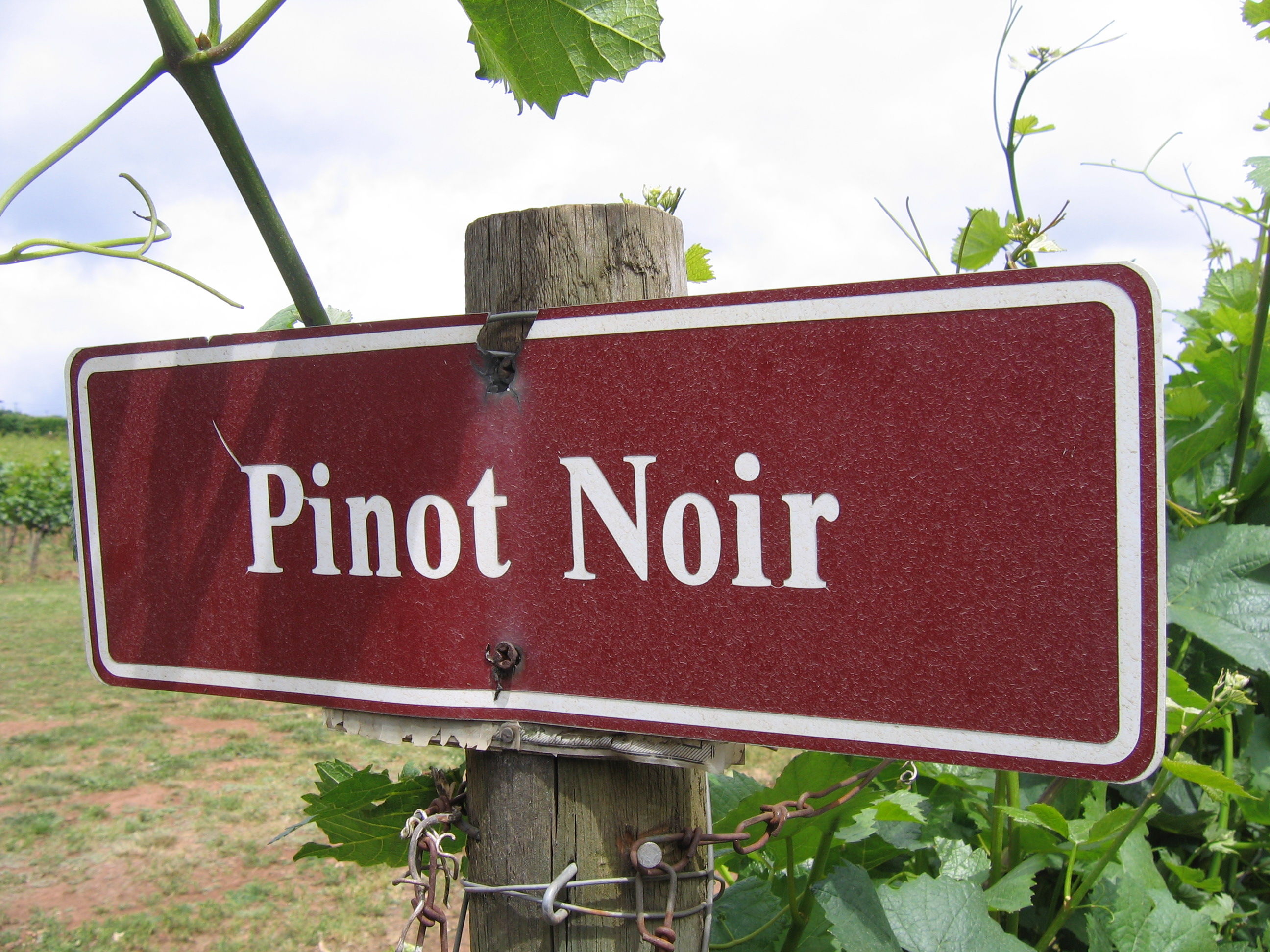
Pinot Noir is the Noble red grape of Burgundy, capable of ripening in a cooler climate, which Cabernet Sauvignon and Merlot will not reliably do. It is unpredictable and difficult both to grow and to vinify, but results in some of the finest reds in the world. It is believed to have been selected from wild vines two thousand years ago. It is also used in the production of champagne. In fact, more Pinot Noir goes into Champagne than is used in all of the Cote d’Or.

Pinot noir’s home is France’s Burgundy region, particularly on the Côte-d’Or. It is also planted in Austria, Argentina, Australia, Azerbaijan, Canada, Chile, north parts of Croatia, the Republic of Georgia, Germany, Italy, Hungary, Kosova, the Republic of Macedonia, Moldova, Greece, Romania, New Zealand, South Africa, Serbia, Slovenia, Switzerland, Bulgaria, Czech Republic, United States, Uruguay, Ukraine and Slovakia. The United States has increasingly become a major Pinot noir producer, with some of the best regarded coming from the Willamette Valley in Oregon and California‘s Sonoma County with its Russian River Valley and Sonoma Coast appellations. Lesser known appellations can be found in Mendocino County’s Anderson Valley as well as the Central Coast’s Santa Lucia Highlands appellation and the Sta. Rita Hills American Viticultural Area in Santa Barbara County. In New Zealand, it is principally grown in Martinborough, Marlborough, Waipara and Central Otago.
The tremendously broad range of bouquets, flavors, textures and impressions that Pinot noir can produce sometimes confuses tasters.[2] In the broadest terms, the wine tends to be of light to medium body with an aroma reminiscent of black and / or red cherry, raspberry and to a lesser extent currant and many other fine small red and black berry fruits. Traditional red Burgundy is famous for its savoury fleshiness and ‘farmyard’ aromas (these latter not unassociated with mercaptans and other reductive characters), but changing fashions, modern winemaking techniques, and new easier-to-grow clones have favoured a lighter, more fruit-prominent, cleaner style. The wine’s colour when young is often compared to that of garnet, frequently being much lighter than that of other red wines. This is entirely natural and not a winemaking fault as Pinot noir has a lower skin anthocyanin (colouring matter) content than most other classical red / black varieties. However, an emerging, increasingly evident, style from California and New Zealand highlights a more powerful, fruit forward and darker wine that can tend toward Syrah (or even new world Malbec) in depth, extract, and alcoholic content.

The identifying characteristic of Pinot Noir wine is its strawberry and cherry aromas – fresh red cherries in lighter wines and deeper-colored black cherries in weightier versions. These notes are often complimented by hints of undergrowth, known as sous-bois in French. Well-built Pinot Noirs, particularly those from warmer harvests, also exhibit notes of leather and violets, sometimes approaching the flavor spectrum of Syrah.

     General information about  Sancerre Wine       

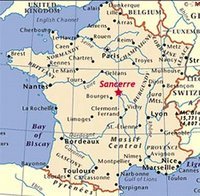
The Sancerre wine appellation lies in the Loire Valley in France just two hours south of Paris on the ‘Left Bank’ of the Loire. The appellation is to the east of Bourges and overlooks the Loire River as it finishes its northward exploration and suddenly turns west to head towards the Atlantic near the city of Nantes.

The appellation is centered on the picturesque hill-top village of the same name that has been an important regional centre since Roman times. It is rightly famous for the thrilling Sauvignon Blanc wines that are produced here. It is here that the grape reaches its ultimate expression.

The Sancerre appellation is unusual in France in that only two grape varieties are permitted for three wine types. Most appellations have many more permitted types. And a note to new world producers of Sauvignon Blanc wines, irrigation is not permitted in the Sancerre appellation. One of the secrets of the success of the Sauvignon Blanc grape here is the soil which is derived from the Kimmeridgian limestone that it shares with northern Burgundy (Chablis) and southern Champagne. The wine is fermented with indigenous yeasts and does not see any new wood although some of it is fermented in old barrels. The result is a piercing, wonderful wine with great complexity.

Sancerrene blanc Wines

Wine expert Tom Stevenson describes the classic profile of Sancerre blanc as bone dry, highly aromatic with intense flavors of peaches and gooseberries.

The styles of Sancerre will vary somewhat depending on what part of the wine region in which the grapes are produced. Around the village of Bué in the western reaches of the AOC, the soils tend to have more clay and produce more full bodied and rounded wines. Within Sancerre the three villages of Bué, Chavignol and Ménétréol-sous-Sancerre   have become so widely associated with distinctive and high quality wines that they are often referred to as “crus” even though Sancerre is not officially classified like parts of Bordeaux and Burgundy.

Comparisons to other Sauvignon blancs

Sancerre is often compared to neighboring Pouilly-Fumé which also specializes in 100% Sauvignon blanc wines, and while there are some differences, only very experienced tasters can distinguish the differences in a blind tasting. Broadly speaking, Sancerre tends to have a fuller body with more pronounced aromas, while Pouilly-Fumé wines are more perfumed. However, both wines have naturally high acidity and the potential to exhibit the minerally, flinty notes, as well as citrus and spicy notes.

Similarly Sancerre is compared to Sauvignon blancs produced around the globe. According to Sancerre tends to be less herbaceous and grassy than Sauvignon blancs from New Zealand and the Alto-Adige and Friuli-Venezia Giulia region of Italy. Compared to Sauvignon blanc grown in Bordeaux, which are often blended with Semillon, Sancerre can be both more concentrated with more racy acidity. When contrasted with New World examples from California, Washington, Chile and South Africa, Sancerre tends to exhibit more assertive mineral flavors.


Posted in Meeting Abstract | Leave a comment

Special Meeting: March 20 Wine Tasting at the Total Wine of McLean, VA

March 20  Wine Tasting at the Total Wine McLean Store          12:30 PM

Post Contents:

  • I. Total Wine address
  • II. List of Participants
  • III. Wines of the Silver List briefs
  • IV. Notes on the Tasting

I.    Total Wine will present 8 wines from California

1451 Chain Bridge Road         McLean Shopping Center                                                                                   McLean, VA 22101                                 (703) 749-0011

View Map   location

Club del Vino handler:  Kiera Hill, Wine Manager      Wines’ Presenter: TBA                  Cost: $ 20

Any combination of wines purchased in the day of the tasting will get a discount of $ 15 per $ 100 spent. The discount is not a percentage but a fixed amount of $ 15 per $ 100 of purchase.

II.  Participants in the Total Wine  ‘Wines of California’ wine tasting (as of March 8):

Albertina Frenkel (a confirmar)                          Alfonso Caycedo (condicional)
Alfonso Sanchez                                                        Carlos Maraviglia
Carlos Paldao                                                             Cecilio-Augusto Berndsen
Clarita Estrada                                                           Emilio Labrada
German Zincke                                                          Ginger Smart
Invitado de Carlos Paldao                                    Italo MIrkow
Jaime Estupinan                                                        Jairo Sanchez
Juan Luis Colaiacovo                                              Luis Carlos Danin Lobo( condicional)
Marcello Averbug                                                    Mario Aguilar
Miguel Segovia                                                          Pedro Turina
Ricardo Zavaleta                                                       Ruth Connolly

III.   Silver Level California Dreaming Class  Wines   at Total Wine of McLean

1.      Martin Ray Napa Pinot Gris,  Napa Valley,  Wine Enthusiast Rating: 88    $20/750 Alcohol: 13.9%  (3/1/12 at Wine Enthusiast).

From Pinot Gris Wikipedia entry:

Martin Ray Pinot GrisWines made from the Pinot gris vary greatly and are dependent on the region and wine making style they are from. Alsatian Pinot gris are medium to full bodied wines with a rich, somewhat floral bouquet. They tend to be spicy in comparisons with other Pinot gris. While most Pinot gris are meant to be consumed early, Alsatian Pinot gris can age well. German Pinot gris are more full-bodied with a balance of acidity and slight sweetness. In Oregon the wines are medium bodied with a yellow to copper-pink color and aromas of pear, apple, and/or melon. In California, the Pinot gris are more light bodied with a crisp, refreshing taste with some pepper and arugula notes. The Pinot grigio style of Italy is a light-bodied, often lean wine that is light in color with sometimes spritzy flavors that can be crisp and acidic. Although this wine can be very sweet, it will begin to lose its acidity when it is nearly ripe.

Pinot gris is considered an “early to market wine” that can be bottled and out on the market within 4–12 weeks after fermentation.

Varietal character (Appellation America)

Les mets conseillés avec ce vin,     Conseillé pour l’apéritif et avec les mets suivants :
Foie Gras terrine                             Foie Gras poêlé                                 Tarte tatin

Winemaker’s notes:  Our Martin Ray Pinot Gris was partially aged in French oak barrels, resulting in a rich, yet refreshing wine. Rich floral aromatics lead to flavors of luscious peaches and creamy vanilla. This wine has a full mouthfeel and finishes soft and long.

Food and Wine Pairing:  Enjoy our Martin Ray Pinot Gris with a light olive oil pasta dish or a crisp summer salad with crab.

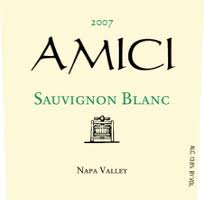
2.  Amici Napa Sauvignon Blanc, Napa Valley,     $ 19        Alc.: 14.2%                Elegant, Guava, Peach, Light-bodied

AmiciSaugignonBlanckTotal Wine:  This is a crisp, dry white with flavors of peach, guava and spice that will impress even the most discriminating of Sauvignon blanc fans. Serve this wine lightly chilled, paired with virtually any food – you won’t be disappointed.

The Cellar Tracker:  Tasted by AllRed on 10/7/2011 & rated 90 points: TNs: Amici Cellars Visit: 50% Sauvignon Blanc and 50% Musque aged in stainless. Pale color with aromas of grass, tropical fruit and florals. Nice balance, with citrus, florals and grassy tones. Bright acidity. 14.2% abv. 90 pts.

Wine Country, Signal Hill, Ca:   Made by former winemaker for Beaulieu Vineyards (BV) Joel Aiken, this is a classic Napa Valley Sauvignon at a very attractive price. Made in a slightly richer style and filled with the melon and fig notes that make Napa Sauvignon so popular, this is a medium rich, round style of Sauvignon that is less grassy and more savory than most. Rich enough to drink on its own or pair with foods you might otherwise match with a chardonnay, yet with the characteristic crispness and zest that gives Sauvignon blanc its great affinity for fish, seafood and vegetable dishes. Very fine, and a great value!


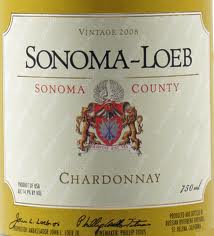
3. Sonoma Loeb Chardonnay,        $ 19

Sonoma Loeb ChardonnayThe Wine Chateau:      Tasting Notes         AromasThe nose immediately opens up with lush tropical fruit along with orange peel and ripe apricot. A creamy sweetness from malolactic fermentation combines with the natural minerality from the old vines creating a background of complexity and depth. Spicy new French oak and aromas of brioche and fresh-baked bread add the final touch to this powerful yet elegant chardonnay.FlavorsSuper concentrated flavors of creamy, ripe tropical fruit and oak saturate the palate. The texture is mouth coating, rich and fleshy with layers of exotic fruit and spice. An extra dimension of body and flavor make this wine uniquely powerful yet totally balanced and refined. Food PairingThis rich wine will pair well salmon, lobster, sweetbreads and veal as well as poultry dishes, pork or recipes that have a heavy cream or butter. Try also with cheeses such as Emmenthal, Gruyère and Feta

The Cellar Tracker:  Community Notes:  Tasted by Skylarburris on 4/26/2011 & rated 80 points: Unoaked taste, which I prefer. Good for someone who typically does not like chard. No bite to it. Fruity. But overpriced. (744 views).                                                       Tasted by THaas on 1/31/2011 & rated 89 points: Golden in the glass. Shows nose of pear and Golden Delicious apple, a little hint of melted butter. In the mouth, well-balanced with nice fruit notes overlaying enough oak to be tasted but not overpower. Some butter, but this has a little zip too. Balance is quite nice. Finish is long.  Drink 2010-2017. (823 views). Tasted by wmgeorge767 on 1/29/2011 & rated 82 points: Nice pear-focused nose and pleasant buttery apple on the palate, but overall a bit bland and boring. As a result, the price point was too high for me. (749 views).


4.  River Road Boschetti Pinot Noir,  Russian River Valley,  $ 19,   Alc. 13.9% at the bottling time.   Cooperage: French Oak, 15% new.

Winemaker Notes:  Handcrafted from small lots of Pinot Noir grown in vineyards throughout the Russian River Valley. This wine shows cherry and strawberry flavors typical of the appellation.

Pinot File:     2009 River Road Vineyards & Winery Stephanie’s Vineyard Green Valley of Russian River Valley Pinot Noir  13.9% alc., $18. · Moderate reddish-purple color in the glass. Lacks fruit on the nose, offering only aromas of oak, pine sap and savory herbs. Moderately rich core of dark red stone fruits wrapped in soft tannins. Prominent oak presence evidenced by vanillin and assertive herbs carries over on the finish. Decent. Reviewed May 15, 2011       More info at:          ARTICLE »

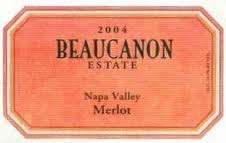
5.  Beaucanon Napa Merlot, Napa Valley,    Alc. 14.7%  $ 19

Beaucanon Napa Merlot

Total Wine:   Elegant; Black Cherry; Plum; Full-bodied – The Merlot comes from the Estate’s Oakville vineyard and exhibits layers of dark berries, plum and cherry on the palate. The Oakville terroir shines through with tastes of dust and dark loam. Tannins are big and velvety, creating a long and smooth finish.

Wine Access: By Thumper 12141604, November 10, 2010
Lush deep leathery and cedar nose, dark tar and plum fruit on the palate, tart chewy mouthfeel, robust controlled dusty tannins on the heavy-handed finish. Spectacular out of the decanter with blood-red rare grilled meats. An acquired taste as an aperitif. Big time Napa Valley Red wine at a fair price. Recommended as indicated.

Cellar Tracker:   Community Notes:  Tasted by mulligan452 on 9/10/2007 & rated 86 points: Sampled at Papa Joe’s. Cost $0.88 per ounce. The appearance is dark purple. The nose is nicely aromatic and is a pleasure to smell. The taste is rich, flavourful and fruity, with some complexity. The finish is medium to long. Three to four star value. Very good (86.5). (995 views).                 Tasted by GolferChris on 10/18/2006 & rated 90 points: Napa Valley Vintner’s Big Nightlife Napa Valley Magnum Tasting Party (San Francisco, CA): A wonderful wine, much like a fine St. Emillon from France. Aromas of blackberry, black tea, black cherry, spice and vanilla. Rich fruit and a hint of mocha and licorice in the mouth. Fine, grained tannins give this wine an elegant mouthfeel. Good depth and complexity, this wine provides a long, lingering finish. (3442 views)

6. Sobon Paul’s Vineyard Zinfandel, Amador County     Alc.: 15.1%      $  11

Winemaker Notes:     Description: This is a very stylish and likable wine. It has forward aromas of fresh-baked oatmeal cookies, with undertones of licorice and mint chocolate. The flavors are rich, full, and reminiscent of ripe, dusty blackberries and cranberry juice. The finish is crisp and lingering.                                                     Food Pairing: Serve with grilled foods or pasta dishes.

Total Wine:  Intense, Blackberry, Spice, Medium-bodiedAmador, CA- Handcrafted by Paul Sobon, this red boasts an alluring bouquet of dark fruit and cocoa. Bright and ripe fruit explodes on the palate, with flavors of blackberries, black cherry and spice. Great with grilled chicken, or sausage. Organically farmed.

The Cellar Tracker:   Community Notes:  Tasted by ToniTony on 3/6/2012 & rated 88 points: Yummy but not a lot of body (46 views).              Tasted by stormn1 on 11/22/2011 & rated 86 points: Big jammy zin. Very fruit forward, soft tannins. (230 views)

Also of value to read:   Gold Rush Wine   http://thewinecellarsclub.com/2012/01/gold-rush-wine-sobon-zinfandel/

7. Chateau Chevalier Spring Mountain Cabernet,  Spring Mountain District    $ 25    Alc.: 14.5%

Chateau Chevalier CarbernetTotal Wine:    Beverage Dynamics: 91      Elegant, Anise, Berry, Medium-bodiedBeverage Dynamics – Spring Mountain, Napa, CA- “This 2006 Cabernet has nice notes of blueberry, Cassis, coffee and spice flavors. Supple texture and mineral tones fold into the well structured tannins.”

Cellar Tracker: Community Notes:        1/7/2012 Mike Kopanski       90  Points.    What a pleasant surprise. This was a gift from a friend. We popped and poured without paying much attention to the label. At first taste, we said, blockbuster. The nose was explosive black cherry and cassis. The color was super concentrated thick and dark. Full bodied. There was loads of sediment, we did not expect to decant, wish we had. Even though it is already 6 years off the vine, it still has the taste of a young wine, in fact, it may be a little rough. The rich black cherry fruit is as dominant as any wine I have ever tasted. It does not take much imagination to see these vines above the fog soaking up sun on Spring Mountain, probably dry farmed. Plenty of fruit support from lots of red raspberry, some cranberry, and Cassis. Maybe slightly out of balance with not enough tannins and acid for all the fruit, but still a very unique and enjoyable mouth full of wine that I will gladly try again. (667 views).

Snooth:  User Reviews:    Wine Guy9 :  Great Wine ! Bought this for $14.99 at Total Wine in Roseville, CA and was pleasantly surprised. Will be going back for more…

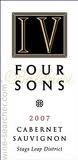
8.  Baldacci Four Sons SLD Cabernet Sauvignon, Stag’s Leap District, Napa   $ 24      Alc. 14.5%

Baldacci Four Sons SLD Cabernet SauvignonWine Maker notes:   The IV Sons Cab is full of the Stags Leap District terroir – rich red fruit flavors and lingering tannins. This wine smells like a summer afternoon – lavender, dried figs, bright cherries! The IV Sons has layered flavors from the 3% Cabernet Franc and the small amount of American Oak that is part of the blend on this wine. We always say that the IV Sons can age for several years and the 2008 is no exception – however, you might not be able to resist drinking all that you have right now!

Total Wine:  Elegant, Black Cherry, Cassis, Mint, Full-bodied               Stags Leap District, Napa, CA- Filled to the brim with mouth-watering watering red fruit flavors and aromas of violets and freshly picked blackberries. Finishes with hints of vanilla and white chocolate on the long, smooth finish. From the Baldacci team.

The Petaluma Post:   Baldacci Winery came into existence in 1997, when Tom Baldacci purchased  20 acres of vineyard in the    Stags Leap District of the Napa Valley.  IV Four Sons  is Baldacci’s 2nd   label – named for Tom and Brenda  Baldacci’s four handsome young sons who, as the family looks at it, can sink or swim together.   The blend  for this wine is 97% Cabernet Sauvignon and 3% Cabernet Franc, aged for 20 months in 95% French  and  5% American oak, followed by 9 months bottle aging before release.

IV.   Notes on the TastingTotal Wine Tasting Room in McLean, VA

  • There will be very limited food offered.
  • Total Wine offers a few crackers and maybe some bread
  • Carlos Paldao will bring a special cheese. Italo Mirkov  prosscciutto, J.L. Colaiacovo salame.
  • Another Member will bring  cheese, butter, bread,some plastic utensils and paper plates in limited amounts
  • Total Wine has a small offer of cheeses and cold cuts available for purchase.
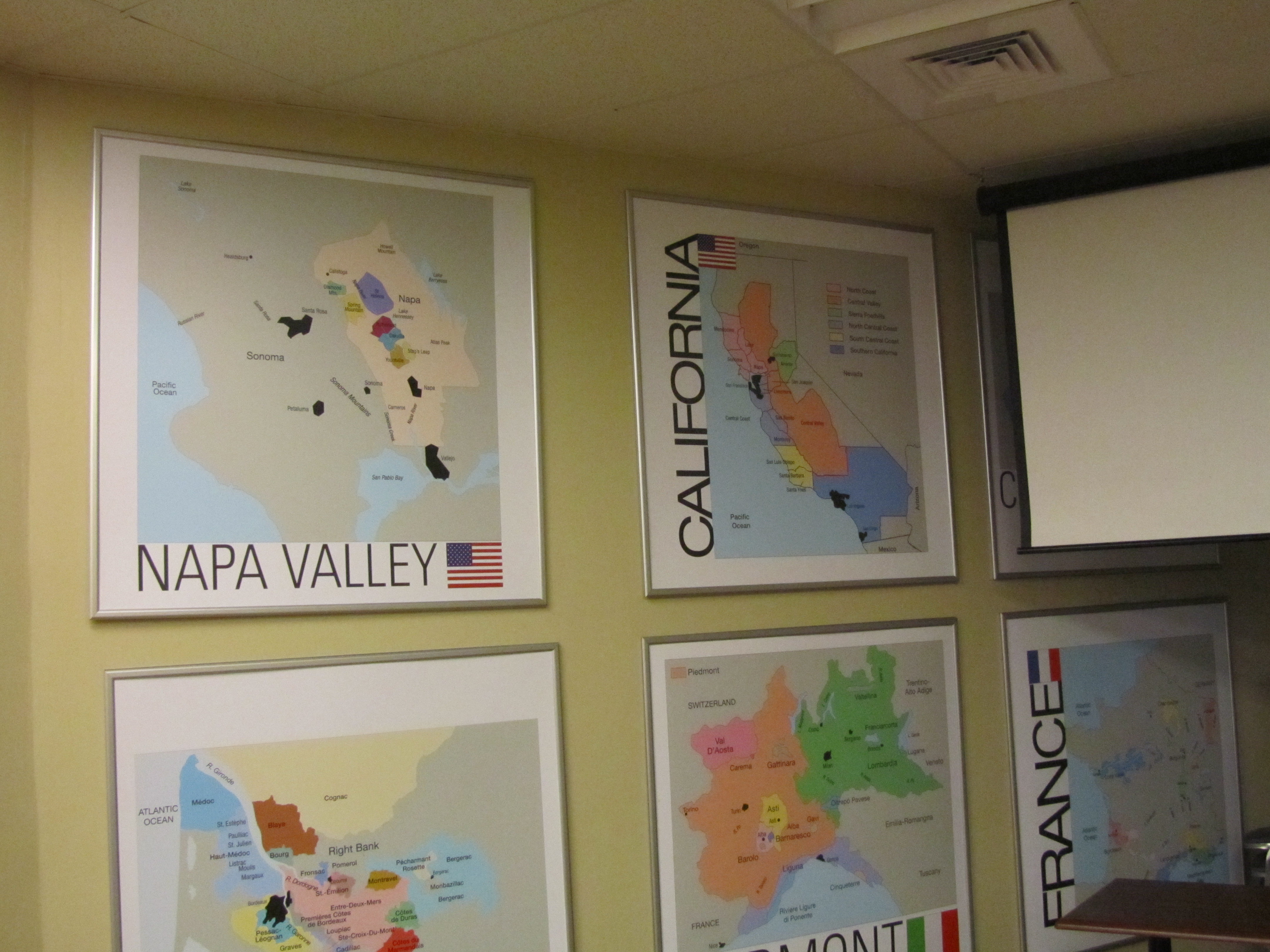
  • View of the Total Wine Tasting and ClassroomOn the other side of the street there is an expansive Giant
  • Around the block there is a Balducci (3 blocks away)
  • Total Wine has no restrictions for participants to bring food for their own consuption- no sales alowed.
  • The “Classroom” is spacious and accomodates more than 30 seated participants.
  • Instant rebate of $ 15 per $100 spent at the tasting.

Total Wine Tasting Room in McLean, VA

Posted in Meeting Abstract, Restaurants, Wine Shops, Merchants | Leave a comment

Sobre o falecimento de Euro Alves

Falecimento de Euro Alves

Meus Queridos Amigos do Club del Vino

Euro AlvesTenho a péssima missão de informar que o nosso estimado Euro Alves não se encontra mais entre nós. Faleceu esta madrugada (24/Fevereiro/2012) em sua casa em Rockville, MD.

A família levará o corpo para as cerimonias funerárias no Brasil segundo notícias sujeitas a confirmação.  O nosso muito estimado Euro deixa a esposa Carmem e filhos Leandro e Lizi.

♦        Gracias por compartir esta triste noticia porque las penas compartidas son menos dolorosas porque hay más espaldas para cargar el dolor.    Rezaremos por él.      Cálido abrazo             Carlos Paldao

♦          Estimados Amigos del Club del Vino,                          Lamento comunicarle el fallecimiento de nuestro querido amigo del Club, Euro Alvez , quien fallecio el dia 24. El mail de Cecilio nos da detalles.    Saludos                      Hugo Benito

♦      Con mucha pena he tomado conocimiento del fallecimiento de nuestro colega Euro. Mi más sentidas condolencias para su familia.        Saludos,                   Bernardo   Gluch

♦          Con mucho pesar he sabido el fallecimiento de nuestro querido amigo Euro, un muy entusiasta miembro del Club y un gran colega de tantos años en el BID.  Mi más sentido pésame para su familia y sus amigos cercanos.     Un fuerte abrazo y afectuosos saludos,   Rolando  Castaneda


♦         Con gran pena he recibido la noticia del lamentable fallecimiento de nuestro apreciado colega Euro Alves, entusiasta participante en el Club de Vino. A la familia mis expresiones de   condolencias ante tan  dolorsa pena.      Cordialmente,                         Alfonso Munevar


♦     Com grande pezar e tristeza recebo a notícia do falecimento do nosso querido amigo Euro. Externo os meus pêsames à sua esposa Carmen e família.   Um saudoso abraço,                  Wilson Moreira

♦       Certamente e uma noticia muito triste. Deus de para ele o descanso eterno e tenha na sua gloria e para a familia, muita resignação.     Um abraco.                  Clarita  Estrada

♦     Es una noticia muy triste y sobrecogedora.  En el corto tiempo que lo conocí me pareció una excelente persona y lo admiré por su buen sentido del humor.  Que tenga un buen descanso.                          Alfonso Sanchez

♦      Gracias por la noticia de la inesperada partida de nuestro gran amigo y companero Euro Alves. Los que como tu y yo compartimos el trabajo y la oficina por mas de 5 anos, tuvimos el privilegio de conocerlo y aprender de su alegria y afectuoso companerismo y ademas del privileging de su amistad y Serena sabiduria.               Tratare de communicarme con su  hijo Leandro, quien es el Jefe de la Division de Energia en el BID.           Si sabes de algun servicio funebre en el area de Washington por favor avisanos para poder acompanar a Carmen y a su familia.              Un abrazo y una oration por este Alegre y Sabio consejero y gran amigo.       Saludos,       Jairo Sanchez

Euro Alves com Jaime Estupinan♦        Con mucha tristeza te agradeceré que transmitas a la familia de Euro Alves mi pesar por su fallecimiento.           Un abrazo,                  Orlando Mason

♦       Con gran dolor acabo de leer el e-mail. Euro fue un gran amigo que siempre demostraba simpatia y calidez humana. Me gustaria que por favor le transmitieras a su familia los pesames de todos sus amigos del club del vino que lo recordaran siempre con carino. Cualquier informacion sobre sepelio, memorial, misa favor informar.     Un abrazo.               Juan Luis Colaiacovo

♦       Acabo de recibir la triste noticia del fallecimiento nuestro buen amigo Euro Alves. Lo vamos a hechar de menos en nuestras reuniones del Club. De mi parte mis mas sinceras condolencias para su familia.            Saludos,                              Alfonso Caycedo

♦          Una triste noticia. Euro nos alegró con su humor y sus chistes. Una sensible pérdida para el Club.                  German Zinke

Euro Alves com Cecilio-Augusto Berndsen e Bolivar Cobos♦          Estoy en la mitad de un largo viaje y el Internet ha sido un problema.  Hoy pude conectarme en Saigon … Para enterarme de la triste noticia de la partida de nuestro querido amigo Euro. Me parece increible la noticia y me cuesta mucho aceptar la realidad.            Mario Aguilar

♦       Apreciados amigos del Club del Vino,              Me adhiero a las expresiones de tristeza por el fallecimiento de nuestro amigo Euro Alves. Estoy de acuerdo en el envio a su familia de un mensaje  conjunto  de condolencias y solidaridad .        Abrazos,          Jaime Estupinan

♦        Muchas gracias por compartir con los socios del Club del Vino la lamentable noticia del fallecimiento del estimadisimo Don Euro Alves. Lo recordare siempre por su grato sentido del humor y como una buena persona, con su amable sonrisa y siempre atento a servir.  Nos vamos a sentir tristes sin su amable compania.  Estoy seguro que la Comision Directiva y los socios se haran presentes en los actos que la familia determine  como homenajes a su memoria.   Te ruego transmitir mi sincera expresion de condolencia a sus familiares. Abrazo cordial            Italo Mirkow

♦    Me ha entristecido mucho esta noticia. Euro siempre nos hizo reir  en el Bid, especialmente, con el  grupo de jubilados en nuestro club de inversiones durante las bajas o subidas de  nuestras inversiones. Su sentido de humor nos lleno siempre de alegria.  Que Dios  reciba esta alma generosa y noble. Inclino mi cabeza ante ese gran amigo que bajo  del tren de la vida, dejandonos un gran recuerdo.               Bolivar Cobos

♦  El Club del Vino esta de luto, ha perdido uno de sus mejores socios, con su elocuencia, ingenio y buen humor nos hacia siempre sonreir. Nos llevamos como recuerdo de su amabilidad las Campirinias que todos disfrutamos en su presencia.              Mis mayores condolencias para su familia.                              Rene Meza, MD

♦    Con gran pena es que recibo la triste noticia sobre persona tan fina, amable y amistosa.       El más sentido pésame de parte de Ginger y mía a su familia.           Emilio Bernal Labrada

Euro Alves♦  Queridos amigos,        Ayer regresé a Washington después de un mes de ausencia y a la gran pena que me produjo el fallecimiento de nuestro querido y apreciado amigo Euro, tuve que agregar la frustración de no haber podido asistir al servicio religioso en su memoria que tuvo lugar el viernes pasado.     Saludos               Mario Aguilar

Caro Sir Cecil

Euro sentou do meu lado no almoço aquele que fui dos vinhos ao teu convite. Parecia um bom sujeito. Uma pena.    O ciclo da vida, sempre acaba assim….      Abraço     Tulio Arvelo

Nota da Associação de Aposentados do Banco Interamericano de Desenvolvimento

Con profundo pesar informamos que el sábado 25 de febrero falleció nuestro compañero jubilado Euro Alves, en Rockville, Maryland.

La familia les invita muy cordialmente para que los acompañen a un servicio religioso programado para mañana viernes, 2 de marzo, a las 9:00 a.m. en la Iglesia Católica San Rafael, localizada en el 1513 Dunster Road, Rockville, MD  20854.

Las muestras de condolencias pueden ser enviadas a su esposa Carmen Alves a la siguiente dirección:

17508 Applewood Lane

Rockville, MD 20855

—————————–

The Official Note from the IDB Retirees Association:

We regret to inform you that on Saturday, February 25, our retired colleague Euro Alves, passed away in Rockville, Maryland.

The family cordially invites you to accompany them to a church service scheduled for tomorrow, Friday, March 2, at 9:00 AM. at Saint Raphael Catholic Church, located at 1513 Dunster Road, Rockville, MD 20854.
Expressions of sympathy may be sent to his wife Carmen Alves to the address indicated above.

Posted in General, Photos and Videos - Club del Vino | Leave a comment

Four bottles of life

These are the four bottles of life. It seems that we are in the third one.

Enjoy!

Four bottles of life

Posted in Humor | Leave a comment

Degustación # 130 – 23 de febrero de 2012 – Da Domenico Ristorante Italiano

Degustación # 130         23  febrero  2012                Da Domenico Ristorante Italiano

Post Content:

  • I.    Encargados de la Degustación, los Vinos y el Menu
  • II.   Socios com participación confirmada
  • III. Los Cumpleaños de Febrero
  • IV. Descripción de la Region Productora de los vinos

I. Encargados de la Degustación, los Vinos, el Menu

Orlando Mason

Bolivar Cobos

La degustación de febrero tiene vinos de España de las regiones de   Castilla-La Mancha    Almansa –Valdepeñas.                                                  Organización de la desgustación  y seleción de los vinos a cargo de Orlando Mason  y  Bolivar Cobos.

Los Vinos:

Aperitivo:   Blanco:  2010  Val de Socego Alabariño Rias Baixas,  Rias Baixas, Galicia, Spain;  100% Albarinõ,    Alcohol   12.5%,   $ 15

Acclaim: Deep straw color, pretty dark for an Albariño. It has an inviting nose of citrus and tangerine, along with a hint of peach, that becomes more intense as the wine warms up. Medium bodied, dry, silky and crisp; as I was guessing from its color, it has more body than the average Albariño. The palate reflects the nose, however the lemon is dominant and it highlights the acidity of this wine. The finish is lingering, up to 1 minute. I really enjoyed it with grilled spicy shrimp skewers. ”  (adega.com)

Elegant, Citrus, Medium-bodied

Wine & Spirits – Rias Baixas, Spain- “Bright scents of green apple deepen to green olive in this crisp and robust wine. There’s tension in the mineral finish, with a pleasantly abrasive edge…”

o   Tinto:  2008 Higueruela Cosecha Almansa-Bodegas Tintoralba -Castilla La Mancha, Spain:   Granache ,         87/100,,  Concours Mondial de Bruxelles, 2009: Silver   Alcohol  13%,   $ 11.00

The predominant grape variety is a type of Garnacha known as Garnacha Tintorera, one of the few red fleshed grapes yielding colored juice immediately after crushing. The site of the vineyards is at an altitude of between 2,952 and 3,608 feet above sea level, which has proven ideal for this special clone of Garnacha as well as maintaining a surprising amount of acidity from this warm corner of Spain. The climate is dry and arid, with cold winters and warm summers. The low-organic matter soil and the climate contribute to low yielding vines.
Higueruela is made using a cold maceration technique, whereby the de-stemmed grapes are treated with a dry ice at low temperatures and macerated for 8-10 days. A small proportion (5%) of young vines fruit proceeds through carbonic maceration. Both techniques are used to obtain a wine with less astringency and more aromatic complexity. The wines are made using a long and slow fermentation. No oak, aged for 4 months in tank.       ( Vinopedia.com)

Vino 1:  2001 Bodegas Navalon Valdepeñas Anciano Gran Reserva Valdepeñas, Castilla-La Mancha, Spain,       88 a 90 puntos    Alcohol 13%,    $ 11

“”This was the consensus favorite for the evening. Light color for a Tempranillo. Nose of red fruit with earth. Palate of soft, very soft, red fruits with leather and chocolate finish. Hints of tobacco on mid-palate. Short finish. A crowd pleaser!””

Tempranillo is the premium red wine grape variety from the Rioja and Ribera del Duero region in Spain. Tempranillo’s aromas and flavors often combine elements of berryish fruit, herbaceousness, and an earthy-leathery minerality. Being low in acidity and sugar content, it is commonly blended with Carignan (Mazuela), Grenache (Garnacha), Graciano, Merlot and Cabernet Sauvignon.

Valdepeñas has been linked to wine since immemorial time. It is the second Spanish designation of origin in terms of spontaneous knowledge, it always occupies one of the privileged positions in sales and is one of the oldest in Spain, since it was first recognized in 1932.

Pair older-style Rioja with simple meats like chicken, leg of lamb, and pork loin. However, the newer style of Rioja and Ribera del Duero works especially well with bolder meat dishes or an aged Spanish cheese like Manchego or Idiazabal. (cellartracker.com)

Vino 2-    2008 Atalaya – Almansa, Almansa, Castilla de La Mancha, Spain;  Red,     Alcohol 14%,          $ 11

R. Parker comment: 90 points – The 2008 Atalaya is a blend of Monastrell, Garnacha Tintorera (Alicante Bouschet), and other unspecified varieties. It was aged for 8 months in French oak. Deep crimson-colored, it displays an aromatic array of cedar, spice box, violets, blueberry, and blackberry with a hint of licorice in the background. On the palate it has layers of savory fruit, excellent concentration, and a long, fruit-filled finish. It is likely to evolve for 1-3 years but can be enjoyed now. This outstanding value over-delivers in a big way.

Vino 3-   2009 Bodegas Volver Tempranillo – La Mancha, Spain; 100% Tempranillo,  Alcohol 15%,         $ 17,  Wine Advocate: 92/100,      International Wine Cellar:    90/100

Winemaker’s notes:
Very dark purple with lots of black hues. Big sweet nose (some may call it candified) of dark plums, black cherries, sweet smoky oak, tobacco, and funky tree bark. Forward gush of dark fruit that also has some helpful tangy red currants along with tobacco, smoke, and earth. Medium-low acid, soft tannins.

Critical Acclaim:
“Robert Parker doesn’t write the Spanish reviews these days for Wine Advocate as he has given that job to Jay Miller. However, Mr. Parker does still drink Spanish wines and reviews them “informally” in his Hedonist’s Gazette. In July Parker wrote about a great Spanish feast where he enjoyed a short list of excellent Spanish wines including Volver 2009. The review was glowing as Parker gave the wine 92 points noting, “A great value that I would unquestionably drink as a house wine, the 2009 Volver from La Mancha. Made from 50-year old Tempranillo vines…” ”

“Bright purple. Dark berries, cherry pit, licorice and tobacco on the nose. Slowly unfolds to offer sappy cassis and bitter cherry flavors lifted by tangy acidity and complicated by a peppery, spicy quality. Finishes gripping and long, with resonating cherry and spice notes. Give this some aeration or a couple more years of bottle age. The Wine Advocate.

The 2007 Volver   (ours is 2008) is a single vineyard wine made from 100% Tempranillo from the La Mancha area of central Spain. The wine is aged for 14 months in new French oak. This is another wine imported by Jorge Ordonez and is a good example of the great quality wines that can be made from the Tempranillo grape. The wine has a deep purple color with a lovely nose of black cherry, raspberry, smoke and vanilla. On the palate it is a full-bodied wine with of ripe black plum, blackberry, cherry jam, ground coffee and a touch of oak. This wine is very “New-World” with a rich mouth-feel, bold fruit, abundant creamy tannins and a long, balanced finish. The 2007 Volver is delicious now, but should continue to develop with a few years in the cellar.  International Wine Cellar

La Comida: 

Apetizer :    Calamari con Zucchini 

Pasta:       Papardelle Bolognese

Entrees:     A seleccionar de:

1- Petto de Pollo Toscana  

2- Scalopini di Vitello Portini (Or Lombata di Vitello if it can be included)

3- Fruto di Mare

Postre: TBA

_____________________________

II – Socios con participación confirmada:

  • Juan Luis Colaiacovo
  • Ricardo Zavaleta
  • Cecilio Augusto Berndsen
  • Luis Carlos Danin Lobo -Lula
  • Ruth Connolly
  • Bolivar Cobos
  • Orlando Mason
  • Hugo Benito
  • Alvaro Lopez
  • Pedro Turina
  • Francisco Uribe (Invitado de Pedro)
  • Rolando Castaneda
  • Italo Mirkow
  • Jaime Esupinan
  • Marcello Averbug
  • Rene Meza
  • Jairo Sanchez
_______________________________

III.  Cumpleaños de febrero

Euro Alves   – 2

Carlos Paldao   – 11

Walter Gutierrez   – 12

Jorge Omar Rodrigues  – 21

Oscar Guerra  –  24

___________________________________________________

LA REGIÓN:             Castilla la Mancha

Alfonso Sánchez

La tierra de Don Quijote, un lugar de la cual Cervantes no quería acordarse, está localizada en la meseta que lleva su nombre unos 150 KM al sur de Madrid en el centro de España y con una extensión plantada en viñedos  comparable a la de Australia que comprende dos tercios del total plantado en España (192.000Ha/474,000 acres registrados y otro tanto no registrados).

Los monjes cistercienses fueron los que impulsaron inicialmente el cultivo de la vid en la región  que sufrió altibajos durante la ocupación de los árabes que terminó con la reconquista en el siglo XII.  Después vino una gran expansión favorecida por el establecimiento por Felipe II de la sede real en Madrid en 1513 que como consecuencia se volvió un centro de consumo muy importante.

Inicialmente su producción era de calidad mediocre y estaba basada en la variedad blanca Airén alrededor de la zona de Valdepeñas al sur de la meseta.  Los vinos eran blancos fuertes, algunos teñidos con variedades tintas.  Esta situación cambió radicalmente a partir de los 90s cuando los cultivadores empezaron a plantar viñas para tinto principalmente variedades de Tempranillo (Cencibel), Monastrell, Bobal, Mencia, Garnacha, Cabernet, Syrah, Petit Verdot y Merlot.   Hoy los vinos blancos se elaboran con base en la Airén, Viura, Sauvignon Blanc, Chardonnay, Verdejo  Viognier, Pedro Ximenes y Torrontes y otras de menor importancia.  En la actualidad hay más de 600 bodegas en la Región y 9 DOs: Jumilla, Manchuela, Ribera del Juncal, Uclés, La Mancha, Méntrida, Mondéjar, Valdepeñas y Almanza.

Debido a las condiciones climáticas, los viñedos se plantan con alta densidad y los rendimientos son muy bajos (1.4 tons/acre comparadas con 2.5 autorizadas en Francia y 3 a 5 toneladas en otros países.) lo que resulta en vinos de alta concentración.  Los tintos tienen alrededor de los 13 a 14 grados de alcohol y los blancos entre 10 y 12.  Por otro lado dado el bajo precio de la mano de obra, se ha logrado mantener costos y por ende precios relativamente bajos para los vinos.    Se dice que estos vinos tienen la mejor relación entre precio y calidad de España.  Además de los vinos, la región es un importante productor de alcohol destilado de uva que se envía a Jerez para la elaboración de sus vinos fortificados.

Merecen mención especial los vinos de Marqués de Griñón de Dominio de Valdepusa en Malpica a unos 50 Km de Toledo.  Este viñedo que se ha mantenido en estado “experimental” (para poder usar riego por goteo y otras técnicas no autorizadas en la DO regional) es uno de los más altos de España en suelos calcáreos muy similares a los de Borgoña produce vinos de gran concentración y alta reputación.  Ver video corto muy bonito y educativo en (no se lo pierdan) http://www.youtube.com/watch?v=4bLs7czC_HU

El Clima

El clima de la región es continental cálido por lo que hay que empezar la vendimia en mitad de agosto o sea mas temprano que en otras regiones.  Las temperaturas alcanzan a los 104º F en verano mientas los inviernos son extremadamente fríos con heladas extensas y prolongadas.  Las lluvias son impredecibles y promedian los 300 a 400 mm por año.  Debido a la sequedad prácticamente no hay pestes u hongos que afecten los viñedos.

Posted in Meeting Abstract, Wine - Vino - Vinho | Tagged , , , , , | Leave a comment

Argentina: from bad wine to best (a book review and a video on Argentinian Wine)

Argentina: from bad wine to best  

(a book review and a video on Argentinian Wine)

(the video sent by Juan Luis Colaiacovo is at the bottom of this post)

‘Vineyard’ toasts Argentina’s growth from ‘bad’ wine to ‘best’

(W.W. Norton/W.W. Norton) – ’The Vineyard at the End of the World: Maverick Winemakers and the Rebirth of Malbec’ by Ian Mount

By Mark Jenkins, Published: February 17 The Washington Post

In 1561, a Spanish conquistador claimed a dusty chunk of western Argentina and designated a plot for a vineyard. In 2000, an Argentine wine was picked as the best offering by five British connoisseurs in a blind tasting at London’s Dorchester Hotel.

The route between those two events, reveals American journalist Ian Mount in “The Vineyard at the End of the World,” has as many switchbacks as an Andean trail.

Mount’s account of Argentina’s wine industry is actually two stories in one: the country’s development of wine and, a few centuries later, its realization that the stuff wasn’t any good.

Argentina was founded by Spaniards, but the immigration surge that transformed the nation in the 19th century was almost half-Italian. These newcomers began what was to become Argentina’s modern wine industry, and their preference was for simple table wine. It was produced cheaply, quickly and sometimes unhygienically — “as if the system were designed to make the wine bad,” Mount writes. That didn’t matter much, since Argentina’s high tariffs, political instability and frequent currency crises led to economic isolation from the rest of the world. There was no point in making wine for export, and few Argentines could afford to import top-rated French wines. The choice was plonk or nothing.

By the time that changed, France was no longer the country’s oenological model. As Argentina’s economic barriers fell, a new wine power was rising: California. Europeans eventually enter Mount’s saga, but it’s primarily about the collaboration between Argentines with big ambitions and Americans with new ideas. They were the “mavericks” of Mount’s subtitle only in the sense of violating local standards of mediocrity. They set out to craft fresh, fruity, intense vintages of the sort already favored by such influential U.S. wine critics as Robert Parker Jr.

Despite its singular title, Mount’s book is not about a lone vineyard. He covers a 1,000-mile swath of the Andean foothills, from Salta in the north to Nequen in the south. But most of his characters toil near Mendoza, roughly due west of Buenos Aires. This is where the Catena family started making wine in 1902. Three generations later, in 1982, Nicolas Catena was an economics PhD on sabbatical at Berkeley. He had previously avoided American wines, but he decided to tour Napa. He was impressed by what he drank and by the openness of American winemakers. Soon he was hiring consultants from California, and he clicked with one of them, Paul Hobbs. The duo remade Catena’s operation so successfully that today — according to Mount — both want credit for the accomplishment.

It was this vineyard’s 1996 Catena Alta Malbec that got a 94 (out of 100) from Parker, thus launching a vogue for Malbec, a dark grape largely abandoned in Europe. Although it’s in the subtitle, Malbec arrives late in the book and may not prove all that important. The fruit thrives in western Argentina’s arid soil and high altitudes. But in his epilogue, Mount notes that Argentine producers are already using other grapes and that “more of its regions and varietals are receiving international recognition for their quality.”

Mount has lived in Argentina since 2005 and clearly likes the place. Yet he’s candid about its problems, including a culture of bribery and corruption. He also concedes that winemaking is not much of a business. In 2007, as foreigners rushed to open boutique wineries in Argentina, “Europe was producing about 1.7 billion bottles more than it sold every year.”

“The Vineyard at the End of the World” is occasionally repetitive, and Mount’s frequent movie analogies are distracting. So is his habit of introducing his characters by describing their distinctive facial hair, which has the unintended effect of making them all seem interchangeable. Mount doesn’t immerse the story in arcane matters of chemistry, and he touches only lightly on controversies about wine-industry globalization — leading, some argue, to a decline in subtle flavors and regional character. He’s written a book for people who are as interested in Argentina’s culture and history as its wine. That may disappoint Bacchus’ most zealous acolytes, but the casual drinker should find the result lively and well-balanced.

Jenkins is a reviewer of film, arts, music and books.

THE VINEYARD AT THE END OF THE WORLD Maverick Winemakers and the Rebirth of Malbec,
By Ian Mount Norton. 350 pp. $26.95

_____________________________

More than Malbec: The Story of Argentine Wine

A SimithsonianVideo    September 29, 2010     1 h  28′ 03″

Posted in General, TV, Video, Film on wine, Wine - Vino - Vinho | Tagged , , , | Leave a comment