Pinot Noir Anyone? Check out this Guide of Pinot Noir from $ 15 to $ 100

Pinot Noir: Snoot.com Pinot Noir Lovers Buying Guide

SnoothPinotLoversBuyingGuide       < click here

Posted in Wine - Vino - Vinho | Tagged | Leave a comment

Madeira: One robust tipple – The wine that defies time

Madeira: One robust tipple

The Founding Founders lifted a glass of Madeira to toast the Declaration of Independence.

“Madeira played an important part” in early U.S. history, said Dave McIntyre in The Washington Post. Named for a Portuguese archipelago, this sweet fortified wine served as ballast for many early trans-Atlantic voyages, and the Founding Founders lifted it to toast the Declaration of Independence. Madeira is famed for its “indestructibility.” Cooked at 115 degrees when young, it lasts indefinitely after it’s opened.

1996 Broadbent Madeira Colheita ($50). This aged Madeira is “gorgeous and sweet,” with hints of orange peel and toasted hazelnut.

Broadbent Madeira Reserve 5 Years Old ($25). A wine that’s “richer than the 1996,” and nearly as complex.

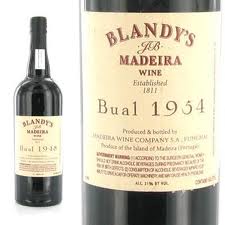
1994 Blandy’s Madeira Colheita Malmsey ($48). Flavors of caramel and lots of nuts make this a particularly delightful choice.

________________

Madeira: The wine that defies time

To keep their wines from spoiling, Portugese farmers added a little brandy to the barrel.

There’s a good reason that Madeira is nearly synonymous with old-fashioned reliability, said Elin McCoy in Bloomberg.com. Portuguese farmers have been tilling “steep mountain vineyards on the eponymous volcanic island” off Africa’s coast since the 1700s.

To keep their wines from spoiling during long ocean deliveries to Europe or the Americas, they “fortified” them, dosing each batch with brandy during fermentation. The result was a virtually “indestructible” beverage that could keep seemingly forever.  For a splurge, here are three bottles that prove Madeira can still taste exquisite decades—even centuries—later. You can find a dealer through Wine-searcher.com.

1825 Leacock Seco ($450)
This Madeira starts with a nose of hazelnuts and reveals layers of tangy candied fruit.

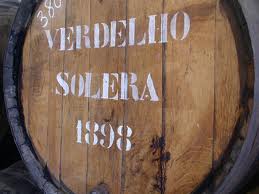
1912 D’Oliveira Verdelho ($350)
This “toffee-nosed” Madeira reminded me of “ethereal Kenya coffee.”

1922 D’Oliveira Bual ($350)
This powerful Madeira has sweet notes that taste like “essence of fruitcake.”


From “The Week” postings April 2010 and Mach 2012

__________________________________

Posted in Magazines and Books wine related, Wine - Vino - Vinho | Leave a comment

California’s Albariño

California’s Albariño

The white wine grape has become a “recent darling” of California’s Central Coast.

The Week  August 1, 2012. p. 27

Albariño is best known as a Spanish wine, “but there’s a less-known spate of bottles with American provenance,” said TastingTable.com. The white wine grape has become a “recent darling” of California’s Central Coast, where winemakers are creating wines that are “lively” and “food-friendly” with salads and ceviche.

2010 Bonny Doon Vineyard Albariño ($15). This “zesty” wine from star winemaker Randall Grahm “matches well with the minerality of oysters on the half shell.”

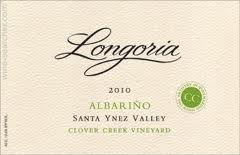
2011 Longoria Albariño ($23). Cultivated from a single vineyard in the Santa Ynez Valley, this wine is “practically designed for butter-drenched lobster rolls.”

2011 Acha Blanca ($23). Idiosyncratic winemaker Mark Herold sources grapes from grower Markus Bokisch, who’s made a name for himself growing Spanish varietals just east of San Francisco.

Posted in Wine - Vino - Vinho | Tagged , | Leave a comment

Watch out Virginia: Maryland wines are coming!

Maryland vineyards are up to the competition

By ,        Published: July 30, 2012    from the Washington Post

Fred Wilson knew he had some winners even before the fruit from the 2010 harvest reached the winery at Elk Run Vineyards in Maryland’s Frederick County. The extremely hot, dry summer ripened the grapes a fortnight earlier than usual, and most of his wines were happily cooling in their fermenters within three weeks.

“The balance between the sugars and acids was just about spot-on to carry the wines through malolactic fermentation, so we didn’t have to adjust the wines at all,” recalls Wilson, who has run the winery with his wife, Carol, since 1983. “You should be able to produce something good out of a vintage like that.”

Wilson produced a few good wines from that vintage. Last month, Elk Run took a surprising four best-of-category awards at the Atlantic Seaboard Wine Competition for its 2010 pinot noir, syrah, merlot and cabernet franc, leading a strong showing by Maryland’s up-and-coming wine industry.

This was the eighth year of the competition, which promotes advances in winemaking in 17 states along the Atlantic coast. This year’s competition included 495 wines and 42 gold medals were awarded.

Four other Maryland wines — one each from Basignani and Bordeleau and two from Knob Hall — also won categories and competed for the best-of-show honor. Maryland wineries claimed 11 gold medals, including two by Port of Leonardtown Winery and one for Sugarloaf Mountain Vineyard.

The competition’s top prize went to Chateau Frank’s 2006 Blanc de Noirs from New York’s Finger Lakes region, the first sparkling wine to win best of show. Virginia wineries also showed well, with nine category winners and 15 gold medals.

Although Virginia’s numbers surpass Maryland’s, remember that Virginia has four times as many wineries, and its modern wine renaissance began earlier than Maryland’s. This strong result shows that Maryland is its neighbor’s equal, at least in vintages when nothing goes wrong.

I was one of 19 judges at the ASWC, held July 14-15 in Haymarket. Over the two days, not every wine was tasted by each judge. But on Sunday, all 19 of us blitzed through the sweepstakes round of 20 best-of-category winners to determine the best of show. It was a don’t-blink-or-you’ll-miss-it tasting; we had about 15 minutes to evaluate 20 wines and rank our top five without giving scores. (I managed to jot down the code numbers of my favorites.) Each already had won a gold medal.

Yet in that brief time I fell in love with that Elk Run syrah and a lovely 2010 petit verdot from Cross Keys winery in Virginia’s Shenandoah Valley.

No competition can truly anoint the best wines of a state or region, if only because not every wine is entered. Black Ankle Vineyards, widely considered one of Maryland’s best wineries, submitted no wines this year. Neither did such leading Virginia wineries as Linden,RdV, Glen Manor and Boxwood. But such competitions are useful snapshots of how wineries and regions are doing. Maryland has a right to be proud of its performance. And I need to get down to Leonardtown.


McIntyre blogs at dmwineline.com. Follow him on Twitter: @dmwine.

Posted in Magazines and Books wine related, Wine - Vino - Vinho | Leave a comment

Emilio Bernal Labrada has a new book: Geting Away with Murder in US Public Life

Emilio Bernal Labrada has a new book: Geting Away with Murder in US Public Life

This gripping page-turner covers a series of murders and felonies in high places,
committed by and against powerful politicians and public figures of all stripes in
collusion with mobsters, spies and henchmen.
Exposed are great unsolved murders: a famous president and his brother, a great
civil rights leader, an FBI Chief, a legendary movie star (“suicide”) and an iconic
politician’s lover (“car accident”). Covered up by the very powers that committed
them were the motives and brains behind them.
Also exposed are the sex lives of the killed and their killers, their Mafia
accomplices and Hollywood lovers, including regular participants in White House
and Las Vegas sex parties.
These unsettling events form a mind-boggling compendium of criminal and
amoral conduct. Even today, media manipulation and continuing official cover-ups
keep the public in the dark, assuming that everything has been done “by the book.”
This chronicle, reflecting possible reality, will awaken Americans to powerful
forces working behind the scenes, capable not only of unimpeached and unpunished
high crimes, misdemeanors and felonies but, more importantly, of covering them
up officially and seamlessly.              ISBN 978-1-47503-110-2

About the Author

A Cuban-Americanliving in the U.S. for a half century,    the author is a linguist who writes prose and poetry in two languages (English, Spanish), and reads in five or  six. He is a member of the North American Academy of the Spanish Language (ANLE), the Real Academia Española (RAE) and the Academy of the History of Cuba (in exile).

A curious, sophisticated world traveler,  he has spent decades researching suspicious public events, reading hundreds of books and interviewing anonymous confidential sources. Refusing to believe official versions, he is setting the record straight by gathering facts and piecing together the jig-saw puzzles masking the truth. While others have pseudonymously evaded consequences, he is keenly aware that this book entails a palpable danger.

But after spending a lifetime writing it, unveiling the story behind momentous events in America’s history is, for him, worth the risk.

 The Club del Vino congratulates the member Emilio Bernal Labrada for the release of his book that will be available in the bookstores very soon. Amazon.com, for instance, will ship the book for those interested.

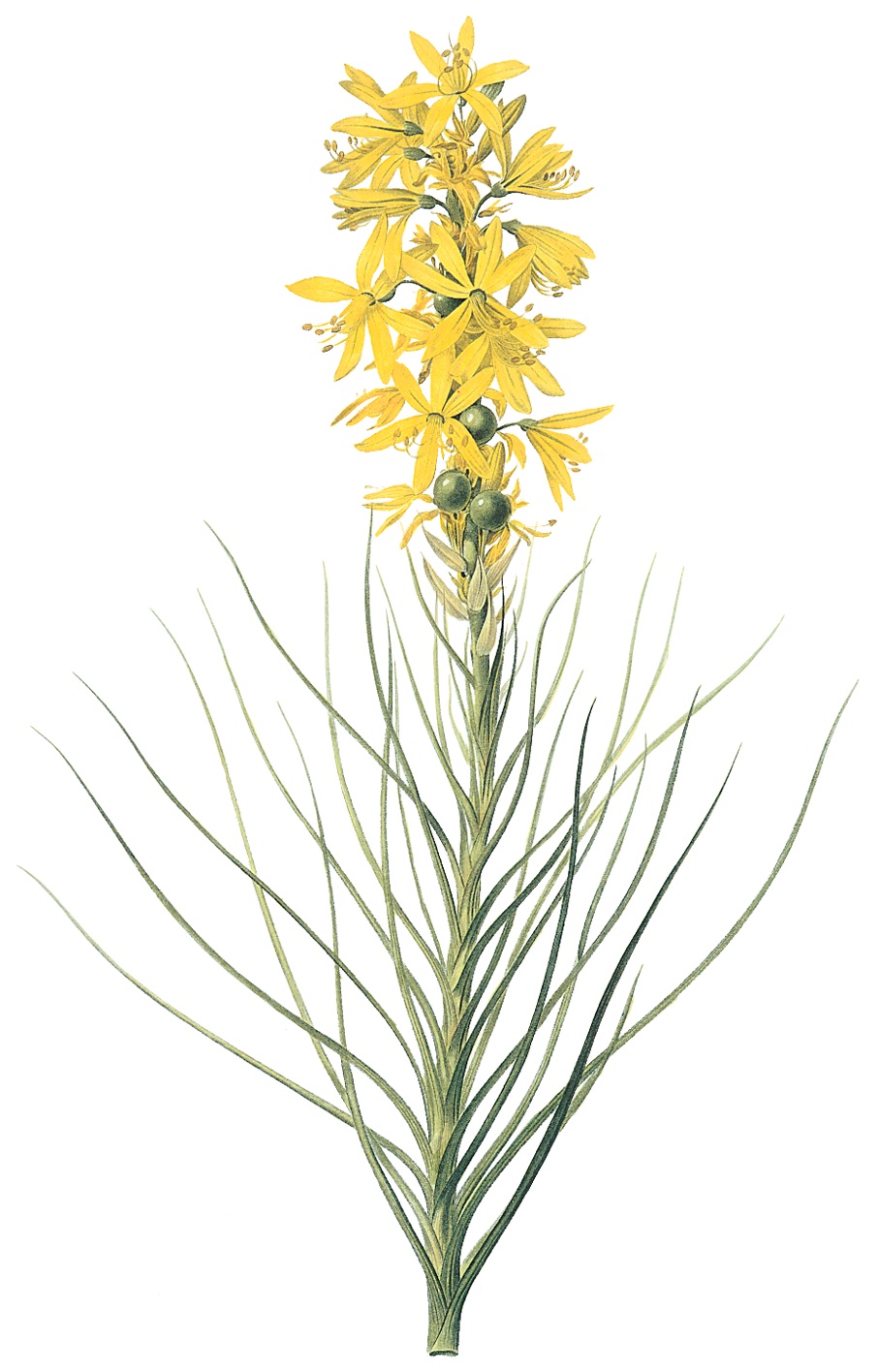
Asphodelus Luteus

Posted in General | Tagged , , , , , | Leave a comment

Wine Tasting # 135 – July 26, 2012 – Da Domenico

Wine Tasting   # 135       July 26, 2012 – Da Domenico Ristorante Italiano  12:00 noon

This post contents:

  • 1. Participants
  • 2. Menu and Wines to be tasted
  • 3. Information on the wines of the tasting
  • 4. Club Members Assessment of the Wines
  • 4. General information on Sangiovese Grape
  • 5. Birthdays of July:  Carlos C., Alvaro L. and G. Zincke

1.  Participants

Pedro Turina

El dia 26 tendemos el placer de degustar vino Sangiovese presentados por Pedro Turina con la colaboracion de Ruth Connolly. Se han inscipto las siguientes  personas:  (Julho 25)

Alvaro Lopez,  Jairo Sanchez,  J.Omar Rodriguez,  Italo Mirkow,

Ruth Connoly

Wilson Moreira,  Rolando Castaneda, Cecilio Berndsen, Marcello Averbug, Jaime Estupinan, Hugo Benito, Pedro Turina,  Ruth Connolly, Mario Aguilar, Ricardo Zavaleta, German Zincke, Emilio Labrada, Genger Smart, Lula Danin Lobo, Juan Luis Colaiacovo.

2.   Menú y Vinos

Antipasti (Appetizers)  

♠  Riondo Prosecco Spago Nero, Riondo USA,  10.5 APV
Salsicce Alla San Gennaro      Traditional Italian Sausages oven roasted with sweet
Pepper, Onion & Rich Tomato Sauce served over Crostini   or
Carpaccio di Manzo         Thinly Slices of raw shaved Filet Mignon, Parmigiano cheese, mixed green, Truffle Oil

Insalate (Salads)    

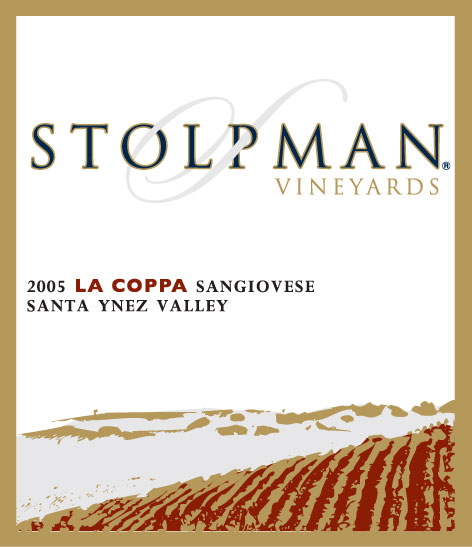
♣ 2009 La Copa Sangiovese,  Stolpman Vineyards

Mozzarella Caprese      Slices of Fresh Mozzarella Cheese with Fresh Tomatoes, Fresh Basil & Extra Virgin Olive Oil    or

Insalata di Arrugula Parmigiano      Baby Arrugula Salad with Italian Dressing   and  Shaved Parmigiano Cheese

Pasta

 ♥  2008 Vecchia Cantina di Montepulciano Vino Nobile di Montepulciano DOCG

Pappardelle Bolognese        Large Fettuccine with Veal, Beef and
Pork Bolognese Sauce        or

Lasagna alla Forno       Layers of Fresh Pasta, Two Cheeses, Ground
Veal in a Light tomato Sauce    or

Cannelloni Fiorentina         From Florence! Crepes of Pasta stuffed with Ground
Veal, Ricotta Cheese and Spinach in Cream Sauce

Entree

♦  2006  Vasco Sassetti Brunello di Montalcino

Scaloppine di Vitello Porcini      Veal Scaloppine with Porcini Mushrooms Brandy Cream Sauce     or

Cotoletta alla Pamigiana        Veal Scaloppine Breaded & Baked with Fontina
Cheese, Tomato Sauce, served with Linguini

–   Desert and Coffee

3.       Wines Information

I.  Riondo Prosecco Spago Nero, Riondo USA,     from Veneto, Italy     100% Prosecco DOC, Non Vintage Wine   pH: 3.20   TA: 5.8 g/l   ALC: 10.5%   $ 11     Wine Advocate grade: 90

Description from the wholesaler:    “This effusively fruity, light-bodied offering shows terrific floral notes, persistent effervescence, and a clean, delicate finish. There is not much body or weight in this crystal clean, pure, sparkling white.    It is an ideal aperitif to enjoy on any occasion.”

From  http://cheapwineratings.com:    When it comes to finding bubbly wine at bargain prices, Prosecco can’t be beat.  Actually, Prosecco is a grape variety from the Veneto region of Italy and there is some of it produced as still wine, but the vast majority of it is bubbly.  Here’s one that is simply awesome and it’s about $10 to boot.

Why spend $40+ on fancy Champagne when this Prosecco is sooooo good, and it’s readily available?  And why buy crappy sparkling wine, when you can get this stuff for just over ten bucks?  So many people get crappy, cheap sparkling wine for weddings or New Year’s parties, but I say “no more!”  Seek out the Prosecco section and wow your friends with this stuff.

What I really like about this Prosecco is the slight mineral quality on the nose.  You’ll also find citrus and melon aromas.  On the palate it’s only lightly sparkling — “frizzante.”  Crisp apple and light citrus flavors with near perfect acidity make this a pleasant sipper.  And at only 10.5% abv, it’s one you can sip a little more of before you’ve had too much.  This wine goes well with rich salty foods, like olives, or could be served with fresh fruit.

2.         2009 La Copa Sangiovese,  Stolpman Vineyards, Santa Ynez Valley,  California.  14.5% APV,  $ 19

From the Vineyard site:      Fruit forward & fresh on the nose with an elegant medium bodied palate & Italian Tannin Structure.  Dry farmed since 2001, Stolpman Sangiovese offers New World Intensity with Old World refinement.  Aged 10 months in Neutral Oak.  Organic and dry farming.

From cellartracker.com:      Community Tasting Notes average 89 pts. and median of 88 pts. in 17 notes.

.

3.   2008 Vecchia Cantina di Montepulciano Vino Nobile di Montepulciano DOCG, Tuscany, Italy, Varietal: Sangiovese. Moderate Alcohol PV,     $ 15  Total Wine

Wine Spectator: 90/100, Jancis Robinson 16.5/20, Wine Searcher: 86/100, Vinodivino: 90/100

Intense, Blackberry, Cassis, Herb, Full-bodied            Wine Spectator description: “Floral, raspberry, tobacco and mineral aromas and flavors garner your attention in this elegant red, which is velvety and intense, with serious tannins providing support. The aftertaste lingers.”

This delicious red bursts with juicy black cherry, raspberry, tobacco and mineral flavors. This is harmonious and supple, despite its tannic structure. Plays for intensity rather than sheer power. Best from 2012 through 2025. Bruce Sanderson, October 15, 2011

4.    2006  Vasco Sassetti Brunello di Montalcino, Tuscani, Italy.  Varietal: Sangiovese             $29.99

91 Wine Advocate.     CellarTracker  grade:  Community Tasting Notes average 89.3 pts. and median of 90 pts. in 33 notes.
Concentrated, Wild Cherry, Herb, Full-bodied

Deep black cherry ruby with black reflections and almandine rim. The bouquet is fairly intense, and rather jammy with cherry fruit and considerable peppery nutmeg spice and some pungent leathery accents. The overall impression is brooding. On the palate it’s moderately intense, with rather generic sour cherry fruit supported more by minerality than fruit based acidity, and by tannins that have quite a bit of cedar to them, and flow into a rather dry finish with slight sour cherry brightness. I’d have liked greater richness of fruit and brighter acidity, because it comes across as a bit more settled than I might have liked. In its defense it needs at least a couple of years for the tannins to smooth, and when they will the wine will brighten some, but I must write about what’s in the glass now. http://italianwinereview.blogspot.com/2011/05/2006-brunello-di-montalcino-impressions.html

E’ scomparso Vasco Sassetti, pietra miliare di Montalcino

di RoVino ⋅ 7 gennaio, 2009 ⋅Print This Post Print This PostInvia un commento

Vasco SassettiDopo anni di lotta contro un male che non perdona, durante i quali ha sempre combattuto per la vita in barba alle più pessimistiche previsioni dei medici che gli avevano dato pochi mesi di vita, Vasco Sassetti, uno dei produttori storici di Montalcino (l’azienda produce vino dai primi del ‘900), non ce l’ha fatta e sabato scorso ha abbandonato la sua terra.
Fu proprio lui che a metà degli anni ‘80 fece fare una svolta decisiva alla sua azienda di Castelnuovo dell’Abate, impostandola verso una produzione di alta qualità ed eliminando completamente la vendita del vino sfuso. Otto ettari dedicati al Brunello e al Rosso di Montalcino con una media annua di 30.000 bottiglie per il Brunello e 18.000 per il rosso, due ettari per il Sant’Antimo (13.000 bottiglie) e dieci per i vini Igt (65.000 bottiglie). Il suo Brunello è ottenuto da sangiovese vinificato con tecniche moderne, utilizzando il Ganimede, un tino per la fermentazione a controllo automatico dei rimontaggi, mentre l’affinamento avviene in barrique e botti da 25-50 ettolitri. Il lavoro in vigna è sempre stato rigoroso, potature attente per evitare interventi massicci sulla vegetazione in estate, raccolta rigorosamente manuale e cernita delle uve migliori in cantina.
Ma Vasco non si limitava a fare vino, aveva un’altra grande passione, la produzione di pecorino e salumi, che curava con altrettanto amore e impegno e proponeva nella sua trattoria Bassomondo, oltre ad un ottimo olio extravergine.
Ho ricevuto notizia della sua scomparsa da Claudio Gori, suo amico ed enologo. Caro Vasco, che la tua anima possa riposare finalmente serena fra i filari del tuo brunello.

_____________________________________________

4. Evaluación de los Vinos por los Miembros del Club

por Hugo Benito
Se repartieron 22 formularios (una a cada asistente) y se recibieron 17 respuestas.  Como es norma se eliminaron los valores muy extremos.

Vino Numero 1 –  Riondo Prosseco Spago Nero-Riondo USA.   Alcohol 10.5 % -Precio $11.00. WA 90 puntos. Contestaron 10 comensales con un promedio de 87.7 puntos. Hay una concentración (8 personas) entre 85 y 88 puntos con un promedio de 86.3.Comentarios: Color amarillo pálido, transparente, aroma mediano a frutas blancas, melón, poca efervescencia -frizante-ligero sabor residual, muy agradable. Algunos encontraron un sabor ligeramente salobre.

Vino Numero 2 –  La Copa Sangiovese  2009 – Stoplman Vineyards, Santa Inez Valley-California-Alcohol 14.5%-  Precio$19.00-comunity tasting 88-89 puntos. Contestaron 15 comensales con un promedio de  88.1 puntos. Seis personas le dieron 89 puntos. Comentarios: Color rojo brillante y transparente, buen aroma frutal, buen cuerpo, taninos moderados, agradable, sedoso al beberlo, equilibrado, algo dulzón para algunos, buena estructura.

Vino Numero 3 –  Vecchia Cantina di Montepulciano-2008-Vino Nobile di Montepulciano DOCG.      Precio $ 15.00 . Vinodivino 90 puntos.  Wine Spectator 90 puntos.-Wine Sercher 86-  Contestaron 16 comensales con un promedio de 87.9 puntos. Hubo una concentración (9 personas.) entre  88  y  89 puntos con un promedio de 88.3 puntos. Comentarios: Color rojo violáceo, aromas débiles, buen cuerpo, sedoso al paladar, sabor intenso, taninos medianos a moderados, acidez poco notable, balanceado, final mediano.

Vino Número  4-  Vasco Sassetti Brunello di Montalcino, Tuscani Italia.  Precio $29.99 Wine Advocate 91 puntos. Contestaron 17 comensales con un promedio de    90.4 puntos. Hubieron 2 personas que le dieron  94 puntos y dos 95. Si consideramos estos valores tan altos el promedio seria de 91.2 puntos. Sin esos 4 valores el promedio de 13 personas resulta de 90.2 puntos. Comentarios: color purpura transparente, aromático, sedoso al paladar, buen cuerpo, buen final, sabor residual largo grato.

Hubo consenso que este fue el mejor de los vinos degustados en esta ocasión.

_______________________________________________________

4. La Uva Sangiovese

Alfonso Sanchez

Toscana en Italia es la tierra de la uva Sangiovese.  Esta uva es la base do los vinos Chianti,  Carmignano,  Vino Nobile y Rosso de Montepuciano, Super Toscanos y Brunello y Rosso de Montalcino (100% Sangiovese).  Hoy se sabe gracias a las investigaciones genéticas del Instituto Agrario San Michele de All’Adige que la uva proviene de dos variedades llamadas Ciliegiolo (al parecer nativa de Toscana) y Calabrese Montenouvo y descubierta en un viñedo de Campania pero posiblemente originaria de Calabria (de ahí su nombre).  Al parecer la uva se generó en un cruce accidental entre esta dos variedades alrededor de 1700 pues hasta ese entonces en Toscana las más variedades prevalecientes eran la Trebbiano y la Malvasía.

Desde Toscana el cultivo de esta uva se ha extendido a otras regiones de Italia (principal pero no exclusivamente Umbría y Emilia Romana) y al nuevo mundo predominantemente a Argentina (Mendoza), Chile y a California después del auge de los Super Toscanos.

La característica principal de la Sangiovese es su lenta maduración (se cosecha normalmente a finales de septiembre y principios de octubre) lo que resulta en años cálidos en vinos densos, alcohólicos y de larga vida y mas ácidos y tánicos en años mas fríos.  La acidez y los taninos son característicos de estos vinos que además se oxidan fácilmente por lo que su color se torna del rojo granate hacia el ladrillo amarilloso en el borde de la copa a una edad relativamente temprana (4 a 6 años).  Los vinos tienen gran capacidad de envejecimiento hasta de 15 o 20 años sin perder la estructura gracias a los taninos y a la acidez.  La que hace precisamente que estos vinos combinen bien con comidas ricas en tomate que es un cultivo extendido en Toscana.

La región de Chianti (DOCg – Denominazione de Origen Controlata e Garantita) produce la mayor cantidad de vino  y está subdividida en siete distritos de los cuales los mas conocidos son en Classico y el Rufina.  El Chianti estuvo desacreditado hace algunos años por la concentración de los productores en el volumen con perjuicio de la calidad.  Sin embargo con mejore técnicas de manejo de viñedos y de procesamiento de la uva este vino es hoy uno de los favoritos en el mundo.  Es un vino muy seco que sabe mejor con comida que solo.  Tiene aromas a cerezas, frambuesas y a veces a violetas y sabores a frutas rojas con acidez pronunciada y taninos fuertes.  Son mejores con seis a ocho años de envejecimiento cuando los taninos se han suavizado y la acidez se ha moderado.

El Brunello di Montalcino que es 100% de Sangiovese que se ha vuelto muy famoso en los últimos 20 ó 30 años es vigoroso y concentrado y tánico que añeja hasta 20 años y debe airearse varias horas antes de tomarlo (preferiblemente beberlo con 15 años de añejamiento).  Es costoso ($50 ó mas por uno decente) pero últimamente han salido algunos mas económicos ($25 a 30) de calidad muy buena (Tenuta di Sesta 93 pts.).  Para clasificar como un Brunello el vino debe añejarse en bodega por 48 meses de los cuales 46 deben ser en barriles y los seis últimos en la botella.  La alternativa es el Rosso di Montalcino que es menos costoso (cerca de $20) y se vende con solo un año de añejamiento en Bodega siendo los seis últimos meses en la botella.  A veces cuando el Brunello no llega a los estándares deseados se desclasifica y se vende como Rosso.  Le productores venden el Rosso mas temprano para poder costear el largo añejamiento del Brunello por lo que la producción del primero ha aumentado considerablemente.

Toscana

Hay dos vinos de Montepulciano de altísima reputación. El Vino Nobile que solo se produce en ese lugar y es de gran ancestro (en 1549 el sommelier del papa Paulo III lo denominó el vino perfecto).  Es más robusto y alcohólico que el Chianti por el clima más cálido y con menos mineralidad (por la ausencia de caliza).  Siendo un vino de alta calidad aún no ha podido superar al Brunello según los expertos.  También se produce el Rosso di Montepulciano que se asemeja en su concepto al de Montalcino.

Finalmente están los Super Toscanos que emergieron en los 70s (Viña Antinori) hoy en gran demanda sobre todo en el mercado Americano.  Estos vinos resultaron del deseo de recuperar el prestigio del Chianti que estaba mal en esa época y son mezclas de Sangiovese generalmente con variedades de Burdeos (Cabernet, Merlot, Syrah, etc.).  Son vinos muy agradables de gran cuerpo y estructura y sabores intensos y concentrados con precios que fluctúan desde unos $40 hasta más de $100.

5. Aniversário del Julho: Feliz Cumpleaños!

Dia 10: Carlos Calderón

Dia 25: German Zincke

Dia 31: Alvaro Lopes

.o.o.o.o.

Posted in Meeting Abstract | Tagged , , , , , , | Leave a comment

California – Tasting # 134 June 28, 2012 – Da Domenico Ristorante Italiano 12:00 noon

California – Central Coast  
Tasting # 134   June 28, 2012 

Da Domenico Ristorante Italiano  12:00 noon

This post contents:

  • 1. Participants
  • 2. Menu and Wines to be tasted
  • 3. Information on the wines of the tasting
  • 4. Evaluación de Vinos por Socios del Club
  • 4. General information on California Central Coast
  • 5. California Central Coast – History, Geography and Wine Production, by Alfonso Sanchez

I – Participants

Los vinos que Alfonso Sanchez y Miguel Segovia presentam son de Central Coast de California, San Luís Obispo y Santa Barbara. En una feliz concidencia Alfonso cumple años en el 7 del junio y Miguel en el 27 des mismo mes. Congratulaciones a los aniversariantes.

Miguel Segovia

Alfonso Sanchez

Confirmed Participants of this Tasting: Clara Estrada, Rolando Castañeda,  Alfonso Sanchez, Marcello Averbug, Italo Mirkov, Wilson Moreira, Mario Aguilar, Orlando Mason, Miguel Segovia, Ricardo Zavaleta, Jairo Sanchez, Hugo Benito, Ruth Connoly, Luis Danin Lobo, German Zincke, Cecílio-Augusto Berndsen.

II. The Wines and the Menu

♦  Aperitivo:   2010 Foxglove -Chardonay, Bob Warner – San Luis Obispo, Central Coast, California.

♦  Entrada: 2009 Paraíso – Pinot Noir,  Santa Lucia Highlands     —  Mini Salmón a la Parrilla (espinacas salteadas y salsa de mostaza).

♦  Pasta:   2010 Tensley, Syrah, Santa Barbara            —-  Papardelle Bolognesa (pasta ancha con bolognesa de tres carnes)

♦ Plato Principal:  2009 Justin, Cabernet Sauvignon,  Paso Robles  —-   Pechuga de Pollo a la Toscana (hierbas frescas, salsa demiglaze de balsamico)

♦  Postre:  Del Menú (Tiramisu, panacota, sorbete o helado) y Café.

___________________________________________________________

3.       Wines Information

2010 Foxglove Chardonnay, Bob Varner,  San Luis Obispo County, Central Coast   APV:  13.9%    from $ 10 to $ 18 + tax
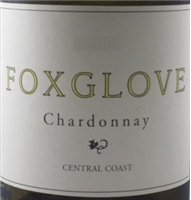
Winemaker’s notes:     Fresh and lively with aromatic notes of tropical fruit and pear, in a fleshy, medium bodied style, with obvious minerality and precision.

Critical acclaim:     “The 2010 Chardonnay is one of the top values in California wine. It possesses tons of ripe, varietal fruit in a style that is quite rich but not heavy. Clean citrus and floral notes add freshness on the long finish. Lees stirring gives the wine much of its richness, while aging in steel helps maintain freshness. There is remarkable depth and textural finesse here, never mind a price that is mind-boggling for this level of quality. Anticipated maturity: 2011-2014.”      90 Points    The Wine Advocate

WA 90 pts- According to Robert Parker – This terrific portfolio of values is led by Foxglove’s remarkable 2009 Chardonnay, a non-oaked, stainless steel-fermented and aged white that sees no malolactic fermentation. Moreover, there are 30,000 cases of this beauty, a blend of two-thirds Santa Barbara County fruit and the rest from Paso Robles and further north in Monterey. It exhibits crisp honeyed lemon, citrus, poached pear, and honeysuckle notes intermixed with a hint of pineapple. However, it is the zesty acidity, stunning purity, and delightful balance this naked Chardonnay possesses that make it so appealing. Enjoy it over the next year…. Rated 90+

___________________________________________

2009 Paraiso Pinot Noir, Santa Lucia Highlands (SLH), Monterey County, California,     APV: 14.2%       from $ 9 to $ 17
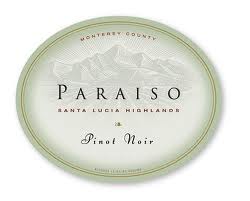
Winemaker Notes: The 2009 Estate Pinot Noir is a fine example of clonal diversity coming together in one wine. The focus is decidedly Burgundian, with flavors of raspberry, cherry and wild berries, good acidity, and a nice French oak complexity.

From K&L Wines:  A well-priced Santa Lucia Highlands Pinot Noir, with lots of bright red raspberry, cherry and strawberry fruit, accented by cinnamon spice and refreshing acidity. According to Wine Spectator: “Appealing for its easy-drinking allure, with ripe plum, raspberry, wild berry and spice flavors. Medium- to full-bodied, showing off a racy earthiness on the finish, which gives this a nice touch. Drink now through 2016.” (9/10/11).

_____________________________________________

Tensley- Syrah – 2010 – Santa Bárbara        APV: 14%  from $  20 to 30

One of the finest values in Syrah is Tensely’s 2010 Syrah Santa Barbara (100% Syrah aged in neutral oak barrels). The 500 cases of this amazing offering should disappear quickly given what’s in the bottle. A dense purple color is accompanied by notes of roasted meats, lavender, cassis, blackberries, charcoal and ink. This ripe, full-bodied, dense wine should drink well for 7-8 years, possibly longer.

From Amanti Vino:The grapes for this year’s Santa Barbara County Syrah were sourced from five distinct vineyards. 40% of the fruit comes from the Camp 4 Vineyard; 25% is from the Mormon Vineyard in the Santa Rita Hills appellation, and the remainder comes from Thompson, Tierra Alta, and Colson Canyon in equal parts. Moorman is a new addition for us and introduces prominent notes of pepper and red fruits typical of Syrahs grown in the cooler Santa Rita Hills climate. The Camp 4 brings bright notes of raspberry and blueberry along with a streak of minerality while the Thompson, Tierra Alta, and Colson combine to add a lush mouthfeel and notes of black stone fruits, smoked meats and chocolate. Drink this wine now or age it over the next 3 to 5 years.

Wine Advocate:     One of the finest values in Syrah is Tensely’s 2010 Syrah Santa Barbara (100% Syrah aged in neutral oak barrels). The 500 cases of this amazing offering should disappear quickly given what’s in the bottle. A dense purple color is accompanied by notes of roasted meats, lavender, cassis, blackberries, charcoal and ink. This ripe, full-bodied, dense wine should drink well for 7-8 years, possibly longer.  Score: 92. —Robert Parker, August 2011.

__________________________________________________

Justin – 2009 – Cabernet Sauvignon – Paso Robles      Alcohol:  14.5%   $ 21
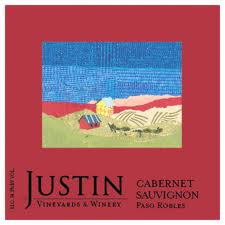
From KLWines.com:     Justin’s 2009 Cabernet Sauvignon is generous and easy-to-drink, with loads of ripe red and black fruits, meaty undertones and a dollop of spice. The tannins are definitely perceptible, but they give this otherwise juicy red some nice texture, perfect for fancy burgers, braises and stews.

Chiara Shanon, from KLWines.com:      This entry level Cabernet from Justin really impressed me at the Paso Wine Showcase tasting that took place in the Redwood City store earlier this month. Stylistically it is more similar to comparable wines produced in Bordeaux than what you might expect to find in Paso Robles and many other new world regions. The nose is fruity and attractive, offering a mix of just-ripe (no pun intended) and juicy red and black fruit aromas with underlying earthy spice notes. The soft midpalate is framed by medium tannins that provide just the right (again, no pun intended) amount of texture and grip to persist in the finish. A Cabernet you can drink!  7/15/2011.

__________________________________________

4.  Evaluación de Vinos por  Socios del Club

por Hugo Benito

El dia 27 de junio  hemos tenido la degustacion 134 de nuestro querido Club, en cuya HugoBenitoopotunidad degustamos vinos de California,  de las siguientes  regiones:  Central Coast-S.L.Obispo, Paso Robles-Santa Barbara. Estos vinos fueron presentados  por Alfonso Sanchez y Miguel Segovia. Se repartieron 20 formularios (uno para cada persona presente)y se recibieron 16 .Como es norma para los calculos no se consideran los valores extremos cuando estan en solitario.

Vino Numero 1- Foxglove Chardonais 2010 -Bob Warner-San Luis Obispo county-Central Coast. Alcohol    Precio %10 a $18 . Evaluaron este vino 11 comensales con un promedio de 88.2 puntos. Hay una concentracion (10 pers.) con un promedio de 88.5. Comentarios: color ambar claro brillante,aromas frutales,manzana, florales, citricos ,especias, poco cuerpo, delicado, elegante buena estructura y balance, final largo. Algunos lo sintieron algo amargo.

Vino Numero 2- Paraiso Pinot Noir -Santa Lucia Highlands (SLH)-Monterrey County.Alcohol    Precio $9 a $12. Evaluaron ese vino 13 personas entre 85 y 89 puntos con un promedio de 87.5 puntos.No hay una concentracion manifiesta.Comentarios: Color rubi intenso, rojo tipico del pinot noir, transparente,aroma a frutas rojas ,violeta, especias;acidez, fruta y taninos equilibrados, algo dulce, final corto.

Vino Numero 3- Tensley-Shirah 2010  -Santa Barbara. Alcohol   Precio $19
Evaluaron ese vino 13 personas.Hubo una concentacion (12 pers.) entre 88  y 90 puntos con un promedio de 88.8 puntos. Comentarios: Rojo oscuro burgundy clasico,aroma a frutas negras muy marcado, mucho cuerpo, taninos suaves, muy buen balance y estructura.

Vino Numero 4- Justin 2009     -Cabernet Sauvignon-Paso Robles. Alcohol 14.5% Precio $19. Evaluaron este vino 13 personas con un promedio de 89.8 puntos. Seis personas le dieron 90 puntos. Comentarios:  Rojo perfecto brillante oscuro,aroma a flores ,taninos suaves, baja acidez,  aterciopelado al paladar, muy bien balanceado, final largo y complejo.

____________________________________

5.     California Central Coast

From Wikipedia:  The region is known primarily for agriculture and tourism. Major
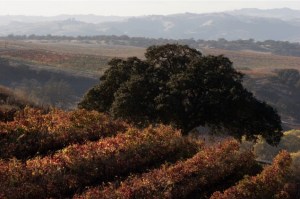
Paso Robles

crops include lettuce, strawberries, and artichokes. The Salinas Valley is one of the mostfertile farming regions in the United States. Tourist attractions include Cannery Row in Monterey, the Monterey Bay Aquarium, the theatres, galleries and white sand beaches of Carmel-by-the-Sea, the golf courses of Pebble Beach and the Monterey Peninsula, the rugged coastline of Big Sur and Hearst Castle in San Simeon.
From CentralCoast.com :    The area is not densely populated. The largest city in the region is Salinas, with approximately 150,000 people. University of California campuses are found in Santa Cruz and Santa Barbara, on the extreme north and south edges of the region respectively. California State University, Monterey Bay, founded in 1994, uses facilities donated when Fort Ord was converted from military to civilian uses. California Polytechnic State University, in San Luis Obispo, was founded in 1901.

Located along the Pacific Ocean halfway between Los Angeles and San Francisco, the Central Coast region spanning from Santa Barbara to Monterey offers long sandy beaches and rocky coastline vistas, wine country tours and artisan villages. Visitors can enjoy quaint country inns and ocean side cottages. Opportunities for surfing, water skiing, golfing, hiking, biking, horse back riding, bird watching,  festivals, farmers markets, shopping, film festivals, art shows and wine tasting all abound on the central coast. And with the breathtaking vacation spots, there’s no problem finding hotels.  In Centralcoast.com, you’ll find the information you need for living and traveling on the California Central Coast.

____________________________________________

6.  California Central Coast – History, Geography and Wine Production


Alfonso Sanchez

Alfonso Sanchez

Los vinos seleccionados para esta degustación son una muestra representativa, si bien limitada, de los producidos en la Costa Central de California.  Cada uno tiene características e identidad propias y la comparación o categorización entre ellos no tiene mucho sentido dado que son producidos a partir de diferentes cepas en subregiones diversas con climas y suelos distintos.  Se trata pues de juzgar las características de cada vino individual sin referencia a los otros.

La Costa Central de California comprende los condados de Monterrey, San Luis Obispo/Paso Robles y Santa Bárbara (ver mapa) y está localizada a lo largo de la costa pacífica al sur de la Bahía de San Francisco.  En la región se identifican dos grandes subregiones de gran importancia vitivinícola a saber:

a)     Monterrey y San Benito.  Con mas de 39.000 acres de viñedos de los cuales unos 16.000 (40%) están plantados en Chardonnay, unos 6.000 en Merlot y el resto en otras variedades.
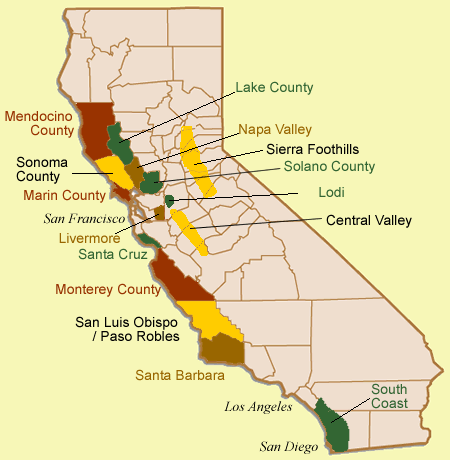
b)     San Luis Obispo y Santa Bárbara.  Con mas de 70.000 acres sembrados predominantemente de Cabernet Sauvignon predominate en San Luis Obispo (8.600 acres) seguida de la Merlot (4,200 acres).  En Santa Bárbara la Cahrdonnay y la Pinot Noir son las cepas predominantes.  Zinfandel es otra variedad de gran importancia particularmente en el área de Paso robles

Los monjes españoles introdujeron los primeros viñedos en la  región en el siglo XVIII en las distintas misiones que fundaron.  Las cepas eran traídas de México y se cree eran descendientes de la “uva negra” traída de España por Hernán cortes en 1500.  Con el tiempo estas uvas se denominaron Misión.  Los vinos se usaban para el culto religioso pero también como bebida familiar y celebratoria.  A mediados del siglo pasado (50s y 60s) se introdujeron las variedades francesas.

En Monterrey (Salinas Valley) se plantó inicialmente (en los 60’s) mucho Cabernet Sauvignon pero las condiciones climáticas no permitían un adecuada maduración de esta variedad que resultó cargada de taninos verdes.  El clima de Monterrey está influenciado por las brisas frías del Pacífico, es de baja pluviosidad y los vientos fuertes son frecuentes.  Esta influencia marina favorece las variedades del clima frío y de largo tiempo de maduración (típicamente se cosecha dos semanas mas tarde que en el resto de  las otras regiones).  Además el terreno frio propicia rendimientos bajos lo que produce concentración en los vinos.  Por eso desde hace muchos años los cultivos fueron cambiando a la uva Chardonnay y a la Pinot Noir que junto con la Merlot son las que caracterizan a Monterrey.  Las AVAs de la región incluyen Arroyo Seco, Carmel Valley, Chalone, Hames Valley, San Antonio, San Bernabé, San Lucas y Santa Lucía Highlands.

Alrededor de Paso Robles (a unos 30 km de la costa a mitad de camino entre San Francisco y Los Angeles) existen una gran variedad de microclimas y suelos que favorecen tanto a las variedades de climas fríos así como aquellas que prefieren climas cálidos.  Los días son claros, soleados y cálidos pero en la noche las temperaturas descienden hasta 40º F (bueno para maduración lenta) pero la orientación los cañones montañosos por donde entran las corrientes frías del Pacífico y la variedad de suelos determinan el microclima de los diferentes viñedos y la gama de vinos que ahí se producen.  Esta característica es más pronunciada en Santa Bárbara en donde los cañones corren en dirección este oeste lo que permite la entrada de los vientos y nieblas del Pacífico.  Sin embargo las temperaturas durante el día son altas lo que conduce a una maduración con alto contenido de azúcar  y por lo tanto con vinos de mucha fruta y alcohol (normalmente entre 14 y 15%).  La subregión de San Luis Obispo incluye las AVAs de Arroyo Grande, Edna Valley, Paso Robles, y York Mountain.  Santa Bárbara incluye Happy Canyon, Santa María Valley, Santa Rita Hills y Santa Ynez Valley

Los vinos del área son pues variados que incluyen como los mas importantes: a) los Chardonnays fragantes, con aromas y sabores a frutas tropicales y flores blancas, mineralidad y balance; b) los Pinot Noir livianos y fragantes (violetas y especies), c) los Cabernets, Zinfandels y Syrahs con aromas frutas negras y rojas, y especies y sabores donde la fruta es evidente y con taninos variables y alto contenido de alcohol y d) las mezclas tipo Ródano Norte de gran calidad (y precio).

Posted in Meeting Abstract | Leave a comment

Brief Selection of Red Virginian Wines

Brief Selection of Red Virginian Wines

This post has digested information on the wines: White Hall Petit Verdot, Chrysalis Norton,  Breaux Merlot, New Kent Meritage, North Gate Meritage, Jefferson Meritage, Glen Manor Meritage, Barboursville ‘Octagon’ Cab Sauvignon, Charthan ‘Church Creek’ Cab Franc and Jefferson Cab Franc.

At the bottom of the post a list of the Virginia Governors Case list of 2012 champions. How many of those have you tasted?

Brief Selection of Red Virginian Wines

Miguel Segovia, Jairo Sanchez, Alfonso Sanchez, Cecílio-Augusto Berndsen, Juan Luis Colaiacovo, Peter Sherer, Mario Aguilar have participated in this “brief selection of Red Virginian Wines.” The vineyards are in Virginia. Most of the places are less than one hour away from the metropolitan Washington, DC area.

______________________________________________________________

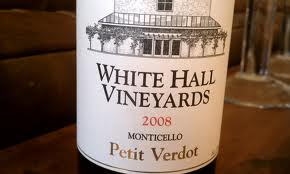
2009 Petit Verdot   White Hall Vineyards,   5282 Sugar Ridge Road,  Crozet, Virginia 22932      Blend   82% Petit Verdot, 9% Cabernet Sauvignon, 9% Merlot     $ 20

 From Producer website: A popular Bordeaux varietal that has recently gained much recognition in Virginia, this is our fifth vintage of Petit Verdot, and has become one of our bestsellers! The grapes were fermented half in small bins and half with the French Delestage method, and the fruit was then aged in French and American oak. One of our deepest and most complex wines, the Petit Verdot shows great potential for long-term cellaring with its rich burgundy color, smooth tannic structure, and deep flavors of fruit and spice, enhanced by tobacco notes.

Tasting Notes:  Rich ruby colors and luxurious aromas of cedar, dark chocolate, and tobacco foreshadow a round palate laced with notes of bright cherry and currants, enhanced by smoky vanilla flavors and well-integrated tannins.

Food Pairings:  Portabello Mushrooms, Eggplant, Veal, Steak, Prime Rib, Marinated Chicken

From Cellar Tracker:   Community Tasting Notes (average 86.5 pts. and median of 86 pts. in 2 notes) – Tasted by AngryPrez on 4/10/2012 & rated 84 points: decent bottle of wine but found it average – maybe it is the petit verdot, but it seemed a bit too fruity, almost sweet to me – liked the moon mountain petit verdot better — bought at the vineyard and glad we could support them but would not buy again (202 views)

Tasted by Richard Jennings on 7/22/2011 & rated 89 points: Virginia Wines from 2011 Wine Bloggers Conference; 7/22/2011-7/24/2011 (Omni Hotel, Charlottesville; Monticello; and Pollak and Veritas Tasting Rooms, Virginia): Tart black fruit, tart berry nose; tasty, tart berry, ripe currant palate; medium-plus finish (82% Petit Verdot, 9% Merlot, 9% Cabernet Sauvignon) (503 views)

__________________________________________

Chrysalis Vineyards Norton – Estate Bottled        23876 Champe Ford Road    Middleburg,  Virginia 20117    Tel.: 540-687-8222   13.2% Alcohol  from $17 to $ 39 year and selection dependent

From the producer web site:  In 1873, at the Vienna Universal Exhibition in Austria, a Norton wine was acclaimed “the best red wine of all nations.”

Here at Chrysalis Vineyards, we’ve undertaken a serious commitment to restore Virginia’s native grape to its former glory – making wines worthy of international praise.

Estate Bottled Norton is a deeply colored, robust and full-bodied wine. We hope you’ll agree that this fine wine is another exciting step forward on our mission “To proudly restore Virginia wines to world renown, and celebrate the homecoming of Norton, the Real American Grape!®

No additional information was found   for 2006 or 2008 or any other year.

>>  A bit of info on the grape: from http://vinespot.blogspot.com  Norton, also known as Cythiana is one of the few Native American grape varieties that can produce quality red wine which rivals some European reds. Norton is hardy, disease resistant, and unlike Pinot Noir for instance can grow just about anywhere. The exact origin of Norton is spark for many debates. Some experts believe that Norton is a true native of North America, whilst others believe Norton is a hybrid between indigenous varieties and Vinifera varieties. Others surmise that Dr. Norton of Richmond first planted this grape in Virginia in the late 1820’s, hence the name.

The grape blossomed in the 1830’s and was widely planted throughout much of the Eastern half of the United States. The origin of this variety is quite a mystery, but the aroma and flavors are pleasantly revealing.

The Norton grape saw great prominence during its peak throughout the 1800’s, and excelled as a quality red wine. In Missouri the Norton grape fetched gold medals and high praise from acclaimed and renowned wine critics. Sadly enough, during prohibition Norton saw it’s untimely demise, but would emerge many decades later to dazzle the palates of a new genre.

______________________________________________

Merlot  –   Breaux Vineyards,

36888 Breaux Vineyards Ln, Purcellville,  Loudon Co.,  VA 20132   Alcohol:   14%      $   28   (2005 & 2006)     $  32  ( 2007)
From the producer site:    http://www.breauxvineyards.com      Merlot Wine Information:            This balanced Merlot is shows complex flavors suggesting dark cherry and ripe plum. The supple tannins provide a smooth, long, lasting finish. A great companion to spicy pasta dishes, aged cheeses, grilled tuna steaks and pork….just to name a few.

From Cellar Tracker site:   Community Tasting Notes (average 86.7 pts. and median of 88 pts. in 11 notes)   Tasted by TheOther46 on 4/8/2011 & rated 88 points: Always delicious and represents great value for a Virginia red. Ripe, red fruit with plum and spice. Medium-bodied and extremely versatile with food. (973 views)

Tasted by jdabrowski1027 on 7/7/2010 & rated 88 points: slight hints of under-ripe greeness, but very smooth. (1379 views)

Tasted by Seventy on 4/25/2010 & rated 86 points: Blended 2005 and 2007 Merlots, with some Petit Verdot. Smoky on the nose and palate, a bit oaky. (1446 views)

Tasted by Anonymous on 6/30/2009 & rated 90 points: Excellent! (1569 views)

Tasted by Anonymous on 12/5/2008 & rated 88 points: Lush earthy, smooth and easy drinking. Medium bodied, very well balanced. Very good. (1556 views).  ______________________________________________________

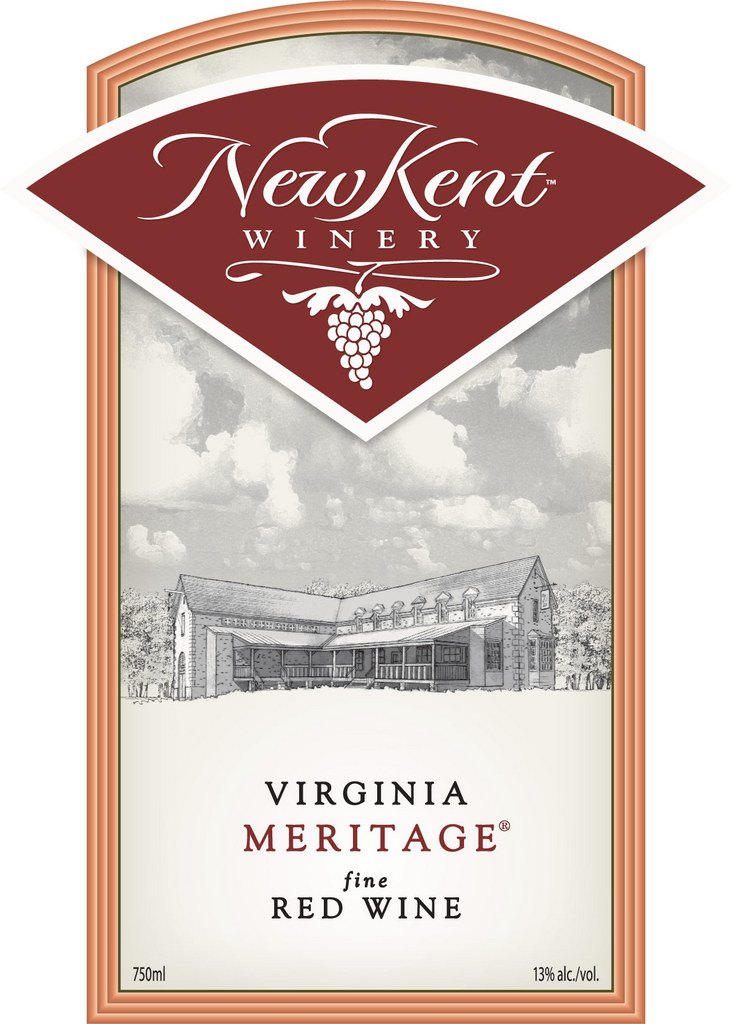
Meritage    – New Kent Vinery  

8400 Old Church Road, New Kent, Virginia 23124  Alcohol: 13%    $ 23 +tax  vintabe blend

A traditional-style Bordeaux blended red wine.

Small lots selected from our Virginia vineyard were fermented separately and made to their best potential. Laborious hours blending these selections (someone has to do it) revealed the exact quantities needed of each to make this evolved jewel.

Pairing: Our Meritage red wine pairs well with strong cheeses, red pasta sauce dishes and meats.

The Good Wine Guru: Earthy aromas is a contrast to the mellow flavors of this red.  The light red color belies the dryness of the wine, one that would pair well with red meats, strong cheeses, or red pasta sauces.  As New Kent Winery is a new winery, this Meritage is a respectable offering.

Cellar Tracker:  Gives 85.8 points 6 notes.    What Is Meritage?

In 1988, a group of American vintners formed The Meritage Association to identify hand-crafted wines blended from the traditional “noble” Bordeaux varietals including: Cabernet Sauvignon, Merlot, Cabernet Franc, and Petit Verdot and Malbec or Sauvignon Blanc, Semillon, and Sauvignon Vert.”Meritage,” pronounced like “heritage,” was selected from more than 6,000 entries in an international contest to name the new wine category. Meritage is an invented   word that combines “merit” and “heritage” – reflecting the spirit of members of The Meritage Association. Meritage® is a registered trademark of The Meritage Association. To use this name on your wine label, please contacthttp://www.meritagewine.org/about becoming a member.

Who’s Legal?http://www.meritagewine.org/new_members.htm   ________________________________________________

2009 Meritage  North Gage Vineyard

16031 Hillsboro Road  Purcellville, Loudon Co. VA 20132

Alcohol 13%      $ 20 + Tax

Prizes: 2008  Dallas – Gold, VA Gov –Silver, Finger Lakes – Silver, Vineyard & Vinery Mgt. Mag. – Bronze.

From the Vineyard site:  Science gives way to art when a winemaker puts together a blend of wines that is greater than the sum of its parts. We evaluate the characteristics of the parts we have to work with and then create a blend that shows the best of our Cabernet Franc, (47%), Cabernet Sauvignon (26%), Petit Verdot (21%), and Merlot (6%). The result is a full-bodied wine, complete and complex from start to finish.

Wine Enthusiast Mag. :    82 points –  Although initially the bouquet is inviting with scents of dark fruit, chocolate and mocha, notes of tomato and tomato leaf carry through to the palate as well. Lots of tart acidity and chunky grape and wood tannins leave the mouth feeling jagged.       ______________________________________________________

2008 Meritage  –     Jefferson Vineyards                 

1353 Thomas Jefferson Parkway,    Charlottesville, Virginia 22902   Meritage Blend: 55% Cabernet Franc, 23% Petit Verdot, 12% Cabernet Sauvignon10% Merlot.     Alcohol 13%    $ 23.81 Safeway McLean, elsewhere  $ 30 + tax.

From the producer site: Shows palate saturating red and black fruits from the first  taste through the finish. With notes of cassis, espresso, chocolate on the mid-palate and Provencal herbs on the finish. This wine will bring handsome rewards if cellared for the next decade. Awards: 2011 San Diego International  – PLATINUM Medal *Staff Superlative: Most likely to age gracefully*

>> About the MERITAGE: Derived from a combination of the words “Merit” and “Heritage”, Meritage wines are U.S. born and bred and must include some combination of the classic Bordeaux varietals. When examining our Meritage Wine Ratings, it is evident that the red blends are far more prevalent than the whites. The red wines are a blend of the noble Cabernet Sauvignon, Cabernet Franc, Petit Verdot and Malbec, while the whites combine Sauvignon Blanc, Sémillon and Muscadelle. In these wines, no one varietal may account for more than 90% of the blend. In order to use the term Meritage, wineries must apply for and obtain a license through the Meritage Alliance, though certain wineries choose to brand their wines, creating a proprietary blend such as Joseph Phelps’Insignia.” The Alliance considers these wines to be the best of the vintage, and consumers can expect big and bold flavors, brimming with ripe and lush berry fruit that will only improve with oak barrel aging.

From the Wine Enthusiast: (evaluation on the Meritage 2002):  82 points  Nicely structured, but where’s the fruit? Despite a rich, dark color, the flavors are of tobacco, earth and menthol. Drying tannins on the finish.  — J.C.  (9/1/2005)

from http://www.chuggingveuve.com:      Meritage   is a term coined by American winemakers to denote a Bordeaux-style blend, which uses a combination of any of the following five grapes: cabernet sauvignon, cabernet franc, merlot, petit verdot and malbec. While the Jefferson Meritage blend changes the grapes and percentages each year, all were aged in select French oak barrels from three distinct coopers in France.

________________________________________________________

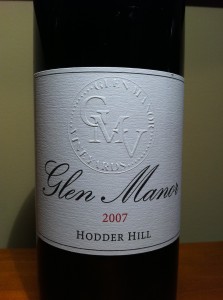
2009  Hodder Hill,  Glen Manor  Vineyards  – Meritage

 2244 Browntown Road Front Royal, VA 22630   Meritage,     $ 40 + tax    Winner of 2012 Virginia Governor’s Cup.

Washington Post, by David McIntyre:  The 2009 Hodder Hill is a blend of 63 percent cabernet sauvignon, 25 percent merlot and 6 percent each cabernet franc and petit verdot. Ironically, those last two varietals are the grapes most people would argue perform best in Virginia.

[Virginia Governor Bob] McDonnell called the Hodder Hill “a stunning representation of the best in Virginia wines. Just as Virginia wines have been gaining acclaim here and abroad, we have raised the bar on the competition,” he said in a press release issued by the Virginia Wine Board marketing office. “This, and the other 11 wines that make up the Governor’s Cup Case, will make a fine addition to wine cellars everywhere, further enhancing the growing reputation of Virginia Wines.”

VA Gov. McDonnell, Jeff White and First Lady Maureen McDonnell

The Governor’s Case was intended to be an annual snapshot of the best of Virginia wine, and as such, it is instructive. Some notable names — such as Barboursville and Linden — were missing. While Glen Manor took top prize, nine of the 12 finalists were from the Charlottesville area. Of the 12 wines, five were Bordeaux-styled “meritage” red blends, including the Glen Manor. No viogniers or petit verdots made the cut, and only one cabernet franc. Only three white wines were represented, including one sparkling.

From the http://www.olddominionwine.com:   Glen Manor’s award winning wine is a blend of 63% Cabernet Sauvignon, 25% Merlot, 6% Cabernet Franc and 6% Pertit Verdot. The 2009 Hodder Hill Meritage is a complex wine with ever-evolving aromas of dark red berries, eucalyptus, licorice, tea leaf, cassis and fresh ground coffee beans. On the palate, it is a highly structured wine of dark and refined flavors, with mouth-coating tannins, refreshed by brightness of acidity and finishing long and expressive.

The complexity of this wine allows pairing with a wide variety of foods and cooking styles, from aged gouda and earthy sheep cheese to a rustic bowl of onion soup to rich meats, duck, game or lamb.

_________________________________________________

Barboursville 2007 “Octagon” Red,  

Barboursville Vineyards    17655 Winery Rd.    Barboursville VA  22923      Bordeaux Varietal Blend   Alcohol:  13.5%    $40 and tax.
from Tastings.com:  92 points (Exceptional) World Wine Championships Awarda of Chicago: Gold Medal.            Deep garnet color. Aromas of mulberries, roasted tomatoes, forest floor, and caramelized nuts with a supple, dryish light-to-medium body and a lively, refined, mineral and nutskin finish. A spot on Old World styled claret that will shine with porterhouse steaks or elk chops.

From Cellar Tracker: Community Tasting Notes (average 89.2 pts. and median of 89 pts. in 5 notes) –

Tasted by JayPKay on 6/16/2012 & rated 88 points: A finely crafted European style blend. This is still a little tight and could benefit from another year or so in the cellar. But it drinks nicely after an hour of breathing. A muted mint on the nose, the attack is subtle with a blossoming middle and nice finish. Virginia has slowly been making its way onto the world stage and this is one of it’s premier bottles from one of its better vineyard/winemakers. (106 views)

Tasted by comlaw on 5/10/2012 & rated 90 points: Very smooth. Decanted for half an hour. Already quite drinkable. Paired well with venison meatloaf. (225 views)
Tasted by wineshaman on 3/25/2012 & rated 89 points: Decanted 2hrs, subtle, balanced, smooth and silky, hints of eucalyptus. (289 views)

Tasted by wineshaman on 1/7/2012 & rated 89 points: Decanted 2hrs, eucalytus, plum, blackcherry on the nose. Nice balance of berries, mint and a touch of stone on the finish. Soft and smooth finish, best Octagon I’ve tasted since the 2002 vintage. (480 views)

Red Bordeaux Blend:      The variety Red Bordeaux Blend in CellarTracker implies any blend using any or all of the five traditional Bordeaux varieties: Cabernet Sauvignon, Merlot, Cabernet Franc, Petit Verdot and Malbec. As such, this is used worldwide, whether for wines from Bordeaux, Meritages from California and Canada, some Super-Tuscan wines etc.

__________________________________________________

Church Creek  Cabernet Frank,

Charthan Vineyards,      9232 Chatham Road, Machipongo, VA 23405   $19
From the Producer site:  Cabernet Franc (75%), Merlot (22%) and Petit Verdot (3%)
A well-balanced blend of the 2009 and 2010 vintages with a very rich, ripe tannic structure. Flavors of ripe raspberry with a velvety mouth feel. Floral notes of violet on the nose and a hint of pepper on the finish. Barrel-aged in new French oak for two years.

From  www.thevineyard.com:  A versatile Cabernet for food pairings with medium-bodied cheeses, grilled or roasted meats, and rich sauces. Well-balanced with a very rich, ripe tannic structure. Flavors of ripe raspberry with a velvety mouth feel. Floral notes of violet on the nose and a hint of pepper on the finish. Aged in new French oak for nine months.   Dry Wine.

From Cellar Tracker:  Community Tasting Notes (average 90 pts. and median of 90 pts. in 1 note).   Tasted by Warnockw on 1/16/2012 & rated 90 points: Smooth with a nice pepper finish (94 views)

From Winecompass.com:  With hazelnut, spice, tobacco, and notes of dried fruits, this wine lingers on the palette.

____________________________________________________

2010 Cabernet Franc – Jefferson Wineyards  

1353 Thomas Jefferson Parkway, Charlottesville, VA 22902     Alcohol: 14.5%  from $18 to $ 25 before tax
From the Jefferson Wineyards site:   Pepper and spice on the nose lead to soft cherry, raspberry and licorice on the palate complemented by subtle tannins. Cellar for the next three to five years. 2012 Winemaker Challenge Wine Competition – GOLD Medal, 2012 Governor’s Cup – GOLD Medal

From the wineaccess.com: User Reviews:       Excellent  —   By Delany  13922535,  January 29, 2011  –  I have always found Jefferson Vineyards to be one of the best vineyards in Virginia. This cab franc proves it. It has a wonderful nose and there are some spicy notes which is characteristic of cab franc. If you are looking to show off VA wines then this is a good bottle to start with.

Great Stuff   –    By Zakaib      11936021, February 09, 2006   –   Classic nose of bright cherry and pepper so typical of Virginia Cabernet Franc. Mid-weight on the palate with great saturated flavors and delineation on the finish.

From the corkenvy.com (corkpit):   …The Jefferson Vineyards Cabernet Franc didn’t represent the best expression of the grape ever, but this wine was more than enjoyable.  At $18, this is a nice little bottle of wine.  I would absolutely recommend decanting this wine before serving—probably for 2-3 hours.  It got better with each sip after 90 minutes or so.  The blurb on the bottle recommends pairing with game meats; I agree, provided you keep a lot of game meats around.  If you enjoy Cabernet Franc (or haven’t had this varietal before and would like to try something different), give this wine a go.  …

_________________________________________

2012  list of the Virginia Governor’s Case wines:

Glen Manor Vineyards, Hodder Hill 2009 (Meritage)

Bluestone Vineyard 2010 Cabernet Sauvignon

Delfosse Vineyards 2007 Meritage

Jefferson Vineyards 2010 Cabernet Franc

Keswick Vineyards 2009 Cabernet Sauvignon Reserve

Keswick Vineyards 2010 Merlot

King Family Vineyards 2008 Meritage

Potomac Point Winery 2009 Heritage Reserve (Meritage)

Tarara Winery 2010 Honah Lee (White Blend)

Trump Winery 2008 Kluge SP Blanc de Blanc Sparkling Wine

Veritas Vineyard 2010 Meritage

White Hall Vineyards 2010 Gewurztraminer

By Dave McIntyre | 08:00 PM ET, 02/23/2012

Posted in General, Magazines and Books wine related | Tagged , , , , | Leave a comment

El Scotch e tu edad (puede ser vino también, no hay restricciones, pero no funciona con agua)

El Scotch e tu edad (puede ser vino también, no hay restricciones, pero no funciona con agua)

Ricardo Zavaleta

Ricardo Zavaleta

Nuestro buen amigo Ricardo Zavaleta envió para publicacion en el blog este interesante execicio para calcular tu edad. Esto es mucho  importante después de muchas copas cuando te  olvidas de tu propia edad.

Ricardo envia esta mensagem com el Power Point:

Queridos Amigos

Antes de entrar en materia quiero desearles un feliz día del padre en compañía de sus familias. Que Dios les bendiga y pasen como yo en compañía de hijos y nietos.

Fraternal Saludo de              Ricardo Zavaleta

Ahora, por favor, calculen su edad usando … … whisky (puede ser vino, pero no usen agua)

Es fabuloso y no se equivoca. Hagan la prueva y veran.  Que lo disfruten

Whisky calculadora

Posted in Humor | Leave a comment

Malbec – Tasting # 133 31/May/2012 – Da Domenico Ristorante Italiano 12:00 noon

Malbec  

Tasting # 133   31/May/2012 

Da Domenico Ristorante Italiano  12:00 noon

Contents of this post:

I – The Wines Presenters and Birthdays of the Month

Raúl Sanguinetti

This month the wines are being presented by Raúl Sanguinetti and Jorge Omar Rodrigues. Raúl sent this message announcing the selection of the Malbec wines:

Jorge Omar Rodrigues

“Tenemos escogidos dos Malbecs tradicionales de bodegas establecidas y uno de la nueva generación de Malbecs boutique de parela única que creo van a gustar mucho.

Con Omar disfrutamos mucho probando algunos excelentes Malbecs de la amplia selección disponible en la plaza”.

Birthdays of the Month: Leonor Barreto  dia 26, Rene Meza  dia 31.

___________________________________________________________

II.   Wines

1.      2009  Crios Bodega Hijos de Susana Balbo,    Malbec-Rose.  Alto Agrelo, Lujan de Cuyo,  Mengoza,  Argentina. APV: 14%,  $ 13.

Winemaker’s Notes: A beautiful, deep, vibrant rosé color. Has a surprising amount of  body for a rosé wine, and beautiful aromas of fresh, ripe wild strawberries. On the palate, the flavors of strawberries and young cherries come rushing in, accompanied by some spice notes and a clean, dry finish. This is the perfect chicken wine and a charming companion to mildly spicy Asian cuisine. Keep one in the fridge at all times and you’ll always have a delicious wine to enjoy with light snacks and cheeses. Best consumed in its youth.

Reviews:

Wine Advocate:  87 Points: The 2011 Rose of Malbec (100%) was fermented and aged in stainless steel. Aromas of strawberry, cherry blossom, and cranberry lead to a crisp, dry, savory wine that should prove versatile at the dining table over the next 12-18 months.-JM

International Wine Cellar:  88 Points:   Bright, light red.  Perfumed aromas of red berries and flowers.  Cleanly made and lively, with a lovely hint of sweetness to the red berry and spice flavors.  Very attractive, fruity rose with dusty tannins and very good finishing lift.  Susanna Balbo’s son Jose Lovaglio, a graduate of UC/Davis, took over winemaking responsibility for the Crios wines with the 2011 vintage.  Stephen Tanzer

2.    2010 Pulenta La Flor Malbec.    Bodegas Pulenta.  Alto Agrelo, Lujan de Cuyo,  Mendoza, Argentina, APV: 14,5 %, bottling Jan. 2011, $ 15

Rated 90 – Offers up an inviting nose of cedar, spice box, lavender, earthy minerals, and black cherry. This sets the stage for a savory, ripe, layered offering that over-delivers in a big way. Drink this outstanding value over the next 3-4 years. Robert Parker.

Smells of raspberry and cherry with a nice hit of “Old World” stink. A blast of ripe fruit notes, cherries and black currants with a dash of pepper and toast that intensifies on the mid-palate. Sweet tannins on a long finish. This wine has both power and finesse and is a lot of wine for thirteen bucks. The Blue Collar Wine Guy

3.    2009 La Posta del Viñatero,   Malbec.       Angel Paulucci Vineyard,     Lujan de Cuyo,  Mendoza,  Argentina, APV: 13.1%  $ 14

Red, Dry, Full-Bodied, Fruity, Rich

Bottlerocket Index: 4,  Wine Advocate: 90 pts.

Sí. Malbec ama la carne. Pair with a generously marinated carne asada or a super-savory carne guisada. Warm yourself up and serve with a piquant chili con carne or a stewy carne adovada.

Eyes:  Ruby,   Nose:  Medium-High Intensity, developing, black fruits, coffee, mineral, cherry,  Mouth:  Medium-Full Bodied, dry, medium acidity, light tannin, moderate-high intensity, chocolate, blackberry, raspberry, medium-long finish

La Posta is the triadic partnership between longtime grape growers, a talented winemaker and an enthusiastic importer. In this case, the grower is Angel Paulucci, who planted these Malbec vines in 1970. The winemaker is Luis Reginato (Tikal, Catena) and the importer is Vine Connections, who have been a leading force in artisanal Argentine wines for over a decade.

Tasting Notes – This blend impresses you right from the start. Aromas of black cherries and loganberries are infused with mocha and spice hints that give up the secret for what’s about to come. Your first sip washes broadly across your palate like a flood of sweet, fresh fruit and the viscous mouthfeel keeps the flavors lingering for a while. The hints of baking spice and some oak keep the fruit flavors fresh and lively. This is a wine that you’ll want to stack up in your wine rack (or closet) for any occasion. Great all by itself or with all your favorite red wine foods like burgers, ribs, lamb chops, and even pizza. Blend: 60% Malbec, 20% Bonarda and 20% Syrah. Rated 90+

According to the Wine Advocate: Medium purple; loganberries, black cherry, spice box, some complexity, good balance, long.

4.    2008 Malbec Mendel.   Bodegas y Viniedos Mendel  y  Roberto de la Mota.  Finca Perdriel, Lujan de Cuyo, Mendoza,  Argentina.  APV:  13.9%,  $  27.

http://www.mendel.com.ar     COLOR: Vivacious violet red.
NOSE: Fresh and intense. Violets, cherries and plum aromas predominate. The liquorice is present, giving complexity. Very integrated with the fruit are the vanilla, toast and smoky notes which denote its 12 month passage through French oak barrels.
MOUTH: Wine of great kindness in the mouth. The mature and soft tannins give it vivacity in the mouth, but they are nonetheless round. Its acidity gives it freshness, assuring a good longevity and potential for bottle ageing. The aromas in the mouth are intense and persistent. In the mouth they express themselves as a long, harmonic elegant and smooth set.

______________________________

III.    Evaluación de Vinos por  Socios del Club

Hugo Benito

El dia 6/31/2012 tuvimos la degustacion 133 de nuestro querido Club.En esta ocacion  Jorge O. Rodriguez y Raul Sanguinetti presentaron vinos de la cepa Malbec. Se repartieron HugoBenito25 formularios de evaluacion y se recibieron 18.Como es norma no se consideraron para los calculos los valores muy extremos en solitario.

Vino Numero 1- Crios Bodega Hijos de Susana Balbo Malbec-Rose -Alto Agrelo,Lujan de Cuyo,Mengoza -Argentina. Alcohol 14% Precio    Evaluaron este vino 16 personas entre 81 y 90 puntos con un promedio de 81.2. Hubo una concentracion (9 personas) entre 88 y 90 puntos con un promedio de 88.6  Comentarios:  Color amarillo palido,aroma a frutas blancas algo a ciruelas tambien, acidez y fruta bien balanceados, sabor agridulce,final mediano.

Vino Numero 2- Malbec La Flor 2010 – Bodegas Pulenta Wines-Alto Agrelo-Lujan de Cuyo-Mendoza -Argentina –  Alcohol  14.5% Precio .Degustaron este vino 18 personas entre 82 y 97 puntos con un promedio de 87.4 puntos.  Entre 85 y 90 puntos 13 personas le dieron un promedio similar.
Aqui los extremos se compensaron 87.3 .Comentarios:Color Rojo Granate,transparente,aroma a frutas rojas (se nota el alcohol)buen balance acidez ,fruta y taninos, algo de madera,final largo con presencia de taninos.

Vino Numero 3- La Posta del Vinatero-Malbec 2009 -Angel Pauluchi Vineyard
Lujan de Cuyo-Mendoza Argentina.Degustaron este vino 18 personas entre 82 y 95 puntos con un promedio de 89.1. Ente 87 y 91 puntos  13 personas le dieron exactamente el mismo promedio,en este caso los  los extremos se  compensaron :89.1 puntos.Color Rojo Granate intenso atractivo,aroma citrico y a frutas, muy buen balance,aterciopelado al paladar, algo de madera,taninos suaves , final largo y agradable.

Vino Numero 4- Bodegas y Viniedos Mendel-Roberto de la Mota 2008-Finca Perdriel-Lujan de Cuyo-Mendoza -Argentina- Alcohol 13.9%  Precio     .
Degustaron este vino 18 comensales entre 86 y 97 puntos con un promedio de 91.3 puntos.Diez pesonas entre 90 y 92 puntos le dieron un promedio de 90.8.  Comentarios:  Excelente color granate intenso, aromas a frutas bien equilibrados los taninos y la acidez,sabor mediano pero muy grato y y aterciopelado.Final medio alargo.

_________________________________________

IV.     VINOS MALBEC DE ARGENTINA

 Additional rich information on this topic click here →       Wines of Argentina
Argentina has been making wine since the 1500s, tracing its wine heritage back to Spain, France and, perhaps surprisingly, Italy. Italian immigration is second only to Spanish in Argentine culture, and the flavors of Italy show up strongly in the nation’s wine, food and cultural tradition. Historically, Argentina has kept much of its wine consumption at home, drinking most of the wine it makes. But we are now seeing more very serious Argentine Flag of Argentinawines north of the border, and Malbec is leading the movement. The wine-making region in Argentina ranges between the 22° and 42° South latitude. It spreads at the foothills of the Andean mountain range along over 2,400 km; from the province of Salta to the province of Río Negro, with a variety of climates and soils that makes each region a unique land. In general terms, the areas dedicated to vine cultivation are dry and arid with a low level of rain and humidity, determining factor as regards grape health. Abundant sunny days and thermal amplitude favor a good maturity and concentration of aroma and color in the grain. Soils are deep, permeable and poor in organic matter, decisive qualities at the time of obtaining good wine. Due to the low rain regime, irrigation is necessary. Water comes from the Andean range thaw, descending in the shape of rivers to become channels or ditches. Undoubtedly, the combination of these factors turns Argentina into a veritable oasis for the highest quality wine-making. Nevertheless, there is still a long way to go. Wine-making in Argentina, at the level that it achieves today, has a young history that goes back to a little more than 10 years ago. Technological progress, investment and some farsighted businessmen enabled a determining transformation. The province of Mendoza is the most traditional area in the viticultural industry, and is diverse enough to be divided into zones, according to their significantly different weather, height and soil characteristics. These include the Northern Zone, which is suitable for fruity whites and young reds, at a height from 600 to 700m; the Eastern Zone, with a height ranging from 600 to 700m, and the most productive zone in the province; the Uco Valley, a zone of colder weather and higher altitudes (between 800 and 1,400m over sea level); San Rafael, with heights ranging from 450 to 800m; and the High Zone of the Mendoza River, with heights ranging from 800 to 1,100m over sea level and various microclimates, this is the zone where almost all noble varieties have easily become adapted. It is a region that is remarkably well-suited to vine culture, protected from the Pacific’s cooling influence by the Andes and enjoying a long summer of cool nights and warm days, with a dry summer climate but plenty of water available from the region’s rivers. Malbec in particular is outstanding from this area, and it has clearly emerged as the star, the darling of both consumers and critics.
Malbec Varietal character (Appellation America)

One of the traditional “Bordeaux varietals”, Malbec has characteristics that fall somewhere between Cabernet Sauvignon and Merlot. A midseason ripener, it can bring very deep color, ample tannin, and a particular plum-like flavor component to add complexity to claret blends. Malbec is a finicky vine whose fruit is prone to rot and mildew in the cool, damp coastal climate of Bordeaux. But ask a Bordelais grower why there’s no Malbec around, and you’ll more likely get a dismissive shrug and sniff than a viticultural analysis. It is known in much of France as Côt, and, in Cahors, also as Auxerrois. There are in fact hundreds of local synonyms, since Malbec at one time was widely planted all over the country. Sensitivity to frost and proclivity to shatter or coulure (a disease that results in premature fruit drop) is the primary reason that Malbec has become a decreasing factor in most of France. Although plantings in the Medoc have decreased by over twothirds since the mid-twentieth century, Malbec is now the dominant red varietal in the Cahors area. The Appellation Controlée regulations for Cahors require a minimum content of 70%. Malbec is also planted in Chile, and there’s relatively little and recent acreage in California and Australia. It is usually blended with other red varietals in these countries. But Malbec truly comes into its own in Argentina, where it is the major red varietal planted. Much of the Malbec vines there were transplanted from Europe prior to the outbreak of phylloxera and most is therefore ungrafted, on its own roots. Sadly, over the years the bug infested Argentina, too, and vineyards are being replanted on resistant rootstock. Happily, the vines thrive in the arid climate of the Mendoza region in the foothills of the Andes. Made in the context of this South American nation’s Spanish and Italian heritage, it produces a delicious wine that has almost nothing in common with Bordeaux except the color. Argentines often spell it “Malbeck” and make wines from it that are slightly similar in flavor to those made in Europe, but with softer, lusher structure, more like New World Merlot. Another difference is that where French examples are usually considered short-lived, Argentine Malbecs seem to age fairly well. Successful Argentine Malbec growers claim that, in order to develop full maturity and distinction, Malbec needs “hang time” even after sugar levels indicate ripeness. Otherwise, immature Malbec can be very “green” tasting, without its characteristic notes of plum and anise. Malbec in Argentina has come to be appreciated for a spicy white pepper characteristic, the aroma of violets, and sweet, jammy fruit. It is a seductive wine that is typically warm and generous in the mouth, with plenty of flesh, and very appealing when young. Almost always producing a ripe and fruity, even plummy wine, Malbec can take oak aging or show well without it; it’s juicy and quaffable when young but can benefit from aging, developing an intriguing complexity with time in the bottle. It can range in price from as little as $7 to more than $75. The true potential of Argentine Malbec, and indeed in the entire spectrum of Argentine wines, is demonstrated by the fact that many of the world’s most renowned winemakers have come to Argentina to make wine. Both the legendary California winemaker Paul Hobbs, and Michel Rolland of Bordeaux, one of the world’s most famous winemakers, have created very high-end Malbecs. It may be the Italian component in the country’s mixed Latin family tree that fosters the fact that Malbec is an exceptional companion with a broad range of food. Its well-balanced fruit-and-acid profile makes it a natural with rare beef (bear in mind that Argentina is cattle country), but it’s just as good with simple fare from burgers to fried chicken. With its natural balance, good pairings include: cajun cuisine, calzones, cannelloni with meat, poultry, vegetable couscous, steak creole, Greek cuisine, deviled eggs, hummus, Indian cuisine, leg of lamb, Mexican cuisine with meat, pâté, spinach soufflé, and hearty pasta. For cheeses, think of harder styles that are either waxed or oiled, such as Parmigiano Reggiano, Ricotta Salata, Romano, Asiago, Pont l’Eveque, Gruyere, Manchego, Cantal, Comte, old Gouda, old Cheddar, Baulderstone, Beaufort, Leicester, aged Chesire, Chevre Noir, Wensleydale, Tilsit, Iberico, Mahon, Roncal, and Mizithra.

Posted in Meeting Abstract | Tagged | Leave a comment