Reunión 125 Da Domenico Ristorante Italiano Septiembre 29, 2011 12:30 PM

Reunión 125  Septiembre 29, 2011

Vinos de Valle del Loire  y   Cote du Rhone

Contents of this post:

  1. Vinos a degustar
  2. Menu  (revised)
  3. Opinión de los miembros acerca de los vinos catados
  4. Regiones Productoras de los Vinos
  5. Sócios com presencia confirmada

1.  La selección de vinos para la degustación:

En esa oportunidad se degustaron vinos del Valle del Loire y Cote du Rhone de Francia. Los socios Alvaro López y Juan Luis Colaiacavo seleccionaron los vinos y presentaron los vinos.


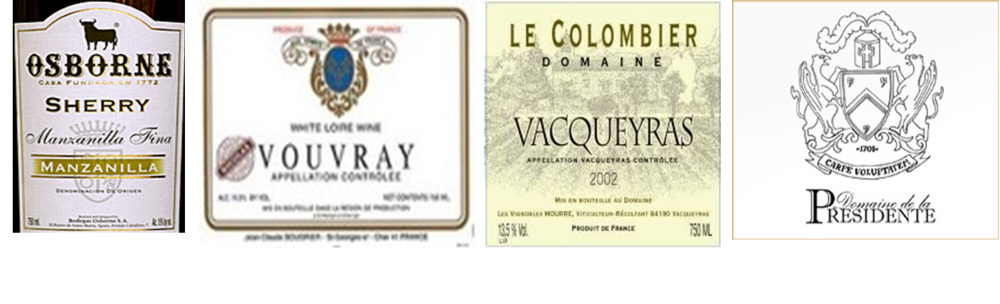
  1. 1. Osborne Manzanilla Fina, Alcohol 15%. Unabotella para aperitivo, Casa Fundada en 1772, Denominacion de Origen Manzanilla, Producto de España. Has been aged for 3 and 1/2 years in Oak barrells following the traditional “Solera” and “Criadera” systems. The result is a pale color and smooth flavor. Serve between 8 y 12 Grados Centigrados (43/56F).
  2. Famille Bougrier, Vouvray, Chenin, 2010.  Mis in Bouteille a Saint Romain sur Cher–Loire Valley , Product of France.      Alfio Moricone Selection:  “I choose the finest grapes to make my family reserve. It has classic Vouvray Character: Rich, Aromatic and Off-Dry. We like to serve this wine chilled (45/46 F.) as an aperitive or with poultry and salads or the Loire classic goat cheese.”
  3. Red Rhone Wine Le Colombier, 2009. Alcohol 14.5%.   Mis en Bouteille au Domaine, Les Vigno, Les Vignobles, Mourre. Viticulteur: Récoltant 84190 Vacqueyras, Product of France, Alfio Moricone Selection, Vieilles Vignes: Grenache 80%, Mourdvedre 20%.   Age of the Vines: 60 years old. Hand Picked.
  4. Chateauneuf du Pape, Red Rhone Valley Wine, 2006. Alcohol 14.5%. Alfio Moricone Selection. Mis en Bouteille Domaine de la Presidente, Famille Max Aubert, Proprietaire – Recoltant F 84290 Sainte Cecile, Les Vignes, Product of France.

______________________________

2.  Menu:

Appetizer:  Calamari Fritti

Primer Plato:   Eggplant Parmigiana   –  Layers os Eggplant, Mozzarela and Marinara sauce, served with Linguine

Segundo Plato  – seleccion de:

  • Braciolle di Maiale alla Grilia   –  Seared Pork   o
  • Cotoletta alla Parmigiana  –   Veal,  Breaded and baked, topped with Mozzarella Cheese and Marinara Sauce, served with linguine  o
  • Petto di Pollo  –  Chicken Breast  Pan seared with Mushroom and Marsala Wine Sauce.
Desert:   Homemade Tiramisu    o    Sicilian  Canoli

3.  Opinión de los miembros acerca de los vinos catados

Hugo Benito

Se repartieron 27 formularios y se recibieron 23. Como es norma no se consideraron los valores muy extremos.

El almuerzo comenzó con un aperitivo, un Osborne Manzanilla Fina.

La apreciación de los vinos degustados fue la siguiente:

 1 – Famille Vougnier-Vouvray Chenin Blanc 2010 – Loire   –  Calificaron este vino 22 personas con un promedio de 88 puntos. Hubo una concentración (15 pers) entre 84 y 89 puntos con un promedio similar. Color amarillo pálido, muy aromático, dulce muy frutal de final mediano. Debido a su condición dulce ese vino no combino muy bien con el plato de pescado de entrada.

2 – Domaine Le Colombier-Vaqueiras Rhone-Grenache 80 %,Mouvedre 20% –  Calificaron este vino 22 personas con un promedio de 89.1 puntos. Hubo una concentración (13 pers) entre 89 y 90 puntos con un promedio de 89.6 puntos.

También hubo bastante coincidencia en la descripción de ese vino. Rojo granate intenso, aroma muy complejo, frutas rojas, ciruelas guindas, poca acidez, taninos prolongados, se nota la madera. Típico viejo mundo. Poco aroma, buen sabor.

3 – Chateauneuf du Pape 2006-Grand Classiques-Rhone Valley.        Evaluaron este vino 22 personas con un promedio de 91.9 puntos. Hubo una concentracion (14 pers) entre 90 y 92 puntos con un promedio de 90.7 puntos. Tres personas le dieron 98 puntos. Rojo violado, carmín profundo? Aroma a frutas rojas muy balanceado, chocolate, taninos suaves. long finish, cuerpo medio, muy buen aftertaste. Excelente. Uno de los mejores vinos degustados en el Club.

____________________________

4.        Regions of the Wines

por Alfonso Sánchez


EL VALLE DEL LOIRE

Su localización a 45º de latitud norte (ver mapa) hace que los vinos del Valle del Loire sean de bajo contenido alcohólico (menos azúcar en la uvas) y más ácidos que aquellos que se producen más al sur.  Las variedades de uva (especialmente la Sauvignon Blanc) y de suelos resultan en vinos muy aromáticos y balanceados y muy sensibles  al terroir.  Es una de las principales regiones productoras de vinos de Francia y del mundo (en especial blancos y espumantes muy apetecidos).  La Iglesia tuvo un papel predominante en el desarrollo vinícola de la región cuando en los tiempos de las cruzadas los nobles vendían sus tierras a los monjes para financiar la guerra santa.  Estos últimos las dedicaron al cultivo de la vid para comercio de los vinos.
.
La región es famosa por sus excelentes vinos blancos.  Los tintos de la región (a base de Gamay y Caberent Franc) son poco conocidos por fuera de Francia pero son notables por su delicadeza y de menos cuerpo y longevidad que los tintos de otras procedencias.
.
Los vinos de Loire excelentes para acompañar las comidas.  Los Sauvignon Blanc, el Chenin Blanc y el Muscadet son excelentes para acompañar pescados, mariscos y quesos fuertes.
.
El Valle de Loire es una región compleja por la multitud de pequeños productores y sus 87 appellations de origen. Hay tres subregiones principales en el Valle de Loire:  a) La occidental donde predominan la variedades Chenin Blanc, Cabernet Franc y Melon de Borgoña ó Muscadet (no confundir con moscatel).  La Chenin Blanc nativa de la región estuvo desacreditada por vinos de mala calidad, pero recientemente las técnicas de manejo de viñedos, el procesamiento de las uvas y mostos y el enfoque  en la calidad han resultado en vinos de altísima calidad. Esta uva y la Muscadet le han dado un gran renombre a la región;  b) La subregión central en donde predomina la Cabernet Franc y la Chenin Blanc y c) la sub-región oriental (o alto Loire) en donde se planta excelente Sauvignon Blanc de cuya calidad dan prueba los producidos en appellations como Sancerre, Poulli Fumé y Menetou- Salon.  En todas hay pequeñas extensiones de las variedades tradicionales rojas de Bordeaux y de Pinot Noir.  Casi CV CLUB DEL VINO Washignton D.C.
2 todos los viñedos fueron destruidos por la Philopxera en el siglo XIX y los que hoy existen son plantados en raíces americanas resistentes a la enfermedad.
.
Los Suelos: Calcáreos y sedimentarios de viejos lagos y mares pero con muchas variaciones  de textura desde limos con cantos rodados hasta suelos finos compuestos principalmente de yeso (carbonato de calcio) y crustáceos fosilizados.
.
El Clima: Predominantemente mediterráneo con veranos muy cálidos, inviernos muy fríos y variaciones frecuentes por la influencia del rio y del océano Atlántico en la subregión occidental.
____________________________________

 RHÔNE

La región de Rhône (ver mapa) está situada al sureste de Francia sobre el río de su mismo nombre que corre de norte a sur desde los Alpes Suizos hasta Marsella (500 millas) y está dedicada principalmente a la producción de vinos tintos (95%).  Estos se caracterizan por un contenido de alcohol mayor (14-15%) que en el resto de Francia (13-13.5%).  Está dividida en cuatro sub-regiones, las dos más importantes son la meridional que es la de mayor volumen de producción, y la septentrional que produce los vinos más prestigiosos de la región y que compiten con los de Burdeos y Borgoña.  Hay registros de producción de vinos en la región desde 71AD pero su auge vino cuando en el Papa Clemente V trasladó la sede pontificia a Aviñón en 1309.  Cerca de 75 por ciento de los vinos para la corte papal eran de Rhône (Chateau neuf du Pape viene de ahí), el resto de Borgoña.
.

Cote du Rhone

La región Rhône norte alberga las appellations muy conocidas de Crozens -Herniare y Hermitage que por estar al lado derecho del río se favorecen del sol poniente.  Esta región es la tierra de la uva Syrah, que es la única uva roja permitida en los vinos y de la Viognier para los blancos junto con la Marsanne y la Rousanne en las appellations de Condrieu y Chateau Grillet.
.
Los blancos son opulentos y con cuerpo.  Los viñedos son propiedades familiares muchos en escarpadas laderas del río y más de la mitad del vino es embotellado por “negotiants” o comerciantes (Chapoutier, Delas, Guigal, etc.).  Los tintos del norte son famosos por su capacidad de envejecer y mejorar con el tiempo (un buen Hermitage solo está óptimo para beber después de 8 o hasta 10 años de embotellado).  Los blancos están en su punto entre los  18 meses y los cuatro años.
La región sur del Rhône es muy diferente en su topografía (plana) en el carácter de sus vinos, la mayoría son mezclas de varias uvas y son más livianos, por la uva Grenache, que los del norte donde domina la Syrah.   Aunque la Syrah se encuentra en auge, y se usa en las mezclas para alargar la vida del vino, la Grenache  es la más cultivada que se combina con Carignan, Cinsault (Hermitage) y Mouverdre principalmente.  Los tintos tienden a ser más afrutados, con especies y hierbas y taninos livianos mientras que los del norte son más achocolatados con sabores a frutas negras, moca y tabaco y taninos más fuertes característicos de la uva Syrah.
..
Las cooperativas hacen cerca del 70 por ciento del  vino pero existen appelations como Chateau neuf du Pape, Côtes du Rhône and Côtes du Rhône Villages dentro de la cual 20 Villages pueden agregar su nombre al rotulo del vino (Giocondas, Vacqueiras, etc.).  Las reglas aquí limitan el rendimiento del viñedo a no más de  42 hl/ha  (normalmente 50 o más en otras regiones) y requieren un mínimo de 12.5 por ciento  de alcohol.  No se permite producción de rosé en la AC de Chateau neuf pero este se produce en las otras AC (en la AC Tavel solo se permite rosé) en cantidades importantes y de buena  calidad.  Los tintos del sur pueden durar hasta 25 años pero no mejoran con el tiempo después de unos 6 años y los blancos deben tomarse jóvenes (dos años como máximo).
.
Clima: En el norte es continental con inviernos muy fríos y veranos muy cálidos aptos para uvas robustas.  En el sur es mediterráneo apto para frutales y viñedos.  Los riesgos frecuentes son las lluvias durante la florescencia en el norte, las heladas y los vientos fríos (mistral) en el sur y las lluvias excesivas en el otoño que favorecen los hongos.  Cualquiera de esos fenómenos puede arruinar las cosechas.
.
Suelos.  El norte los suelos son residuales de granito del Macizo Central de origen volcánico con excelente drenaje, micas, pedernal y residuos de calizas.  En el sur son arcillosos con gravas y residuos de rocas de caliza.
_______________________________________

5.  Sócios com presencia confirmada para esta degustación:

Se han anotado para esta degustacion los siguientes  24 socios e invitados:

Italo Mirkow,  Cecilio-Augusto Berndsen, Rene Mesa, Orlando Mason, Ricardo Zavaleta, Alvaro Lopez, Marco Lopez (Invitado de Alvaro Lopez),  Juan Luis Colaiacovo, Hugo Benito, Jairo Sanchez, Wilson Moreira, Euro Alves, Alfonso Caycedo, Bolivar Cobos, Alfonso Sanchez, Tulio Arvelo-Duran (Invitado de Cecilio-Augusto Berndsen),Mario Aguilar, Rolando Castaneda, Ruth Connolly, Pedro Turina, Alfonso Munevar, Jorge Omar Rodriguez, Clara Estrada, Leonor Barreto, Maria Victoria Rodriguez, German Zinke y Raul Sanguinetti.

Posted in Meeting Abstract | Tagged , , , , , , , , | Leave a comment

Club del Vino en el “En Contato” de la Asociación de Jubilados del BID-CII

Club del Vino en el “En Contato” newsletter de la Asociación de Jubilados del BID-CII  –                               Junio-Julio 2011 – No. 150

por Bolivar Cobos  (como publicado en el newsletter “En Contato”)  English version at the bottom of this post.

Integrado principalmente por jubilados de la OEA, el BID y el Banco Mundial, nuestro querido Club del Vino de DC cumplió en mayo pasado diez años de funcionamiento. Los socios nos reunimos una vez por mesa almorzar en un buen restaurante del área de Virginia, para disfrutar de un exquisito menú y degustar cuatro clases de vino en un ambiente de fraterna alegría.

Y esa cita se ha llevado a cabo mes a mes sin fallar ni una sola vez, de modo que son ya 123 los almuerzos que hemos celebrado, incluyendo el más reciente, en el restaurante Da Domenico de Mc Lean, el 29 de julio recién pasado. El club tiene actualmente 35 socios (30 de ellos regulares y 5 honorarios) y la mesa directiva la integran Juan Luis Colaiacovo (presidente, ex funcionario de la OEA), Álvaro López (vicepresidente),  Hugo Benito (Secretario) e Ítalo Mirkow (Tesorero). Al cumplirse los diez años de la fundación del club, en el almuerzo de mayo, se entregó al presidente Colaiacovo una placa conmemorativa y la ceremonia, grabada en video, está disponible a través de YouTube en


Como tradición, cada mes, en forma rotatoria, un grupo de socios compra varias botellas de vino, con un costo promedio de 15 dólares cada una. El primer vino a degustar es blanco y luego vienen tres tipos de vino tinto. Al iniciarse el almuerzo, el socio encargado describe las características principales de cada tipo de vino y el país y la región de donde provienen.

Durante nuestros almuerzos tenemos el contacto fraterno de amigos de antaño y compartimos con los nuevos socios e invitados, en medio de una amena conversación en que prima la alegría. Intercambiamos comentarios sobre los vinos que vamos degustando, y nos reímos al escuchar anécdotas y experiencias pasadas. También es tradicional que cada asistente llene, si así lo desea, un formulario individual donde puede señalar el grado de alcohol, balance, aroma, color, fragancia y sabor de cada vino.

Los interesados en asistir a los almuerzos o convertirse en miembros del club, deben ponerse en contacto con cualquiera de sus socios. El email del autor es bolivarcobos@yahoo.com

Para ver mas fotos de la reunión de abril de 2011 click aqui

Eventualmente la edicion completa de “En Contato” estará disponible en el sitio: ajbid.org   pag. 5.

English Version

Local Wine Club Turns Ten

by Bolívar Cobos

Our dear Wine Club in Virginia, whose members are mainly retirees from the OAS, the IDB and the World Bank, has recently celebrated its tenth anniversary. Once a month, we meet for lunch at a good restaurant to enjoy a delicious meal and taste four types of wine, in an atmosphere of comraderie and enthusiasm.

These lunches have been held without skipping a single month since the club’s foundation, so we’ve had 123 of them, including the most recent one, held July 29th 2011 at Da Domenico restaurant in McLean. The club currently has 35 members (30 regular, 5 honorary), and its board includes Juan Luis Colaiacovo (President, a former OAS employee), Alvaro López (Vice-President), Hugo Benito (Secretary) and Ítalo Mirkov (Treasurer). At the celebration of our tenth anniversary of the club’s foundation during our May 2011 lunch, we gave President Colaiacovo a plaque commemorating the event. The ceremony was video recorded, and it is available on YouTube at http://youtu.be/5vzlE0wvQvw.

Every month we agree by rotation on a member to be in charge of selecting and buying several bottles of wine with an average price of $15 each. We taste the white wine first and then three kinds of red wine. The member who chose and purchased the bottles also provides information about the main characteristics of each wine and the region and country where they are produced.

Each and every lunch is an opportunity to share with old-time friends, new members and guests, and enjoy their conversation. We exchange comments about the different wines we taste and laugh with the stories and anecdotes some of us tell. It is also traditional that participants, if they wish to do it, fill out an individual form indicating the alcohol content, balance, bouquet, color, fragrance and taste of each wine.

Those interested in attending a lunch or joining the club, please get in contact with any club member. The author’s email address is bolivarcobos@yahoo.com.

Additional photos of the meeting of 10 years click here

Posted in Photos and Videos - Club del Vino | Tagged , , , , , , | Leave a comment

Staff of the Da Domenico Ristorante Italiano – Club del Vino Meeting Place 2011

Staff of the Da Domenico Ristorante Italiano – Club del Vino Meeting Place   2011

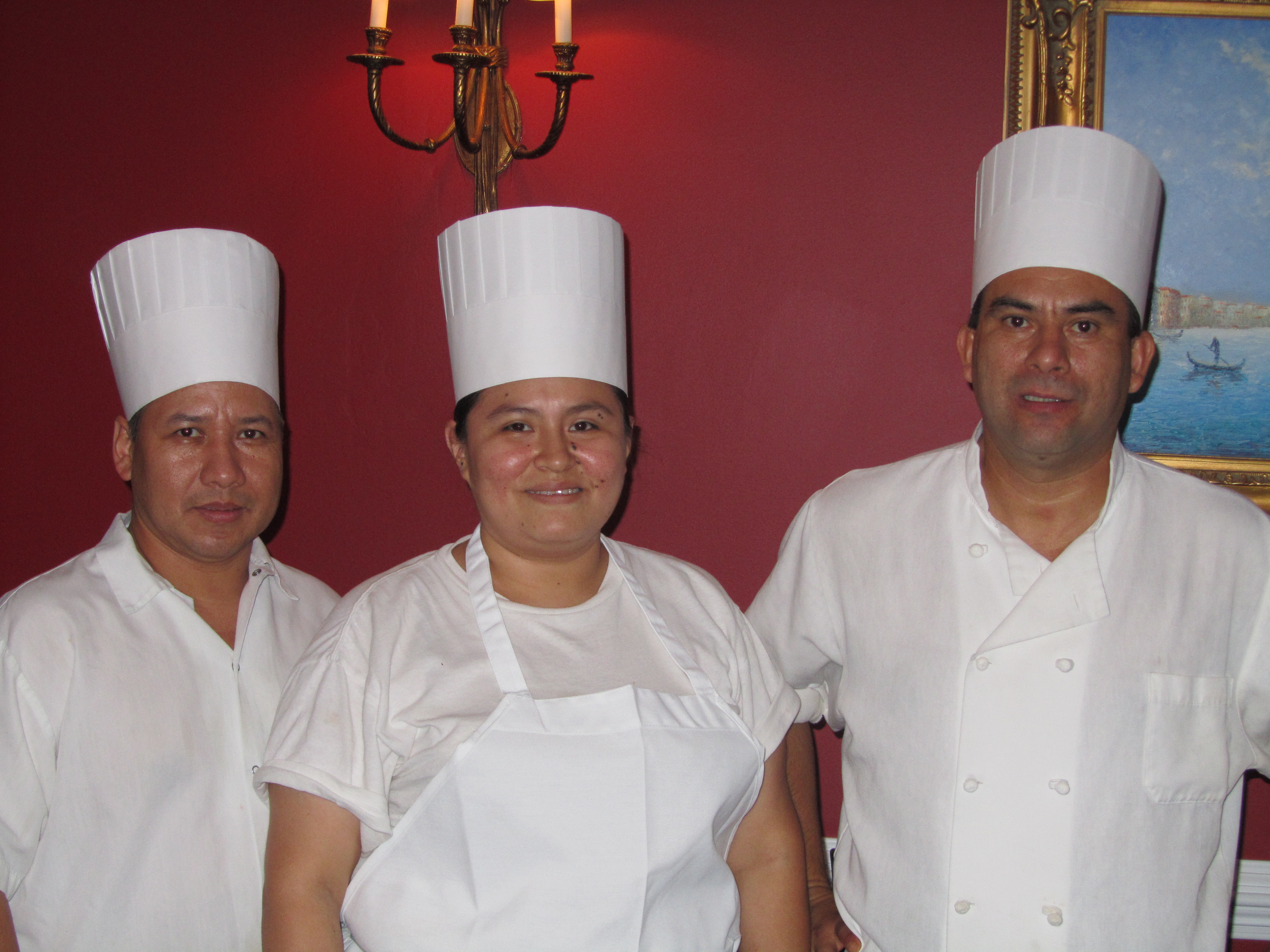
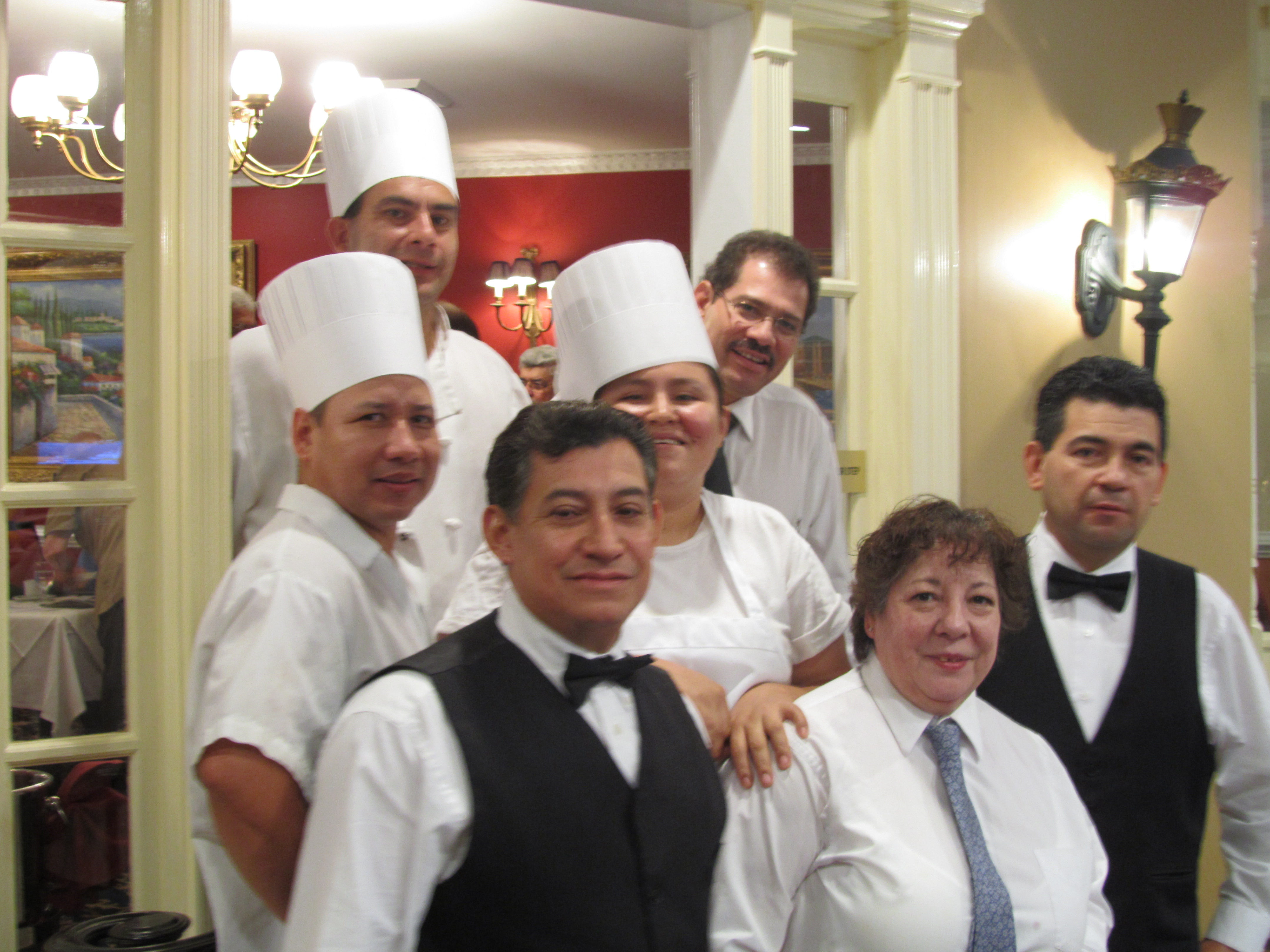
Attentive, friendly and competent staff of the Da Domenico Ristorante Italiano that makes our tastings more agreable.

Beth Lambert y el nuevo Manager Francesco

Da Domenico

Antonio, Claribel y Pantera

Gregorio, Antonio, Pantera, Claribel, José y Carlos Ramos

Gregorio, Antonio, Beth Lambert, Claribel, Pantera, José y Carlos Ramos.

Antonio, Pantera, Gregorio, Claribel, José, Beth Lambert y Carlos Ramos

Posted in Photos and Videos - Club del Vino | Leave a comment

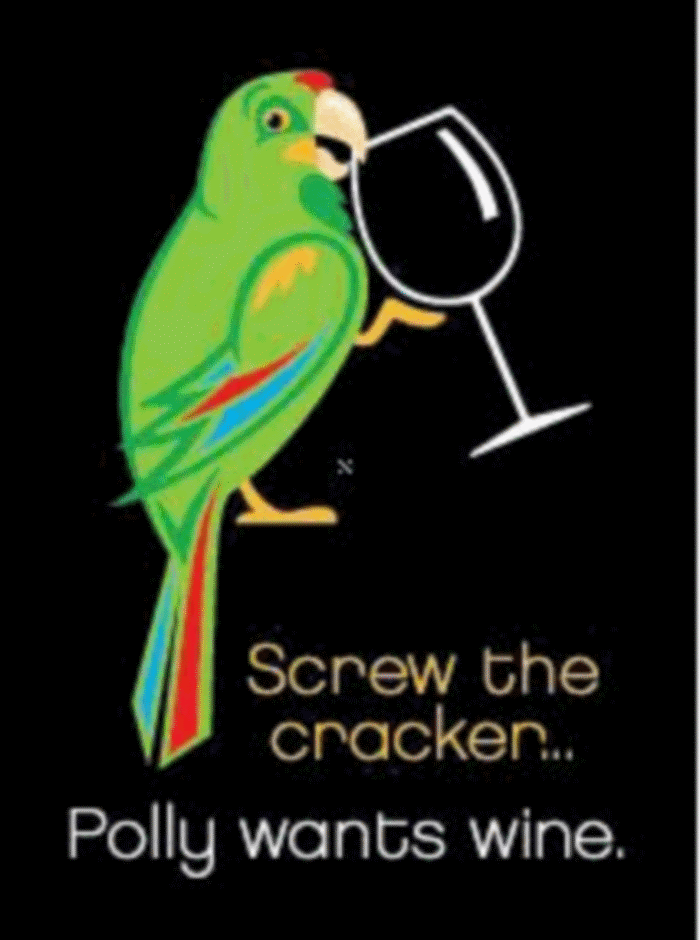
Polly Wants Wine

Polyy Wants Wine

Posted in Humor | Leave a comment

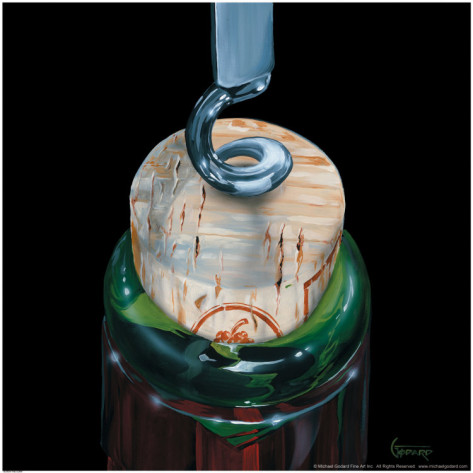
Wine: Screw caps make more inroads are corks out?

Wine: Screw caps make more inroads

By , Published: September 6      Washington Post

(post suggested by Juan Luis Colaiacovo)


Have screw caps reached a tippling point in their quest for acceptability?

The metal wine bottle closure has become increasingly common over the past decade, as winemakers abandoned corks out of concern that “cork taint” (that moldy-basement smell you sometimes find in wine) was ruining too many bottles. The cork industry fought back, improving quality control to limit, if not entirely eliminate, the taint problem and arguing that cork is the only “natural” wine bottle closure.

Even among many of their adherents, however, screw caps found only limited acceptance. It is not uncommon for wineries to put some of their white wines and rosés under screw cap while continuing to use corks for weightier whites (such as oak-aged chardonnay) and red wines. Their reasoning is that screw caps are ideal for preserving a wine’s freshness over the short term because they prevent premature oxidation. However, long-term aging requires some oxygen to penetrate to the wine, and screw caps — being relatively new — did not have a track record in that regard. So cork remains the preferred closure for wines destined for your cellar.

That might be changing. This summer, Hogue Cellars, Washington state’s fourth-largest winery, published the results of a five-year study that compared various bottle closures for three of its wines. More than 3,200 bottles were tasted. Hogue’s 2004 fumé blanc, using 10 different closures, was evaluated every four months for three years; the 2004 merlot and 2003 Genesis Merlot (a reserve bottling), under nine closure types, were tasted every 12 months for five years.

The tasters concluded that high-quality natural cork preserved the wine’s fruit and offered a steady avenue for oxygen to get to the wine; however, there was great bottle-to-bottle variation. Wines sealed with synthetic corks tended to oxidize more rapidly than other samples, which has been a complaint about plastic corks for years.

Here’s where the study gets a bit geeky. Much of the industry debate about screw caps has

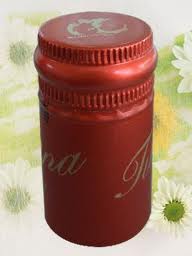
Aluminum Wine Bottle Cap

Aluminum Wine Bottle Cap

focused on the liners inside the caps; it’s the liners that actually touch the wine. The Hogue study used screw caps with several types of liners. Those with aluminum or tin liners yielded wines with reductive qualities: flinty, smoky, gunpowder smells and flavors. (That is a common complaint about screw caps, and winemakers respond by reducing the use of sulfur at bottling or adjusting the wine’s exposure to oxygen.) Screw caps using an experimental polymer liner designed to allow greater oxygen exposure to the contents yielded wines with dried-fruit flavors and other signs of oxidation. But caps lined with Saranex, a layered polyethylene that is slightly permeable to oxygen (think Saran Wrap — not identical, but similar), preserved the wine’s fruit and aromas without excessive sulfur smells and allowed some oxygen into the wine.

Hogue, which had moved most of its production to screw cap in 2004 after achieving similar results in a more narrow study, announced that it would now bottle its entire production under Saranex-lined screw caps.

Hogue is not the first winery to move entirely to screw caps, of course. Two prominent Virginia producers, Tarara Winery in Loudoun County and Blenheim Vineyards near Charlottesville, made the switch for their entire production over the past few years. Winemaker Jordan Harris of Tarara said he didn’t need the Hogue study to convince him that screw caps are the best closure for young wines as well as those intended to age.

“Our reasoning was simply that any percentage of wine flawed by the closure was too many and unacceptable,” he wrote in an e-mail.

And what about fears that consumers view screw caps as appropriate only for inexpensive wines? “We do not believe the closure should or really does have much bearing at all on consumer perception, and we find it the best closure, period,” Harris said.

♠♠♠♠♠♠♠♠♠♠♠♠♠♠♠♠♠♠♠♠♠♠♠♠♠♠♠♠♠♠♠♠♠♠♠♠♠♠♠♠♠♠♠♠♠♠♠♠♠♠♠♠♠♠♠♠♠♠♠♠♠♠♠♠♠♠♠♠♠♠♠♠♠♠

Posted in General, Magazines and Books wine related | Leave a comment

Books of interest … …for oenophiles – as reported in The Week of September 2, 2011

BOOKS   as   reported in The Week    – September 2, 2011

Also of interest…for oenophiles

A Vineyard in My Glass by Gerald Asher; An Ideal Wine by David Darlington; Dying on the Vine by George Gale; Voodoo Vintners by Katherine Cole

A Vineyard in My Glass

by Gerald Asher                  (Univ. of Calif., $30)

“Almost all the best English wine writers seem to have begun life as wine merchants,” said Lettie Teague in The Wall Street Journal. Gerald Asher was a wine buyer before his 30-year career as a wine columnist for Gourmet, and he is responsible for some of the most evocative writing about wine put to page. Some of Asher’s columns collected here are, unsurprisingly, a bit dated. But “there is a timelessness in his writing” that makes most every piece “a literary pleasure.”

An Ideal Wine

by David Darlington                (Harper, $27)

This portrait of two California wine-industry giants is one of the best books ever written about “how modern wine is really made and sold,” said Russ Parsons in the Los Angeles Times. Randall Grahm, of Bonny Doon Vineyard, is the story’s artistic spirit; Leo McCloskey, of the consulting firm Enologix, is the technician who shapes wines according to chemical profiles. The contrast allows author David Darlington to capture both the ruthlessness of the $18 billion business and its capacity to delight.

Dying on the Vine

by George Gale                               (Univ. of Calif., $40)

It’s hard to imagine a more frightening moment in the history of viticulture than the one George Gale re-creates here, said The Economist. In the last decades of the 19th century, a root-munching aphid swept across Europe, destroying formidable vineyards “from Rioja to Rheingau.” Though Gale sometimes writes like the academic he is, his account of the successful battle to save Europe’s storied grapes—ultimately by grafting the vines to phylloxera-resistant American rootstocks—is consistently fascinating.

Voodoo Vintners

by Katherine Cole               (Oregon State Univ., $19)

“In almost any discussion of wine these days, the subject of biodynamic viticulture is likely to come up,” said Eric Asimov in The New York Times. In “easy-to-understand language,” wine columnist Katherine Cole traces the development of this in-vogue method of organic growing to its roots in the suspect ideas of a 1920s philosopher. Though it’s “not always clear how or whether” the methods work, Cole does showcase the astonishing success achieved by vintners in Oregon who’ve embraced the trend.

Posted in Magazines and Books wine related | Leave a comment

Richard Berger: The Wine Basics

This is document that supplements the DVD

 WINE THE BASICS

A Comprehensive Guide to Wine for Beginners by Richard Berguer.  (2007)

This material is available in the website www.thewinedvd.com  as a complimentary to those who purchase the DVD. We reapresent the material here for informative purposes only and we encourage to acquire the DVD (available at Amazon among other retailers) that provides very interesting material for beginners and advanced wine lovers.
 

A Note From the Author

 by Richard Berger         2007

Wine is about discovery…discovering new flavors, new tastes, new regions, new grapes,
new winemakers…

Wine is not complicated, although many people believe that it is. That’s why we made this program…to demystify wine, and to make it more accessible to people who may be afflicted with oenophobia (fear of wine). I don’t know if that’s a real word, but I’ve seen the behavior many times…and you may have seen it too. I’ve watched people in situations where they have been responsible to order wine in a restaurant, bring wine to a dinner party, or buy wine as a gift become paralyzed with the fear that they may make a
bad choice.

If you only get ONE thing out of this program, I hope it is this: There are no bad choices
if they are right for you. If you like white wine with steak and merlot with lemon sorbet…I say…”That’s great!”

I hope you will allow yourself to learn and explore, keep yourself open to new tastes and flavors…and to also learn about the history and traditions of wine that have raised wine to
an art form. There is a vast body of knowledge and a great history there…and some of it
may come over time, much like many of the other finer things in life…like some types of
art or music that take you a while to appreciate, but grow on you until they just feel right.

We’ve tried to present a variety of facts and opinions here in the hope that you will come away from viewing our program both excited about your new knowledge, and with the desire to go out and learn even more. There are many places to learn…books, magazines, TV, Internet, newspapers, wine tastings… I hope you will delve into some of them and be inspired to make great food and great wine something you’ll pursue as long as you live…

Today the rules have changed a lot…partially because food has changed a lot, and the traditional fine dining experience of lighter white wines with the first course giving way
to bigger red wines with the main course is no longer the only way to go. You’re finding chefs who are creating different fusion cuisines of many countries and cultures and who
are far more willing to experiment…and I think that’s exciting…And I also think that it gives a person who is a fan of wine even more opportunities to try new things. So…just
go for it…I’m sure you’ll make a couple of mistakes, but I bet you’ll find some really great tastes along the way.

One last random thought…If it tastes good, it is good…but if you don’t like it at first, don’t
be afraid to give it another chance at some future time…it may turn out that your palate has evolved and you will be able to appreciate those same flavors and same tastes in a new way…

Richard Berger
Los Angeles      2007

Supplemental Information for Scene 1

An important thing to understand is that a bottle of wine is a living thing, and like all
things alive…it has a life span. It starts out young, fruity and fresh…will mature gracefully under the proper conditions, until that bottle reaches the point of perfection, and will drink as perfectly as it can for that particular bottle. In some wines, this can happen fairly fast…requiring only a year or two, with other wines the process is much longer, taking many years to reach that point of optimum drinkability.

Many things can affect the bottle throughout its lifespan…the way it is stored being the most important. The proper temperature and cellaring will insure that a bottle of wine
does exactly what it is supposed to do; improper conditions can ruin a good bottle.

One of the other important factors (maybe most important) is contact with the air. If you notice, the wine is bottled with a little air inside. This is deliberate on the part of the winemaker and allows the wine to slowly age. Sometimes, you will order a bottle of wine that will improve during the course of your meal…this is known as “Getting better in the Glass” and is due to the fact that the wine, now out of the bottle, is coming in contact
with the air. Sometimes wine will be put in a decanter for the same reason. Air brings out many of the aromas and flavors, and is an important part of how it drinks.

1. Glassware

Notice the glasses that Rick and Kim are using. For the red wine, the glass is rounder and
has room to stick your nose right down into the glass. For the white wine, which is
usually a little more delicate, the glass has more of a “chimney” to funnel the aroma up toward your nose while giving it time to react with the air.

Sometimes (not always) the glassware that a restaurant uses can be an indication of a couple of things…first, whether the chef or owner is knowledgeable about wine…and secondly, whether he cares enough to want his customers to fully enjoy the wine that is
on their list. Using the correct glassware is usually a little more expensive for the restaurant, but a chef or owner who is proud of their establishment will do it.

2. Tasting

Tasting wine is very subjective, so any attempt to try to tell you what you should like is
just silly…but here are some guidelines that you can use as a frame of reference.

A.  Look at the wine first. You can do this most easily against a white background such as a tablecloth or napkin. The color of wine can vary greatly, even in
wines made from the same grapes…

B.  A white wine, for example, is never white. The color can range from a light yellow-green to almost brown. A deeper color can be an indication of a couple
of things…it can mean that the wine is more full bodied, has more flavor, and/or has been aged longer. If the wine is actually brown, it may mean the wine has turned.

C. For red wine, it’s similar…as the wine ages, it will start to oxidize (come in
contact with air) and the color will become more “brickish” or darker and
somewhat more toward brown. And again, the color of red wine has a wide
range, from pale red or purple to deep red-brown or even a mahogany-brown.
An expert can make a good guess at the age of a wine by looking at the “legs”
or “rim”, which is done by tilting the glass and observing the edges of the
wine as it runs back down. A nice deep silky color usually means that the
tannins have started to evolve and are causing the wine to mature.

D. Swirl the wine. Swirling accomplishes two things…it lets you observe the
texture and body of the wine in the glass, and it aerates the wine to allow the
flavors to come out as you get it ready for your nose.

E. Smell the wine. Stick your nose into the glass. This is the moment of the first
impression. Don’t be afraid…now is when you get the “Bouquet” or the
“Nose” and you start to find out if this is a wine you will like. As a novice or
beginner, you may find it hard to describe or put into words what you are
experiencing. Don’t worry about it. As you do this more, your comfort level
will increase…you’ll start to notice similarities, differences, more aromas
inside the aromas, complexities…it’s a beautiful thing.

F. Taste the wine. For people who are more advanced, they will break the actual
tasting into three (or even more) areas: The Beginning (or Start), The Middle,
and The Finish. They are just what they sound like…The Beginning is when
the wine enters your mouth…notice the sensations it causes, the flavors. As it
moves farther into the middle of your mouth, more taste buds come in contact
with it, maybe causing you to experience other sensations or become aware of
different flavors. The Middle is where many people like to slosh it around, or
breath in some air to really get the most out of the wine.

G. The Finish…the wine is heading down, and now is when you will become
aware of the “aftertaste” of the wine. Is it pleasant? Did it “bite” a little? Did
the taste linger for a satisfactory amount of time? The Finish is when you can
sit back for a moment and decide if you like it or not…the moment when it all
should come together.

Just one more note about tasting…Wine reacts to food and vice versa. You notice that
Rick always encourages Kim to have a bite of plain cracker in between tastings. This is to
neutralize her palate, and you should get into the habit of doing this too. If you have the
strong taste or flavor of something remaining in your mouth from one type of food or
wine, you will not be able to accurately taste what comes next. Use plain white crackers
or bread…something with no real taste of its own. Commonly a baguette is used for this.

 3. Some Wine Words and what they mean.

Most things people say about wine are pretty obvious to figure out with a just a little bit
of experience. Just remember that it is all pretty subjective…you’re using words to
describe something that must be experienced to be really understood. It’s like if you went
hang-gliding and tried to explain to your friends who had never done it what it was
like…At the end you’d wind up saying, “You just have to try it”.
Words like “Big” or “Bold” are pretty simple, here’s a few of the ones you might need
help with…

Backbone – Usually refers to the right amount of acidity. Sometimes can refer to
tannins or alcohol…but it is a term used to talk about “Structure”
Balanced – All the flavors and aromas are working together in harmony. None of
them overpowers any of the others.
Complex – Wine with many different flavors, some of them may only become
obvious after repeated tasting, or some flavors may exist underneath other flavors.
Corked – A not un-common fault where the cork had some bacteria on it at the
time of bottling, leaving the wine with a moldy or “wet cardboard” smell and/or taste.
Crisp – Usually used for white wines…refers to a tartness or acidity that doesn’t
overwhelm the taste.
Dry – Not sweet. Dry wines often match best with food.
Earthy – A term to describe a range of flavors and aromas that are “Organic” in
nature…tree bark, barnyard, etc. A little goes a long way.
Elusive – When you’re at a loss for any other words…
Fat or Flabby – Lacking structure, too little acidity.
Forward – A big burst of flavor hits you at the start, sometimes people will say
“fruit forward”. It can be a good thing if the taste stays consistent through the finish,
disappointing if the finish is weak. Sometimes wine is purposely made to either mature
early or be drunk young. These are usually “Forward” wines.
Fresh – A generalized term meaning the wine has good, pleasant aromas and
tastes and fruitiness.
Grassy – Usually a taste or aroma found in white wines, especially Sauvignon
Blancs…like the smell of a fresh cut or mown lawn.
Herbaceous – A more general term for grassy, green, vegetal, or “haylike”
aromas
Hollow – Usually refers to a wine that has a weak mid-palate.
Inky – Usually a favorable term describing a dark or opaque red wine.
Jammy – Just what it sounds like…so fruity it tastes like jam or jelly. Often a tag
for big Zinfandels.
Lean – Usually applied to an “acidic” light wine. This can be a plus for a wine
that goes well with certain foods.
Length – Just what it sounds like…how long the flavor lingers in your mouth.
Mid-Palate – Is used to describe the behavior of the wine in the middle of your
mouth after the Start. Sometimes used to discern a great wine from an average wine,
which may fall off in this part of the journey.
Mouth Feel – Texture in the mouth.
Muted – Usually not a favorable description. It means that the basic elements of
the wine are present, but it still doesn’t taste like much.
Oxidized – Wine which has had either a cork that leaked or too much exposure to
air and is ruined.
Persistent – Refers to the amount of time one can taste the wine in the mouth or
the aftertaste…similar to “Length”
Ripe – A catchall term that refers to the dominant fruitiness of a wine. Usually
means the wine has some balance but is somewhat less than “Jammy”.
Short – The opposite of “Length”…little finish or aftertaste.
Smooth – Usually means that the tannins have lost their astringency and the wine
is drinking very nicely.
Soft – Just what it sounds like…soft in the mouth, fruity…almost to the point of
being “Flabby”. Some of the wines made for the mass-market are consciously made to be
far along in this direction so as to appeal to people with undeveloped palates.
Steely – A wine with the kind of acidity that tastes slightly metallic, sometimes
found in very good wines.
Stony or Mineraly – You can taste the rocks in the soil…Again, some very fine
wines may have this taste somewhere in them.
Straight Forward – A wine that is not complex, but is uncluttered in its taste.
This may be a good thing or a bad thing.
Structure – A general term that describes the wine’s character or body. It is
usually based on acidity, tannins, and alcohol balance.
Weight – Used to describe the texture and body of the wine. Weight may be used
with words like thin, thick, dense, light, heavy.
Youthful – Usually means that the wine needs more time in the cellar, but can be
a positive when talking about wines that are meant to be drunk fresh, like Beaujolais.
There are hundreds, probably thousands more words used to describe wine. If you hear
one you don’t understand, ask the person who used it what he (or she) meant. Start using
words to describe the wine you’re drinking, either to yourself (so you’ll more easily
remember what it tasted like) or to your friends so they can share what they think with
you…try it…it’s fun. Just remember to associate the tastes with the words.

4. In a Restaurant

The only reason you might ever actually sniff the cork is if the wine in the glass smells
“musty” or “moldy”…sometimes sniffing the cork may help reveal that the wine is
actually “corked”…in which case you are quite within your rights to ask for a new bottle
and your waiter or sommelier will usually confirm it for you without a problem.
Looking at the cork is something that you may want to do if you order an expensive
bottle. There was a time when some inferior wine was being passed off as quality wine
by the simple process of steaming off the real label and substituting a much better or
much more expensive label. The cork will usually have the correct information (Winery,
Chateau, and Year) printed on it.

 Ordering Wine

Traditionally, you are presented with the wine list at the same time you are
presented with the menu, or even before. Do not let this throw you. The reason
behind this is because many gourmets prefer to choose the wine, and then order
their meal around the wine or wines they have chosen.
Today, anything goes…you may want to wait until you decide on your meal
before you order wine, or have a glass of wine and then a bottle of something else,
or two glasses of different wines with the different courses…it is entirely up to
you and what you feel comfortable doing. Be self assured as you inform the
waiter of your decision and your desires. He’s there to help you enjoy the meal.

The traditional markup in a restaurant is three times what you would pay for the wine in a
retail store. If you know the prices of a few wines you can make a judgment about how
the restaurant is pricing its list. Sometimes you will find that you feel you are being
charged more than normal, but these days you will find that more and more restaurants
are “wine friendly” and charge less than normal in order to encourage their customers to
both try more and drink more. Try to find a couple of these in your area…it’s worth it.

I feel that a good meal deserves a good wine, so I usually leave the least expensive bottles
alone…but almost every wine list has a couple of relative bargains on it somewhere if
you look. It’s also OK to ask the waiter to bring you a small taste of a wine if you are
unsure about it…usually they are very obliging about this. This usually only applies to
wines they serve by the glass.

As far as bringing your own wine to a restaurant, it may or may not be a good idea,
depending on the policy of the particular place. Here’s a couple of rules to follow:
1. Expect to pay a “Corkage” fee, This can range from a very few dollars to
almost as much as a bottle off the wine list. You can decide if it’s worth it.
2. Do not EVER bring a bottle of a wine into a restaurant that they have on their
wine list. This is considered really bad form.
3. Bring a good wine. Don’t bring in cheap wine. This should be obvious. A
good meal is a good time to open that $200 bottle that a friend gave you for
your birthday.
4. You may want to ask about the policy of the restaurant when you make your
reservation, just to avoid any misunderstandings.

 Supplemental Information for Scene 3

The reason that we are presenting our program focused around Four Grapes plus Merlot,
is very simple…these grapes can make great wine, and they have stood the test of time.
As you become more advanced, you will find that many other grapes in many other
regions of the world can make wonderful (and quite different) wines. The first time you
open a good Barolo (just for one example) and stick your nose into the glass, you’ll know
you’ve hit on something very special…And wines from Germany, Spain…all over the
world, great wine is being made…

And yet…we keep coming back to Sauvignon Blanc, Chardonnay, Pinot Noir, Merlot,
Cabernet Sauvignon…These wines usually make up the bulk of every wine list, every
serious tasting, and lend themselves to accurate pairing with, and enhancement of many
different foods. That’s why they’re still around after all these years, and that’s why it
pays to learn them and then use that knowledge as a basis to compare to other wines
made from other varietals.

I hope you will not just watch this DVD and think you know something…I hope you will
actually go BUY a few bottles of Sauvignon Blanc and try them out. Learn the difference
in taste between the California and the French versions…taste the difference in the ones
from the North Coast, Central Coast, Graves, Entre Deux Mers…Do the same for the
other grapes…You don’t need to do it all in one night, or three weeks…just take the
opportunities as they come…in a restaurant, with a meal you cook, at a dinner with your
friends…you may want to keep your own tasting notes in order to help you remember
flavors and tastes and reinforce your frame of reference.

When you find yourself in a wine store, and are looking at the bottles…you might still
not feel totally comfortable…so here’s a couple of things to look for:

1. If it’s in a Burgundy-style bottle…make sure it says “Bourgogne” somewhere
on the label…that way you can be sure that the wine is a Chardonnay if it’s
white, Pinot Noir if it’s red…UNLESS it says “Boujolais”…then it’s made
from the Gamay grape.

2. If it’s in a Bordeaux-style bottle…make sure it says “Bordeaux” somewhere
on the label…that way you can be sure that the wine is mostly Sauvignon
Blanc if it’s white, and a blend based on either Merlot or Cabernet Sauvignon
if it’s red. All Bordeaux wines are blended, so if it doesn’t say on the label
(usually on the back), you might want to ask the seller if he knows about the
particular varietals that go to make up the blend. For the Whites, it’s
interesting to note that the blends are made from Sauvignon Blanc and
Semillon…which is much sweeter. So you can have White Bordeaux wine
that ranges anywhere from very dry and nicely acidic…to wines that are so
sweet that they’re considered dessert wines. Sometimes you will find another
grape called Muscadelle present to add a floral boquet to some of the sweeter
wines. There are a few other grapes that can be found on occasion, but more
for yield than any particular quality they add. Some white Bordeaux wines
will carry the label “Sauternes” on the bottle, which is a region on the Left
Bank. These wines are usually quite sweet, as are the white wines from the
Barsac region.

The type of grape that the wine is made from and the particular place that the grape is
grown is a very important concept to understand. Different regions of the world or
different regions of a particular vineyard can affect the taste of a wine dramatically. If
you run across something you haven’t tried, the first pieces of information about the wine
should be those. There is no better way to develop your ability to understand wine than
this…and you should always try to do it in conjunction with tasting the wine.

The art of pairing wine with food can be a complex and lifelong study. We offered a few
very basic examples in the scene…let’s see if we can clarify it a little, just so you can get
started (There’s more info – a lot more – later in these pages). Here are a couple more
very basic ideas about this…

1. Light with light, heavy with heavy…this is the classic way to do it, and it still
works, although now the rules have changed to allow you to not only
experiment, but be self-assured in terms of whatever it is that you like. Light
wines like Sauvignon Blanc, or Pinot Noir (for the Reds) lend themselves to
light dishes…salads, grilled fish…if the food has a light, delicate flavor a
more robust wine will tend to overpower it. For Pinot, lighter meats or poultry
works well, but you should also consider…

2. How the food is prepared…If we’re talking chicken, and you make it in a
lemon-butter sauce…a more delicate wine will allow the flavors to mix
together nicely, while a bigger wine will probably clash…whereas if you were
making the same chicken in a tomato-based sauce (like Chicken Cacciatore),
the sauce will have a chance of standing up to the bigger wine and probably it
all can work together well.

3. Sweet foods will make the wine seem a little drier than it actually is and you
may want a wine that is a little sweeter.

4. Foods high in Acid usually go well with more acidic wines because the wine
will stand up to them.

5. Big Red, very tannic wines go well with your classic steak or lamb chops
because the fat in the meat will smooth out the tannins. Sometimes other bitter
or astringent foods can work with these wines…like salad herbs or olives.

6. Wine ultimately acts like another type of spice and will either pick up or fight
other flavors in the dish.

7. Be adventurous and let your own palate be the ultimate judge.

If you’re still getting a little lost, try taking a bottle each (really do this, I mean really –
line them all up on a table) of Sauvignon Blanc, Chardonnay, Pinot Noir, and Cabernet
and lining them up in that order. The first thing you’ll notice is that the Bordeaux-style
bottles are on the outside, the Burgundy bottles on the inside. This is a very simplistic
way of determining what to serve with the meal. As you visualize the weight and texture
of the food, visualize the weight and texture of the wine from “light” to “heavy”…and
you’ll find that this may make it easier for you.

Supplemental Information for Scene 4

Reading the label…
Your ability to puzzle out the meaning behind what’s written on a wine label will largely
determine your ability to consistently choose good bottles of wine. The most important
things to look for of course are the type of grape (or blends of grapes) the wine is made
from, and where those grapes come from and/or where they were grown. Just that very
basic information alone can help you avoid making too many mistakes.

As you become more advanced and better at this, you’ll want to pay attention to more
things, so that you can really be specific about what it is that you can expect from that
particular bottle. For example…for French wine, various levels of government or
regional wine authority regulations apply to basically any bottle of wine you can buy.
This is mostly known as the AC, or AOC…which stands for “Appellation Controlee” or,
“Appellation d’Origine Controlee”, which basically means the Appellation (or area) of
controlled origin. You will see either the phrase or the abbreviation (AC or AOC) on
many, many bottles of French wine.

The reason that this is important is that it is a method of quality control, and it does this
by regulating all of the elements that go to make up the wine…For example…

To be able to put the particular AC or AOC on the label, the winemaker must adhere to a
number of standards…among them…

1. Permissible yield-per-acre, since growing more tonnage usually means lower
quality.
2. Which particular land in the area can have grapes grown on it. In France, records
of which grapes grow well in which areas have been around for centuries.
3. Which grape varietals can be grown in which particular areas…again, this is
based on historical data.
4. Pruning and fertilization techniques.
5. Alcohol content…in other words, by making sure that there is a minimum alcohol
content, the AC ensures that the grapes reach a certain degree of ripeness, which
guarantees a certain sugar content, which guarantees flavor.
6. Winemaking practices…again, based on historical data
7. Official tasting panels…since 1979, all wines that apply for an AC or AOC rating
must pass by a tasting panel. Wines that meet all the criteria established for that
AC are allowed to use the designation on the label.

A bottle of Bordeaux wine that bears the Appellation of Bordeaux, is less strictly
controlled than a bottle which bears the Appellation Haute-Medoc…which is a subregion
of Bordeaux, and a bottle which bears the Appellation Margaux, is likely to be
better still…since Margaux is a sub-region of Haute-Medoc.

RULE: Generally, the smaller the AC, the higher the quality of the wine.
Wines that do not meet the standards of the AC or AOC are labeled (in descending
order):

1. Vin Délimité de Qualité Supérieure or sometimes “VDQS” – some of these wines
can be surprisingly good…and will be less expensive.

2. Vin de Pays

3. Vin de Table
Other countries have tried to base their own standards on the French system, none with
the same kind of success…in the U.S. for example, you will sometimes see the
designation “AVA” which stands for American Viticultural Area.

Another thing that you may want to be aware of is the exact name of the winemaker or
wine producer. The reason this may be important is that, in France, there can be a number
of producers with the same surname…some of them will produce high-quality wines year
after year, others will have a somewhat spottier record. Also, the way that vineyard land
has been passed down and divvied up over the years can mean that the same Grand Cru
vineyard can have several different wine producers and all the wine will not be the same.
When you see Grand Cru on a label…or Grand Cru Classe, or Premiere Grand
Cru…These are terms with specific meanings as to exactly how they are applied, but they
all mean that the wine in that bottle should be pretty wonderful. A term like Grand Vin de
Bordeaux (or Bourgogne – or other region) however, is not regulated by either the
government or the AOC, and is more of a marketing term.

In the U.S. it can be a little more complicated…there is no exact term that means the
same as “Mis en Bouteille au Chateau”. The phrase “Estate Bottled” comes very close,
but it is less precise. Turn the bottle around and look for “Grown, Produced and Bottled
by…” You should get in the habit of reading the back of the bottle anyway.
For California wines, the bottle must contain 75% of a particular grape before it can
claim to be that type of wine on the label…so if it says “Merlot”, you can be sure that at
least 75% of the wine in that bottle was made from Merlot grapes.
Where this can get a little confusing (for California wines) is that some extremely good
wines are blended to the extent of not having 75% of any one particular grape prominent.
This causes the wine to be labeled something unattractive…perhaps like, “Red Table
Wine”…even though the wine may be of premium quality.
Then there are terms like “Reserve” or “Vintner’s Reserve”…I’ll quote here from one of
the actual government publications regarding this (this is from 1994)…
“Although not defined in the regulations, ATF has permitted the use
of such terms as “reserve,” “vintner’s select,” “barrel select,”
“premium,” etc. on wine labels. The Bureau considers these terms to
be mere “puffery.” It has been ATF’s position that consumers
recognize these terms as expressing the proprietor’s subjective
evaluation of the wine, rather than as terms denoting any objective
standards.”
The Wine Institute, which is a California trade organization, had filed a petition with the
ATF (Bureau of Alcohol, Tobacco, Firearms) to try to have some regulatory standards
applied to some of these terms so that when American wines were exported, everyone
around the world would know what they meant.
As far as I know, there has not been any agreement reached about the legal usage of any
of these terms…however, most reputable winemakers use “Reserve” or “Vintner’s
Reserve” in the true sense of the word…they have “held back” the wine for added aging
and/or believe the wine to be of superior quality.
For Spanish and Italian wine, the term “Reserva” does have an actual legal meaning. For
American wines, the term is unregulated, so you may want to ask a few questions. Here
are some other (Un-regulated) terms you may find on American wine bottles:
“Private Reserve, Proprietor’s Reserve, Special Reserve, Special
Cask Bottling, Grand Reserve, Limited Cask, Special Selection,
Winemaker’s Reserve” It can drive you a little nuts…
The thing to remember is that you ultimately have to taste the wine.-

WHAT IS A NEGOCIANT?

One of the other confusing things about wine and winemakers is the difference between
an actual winemaker, and a “Negociant”…I’ll try to clarify it.

When you see the phrase “Mis en Bouteille a Chateau” on a wine bottle, you know that it
means a certain thing…it means that the wine was made from grapes grown on the
property of the Chateau, and then put into the bottle at the same location. It also usually
means that there is only one individual in charge of the whole process, and the wine is not
touched by any third party.

Other, similar phrases such as “Mis en Bouteille a la Propriete” – or Bottled at the
Property, or “Mis par le Propriétaire” – Bottled by the Proprietor, or “Mis en Bouteille au
Domaine” – Bottled at the Estate, mean essentially the same thing…that the wine was
made where the grapes were grown.

Other phrases that you might see on a bottle of French wine, such as “Mis en Bouteille
dans nos Caves”, or “Mis en Bouteille dans nos Chais” (both meaning essentially
“Bottled in our Cellars”) usually should be taken to mean that the grapes were grown
elsewhere, then shipped to another location before the winemaking process got started.
The reason that this is significant is that it implies that the grapes were bought or traded
on the open market…this is where the “Negociant” comes in.

A Negociant is a person (or a company) that may or may not possess its own vineyards,
but in terms of the particular bottle of wine in question…they either bought the grapes,
then made the wine…or bought the wine already made…OR – they bought different
batches of wine and blended it themselves. The very best Negociants have long term
contracts with either grape growers, or rights to the yield of certain vineyards, or
contracts with winemakers they know will produce quality year after year. And usually
those Negociants will proudly display their name on the label.

In some cases (again, due to French inheritance laws and how land has been split up),
using a Negociant is the only way for the owner of a very small parcel of land (maybe
just a couple of rows of vines) to get any of his “Cru” vineyard wine to market. In a case
like this, the Negociant is buying the yields of a number of small growers and blending
them into excellent wine that would never reach the market in any other way.
Other Negociants are more interested in how much they can make and how much wine
they can sell, and consequently wine from these merchants will be less good. In America,
the situation is not that different. Here we have “Negociants” that are very large
companies, buying grapes or wine from many sources, and putting wine on the market
that will usually be consistent, but lacking the special attention that a smaller winemaker
will give to their product. And again, following the French model, we have some smaller
Negociants that can take advantage of odd-lots of very good wine, blend it, and sell it at
sometimes deep discounts…and the wine will be quite good.
It’s all about knowing who the Negociant is, and what kind of reputation they have.
In California, phrases such as “Cellared and Bottled by” or “Vinted and Bottled by” are
usually an indication that a Negociant or a 3rd party was involved. On bottles of French
wine, you will sometimes see the phrase “Négociant-éleveur” which means that the
Negociant had much more to do with the actual making of the wine, and wants you to
know that.
The actual terminology (for French wine) will be, “Mis en Bouteille par (and here they
insert the name of the Negociant – such as Louis Jadot, Louis Latour, etc.)…so the
bottom line would be – don’t be afraid to try “Negociant-type” wines, but it’s a good idea
to keep track of some of the particular Negociant names that go along with the wines that
you find pleasing to your palate…That goes for French AND California.
Supplemental Info – Bordeaux
The best way to understand Bordeaux wines is to look at a map of the region. There are
many such maps available (and in many degrees of detail) online. Almost all Red
Bordeaux wines are blends of Cabernet Sauvignon and Merlot (in varying proportions –
depending on where it’s grown and made) with a couple of other blending grapes
(Cabernet Franc, Malbec, Petit Verdot) thrown in just for individuality.
If we start at the sea and work backwards, it’s like this…The Gironde River runs from the
Atlantic Ocean until it splits into two smaller rivers…the Garonne (the south fork) and
the Dordogne (the north fork). The Gironde river is affected by very strong tidal currents,
and this may have had something to do with why the soils in the Medoc and Haut-Medoc
region are particularly suited to growing the Cabernet Sauvignon grape.
Working back from the Atlantic…First, on the Left Bank of the Gironde River is the
Medoc region. The entire area of that growing region (or AOC), including all the subregions…
which we’ll get to in a moment…are known by that general name.
The Lower, or BAS MEDOC is nearest the ocean, with the HAUT-MEDOC (or higher, in
this case slightly higher in elevation) region next. It is in the Haut-Medoc region that the
most famous sub-regions (or Communes) are found…Saint-Estephe, Pauillac, Saint-
Julien, and Margaux.
Almost all of the Chateaus that were classified in 1855 are found here. The 1855
classification is important because it categorized the best Bordeaux wines (Left Bank
only) into Five “Growths”. First Growth being best, Fifth Growth supposedly not as
good…but any classed “Growth” wine should be pretty wonderful. By the way, you’ll
never actually see the growth classification on the label. You’re just supposed to know.
Over time, that listing has hardly changed at all…in 1976 Chateau Mouton-Rothschild
was elevated to “First Growth”, or “Premiere Cru”, and a couple of the Chateaus have
closed, and a couple have seen their reputation slide a bit…but it’s remarkable how well
the list has held up and stood the test of time.
The method of classification was probably based on two things…the price of the wine,
and the ability of the particular Chateaus to make good wine in bad years, which also
would naturally affect the price and the reputation of the Chateau.
A couple of other designations are worth mentioning here. Beyond the first five growths,
in ascending order, are: Cru Bourgeois, Cru Bourgeois Superieur, and Cru Exceptionnel.
Just to clarify the designation of “Bordeaux Superieur”…when you see this on the label,
it is merely an indication of the alcohol content (one percent higher) which is important
because it doesn’t reflect anything about the quality of the wine. A quality designation
would be that the word “Superieur” would be preceded by “Cru Bourgeois”.
As far as what you are likely to see on a Bordeaux label, here’s a couple of things to keep
in mind…If the label merely says “Appellation Bordeaux Controllee”, it usually means
that the grapes come from the area known as Entre-Deux-Mers (the land in between the
Garonne and Dordogne rivers, or else north of Libourne, which is on the RIGHT BANK.
If the label says “Appellation Medoc Controllee”, it’s likely that the grapes were grown
in the Bas-Medoc region, and of course if it says “Haut-Medoc” on the label, the grapes
are grown closer still to the communes that contain the most highly classified Chateaus.
Two other names you might see on a Bordeaux label are “Listrac” and “Moulis”. At one
point, you might see these two geographically-close communes linked together, now it is
becoming more fashionable to keep them separate. They are both part of the Haut-Medoc
Appellation.
On the Right Bank, the story is slightly different. A good bit further from the ocean, the
two most famous right-bank communes of Saint-Emilion and Pomerol sit just north of the
Dordogne river. The wines of the Right Bank are made from blends where the Merlot
grape dominates.
Because of the fact that these AOC’s were not classified in 1855, in 1955 (the one
hundred year anniversary) there was an attempt to classify the wines of Saint-Emilion
(Pomerol has never been classified), and they have come up with these categories:
There is the designation “St-Emilion”, then “St-Emilion Grand Cru”, then “St-Emilion
Grand Cru Classe”, then “St-Emilion Premiere Grand Cru Classe”.
The other thing that may be somewhat confusing is the fact that St-Emilion has decided
to re-classify about every 10 years…with promotions and demotions as they deem fit.
Pomerol is much simpler. They have never classified their Chateaus, and some of the
very, very best of the Merlot based blends come from there (also most expensive). The
soil is a thick, heavy clay, and this seems to give the wines a soft, seductive character.
These wines tend to run in the direction of spice and vibrant (almost brazen) fruit. It is the
smallest (acreage-wise) of the Bordeaux Appellations.
A couple of the other regions of Bordeaux worth mentioning are Graves, and Entre Deux
Mers. In Graves (coming from the French word for gravel – as in the soil of the region),
there is the Commune of Pessac-Leognan which has a couple of the finest Chateaus,
including First Growth “Chateau Haut-Brion”.
Entre Deux Mers is a large growing region that produces both red and white wines
although the reds are rarely labeled as such, merely carrying the Bordeaux designation.
For the Bordeaux white wines, the most interesting region is by far Graves, where the
wines are made from mainly Sauvignon Blanc grapes which makes the wine deeply
complex with the taste of the “flintiness” of the soil adding to the experience.
In Entre Deux Mers the white wines are primarily made with more of the Semillion grape
which gives the wines a softer, simpler, more refreshing character.
Just remember that all Bordeaux wines (red or white) are blended wines.
Finally there are Sauternes and Barsac, which produce some of the rarest and most
expensive sweet white wines in the world. Chateau d’Yquem wines regularly command
among the highest prices of any wines made. These wines are produced by the “Noble
Rot” process which leaves the grapes on the vine way past the normal time for harvest.
At that point, a mold (Boytrytis cinerea) attacks the grapeskins until almost all the liquid
inside seeps out, concentrating the sugars. The grapes are then harvested by hand and
pressed into what can only be described as glorious.
Supplemental Info – Burgundy
Burgundy Wines…Chardonnay or Pinot Noir…but:
Let’s just take Chardonnay for a moment. From Chablis in the North to the Macon (or
Maconnaise) in the south…the flavor of the same wine (made from ONLY the
Chardonnay grape) runs the gamut all the way from luscious and fruity to “Steely” and
“Flinty”. Is it due to the way the wine is made? The soil? The weather?…It’s all of these
things. That’s why people who love Burgundy wine can sit and talk for hours about the
minutiae of a particular vineyard, village, or growing season.
The growing regions of Burgundy start (from the north on down) with Chablis, which is
known for its white wines, which are characteristically not finished in oak and are clean
and crisp…sometimes almost too tart/crisp for some people, but they pair wonderfully
with food…not much red wine is made here.
Just south of Chablis is the Cotes de Nuits, and here starts the Cotes D’Or… or “Golden
Slope”, a commonly used term that is applied to the Cotes de Nuits and Cotes de Beaune,
the next region to the south. It is in these two regions that almost all of the Grand Cru
Appellations are found.
Next come the Cotes Chalonnaise, and Maconnaise, and finally comes Beaujolais,
which is not really considered part of Burgundy due to the fact that most wines are made
with a different grape (Gamay) and use different winemaking methods. The Cotes
Chalonnaise and Maconnaise wines taste quite different than those of the Cote D’Or,
usually being described as having a more “earthy” or “mineraly” taste…and some people
will find that they like them better.
The designation of Grand Cru, or Premiere Cru is important in terms of understanding
how Burgundy wines get and maintain their reputations. In Bordeaux, you’ll remember
that there was the Classification of 1855, and the various Chateaus were rated 1st Growth,
2nd Growth, etc. In Burgundy, the Cru designations are based on an original classification
in 1861 which divided the various wines and vineyards into tête de cuvee (literally “head of
the class”), 1st, 2nd, 3rd class, and Regional. This system remained until 1935, when the
system we use now was instituted.
If you think of Burgundy as a pyramid, you can easily get a sense of how and why the
classification system works. At the very top of the Pyramid, are the Grand Cru wines.
There are 33 Grand Cru appellations, then there are 55 Communal (or Village)
appellations, then 28 Regional appellations.
There are also about 500 growing sites which are allowed to use the designation
“Premiere Cru” (sometimes you will see this written as 1er Cru), which are Vineyards
that are allowed to add their name to that of their Village…so you might see something
like “Givery 1er Cru” followed by the name of a particular vineyard…where Givery is
the name of the Village (or appellation). A different example…the Village of Santenay
has 390 hectares of vineyards of which 140 are considered to be Premiere Cru.
The place where it really starts to get confusing is when you understand that the French
inheritance laws (since the time of Napoleon) have caused all the land (here and
elsewhere in France) to be divided, re-divided, sub-divided, and hacked up until you find
some owners with 2 rows of vines in a Grand Cru vineyard, and no way to grow enough
grapes for a bottling. This is where the Negociant comes into play in a good way.
The way in which the Burgundy system (as complex as it is) really works well is that a
negociant can come in, buy grapes (or wine), bottle it and sell it…BUT…he will still keep
the correct designations on the label. So if he gets grapes from a Grand Cru Vineyard, it
will say Grand Cru on the label…Premiere Cru…it says so on the label…and you, the
consumer can use the information to have some assurance that you’re getting what you
pay for. Just remember that all this talk about Villages, Vineyards, Grand Cru, Premiere
Cru, Regions…all of these terms just refer to SPECIFIC places that grow grapes, and
have been designated with these terms as a type of rating system…the more specific the
location, the better the wine will likely be.
So, at the base of the Pyramid would be the wines with the designation of Burgundy AC,
or Appellation Bourgogne Controllee…these wines can be made from grapes grown
anywhere in Burgundy. Next, you will have the “Regional” wines, such as Cote de Nuits,
or Cote Chalonnaise…then come the “Village” wines, which will have the name of a
specific village on the label, such as “Puligny-Montrechet”, or “Givery-Chambertin”.
And then you will have the Premiere Cru wines, and, even better, Single Vineyard wines
that will bear the name of the particular vineyard on the label under the name of the
Village…Finally, the Grand Cru’s…These make up about one percent of all the wines
that come from Burgundy and are the best of the best.
There can never be very much production of these wines because of the acreage involved,
and so the price of them is usually very high due to the rarity. In rare instances you will
see the word “Cazatiere” on the label of some Grand Cru wines, and it means that the
wine is not only a single-vineyard wine, but it usually refers to a very small plot of land
that is very special.
Here’s a list of just the major regions and Villages of Burgundy:
Chablis – white wine
Cote de Nuits – white & red
Dijon…Gevrey-Chambertin…Morey-St-Denis…Chambolle-Musigny..
Vosne-Romanee…Vougeot…Nuits St George
Cote de Beaune – white & red
Corton…Savigny…Beaune…Pommard…Volnay…Meursault…Puligny-Montrachet
St-Aubin…Chassagne-Montrachet…Santenay
Cote Chalonnaise –
Mercurey
Maconnais –
Pouilly-Fuisse
There are many other names you will encounter as you navigate your way through the
wines of Burgundy and find out which ones you’ll like. Take the time…learn some of
them…It’s all worth it.
California Supplemental
California Wine is pretty easy to understand…first of all, it has the name of the grape
right smack on the front of the bottle. So if you want Merlot…you just look for a bottle
that says Merlot on it….none of this Pomerol, St. Emilion stuff. A nice Cab…just look
for a bottle of Cabernet Sauvignon…no Medoc, Haut-Medoc. It’s simple…it’s…it’s…
..downright American…
Well…you don’t get off quite THAT easy. California wine has a few peculiarities of its
own that you might want to be aware of. First, there’s the labeling regulations. We’ve
mentioned the fact that if the label says for example, Merlot…the wine has to be made
from at least 75% Merlot grapes. Same with the vintages. If it says 2004, you know that
either 85% or 95% of the grapes were harvested in the year that’s printed on the label. It
just depends on the AVA…Wait!! What?! What did he say?! What’s an AVA?
Well…Here’s where all of that French Appellation/label reading stuff is going to come in
handy. Now that you understand how the French do it, the American (and particularly
California) system is going to really make sense. The one main difference is that in
America, we don’t (or I should say the ATF – which makes the regulations for Alcoholic
beverages) really make any labeling requirements regarding the quality of the wine.
The French you remember, in order to bestow an AOC designation on a winery, had a
bunch of rules that the winemaker had to follow in order to earn the designation. This has
turned out to be a pretty good method for assuring a certain level of drink-ability in those
French wines that follow those rules. America’s answer to that system is the AVA, or
American Viticultural Area.
In order to understand what they are, let’s look first at what they are NOT. An AVA is no
guarantee of, nor has it anything to do with, the quality of a wine…legally. In practice, it
may have a lot to do with how you make your choices in a wine store or off a wine list.
Just the same as if you develop a taste for wines from the Margaux or St. Estephe
Appellation, so you may find that you develop a preference for wines from Stag’s Leap,
which is in the Napa Valley AVA…the only problem is that Stag’s Leap (or more
precisely, the Stag’s Leap district) is ALSO an AVA…
This can get a little confusing, because in theory, one AVA is just as good as another
AVA…in practice, it’s just like France…usually, the smaller the region, the more control
over the product, and the better the wine is going to be.
For example, I have in front of me (as I’m writing this) three bottles of different
California Merlots. One says “2001 North Coast”, one says “2001 Santa Barbara
County”, and “2001 Yorkville Highlands”. How do I figure out which one I think would
be better wine? Well…in California (as well as most other places), you want to turn the
bottle around and look at the back of the label.
When I do that, this is what I see…The bottle that says “North Coast” says a couple of
other things as well: It says that the grapes come from Mendocino County plus other
coastal counties…this is what we should expect. The AVA designation of North Coast
ONLY guarantees that the grapes come from the counties of Napa, Sonoma, Mendocino,
Lake, etc. Then, at the bottom of the label, it says, “Cellared & Bottled by” and then the
name of the winery. So we know that this is a negociant style wine, which may or may
not be a good thing.
The next bottle says, “Santa Barbara County”…so we know that the grapes come from a
smaller area. When we turn the bottle around, it says…”Produced and Bottled by” and
then the name of the winery…that tells us that the grapes (or the largest part of them)
were grown in Santa Barbara County, bought by the winery (maybe they grew some of
them), and then they made this bottle of wine. All of the process of winemaking under
conditions somewhat more tightly controlled than the first bottle.
The third bottle says “Yorkville Highlands”, which, if we do a tiny bit of research, we
find is a smaller AVA contained in the Mendocino County AVA. When we turn this
bottle around, it says, “Grown, Produced, and Bottled by” and the name of the winery.
Since we already know that this is essentially the same as “Estate Bottled”, we can
wonder why the winery chose not to use that designation on the label. The reason might
be because up to 25% of the grapes may have come from somewhere else…but the
chances are good that THIS bottle of wine is the best of the bunch.
The only better designations for California wines would be, “Estate Bottled” (which
means that ALL the grapes come from the same AVA) or even better would be “Single
Vineyard”…which means that all the grapes come from a single property.
So…here are the actual labeling requirements….A wine with a “California” designation
on the label…100% of the grapes must come from California. A “County” designation
such as Mendocino or Napa…75% percent of the grapes must come from that county. If
you go to a smaller AVA, like a “Stag’s Leap” designation, 85% of the grapes MUST
come from that AVA. If there is a “Vineyard” designation on the label, 95% of the grapes
must come from that Vineyard.
In America, we don’t really get into telling winemakers how they have to make their
wine, but we do regulate the origins of the grapes, and in practice it seems to work fairly
well…the place where it can get tricky is that some AVA’s are HUGE. For example, the
Ozark Mountain AVA covers areas of 3 states…Arkansas, Missouri, and Oklahoma.
In my opinion, until you really get to the point of knowing the Terroir of the California
regions, there is really only one reason to pay attention to any of this AVA stuff, and it’s
this…
If you find a great bottle of Napa Cabernet from say, Yountville…and you look for other
bottles from the same winemaker/vineyard and the same year, and you can’t find
any…let’s say that you got the last bottle in the store, or it’s been in your cellar for a
couple of years and you don’t remember where you got it…Well, there’s a very good
chance that if you look around for other bottles of Yountville Cabernet from that same
year, it’s going to be something that you’ll like.
In California, “Estate Bottled” means roughly the same as “Bottled at the Chateau”,
always a good indication that the wine was carefully made. We’ve covered other terms
that you see on California labels, like “Reserve”, etc.
For California wines, I’m of the opinion that you do yourself a lot of good by learning
about different winemakers and trying wines from the different regions. Almost all the
wineries have websites and they put a lot of information out there for you to mull over,
and mostly they are very good about answering e-mails regarding their products.
Please see the list of weblinks for more specific info on California AVA’s and complete
listings of them.
PAIRINGS SUPPLEMENTAL
Pairing Wine with Food is taking the Creativity and the Art of Wine to a whole other
level. There has been so much information put out there about this that it can get both
daunting and confusing as you try to work your way through it all. Let me try to put it
into one sentence and simplify it for you:
It all comes down to taste.
So…taste a bunch of wine, taste a bunch of food, REMEMBER what they taste like, and
try to visualize or imagine how they would go together. This is not as simple as it sounds
for most of us. We forget the subtlety of flavors…We forget the intensity of flavors…the
taste of a great bottle of wine may fade after awhile…that perfectly seasoned and
prepared sea bass we had at that little bistro by the sea…we remember the setting, we
remember the meal was a memorable one…but the taste may not spring to mind.
There are some people by the way, that are unusually gifted in this area. Among great
chefs, the ability to remember the nuances of dishes tasted years ago more or less goes
with the territory. Robert Parker (Author of The Wine Advocate and probably the most
influential wine critic of today) is reputed to be able to taste a wine (blind – or without
looking at the label), then taste the same wine 10 or more years later and identify it as
being the same wine. Even he says he does not understand his gift.
For the rest of us, we will have to muddle along and try to figure out a method of how to
do it until we develop our palates…then we can hope for some inspired moments.
One of the basic things we should be aware of is the “weight” of the food. A steak would
be considered a “heavy” meal…that’s pretty obvious. A seafood salad would be a “light”
one…But…If we took the seafood and put it into a pasta…is it still “light”? How about if
we add a lemony-garlic-butter sauce on the pasta? How about chopping in some fresh
tomatoes? How about a tomato-based sauce? How about if we replace the seafood with
meatballs?..Made out of Turkey and Veal? AAaahhhhhhh…….it can make you crazy.
There’s hope…The next most important concept in understanding how to pair wine with
food is to develop a sense of the ACIDITY of both. So in the case of the seafood pasta
with a lemon-garlic-butter sauce, you have to figure out if you want the wine to MATCH
the acidity of the sauce, or if you want the wine to be more acidic (thereby making the
food seem softer), or if you want to use a softer, fruitier wine with less acidity to bring
out the lemon and garlic in the sauce and be more in sync with the taste of the butter.
Your choice might depend on the amount of each of the 3 ingredients in the sauce.
If you wanted the food to tone down, a new, acidic Pinot Grigio or Sauvignon Blanc
might be just the answer…if you wanted more of the taste of the lemon and garlic, an oak
fermented Chardonnay or a Riesling that had a little sweetness to it might be the exact
taste that you were looking for.
If we were going to make that seafood pasta with a Tomato sauce, you might want to go
with red wine…anything from a mildly spicy Pinot Noir, to a Chianti that could be so
acidic that the red sauce tasted sweet by comparison…
So…acidity and its opposite, SWEETNESS, are two of the major factors in how the taste
of the food affects the taste of the wine and vice versa. Normally the wine should be a bit
sweeter than the food…if the food is sweeter, it will tend to bring out any astringency or
tartness in the wine, making it seem less sweet than it may actually be. Salt, on the other
hand will tend to do the opposite. A dish that is salty will usually tend to bring out more
of the fruitiness of a wine and tone down any astringency or bitterness.
It may take you a while to get a feel for this, but we all like to eat, and almost all of us
like food that tastes good…so keep some notes along the way, remember the things that
work, and you’ll soon see that it really isn’t brain surgery.
One of the best things you can do for yourself is something like what you saw in the
DVD…an evening of wine and food that lets you experience a wide range of flavors and
combinations of flavors.
I wouldn’t start out by trying to imitate exactly what you saw in the program, because,
quite frankly, it was TV and we had to cover too much ground. In a minute I’m going to
list all of the things we tasted with which wines, but my recommendation is that you
break it up into a few evenings so it doesn’t get out of hand.
Another thing that you might want to experience (before I get into explaining what you
watched in the program) is this…You noticed that we had Asparagus and Artichokes on
the table. These are a couple of things that are hard to match with wine…and learning
what doesn’t work is every bit as important as learning what does…you may find it helps
you “zero-in” on complimentary flavors.
With that in mind, I suggest that you try the following…and by the way, you should
actually try all of this stuff. Reading about it almost doesn’t matter. Pairing wine and
food is almost all about experiencing tastes…Anyway, try some of these things….
Asparagus
Artichoke
A salad with a vinaigrette dressing
Walnuts
Try them with both sweet and dry red and white wines…these are all tastes that are hard
to pair with wine, and you’ll get a sense of what doesn’t work very well…and this may
help you learn about those things that you prefer.
Wines We Haven’t Mentioned, but Which You Should Try
There are a number of wines that we haven’t mentioned in the program, and of course
there are literally hundreds of grape varietals…this can be both useful as well as
confusing when trying to pair wine and food. Here are a few of these wines that I think
you should become acquainted with for those occasions when our “Four Grapes plus
Merlot” won’t do the job:
Whites
Riesling
Pinot Grigio
Chenin Blanc
Pinot Gris
Gewürztraminer
Reds
Beaujolais
Tempranillo
Chianti
Barbaresco
Zinfandel
Syrah (or Shiraz)
I think for the whites, Riesling and Gewürztraminer are wines that can have a wide range
of sweetness, and this is useful to know…and for the reds, Beaujolais usually is quite
fruity and has very little tannins, Zinfandel is usually pretty “spicy”, and Chianti usually
is nicely acidic…these are wines you may not think of right away when making pairing
choices, but you should become a little familiar with them for those occasions when your
usual choices may not be quite right.
You’ll find that all these wines are not that dissimilar from what you know already, but
they all have slightly different characteristics as far as matching them with food. Taste a
bunch of them and have fun…
Just one more thing…When nothing else works, try Champagne….
Things to Consider When Choosing Pairings
There has been a ton of stuff written about pairings, and I would encourage you to go out
and learn what other people have to say about it. It’s beyond the scope of this program to
delve very deeply into the details of a subject that has so, so many possibilities and
variations. But…
To my mind, there are a few most important things to consider. They are:
1. How is the food prepared? Is it grilled, fried, poached? Baked in a casserole?
Sautéed? Steamed? The preparation method will likely make a big difference in
the wine you choose because it will alter the flavor of the food. It will also bring
into play the flavors (or lack of them) of other things that are unique to the
cooking method…such as the kind of oil you might fry something in, or the
carrots and mushrooms you might put in the casserole to keep it moist.
2. Is there a sauce? If there is a sauce, you will usually want to match the wine with
the sauce…as that will tend to be the overpowering taste of the dish. If the sauce
is a reduction, it will be an even more powerful flavor.
3. What are the spices that you are using in the dish? Remember that Eric talked
about “Red fruit, Black fruit”? Certain spices tend to combine well with certain
types of fruit…For example, cloves, thyme, and rosemary seem to combine well
with red fruit, while pepper, cumin, and curry seem to match up with low-tannin
black fruit wines…For me. Your palate may lead you in other directions.
4. Is it an “Ethnic” type of cuisine? Certain types of ethnic foods lend themselves to
certain types of wines. Examples would be…
a. Chinese – The seasonings are largely Garlic, Ginger, Oyster Sauce, Soy
Sauce…A sweetish, fruity White can work well, or Mild-Tannin Red if
it’s Pork or Duck.
b. Thai – Not too different than Chinese except more aromatic and spicier. A
crisp White wine or maybe a spicy Pinot can work.
c. Indian – Coconut, Curry, Cumin are the main spices. I like Mild-Tannin
Reds or Oaky Chardonnay
d. Mexican – I like Margaritas or Cerveza…but if you have to drink wine, go
for something like a Beaujolais that has low spice, lots of fruit, and very
little tannins…that’s what I like anyway…
At a certain point it just all becomes about what it is that you have a preference for…But
don’t forget the concept of “Regionalism”. If the style of food is native to a particular
place, try the wine that comes from that place. I was recently at a Moroccan Restaurant,
and tried a couple of glasses of Moroccan Red and White. They were quite good wines
with the meal, and I didn’t even know they made wine in Morocco.
What We Did in the Program
In the tasting scene in the program, we were interested in letting people experience two
things…the difference in taste between California and French wines, and some very basic
food flavors that are fairly traditional, and yet would allow our friends to see how these
French and California wines would react to the same foods in slightly different ways.
If you are very new to wine, I would suggest that you might want to try some of this at
home, but on a smaller scale. Pick either one or two types of wine, get the French and
California versions, and invite some friends over…you’ll have a lot of fun.
For the whites, we started with Sauvignon Blanc, and paired it with slices of Honeydew
Melon, Grapefruit, Pineapple…and our cheeses were basically goat cheese and brie.
When we moved on to the Chardonnay, we became a bit more ambitious…My friend Al
cooked the scallops that you saw in the program, as well as a Penne Pasta in an Alfredo
sauce. And again, the wine was paired with the same fruit and cheese (plus we added
Swiss cheese and Gruyere) and here is where we paired it with a piece of Endive, and
then the Endive with a smear of goat cheese…just to contrast the flavors.
When we started tasting the reds, we started with Pinot Noir, then Merlot and finally the
Cabernets. We wanted to explore the flavor of the Pinot with some sautéed Portobello
mushrooms, and then with some Penne pasta with a tomato sauce…both very different
types of flavors, but they both match well with the character of the wine. Finally, we had
a classic Pinot match-up…breast of chicken pan-fried in butter and thyme with
caramelized onions.
As we moved on to the bigger reds – the Merlots and the Cabernets, we paired them first
with Gorgonzola cheese, then Steak-au-Poivre, and then some pears poached in brandy
before we tried them with light and dark chocolate as a finale. These are a few of the
classic flavors for “big” red wines, but there are many more…some of the weblinks will
lead you to them.
One final comment…all of the things we tasted are easy to prepare, and you can certainly
make them yourself…but if you have a friend or friends that like to cook, let them get a
little creative, it will insure a memorable evening. Just make sure it doesn’t get out of
hand and that there are always a couple of very simple tastes or foods to pair with the
wines so the flavors can be understood.
THE RECIPES
SAUTEED SCALLOPS –We served with Chardonnay
1 lb Scallops
1/4 cup butter
2 tsp diced garlic – about 2 cloves crushed
Optional – 2 fresh rosemary sprigs (leave out if you want a really simple taste)
Optional – 1 lemon cut into wedges
Some chopped parsley for sprinkling over the scallops, a couple sprigs for garnish
Medium sized sauce pan
In the sauce pan melt the butter over medium/high heat. Add the garlic and (optional
rosemary), stir with a wooden spoon till the garlic begins to brown (maybe 40 seconds).
Add the scallops and cook about 2 minutes on each side (more if you want a firmer
texture). Spoon out the garlic, remove the optional rosemary and serve.
You can try this with and without a spritz of lemon to see how this affects the wine on
your palate.
PAN DONE CHICKEN BREAST – We served with Pinot Noire
4 de-boned chicken breasts with the skin
2 large onions – sliced into rings
1 cup button mushrooms – stems removed
1/4 lb butter
salt/pepper
paprika
Pinch or two of Thyme and Rosemary (either fresh or dried)
Sprinkle paprika on the skin of the chicken breasts.
In a medium large pan melt 2 tablespoons of butter over medium heat. Add the onions
and sauté until onions are limp and beginning to brown. Move the onions to the outside
of the pan in a ring so that when you add the chicken breasts they will have a clear
surface to cook upon. Add another 2 tablespoons of butter and increase heat.
Add the thyme, rosemary and chicken breasts skin side down to the center of the
pan…cook the breasts until the skin has browned.
Add the mushrooms, Salt and Pepper to taste. Reduce heat and turn over the breasts.
Add more butter, cover and cook until the breasts are tender and cooked through.
Transfer to a serving tray and serve.
STEAK AU POIVRE – We served with Merlot/Cabernet Sauvignon
About this dish….Steak au Poivre is a great meal if you include side dishes like string
beans and boiled or baked potatoes. For tasting purposes I have prepared this dish
without cream and cut into smaller strips after preparation. For your own tasting party
leave the steaks as prepared. Steak au Poivre is a good reason not to hate the French.
This Recipe is for Four
4 sirloin steaks or filet mignon, 6 to 8 ounces each and no more than 1 1/2 inches thick,
trim off as much fat as possible.
Kosher or sea salt
Coarsely crushed peppercorns (a bottle you might find in a grocery spice rack will do or
you can crush your own in a cellar – if you wish use mixed peppercorns rather than just
white or black)
Unsalted butter – alternatively, you can use a cooking oil or olive oil but I much prefer
using butter.
Shallots (optional) – chopped
Cognac – use a reasonably good cognac, not cooking swill
1 cup heavy cream (optional – I leave out the cream usually but…it’s up to you)
1. Thaw the steaks from the refrigerator for at least 30 minutes and up to 1 hour prior to
cooking. Sprinkle all sides with salt.
2. Spread the crushed peppercorns evenly onto a plate. Press the fillets on both sides, into
the pepper until it coats the surface. Make sure that the pepper is deeply embedded in the
steak. You can also use a French mallet (a wooden gavel with points on the ends) to
pound the peppercorns into the steak. Set aside.
3. In a medium skillet over medium heat, melt the butter or heat the oil. As soon as the
butter begins to turn golden, gently place the steaks in the pan. First sear the steaks on
both sides briefly, then you can press the sides against the pan to help the steaks retain
their juices. Turn the steaks over and continue to cook. Optionally add the shallots at this
time. For medium-rare, cook for about 4 minutes on each side.
3a. IMPORTANT NOTE: Although you see me do this in the video this is potentially a
fire hazard so please TAKE CARE with this optional step and keep your face well away
from the pan. While the steaks are cooking you can sprinkle a little of the cognac over the
steaks and ignite the alcohol vapors coming off the pan.
4. Once done, remove the steaks to a plate, Cover loosely with foil and set aside to keep
warm and moist. Pour off the excess fat but DO NOT wipe or scrape the pan clean.
5. Take the pan off of the heat, add 1/3 cup Cognac to the pan and carefully ignite the
alcohol with a long match or very, very carefully tilt the pan until the flames from the
stove ignite the brandy (obviously you don’t want to do this on an electric stove). Again,
let me remind you that this is potentially dangerous so please be VERY careful (refer to
step 3a).
6. Gently shake pan until the flames die. Return the pan to medium heat and (optionally)
gradually add the cream to your desired thickness, if you leave out the cream you may
want to add and fire more cognac to produce more liquid, and if you wish, you may use a
roux of oil/butter and flour to thicken the sauce.
7. Still under low heat bring the mixture to a light boil and whisk until the sauce coats the
back of a spoon, approximately 5 to 6 minutes. Add another spritz of Cognac and season,
to taste, with salt. Put the steaks on a serving plate, spoon the sauce over them, and serve.
POACHED PEARS – We served with Merlot/Cabernet
About the poached pears, they are usually made whole with the core removed only. For
the purposes of the video and tasting we made them in halves. This recipe should work
with any red wine including Port or any white wine. Desert wines should be okay too.
4 pears (Any kind will do but Bartlett and Bosc have a good outer texture)
1/4 cup of white sugar
2 to 3 cups of a red wine such as Zinfandel or a white wine such as Chardonnay
1 can pear nectar
Spices (Star anise, crushed cinnamon stick, vanilla bean – sliced lengthwise, a few pepper
corns) – use all of these, some of these, or your own.
Lemon zest (only the skin, no pith)
Raspberries (a handful) washed, drained, crushed
1 deep small saucepan that will hold the 4 upright pears (the pears will need to be
covered in liquid so use a saucepan which will allow you to do this)
1. Core the pears from the bottom, carefully so they don’t split. A small knife is good for
this though there are such things as melon ballers, or apple corers which will do fine.
Make sure the pear will stand upright by itself. If not, slice the bottom so that it will.
2. In the sauce pan: combine the wine, water, spices, and pears (upright in the saucepan).
Bring to a boil then reduce heat to a simmer and simmer for 30 to 45 minutes (until the
pears are tender).
3. Once tender, carefully move the pears to a plate and set aside. Strain the liquid into a
bowl and discard the solids. You can scrape the vanilla seeds into the liquid if you wish.
4. Pour the strained liquid back into the sauce pan, add about 2 heaping tablespoons of
the crushed raspberries and juice to the liquid and reduce over high heat until the sauce
thickens into a syrup. This should take about 20 minutes.
5. Place each pear into a small shallow desert bowl, pour some syrup over each and
sprinkle with a little of the lemon zest.
Eat and enjoy
Note: I would like to thank my friend Al Krever for the above recipes. Al is one of those
people who have a natural talent for flavors and cooking. His help was invaluable in
making this part of the program work.
Some of My Favorite Wine Websites
(Of course, most of these pages have other links)
**Some Websites appear more than once…it’s
because I feel their different pages are important**
Glossaries/Dictionaries/Definitions of Terms
http://www.epicurious.com/drinking/wine_dictionary/
http://www.wineloverspage.com/oxford/reserve.shtml
Fun and Informative – General Info
http://www.wineloverspage.com/
http://www.cs.utexas.edu/users/walter/wine/wines.html
http://www.twis.info/
http://www.grape-nutz.com/links.html
http://www.internetwineguide.com/index.htm
http://www.terroir-france.com/index.html
Tasting
http://www.theepicentre.com/Entertaining/tastewin.html
http://www.tasting-wine.com/
http://www.wineloverspage.com/taste/
http://www.terroir-france.com/wine/tasting.htm
http://wine.about.com/od/winebasic1/ht/winetasting.htm
http://www.bbr.com/US/wine-knowledge/faq-tasting.lml?ID=null
http://www.winecountrygetaways.com/taste.html
Reading the Label
http://www.epicurious.com/drinking/wine/label/
http://www.wineanswers.com/47.asp
http://www.germanwine.de/english/guide/germanwinelabels.htm
http://www.wineloverspage.com/wines/labels.shtml
http://www.civusa.com/consumerCenter/howToLabels.html
http://www.diwinetaste.com/dwt/en2004016.php
http://www.starchefs.com/wine/features/html/california_label/html/index.shtml
http://ewineplanet.com/label1.asp
http://www.googobits.com/articles/p0-22-how-to-decipher-a-wine-label.html
Vintage Charts
**NOTE: Check several. Vintage Charts can be somewhat opinion-driven**

Click to access VintageChart.pdf

http://wine-pages.com/vintage.shtml
http://wine-pages.com/vintold.shtml
http://www.wineontheweb.com/vintage/vintage.html
http://www.wineontheweb.com/vintage/112_years/112_years.html
http://www.winestore.com/bordeaux-chart.php
http://www.italianmade.com/wines/vintage.cfm
http://www.decanter.com/vintageguides/
http://www.cellarnotes.net/vintage_chart.htm
Pairing Wine and Food
** NOTE: Keep in mind that many opinions
about pairing wine and food are purely subjective**
http://www.inetours.com/PagesWT/Food_and_wine.html
http://www.chiff.com/wine/food-match.htm
http://gourmetsleuth.com/cpairing.htm
http://www.novusvinum.com/pairings/main.html
http://www.winecountrygetaways.com/pairing.html
http://www.drinkwine.com/wine_guide/pairing.html
http://www.rachaelraymag.com/content/23727/
http://www.evite.com/pages/party/wine-pairing.jsp
http://www.winewebcentral.com/winepairing/
Bordeaux
http://www.bordeaux.com/default.aspx?culture=en-US&country=US
http://www.wine-pages.com/regions/bordexp.htm
http://www.terroir-france.com/wine/bordeaux.htm
http://www.thewinedoctor.com/regionalguides/bordeaux.shtml
http://www.greatwinecapitals.com/bordeaux/index.html
http://www.castles-france.net/bordeaux-chateaux/
Burgundy
http://www.burgundywinecompany.com/home/
http://www.terroir-france.com/wine/bourgogne.htm
http://www.thewinedoctor.com/regionalguides/burgundypartone.shtml
http://wine-pages.com/regions/burgexp.htm
http://www.bourgogne-wines.com/
California
http://www.travelenvoy.com/wine/californiaAVA.htm
http://www.totalescape.com/tripez/califwine.html#map
http://carolyntillie_ultimate_california_wine_blog.typepad.com/
http://www.winefiles.org/
http://www.cawinemall.com/
http://www.californiawineandfood.com/
http://vinescape.com/vs/
Other/Different Varietals
http://www.wineonline.ie/winery/varietals.htm
http://www.winepros.org/wine101/grape_profiles/varietals.htm
http://www.pjwine.com/html/101varietals.html
http://www.wine-searcher.com/default.htm
http://www.answers.com/topic/list-of-grape-varieties
http://www.winespectator.com/Wine/Wine_Basics/Wine_Basics_Template/0,,1004,00.html
Other/Different Regions
http://www.wine.co.za/
http://www.germanwineusa.org/
http://www.winesofhungary.com/
http://www.germanwineinfo.co.uk/
http://www.oregonwineinfo.com/
http://www.jacobscreek.com/australian-wine/index.htm
http://www.winesofsicily.info/
http://www.annamariavolpi.com/wine_dictionary.html
http://www.bettertastingwine.com/italy.html
A Little More Advanced
http://www.wineint.com/home.asp
http://www.wineinstitute.org/
http://www.grapestomper.com/
http://erobertparker.com/info/edulinks.asp
Some Government Rules, Regs & Info
http://www.wineinstitute.org/industry/reflib/pub/fed/fedregister/ReserveNPRM.htm
http://vintners.net/wawine/misc/gov_tax.html
http://www.vinography.com/archives/2007/01/ingredients_and_arguments_gove.html
http://www.naa.gov.au/fSheets/FS26.html
http://www.dpiw.tas.gov.au/inter.nsf/WebPages/EGIL-5HU8LS?open
http://www.wd.gc.ca/mediacentre/2006/june27-01a_e.asp

Posted in Magazines and Books wine related, TV, Video, Film on wine | Tagged , , , , , , , , , , , , | Leave a comment

Reunión 124 – August 25th, 2011 Da Domenico Ristorante Italiano

Reunión 124  -25 de Agosto de  2011

Contents 

  1. List of Wines for the tasting
  2. Evaluación de los vinos por los socios, Hugo Benito
  3. Menu for this wine tasting – Da Domenico Ristorante Italiano
  4. Summary South Africa information, Wilson Moreira
  5. Características de la Región Rroductora de Vinos de Sudáfrica, Alfonso Sanchez

1 – List of Wines

The team in charge of the selection and purchase of the wines is: Wilson Moreira, Cecílio-Augusto Berndsen, Luis Carlos Danin Lobo, Euro Alves and Jaime Estupinan

I. “Petit” – Chenin Blanc 2010 – by  Ken Forrester,  Stellenbosch(www.kenforresterwines.com)  – Price $  7.99      Trader’s Joe – several stores.

Region: Stellenbosch, Coastal Region, Western Cape, South Africa
Varietal: 100% Chenin Blanc
Category: White Wine
Alcohol: 13.5%

Forrester’s wines were served at Nelson Mandela’s 85th birthday party. This fantastic succulent barrel-fermented CHENIN high-toned aromas of mint and lime, with hints of honey and resin. Supple and bright, with attractive citrus fruit flavor complicated by a note of nutmeg. Broad and rich Chenin with an enticing sweet touch that should work well at the dinner table.  Westchester Wine Warehouse.

2003-2009: 7 consecutive vintages of Wine Spectator “Best Value”

Chenin Blanc is probably the world’s most versatile grape variety and is used in ‘old’ and ‘new’ world wine production. Both California and South Africa now has more Chenin planted than in France. It is also known as Pinot Blanco (Latin America), Pinot de la Loire (Loire), Rouchalin/Rouchelin (S W France), Chenin and Pineau.

II. “Six Hats” – Pinotage 2009 – Citrusdal Wines,  Western Cape (www.citrusdalwines.co.za) – Price $ 14.99;    Bacchus Wine Cellar (1635 Wisconsin Ave. – Georgetown – tel: 202-337 2003);

Region/Pais; Olifants River Valley, Western Cape, South Africa
Varietal: Pinotage
Category/Type: Red Wine
Alcohol: 14%

A medium bodied wine with an intense red colour and typical aromas of ripe strawberries and plums. Well balanced with soft oak and vanilla.

Grapes are predominantly sourced from Fairtrade vineyards in the Piekenierskloof region. These sixteen year old vineyards are trellised and grow on Tafelberg sandstone soils with gravel underground. Grapes were handpicked and cold soaked for 24 hours to obtain the desired colour and flavour, fermentation is started with selected yeasts strains under controlled conditions at 26 °C. Malolactic fermentation also took place in tank and was matured for six months on French and American oak stave

Tasting Notes:  This has a lovely nose, very pure and well-defined with baked black cherries, sloes, undergrowth and hung game. The palate is medium-bodied, quite silky and Languedoc in texture, taut and well-poised with excellent acidity.    Wine Director: 90

III. “Faithful Hound” – Blend 2006 -Mulderbosch Vineyards,  Stellenbosch (www.mulderbosch.co.za) – Price U$ 24.99; Potomac Wine & Spirits  (3100 M Street – Georgetown – tel: 202-333 2847).

Region/Pais: Stellenbosch, South Africa
Varietal: 41% Cabernet Sauvignon, 36% Petit Verdot, 10% Cabernet Franc, 9% Merlot & 4% Malbec
Category/Type: South African – Red Blend
Alcohol: 13.5%

Wine Review: This very dark ruby colored red blend from South Africa opens with a mild oak and black cherry bouquet with a hint of black currant. On the palate, this wine is full-bodied, well-balanced, and quite approachable. The flavor profile is a pleasant mild red currant and craisin blend with classic South African gently integrated oak. The finish is dry and its sticky tannins are quite prolonged. This wine is very food friendly and would pair well with seasoned pork tenderloin. – Kens Wine Guide

Wine Enthusiast Rating: 88

IV. “Rubicon” – Blend 2006 – Meerlust Estate,  Stellenbosch (www.meerlust.com) – Price$ 29.99.  Bell Liquor & Wine Shoppe (1821 M Street, DC – tel: 202-223 4727).

Region/Country: Stellenbosch, South Africa
Varietal: Bordeaux Blend
Category/Type:  Red Wine
Alcohol: 14%

Wine Enthusiast: “This Cab-dominant Bordeaux-style blend needs some time to come around, with closed aromas of dark fruits, cedar, leather and cigar box trying to fully unfold in the bouquet. The mouthfeel is creamy but gripping, the texture like crushed velvet that lingers on the finish. Black berries and plum flavors fill the mouth, accented by herbal notes of thyme, sweet spice and tobacco leaf.” (12/10) The wine has an intense, opaque deep ruby colour, very slight gradation to the rim. Bright and vivacious in the glass, very youthful. The nose is brooding and restrained at this stage, yet beginning to emerge with deep, dark fruit, cassis, plum and black cherry. There is a pronounced minerality on the nose with graphite, cedar smoke and cigar box bouquet. The palate is beautifully structured, fuller bodied than some earlier vintages of Rubicon due to the intensity of the fruit and intricate tannin structure. The wine exhibits rich juiciness and savour already, but the compactness and sinewy taughtness of this young wine suggest a long maturation potential. The perfectly formed, ripe tannins are densely packed and tightly woven but remain lithe and almost powdery, giving the wine a generous opulence even at this early phase of its development. Grade: 89 points by Wine Enthusiast.

Meerlust Estate Rubicon (Stellenbosch) 2006: This very recent vintage is a blend of 74% Cabernet Sauvignon, 8% Merlot and 18% Cabernet Franc, aged in a mix of French oak barrels, 65% new and 35% on their second vintage. It has a rather modern and youthful nose, full of sweet fruit, but also something darker, possibly related to extraction and structure in the fruit. It does have a very sweet and focused composition, still very primary, with a dense, dark concentrated fruit-skin character. This has plenty of potential and should do very well over 10-15 years. 17+/20  (85 in scale of 100)  windedoctor.com by Cris Kissack

Wine Spectator: 90 points

_____________________________________________

Evaluación de los vinos por los socios

por Hugo Benito

En la oportunidad de la dustación número 124  Wilson Moreira, Cecilio-Augusto Berndsen, Euro Alves, Luis Carlos Danin Lobo y Jaime Estupiñán presentaron vinos de  Sud África.  La presentación realizada por  Wilson Moriera fue  muy  exhaustiva  e incluyo la  descripción de las zonas vitivinícolas, las variedades plantadas   y el desarrollo de la industria en el país, a lo largo de sus diferentes momentos históricos. Su presentación mereció un caluroso aplauso. Asistieron a la reunión 17 socios y un invitado. Se repartieron 18 formularios de evaluación y se recibieron 14.

Hubo un consenso general  que  la degustación  pudo haber resultado algo sesgada debido a que los vinos tintos  fueron servidos  a una temperatura muy baja respecto a la temperatura  ideal para su consumo. Es probable que por esta razón se anotaran algunas evaluaciones contradictorias.

Como es norma en el cálculo de los promedios no se consideraron los valores muy extremos.

Vino Numero 1 – Petit Chenin Blanc 2010 – Ken Forrester. Precio $ 7.99 Alcohol 13.5 %. Evaluaron este vino 14 personas con un promedio de 88.6 puntos. Hubo una concentración (9 personas) entre 88 y  90 puntos con un promedio de 88.9 puntos.Color amarillo pálido, aromas a hierbas y cítricos, algo salobre, Frutal, seco, bueno para el verano. Crispí, equilibrado. Buena acidez y balance. Refrescante, buen sabor. Excelente relación calidad/precio.

Vino Numero 2 – Six Hats – Pinotage 2009 – Citrusdal Wines-Westerrn Cape –  Precio $ 14.99- Alcohol 14 %. Calificaron ese vino 14 personas con un promedio de 87.3 puntos. Hubo una concentración  (7 personas) entre 88 y 89 puntos con un promedio de 88.4 puntos. Vino muy ligero, aromas débiles (mejora al aumentar la temperatura).Pobre, sin personalidad, no balanceado, taninos. Se nota el alcohol. Se siente el Pinot Noir (Pinotage: Pinot-Hermitage). Buen  aroma, long finish, recuerda  al clarete, balanceado, muy bueno.

Vino Numerous 3 – Faithfull Hound-Blend 2006 – Mulderbosch Vineyards. Cabernet Sauvignon. 41%, Petit Verdot 36 %, Cabernet Franc 9 %, Merlot 9 % y Malbec 4 %. Precio $24.99 Alcohol 13.5 %.  Evaluaron este vino 14 personas con un promedio de 88.2 puntos. Cinco personas le dieron 90 puntos, 2 personas le dieron 92 puntos. Relativamente grueso, con algún cuerpo, aromas y sabores a humo, chocolate, especias. Buen Vino. Olor a cuero, algo de azúcar. Rubí oscuro, complejo, buen final, balanceado, muy buen sabor. Caro por su calidad.

Vino Numero 4 – Rubicon – Blend 2006 – Meerlust Estate. Cabernet Sauvignon 74 %, Merlot 8%, Cabernet Franc 18 %. Precio $29.99. Alcohol 14 %. Evaluaron este vino 14 personas con un promedio de 87.9 puntos. Hubo una concentración  (9 personas) entre 87 y 90 puntos  con un promedio de 88.3. Rojo intenso, aroma débil debido a su juventud (5 años). Cierta acidez, muy astringente (taninos). Balanceado refinado, el mejor de los tres vinos tintos. Olores y sabores a cocina de leña. Muy bueno pero requiere de 3 a 5 años de guarda.

____________________________________________

2. Menu de la Degustazione di Vini – Da Domenico Ristorante Italiano

Antipasti:        La Classica Caprese

Pasta:        Pappardele Bolognese Tre Carne

Secondi (Carne e Pesce):      scegilere una

-Fruta di Mare o

-Scaloppine di Vitello alla Piccata o

-Pollo o Coteleletta alla Parmigiana

Dolci:    Profiterole      o    Cheese Cake

For additional details please go to the Da Domenico  website. Tel. 703-790-9000

_____________________________________________

3.  VITIVINICULTURA  DA  ÁFRICA  DO   SUL

por Wilson Moreira

História:     Descoberta  pelos  portugueses em 1488, a África do Sul foi colonizada pelos holandeses, franceses e ingleses.

O desenvolvimento de sua vitivinicultura é caracterizado por fases positivas e negativas que foram consequências naturais dos principais fatos da história do País: a colonização holandesa, a colonização francesa, a colonização inglesa, as guerras Anglo-Boer (entres os ingleses e os descendentes de colonos protestantes da Holanda, França e Alemanha), o advento da praga da “phylloxera”, o regime do “apartheid” e, a partir de 1994, a democratização do País.

A história da vitivinicultura sul-africana perfaz mais de 350 anos. As primeiras videiras foram  plantadas em 1655 e o primeiro vinho foi produzido em 1659.

Viticultura:     Na era pós-apartheid, iniciada em 1994, o vinho da África do Sul retornou à arena mundial com significativo impacto. Mas, internacionalmente, a indústria de vinho sul-africana ainda pode ser considerada pequena, se comparada às dos maiores produtores, e ocupa a 15ª. posição no ranking global dos países em termos de área total ocupada por vinhedos, com 1,8% da área de vinhedos no mundo.

Com aproximadamente 132.500 hectares, a área plantada no País corresponde a cerca de 11,9% da plantada na Espanha, a 16,5% na França, a 19% na Itália e a 34,4% nos Estados Unidos.

As castas mais plantadas na África do Sul representam os seguintes percentuais de participação nos seus vinhedos: Chenin Blanc (18,7%), Cabernet Sauvignon

(13,1%), Colombard (11,4%), Shiraz (9,6%), Sauvignon Blanc (8,2%),Chardonnay (8,0%), Merlot (6,7%) e Pinotage (6,2%).

A uva Pinotage foi criada, em 1925,  na África do Sul a partir do cruzamento da casta Pinot Noir com a casta Cinsault (conhecida naquele País como Hermitage) e é considerada a “uva emblemática da África do Sul”.

Vinicultura:     O vinho sul-africano guarda a tradição de sabores e estilos do Velho Mundo adquirida durante os períodos de colonização, especialmente quanto às influências francesas, italianas e alemãs, e, por outro lado, tem absorvido as  experiências de vinificação do Novo Mundo, principalmente da Austrália e dos Estados Unidos.

Em suma, os 350 anos da vitivinicultura da África do Sul refletem ao mesmo tempo  o classicismo e a tradição do Velho Mundo e o estilo contemporâneo do Novo Mundo, gerando vinhos classificáveis como diferenciados.

A maioria do vinho produzido na África do Sul é originária da Província do Cabo. O coração histórico do vinho sul-africano tem sido a área próxima da Península do Cabo, local proeminente na indústria, onde se localizam as importantes e destacadas regiões vinícolas de Stellenbosch, Constantia e Paarl.

Em 2009, a África do Sul produziu 780,7 milhões de litros de vinho, passando a ocupar a posição de 9º. maior produtor mundial de vinho.

Essa produção correspondeu a 2,92% de toda a produção mundial, a 16,6% da produção da França  (4,70 bilhões de litros), a 16,8% da Itália (4,65 bilhões), 20,5% da Espanha (3,80 bilhões), 28,1% dos Estados Unidos (2,78 bilhões), 64,5% da Argentina (1,21 bilhões), 66,7% da Austrália (1,17 bilhões), 79,1% do Chile (987 milhões), 84,1% da Alemanha (928 milhões) e 130,1% de Portugal (600 milhões).

Segundo estatísticas  relativas ao ano de 2006, a África do Sul exportou 272 milhões de litros de vinho (correspondentes a 3,25% do volume físico exportado por todos os países produtores), colocando-se como o 10º. maior país exportador em termos de volume físico e como o 9º. maior país exportador em termos de valores exportados em dólares (com um montante equivalente a 2,4% do valor total exportado pelos países produtores).

No tocante ao consumo interno de vinhos, registrado em 2009, a África do Sul se situou no 13º. lugar no ranking mundial, com um consumo de 341,9 milhões  de litros (equivalente a 1,48% do consumo mundial).

Quanto ao consumo médio per capita, a África do Sul ocupa a 64ª. posição no ranking mundial, com um índice de 6,97 litros/ano por habitante, registrado no ano de 2009.

Conclusão:  Atualmente, os vinhos da África do Sul já são reconhecidos internacionalmente quanto a sua qualidade e os vinhos do tipo “easy-drinking”, não raro, apresentam muito boa relação custo x benefício, quando comparados com os seus similares fabricados em outros países.

Com os estimulantes resultados obtidos em poucos anos após a era do “apartheid”, a África do Sul, desde que preservados o compromisso com a qualidade e o nível de preços dos seus produtos, tem ótimas condições , como já demonstraram outros países do Novo Mundo, de ser cada vez mais competitiva no mercado e de expandir sua participação relativa nas exportações de vinho, especialmente se conseguir mais penetração no mercado americano.

[Procure, em um post vizinho a este, um estudo bem mais detalhado sobre a Produção de Vinho da África do Sul  ou use este link:  https://clubvino1.wordpress.com/2011/08/05/a-vitivinicultura-na-africa-do-sul/  ]

4.  Características de la Región Productora de Vinos de Sudáfrica

por Alfonso Sanchez

La producción vinícola de Sur África se concentra en el extremo suroeste del país y más específicamente en un radio unos 60 km alrededor de Cape Town (provincia de Western Cape). El clima de esta región es mucho más fresco que otros lugares en el mundo a la misma latitud debido a la corriente fría Benguela del Atlántico que baña sus costas. El resultado es un clima típicamente mediterráneo con inviernos fríos y lluviosos y veranos calurosos. La cercanía al mar (sus brisas) suavizan estos extremos. Las cadenas montañosas de la región canalizan los vientos secos y fríos del sureste (Cape Doctor) que moderan el clima y minimizan las infecciones de hongos, aunque a veces también dañan los viñedos.

La iniciativa del Biodiversidad y Vino busca mantener el equilibrio entre el rico ecosistema regional y la producción de vinos mediante el manejo de los cultivos que preservan la vegetación natural y promueven el interés eco turístico. Esto aumenta los costos por lo cual los vinos deben competir con base en la calidad. Después de la terminación del “apartheid” y de las sanciones internacionales la industria ha tenido un desarrollo sobresaliente en términos de calidad y volumen. Todas las variedades de uva cultivadas en Sudáfrica, fueron importadas de Europa y por lo tanto son muy propensas a la phylloxera. Por eso actualmente suelen ser injertadas en pies de vides americanas, resistentes a este insecto. Hay en total 11 regiones vitivinícolas en el área entre las cuales las principales son Stellenbosch y Paarl seguidas por Olifants River (Chenin Blanc, Colombrd) y Klein Karoo (oportos y vinos Moscateles fortificados).

Vale la pena mencionar dos tipos de vinos especiales de Sur África. Uno es el ROODEBERG, elaborado solamente en Sur África (en Paarl) de color rubí, tirando a granate. Se ha producido por 50 años o más y es el resultado de mezclas de Cabernet Sauvignon, Merlot y Shiraz. Aromas a frutas rojas, hierba y tabaco. Fuerte en taninos, algo astringente. El otro es el PINOTAGE, variedad creada en 1925, por la hibridación de las cepas Pinot Noir y Cinsault (llamada también Hermitage – de ahí el nombre de Pinotage). Esta variedad es característica de Sur África y se ha convertido en el símbolo de los vinos del país aun cuando no es la variedad más cultivada.

Stellenbosch

Stellenboch, a unos 45 km al este de Cape Town es la capital de los vinos sudafricanos donde se encuentra el 50% de las bodegas el país y la región productora de los tintos más famosos del país. La ciudad es la sede de la Academia Sur Africana de Vino.

Los Suelos    Los suelos son residuales de granito y areniscas descompuestos bien drenados. La topografía montañosa hacia el este produce gran variedad de suelos y microclimas pero los vinos no exhiben las características de “terroir” porque casi siempre provienen de mezclas de uvas de varios lugares.

El Clima              Clima mediterráneo con cantidades adecuadas de lluvia y veranos un poco más cálidos que los de Burdeos. Por ello la variedades Cabernet Sauvignon, Merlot y Shiraz están sobrepasando al Chening Blanc que era la uva predominante en la sub región y los tipos de vino se parecen más a los del viejo mundo (tipo Burdeos) que a los varietales del nuevo mundo. No hay necesidad de riego en esta sub región y por ello la producción por hectárea es menor con una mayor concentración de sabores que en las otras.

Las Variedades             Se cultivan mayormente las variedades francesas mencionadas arriba además de la Pinotage, Sauvignon Blanc, y la Chardonay en las áreas más frías.

Olifants River                

Esta es la sub región más al norte de West Cape y comprende el valle del río que le da su nombre. Su agricultura principal son los cítricos. Produce uvas a granel principalmente para destilación de los jugos por parte de empresas cooperativas (Vredendal que es la más grande procesa 40.000 toneladas de uva anualmente). La región también produce vinos para exportación.

Los Suelos               El perfil de suelos varía desde aluviales arenosos (cerca del río) a aluviones con gravas y limos arcillosos en las laderas. Estos últimos producen los mejores tintos mientras los arenosos son excelentes para los blancos.

El Clima                      Debido a su localización el clima es más influenciado por el Atlántico y es más suave que en otras sub regiones con días soleadas y mañas brumosas.

Las Variedades        Las principales son Merlot, Pinotage, Shiraz, Cabernet Sauvignon, Sauvignon Blanc y Chenin Blanc.

Posted in General, Meeting Abstract | Tagged , , | Leave a comment

Mucha Atención: Quien bebe vino, VIVE MENOS

Quien bebe vino, VIVE  MENOS:

· Menos triste.

· Menos deprimido.

· Menos tenso.

· Menos peleado con la vida.

· Menos enfermo del corazón.

  Piensa en ello.

  Para mis tintos amigos, sauvignon e malbecs cordiales, y que tengan un merlot día.  

Posted in Humor | Tagged , | Leave a comment

A Vitivinicultura na África do Sul

Á F R I C A    D O    S U L:   

V I T I V I N I C U L T U R A

Wilson Moreira                                                                      Washington, DC, Agosto.2011

Índice

I. HISTÓRIA

I.1.  A DESCOBERTA DA ÁFRICA DO SUL

I.2.  A COLONIZAÇÃO HOLANDESA. INÍCIO DA VITIVINICULTURA NA ÁFRICA DO SUL

I.3.  CRIAÇÃO DA PROPRIEDADE “CONSTANTIA ESTATE” E FUNDAÇÃO DA CIDADE DE STELLENBOSCH. O VINHO DE CONSTANTIA

I.4   A PARTICIPAÇÃO DOS HUGUENOTES

I.5.  A COLONIZAÇÃO INGLESA

I.6.  A “PHYLLOXERA”

I.7.  AS GUERRAS ANGLO-BOER

I.8.  A CRIAÇÃO DA UNIÃO SUL-AFRICANA. O “APARTHEID”

I.9.  A “KWV – KOOPERATIEVE WIJNBOUWERS VERENIGING VAN ZUID-AFRIKA BKPT”

I.10. A NOVA ERA

II.  CARACTERÍSTICAS GEO-CLIMÁTICAS

II.1. O “WINE OF ORIGINS (WO)” PROGRAM

II.2. AS REGIÕES VINÍCOLAS

II.3. CLIMA

III. VITICULTURA

III.1. HISTÓRICO

III.2. AS CASTAS

III.3. A UVA PINOTAGE

III.4. A ÁREA OCUPADA POR VINHEDOS

IV.  VINICULTURA

IV.1. HISTÓRICO

IV.2. O “VINE IMPROVEMENT PROGRAM (VIP)”

IV.3. A INDÚSTRIA DO VINHO

IV.4. VINHOS FORTIFICADOS. VINHOS DE SOBREMESA. ESPUMANTES

IV.5. A ROTULAÇÃO DE VINHOS

IV.6. A PRODUÇÃO VINÍCOLA

V.   VINÍCOLAS SUL-AFRICANAS

VI.  TENDÊNCIAS DA VITIVINICULTURA

VI.1. NO MUNDO

VI.2. NA ÁFRICA DO SUL

VII. CONCLUSÃO  

Á F R I C A   D O   S U L:   

V I T I V I N I C U L T U R A

I – HISTÓRIA

I.1.  A DESCOBERTA DA ÁFRICA DO SUL

1.    A África do Sul foi descoberta pelo navegador português Bartolomeu Dias que, em 1488, aportou na Ilha de Robben, ao largo da atual cidade do Cabo, na  viagem que objetivava descobrir um caminho marítimo  para a Índia. A ilha foi, durante muitos anos, utilizada por navegadores portugueses, holandeses e ingleses como posto de reabastecimento.

I.2.  A COLONIZAÇÃO HOLANDESA. INÍCIO DA VITIVINICULTURA NA ÁFRICA DO SUL

2.    Em abril de 1652, o comandante holandês Jan van Riebeeck, da Companhia Holandesa das Índias Orientais, iniciou o processo de colonização da África do Sul e fundou a cidade do Cabo no extremo sul do continente africano, próxima à Montanha da Mesa (“Table Mountain”).

3.    E, em 1655, ao plantar as primeiras mudas de videiras na região daquela cidade, ele deu início à vitivinicultura da África do Sul, cuja história, que perfaz mais de 350 anos, mantém estreita correlação com os vários períodos de desenvolvimento do País, especiamente quanto aos problemas vividos ao longo dos períodos coloniais e do “apartheid”.

4.    Em 1659, foram prensadas, pela primeira vez, uvas na região do Cabo e o fundador da cidade, van  Riebeeck, produziu o primeiro vinho sul-africano.

I.3.  CRIAÇÃO DA PROPRIEDADE “CONSTANTIA ESTATE” E FUNDAÇÃO DA CIDADE DE STELLENBOSCH. O VINHO DE CONSTANTIA

5.    Quando Simon van der Stel tornou-se o primeiro Governador do Cabo, ele encorajou ativamente o  cultivo de mais videiras e estabeleceu, em bases firmes, a indústria do  vinho na região do Cabo.

6.    Para tanto, em 1685 ele criou a vinícola “CONSTANTIA ESTATE” e fundou a cidade de Stellenbosch, que  passaram a funcionar como pontos referenciais de qualidade na fabricação de vinho. O “Vin de Constance” logo adquiriu boa reputação.

7.    Depois da morte de van der Stel, a vinícola entrou em decadência, mas reviveu em 1778, quando foi comprada por Hendrik Cloete, que realmente tornou o nome de “Constantia” famoso, especialmente ao produzir “dessert wines” derivados de um “blend” composto, em sua maioria, pela casta Muscat de Frontignan (Muscat Blanc à Petits Grains), pela tinta Potac, pela branca Muscadel e por uma pequena porção de Chenin Blanc.

8.    Sob a administração de Cloete, os vinhos de “Constantia” logo ganharam grande reputação através da Europa, comercializados pela Companhia Holandesa das Índias Orientais em leilões na Holanda, e durante muito tempo foram considerados como uns dos melhores vinhos do mundo, rivalizando, inclusive, com os mais destacados vinhos europeus.

9.    Dessa forma, os famosos “dessert wines” de Constantia conquistaram para a região do Cabo a  qualificação de zona produtora de vinhos “premium”, com um destaque global no mercado internacional.

I.4.  A PARTICIPAÇÃO DOS HUGUENOTES

10.    Em 1688, huguenotes (protestantes franceses), que fugiram da perseguição religiosa na França, se estabeleceram na região do Cabo. Eles fundaram o distrito de Franschhoek (“Cantão Francês”) e contribuiram significativamente, na época, com a melhoria da qualidade na produção do vinho.

11.  Além dos huguenotes, se instalaram na Colônia Holandesa do Cabo, durante os séculos XVII e XVIII, protestantes oriundos da Holanda, da Alemanha, da Escócia e de outros países europeus.

I.5.  A COLONIZAÇÃO INGLESA

12.   Os ingleses ocuparam a Cidade do Cabo em 1795, durante a Guerra Anglo-Holandesa. Depois de breve período de domínio holandês entre 1803 e 1806, a cidade tornou-se capital da colônia britânica do Cabo.

13.   Durante o século XVIII, a indústria de vinho do Cabo floresceu e cresceu muito, em função das guerras napoleônicas que acarretaram o corte do fornecimento de vinhos franceses para a Inglaterra.

14.   Aliado ao efeito altamente positivo que Constantia havia trazido para a percepção de vinhos de outras regiões do Cabo, este período de colonização britânica propiciou que, para suprir a lacuna deixada pela ausência dos vinhos franceses, largas quantidades de vinho do Cabo fossem exportadas para a Inglaterra. No  ano de 1859, já eram exportados para aquele País mais de 4,5 milhões de litros de vinhos sul-africanos.

15.   Assim, a África do Sul experimentou um período de prosperidade que durou até 1860. Com o fim das guerras anglo-francesas, naquele ano foi assinado um tratado entre os dois países que reduziu as tarifas preferenciais que beneficiavam o vinho sul-africano, favorecendo, em consequência, as  exportações dos vinhos franceses. Em 1865, as exportações de vinhos sul-africanos para a Inglaterra cairam para menos de 1,5 milhões de litros, fazendo com que a vitivinicultura da África do Sul entrasse em declínio.

I.6.  A “PHYLLOXERA”

All remedies were tried out to fix the PHYLLOXERA assault. There was little success to deal with the plague.

16.   Em 1866, a praga da “phylloxera”, que já havia causado grande devastação de vinhedos na Europa, alcançou a África do Sul, trazendo, da mesma   forma, imensos danos à indústria de vinhos e aos vinhedos, que levaram mais de 20 anos para se recuperar.

17.   Nessa fase, muitos viticultores desistiram de se voltar para a indústria do vinho, passando a cultivar outras espécies agrícolas. E a maior parte dos viticultores que decidiram replantar suas videiras escolheu variedades de alta produtividade, como a Cinsault, fazendo com que no início dos anos 1900 mais de 80 milhões de videiras tenham sido replantadas, o que gerou uma excessiva produção de vinho, de baixa qualidade.

I.7.  AS GUERRAS ANGLO-BOER

18.   A descoberta de diamantes, em 1867, e de ouro, em 1886, aumentou a riqueza dos bôeres (descendentes de colonos protestantes da Holanda, da França e da Alemanha), que habitavam as Regiões do Transvaal e do Estado Livre de Orange, não submetidas à Colônia Britânica sediada na Região do Cabo.

19.   O interesse britânico em se apoderar dessas riquezas encontrou resistência por parte dos bôeres, daí resultando, em 1880-1881, a 1a. Guerra  Anglo-Boer, vencida pelos bôeres.

20.   A continuação do conflito de interesses, reforçado pelo aumento do número de colonos que continuavam chegando à África do Sul atraídos pelas suas riquezas, acabou por deflagrar a  2a. Guerra Anglo-Boer, entre 1899-1902, que foi vencida pelos britânicos e que culminou com a anexação das repúblicas bôeres do Transvaal e do Estado Livre de Orange à Colônia Britânica do Cabo.

21.   Dentre as amplas consequências internas trazidas para o País, essas guerras afetaram bastante a já, à época, combalida indústria de vinhos sul-africana, mergulhando-a quase no caos.

I.8.  A CRIAÇÃO DA UNIÃO SUL-AFRICANA. O “APARTHEID”

22.   Após 4 anos de negociação, a União Sul-Africana foi criada em 31 de Maio de 1910, incluindo a Colônia do Cabo, a Colônia de Natal, a Colônia do Rio Orange (ex-república boer do “Estado Livre de  Orange”) e o Transvaal, exatamente 8 anos depois do fim da 2a. Guerra Anglo-Boer, tendo sido mantido, todavia, o estatuto que garantia o domínio do Império Britânico sobre essa União. Esse foi o primeiro passo para a independência da África do Sul que, no entanto, só veio ocorrer 51 anos mais tarde.

23.   O sistema colonial era essencialmente racista e foi nesta fase que começaram a ser forjadas as bases legais para o regime do “apartheid”. Por exemplo, na própria constituição da União, que era considerada uma   república unitária, com um único governo, foi previsto que apenas na Região do Cabo os não-brancos que fossem proprietários tinham direito ao voto, porque os “estados-membros”, que passaram a ser considerados Províncias, mantiveram alguma autonomia.

24.   Como outros exemplos, podem ser citadas:

a) a adoção, em 1911, do “Regulamento do Trabalho Nativo” (“The Native Labour Regulation Act”), segundo o qual era considerado um crime – apenas para os “africanos”, ou seja, os “não-brancos” – a quebra de um contrato de trabalho;

Apartheid Sign. It took many years of struggle and international pressure to eradicate the injustice.

b) a promulgação, também em 1911, da “Lei da Igreja Reformista Holandesa” (“The Dutch Reformed Church Act”) que proibia os negros de se tornarem seus membros;

c) a edição, em 1913, da “Lei da Terra” (“Natives Land Act”) que dividiu a África do Sul em áreas onde só negros ou brancos podiam ter a posse de terra. Os negros, que constituíam dois terços da população, ficaram com direito a 7,5% da terra, enquanto os brancos, que eram apenas um quinto da população, ficaram com direito a 92,5%. Os mestiços (“coloured”) não tinham direito à posse de terra. Esta lei determinou, ainda, que os “africanos” só poderiam viver fora de suas terras quando fossem empregados dos brancos e passou a considerar ilegal a prática usual de ter rendeiros negros nas plantações.

25.   A palavra “apartheid” (“separação” em africâner, uma dos idiomas oficiais da África do Sul) foi registrada pela primeira vez num discurso proferido em 1917 por Jan Smuts, que se tornou  Primeiro-Ministro da África do Sul em 1919. É uma expressão que acabou sendo adotada legalmente em 1948 naquele País para designar um regime segundo o qual os brancos detinham o poder e os não-brancos eram obrigados a viver deles separados, de acordo com regras que os impediam de ser verdadeiros cidadãos.

26.   A partir de 1948, o regime do “apartheid” gradativamente se aprofundou, criando uma vasta gama de discriminações e restrições para os não-brancos, que culminaram por gerar uma “política de segregação racial” de enorme abrangência, que negava ou impedia o exercício dos mais básicos direitos de cidadania para as classes excluídas.

27.   Esse regime foi abolido em 1990, no governo de Frederik de Klerk, que foi Presidente da África do Sul no período de Setembro/1989 a Maio/1994, ano em que foram realizadas as primeiras eleições livres no País.

28.   Durante a era do “apartheid”, as sanções comerciais impostas por vários países à importação de produtos da África do Sul mantiveram os seus vinhos fora dos principais mercados, com graves consequências para os produtores sul-africanos, que ficaram com pouco incentivo para produzir vinhos que fossem competitivos internacionalmente e passaram a ter limitado acesso aos novos desenvolvimentos no mundo do vinho.

29.   De fato, ao longo da vigência desse regime,  a maioria dos viticultores vendia suas colheitas para cooperativas, que as transformavam em conhaque, vinhos tipo “porto” de baixa qualidade ou outras bebidas alcoólicas. E, com o fim do “apartheid”, a África do Sul, que havia ficado com suas exportações reprimidas por muito tempo, inundou o mercado internacional com vinhos baratos e medíocres.

I.9.   A “KWV-KOOPERATIEVE WIJNBOUWERS VERENIGING VAN ZUID-AFRIKA BKPT”

30.    Como consequência do excessivo número de videiras que foram replantadas até o início dos anos 1900, em substituição às que haviam sido dizimadas pela “phylloxera”, a produção de vinhos na África do Sul se tornou excessiva, fazendo até com que alguns vinicultores despejassem em rios parcelas de suas produções que não eram absorvíveis pelo mercado.

31.    A depressão de preços causada pelo desequilíbrio entre a oferta e a demanda impeliu o Governo Sul-africano a financiar, em 1918, a formação da KWV, cooperativa que, com pouco tempo de funcionamento, cresceu em poder e notoriedade e passou, de fato, a estabelecer as políticas e os preços para a indústria de vinho em toda a África do Sul, especialmente visando ao controle dos níveis de produção e das demandas do mercado.

32.    A KWV, na prática, dominou a indústria de vinho sul-africana até o fim do “apartheid”. Em 1990, as quotas de produção, que a KWV estabeleceu por muito tempo, foram abolidas e essa cooperativa foi reformulada, funcionando atualmente como uma organização de marketing em nome dos seus quase 5.000 acionistas (viticultores e vinicultores sul-africanos)

In the South African wine industry Ntsiki Biyela is something of a rarity. The country's first black female winemaker when she started out six years ago, Biyela has established herself as an award-winning vintner. Biyela grew up in KwaZulu Natal, 800 miles from the vineyards of Stellenbosch where she now practices her craft

I.10.  A NOVA ERA

33.    Durante os anos do “apartheid”, o comércio da África do Sul com o exterior diminuiu bastante em decorrência das sanções internacionais e a sua indústria de vinho se voltou para dentro do País.

34.    Com o advento da democracia em 1994, essa indústria, que tinha ficado maciçamente nas mãos de proprietários e produtores brancos, foi forçada a se adaptar a uma nova realidade.

35.    A KWV teve a sua atuação profundamente reformulada em 1997 e, juntamente com outros participantes do mercado vitivinícola, formou a “South  African Industry Trust”, em 1999, para promover a transformação da indústria de vinho sul-africana.

36.    A maioria dos produtores ainda é de brancos, mas nos anos mais recentes já foram constatadas participações de não-brancos na indústria de vinho da África do Sul.

37.    Em 2001, foi lançado um projeto de caráter participativo, o “Vineyard Academy”, para prover treinamento aos trabalhadores da área vitícola em diversos assuntos inerentes a sua atividade.

38.    Embora o consumo de vinho na África do Sul não tenha crescido por muitos anos, existem sinais positivos de que os maiores produtores estão com sua atenção também voltada para o potencial do mercado interno.

39.    E, com o fim do “apartheid”, desde 1994 o vinho sul-africano retornou à arena internacional com significativo impacto, crescendo de 50 milhões de litros exportados naquele ano para 139 milhões de litros exportados já em 2000, com 25% dessas exportações sendo constituídos de vinhos de boa qualidade.

II. CARACTERÍSTICAS GEO-CLIMÁTICAS

II.1.   O “WINE OF ORIGINS (WO)” PROGRAM

40.    Editado em 1973, o “Wine of Origins (WO)” Program estabelece como as regiões vinícolas da África do Sul são definidas e como devem ser citadas nos rótulos dos vinhos.

41.    Mantendo alguma similaridade com o sistema francês “Appellation d’Origine Controlée (AOC)”, todo vinho sul-africano que cite no rótulo uma “Wine of Origin (WO)” deve ser composto inteiramente de uvas produzidas na WO citada.

42.    Mas, a par dessa similaridade, o programa se preocupa principalmente com a fidedignidade da rotulação dos vinhos e não dispõe sobre quaisquer regulamentações adicionais sobre regiões vinícolas, tais como variedades de castas permitidas, métodos de plantio, irrigação e níveis de produção de safras.

43.    Cada região vinícola integrante do programa WO é classificada em uma das 4 seguintes categorias:

a) Unidades Geográficas (exemplo: Região “Western Cape”);

b) Regiões (exemplo: Coastal Region);

c) Distritos (exemplo: Stellenbosch);

d) Wards (exemplo: Constantia).

44.    Enquanto as Unidades Geográficas, as Regiões e os Distritos são definidos em função das suas delimitações geopolíticas, um “ward” é uma área com tipo de solo e/ou clima distintos e, a grosso modo, equivale a uma “appellation” européia (“terroir”). Existem 84 regiões vinícolas (“appellations”) definidas atualmente no programa WO.

Wine Regions of South Africa

II.2.  AS REGIÕES VINÍCOLAS

45.    A África do Sul está situada na extremidade do continente africano e a maior parte de suas regiões vinícolas está localizada nas áreas sob influência climática dos oceanos Atlântico e Índico.

46.    Todas as regiões vinícolas estão espalhadas ao longo das regiões geográficas de “Western Cape”, “Eastern Cape” e “Northern Cape”, exceto uma que corresponde à toda a região geográfica de “KwaZulu-Natal”.

47.    Segundo o programa WO existem, hoje, 3 “Unidades Geográficas” (Western Cape, KwaZulu-Natal e Eastern Cape), 9 “Regiões”, 17 “Distritos” e 55 “Wards”.

48.    As 9 “Regiões” são:

  1. Boberg (denominação usada exclusivamente para os vinhos fortificados produzidos nos “Distritos” de Paarl e Tulbagh, que fazem parte da “Região” Coastal Region);
  2. Breede River Valley (integrada por 4 “Distritos” e 17 “Wards”);
  3. Cederberg (ainda não tem “Distritos” ou “Wards” definidos);
  4. Coastal Region (integrada por 7 “Distritos” e 18 “Wards”);
  5. Klein Karoo (integrada por 1 “Distrito” e 4 “Wards”);
  6. Northern Cape (integrada por 1 “Distrito” e 3 “Wards”);
  7. Olifants River (integrada por 3 “Distritos” e 5 “Wards”);
  8. Overberg (integrada por 1 “Distrito” e 3 “Wards”); e
  9. Piketberg (ainda não tem “Distritos” ou “Wards” definidos).

49.    Os 17 “Distritos” estão localizados nas “Regiões” da seguinte forma:

  1. na “Região” Breede River Valley: “Distritos” de Breedekloof, Robertson, Swellendam e  Worcester;
  2. na “Região” Coastal Region: “Distritos” de Cape Point, Darling, Paarl, Stellenbosch, Swartland, Tulbagh e Tygerberg;
  3. na “Região” Klein Karoo: “Distrito” de Calitzdorp;
  4. na “Região” Northern Cape: “Distrito” de Douglas;
  5. na “Região” Olifants River: “Distritos” de Citrusdal Mountain, Citrusdal Valley e Lutzville  Valley; e
  6. na “Região” Overberg: “Distrito” de Walker Bay.

50.    Do total de 55 “Wards”, 50 estão localizados nas “Regiões” ou nos “Distritos” e 5, denominados “Isolated Wards”, estão localizados fora das áreas geográficas abrangidas pelas duas categorias de WO citadas.

51.    Os seguintes “Distritos” merecem destaque:

  • STELLENBOSCH – é a segunda WO mais antiga (a primeira é Constantia), responsável por cerca  de 14% da produção anual de vinho do País, e sedia a maior parte dos produtores mais conceituados.   É considerada a região que fabrica os melhores vinhos da África do Sul, com destaque para os tintos, especialmente no que diz respeito aos “blends”. Reúne mais de 80 vinícolas, cujos vinhos se  situam entre os mais caros produzidos no País, com preços, todavia, justificados pela sua qualidade.
  • PAARL– na maior parte do século XX, Paarl foi para todos os propósitos práticos

    Paarl

    o coração da  indústria de vinho sul-africano. Sediava a cooperativa KWV e realizava anualmente o leilão “Nederburg Wine Auction”, no qual a reputação das safras ou dos produtores era altamente avaliada.

Gradualmente, o foco se deslocou para Stellenbosch, onde a sua universidade exerceu proeminente papel para a indústria do vinho, com seus programas de viticultura e vinicultura. Da mesma forma que Stellenbosch, tem, por séculos, fabricado vinhos e sedia importantes produtores.

52.    Entre os “Wards”, cabem ser destacados Constantia (do “Distrito” de Cape Point), Franschhoek Valley (do “Distrito” de Paarl), Banghoek, Bottelary, Devon Valley, Jonkershoek Valley, Papegaaiberg, Polkadraai Hills e Simonsberg-Stellenbosch (todos do “Distrito” de Stellenbosch), Bonnievale (do “Distrito”de Robertson), Groenekloof (do “Distrito” de Darling) e Elgin (da “Região” de Overberg).

II.3.   CLIMA

53.    A maioria das regiões vinícolas sul-africanas tem um clima “mediterrâneo”, marcado por intenso nível de luz solar e de calor seco. Em geral, o clima é temperado com verões agradáveis e invernos frios, com chuvas entre maio e agosto.

54.    A corrente de Benguela que vem da Região Antártica traz ar frio para a costa sul do País, o que faz com que, nessa região, a sensação térmica seja inferior à de outras regiões de mesma latitude. Além disso, uma forte corrente de vento, conhecida como “Cape Doctor”, traz fortes ventos para  as regiões ao longo do Cabo, constituindo fator positivo na limitação do risco da absorção de vários fungos pelas videiras.

The climate in South Africa is generally dry, warm and sometimes humid. It can also be unpredictable.

55.    Na escala “Winkler”, as regiões vinícolas da África do Sul podem, na maioria, ser classificadas como localidades da “Região III”, com níveis de calor e de variação diária de temperatura similares à da região vinícola de Oakville, em Napa Valley, Califórnia.

56.    A África do Sul, com a viticultura instalada em áreas que vão das regiões costeiras até as no quase deserto, tem uma variedade de meso-climas e “terroirs” que geram diferentes vocações em termos de variedades de castas utilizadas e de vinhos produzidos.

III.    VITICULTURA

III.  1.   HISTÓRICO

57.    Ao longo das várias fases de colonização, a viticultura sul-africana adotou, basicamente, os princípios e as técnicas que haviam sido trazidos pelos colonizadores europeus, o que lhe assegurou manter, em nível satisfatório, os padrões de produção que eram obtidos na Europa.

58.    Após a devastação causada pela “phylloxera”, o foco da viticultura na África do Sul voltou-se mais  para a quantidade do que para a qualidade. Vinhedos foram plantados com castas de alta produtividade, com bastante espaço entre as videiras para facilitar a utilização da colheita mecanizada.

59.    Mas, no final do século XX, muitos produtores começaram a alterar esse foco para priorizar a fabricação de vinho de qualidade e passaram a adotar técnicas de viticultura mais modernas.

III.2.  AS CASTAS

60.    Na África do Sul, a palavra usada para traduzir “casta” é “cultivar” e muitas variedades de uvas, internacionalmente conhecidas, possuem  nomenclatura local diferente. Como exemplos, podem ser citadas as castas Chenin Blanc (localmente conhecida como Steen), Riesling (localmente é denominada Weisser Riesling), Sémillon (conhecida localmente como Groendruif), Trebbiano (lá conhecida como Ugni Blanc), Muscat (conhecida localmente como Hanepoot). Contudo, os vinhos sul-africanos que são exportados utilizam em seus rótulos, de modo geral, a nomenclatura de castas internacionalmente adotada.

61.    Chenin Blanc é, há longo tempo, a casta mais produzida na África do Sul, tendo, em 2004, alcançado, no mínimo, o volume de 1/5 de todas as variedades plantadas no País. Mas, essa proporção vem se reduzindo em favor do plantio de outras castas. Além da Chenin Blanc, são produzidas no País em quantidades significativas as castas brancas Colombard, Sauvignon Blanc, Chardonnay e Muscat.

62.    Quanto às castas tintas, o plantio tem, desde 1990, crescido constantemente. Até aquele ano, menos de 18% de todas as uvas produzidas eram tintas; em 2003, esta proporção já havia crescido para 40% e essa tendência de crescimento se manteve.

63.    Na maior parte do século passado, a casta Cinsault, de alta produtividade, foi a uva tinta mais largamente produzida na África do Sul, mas a mudança de foco para priorizar a qualidade na produção de vinho fez com que o plantio dessa variedade fosse profundamente reduzido, de tal modo que em 2004 já representava menos de 3% de todos os vinhedos.

64.    Em substituição à Cinsault, a Cabernet Sauvignon, a Shiraz, a Merlot e a Pinotage se tornaram proeminentes, com a Cabernet Sauvignon passando a ser a casta tinta mais amplamente produzida, cobrindo, já em 2006, 13% de toda a área plantada. Entre outras castas tintas plantada na África do Sul, podem ser citadas a Carignan, a Gamay, a Grenache, a Tinta Barroca e a Zinfandel.

65.    Além disso, existe uma vasta variedade de castas menos conhecidas que são usadas para alimentar a robusta indústria sul-africana de destilados e de vinhos fortificados. Essas castas usualmente produzem vinhos suaves e neutros, que se prestam bem para serem usados em “blends” ou para destilação, e raramente serão encontradas em rótulos de vinhos varietais.

66.    Atualmente, as castas mais plantadas na África do Sul representam os seguintes percentuais de participação nos seus vinhedos:

  • Chenin Blanc …………………. 18,7%;
  • Cabernet Sauvignon ……… 13,1%;
  • Colombard ……………………. 11,4%;
  • Shiraz …………………………….  9,6%;
  • Sauvignon Blanc ……………..  8,2%;
  • Chardonnay ……………………. 8,0%;
  • Merlot …………………………….  6,7%;
  • Pinotage …………………………   6,2%.

III.3.  A UVA PINOTAGE

67.    Na história da viticultura sul-africana, merece especial menção a uva Pinotage, que é uma casta criada na África do Sul em 1925, pelo Professor Abraham Izak Perold, primeiro docente de viticultura da “Stellenbosch University”, a partir do cruzamento da uva Pinot Noir com a uva Cinsault (conhecida na África do Sul como Hermitage), e que se revelou uma variedade bem apropriada para as características geoclimáticas do País. A intenção foi combinar as melhores qualidades da robusta e resistente Cinsault com a Pinot Noir, uva da qual se faz bons vinhos, mas que pode ser difícil de cultivar.

68.    O primeiro vinho da uva Pinotage foi feito em 1941. O primeiro reconhecimento público veio quando um vinho denominado “Bellevue” tornou-se o vinho campeão no “Cape Wine Show” de 1959. Este vinho foi, posteriormente em 1961, o primeiro a mencionar em seu rótulo a expressão “Pinotage”. Este sucesso, e a sua fácil viticultura, induziram uma onda de plantio da Pinotage durante os anos 1960.

69.    A despeito da reputação de fácil cultivo, a uva Pinotage tem sofrido críticas. Uma reclamação comum é a tendência a desenvolver, durante a vinificação, o “acetato de isoamyl” (composto orgânico que é um éter formado do álcool isoamyl e do ácido acético), que tem um forte odor similar ao da banana e da pera, em conjunto, e que conduz a um “picante doce”, que frequentemente lembra o aroma de uma “camada de pintura”. Um grupo de “British Masters Wine”, que visitou a África do Sul em 1976, teve uma impressão desfavorável sobre a Pinotage, classificando seu nariz como “quente e horrível” e comparando o gosto a cravos rústicos e embolorados. Mas, já decorreu bastante tempo desde essa avaliação e a evolução das técnicas de vinificação certamente propiciam hoje aos produtores condições de anular ou, no mínimo, reduzir bastante essas imperfeições da Pinotage.

70.    O volume plantado de Pinotage tem subido ou caído em função da permanente intenção e necessidade da indústria de vinhos sul-africana de se ajustar às preferências do mercado, especialmente o mercado externo. Mais de 20% dos vinhos tintos produzidos na África do Sul já foram de Pinotage; hoje, essa proporção é muito menor.

71.    No início dos anos 1990, com o fim do “apartheid” e a reabertura dos mercados internacionais, produtores da África do Sul ignoraram a  Pinotage em favor das variedades mais reconhecidas internacionalmente, tais como a Cabernet Sauvignon e a Shiraz. No fim do século, a reputação da Pinotage começou a mudar e em 1997 os vinhos sul-africanos feitos com ela chegaram a obter no mercado preços mais altos do que qualquer outro vinho varietal feito na África do Sul.

72.    Enquanto que há incentivadores que defendem que a Pinotage seja transformada na “variedade de assinatura” da África do Sul, de outro lado há os críticos dessa casta que registram que, possivelmente devido a algumas de suas características (tais como, tendência a desenvolver sabores vegetais e aroma de banana), esta uva ainda não se consolidou no exterior e, fora da África do Sul, é plantada, em pequenas proporções, por exemplo, nos Estados Unidos, na Nova Zelândia, no Canadá, no Brasil, em Israel e no Zimbabwe. Parte dos produtores sul-africanos desdenham dos vinhos Pinotage pelo fato de que eles são, claramente, inconfundivelmente, um “vinho do Novo Mundo”, enquanto que a tendência do vinho sul-africano é refletir mais as influências e sabores europeus. Dizem que, apesar de ser um cruzamento de castas da Borgonha e do Reno, a Pinotage não reflete fidedignamente os sabores do vinho francês.

73.    Mas, de toda forma, a qualidade de vinhos Pinotage produzidos na África do Sul vem melhorando e esta casta tem presença marcante nos apreciados tintos conhecidos como “Cape blends”. E, assim, hoje parcela significativa da opinião pública interessada no mercado de vinho já considera a Pinotage a “uva emblemática” da África do Sul.

III.4.  A ÁREA OCUPADA POR VINHEDOS

74.    Na era pós-apartheid, iniciada em 1994, o vinho da África do Sul retornou à arena mundial com significativo impacto. Mas, internacionalmente, a indústria de vinho sul-africana ainda pode ser considerada pequena, se comparada à dos maiores países produtores, e ocupa a 15ª. posição no ranking global dos países em termos de área total ocupada por vinhedos.

75.    No ano 2000, a área ocupada por vinhedos na África do Sul era de aproximadamente 111.700 hectares; em 2009, essa área já era de  aproximadamente 132.500 hectares, com um crescimento de quase 19% em relação ao ano de 2000, passando o País a ter 1,8% da área global ocupada por vinhedos no mundo. Para se ter uma noção da posição relativa da África do Sul em relação aos países maiores produtores, pode-se registrar que a sua área de vinhedos corresponde a 11,9% da área plantada na Espanha, 16,5% na França, 19,0% na Itália e 34,4% nos Estados Unidos.

76.    Na África do Sul, as castas brancas ainda ocupam um pouco mais de 50% da área plantada, mas já houve um grande avanço no sentido de corrigir o desequilíbrio existente no ano de 1990, quando 85% da área era ocupada por uvas brancas e 15% por tintas. Em 2000, mais de 80% dos novos plantios foram de uvas tintas, predominantemente a Cabernet Sauvignon, a Shiraz e a Merlot. Ao mesmo tempo, 87% de todas  as videiras arrancadas foram brancas, principalmente das castas Chenin Blanc, Palomino e Colombard.

IV.    VINICULTURA

IV.1.  HISTÓRICO

77.    O vinho sul-africano guarda a tradição de sabores e estilos dos vinhos do Velho Mundo adquirida durante os períodos de colonização, especialmente quanto às influências francesas, italianas e alemãs, e, por     outro lado, tem absorvido as experiências de vinificação do Novo Mundo, principalmente da Austrália e dos Estados Unidos. Em suma, os 350 anos da vinicultura da África do Sul refletem ao mesmo tempo o classicismo e a tradição do Velho Mundo e as influências do estilo contemporâneo do Novo Mundo.

78.  Emergindo das sombras do “apartheid”, a África do Sul vem, progressivamente, fazendo vinhos melhores e a bons preços para todos os níveis de escala de qualidade.

IV.2.  O “VINE IMPROVEMENT PROGRAM (VIP)”

79.    Com o fim do “apartheid” e a reabertura dos mercados internacionais, a indústria de vinho da África do Sul necessitou de um substancial aprendizado para ultrapassar a defasagem em que se encontrava e se recolocar no mercado mundial de vinho.

80.    Nesse sentido, foi estabelecido o “VINE IMPROVEMENT PROGRAM (VIP)” para trazer, para a indústria de vinho, moderna compreensão da viticultura. A primeira fase do programa foi lançada no final do século passado e objetivou proteger os vinhedos contra pragas e manter adequado nível de produtividade para videiras. A segunda fase, que ainda está em curso, está voltada para a promoção da adequada harmonização das combinações de variedades de uvas, clones e videiras com os adequados “terroirs”, a fim de garantir a produção de vinhos de qualidade.

IV.3.  A INDÚSTRIA DO VINHO

81.    A maioria do vinho produzido na África do Sul é originária da Província do Cabo. O coração histórico do vinho sul-africano tem sido a área próxima da Península do Cabo, local proeminente na indústria, onde se localizam as importantes regiões vinícolas de Constantia, Stellenbosch e Paarl. Hoje, a maior parte do vinho é produzida em Western Cape e em algumas regiões do Northern Cape. As regiões vinícolas em  Breede Valley, Olifants River e Orange River são locais mais quentes e estão voltadas para a produção de vinhos de volume e de destilados. As regiões de clima mais frio a leste da Cidade do Cabo e ao longo da costa do Oceano Índico, tais como Walker Bay e Elgin, têm mostrado expansão e desenvolvimento nos anos recentes na utilização de variedades de castas que se adaptam a esse tipo de clima.

82.    Na maior parte do século XX, a indústria de vinho da África do Sul recebeu muito pouca atenção no cenário mundial. Seu isolamento foi, ademais, aprofundado pelo boicote dos produtos sul-africanos em protesto ao regime do “apartheid”. E somente a partir do fim desse regime, após 1990, e a consequente reabertura dos mercados internacionais, foi que os vinhos da África do Sul começaram a experimentar um renascimento.

83.    Então, com uma elevada carga de aprendizado novo, muitos produtores sul-africanos rapidamente adotaram novas tecnologias de viticultura e de vinicultura. Além disso, enólogos estrangeiros, conhecidos como “flying winemakers”, da França, Espanha e Califórnia têm trazido para o País novas técnicas e novos estilos.

84.    No fim dos anos 1980, o uso de barrris de carvalho para fermentação e envelhecimento tornou-se popular. O uso da chapitalização é proibido no País, pois o seu clima temperado assegura o alcance dos desejáveis níveis de açúcar e de álcool na produção de vinhos. Alguns produtores têm problemas com baixos níveis de acidez no vinho, o que requer alguma suplementação com a adição de ácidos, tal como o ácido tartárico.

85.    Em 1990, menos de 30% de todas as uvas colhidas eram usados na produção de vinhos, sendo os remanescentes 70% descartados, destilados ou vendidos como uvas de mesa ou para a fabricação de suco. Em 2003, essa situação havia se invertido, com 70% de todas as uvas colhidas chegando ao mercado consumidor como vinho.

86.   Tradicionalmente, os vinhos tintos sul-africanos tinham a reputação de  serem ásperos na textura e terem aromas rústicos. A palavra africana usada para descrever esses vinhos significa literalmente “pé pesado, compacto”. Hoje, o foco da indústria de vinho na África do Sul está voltado para o aumento da  qualidade na produção de vinho, particularmente com uso de variedades de uvas tintas mais em moda e mais exportáveis. Nos vinhedos, viticultores passaram a focar no controle de produtividade e no adequado tempo de amadurecimento, enquanto os vinicultores passaram a adotar modernas técnicas para criar vinhos mais delicados e consistentes. Controle de temperatura de fermentação e fermentação malolática controlada têm sido mais amplamente adotados, bem como menos dependência da filtração como um meio de estabilização.

87.    Por outro lado, a reorganização da cooperativa KWV, transformando-a numa instituição privada, estimulou a inovação e o aprimoramento da qualidade entre os proprietários de vinhedos e as vinícolas, os quais anteriormente contavam com o sistema de preços fixados que assegurava a compra, para a destilação, dos excessos de uvas produzidas. Esta reorganização gerou a mudança de foco para a produção de vinho de qualidade, a fim de preservar a capacidade de competir no mercado.

88.    Na realidade, uma nova geração de produtores de vinho tem se beneficiado do maior contato com o mundo exterior e os produtores sul-africanos em geral agora sabem que eles podem competir na arena internacional. Hoje, a África do Sul é o 9º. maior produtor de vinhos, fabricando desde frescos, vibrantes Sauvignon Blancs e Chenin Blancs a estruturados, sérios Cabernet Sauvignons, Syrahs e tintos “blend”. Os melhores exemplares são, na verdade, vinhos que provocam alto grau de satisfação, mesclando os estilos do Velho e do Novo Mundo.

IV.4.  VINHOS FORTIFICADOS. VINHOS DE SOBREMESA. ESPUMANTES

89.    A indústria de vinhos da África do Sul tem um longo histórico de produção de vinhos fortificados, conhecidos popularmente como “Cape port” (embora o termo “port” esteja protegido pela União Européia para se referir somente aos vinhos da Região do Douro, em Portugal). Esses  vinhos são feitos de uma variedade de uvas, tais como Shiraz e Pinotage, bem como de uma variedade de uvas portuguesas, como Tinta Barroca, Touriga Nacional, Souzão e Fernando Pires. O nível mínimo de álcool para esses vinhos deve se situar entre 16,5 e 22%.

90.    Os vários estilos de “Cape port” mantêm uma certa similaridade com os vinhos do Porto portugueses e incluem:

a) “Cape White port”, que pode ser feito de quaisquer variedades de uvas brancas (tais como Chenin Blanc, Colombard ou Fernão Pires), exceto a uva Muscat. É requerido que este vinho seja envelhecido em barris  de madeira por pelo menos 6 meses;

b) “Cape Ruby port”, que usualmente é um “blend” de várias uvas, bem encorpado, sendo que cada vinho de sua composição deve envelhecer em barris de madeira por pelo menos 6 meses e o “blend” por pelo menos 1 ano;

c) “Cape Tawny port”, que é um “blend” que deve envelhecer em barris de madeira o tempo suficiente para adquirir a cor “tawny” (amarelo tostado) e o sabor leve de nozes. É proibido misturar “Cape White” e “Cape Ruby” ports para produzir o “Cape Tawny port”;

d) “Cape Late Bottled Vintage (LBV) port”, que é feito de uvas colhidas em uma única safra, envelhecido por pelo menos 2 anos em  barris de carvalho e passa por um envelhecimento total de 3 a 6 anos antes de ser engarrafado. A legislação sul-africana de vinhos determina que o termo “Late Bottled Vintage” ou  “LBV” conste do rótulo deste vinho, acompanhado da safra e do ano de engarrafamento;

e) “Cape Vintage port”, que é feito de uvas colhidas em uma única safra, envelhecido em barris de madeira e deve ter a expressão “Vintage port” e a safra explicitados no rótulo; e

f) “Cape Vintage Reserve port”, que somente é produzido em safras consideradas de excepcional qualidade pela indústria sul-africana de vinhos e/ou por publicações especializadas. Este vinho deve ser envelhecido por pelo menos 1 ano em barris de carvalho e vendido exclusivamente em garrafas de vidro, além de obrigatoriamente ter a expressão “Vintage Reserve port” e a safra explicitadas no rótulo.

91. Além dos denominados”Cape ports”,a África do Sul produz vinhos estilo “sherry” (xerez) e um vinho de licor feito de uva Muscat, conhecido como “Jerepigo” (ou “Jerepiko”), em cuja elaboração é adicionado conhaque ao mosto antes da fermentação, com o objetivo de lhe proporcionar um teor residual de açúcar de pelo menos 160 gramas por litro.

92.    Também têm uma longa história os vinhos de sobremesa sul-africanos. Além dos tradicionais e famosos vinhos de Constantia, essa espécie inclui, hoje, os modernos vinhos “Edel Laat-oes”, de uvas infectadas por “podridão nobre” (conhecida localmente como “Edelkeur”) e contendo pelo menos 50 gramas de açúcar residual por litro. Os vinhos rotulados sob a denominação “Laat-oes” são feitos de uvas de colheita tardia, mas não infectadas por “botrytis”. Estes vinhos devem ter um teor alcoólico mínimo de 10% e um nível residual de açúcar entre 10 e 30 gramas por litro. Vinhos com teor residual de açúcar acima de 30 gramas por litro são denominados “Spesiale Laat-oes” ou “Special Late Harvest”, o que pode indicar que na sua elaboração foram usadas algumas uvas com “botrytis”.

93.     Na África do Sul, vinhos espumantes são produzidos tanto com uso do método “Charmat”, como do método “Champenoise”. Para distinguir os espumantes sul-africanos (e para observar as regras de proteção da  União Européia para os termos “Champagne” e “Champenoise”), os que são feitos com uso do método “Champenoise” são rotulados como “Cape Classique”. Estes vinhos eram tradicionalmente feitos com as uvas  Sauvignon Blanc e Chenin Blanc, mas há poucos anos a maioria passou a ser produzida com as difundidas castas Chardonnay e Pinot Noir. São fabricados também espumantes tintos a partir da uva Pinotage.

IV.5.  A ROTULAÇÃO DOS VINHOS

94.    A lei sul-africana que dispõe sobre rotulação de vinhos observa estritamente as classificações oficiais das regiões vinícolas definidas no programa “Wine of Origins (WO)”. Vinhos que somente utilizem uvas de um determinado vinhedo podem citar o nome deste vinhedo em seu  rótulo, desde que o vinhedo esteja registrado pelo governo. Vinícolas podem ainda rotular vinhos como “Estate Wines”, desde que todas as uvas usadas em sua fabricação, a vinificação e o engarrafamento tenham como origem a mesma propriedade.

95.    Além disso, o “The South African Wine & Spirit Board” opera um programa de adesão voluntária que permite aos vinhos sul-africanos serem certificados quanto à qualidade e exatidão dos seus rótulos. Sob este  processo de certificação, um vinho de uma determinada safra deve ser composto por pelo menos 85% de uvas colhidas na safra citada no rótulo. Vinhos varietais devem ser compostos por pelo menos 85% da variedade de uva mencionada. “Blends”, como por exemplo um de Cabernet Sauvignon e Pinotage, podem ter ambas as castas citadas no rótulo, desde que os dois vinhos tenham sido vinificados separadamente. Um vinho que tenha sido co-fermentado, com as castas prensadas e vinificadas juntamente, como por exemplo um Shiraz-Viognier, não pode citar as variedades de uvas no rótulo. Em 2006, 35% das vinícolas sul-africanas já participavam deste programa.

IV.6. A PRODUÇÃO VINÍCOLA

96.    Em 2009, a produção de vinhos na África do Sul foi de 780,7 milhões de litros, 17,4 milhões de litros a mais do que no ano anterior. Segundo as estatísticas daquele ano, o País ocupava a posição de 9º. maior produtor do mundo. O volume produzido pela África do Sul correspondeu a 2,92% de toda a produção mundial. Para se ter uma idéia da posição relativa da África do Sul em relação aos países maiores produtores, cabe registrar que a sua produção de vinhos equivaleu, no ano de 2009, a aproximadamente 16,6% da produção da França (4,70 bilhões de litros), 16,8% da Itália (4,65 bilhões de litros), 20,5% da Espanha (3,80 bilhões de litros), 28,1% dos Estados Unidos (2,78 bilhões de litros), 64,5% da Argentina (1,21 bilhões de litros), 66,7% da Austrália (1,17 bilhões de litros), 79,1% do Chile (987 milhões de litros), 84,1% da Alemanha (928 milhões de litros) e 130,1% de Portugal (600 milhões de litros). De 2006 a 2009, a África do Sul, dando seguimento à política de privilegiar a qualidade em detrimento da quantidade, reduziu a sua produção em 16,93% (de 939,8 milhões para 780,7 milhões de litros), caindo do 7º. para o 9º. lugar entre os produtores mundiais de vinho.

97.    Segundo estatísticas relativas ao ano de 2006, a África do Sul exportou 272 milhões de litros de vinho (correspondentes a 3,25% do volume físico exportado por todos os países produtores), colocando-se como o 10º. maior país exportador em termos de volume físico e como o 9º. maior país exportador em termos de valores exportados em dólares (com um montante equivalente a 2,4% do valor total exportado pelos países produtores).

98.    Para se ter uma noção de sua posição em relação aos demais países, cabe registrar que o volume físico exportado pela África do Sul em 2006 correspondeu a aproximadamente 15,2% do volume exportado pela Itália (1,79 bilhões de litros), 18,6% pela França (1,46 bilhões de litros), 20,3% pela Espanha (1,34 bilhões de litros), 35,7% pela Austrália (762 milhões de litros), 57,6% pelo Chile (472 milhões de litros), 73,7% pelos Estados Unidos (369 milhões de litros), 86,1% pela Alemanha (316 milhões de litros), 90,1% pela Argentina (302 milhões de litros) e 95,1% por Portugal (286 milhões de litros).

99.    Quanto ao valor exportado em 2006, a posição relativa da África do Sul correspondeu a aproximadamente 6,9% do valor exportado pela França, 13,3% pela Itália, 25,8% pela Austrália, 27,6% pela Espanha, 55,8% pelo Chile, 66,7% pelos Estados Unidos, 68,6% pela Alemanha e 80% por Portugal.

100.   No tocante ao consumo interno de vinhos, registrado no ano de 2009, a África do Sul se situou no 13º. lugar no ranking, com um consumo de 341,9 milhões de litros (equivalente a 1,48% do consumo mundial), correspondentes a 11,7% do consumo na França (2,91 bilhões de litros), 12,4% nos Estados Unidos (2,75 bilhões de litros), 13,96% na Itália (2,45 bilhões de litros), 16,99% na Alemanha (2,01 bilhões de litros), 22,2% na China (1,54 bilhões de litros), 27% no Reino Unido (1,27 bilhões de litros), 29,86% na Rússia (1,15 bilhões de litros), 30,3% na Espanha (1,13 bilhões de litros), 33,2% na Argentina (1,03 bilhões de litros), 67,1% na Romênia (509,7 milhões de litros), 69,33% na Austrália (493,1 milhões de litros), 75,14% em Portugal (455 milhões de litros) e 106,8% no Brasil (320 milhões de litros).

101.  Quanto ao consumo médio per capita, a África do Sul ocupa o 64º. lugar no ranking, com um índice de 6,97 litros/ano por habitante, registrado no ano de 2009, correspondente a 15,41% do consumo na França (45,23 litros/ano por habitante), 16,40% em Portugal (42,49 litros/ano por habitante), 16,54% na Itália (42,15 litros/ano por habitante), 25,06% na Espanha (27,81 litros/ano por habitante), 27,70% na  Argentina (25,16 litros/ano por habitante), 28,52% na Alemanha (24,44 litros/ano por habitante), 30,06% na Austrália  (23,19 litros/ano por habitante), 33,64% no Reino Unido (20,72 litros/ano por habitante), 34,15% na Nova  Zelândia (20,41 litros/ano por habitante), 50,32% no Chile (13,85 litros/ano por habitante), 77,79% nos Estados Unidos (8,96 litros/ano por habitante) e 432,92% no Brasil (1,61 litros/ano por habitante).

V.     VINÍCOLAS SUL-AFRICANAS

102.  Somente a Região do Cabo conta com aproximadamente 4.500 produtores (viticultores) e 340 vinícolas. Em todo o País, estima-se que existam cerca de 500 vinícolas.

103.  Uma pesquisa realizada em 2009 pela revista “South Africa Independent Grape”, no âmbito de escritores sobre vinho, de críticos do assunto e de avaliadores de vinhos, apresentou como resultado uma relação das melhores vinícolas e dos melhores produtores de vinho sul-africanos. As 21 melhores vinícolas, em ordem de classificação, foram as seguintes:

  1. Kanonkop Estate (de Stellenbosch);
  2. Vergelegen (de Stellenbosch);
  3. Neil Ellis Wine (de Stellenbosch);
  4. Hamilton-Russell Vineyards (de Overberg);
  5. Rustenberg Wines (de Stellenbosch);
  6. Glen Carlou Vineyards (de Paarl);
  7. Thelema Mountain Vineyards (de Stellenbosch);
  8. Jordan Vineyards (de Stellenbosch);
  9. Veenwouden Private Cellar (de Paarl);
  10. Klein Constantia Estate (de Constantia);
  11. Grangehurst Winery (de Stellenbosch);
  12. Boekenhoutskloof (de Stellenbosch);
  13. Villiera Wines (de Paarl);
  14. Saxenburg (de Stellenbosch);
  15. Spice Route Wine Company (de Swartland);
  16. Bouchard Finlayson (de Walker Bay);
  17. De Trafford Wines (de Stellenbosch);
  18. Buitenverwachting Estate (de Constantia);
  19. Fairview (de Paarl);
  20. Graham Beck Wines (de Robertson); e
  21. Springfield Estate (de Robertson).

104.  Além dessas, algumas vinícolas sul-africanas construíram, ao longo dos anos, destacada reputação, sendo bem nominadas em  publicações e avaliadores especializados, como “Wine Spectator”, Robert Parker, “Wine Enthusiast”, “Decanter”, “Wine” e a publicação anual sul-africana “The John Platter Guide”, entre as quais cabe destacar:

  1. Muldersboch Vineyards (de Stellenbosch);
  2. Warwick Wine Estate (de Stellenbosch);
  3. Groot Constantia Estate (de Constantia);
  4. Morgenhof Wine (de Stellenbosch);
  5. Rust en Vrede Estate (de Stellenbosch);
  6. Simonsig (de Stellenbosch);
  7. Meerlust Estate (de Stellenbosch);
  8. Fleur du Cap (de Stellenbosch);
  9. Beyerskloof Wines (de Stellenbosch);
  10. Nederburg Wines (de Paarl);
  11. De Wetshof Estate (de Robertson);
  12. Cabrière Estate (de Franschhoek Valley);
  13. La Motte (de Franschhoek Valley); e
  14. Plaisir de Merle (de Franschhoek Valley). 

VI.    TENDÊNCIAS DA VITIVINICULTURA

VI.1.  NO MUNDO

105.  Novas circunstâncias, tais como a necessidade de adaptação à última crise econômica internacional, quedas na produção e no consumo, restrições ao consumo de álcool, impostos crescentes, protecionismo, novas regras no âmbito da União Européia e o processo climático de aquecimento global, têm  configurado um verdadeiro “terremoto” que parece ameaçar o costumeiramente pacato e tranquilo mundo dos vinhos de qualidade.

106.  A Itália, país onde os vinhos brancos respondem por metade das vendas, tornou-se em 2008 o maior produtor mundial de vinhos, não por ter aumentado ou melhorado seus vinhedos e sim por uma nova diminuição nas colheitas francesas. A produção mundial em 2009 (ano em a França retomou o 1º. lugar em produção, mas em quantidade muito pouco superior à da Itália) foi de 26,8 bilhões de litros (2/3 oriundos da Europa), com um recuo de 1,5% em relação a 2008, em decorrência da crise econômica global que forçou a mudança de hábitos dos consumidores, que começaram a preferir vinhos mais baratos, favorecendo países grandes exportadores como Austrália, Chile, Argentina e  África do Sul.

107.  O consumo também está em leve queda. Há uma década, quatro dos maiores bebedores do mundo (um francês, um italiano, um espanhol e um português) juntos liquidariam com 200 garrafas em um ano, mas hoje só bebem 168. Na Eupopa, são três as causas para a queda nas vendas: a crise econômica, condições climáticas desfavoráveis e o impacto das políticas governamentais (que não são novas, mas estão mais rígidas) de restrição ao álcool para os que dirigem. Consumidores franceses estão preocupados, achando que a tendência é a adoção de mais políticas proibicionistas. Em alguns países são cobrados impostos cada vez mais altos sobre bebidas alcoólicas, aumentando o seu preço final. Em contrapartida, na Hungria o imposto é zero para os vinhos nacionais (situação que retrata o sonho, por exemplo, dos produtores brasileiros para enfrentar a invasão argentina). Os britânicos são inventivos e discutem a redução no tamanho das garrafas e das taças para forçar um menor consumo.

108.  A reforma do setor vitivinícola aprovada pelo Mercado Comum Europeu entrou em vigência, objetivando reduzir a superprodução e ganhar competitividade no mercado global. O argumento para a adoção de medidas nitidamente protecionistas é que seus produtores são menores do que os dos países rivais e estão em desvantagem diante das principais redes varejistas que compram em grandes quantidades. Esta  refoma destina, até 2013, recursos para modernização da cadeia de produção, conversão de vinhedos e eliminação, a partir de 2010, de 175 mil hectares plantados, para conter o aumento de estoques; ademais, objetiva maior apoio à divulgação no exterior, além de prever uma simplificação dos regulamentos e dos rótulos, enfatizando as denominações de origem controlada. Produtos dos Estados Unidos vendidos na Europa terão de retirar de seus  rótulos expressões como “chateau, tawny, ruby, vintage”, repetindo o que já tiveram que fazer com seus “champagnes”, que viraram “espumantes”.

109.  Não é novidade que uvas viníferas se desenvolvem idealmente numa faixa de uns 2.200 km de largura ao redor do mundo entre 30 e 50 graus de latitude ao norte ou ao sul da Linha do Equador (os vinhedos mais ao sul se situam na região “Central Otago” da Nova Zelândia, perto do paralelo 45 sul, e os mais ao norte em “Flen” na Suécia, exatamente no paralelo 59 norte), onde o clima é temperado, com invernos úmidos e verões secos. Assustados com as mudanças climáticas em curso, produtores de regiões tradicionais pressionam seus governos para adotarem medidas de contenção do aquecimento global e alguns líderes, como o Presidente da França, se manifestaram duramente a respeito na Cúpula sobre Clima realizada em Dezembro/2009 em Copenhagen.

110.  Se tudo continuar como está, a temperatura média na Terra terá dois graus a mais ao final do século XXI e então as áreas mais favoráveis ao cultivo de uvas viníferas terão se deslocado cerca de 9 graus de latitude na direção norte (algo como 1.000 km para norte). Com isso, regiões nobres como a Borgonha mudarão seus cultivares ou cederão sua primazia, por exemplo, para vinhedos no entorno de Amsterdam e nos condados de Kent e Surrey (que já possuem extensos parreirais) ou em Liverpool, recuperando uma tradição vinífera que os ingleses perderam há 600 anos.  Áreas baixas de Mendoza e do Valle del Maipo deslocar-se-iam para colinas e  montanhas a fim de compensar o aumento de latitude. Hoje, os vinhos leves da Alsácia e da Alemanha já estão se tornando mais encorpados e países de clima frio como a Suécia e o Canadá (cujo único produto competitivo é o Ice Wine, um vinho de sobremesa proveniente de uvas congeladas no pé) começam a pensar num futuro promissor no mercado internacional.

VI.2.  NA ÁFRICA DO SUL

111.  A indústria de vinho da África do Sul tem sido liderada por várias organizações do setor privado e por agências governamentais.  Diferentemente de outros países do Novo Mundo produtores de vinho, essa indústria é largamente influenciada por algumas grandes cooperativas. A cooperativa KWV foi a primeira a ser criada, através do financiamento e encorajamento do governo da África do Sul, como um instrumento que poderia estabilizar e fazer crescer a indústria de vinho. Como a KWV passou a ser uma entidade privada, algumas de suas responsabilidades regulatórias passaram para outras entidades, tais como o “South African Wine & Spirit Board”.

112.  O “South African Wine & Spirit Board” executa um programa de certificação, de adesão voluntária, que permite que os vinhos sul-africanos sejam certificados quanto a sua qualidade e à fidedignidade de seus rótulos. Adicionalmente a serem submetidos a vários padrões de rotulação, vinhos são avaliados através de degustações “às cegas” por um painel de especialistas em qualidade e são submetidos a um teste analítico para detecção de eventuais imperfeições. Estes testes são voluntários, mas vinhos que a eles não sejam submetidos estão sujeitos a avaliação aleatória, por exigências de preservação da saúde do consumidor.

113.  Este “Board” também administra o “South African Wine Industry Trust (SAWIT)” que serve como financiador para o marketing e o desenvolvimento do setor vitivinícola sul-africano. Estabelecido em 1999, através de um acordo entre o governo da África do Sul e a KWV, o SAWIT opera no sentido de promover e ampliar a exportação do vinho sul-africano e de prover o desenvolvimento de novas tecnologias e de programas de educação na área vitivinícola. Adicionalmente, o SAWIT trabalha em conjunto com o programa “Black Economic Empowerment (BEE)” para promover o envolvimento da comunidade negra na indústria de vinho sul-africana, incluindo oportunidades de se transformarem em proprietários de vinhedos e de vinícolas.

VII.   CONCLUSÃO

114.  Atualmente, os melhores vinhos da África do Sul já são reconhecidos internacionalmente quanto a  sua qualidade e os vinhos da categoria “easy-drinking”, não raro, apresentam muito boa relação entre custo e benefício, quando comparados com os seus similares fabricados em outros países.

115.  Com a tradição e influências adquiridas, através de mais de 350 anos, de várias colonizações européias e com a assimilação de métodos e procedimentos praticados por países do Novo Mundo, a vitivinicultura da África do Sul acabou por passar a produzir vinhos com uma característica que os classifica como “vinhos diferenciados”, por retratarem, ao mesmo tempo, o perfil mais sofisticado, delicado do Primeiro Mundo e o perfil mais arrojado, ousado do Novo Mundo.

116.  Essa característica de vinho diferenciado, mas que pode alcançar elevados padrões de qualidade, indiscutivelmente traz para o produto uma certa atração, decorrente do seu estilo singular. E isso, aliado aos preços dos vinhos sul-africanos, oferece possibilidades de marketing que podem ser aproveitadas para enfrentar os desafios da economia global.

117.  Na África do Sul, o processo, já bastante implementado, de renovação de vinhedos e de exploração de castas viníferas mais consentâneas com as preferências do mercado e o foco para privilegiar a qualidade continuam vivos e atuantes, criando perspectivas positivas de competitividade para o País.

118.  Hoje, uma entusiasmada legião de jovens vinicultores desenvolve sua herança, tirando vantagem de seu “terroir” para produzir vinhos vencedores em competições internacionais e exportando-os para mais de 80 países. Além disso, o País dispõe de um potencial de exploração de novas regiões vinícolas com “terroirs” característicos que podem, no futuro, propiciar agradáveis surpresas para a indústria de vinho.

119.  Alguns consideram que a indústria de vinhos da Região do Cabo está mais sujeita a modismos e novidades do que a de qualquer outra região vinícola no mundo. Sendo isto verdade ou não, é indiscutível que a vitivinicultura da África do Sul se desenvolveu enormemente nos últimos anos, especialmente para recuperar o tempo e o espaço perdidos na era do “apartheid”, passando a produzir Chardonnays, Sauvignons Blanc e modernas versões de Chenin Blanc de boa qualidade e, em especial, dando também um grande salto de qualidade na produção de tintos Cabernet Sauvignon, Shiraz e Pinotage, com destaque para os tintos “blend” do Cabo.

120.  Também cabe registrar que é frequentemente dito que as terras onde se encontram os vinhedos da Região do Cabo se situam  entre as de mais belo cenário no mundo. Por este motivo, o turismo do vinho é um dos setores em crescimento no País.

121.  Em resumo, a África do Sul conta com condições geográficas e climáticas favoráveis, com potencial de crescimento tecnológico e de exploração de novas regiões vinícolas, com a tradição vitivinícola adquirida ao longo de mais de 350 anos, com a assimilação dos progressos conseguidos por seus parceiros internacionais do Novo Mundo, com um grande mercado interno ainda a conquistar, com os estimulantes resultados obtidos em poucos anos após a era do “apartheid”, com um vinho classificado como diferenciado e tradutor das culturas dos Primeiro e Novo Mundos e com a necessidade de reposicionamento dos países produtores europeus para se ajustarem às novas condições do mercado em decorrência da última crise econômica.

122. Com isso, a África do Sul, desde que preservados o compromisso com a qualidade e o nível de preços dos seus produtos, tem ótimas condições, como já demonstraram outros países do Novo Mundo, de ser cada vez mais competitiva no mercado e de expandir sua participação relativa nas exportações de vinho, especialmente se conseguir mais penetração no mercado americano.

Principais Fontes Consultadas:

  • Wikipedia
  • Wine Institute (Califórnia)
  • Wines of South Africa (www.wosa.co.za)
  • Associação Brasileira de Sommeliers

♣  Agosto de 2011

♠ Wilson Moreira

Posted in General, Magazines and Books wine related | Tagged , , , , , , | 1 Comment