-
Join 78 other subscribers
-
Recent Posts
Archives
Meta
Calendar
February 2026 M T W T F S S 1 2 3 4 5 6 7 8 9 10 11 12 13 14 15 16 17 18 19 20 21 22 23 24 25 26 27 28
Tasting 151 – January 27, 2014 – Red Blends from Australia – Capri Restaurant
Contents of this post
- Presenters and Participants
- Wine List
- Menu
- Wines Details
- Regional Notes
1. Presenters and Participants
Presenters:
Clara Estrada, and Jaime Estupinan
Jaime, Clarita ♦ The Presenters
Participants:
Italo Mirkow, Alfonso Sanchez, Jaime Estupinan, Clarita Estrada, Orlando Mason, Rorlando Castañeda, Alvaro Lopez, Jairo Sanchez, Marcelo Averburg, Ruth Conolly, Jorge Garcia, Ricardo Zavaleta, Alfonso Caycedo, Hugo Benito, Ginger Smart, Emilio Labrada, Leonor Barreto, Carlos E. Velez
.
.
Birthdays of January: Clarita Estrada,
2. Wine List
(Reds are not in order of presentation because the tasting is blind)
- Pewsey Vale, Eden Valley Riesling 2012
- D’Arenberg Laughing Magpie Shiraz Viognier, 2009
- Glaetzer Wallace Shiraz Grenache, 2010
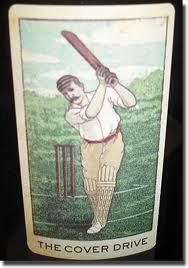
- 2010 Jim Barry – Cabernet Sauvignon The Cover Drive Coonawarra
3. Menu
1-Mussels in white wine sauce
2-Penne con salciccia
3-Insalata de Caprese
4-Lamb chop with brown sauce
4. Information and Tasting notes on the Wines
GENERAL INFORMATION OF AUSTRALIAN RED BLENDS
http://www.wineselectors.com.au/About-Wine/Wine-Varieties/Red-Varieties/Red-Blends
In Australia, there are two main red grape varieties that form the base of most red blends – Shiraz and Cabernet Sauvignon and these are often blended together.
Cabernet Sauvignon-based Australian Red Blends: Cabernet Sauvignon ripens late, and that is the principal reason it is planted with the earlier ripening Merlot in Bordeaux; as an insurance policy for growers, the bonus is that the two make great blending partners. Cabernet Sauvignon’s firm tannin structure ensures that it’s capable of producing wines with good potential to improve with cellaring.
Shiraz-based Australian Red Blends: The blending of Shiraz has its origins in the southern Rhône Valley in France. Here, Grenache is used with smaller amounts of other lesser-known varieties like Mourvèdre to create wines similar to the popular southern ‘GSM’ style reds we see here today. Shiraz Viognier, a blend that is gaining momentum here in Australia, takes its lead from the famous Côte Rôtie wines of the northern Rhône where the cool climate, spicy, elegant Shiraz is enriched with a small addition of the white grape Viognier prior to fermentation.
http://www.vinodiversity.com/blended-wines.html
Many winemakers are now using Viognier with Shiraz. It seems to be a marketing plus to have “Shiraz Viognier” on the label, even if there is only a very small percentage of Viognier. These wines are often not strictly blends as they are made by a process called co-pigmentation. The grapes are mixed prior to fermentation, apparently the effects of the Viognier is to modify the biochemical pathways during fermetation and hence play a role in the final colour intensity and flavour of the wine.
The most interesting blended wines in Australia could turn out to be produced in the ‘Cadenzia‘ project in McLaren Vale. Cadenzia is a marketing name given to Grenache based blends, most often with Shiraz and Mourvedre, but sometimes with a few other varieties. The aim of the marketing is to marry the idea of a particlar blend with the region. There is widespread appreciation already for ‘GSM’ blends, but these are produced in other regions as well, most notably the Barossa.
Selected wines
2012 Pewsley Vale Riesling – Eden Valley, South Australia
Aromas of apple blossom and lime with notes of slate and lifted perfume. This wine is textbook Eden Valley Riesling at its very best. The palate has juicy lemon/lime with hints of rosemary and white flowers. The wine has staying power and a perfectly balanced mineral acidity that just draws the wines line and length out.
Price: $ 17
2010 Jim Barry – Cabernet Sauvignon The Cover Drive, Coonawarra – South Australia
Deep garnet-purple in color, the 2010 The Cover Drive Cabernet Sauvignon shows off a vibrant, ripe, black cherry and red plum core with notes of cloves and vanilla plus a hint of spice. Medium to full-bodied with medium levels of finely-grained tannins, it has a crisp acid line, good fruit concentration and a nice long, spicy finish. Drink it now to 2017.
Score: – Wine Advocate 90 pts. Price: $20
Glaetzer Wallace Shiraz Grenache, 2010 Barossa Valley
Intense, Blackberry, Medium-bodied. Bright purple. Intense dark berry and cherry pit aromas are complemented by notes of vanilla, violet and cracked pepper. Juicy and focused, offering spicy blackberry and bitter cherry flavors and a suggestion of candied flowers.”
Score: 91 pts. – Int’l Wine Cellar Price: $ 22
D’Arenberg Laughing Magpie Shiraz Viognier, 2009 McLaren Vale –
Intense, Berry, Floral, Spice, Medium-bodied. Medium-deep garnet-purple in color, it offers a pretty nose of intense blueberry and black cherry with an undercurrent of frangipani and peach blossom plus some mace and dried leaves…”
Score: 90 pts. Wine Advocate Price:$22
5. Regional Notes
By Jairo Sánchez
(Information sources include The Wine Bible, Wikipedia and other Internet webpages)
The Australian wine industry is the world’s fourth largest exporter of wine with approximately 750 million litres a year to the international export market with only about 40% of production consumed domestically. The wine industry is a significant contributor to the Australian economy through production, employment, export and tourism.
There is a A$2.8 billion domestic market for Australian wines, with Australians consuming over 530 million litres annually with a per capita consumption of about 30 litres – 50% white table wine, 35% red table wine. Only 16.6% of wine sold domestically is imported.
Wine is produced in every state, with more than 60 designated wine regions totaling approximately 160,000 hectares; however Australia’s wine regions are mainly in the southern, cooler parts of the country, with vineyards located in South Australia, New South Wales, Victoria, Western Australia, Tasmania and Queensland. The wine regions in each of these states produce different wine varieties and styles that take advantage of particular climatic differences, topography and soil types. With the major varieties being predominantly Shiraz, Cabernet Sauvignon, Chardonnay, Merlot, Semillon, Pinot noir, Riesling, and Sauvignon Blanc. Wines are often labeled with the name of their grape variety
Australian wine industry is characterized by having the biggest per capita wine consumer of English speaking countries; the most High Tech and most mechanized labor; export oriented structure 605/40%; biggest Shiraz grape producer and an impressive growth during the last half of 20 century.
Wines are generally characterized by concentrated flavor in wines (creamy whites and reds packed with fruit
The industry is made of Four very Large companies (50% Production): South Corp. Wines, BRL Hardy, Orlando Whyndham and Mildara Blass ands many medium size producers.
Grape Varieties.
Major grape varieties are Shiraz, Cabernet Sauvignon, Merlot, Pinot Noir, Grenache Mourverdre Chardonnay, Sémillon, Sauvignon blanc, , and Riesling. The country has no native grapes, and Vitis vinifera varieties were introduced from Europe and South Africa in the late 18th and early 19th centuries. Some varieties have been bred by Australian viticulturists, for example Cienna and Tarrango.
About 130 different grape varieties are used by commercial winemakers in Australia. Over recent years many winemakers have begun exploring so called “alternative varieties” other than those listed above. Many varieties from France, Italy and Spain for example Petit Verdot, Pinot grigio, Pinot noir, Sangiovese, Tempranillo and Viognier are becoming more common. Wines from many other varieties are being produced.
Australian winemaking results have been impressive and it has established benchmarks for a number of varietals, such as Chardonnay and Shiraz. Moreover, Australians have innovated in canopy management and other viticultural and in winemaking techniques, and they have a general attitude toward their work that sets them apart from producers in Europe. Australian wine-makers travel the wine world as highly skilled seasonal workers, relocating to the northern hemisphere during the off-season at home. They are an important resource in the globalisation of wine and wine critic Matt Kramer notes that “the most powerful influence in wine today” comes from Australia (Kramer).
Wine Laws
Australia does not have a strict system of laws regulating grape growing and winemaking.
Regulations define: Viticultural regions and govern Labeling
- If a grape variety is named on the label, 85% of the wine must be composed of the grape named
- If two wines are used in a blend and neither represents 85% of the total, both grape must be listed on the label in order of importance. Thus a wine labeled cabernet-shiraz has more cabernet than one Shiraz-cabernet
- Blended wines must also state the percentage of each grape used in the blend
- If and area, district or region is named in the label, 85% of the wine must come from that place.
Approach to Winemaking and Blends
Conventional European wisdom holds that good wine comes from specific sites that have distinctive terroir. In Australia, however, many winemakers believe that there is another principle for producing good wines, namely the selection and blending
- The grapes of many Australian wines do not come from a single place but instead may be grown over vast stretches of territory.
- Such grapes will be made into separate lots of wine, Then, depending on the quality level, certain lots will be selected and blended together
- The goal of selecting and blending process is to make brands of wine that have fairly consistent flavors year after year
- The same process of selecting and blending makes some of the most prestigious wines in Australia
- The most legendary and expensive wine, Penfold’s Grange is a blend of Shiraz grapes (sometimes blended with small amounts of Cabernet Sauvignon) grown in various vineyards as many as 300 miles apart. To make Lagrange, Penfolds begin with 40,000 cases of wine. After selecting the best lots and blending them together few of 7,000 cases of grange were made.
GSM Combination Wines. GSM is a name commonly used in Australia for a red wine consisting of a blend of Grenache, Shiraz and Mourvèdre. This blend originated from those used in some Southern Rhône wines, including Châteauneuf-du-Pape. Grenache is the lightest of the three grapes, producing a pale red juice with soft berry scents and a bit of spiciness. As a blending component, it contributes alcohol, warmth and fruitiness without added tannins. Shiraz can contribute full-bodied, fleshy flavors of black fruits and pepper. It adds color, backbone and tannins and provides the sense of balance such blends require. Mourvèdre contributes elegance, structure and acidity to the blend, producing flavors of sweet plums, roasted game and hints of tobacco.
Remember that Australia wine Regions are young compared with Europe and that for multiregional blends, grapes may have come from different regions. For those wines the most important guide to quality is the producer’s name
Regions
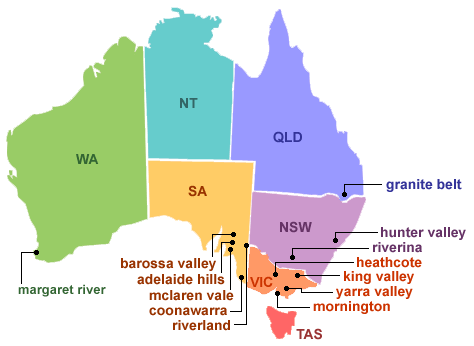
South Australia (Perth) Barossa Valley, (Shiraz, Riesling), Eden Valley, Clare Valley, Coonawara, (cabernet Sauvignon) and McLaren Vale
More than 50% of Aust. Wine is produced in South Australia
Main Wine companies, Hardys, Orlando, Penfolds, Peter Lehmann, Seppelt, Wolf Blass, Wynns, and Yalumba and medium size ones as Henschke, Mountadam, Petaluma and Tim Adams
Inexpensive bag in the box wines
New South Wales. (Sidney) is the second leading wine state producer. Hunter Valley, Chardonnay,(Rosemont State) Semillon (Tyrrel’s, Mc William’s Mount Pleasant, Lindemans and Brookenwoods; Mudgee, Cabernet sauvignon (Huntington State). Riverina, Dry and fortified wine and bag in the box wines
Penfolds, Rosemont State
Victoria. Melbourne . Third wine producing state. Yarra Valley, Geelong, Mornington Penninsula (Chardonnay, Pinot Noir in the south, Cabernet sauvignon, Shiraz), Grampians (Seppet’s Sparklings) Rutherglen, Glenrowan, (Sweet Moscat and Tocays)
Western Australia. Far side of Australia continent, 5000 Km from other wine centers. Margaret River, (Cabs, from Cape Mantelle, Leeuwin State,and Cullens) Great southern region, Pemberton, Perth Hills, Swan Valley.
Bordeaux reds and Whites, (Semillon and Sauvignon Blanc) and Outstanding Chardonnaysand now Verdelho
2014 Tasting Program – Degustaciones 2014
Click here < to check the annual program or click here >
2014_Program_Club del Vino program in Adobe .pdf format – it will open in a new window.
Posted in Meeting Abstract, Wine - Vino - Vinho
Tagged 2014, 2014 defustaciones, degustaciones 2014, program 2014
Leave a comment
Tasting #150 16 December 2013 – Sparkling Wines – Capri Restaurant
Tasting #150 16 December 2013 – Sparkling Wines – 1PM Capri Restaurant Restaurant
- 1. Presenters, Participants and Birthdays of December
- 2. Wines
- 3. Menu
- 4. Wines’ Description
- 5. Sparklings: Cava, Prosecco and Champaign
- 6. Effervescents du Monde
- 7. Last year Alfsonso Sanchez wrote a very informative piece on “Espumosos” click here to read the article at the bottom of the December 2012 post.
1. Presenters, Participants and Birthdays
Presenters: Cecilio-Augusto Berndsen and J.L. Colaiacovo
Participants:
Alvaro Lopes, Jaime Estupinan, Orlando Mason, Jorge Garcia, Italo Mirkow, Albertina Frenkel, German Zincke, Mario Aguilar, Alfonso Caicedo, Cecilio-Augusto Berndsen, Juan Luis Colaiacovo, Clara Estrada, Jairo Sanchez, Carlos E.Velez (invited by Jorge Garcia), Hugo Benito (condicional), Alberto Musalem (invited by J. Garcia, condicional). Leonor Barreto, Alfonso Sanchez, L.C.Danin Lobo (Lula), Ruth Connolly, Ginger Smart.
Birthdays celebrated this month:
- Emilio B. Labrada (6),
- Ruth Connolly (13),
- Ricardo Zavaleta (17),
- Jairo Sanchez (21) and
- Cecilio-Augusto Berndsen (31).
2. Wines 6 Wines from Total Wine
- 1. Tesoro della Regina, Prosecco DOC. Fossalta di Piavi, Italy. ABV 11%. $ 17
- 2. 2009 Marques de Monistrol Winemaker’s Select Brut Cava. Sant Sadurni Danoia, Spain. ABV 12% $ 15
- 3. Russian River Valley Brut Sparkling Wine. Chardonnay 61%, Pinot Noir 21% and Pinot Meunier 18%. River Road F. Vineyards & Winery. Sonoma, California. ABV: 12.4%, $24
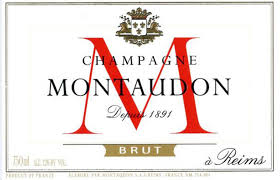
- 4. Champagne Montaudon Brut. Alliance Champagne Reims, France. ABV: 12% $ 30
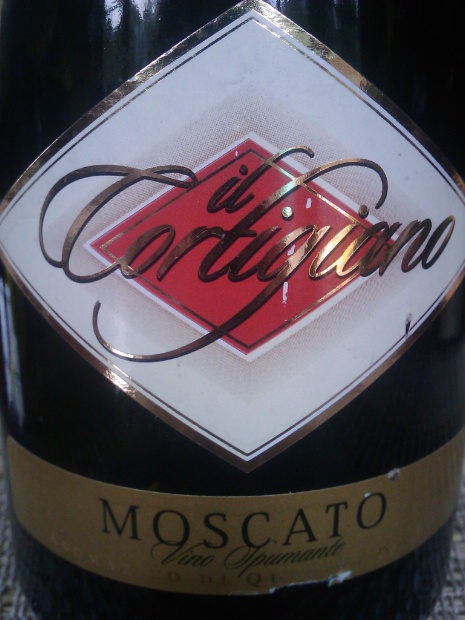
- 5. Moscato Il Corgigiano, Vino Spumante di Qualitá del tipo Aromático-Dulce. Fratelli Martini Secondo Luigi, Cossano Belbo, Veneto, Italy. ABV 7%, $ 10. This wine is going to be raffled. Must be present to win!
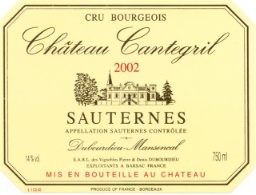
- 6. 2001 Chateau Cantegril Sauternes. Semillon-Sauvignon Blanc Blend. Sauternes, Bordeaux, France. ABV 14%, $ 30
3. Menu
Salmon Salad
Fried Calamari
Penne al Pesto Sauce
Turkey with Stock Sauce
4. Wine’s Details
4.1. Tesoro della Regina, Prosecco DOC. Prosecco di Pronegliano, Fossalta di Piavi, Italy. ABV 11%. $ 17

Wine Enthusiast: 86 points. “Fresh, fragrant and light, this delivers a touch of sweetness, followed by aroma of citrus, white flowers and peach. It’s crisp, easy and light on the finish, with steely efferversence.”
Dry, Apple, Pear, Medium-bodied
Wine & Spirits 90 points- Prosecco, Veneto, Italy – “This wine’s brisk, consistent bubbles carry a green almond scent, driving home crispness and freshness. It’s clean and still manages to feel generous. For aperitifs.”
4.2. 2009 Marques de Monistrol Winemaker’s Select Brut Cava. 40% Macabeo, 30% Parellada, and 30% Xarel-lo. Sant Sadurni D’Anoia, not far from Barcelona, Spain. ABV 12% $ 15
The Reserva Cava Brut is one of the outstanding values of
sparkling wine from Spain. The highest quality grapes are used in the “traditional method”. Its tiny sparkling bubbles and enticing aromas lead to fresh fruit flavors and a silky, dry enduring finish. from Total Wine.
Notes of yeast and blanched almonds on the nose. This vintage Cava is crisp on the palate with good depth of flavor and a refined palate showing very good balance. A very pleasant bubbly with enough depth to stand up to food and enough refinement to serve as an apeitif. The Vintage Brut is a blend of 40% Macabeo, 30% Parellada, and 30% Xarel-lo aged on the lees for 26-30 months. Excellent value! from I-vinereview.com
Award: IWSC Bronze 2012 (International Wine and Spirit Competition, UK) for 2009 vintage.
4.3. Russian River Valley Brut Sparkling Wine. Chardonnay 61%, Pinot Noir 21% and Pinot Meunier 18%. River Road F. Vineyards & Winery. Sonoma, California. ABV: 12.4%, $ 24
Méthode Champenoise, the age-old tradition of producing the highest quality sparkling
wines, is how this classic Brut blend of Chardonnay, Pinot Noir, and Pinot Meunier is made. Whole clusters are gently pressed, with the secondary fermentation happening in the bottle.
Tasting Notes: This sparkling Méthode Champenoise Brut has delicate floral and fresh citrus notes of Meyer lemons, while delivering palate flavors of crisp apples, fresh
strawberries, and toasted almonds.
Food Pairings: This wine will be delicious with Triple Crème cheeses, Lemongrass Crab Cakes, or Tortilla Crusted Turkey Cutlets with Spicy Avocado Sauce.
– See more at: http://www.riverroadvineyards.com/russian-river-valley-brut-sparkling-wine#sthash.shQdqhYW.dpuf
From the winemaker: Our winemaker Joe Freeman introduces our Méthode Champenoise Brut which has delicate floral and fresh citrus notes of Meyer lemons, while delivering palate flavors of crisp apples, fresh strawberries, and toasted almonds. – See more at: http://www.riverroadvineyards.com/russian-river-valley-brut-sparkling-wine#sthash.shQdqhYW.dpuf
Watch this 40 seconds video: Watch Video
4.4. Champagne Montaudon Brut. Alliance Champagne Reims, France. ABV: 12% $ 30
Wine Spectator: 91 Points. Dry, Citrus, Peach, Medium-bodiedWine Spectator –
Champagne, France- “A distinctive, memorable
Champagne in a mature style, this is deep gold in color, expansively doughy, flinty and nutty in aroma and flavor and has a supersmooth texture backed by firm acidity. Try with Sushi.
from http://www.winechateau.com : Today MONTAUDON is one of the rare champagne houses still owned entirely by the founding family. The HOUSE OF MONTAUDON is located right at the heart of REIMS, e few steps away from the Cathedral. The fermentation room, storerooms and two levels of cellars (where bottles for several year’s supply are stocked) are sited in this well integrated centre. The MONTAUDON company owns a vineyard of 45 hectares.
4.5. Moscato Il Corgigiano, Vino Spumante di Qualitá del tipo Aromático-Dulce. Fratelli Martini Secondo Luigi, Cossano Belbo, Veneto, Italy. ABV 7%, $ $10.
This wine is going to be raffled. Must be present to win!
Sweet, Honey, Grape, Medium-bodied. This delightful low alcohol, aromatic sparkling wine, has a fresh, slightly honeyed, grapey flavor. Made from the Muscat grape it is a bit sweeter than Asti. and is an ideal aperitif with strawberries, fruit salads, marzipan, almond pastries and desserts.
On T.Wine site a reviewer ‘hplar’ wrote: “I’ve been
drinking moscato wines for decades – long before the current craze. This is among the best I have had, and one of the best values. Tiny little bubbles like the best Champagnes, but fruity sweet like a Mosel. Very enjoyable.”
Moscato Spumante di Qualità aromatico. Prodotto con uve Moscato, si presenta con un colore giallo paglierino tenue, con spuma bianca, briosa e dal perlage fine e persistente. Profumo caratteristico spiccato. Al palato è dolce, aromatico, caratteristico ed equilibrato. Ottimo con dolci e frutta. Temperatura di servizio 7-10° C. from http://www.enotecapontina.it/
4.6. 2001 Chateau Cantegril Sauternes. Semillon-Sauvignon Blanc Blend. Sauternes, Bordeaux, France. ABV 14%, $ 30
Winemaker tasting note: Cantegril wines, although less rich than the ones of Doisy-Daëne, possess nevertheless all the characteristics of a great Barsac; Pierre and Denis Dubourdieu’s very pure wine-making style is strongly present. Very pleasant when young, they display a great aging potential. More at the winemaker website: Denis Dubordieu Domain
Wine Spectator 91 – Sauternes, France – “Smells like an apple tart with hints of honey and cream. Full-bodied, with very lively acidity yet a rich and very sweet palate. Excellent young Sauternes.”
Acclaim: Cellar Tracker: 91, Jean-Marc Quarin 85.
…
5. Champagne and Sparkling Wine Basics
by Stacy Slinkard
“Come quickly, I am tasting stars,” Dom Perignon’s famous quote after his first taste of Champagne, and a fairly apt description of what a good Champagne or sparkling wine experience should offer. Is Champagne truly a wine? Where do the bubbles come from? How do I serve Champagne and sparkling wines? Any key sparkling wine suggestions? Read on for answers to these questions and more.
Is Champagne a true wine?
Yes, Champagne and other sparkling wines are a category of wine made from a blend of grapes such as Chardonnay, Pinot Noir or Pinot Meunier.
What’s the difference between Champagne and Sparkling Wine?
The Champagne we know and love comes exclusively from the Champagne region of France, and claims the honor of being the most famous of the sparkling wines. Technically, it is the only sparkling wine that may be referred to as “Champagne.” Bubbly from all other regions in the world are simply referred to as “sparkling wine,” though regional specialties abound. Spain’s sparkler is called Cava, Italy’s bubbles come in Prosecco and Moscato d’Asti, and French sparkling wines from everywhere outside of Champagne are referred to as Cremant. Italy, Spain, Australia, New Zealand and the U.S. give France a run for the money by producing some fantastic sparkling wines at exceptionally competitive price points. more at: Wine About
…
6. Effervescents du Monde Confrontacion Internacional des Meilleurs Vins Effervescents
Posted in Meeting Abstract, Wine - Vino - Vinho
Tagged California, Cava, champagne, Champaign, December, France, Italia, Prosecco, Sonoma, Spain, Sparkling
Leave a comment
Los Vinos de las Fiestas
COMO SE HIZO LA LISTA
Esta lista se ha elaborado con base en los vinos que los socios de Club compartieron con familias y amigos durante las festividades de fin de año en 2013 desde el día de Acción de Gracias hasta la Noche Vieja y que generosamente les recomiendan a sus amigos amantes del vino. La lista se irá completando con nuevas recomendaciones a medida que se reciban.
La Lista
Jorge García
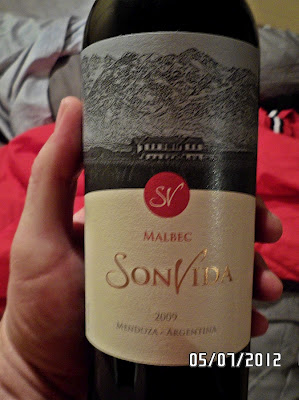
Sonvida 2007 – Uco Valley, Mendoza. A Malbec from Altamira distric in La Consulta city (San Carlos Departament), . Full body
and ripe malbec not far from any first brand around (Achaval Ferrer, La Celia, O.Fournier, some Catena wines,etc). Beautiful acidity and balanced alcohol for this malbec full of ripe small black berries,black california plums and a nice soft oak toach. The wine is very nice now, but surely much better somewhere between 4 and 6 years old. A 92 point malbec now and 94 in a couple of years of progressive maturity. – Calvert Woodly $23
Ricardo Zabaleta
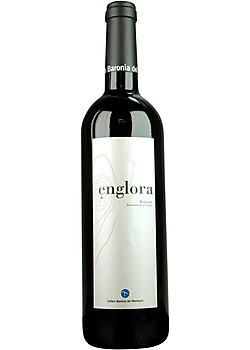
Baronia del Montsant Englora 2008 . Red wine aged in oak barrel.
Englora Composition: Red Grenache 49%, Carignan 24%, Cabernet Sauvignon , 9%, Syrah 7%, Tempranillo 1%.
Crushed-rock, violet, black raspberry, and cherry aromas soar from the glass of this deep, medium-bodied, seriously-endowed, rich, well-structured and delineated offering. Limited Producction: 23,330 bottles. – Total Wine $18
Cecilio- Augusto Berndsen
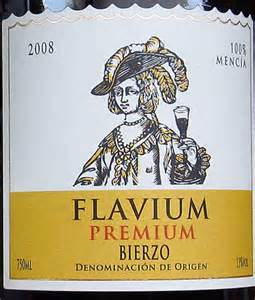
Flavium Mencía Premium – Bierzo – 2008 The 2008 Flavium Premium Mencia
was rated 90 points by Jay Miller of The Wine Advocate. This is incredible, especially for the fact that the wine only costs $10.99. After further searching, it is also available at some other wine stores in DC starting at $8.99, such as MacArthur Beverages.
The Mencia grape is usually grown in the northwestern part of Spain. It was typically used as a blending grape for many years, but lately has become immensely popular on its own, as with the Flavium wine from the Vinos de Arganza vineyard in the Bierzo region. www.examiner.com
Comment: Robert Parker concurs offering a grade of 90. Someone may wargue: Mencia Wine with white meat? Well this wine is so well balanced that can be taken with red or white meat. Or even with no food. It is agreable all ocasions wine. The ratings and the price are a tremendous combination. Drink it you will like it.
German Zinke
Chateau Saint Michele Columbia River Whites.


Para este día de Acción de Gracias elegimos una viña y compramos 3 tipos de blanco. La viña es Chateau Ste. Michelle del Columbia Valley. Los vinos: Riesling, Chardonay y Sauvignon Blanc. Van bien con el pavo. Los precios entre $10 a $15, bastante baratos.
The Following information is from the Chateau St Michele webpage.
The 2012 Sauvignon Blanc exhibits a bright fruit profile of apples and melons. The mostly stainless steel fermentation provides the crisp character to the wine. Try this wine with pasta with cream sauce. 90 pts Wine Enthusiast
The Columbia Valley 2012 Chardonnay is a pleasurable, food-friendly Chardonnay. This is a fresh, soft style of Chardonnay with bright apple and sweet citrus fruit character with subtle spice and oak nuances. The sur lie aging gives it an appealing softness.
The Chateau Ste. Michelle Dry Riesling is a dry, crisp, refreshing style of Riesling with beautiful fruit flavors, crisp acidity and an elegant finish. It offers inviting floral and mandarin aromas with a clean finish. This is an incredibly versatile food wine and my favorite with oysters.
The 2012 Harvest Select Sweet Riesling is made in a slightly sweeter style than our “Columbia Valley Riesling” but still shows the classic elements of Chateau Ste. Michelle Riesling. It offers rich flavors of ripe peaches and apricot that are balanced by crisp acidity. 90 pts Wine Enthusiast.
Alfonso Sanchez
Seghesio Zinfandel 2010
Este es un vino de gran cuerpo y aroma, con sabores a frutas negras, rojas y vainilla, gran estructura y final largo y complejo con taninos suaves. Resultó estupendo con la pierna de cerdo al horno. Agrego las notas de los expertos. Precio $20.
Robert Parker’s Wine Advocate This excellent 2010 Zinfandel was made from a blend of 89% Zinfandel, 9% Petite Sirah and 2% Syrah, and was aged 10 months in primarily American oak and a small amount of French wood. This 80,000-case cuvee exhibits lovely strawberry and black cherry fruit notes intermixed with hints of pepper, spice box and a meaty/charcuterie aroma. It is an enticing, medium to full-bodied, dense, rustic Zinfandel to drink over the next several years. (10/ 2012)
93 points Wine Enthusiast, 90 points Wine Spectator, 89 points Connoisseurs Guide
Jairo Sanchez
Estos vinos los encontré en restaurantes de New York (los tres primeros en el Blue Hill Stone Barn, Tarrington, y el ultimo en El Torrisi, en Manhattan)
Los tres primeros fueron excelentes cada uno en su estilo y quizás lo mas destacado es que los precio en el restaurante eran menos del doble de los de comerciales. El ultimo es un vino de la variedad Rkasitel que se produce en los Finger Lakes en NY y que se caracteriza por ser muy seco y con fuertes sabores herbáceos y minerales que lo hizo una experiencia extraordinaria pues su vigor era suficiente para acompañar comida italiana suculenta.
Champagne, Billecarte Salmon Brut Mareuil Ay, Francia ( $45, 1/2 Bot. )
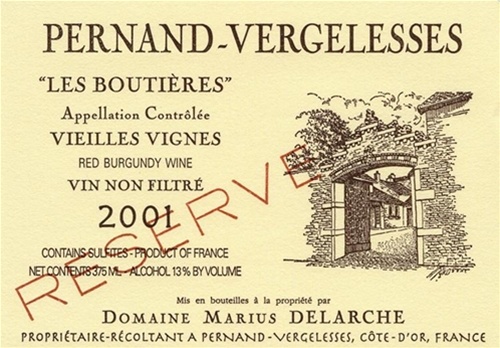
Red Burgundy 1er Cru Domain Marius Delarche Les Boutieres Francia 1996($50)
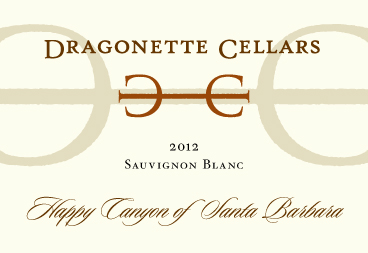
White Sauvignon Blanc Dragonette Cellars 2010 Happy canyon of Santa Barbara, California ($ 30)
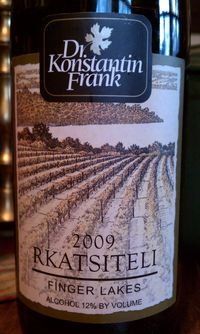
White Rkasitel 2010, Dr Konstantin Frank, Finger Lakes, New York ($15 )
Posted in Wine - Vino - Vinho
Leave a comment
THE TOP 100 WINES OF 2013 – WINE SPECTATOR – Some Obervations
Top WS 100 – Comment
Alfonso Sanchez
There are several salient features in the WS Top 100 Wines for 2013:
- Sixty one wines on the list are from the new world, of which 27 are from the USA which shows probably the increasing quality of American wines and/or the evolving assessment criteria than gives more weight to new world styles (more fruity, high alcohol) as opposed to the old world’s. You guess.
- Six wines South America made it to the list (three from Chile and three from Argentina).
- Spain got 9 wines on the list but it is remarkable that 6 are from Rioja, including the number one – Imperial Rioja – Compañía Vinícola del Norte de España Gran Reserva – 2004 95 pts. $63). The other three wines are from Bierzo, Campo de Borja and Sevilla (Manzanilla La Gitana). Is this a signal of the focus on quality by the wine makers in Rioja? Perhaps.
- There are 24 wines on the list that cost $25 or less, of which 12 are on the top 50. • There are 36 wines that cost between $25 and $50 of which 20 are in the top 50 wines
- In total 60 of the 100 wines cost $50 or less.
- The lowest priced wine on the list (Badia a Coltibouno- Toscana Cancelli -2011) in only $10.
In the same issue of the WS there is a section of 100 wines of outstanding value (defined as 90 points or higher costing $18 or less). Eleven of them are also in the Top 100 list. There France has 26 wines, Italy has 15, Australia has 10, Washington has 10, Argentina has 4 and Chile has 1.
These observations might help us in selecting candidate wines for our tastings. We could say for example that we should not taste wines under say $18 or $20 unless they have a rating of 90 points or more. In this way we can gradually raise the quality of our tastings.
Printable List of Top 100 Wines _ Top 100 of 2013 _ Wine Spectator
Tasting NOTES_Printable List of Top 100 Wines _ Top 100 of 2013 _ Wine Spectator
Posted in General
Leave a comment
Tasting 149 – November 18, 2013 – Wines from Argentina – Capri Restaurant
Contents of this post
- Presenters and Participants
- Wine List
- Menu
- Wines Details
- Información sobre el Malbec
- The Argentine Wine Industry
- Wine Ratings by the Members
Presenters:
Clara Estrada, Jaime Estupinan and Emilio Labrada
Participants:
Rolando Castaneda, Juan Luis Colaiacovo, Hugo Benito, Jairo Sanchez, Alfonso Sanchez, Cecilio-Augusto Berndsen, Emilio Labrada, Orlando Mason, Jaime Estupinan, Marcello Averbug, Raul Sanguinetti, German Zincke – updated November 13.
Jaime, Clarita & Emilio ♦ The Presenters
.
.
Birthdays of November: Mario Aguilar (1) and Hugo Benito (12)
2. Wines List
(this is not the presentation order, it is a blind tasting)2012 Dominio del Plata Torrontés Crios de Susana Balbo. Mendoza. ABV: 13.5% $ 13
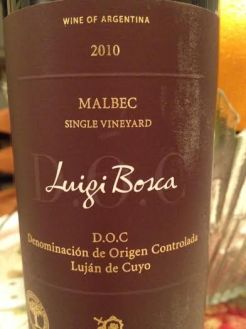
2010 Malbec Single Vineyard, Luigi Bosca DOC. Lujan de Duyo, Mendoza. ABV: 14% $ 18 to 25
2008 Cabernet Sauvignon III , Pulenta Estate. Agrelo, Mendoza. ABV: 14.5% $ 19 to 22
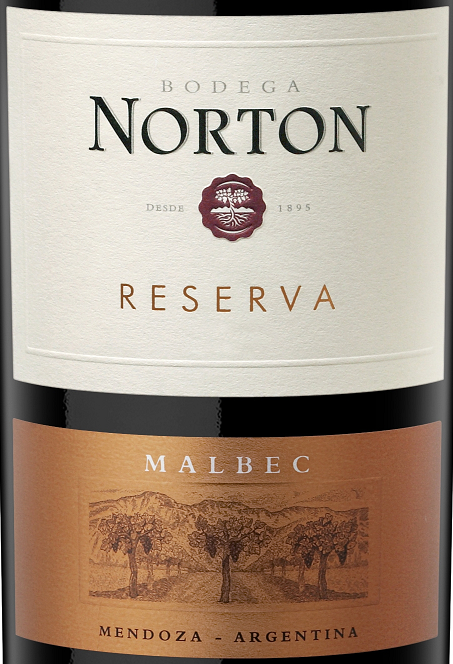
2010 Malbec Reserva, Bodega Norton. Lujan de Cuyo, Mendoza. ABV: 14.3% $ 18 to 22
3. Menu:
- Sea Food Salad
- Gnocchi with Salsa Aurora
- Carne a La Parrilla, Potatoes and Green Beans
- Postre and Coffee
4. Detailled Information and Tasting notes on the Wines
All wines from Agentina, purchased in shops to be announced:
4.1 2012 Dominio del Plata Torrontés Crios de Susana Balbo. Mendoza. APV: 13.5% $ 13
Winemaker description of this wine: Dominio del Plata website: “Enticing aromas that are strikingly similar to Viognier, with hints of white pear, white flowers and citrus fruit. On the palate, it has a beautiful structure and acidity along with enticing fruit flavours that keep you coming back for another sip. Plenty of body for a wine that shows such delicate aromas and flavours. Fruity, floral and yet still quite dry.
Pairing: Best enjoyed in its youth either by itself, or as a wonderful partner with smoked meats, mild to medium-strong cheeses and seafood (especially crab, prawns, raw and marinated fish). It’s also a delicious wine to pair with Asian food and sushis and a surprising partner with goat cheese.” Wine Technical Data Sheet at the winemaker website Dominio del Plata
Critical Acclaim: Rating: WA 88 IWC 88
88 points Neal Martin (Wine Advocate): “[$15 list] The 2012 Crios Torrontes comes from Cafayate in Salta, Altamira and La Rioja from 33-year-old vines. It has much more presence and vivacity than the Chardonnay, with scents of lime, peach and melon that are well-defined. The palate is well-balanced with a prickle of white pepper on the entry. It displays moderate length in the mouth, while the finish is crisp and taut. with notes of pear, bruised apple and dried orange peel. This is worth seeking out for the price. Drink now-2014. (Oct 2012, Wine Advocate)”
88 points Stephen Tanzer (International Wine Cellar): “Pale, bright silver-yellow color. Highly perfumed aromas of lemon drop, white flowers, peppermint and white pepper. Supple, pliant and easygoing, with citrus, herbal and floral flavors joined by a hint of licorice. Shows a touch of heat on the finish. Offers good weight in the mouth but seems less intense than the 2011. Susana Balbo declassified a lot of fruit in the difficult 2012 harvest, making this wine mostly from Mendoza vines planted to the Salta clone of torrontes, as she finds the Mendoza clone’s flavors too fleeting. (Mar/Apr 2013)
4.2 2010 Malbec Single Vineyard, Luigi Bosca DOC. Lujan de Cuyo, Mendoza. ABV: 14% $ 18 to 25.
Wine Maker description (click HERE): Luigi Bosca Malbec D.O.C. es un genuino varietal de un profundo color violáceo y se caracteriza por sus aromas a cerezas y ciruelas maduras. Es, además, especiado, con notas a café y moras, y cierto tostado producto de su crianza en barricas de roble. Su estructura es sólida y su paso por boca, jugoso y elegante, con acidez equilibrada y gran redondez. Un tinto con fuerza pero con sutilezas, además de excelente tipicidad.
Additional information on the Winemaker website.
Critical Acclaim: Robert Parker 89
The Wine Advocate Author: Neal Martin – 88 points
Date: Thursday, November 1, 2012: “The 2010 Luigi Bosca Malbec D.O.C. comes from 70-year-old vines in La Linda, Vistalba and sees 14 months in new oak. The nose is high-toned and a little volatile at first, with black cherry and raisin aromas. The palate is better with firm, ripe tannins and graphite-tinged black fruit. It seems a little pinched towards the finish, when it needs to fan out.”
Wine Spectator Author: Nathan Wesley – 89 points
Date: Tuesday, October 15, 2013 “This rich red features a dark core of roasted plum, black cherry compote, spice, mocha and hot stone. Medium tannins add support to the round finish.”
Award: Awarded “Commended” by the International Wine Challenge UK 2013. Video of awards ceremony highlights:
4.3 2008 Cabernet Sauvignon III , Pulenta Estate. Agrelo, Mendoza. ABV: 14.5% $ 19 to 22
Winemaker Note: “Su color rojo profundo e intenso revela la calidad de la materia prima. Sus notas e pimiento frutos be bosque y algo de mermelada de frutas rojas en equilibrio con aromas proveniente del roble logran una gran complejidad en nariz. Su fuerte y a la vez armonioso carácter típico be la zona de Agrelo. Sus taninos se perciben suaves y sedosos mostrando un trabajo detallado de su maceración y guarda. Es un vino con gran personalidad y sumamente agradable”. more at the winemaker website en español.
Critical Acclaim: Stephen Tanzer I.W.C.: 89
WE: 83 by Michael Schachner Green, tom atoey and strained as a whole. The nose initially smells like marinara sauce and field greens. Mouthfeel is the saving grace; it’s elegant and fresh. But back to the flavor profile, which delivers pizza, herbal overtones and tomato. Cabernet does not seem to be this winery’s cup of tea. (12/31/2011) — 83 more
.
4.4 2010 Malbec Reserva, Bodega Norton. Lujan de Cuyo, Mendoza. ABV: 14.3% $ 18 to 22
Winemaker Tasting Note: Deep red colour with hints of purple. Expressive on the nose with notes of ripe black fruits, violets, and tobacco. Long finish. More details on Bodega Norton website.
WS 90 WE 92
This wine made the Wine Spectator Top 100 Wines list for the second time in 2012 and it’s easy to see why. Bold but supple with richness and depth, this Reserve Malbec has the stuffing to go the distance. Sourced from older vines averaging 30 years of age and given extended maceration of 25 to 30 days. Aged 12 months in French oak barrels. The Spectator scored it 90 points and Wine Enthusiast Magazine made it an Editors Choice with a 92 point score saying “Opaque purple and thick in the glass, this wine has inky, supercharged aromas of ripe blackberry and spice. It feels amped up but balanced, with more intensity and clarity than what most other $18 reds offer. The flavors of wild berry, mild herb and chocolate finish in a rich, toasty wrapping.”
Read the full Bodega Norton 2010 Reserva Malbec, Mendoza review in Wine Enthusiast Magazine’s Buying Guide
Información resumida sobre el vino Malbec de Argentina
- La uva es una cepa de origen francés muy extendida y propia de la vitinicultura Argentina.
- El malbec se originó en Bordeaux, Francia, pero por su susceptibilidad a enfermedades, su popularidad disminuyó en esa Región. Sin embargo, ha tenido una buena adaptación al ambiente de Argentina que ofrece mejor la protección de las plantas contra pestes y enfermedades.
- En Francia es común mezclarlo con Cabernet Sauvignon, Melrot y Petit Verdot, en los vinos Bordeaux. En Argentina se usa sin mezclar.
- Es un vino de cuerpo medio y taninos dulces y amables, con notas florales y especiadas. Su aroma recuerda a frutas como la ciruela, el casis, guindas, frutillas (fresas) y violetas. Con la crianza aporta notas de cuero, vainilla y chocolate. Se combina muy bien con carnes rojas, cordero y de animales de caza (ciervo, jabalí).
- Es un vino que mejora con el añejamiento y se puede guardar por largos periodos.
- Según el Wall Street Discovery Club, el Malbec de Argentina se considera un gran fenómeno del vino en los años recientes, surgiendo de lo desconocido para transformarse en el vino mas comentado por los gustadores de vino en todo el mundo.
The Argentine Wine Industry
Introduction
from: http://www.argentinawineguide.com/resources/industry.html
Argentina is currently the world’s fifth largest wine producer by volume – after France, Italy, Spain and the USA in that order – a position it has held for many years.
Yet it is only very recently – perhaps over the last ten or fifteen years – that the industry has really begun to develop the methods, attitudes and will to become a serious player in the international wine market.
High volume, low quality vines are being replaced by premium varieties. Formerly struggling bodegas are attracting the backing of major international wine companies. Product quality is soaring, and every year the industry balance shifts further from cheap table wines towards exquisitely crafted drops that are increasingly recognised as being amongst the best in the world.
The Argentine wine industry is reaping the benefits of its heritage – old vines, unique geographical conditions – with new technology and a mix of modern and traditional methods. It’s come along way since the first vines were planted in Mendoza more than 400 years ago. more much more http://www.argentinawineguide.com
Also deserves a visit: http://en.wikipedia.org/wiki/Argentine_wine Rich information with good level of detail.
.o0o.o0o.o0o.
Lujan de Cuyo and Agrelo
The Lujan de Cuyo department, is an administrative title which handily covers some of the best viticultural land in Argentina. The wine-producing zone of Agrelo slopes upward from the town toward the Andes, with the highest (and most desirable) vineyards in the west reaching up to 3300ft (1000m) above sea level. The lower-lying eastern part of the area is closer to 3000ft (900m). Agrelo has a dry, desert-like climate due to its position in the rainshadow of the Andes.
The altitude in Agrelo, while not at the extreme of Argentinean viticulture, is sufficiently high to have a pronounced effect on the quality of the grapes grown here. At this height, sunlight is more intense than in lower-lying areas and so grapes have hot sun during the day to help them ripen. These warm, sunny days are followed by much cooler nights due to cold alpine winds that sweep down the western side of the perpetually snow-capped Andes. It is this diurnal temperature variation that is the star of Agrelo’s terroir, extending the ripening period and balancing crisp acidity and complex flavors in the grapes.
The soils in Agrelo are generally sandy loam with a deeper layer of gravelly stones, made up from eroded, mineral-rich material from the slopes of the Andes. These soils have exceptional drainage, and careful irrigation during summer is an essential part of the viticultural process. Using drip irrigation, viticulturists are able to carefully control yield and vigor, and produce small berries with an excellent concentration of sugars, acids and tannins. The wines that result from these grapes are firmly structured, with great complexity.
Ratings by the members
1. Dominio del Plata Torrontés Críos de Susana Balbo. Mendoza, 2012;- Alcohol: 13.5%; Price $ 13.
Average Score: 88; STD: 3
Comments: Good pairing with seafood, aromatic, pale yellow with hints of green, easy to drink, citrus and minerals, hints of sauvignon blanc, good balance. Good value for money.
2. Cabernet Sauvignon III – Pulenta Estate. Agrelo, Mendoza;- 2010
Alcohol: 14%; Price $19 to 22.
Average Score: 89; STD: 1
Comments: light plum color, aromas to red fruit and “green”, intense aroma, flavor layers to black and red fruits with hints to chocolate, good structure, pairs well with steak.
3. Malbec Single Vineyard, Luigi Bosca DOC. Lujan de Cuyo, Mendoza;- 2010
Alcohol: 14%; Price $ 18 to 25
Average Score: 89; STD: 2;
Comments: Deep red ruby, fruity and silky, good balance, burgundy style, light tannins, good and long finish, not bad.
4. Malbec Reserva, Bodega Norton. Lujan de Cuyo, Mendoza.- 2010;-
Alcohol: 14.3%; Price $ 18 to22.
Average Score: 88; STD: 3
Comments: Intense red ruby, lots of fruit and body, lasting taste, good finish, will improve in future, may be too early to drink it now, excellent wine.
.o0o.o0o.o0o.
Posted in Meeting Abstract, Wine - Vino - Vinho
Tagged malbec, Malbec. Argentina, Mendoza, Norton
Leave a comment
2014 Proposed Program of Tasting – Programación 2014
PROGRAMACIÓN DEGUSTACIONES 2014
OBJETIVO: Explorar vinos de corte (blends) de una muestra de países productores y varietales de uvas no emblemáticas de los principales países productores.
CONTENIDO Y ENFOQUE: La programación explora varietales de uvas no emblemáticas de seis de los países productores importantes y de vinos de corte de otros cinco. Se incluyen dos degustaciones de vinos de corte de USA que representan la costa oeste por los Meritage y la costa este teniendo en cuenta las excelentes mezclas tipo Burdeos que se están produciendo en esta región de las cuales algunas no están oficialmente clasificadas como Meritages.
Las degustaciones de los vinos de corte son ciegas para hacer comparaciones horizontales por país. Las degustaciones de varietales se proponen abiertas ya que se sabe de antemano de qué uva se trata pero esta decisión se deja a juicio de los presentadores.
CLUB DEL VINO PROGRAMACION 2014
|
No. |
FECHA |
TEMA |
TIPO |
PRESENTADORES |
|
| Ciega | Abierta | ||||
| 151 | Ene 27 | Uruguay – Vinos de corte |
X |
Raul Sanguinetti Clarita Estrada | |
| 152 | Feb 24 | Portugal – Touriga Nacional, y otras variedades tintas de Portugal |
X |
Cecllio Berndsen | |
| 153 | Mar 31 | USA Costa Este- Meritages u otros vinos de corte a elección de los presentadores |
X |
Alfonso Sanchez Jairo sanchez | |
| 154 | Abr 28 | Argentina – Cabernets y Syrah u otras variedades que no sean Malbec |
X |
Juan Luis Colaiacovo Hugo Benito Alvaro Lopez | |
| 155 | May 27(martes) | Australia – Vinos de corte |
X |
Jaime Estupinan | |
| 156 | Jun 30 | Grecia – Aghiorghitiko y Xinomavro u otras variedades de tintos disponibles en el mercado local. |
X |
Marcello Averbug | |
| 157 | Jul 28 | Chile – Vinos de corte |
X |
Orlando Mason German Zincke | |
| 158 | Ago 25 | España – Varietales menores (Mencia, Monastrel, etc.) |
X |
Jorge Garcia –Garcia Italo Mirkow | |
| 159 | Sep 29 | Italia – Vinos de corte a juicio de los presentadores pero se sugiere incluir un Big Tuscan para ilustrar este vino. |
X |
Ruth Connolly Ginger Smart | |
| 160 | Oct 27 | Nueva Zelanda – Varietales diferentes a Pinot Noir o Sauvignon Blanc |
X |
Ricardo Zavaleta Alfonso Caycedo | |
| 161 | Nov 24 | USA Costa Occidental – Meritages |
X |
Mario Aguilar Rolando Castaneda | |
| 162 | Dic 15 | Europa del Este – Vinos de corte o varietales de interés a juicio de los presentadores |
X |
Hugo Benito Albertina Frenkel | |
Posted in Uncategorized
Leave a comment
Virginia Wine – Expedition to RdV and Delaplane – November 7, 2013
On November 7 a small group of members of Club del Vino visited a couple of vineyards in Virginia not very far from Washington, DC. It was an agreeable day of Fall and the two vineyards visited proved to be places where good wine could be found.
The visited cellars were RdV and Delaplane. Here the group of visitants: Alvaro L., Emilio L., L.Luix C., Cecilio-Augusto B., Marcello A. and German G.

.
The first one was RdV Vineyards. Their website is very informative. There we were greeted by Jackie that guided us on the installations and we had the opportunity to chat with the wine maker.
The building is impressive. The modern interior is matched by an external appearance of an old farm house. Inside the grape processing machines, the tanks and a cellar carved inside the granite that is the subsoil of the vineyard. The arable soil is less than 20 inches deep. Under it several yards of granite.

Jackie of RdV with a vertical cross section of the soil under the vines that is most porous granite. It provides good drainage from the abundant rain of Virginia.
.
Alvaro and Juan Luis did not waste any time to make friends with Jenny owner of the bodega.
Wines we Tasted at RdV
– 2009 Rendezvous.44%Merlot, 24% Cab Sauv., 20% Petit Verdot and 12% Cab Franc. $ more than 70
Rendezvous has a brilliant core of deep ruby color with a delicate nose hinting at sweet notes of pastry. On the palate, the wine reveals a ripe tannin structure that is both harmonious and flattering, leading to a supple approachability. It finishes with an energized backbone that sings of minerality from the hillsides’ granitic soils. – Eric Boissenot – Jancis Robinson score: 17.5?20
– 2009 Lost Mountain
With a vibrant ruby color, Lost Mountain reveals a complex nose of dense black fruit notes and subtle oak. Its young and lively nature, coupled with velvety tannins, creates a wine with remarkable flexibility and refinement. Balanced elegance and structure provides a stunning and delicate finish. – Eric Boissenot – Jancis Robinson score: 17.5?20
A few links related to RdV Vineyards:
- Yelp on RdV
- Vineyards that are putting Virginia on the fine wine map – Washington Post – WP Magazine (2013-Nov-24) by Dana Milibank
- Virginia Wine
- Departure on RdV
- The Georgetown Dish
- and of course their own website: RdV Vineyards
Delaplane Cellars
From the deck of the Delaplane tasting room
Wines we tasted at Delaplane Cellars
2012 Chardonnay 2012 Rosé 2011 Melot and 2011 CINQ³
Links to sites that comment Delaplane Cellars
- Yelp
- Trip Advisor
- Virginia Wine
- Timelapse: A day at Delaplane Cellars (as usual it opens in a new tab) 1:11 November 19, 2013 5:16 PM EST — Virginia’s wine renaissance starts at a simple place—picking grapes. Spend a day grape picking at Delaplane Cellars in this time lapse video, sped up to just a minute. (Logan Mock-Bunting for The Washington Post)
Comments Ex-Post-Facto
Juan Luis:
Me sorprendieron los vinos de RdV. Había probado muchos vinos de Virginia y la conclusión había sido que están mejorando pero que todavía les faltaba bastante para competir internacionalmente. Las variedades que mejor se habían dado eran la cabernet franc en tintos y viognier en blancos. También había buenos resultados en los blends tipo Meritage que es justamente la llamada Bordeaux blends que probamos en RDV. Fue bueno saber que en la 2013 Governor’s Cup los dos vinos de RDV quedaron entre los 12 mejores. El enólogo confirmo que hay muchos problemas en el vineyard debido a la humedad, las plagas, y las aves y animales.
El Rendezvous 2010 con predominio de Merlot me pareció un poquito mejor que el Lost Mountain 2010 con predominio de cabernet sauvignon en la mezcla. A pesar de tener 14.7% y 14.9% de alcohol no se sintió en boca y garganta. Muy equilibrados, con buena presencia de fruta, taninos maduros, principalmente en el primero. Extraordinariamente elegante el primero. Gran finesse. Color y aromas agradables pero poco significativos. Buen finísh y retrogusto.
Ellos organizan degustaciones verticales con los vinos de 2008, 2009, y 2010. Me pregunto si el envejecimiento los mejora. Con buen alcohol, y taninos tienen potencial. Apostaría que el Lost Mountain mejorara más.
Como dije en la mesa el Rendezvous es un buen 92 y el Lost Mountain un 91.
Me pregunto si una bodega que sólo produce 1500 cajas o sea que factura menos de $ 1 millón por año puede ser rentable. Le comentaba a Cecilio en el auto que la mayoría sobrevive y que la ganancia se da cuando la bodega se vendé por un lado con la valorización del viñedo y quizás con el prestigio que los vinos pudieran haber alcanzado. Algunas me comentaron que sólo las reuniones sociales (cumpleaños , casamientos, etc.) les permiten cubrir costos. Generalmente los dueños viven en la propia bodega. Cerca de 70% de las ventas son a visitantes. Esto les proporciona mejor rentabilidad que las ventas en restaurantes y comercio. Cerca de un 20% lo hacen online dentro de Virginia y a través de sus clubes.
El paisaje donde están en Virginia es muy agradable.
Cordiales saludos.
Juan Luis
PS. Comparto con Germán mis agradecimientos a Cecilio por el cómodo transporté.
German Z.
La verdad que fue una linda experiencia. Felicitaciones a nuestro presidente por la iniciativa.
Buenos vinos de RdV y buena compañía.
Deberíamos repetirla, especialmente en primavera.
Apreciamos y agradecemos el apoyo logístico transportivo de Cecilio
En relación a la selección de los vinos del Club, podemos proponer 3 vinos y uno de ellos de más de 90 puntos o de $30.
Un saludo cordial
Germán
Juan Luis
Estimados amigos:
Espero que hayan tenido un tranquilo regreso a sus casas después de las visitas de ayer.
Yo disfrute de las visitas, el paisaje y la compañía. Espero que ustedes también.
Me sorprendieron los vinos de RDV aunque creo que un precio de $ 80 podría discutirse.
La gente que nos recibió y atendió fue muy amable. El enólogo bastante sólido. Delaplane algo más simple y popular pero los vinos que probamos muy agradables. Frescos y disfrutables.
Es una experiencia que debería repetirse con otras bodegas.
Cordiales saludos.
Juan Luis.
Germán