
Tasting No.269   – September 24,  2024 Classic Tuscany – Wine & Food

 Tasting No269   – September 24,  2024

Classic Tuscany – Wine & Food


         Capri Ristorante, McLean VA


  1. Tasting Overview

The main objective of this tasting is to learn about Tuscany and three of its most important red wines – Chianti, Brunello di Montalcino, Super Tuscan – and also Vermentino, a traditional Tuscan white. Also, we’ll learn about Sangiovese, considered one of the greatest red grapes of Italy. And finally, to learn about the wine revolution of the 1970’s and 1980’s that led to wines of immensely higher quality as well as the creation of the Super Tuscans, a group of avant-garde, expensive wines made in an untraditional manner.

Type of tasting: Open

Presenters: Ruth Connolly and Ginger Smart

Participants:  M. Averbug; J. Brakarz; Y. Cutler; C. Estrada; J. Estupiñan; M. Fryer; N. Marzella; J. García;  J. and L. Redwood; P. Meduña; R. Santiago; E. Silva; G. Smart; P. Turina; and G. Zincke. 

These are the wines:

  1. Toscana Vermentino, Casanova Della Spinetta, 2022 Organic Grapes
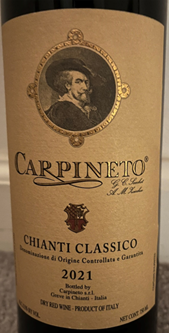
  2. Chianti Classico, Carpineto, 2021, Countryside between Florence and Siena
  3. Super Tuscan, Poggio Antico, Lemartine, 2019, Siena, Italy
  4. Brunello di Montalcino, Campogiovanni, 2018, Montalcino, Italy.

The Tasting Menu

  • Steamed mussels
  • Fettuccine with veal ragu
  • Lamb with vegetables
  • Dessert, with coffee or tea.


  1.  Tuscany and its Classic Wines

As visitors to Tuscany quickly discover, there doesn’t seem to be a straight line in the entire region. Winding back and forth and up and down along Tuscany’s rural roads, it’s impossible not to fall in love with the patchwork of vineyards that cover a landscape undulating so magically. The region is roughly 68 percent hills. Nearly every vineyard is on a slope of some kind, gentle or steep, and two vineyards are only a stone’s throw apart, which often produce wines of very different characters.

Tuscany stretches from the Tyrrhenian Sea in the west to the low mountains that separate the region from Emilia-Romagna, Marche, and Umbria, its neighbors in the east. At nearly 9,000 square miles, it is the fifth largest region in Italy, yet most of the important wine zones are more or less in the middle of the region, from Florence in the north to Siena in the center and then south to the tiny hill town of Montalcino (famous for Brunello wine).

The climate in this central zone is warm, though not as warm or humid as along the Tyrrhenian coast. Nights are cool, helping to preserve the natural acidity of the grapes, particularly Sangiovese. Soil varies considerably, but the well drained slopes of the central hills tend to be sandy or stony, calcareous, and interspersed with schist and galestro (a crumbly stony marl).

 The grape varieties in Tuscany

Like many Italian wine regions, Tuscany was once home to dozens of grape varieties (in the mid-eighteenth century, more than two hundred were officially recognized). But in modern times, the region has been identified almost exclusively with two grapes: the indigenous variety Sangiovese, for centuries Tuscany’s single greatest grape, and Cabernet Sauvignon, the international variety that since the 1980’s has been responsible for making up – in whole or part- of the blend in numerous famous upper Tuscan wines.

Sangiovese is an exacting, troublesome grape. It doesn’t ripen easily or uniformly. In sites that are not consistently sunny or in rainy, overcast years, it’s common around harvest time to see bunches of soft, purple, ripe grapes as well as slightly green, underripe ones. Unevenly ripe bunches can lead to thin or unbalanced wines. This is just one of the challenges Sangiovese presents.

There’s another vexing issue: Sangiovese’s genetic disposition to reinvent itself as different variations, known as clones. Central Italy is literally strewn with multiple clones of Sangiovese. Though no one knows precisely how many different clones there are, winemakers are convinced that the main ones vary enormously in flavor and that the future of Tuscan wine lies in clonal research. An ambitious study of grape clones was begun in Chianti in 1987. With knowledge from this research, wine producers can pull out inferior, poor tasting clonal types. Among the top clone types are Sangioveto, one of the clones found in the best Chianti Classico wines; Brunello, the clone used for Brunello di Montalcino, and Prugnolo, the primary clone used for Vino Nobile di Montepulciano.

As for Cabernet Sauvignon, although it was brought to Tuscany in the XVIII century, reportedly by Grand Duke Cosimo de Medici III, the variety was largely unimportant until the grapes were used in Super Tuscans.

White grapes have never been very important in Tuscany, although Trebbiano and Malvasia were used to make “vino santo”, while the remainder were used in making Chianti and Nobile de Montepulciano. Vernaccia, Tuscany’s most traditional white grape, is grown around the hill town of San Gimignano and is the only white grape of any character. Italian experts consider it a serviceable and charming white. 

Chianti and Super Tuscans as they relate to each other.

Chianti wine has come a long way from its role as companion to spaghetti and meatballs. Not that this association in the United States was always pejorative. After World War II, being cheap and easy to drink was pretty ideal. Chianti implied neither snobbish nor wealth; it was just plain easy to drink. But, as time went on, the wine grew increasingly disappointing. Part of the problem was the Chianti formula. Traditionally, Chianti was a blend of Sangiovese and Canaiolo grapes == and white Malvasia and/or Trebbiano. The formula was developed in the mid 1800’s by Baron Bettino Ricasoli, whose family had been making Tuscan wine since the twelfth century. Ricasoli decided that adding a small amount of Malvasia to Chianti would heighten its vivacity, boost its flavor, and make it more drinkable when young. Imbedded in this notion were the beginnings of disaster.

The more popular Chianti became the more it was “lightened” with white grapes – and not just with Malvasia but with a fairly dull type of Trebbiano. Far from adding character, it turned it into an anorexic red, gaunt, unbalanced and hollow. Even more trouble lay ahead because, after the war, the government gave the winegrowers funds for agricultural development and, in the rush to grow more, vineyards were planted beyond Chianti’s traditional region -between Florence and Siena. Nurseries supplied vineyards with plantings of a different type of Sangiovese, a clone called Sangiovese di Romagna, brought in from the nearby region of Emilia-Romagna and less well suited to Tuscany. As a result, the quality of Chianti collapsed, and by the late 1960’s, Chianti was bought as much for its straw covered bottle (the candle holder of the era) as for the liquid inside.

Faced with the possibility of the industry’s demise, in the mid 1970’s, a handful of innovative producers began taking steps toward making wines that would be the polar opposites of “spaghetti Chianti.” Their inspiration was Sassicaia, made by Marchese Mario Incisa della Rocchetta at his estate Tenuta San Guido, near the coast in Bolgheri.  An artisanal wine that broke every rule, Sassicaia did not have a drop of Sangiovese in it but, instead, was made from Cabernet Sauvignon from vines that had come indirectly from Chateau Lafite. The Sassicaia vineyards were planted in what was considered just about the worst possible location in Tuscany. And the wine was aged in barriques – small, new French-oak barrels – when every other wine in Tuscany was aged in large old barrels, made of Slavonian oak.

The first Sassicaia made in the 1940’s were awkward, even coarse wines, but by the 1960’s, Incisa della Rocchetta had refined his techniques considerably, and the wine, defying expectation, turned out to be impressive. Piero Antinori, who was Incisa della Rocchetta’s cousin, was the head of a centuries-old Tuscan winemaking family. Sassicaia then became the catalyst for Antinori’s Tignanello – the first well known non-Chianti Chianti.

Made in 1971, Tignanello had no white grapes, was based almost entirely on Sangiovese (later Cabernet Sauvignon and Cabernet Franc were added), and was aged in barriques. Tignanello was like a flashlight in the dark. Other top producers immediately followed suit, making expensive proprietary wines of their own, sometimes from Sangiovese blended with Cabernet Sauvignon, sometimes from either grape alone. What unified these wines was what they were not. They were not made according to the traditional Chianti formula specified in the DOC laws. As a result, the government considered them mere “Vini da tavola”; the press nicknamed them the Super Tuscans.

The eclectic group of Super Tuscans motivated winemakers to further improve the quality of Chianti. The Chianti DOC title was created in 1967, and in 1984 Chianti was elevated to DOCG status, paving the way for additional improvements commensurate with the region’s enhanced status. The DOCG laws for Chianti were revised and made more liberal. The Super Tuscan concept has such marketing cachet that it is undoubtedly here to stay. Most wines considered Super Tuscans aren’t really traditional, no matter how close they come to fitting into the DOCG laws. These wines are made in an international style, generally flamboyant, dense and powerful, packed with tannin and wrapped in the vanilla note flavor that new oak imparts.

Traditional Chianti is something quite different. Sangiovese is a grape the entire flavor profile of which seems built for food. It’s more supple and less tannic than Cabernet Sauvignon, more elegant and lighter in body than Syrah or Primitivo and, most importantly, wines made from Sangiovese often possess a fascinating suggestion of saltiness and a good bit of acidity that clears your palate and makes you want to take another bite of food.

Chianti Classico – The area that historically yielded the richest, fullest Chianti was the original small hilly central region known as Chianti Classico. In 1996 the uniqueness of Chianti Classico was underscored when it was awarded a DOCG of its own. The microclimates of the Chianti Classico are multiple and diverse, thanks to the undulating hills and the variations in geology. By law, Chianti Classico can be composed of 75 to 100% Sangiovese, up to 10% Canaiolo, up to 15% other red grapes, including Cabernet Sauvignon and Merlot, and up to 6% white Trebbiano or Malvasia. The best basic Chianti Classico has plum and dried cherry flavors and sometimes a touch of salt and spice.

Brunello di Montalcino – Brunello (dialect for the nice dark one) is Tuscany’s most revered wine. It is also Tuscany’s rarest, most expensive, and longest lived. It is made in Montalcino, a walled medieval village clinging to a rocky hilltop, about an hour’s drive south of Chianti Classico. This southern subregion is warmer, and the wines have historically been bigger bodied than Chiantis. The extra bit of warmth provides winemakers with more assurance that each year Sangiovese grapes will ripen and produce wines of nuance and complexity. As a result, from the start Brunello of Montalcino has been based on Sangiovese alone. Brunello di Montalcino wines is made exclusively from Sangiovese Grosso, which is the large-berried form of Sangiovese. Brunello, its name here, translates roughly as ‘little dark one‘. The use of this synonym, and its inclusion in the name of the wine, was part of a clear strategy to differentiate the wine from Chianti.

The vineyards of Brunello di Montalcino cover a modest area of 3,000 acres (by comparison, Chianti covers more than 41,000 acres.) The best vineyards, as well as the village, are some 1,800 feet above sea level, where they are blanketed by a luminous swatch of sunshine. There is more limestone in the soil than in Chianti, and there are strips of clay, volcanic soil and plots of galestro. The best vineyards are planted on slopes facing south and southwest. The Monte Amiata range to the southeast helps to protect the vineyards from sudden rain and hail.

TuscanyBrunello di Montalcino is made from a special clone of Sangiovese called Brunello. In good years the Brunello clone yields a lavish wine, fleshier in texture than Chianti, with complex aromas and flavors of blackberry, black cherry, and black raspberry fruit and chocolate, violet, and leather.  By law, Brunello di Montalcino must be aged longer than most other Italian wines – four years, two of which must be in oak, for regular Brunello, and five years, two and a half years of which must be in oak, for the Riserva. In great vintages Brunello can take on stunning elegance, suppleness, and concentration.

In 1980, Brunello di Montalcino was awarded DOCG status; it was one of the first Italian reds to be given this designation. Today, slightly more than 100 producers continue to shape and improve what has been considered a venerable wine for the last hundred years.

Brunello di Montalcino has a reputation for longevity. One of the most legendary wines in this regard –not just in Tuscany, but in Italy – is the Biondi-Santi Brunello di Montalcino. After a hundred years, it can still be remarkable.  Brunello di Montalcino was initially the vision and creation of Ferruccio Bondi-Santi, who in the 1870’s isolated the Brunello clone of Sangiovese and planted it throughout his estate, some 1,700 feet above sea level. His Brunello could not have been more unconventional. At that time, most wines there were white and sweet. Those who preferred red would drink Chianti, which was light in style and not very age worthy. Biondi-Santi’s Brunello was the exact opposite: ample in body, packed with flavor, intensely colored, and capable of being cellared for decades. During fermentation, the grape skins sit with juice for maximum color extraction, then, the resulting wines are aged for years before releasing them. Though common today, each of these practices was virtually unheard of in the mid-nineteenth century, especially in a rural village in agrarian central Italy.

Vino Nobile di Montepulciano – These wines were made for just that: noblemen, popes, and poets who drank it regularly. Today, Vino Nobile does not necessarily live up to so lofty a name. Ask any number of Italian sommeliers what they think of Vino Nobile and invariably they will pause or shrug a bit, then meekly suggest that there are some good ones.  Many are just plain thin and tart, without sufficient structure, fruit, or flavor.  Vino Nobile is made primarily from its own clone of Sangiovese – Prugnolo – and then blended with a small amount of Canaiolo, Malvasia, and/or Trebbiano.

  1. Information on the Wines

Wine #1. La Spinetta, Toscana Vermentino IGT, 2022

The Producer. La Spinetta is an Italian wine producer making wines predominantly in Piedmont. La Spinetta is co-owned by Giorgio Rivetti, where he is the head winemaker. The Rivetti family arrived in Bricco di Neive, Tuscany in the early 1800s. The place where the main house now stands was once the location of an ancient, vaulted cellar from the 17th century. It is particularly known for its single-vineyard Barbaresco wines and the Barolo Campe, plus an innovative blend of Nebbiolo and Barbera called Pin.

No chemical fertilizers or pesticides are used, and 75% of vineyards are farmed biodynamically. The grapes are picked by hand by long-serving harvest teams. More recently, La Spinetta has expanded its operations to Tuscany, and makes several wines there from Sangiovese, Vermentino and Colorino. Vermentino comes from Terricciola vineyard, which is characterized by the presence of oceanic sediments in the soil.

 – The wine:

  • Year: 2022
  • Region/appellation: Terricciola Municipality; Toscana Vermentino IGT
  • Grape: 100% Vermentino
  • Viticulture: Organic grapes; no chemical fertilizers or pesticides are used, 75% of vineyards are farmed biodynamically; grapes are picked by hand by long-serving harvest teams.
  • Vinification: Alcoholic fermentation with natural yeasts; aging of about 4 months in steel tanks on its lees.
  • 13% APV %

Winemaker notes: Terricciola’s soil is sandy and rich in marine sediments, which gives the Vermentino an incredibly aromatic profile. Color is straw yellow with greenish hues; bouquet of citrus notes, white flowers and rosemary; fresh and decisive palate, herbal and floral notes with petroleum scents shape its clean and mineral finish. The wine has notes od Mediterranean scrub blended with mineral and white flower scents. The flavors are a perfect match of fresh and savory. https://www.la-spinetta.com/en/product/toscana-vermentino-igt/.

Wine #2 Carpineto, Chianti Classico DOCG, 2021

The Producer: Carpineto is an Italian producer with several estates that encompass 424 hectares across highly regarded Tuscan DOCG regions. It was founded in 1967 by Giovanni Carlo Sachet and Antonio Mario Zaccheo with the aim of being a high-quality Chianti Classico producer, but its estates spread among Tuscany’s most prestigious appellations, stretching from the heart of the Chianti Classico region to their extensive Vino Nobile holdings in Montepulciano. It has five estates in total, two in Chianti Classico and one each in Maremma, Montepulciano, and Montalcino. It was the first Italian winery to receive the Robert Mondavi Trophy for excellence as well as being nominated Best Italian Wine Producer at the 34th International Wine and Spirits Competition.

Approximately 95% of the entire production consists of red wines, and most of this is made up of wines that are aged three years or more before they are released. Sangiovese is easily the most important variety, dominant in Carpenito’s most prestigious wines: Chianti Classico, Brunello di Montalcino and Vino Nobile di Montepulciano.

Carpineto also has a range of single-vineyard selections and proprietary blends at the IGT level, including a few Super Tuscans. Cabernet Sauvignon plays a significant part in these wines, while Chardonnay is the most represented variety in its limited selection of white wine. Carpineto is now exported to more than 70 countries.

The Wine:

  • Year: 2021
  • Region/appellation: Chianti Classico DOCG
  • Composition/varietals: 90% Sangiovese; 10% Canaiolo.
  • Vinification: maceration of the skins in the must and fermentation in stainless steel tanks for 3-4 weeks at controlled low temperature; after the final blend is assembled, the wine is aged in oak casks for 18 months. The wine is bottled during the second year.
  • Alcohol: 13.5% ABV

Winemaker notes. Ruby red color, garnet reflections on aging; intense aroma with hints of violets, berries and cherries; taste is velvety, well rounded and well balanced. https://www.carpineto.com/ .

Critic tasting notes: “The nose is warm, sanguine and slightly herbaceous, with aromas of Bing cherry, potting soil, orange peel and wild fennel leading the way. On the palate, a chocolate-vanilla swirl brings out sweeter cherry and orange flavors, which provide a playful balance to chalky, chewy tannins.” (Wine Enthusiast).

“Produced in the countryside between Florence and Siena, it’s a jeweled ruby color. This 2021 Chianti Classico is ripe and has a great nose of fresh wild herbs, pure raspberry, graphite and fresh violets. Medium bodied, its more cedar tones come through on the palate, with ripe, very well integrated tannins, clean lift, and a hint of its toasted incense on the finish. A very well-balanced wine from Carpineto, it’s showing beautifully now but will certainly improve in time. Drink ’24-’34” (Audrey Frick & Jeb Dunnuck).

Wine #3. Poggio Antico ‘Lemartine’, Toscana IGT, 2019

The Producer. Poggio Antico is a wine producer in Tuscany, particularly known for its Brunello di Montalcino wines. The Poggio Antico estate sits in Montalcino denomination and extends to around 200 hectares (500 acres) including woods, pastures and olive groves. Around 33 Ha (80 acres) are planted with vine, most of which is Sangiovese Grosso, with a small parcel of Cabernet Sauvignon. The vineyards are some of the highest in Montalcino, on sunny, south-facing slopes at around 450 m (1500 feet) above sea level. The hilltop breezes help dissipate fog and frost, and dry the grapes after rain, reducing the pressure of mildew diseases. The acres under vine develop two parallel Brunello worlds – the more traditional, larger barrel Brunello, aged longer in Slavonian oak, and the modern, finesse driven Altero, aged in tonneaux of French oak. Grapes undergo rigorous sorting prior to fermentation in stainless steel tanks. 2020 was the first certified organic harvest.

The wine portfolio has a range of wines, from the IGT Toscana appellations, from both traditional Tuscan varieties like Sangiovese and more international varieties like Cabernet Sauvignon and Petit Verdot. Brunello is the most important variety for the company with three Brunello di Montalcino DOCG wines produced.

The wine. ‘Lemartine’ is named after one of the three original properties. An opulent and intense Super Tuscan that has been produced since 2010. A blend of Sangiovese, each variety used is vinified and aged separately in French oak barrels. https://www.poggioantico.com/en/

  • Vintage: 2019
  • Grape composition: 50% Sangiovese, 25% Cabernet Sauvignon; 25% Petit Verdot
  • Region/appellation: Montalcino (Siena); Toscana IGT
  • Vinification: The two varieties were harvested and fermented separately in truncated cone-shaped steel vats with temperature controlled. Both fermentations were regular with long macerations and gentle extractions.
  • Maturation: Sangiovese and C. Sauvignon were blended right after the fermentation and aged for 12 months in 225L French oak barriques prior to bottling.
  • Alcohol: 14% ABV.

Critic’s tasting notes: Raspberry, blackberry, chestnut, mushroom and earth on the nose. Full bodied with chewy tannins. Structured with a chalky texture in the mouth and a long, flavorful finish (James Suckling).

Wine #4. San Felice ‘Campogiovanni’ Brunello di Montalcino DOCG, 2018

The Producer. Agricola San Felice is a Tuscan wine producer with estates in Chianti Classico and Montalcino denominations. It is most famous for its Sangiovese-based wines under the Campogiovanni and Il Grigio labels, and also its Vigorello cuvée, which is reckoned to be the first example of a Super Tuscan.

The ‘Campogiovanni’ Brunello di Montalcino wine comes from an estate of the same name, purchased by the winery in the 1980s. It covers 65 Ha. (16

0 acres) on the southwestern side of the Montalcino hill, near San Angelo in Colle, where weather conditions and a particular combination of soils favor optimal growing and ripening of the Sangiovese Grosso (known as Brunello here).

The Wine. Campogiovanni Brunello is absolutely classic in style, averaging three years in Slavonian oak casks and 500-liter tonneaux, then another 12 months in the bottle. It is recognized for its finesse and longevity.

  • Vintage: 2018
  • Grape variety: 100% Sangiovese
  • Appellation: Brunello di Montalcino DOCG
  • Viticulture: Vineyard located at Campogiovanni Estate (Montalcino, Siena). Soil Profile Medium textured, largely silt-sand with some clay, on sandstone and               calcareous marl.
  • Vinification: 20-day maceration at 28-30oand malolactic fermentation in steel.
  • Maturation: 36 months in 500-liter French oak barrels and in 60 hl Slavonian oak, followed by a further 12 months in the bottle.
  • Alcohol: 14% ABV

Winemaker notes. Deep ruby red. Offers up aromas of well-ripened wild berries, blackberry preserves, tobacco leaf, and tanned leather. An expansive, generous palate displays a rich mouthfeel, developing into a lengthy finale marked by fruit liqueur. https://www.sanfelice.com/en .

Critic tasting notes. “Very Sangiovese, this red wine combines both fruit and savory elements – cherry, strawberry, hibiscus, wet hay, iron and tobacco – with a firm structure. Expressive, balanced, vibrant and long, with stiff tannins on the finish.” It’s a full bodied, concentrated style of red Sangiovese wine from the Tuscany region of Italy. Montalcino is south and a tiny bit east of Siena. It tastes of dried cherry and black currant.” (Wine Spectator).

“The nose is metallic and stony, with a puff of petrol, like a road trip in winter, but also brighter notes of bergamot, black currant and black cherry. The palate embraces the bitter fruitiness of bergamot before savory notes return for a bitter finish. A balanced, polished and integrated wine.” (Wine Enthusiast).


  1. CV Members Rating 

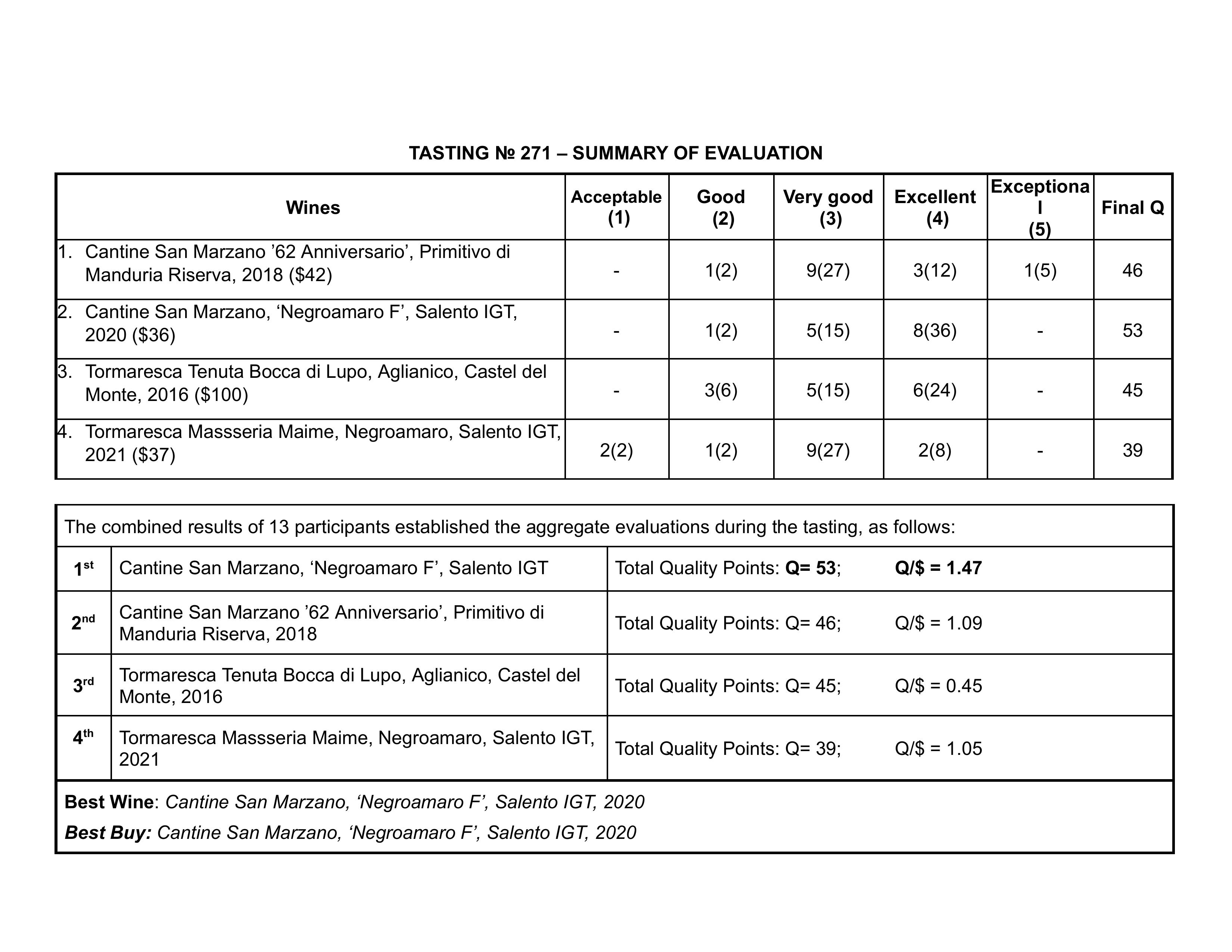
The tasting took place before revealing their prices. 13 participants rated them from Acceptable to Exceptional. The combined results established the preference order during the tasting as follows:

-The red San Felice ‘Campogiovanni’, Brunello di Montalcino DOCG, 2018 was the Best Wine;

-Poggio Antico ‘Lemartine’, Toscana IGT, 2019 was the Best Buy.

The following table presents the details of ratings and combined results.
.o0o.


Laughing matter

.o0o.

Posted in Meeting Abstract, Wine - Vino - Vinho, Wine Regions | Tagged , , , | Leave a comment

Tasting No 268 – August 27, 2024 – Wines of Northwest Veneto: Valpolicella and Soave

Tasting No 268 – August 27, 2024  –  Wines of Northwest Veneto: Valpolicella and Soave


                                                                                      Capri Ristorante, McLean VA

  1. Tasting Overview

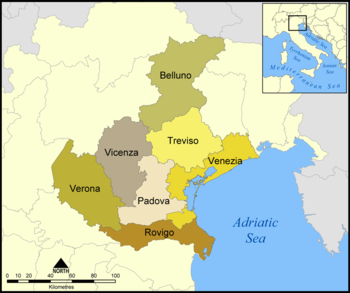
The objective of this tasting is to explore wines from historic wineries in the northwest area of Veneto Region that the presenters visited during a wine tasting tour in June, more specifically in the Verona Province.


Type of tasting: Open

Presenters:

John and Lucia Redwood with Michelle Fryer

Participants:

S. Ardila; R. Arroio; M. Averbug; L. Boccalandro; J. Brakarz; Y. Cutler; M. Fryer; N. Marzella; O. Mason; A and C. Perazza; J and L Redwood; J. Requena; C. Santelices; E. Silva; P. Turina; L. Uechi; and M. Averbug (guest).

The wines:  

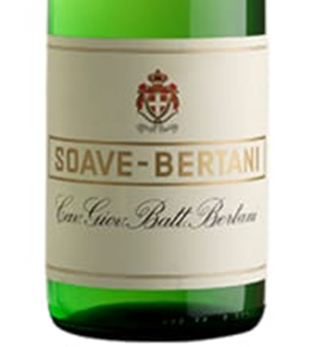
  1. Tenuta Santa Maria de Gaetano Bertani, ‘Vintage Edition’ Soave, 2019
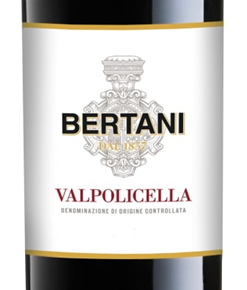
  2. Tenuta Santa Maria de Gaetano Bertani, Valpolicella, 2021
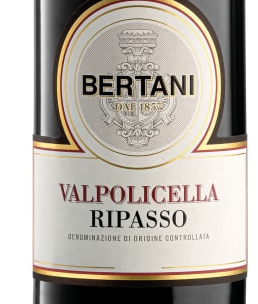
  3. Tenuta Santa Maria de Gaetano Bertani, Valpolicella Ripasso, 2020
  4. Masi, ‘Riserva Costasera’, Amarone della Valpolicella Classico DOCG, 2018

 Menu

  • Beet Salad
  • Mushroom Risotto
  • Grilled Veal with Vegetables
  • Cheese Plate, Coffee and Tea.
  1. Veneto Wine Region

Veneto stretches from the river Po to the sheltering Alps on the Austrian border, between Lake Garda to the west and Fruli-Venezia Giulia to the east. It is slightly smaller than Italy’s other main wine-producing regions:  Piedmont, Tuscany, Lombardy, Puglia, and Sicily. However, it generates more wine than any of them. In terms of geography, culture and wine styles, it represents a transition between the alpine, Germano-Slavic end of Italy and the warmer, drier, more Roman lands to the south.

Veneto is now the first Italian region in wine production, because it is home to Pinot Grigio and Prosecco. These two interregional appellations, widely planted in flat alluvial lands, are increasingly successful and have supported the growth of Italy as a major wine exporting country. On the other hand, beautiful and dramatic hillside vineyards with a cooler climate provide the crisp Cartizze, the mineral whites of Soave and Durello, the fruity Bardoline, and the salty Valpolicella, a trailblazer in the development of hugely appreciated style of wine from dried grapes (Amarone and Recioto) and second fermentation (Ripasso). Veneto is also a vital basin for indigenous grape varieties such as the whites Glera (mainly for Prosecco), Garganega, Tebbin di Soave, Lugana, and Durella, and reds Corvina, Corvinone, Rondinella, and Raboso. With fruity red Valpolicella complementing its intense Amarone and sweet Recioto counterparts, Veneto is armed with a formidable portfolio of red wines to go with its refreshing whites, such as Soave and sparkling Prosecco.

Although much of the new vineyard area that supported Veneto’s increased wine output was of questionable viticultural quality, today more than 25% of the region’s wine is made and sold under DOC/DOCG titles. As of 2020, total area under vine in Veneto was 94,291 hectares, of which 89,190 Ha. (or just under 95%) were IGP/DOC/DOCG area. Total production was 9.7 million hectoliters, or which 7.1 million (45% red and 55% white) were IGP/DOC/DOCG.

The Veneto region can be roughly split into three geographical areas, distinguished by their topography and geology: Northeast, Central and Northwest Veneto, with this presentation focusing only on the latter. 

Northwest Veneto

In this area, the foothills of the Alps descend along the eastern edge of Lake Garda, their path mirrored by the Adige River as it descends from the heights of Alto Adige. Here in the cooler, alpine-influenced climate, fresh, crisp whites are made under the Bianco di Custoza and Garda titles, while refreshing, unassuming Bardolino from the shores of Lake Garda makes the case for Veneto’s lightest reds.

The hills stretching from Soave town westwards to Lake Garda have such fertile volcanic soil that vegetation grows uncontrollably; the vine runs riot on every terrace and pergola, among villas and cypresses that are the image of Italian grace – not always reflected in the wine they produce: high yields with an official limit of 05hl/ha, are the bane of quality, especially in Soave DOC, as almost 80% of the of the vineyards are cultivated by growers that deliver their grapes direct to the local co-op with no personal reputation for quality to uphold.

Wine styles and denominations.


Just east of Lake Garda and north of Verona is Valpolicella DOC and its sub-zone Valpantena. The fabled “Valley of Many Cellars” produces 500,000 hectoliters of fruity red wine each vintage. In terms of production volume, Valpolicella is the only DOC to rival Tuscany’s famous Chianti. The grape varieties Corvina, Corvinone (for a long time confused with the former though they have distinct DNA profiles), and Rondinella are behind the vast majority of reds here.

Immediately east of Valpolicella is the Soave DOC, home to the eponymous dry white wine that now ranks among Italy’s most famous products. The DOC title covers wines made from Garganega grapes grown in hillside vineyards east of Verona. Beyond that, the Gambellara DOC serves as an eastern extension of Soave, both geographically and stylistically. Garganega and Trebbiano are their key white wine grape varieties.

The Soave DOC is arguably the most famous white wine denomination in Italy. Granted in 1968, the DOC title covers wines made from Garganega grapes grown in hillside vineyards east of Verona. A dry, crisp, fruity white wine, Soave’s naturally refreshing appeal led it to phenomenal popularity in the second half of the 20th Century. As with all Soave appellations, the wine must be at least 70% Garganega to which Trebiano, Chardonnay, and up to 5% other local varieties may be added. Most Soave is made in an easy-to-drink style, light bodied and rather neutral; however, an increasing number of producers seek a more ambition and terroir-driven style. Soave DOC may be produced and sold as a spumonte although a classic Soave is definitely a dry still wine. 

Soave cohabits with Valpolicella DOC, whose growing zone has been extended far beyond the original Classico zone until it reaches the boundaries of Soave. The improving Valpantena sub-zone is dominated so far by Bertani winery and the local co-op.

For Valpolicella, vines are being planted on white-pebbled terraces at much higher densities and vertically trained to extract more flavor from every grape, above all, late-ripening Corvina, the best of the region. Neutral Rondinella and the relatively tart (and optional) Molinara can also play a part. There is also experimentation with rarer indigenous grapes such as Oseleta and Corvinone. Valpolicella wines are always blends from 45 to 95% Corvina and/or Corvinone, with the possible addition of 5 to 30% of Rondonella and 25% of other authorized grape varieties. There are an increasing number of wines that are full of cherry-fruit flavors and have light body and supple tannins balanced by a refreshing acidity.

Two subzones are recognized by the Valpolicella DOC: Classico, which covers the historical vineyards, and Valpantena for the vineyards around Quinto in the center of the Valpolicella district. Valpolicella Superiore wine is also made and must reach an alcohol by volume of 12%, compared with 11% for the standard rosso, with a minimum one-year aging requirement. Plain Valpolicella should have a lovely cherry color and flavor, lively acidity, a gentle sweet smell, and just a trace of almond bitterness. Most superior Valpolicella is grown in the Classico zone on four fingers of higher-altitude vineyards sheltering the towns of Fumane, San Ambrogio, and Negrar.

Passito, Amarone, Recioto, Ripasso. Because standard Valpolicella wines have traditionally tended towards the lighter end of the spectrum, local winemakers have employed various techniques to achieve greater depth and complexity in their cuvees. Standard Valpolicella is quite different from the district’s Amarone (“big bitter”), Recioto (“little ear”) and Ripasso (“re-pass”) wines. The passito and ripasso methods have been so successful that both techniques now have dedicated DOC or DOCG designations.

The amarone developed as Veneto’s winemakers searched for a way to increase the body, complexity and alcohol content of their wines. The grapes are dried (passito) for weeks or even months prior to fermentation, during which time their natural sugars and flavors become sufficiently concentrated to produce deeper, more alcoholic wines. Such heady productions are the direct descendants of the Greek wines shipped by the Venetians in the Middle Ages.  This “passito” technique in Valpolicella proved very successful, although initially it was used to produce sweeter (occasionally fizzy) styles of wine, known here as Recioto della Valpolicella. The early amarone wines were seen as mistakes – recioto left to ferment for too long – but eventually the style gained recognition and respect.

Amarone della Valpolicella DOCG – Formerly part of Valpolicella DOC, Amarone della Valpolicella was established as a separate DOC in 1990 and was granted DOCG status in 2009. Amarone is a derivative of Recioto della Valpolicella wine with a similar deep color but in a dry or off-dry style, which seems to make the flavors more powerful and chocolaty-spicy with a distinctly bitter finish, once described as a “bruised sourness”. Amarones are made with the signature grape, Corvina (45-95%, of which up to 50% can be substituted with Corvinone), Rondinelle (5-30%), and other approved red grape varieties (up to 25%). For making Amarone wines, after late harvest the grapes are dried under controlled conditions (a process called appassimento) for at least two months and up to 120 days, depending on the winery, long maceration during the wintertime, and long cask ageing (at least two years). If fermentation is stopped early, the resulting wine will contain residual sugar, producing the sweeter wine Recioto della Valpolicella.  The final result is a very ripe “raisiny”, full-bodied wine with very little acid. Alcohol content easily surpasses 15% (the legal minimum is 14%) and the wine is rarely released until five years after the vintage. The pomace left over from pressing off the grapes for Amarone is used in the production of Ripasso Valpolicellas. “Amarone is often the climax of a Veronese feast” (From the World Atlas of Wine, 7th edition, 2013).

Amarone wines are brilliant and intense ruby red color, their taste is complex and rounded as well as fruity and fresh, especially towards the end. The older the wine is, the better it tastes. Its aromas can be described as a strong mixture of blackberries, black cherries, and plums.

Amarone is the perfect wine to pair with game, braised meats, and stronger cheeses.  It also pairs well with traditional Italian recipes such as risotto and many types of pasta. Although Amarone is not usually recommended for menus including fish, many people seem to believe that it is a great match for dishes like sushi.

Valpolicella Ripasso DOC – Ripasso (re-passed) wine has long been traditional in the Valpolicella denomination. The best young Valpolicella wine is put into tanks that still contain some of Recioto or Amarone for which they were previously used.  The old practice of Ripasso strengthens Valpolicella by refermenting it on the pressed grape skins, preferably of Corvina, after an Amarone or a Recioto has finished fermentation, in which case it may qualify as Valpolicella Superiore or Ripasso, constituting a sort of “Amarone Lite”. The result is a wine that combines the freshness and the brightness of a dry Valpolicella with riper, sour cherry-fruit profile and soft ‘recioto-like’ tannins. For more than a decade, Ripasso has represented an important category in several key export markets.

The red grapes of Valpolicella:

Corvina:

Phenology and Cultivation: Valpolicella’s main cultivar, its oval fruit has thick skin and is particularly suitable to the Appassimento method. It is an exceptionally delicate grape in terms of sensitivity to diseases, humidity, and sun exposure and has a potential for large yields that are kept in check with Guyot management. It is planted with medium density on Arbizzano’s deep limestone soils medium-rich in organic matter. It requires some irrigation in very dry years as it is also very sensitive to drought.

Aromatic Profile: When correctly macerated and fermented at low temperature, Corvina is able to develop a wide aromatic complexity of red fruit aromas such as cherry, raspberry and wild berries, sweet spices, herbs and balsamic notes over fine tannins. With Appassimento and long ageing, macerated fruit aromas are developed over an even finer structure and integrated enveloping glycerine.

Winemaking: Corvina is rarely used alone. Instead, blend between 60% to 80% with more tannic cultivars like Corvinone and Osceleta, which contribute to the structure of the wine.

Corvinone:

Phenology and Cultivation: Originally considered a clone of Corvina, it has been considered a different biotype since 2003. It is cultivated separately at a medium density Guyot or Spurred Cordon system on terraced slopes exposed to the sun where it produces lower yields than Corvina. The soil has a high percentage of limestone and low organic matter. The bunches are large but loosely packed with deep blue ellipsoidal berries, well-suited to the Appassimento method.

Aromatic Profile: Characterized by an intense cherry character, with compelling floral notes of violets and additional fruity notes of raspberry and blackberry. When compared with Corvina, it has a lower alcohol potential and usually light vegetal notes if picked in a later harvest. Spicy notes of cocoa and tobacco emerge in aged wine. It has an important tannic structure.

Winemaking: Corvinone is never used as single varietal in wines, but we usually blend between 15% and 25% to support the less tannic indigenous cultivars such as Corvina and Rondinella.

Rondinella:

Phenology and Cultivation: Rondinella is easily recognized in the vineyard for its smaller, curved, and compact bunches (compared to Corvina and Corvinone) and or its distinctive leaf.  The berries are a very dark color, like a swallow’s feathers (Rondinella translates to swallow). It has a constant production and is less sensitive to cold, dry, and humid years and exposure to the sun. The thick skin is resistant to mold and suitable for late harvests or a more prolonged Appassimento to achieve a higher sugar content.

Aromatic Profile: The cultivar produces wines of an intense ruby color with an interesting herbal and tobacco character, delicately fruity with hints of cherries. It is medium-bodied, has a good acidity and delicate tannins. It strongly contributes to Recioto’s character, as when dried it expresses peculiar prune, date, and black walnut aromas.

Winemaking: Rondinella is rarely used as single varietal, usually blended between 5% and 15% in Amarone Classico Riserva and up to 30% in the Recioto Classico, as it is particularly rich in sugars and suited to longer drying.

Oseleta:

Phenology and Cultivation: Very compact with small bunches and a high number of pips. Oseleta has a very low yield with little juice compared to the other varietals.  The low juice content becomes even more apparent with the Appassimento method, where the cultivar has a faster evaporation rate and is often pressed earlier than the other cultivars when making Amarone or Recioto. It is fairly resistant to disease and is cultivated on site in plots with more gravel and sand.

Aromatic Profile: Deep purple in color with ruby reflections, delicate violet aromas, intricate fresh herbal notes, blackberry flavors, cinnamon and when aged in the bottle, show some tar and petrol character. It is notably tannic and if not harvested when it is sufficiently ripe, it can present an invasive unripe character.

Winemaking: When used as a single varietal, Oseleta produces wines that have a very complex and interesting tannic structure. It is used in a lower percentage in Amarone Classico (5-7%) and in higher percentages in younger wines, bringing noteworthy elegance and complex aromas.

3. Information about the wineries visited

A, -Tenuta Santa Maria de Gaetano Bertani.

This winery is owned by Gaetano Bertani and includes two estates as well as vineyards in Valpantena:

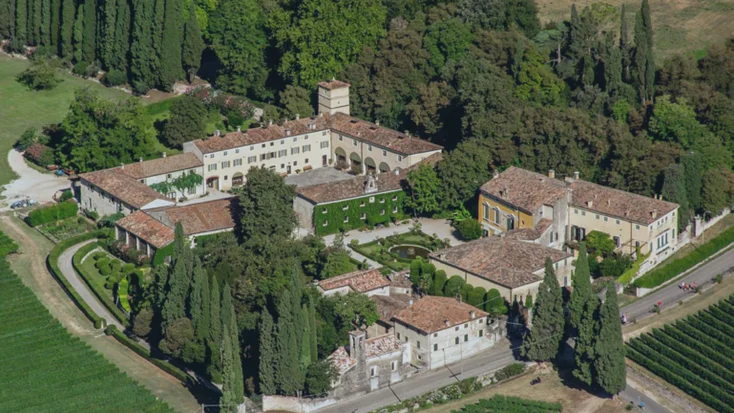
Arbizzano di Negrar Estate, that we visited, is where the winery’s headquarters is located, the Villa Mosconi di Giovanni e Guglielmo Bertain, an elegant residence constructed in Venetian Neoclassic style in 1735, and whose historic cellars witnessed the birth of Amarone in 1936. The estate lies in the picturesque village of Arbizzano di Negrar in the heart of Valpolicella Classica, in a luscious valley, just minutes from Verona and about 20 km from Lake Garda, where the vineyards find an ideal location in terms of microclimate, exposure and soil. The estate itself offers a unique example of a walled vineyard or brolo, drying lofts for apassimento, areas for vinification, and cellars dating back to the 16th century, all dedicated to the production of fine wines. The first record of the family’s winemaking activity in Valpolicella was in 1567. High-density Corvina was planted using the Guyot method in 1883, and, to this day, Amarone and Valpolicella wines are produced from grapes which are grown in these historic vineyards.

                             Villa Mosconi di Giovanni e Guglielmo Bertani, Arbizzano di Negrar, Verona

              Vineyards at the Arbizzano de Negrar Estate

Santa Maria alla Pieve estate.

This estate is the historic property of Gaetano Bertani’s family that became part of the family’s holdings in 1850.  It is located in the village of Colognola ai Colli, in the southernmost part of the Illasi Valley, with the Valpolicella DOC to the west and the Soave DOC to the east. The roots of the vineyards are sunk deep into a terrain alluvial in origin, composed of layers of limestone clay and river stones. The property is situated in a charming hamlet of Roman origins, about 14 kilometers outside Verona. The stately 16th century farmhouse and over 20 hectares of surrounding vineyards represent a span of nearly two Roman centuria, as evidenced by the discovery of a cadastral survey of the time, a tax map showing details of ownership and land values.  Here they grow the Merlot for the production of ‘Decima Aurea’, Chardonnay for the elegant ‘Torre Lepiga’, and Garganega for their ‘Lepiga’ Soave DOC.

Masi/Serego Alighieri Winery.

Serego Alighieriis an Italian wine producer located in the Valpolicella Classico zone of Veneto. In 1353, this charming estate was bought by Pietro Alighieri, son of Dante the poet, who had followed his father into exile in Verona. For 21 generations, descendants of Dante have lived in this place, where winemaking has taken place uninterrupted since the 1500s. Since 1973, the Serego Alighieri has been collaborating with the well-known Veneto wine producer Masi Agricola.The Masi winery shares its great love of the land working together with the Serego Alighieri family producing prestigious wines of an ancient, noble, and expert winemaking tradition.

                                   Possessioni Serego Alighieri, Sant’Ambrogio di Valpolicella, Verona 

Information on the Wines

Wine #1. Bertani Vintage Edition ‘Cav Giov. Batt. Bertani’,  Soave Classico, 2019

      • Vintage: 2019
      • Composition: 100% Garganega
      • Region/appellation: Soave Classico, Veneto
      • Viticulture: 40% of the grapes harvested at peak freshness; remaining grapes staying on the vines for an extra month, followed by a longer maceration of the skins.
      • 12.5 APV %

Winemaker notes: Intense straw-yellow color with gold highlights. The nose hints at peach, pear and apricot. The palate is soft and mouth-filling and persistent.

“This classy wine shines in the glass with a mix of bright apple aromas that give way to ripe peach, magnolia and orange peel. Vibrant apricot flavors engage the palate then turn to tart green apple skin and lemon zest notes, finishing with length and serious minerality”. (Wine Enthusiast, 2021 vintage).

“Intense notes of white flowers and gooseberry bring to mind something original. It continues with notes of peach and apricot, suggesting its complexity and surprising personality. On the palate the acidity is vibrant, softened by intense notes of gooseberry, peach, and apricot, all accompanied by a richness of taste that makes the aftertaste long and lingering.” (Wine.com).

Wine #2. Bertani, Valpolicella, 2021

      • Vintage: 2021
      • Composition: Volpolicella blend
      • Region/appellation: Valpolicella DOC
      • 12% APV

Winemaker notes: Bright hints of redcurrants, plums, raspberries, balanced by spicy notes reminiscent of pepper and cinnamon. On the palate it is approachable, fresh and pleasant, thanks to good balance between acidity savory notes, and richness of flavor. It is excellent with strong flavored pasta dishes, grilled, roast and stewed meat and medium matured cheese.

“Intense red with delicate violet reflections. On the nose, notes of small red fruits, followed by hints of cinnamon, black pepper and undergrowth. The taste is equally delicate, fine, fresh and juicy with a medium finish”. (Fallstaff).

Wine #3. Bertani, Valpolicella Ripasso, 2020

      • Vintage: 2020
      • Composition: 80% Corvina; 15% Rondinella; 5% Merlot
      • Appellation: Valpolicella Ripasso DOC.
      • 13.5% APV

Winemaker notes: Notes of ripe red cherry and underbrush, accented by spice and chocolate. It is velvety and well-balanced, full and round while maintaining a lively and intense grip. This dense Ripasso can be easily matched with different Italian dishes: flavorsome pasta and rice dishes such as risotto with porcini mushrooms, grilled and roast meats, and medium mature cheeses.

“This supple red is balanced and elegant, with a pleasing juiciness to its flavors of cherry and wild strawberry. A medium-bodied version, offering light, creamy tannins and fragrant accents of dried thyme, lavender and paprika. Corvina, Rondinella and Merlot. 10,000 cases made, 3,000 cases imported. Drink now through 2027”. (Wine Spectator).

Wine #4.  Masi – Riserva Costasera Amarone della Valpolicella Classico DOCG Riserva 2018

      • Vintage: 2018
      • Composition: Blend of Corvina, Rondinella, Oseleta, and Molinara
      • Appellation: Amarone  della Valpolicella  Classico DOCG
      • Viniculture: prolonged appassimento process on bamboo racks during winter months, and long aging in fine wooden casks, which “elevate Costanera to Riserva status, for an even more refined expression of Amarone, enriched by the addition of the unique Oseleta, a grape recently discovered by Masi.”
      • 15% APV.

Winemaker notes: Proud, majestic, complex and exuberant: this is a special cru version of Masi’s gentle giant, Costasera. A benchmark for the Amarone category, which, together with Barolo and Brunello, makes up the aristocracy of the Italian wine world. Opaque dark red. Intense, super-ripe fruit, cinnamon and vanilla aromas. Warm and satisfying, baked fruit, sweet spices, cooked cherries, cloves, dry and long finish. deal with red meat, game and mature cheeses. Fine after-dinner drink.

“A well-knit red, with fine tannins swathed in a silky texture, carrying flavors of plumped cherry and blackberry fruit, dried thyme and lavender, ground coffee and pepper. Fresh and focused through the lingering finish. Corvina, Rondinella, Oseleta and Molinara. Drink now through 2034. 4,200 cases made, 700 cases imported”(Wine Spectator).

 References:

https://www.wine-searcher.com/

https://www.wine.com/


  1. CV Members Rating

The tasting took place before revealing their prices. 18 participants rated them from Acceptable to Exceptional. The combined results established the preference order during the tasting as follows:

The red Masi ‘Riserva Costasera’, Amarone della Valpolicella Classico DOCG, 2018 was the Best Wine; Tenuta Santa Maria de Gaetano Bertani, Valpolicella Ripasso DOC, 2020, and Bertani, Valpolicella DOC, 2021 were tied as Best Buy. The following Table presents the details of ratings and combined results.

.o0o.

Laughing mater:

Did this happen with a Club del Vino distinguished member?…      …To be confirmed


May your husband come out and play with us?

.o0o.

Posted in Meeting Abstract, Wine - Vino - Vinho | Tagged , , , , , , | Leave a comment

Tasting No 267 – July 30, 2024  – Italy’s “Underdogs”: Umbria and Lazio

Tasting No 267 – July 30, 2024 

Italy’s “Underdogs”: Umbria and Lazio

     Capri Ristorante, McLean VA


  1. Tasting Overview

The main objective of this tasting is to explore wines of lesser-known grape varieties from two ‘not so famous’ wine regions in Italy.  From a geographical and varietal point of view, Umbria and Lazio make strange bedfellows, yet they share one thing: they are the two Italian regions that receive significantly less credit than they deserve. When we think of Umbria, there are only two or three producers that most consumers can recall. In addition, Sagrantino, the red grape Umbria is known for, tends to intimidate people because of its imposing structure.  

As for Lazio, it is unlikely the average wine lover can name even a single local variety. However, the work that producers are doing with Cesanese is absolutely worth paying attention to. When it comes to value, both regions offer that in spades. There’s a newfound energy, higher-quality winemaking, and a focus on terroir not seen before in either Umbria or Lazio. It is only so long until word gets out, and these are two of the most exciting winemaking regions in Italy today.


Type of tasting: Open

Presenters: Agilson and Claudia Perazza

Participants: R. Arroio; M. Averbug; J. Brakarz; R. Connolly; M. Fryer; J. García; N. Marzella; O. Mason; A. and C. Perazza; J and L Redwood; J. Requena; C. Santelices; R. Santiago; G. Smart; P. Turina; L. Uechi; G. Vega; and G. Zincke.

These are the wines:

  1. Arnaldo Caprai, ‘Grecante’, Colli Martani Grechetto DOC, 2022
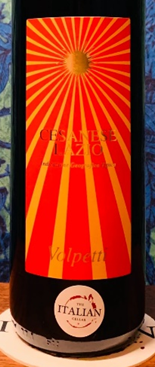
  2. Cantine Volpetti ‘Cesanese del Lazio’ IGT, 2021
  3. Arnaldo Caprai, Montefalco Sagrantino DOCG, 2019
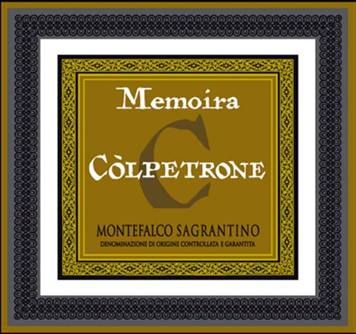
  4. Tenute del Cerro, Còlpetrone ‘Memoira’ Sagrantino di Montefalco DOCG, 2015.

This is the Menu

 Calamari saltati in salsa al burro
 Fettuccine al ragú di vittello
 Agnello in salsa con fungui
 Dolce, caffè o té.

  1. Lazio Wine Region

Lazio (Latium) is a region in central Italy that is home to the ancient capital city of Rome. Vine growing was prevalent in the ancient Roman Empire’s center, although the Etruscans, who spread agriculture and winemaking practices throughout central Italy, already practiced winemaking in Lazio.
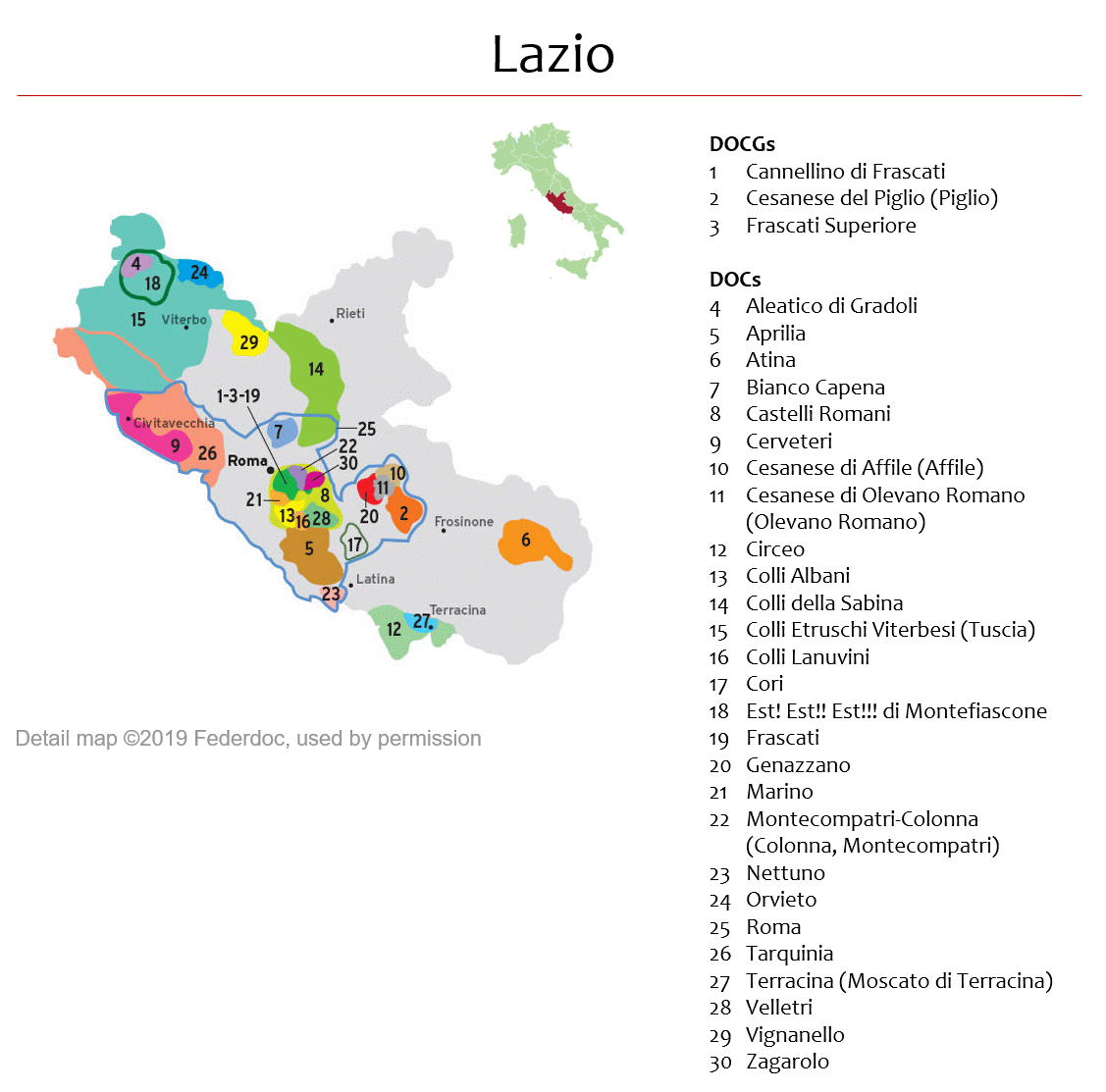
Lazio is best known for white wines from appellations, such as Colli Albani, Est! Est!! Est!!!, and Frascati, made in the local hills to supply Roman tables. The region’s primary white grape varieties are Malvasia (30%) and Trebbiano (28%). Additionally, Lazio is home to its signature red wine  varietal – Cesanese.

Lazio has three DOCGs, 27 mostly unfamiliar DOCs, and six IGPs. In 2022, Lazio produced over 1.4 million hl of wine (15.9 million cases) on 20,400 ha (50,400 acres) of vineyards. White wine accounts for over 70% of its production, about half of which was at the DOP level.
As for white varieties, Lazio’s potential is there, but not yet realized in any significant way. Bellone and Malvasia del Lazio, otherwise known as Malvasia Puntinata, are the two local varieties that could one day prove their worth outside of Lazio’s borders.

Wine styles and denominations

Traditionally, Lazio white wines were fat, rounded, abboccato (off dry) made for immediate consumption. Today the styles are lighter, drier and crisper, thanks to modern vinification methods. Nevertheless, they are still designed for drinking young, characterized by their sharpness, high acidity and a lightness that makes them an ideal accompaniment to the local cuisine.
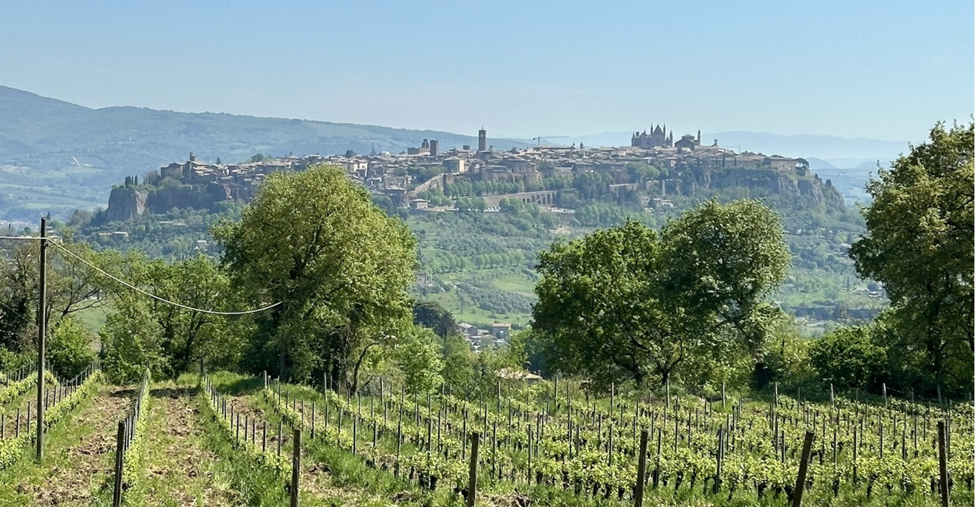
Although Lazio’s red wines are not as high profile beyond Cesanese, they are beginning to make a name for themselves. This is especially so for those made from Sangiovese, Montepulciano, Merlot and Nero Buono di Coro. Also of note are Canaiolo and Ciliegiolo; in total, there are more than 200 grape varieties in the area.

The DOC titles represent a varied collection of wines. Three white DOCs probably stand out in terms of profile, led by Frascati just to the southeast of Rome. Frascati is one of 14 picturesque fortified roman villages around which the Castelli Romani DOC appellation is based.

Two of Lazio’s three DOCGs are special designations of Frascati. One is the stricter Frascati Superiore designation for dry white wines that come from the northern end of the Colli Albani hills, just to the southeast of Rome, Italy. The other is Cannellino di Frascati, for sweet wines only. The permitted grape varieties for both Frascati DOCGs are: at least 70% Malvasia Bianca di Candia or Malvasia del Lazio; and up to 30% can be Bombino Bianco,Greco, Trebbiano and/or Bellone Bianco.

The third DOCG is the Cesanese del Piglio. The hills just south of Rome, where Piglio is located, are also home to two red DOCs worth mentioning: Cesanese di Olevano Romano and Cesanese di Affile.

Unsurprisingly the Lazio IGP designation is the one most commonly seen on wine labels. Production regulations are more flexible, and a long list of grape varieties are permitted, ranging from local obscurities to the Spanish Tempranillo.

Lazio’s Native Grape Varieties

Malvasia white grapes are grown all over Italy under many names and styles. Malvasia Bianca di Candia is grown mainly in Region of Lazio, and is the source of some conjecture in ampelographic circles, with some believing the vine is one of many sub-varieties of the common Malvasia, while others claim it as an altogether separate cultivar. It is used predominantly for blended wines, making crisp, dry whites with refreshing citrus notes of orange blossom. Malvasia di Lazio, also known locally as Malvasia Puntinata, is in fact a spontaneous crossing of Muscat of Alexandria and Schiava Grossa. The skin of the berries features a single dark dot, and the wines tend to show aromas of apricot. Malvasia pairs well with light dishes, gently flavored white meats and entrées. Blue cheese risotto, Waldorf salad or white fish fillets in lighter sauces.

Cesanese is the native red grape variety from Lazio and is used mostly in the production of red wines with bright fruit characters and some earthy overtones and is considered by many to be one of Lazio’s most interesting grape varieties. Cesanese vineyards cover a lot of the hilly land to the south of Rome, on high hillsides that overlook the Sacco and Aniene river valleys below. The variety comes in two distinct types – the large-berried Cesanese Comune and the less widespread Cesanese di Affile. The two grapes are used in both Cesanese del Piglio DOCG and Cesanese di Olevano Romano DOC wines, and Cesanese di Affile – considered the superior of the two – has its own Cesanese di Affile DOC title.

Cesanese is notable for the challenges it poses in the vineyard: the grape ripens extremely late, even in the sunny climes around Rome, and in some cases, the grapes will not reach full phenolic maturity, resulting in thin, watery wines that do not demonstrate the best qualities of the grape When made well, however, this late-ripening red grape offers up a gorgeous, perfumed bouquet of dark fruits mixed with wild herbs, florals and spices, as well as the structure to carry them in the cellar. Truly exciting examples are out there, yet only in small quantities and a bit difficult to find. The wines are medium bodied with soft tannin and are best with minimal oak. Perfect pairing with grilled meat, duck ragu with pappardelle; sausages with polenta; sticky pork ribs and robust aged cheeses.


  1. Umbria Wine Region

Bordering on Tuscany and right above Rome is the lesser-known and lesser-traveled region of Umbria. Umbria is located in the center of Italy, in the Apennines north of Rome. Umbria is a region of lush rolling hills, hilltop villages and iconic, historic towns. At the very heart of the Italian Peninsula, it is surrounded by Tuscany, Marche and Lazio and is in fact, the only Italian region without a coastline or international border.
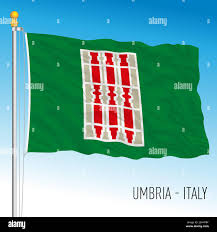
The climate of Umbria is similar to that of Tuscany in that it is distinctly Mediterranean, with cold, rainy winters and dry summers with abundant sunshine to ripen wine grapes. Although temperatures are mild throughout the winter months, Umbria is one of the coldest regions in Italy thanks to the annual average temperature of a mere 13°C (55°F). 

The majority of the region’s vineyards are placed along terraces cut into the hillsides. This is reflected in a number of the area’s DOC names (colli means ‘hills’). The slopes allow for vignerons to cultivate with a favorable aspect for the microclimate and grape varieties chosen. Vineyards planted at an altitude experience a significant change in day and nighttime temperatures, creating ideal conditions for producing the elegant, mineral white wines the region is known for.  

As of mid-2010 only around 17% of the wines produced in the region were of DOC level. However, the quality and prominence of the region’s wines are on the rise, in part due to the work of consulting oenologists. As a result, here now you will find some of the most amazing, delightfully undervalued Italian wines – from the crisp, dry white wines of Grechetto to the deep colored, antioxidant-rich reds of Sagrantino. Also in recent years, the region has markedly improved wines based on Sangiovese.
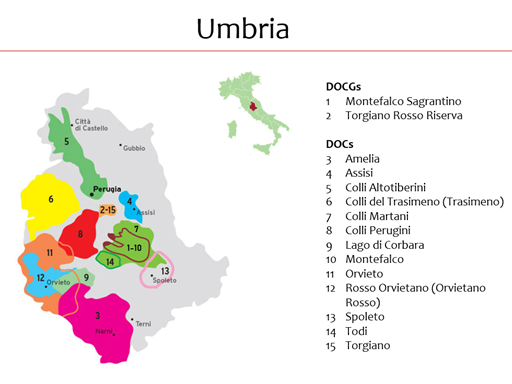
Key Denominations and Native Grape Varieties

The region has two DOCGs, 13 DOCs, and 6 IGPs, including the region-wide Umbria IGT. In 2022, Umbria’s 12,400 ha (30,600 acres) of vineyards produced just under 600,000 hl (6.6 million cases) of wine. Umbria’s primary grape varieties are Sangiovese (22%), Trebbiano (17%), Grechetto (13%) and Sagrantino (9%).

Umbria, like Marche and Lazio, is best known for its white wines. Despite changes in style over time, the Orvieto DOC  (after one of those hill towns, Orvieto), remains the region’s largest appellation. It accounts for over 10% of the overall Umbrian wine production. The Orvieto DOC is unquestionably the best-known wine in Umbria. Orvieto wines have a long history and the region’s “abboccato” (off-dry) whites were once highly prized by popes and the nobility.
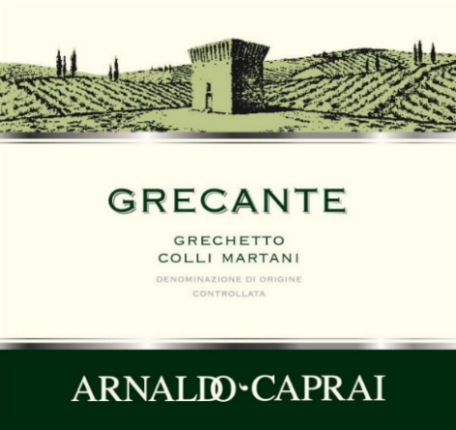
As set out in the DOC regulations, Orvieto blends consist of a minimum of 60% Grechetto and/or 60% Procanico/Trebbiano. However, the low-yielding Grechetto is considered to be far more interesting than the more neutral high-acid Trebbiano wines, with distinctive nutty and leafy notes and richness. Thus, there is a consensus that higher-quality Orvieto blends generally contain higher quantities of Grechetto, giving better fruit and weight to the wines.

Grechetto refers to two distinct grape varieties, Grechetto di Orvieto and Grechetto di Todi. It is fuller in body and, if you close your eyes, it will remind you of rosé! This grape produces Umbria’s best crisp and tactile white wines. It is typically made into a fruity-but-dry white wine with aromas of lemon heads, crisp opal apple and strawberries with juicy acidity. It is a great Italian alternative to unoaked Chardonnay or Pinot Gris. Grechetto is a great aperitif wine or acompanying seafood, veal or poultry dishes; it pairs well with mushrooms; artichoke; asparagus with lemon; tomato & olive penne. Grechetto pairs excellently with tuna and other steak-like sea fare.

Many famous Sagrantino producers from Montefalco also produce single varietal Grechetto wines from the adjacent, Colli Martani DOC, a small denomination from the broad basin south of Perugia.  

Although it is best-known for its white wines, Umbria’s two DOCG designations are for red wines: Montefalco Sagrantino and Torgiano Rosso Riserva.

Sagrantino is Umbria’s native red grape that is grown mainly in this region, which accounts for around 90% of all Sagrantino plantings in Italy. It is often described as Italy’s most tannic variety, exceeding even Nebbiolo in this respect.

Sagrantino has gained prominence in the Montefalco DOC area, creating wines of great depth and power, and nowadays the grape’s nature is most famously displayed in the single variety wines of the Montefalco Sagrantino DOCG. The clay soils of Montefalco are dusted with sand and limestone pockets, which Sagrantino responds well to. The best examples, from producers such as Paolo Bea or Arnaldo Caprai, rival anything from Italy. Sagrantino di Montefalco received DOCG status in 1992, with its name changed in 2009 to Montefalco Sagrantino. The dry reds must be aged for at least 37 months, including 12 months in barrel and 4 months in bottle. Blends are permitted in the greater Montefalco DOC region.

Sagrantino is one of the most ancient varieties in Italy and the richest in tannin and polyphenolic contents. For that reason, a very particular approach to vinification is required, one that shows off the unique power of the grape variety without putting at risk balance and elegance. Varietal Sagrantino is a dark and dense wine almost unique to Umbria. Its fruit profile ranges from black cherries to ripe blackberry, with many secondary spicy and earthy characteristics. A certain smokiness is sometimes noted in some examples, while sappy pine flavors have been observed in others. It is typically a wine that is both sweet and savory. Pair it with wood-roasted fowl; earthy sausages; or eye-fillet steak with black truffles and cheese.

In addition its native varieties, the Sangiovese grape is growing in popularity and is the most planted grape variety in Umbria, red or white. It accounts for around 22% of vineyard area.  This is the principal grape of the region’s second high-quality appellation – Torgiano Rosso Riserva DOCG.

Sagrantino – Sangiovese wines are made in the Montefalco DOC. The blend, typically labeled Montefalco Rosso, balances Italy’s most planted grape Sangiovese with the regional Sagrantino. Wines are deeply colored and layered, combining sweet and savory characters, and with red- and dark-berry flavors.

  1. Information on the Wines

Wine #1. Arnaldo Caprai, ‘Grecante’ Colli Martani Grechetto DOC, 2022

The Producer: Arnaldo Caprai is a leading Umbrian wine estate based in Montefalco, Umbria, and is particularly known for its classic examples of the Sagrantino di Montefalco DOCG wines. The estate was founded in 1971 by Arnaldo Caprai, who bought a 5-hectare (12-acre) site in Montefalco and immediately began to expand his vineyard holdings. His son Marco Caprai, who took over in 1988, is widely credited with making the estate the top producer of Sagrantino di Montefalco. https://www.arnaldocaprai.it/en.

The wine:

  • Vintage: 2022
  • Varietals: 100% Grechetto
  • Region/appellation: Colli Martani DOC, Perugia
  • Viticulture: spurred cordon, guyot with vine density of 5000 vines/ha.; Yield 8-9 tons/ha.
  • Aging: 3 months in steel; minimum 3 months in the bottle.
  • 13.5% APV

Winemaker notes: aroma – intense perfumes of exotic fruit and yellow peach, floral notes of freesia and hawthorn; pleasing chalkiness finish. Taste – full, fresh, with a long persistence.

Critic tasting notes: “Crystal-clear, pale golden yellow. Promising nose of white-flesh fruit, green plums and fresh herbs. Silky, taut and concentrated on the palate, which is imbued with invigorating acidity. A clear-cut and persistent wine, no lack of personality here.” (Gilbert & Gaillard).

Wine #2 Cantine Volpetti, Cesanese, Lazio IGT, 2021

The Producer: Cantine Volpetti Winery is located in the heart of the Colli Albani, the beautiful hill country south of Rome where geologically rich soils and exposure to the sea have favored wine production for centuries.  Ancient writers such as Cato and Horace, among others, sing praises to this region and its wine.  Since 1958 the Volpetti family has produced fine wines in the region with the goal of encouraging and improving local varieties.  The Volpetti produces a wide range of wines representing the particular strengths of local varietals grown in the Colli Albani terroir. Its mission starts with cultivating indigenous vines such as Malvasia Puntinata, Cesanese and Bellone, moves forward with national varieties such as Sangiovese, Montepulciano and Trebbiano, and culminates with international vintages that are compatible with the territory in Syrah and Chardonnay. https://www.cantinevolpetti.it/en/.

The Wine:

  • Vintage: 2021
  • Varietals: 100% Cesanese
  • Production area: Colli Albani, Lazio
  • Viticulture: cordon spurred; vine density 4.000/Ha.; yield: 90ql/Ha.; harvest in early October
  • Vinification: 12-15 days fermentation with submerged cap techniques, malolactic fermentation completed.
  • Maturation: Stainless steel, 8 months in French barriques, and several months in bottle.
  • Alcohol: 13% vol.


Tasting profile: A mouth filling ruby red wines, complex nose of mature red berries, plum spices. It is intense and elegant with soft tannins, has a pleasant bouquetand an aromatic taste.

Wine #3. Tenute del Cerro, ‘Còlpetrone Memoira’ Sagrantino di Montefalco DOCG, 2015

The Producer. Tenute del Cerro is an Italian wine producer with land in Umbria and Tuscany, covering around 600 hectares (1,482 acres) of vineyard in total. This is divided into four wine estates: Fattoria del Cerro, La Poderina and Monterufoli in Tuscany, and Còlpetrone in Umbria. Còlpetrone was founded in 1995 with the construction of the current winery, and it is one of the most important wine producers in the Montefalco DOCG. High quality breeding systems are used in the vineyards, permitting yields of 6 tons per hectare, well below those 8 tons prescribed under the rules of production. Sagrantino is produced in three different versions: Montefalco Sagrantino, Passito, a sweet red wine with an old tradition, and the selection “Gòld” that is the result of the most recent developments of this wine. Còlpetrone also produces a Montefalco Rosso DOC and a Grappa di Montefalco Sagrantino. https://www.tenutedelcerro.it/en/estates/colpetrone .

The Wine:

  • Vintage: 2015
  • Varietal: 100% Sagrantino
  • Production area: Gualdo Cattaneo (Perugia);
  • Vinification: fermentation and maceration at controlled temperature (24°-28° C) with daily pumping over and délestage; at the end of alcoholic fermentation, maceration period is continued bringing the temperature to 29° C;
  • Aging: 12 months in French oak barrels and 6 months in bottle.
  • 13.5% ABV

Winemaker tasting notes: decisive, strong, tannic concentration evident, above all when still young. To serve in large glasses at 18° c. Perfect with roasted red meats, rich and elaborate dishes, aged cheeses.

Critic tasting notes: “steeped raspberry, singed orange peel, black tea leaf and dark chocolate notes are bright and appealing in this silky red, which is tightly meshed with sculpted tannins and a spicy, mineral-driven underpinning, ending with a chewy finish. Drink now through 2035.”(Wine Spectator).

Wine #4.  Arnaldo Caprai Montefalco Sagrantino ‘Collepiano’, 2019.

The Producer (see wine #1) https://www.arnaldocaprai.it/en

The Wine:

  • Vintage: 2019
  • Varietal: 100% Sagrantino
  • Appellation: Montefalco Sagrantino DOCG, Umbria
  • Viticulture: spurred cordon; 6000 vines/Ha. density; yield 5-6tons/Ha.
  • Aging: 22 months in French oak barrique and min. 6 months in the bottle
  • 15.5% ABV

Winemaker tasting notes: aroma of blackberry jam, pepper, clove and vanilla; balsamic notes with hint of powder; aging potential 10-15 yrs.

Critic tasting notes: (2019 vintage) “Aromas of blackberry, cassis, and clove open the nose of this classic wine from Umbria. Firm and very structured, the wine’s core is shaped by black-plum compote, with sweet spices, black pepper and dried thyme giving way to firm tannins and lifted acidity. Drink 2025–2040.” (Wine Enthusiast).

“A plush texture wraps grippy tannins, carrying flavors of baked black cherry, black currant and mocha, with fragrant hints of Earl Grey tea leaf and sandalwood. The finish is firm, with spice and tar accents. Best from 2025 through 2035”(Wine Spectator).

References

https://www.wine-searcher.com/

https://winefolly.com/

https://italianwinecentral.com/

https://v1.vinous.com/articles/umbria-lazio-italy-s-underdogs-aug-2021


CV Members Rating

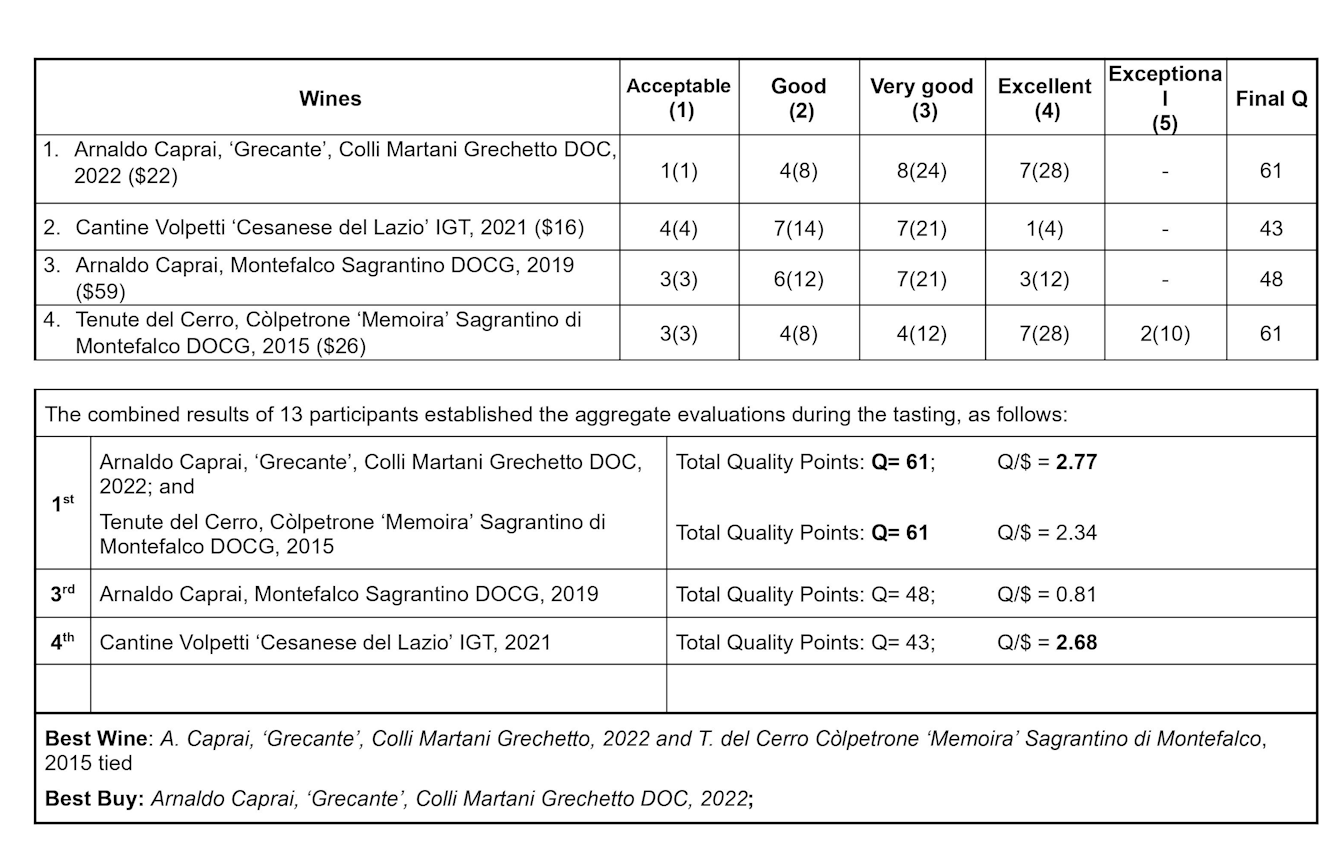
The tasting took place before revealing their prices. 20 participants rated them from Mediocre to Exceptional. The combined results established the preference order during the tasting as follows:

The white Arnaldo Caprai, ‘Grecante’, Colli Martani Grechetto DOC, 2022 and the red Tenute del Cerro, Còlpetrone ‘Memoira’ Sagrantino di Montefalco DOCG, 2015 tied Best Wine and the white ‘Grecante’, Colli Martani Grechetto DOC, 2022 was also the Best Buy.

The following Table presents the details of ratings and combined results.

.o0o.

Smile!


.o0o.

Posted in Meeting Abstract, Wine - Vino - Vinho, Wine Regions | Tagged , , , | Leave a comment

Tasting No 266 – June 25, 2024 – Tuscany beyond Chianti and Sangiovese

Tasting No 266 – June 25, 2024 – Tuscany beyond Chianti and Sangiovese
 

Capri Ristorante, McLean VA


1.Tasting Overview

While Tuscany is mostly known for the Chianti and Sangiovese based wines, this tasting is devoted to wines that are mostly based on other grapes.
Type of tasting: Open

Presenter: Jorge Requena

Participants:       S. Ardila; R. Connolly; C. Estrada; J. Estupiñán; M. Fryer; J. García; A. C. Perazza; J. and L. Redwood; J. Requena; R. Santiago; P. Turina; G. Zincke and Y. Cutler (guest).

2. These are the wines:

  1. Terre di Talamo ‘Vento Teso’, Viognier, 2022
  2. Batzella Bolgheri ‘Tam’ Super Tuscan, 2017
  3. Le Macchiole Bolgheri Rosso Tuscany, 2021
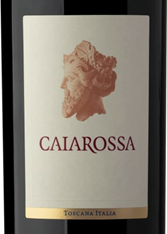
  4. Caiarossa Rosso di Toscana IGT, 2019.

The Menu

  • Seafood salad,
  • Veal Ravioli in aurora sauce
  • Grilled steak in brown mushroom sauce with grilled vegetables
  • Coffee and dessert.
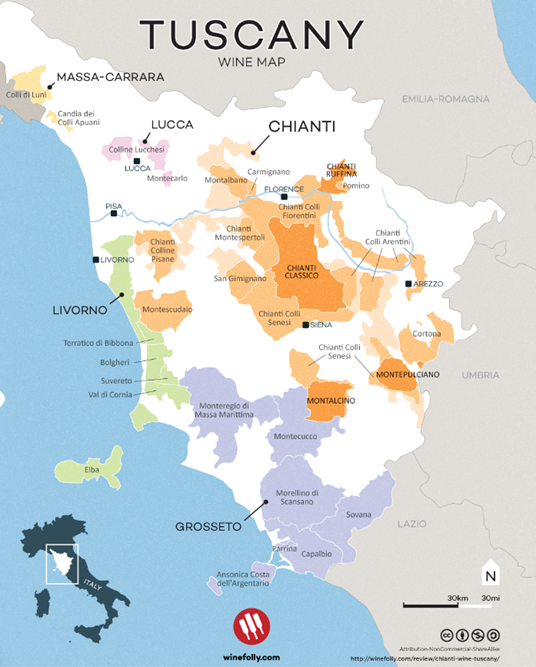
  1. The Tuscany Region


Tuscany stretches from the Tyrrhenian Sea in the west to the low mountains that separate the region from Emilia-Romagna, the Marche, and Umbria, its neighbors to the east. At nearly 9,000 square miles (23,300 square kilometers), it is the fifth largest region in Italy. Yet most of the important wine zones are more or less in the middle of the region, from Florence in the north to Siena in the center and then south to the tiny hill town of Montalcino (famous for Brunello).


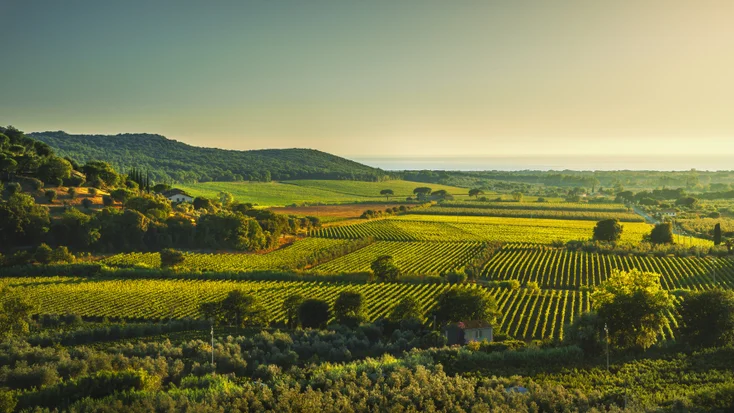
The Tuscany region is roughly 68% hills. The paucity of flat land means that nearly every vineyard is on a slope of some kind, gentle or steep, and that even two vineyards that are only a stone’s throw apart often produce wines of very different character.

The climate in this central zone is warm, although not as warm or humid as along the Tyrrhenian coast. Nights are cool, helping to preserve the natural acidity of the grapes, particularly in sangiovese. Soil varies considerably, but the well-drained slopes of the central hills tend to be sandy or stony, calcareous, and interspersed with schist and galestro (a crumbly, stony marl).

The region’s top wines are officially recognized and protected by a raft of 41 DOC and 11 DOCG titles. There are six more flexible IGP/IGT designations, including the pan-regional Toscana IGT.

Tuscany is renowned for its Chianti and Sangiovese-based wines, but beyond these traditional wines, Tuscany is also recognized for a diverse array of other exceptional wines that highlight the region’s versatile terroir and innovative winemaking.

The region has become famous for its “Super Tuscans”, a category of high-quality wines that often break traditional DOC/DOCG regulations by incorporating international grape varieties such as Cabernet Sauvignon, Merlot, and Syrah. These wines emerged in the late 20th century, as winemakers sought to experiment and elevate the quality of their wines. Notable examples of such wines include Sassicaia, Tignanello, and Ornellaia, that blend traditional Sangiovese with these international varietals.

Super Tuscans are typically aged in new French oak barrels, which impart additional complexity and elegance, characterized by bold flavors, smooth tannins, and impressive longevity.

One of the notable wine appellations of Tuscany that has gained prominence in recent years is Bolgheri, located along the Tuscan coast. Bolgheri’s unique terroir, characterized by its proximity to the Tyrrhenian Sea, mild climate, and diverse soils – including clay, limestone, and sand – provides an ideal environment for growing international grape varieties. Bolgheri is particularly celebrated for its Bordeaux-style blends, featuring Cabernet Sauvignon, Merlot, and Cabernet Franc. Iconic wines from this region have set a new standard for Italian winemaking, combining the elegance and structure of Bordeaux with the distinctive character of Tuscany.

Sassicaia, the most famous of the Super Tuscan red wines, was added to the Bolgheri DOC in 1994. This appellation had been established for white wines only a decade earlier. The estate now has its own Bolgheri Sassicaia designation for its reds.

Another significant appellation in Tuscany is the Maremma Toscana , which has been gaining attention for its innovative and high-quality wines. Maremma’s varied microclimates and fertile soils support a wide range of grape varieties. Vermentino, a white grape variety that thrives in Maremma’s coastal climate, produces wines with vibrant acidity, floral aromas, and crisp citrus flavors, often with a saline minerality imparted by the sea breeze. Maremma also excels in producing robust reds from varieties like Alicante (Grenache) and Syrah, which showcase intense fruit flavors, spice, and balanced tannins. The region’s commitment to sustainable and organic farming practices further enhances the quality and distinctiveness of its wines.


  1. Information about the Wines

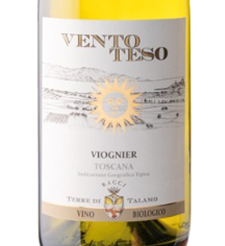
Wine #1 Terre Di Talamo ‘Vento Teso’ Viognier, 2022 (IGT)

Producer: Terre di Talamo winery is located south of Grosseto on the coast of Tuscany, in the Morellino di Scnasano. The 52-hectare estate is on a hillside facing the sea, with 32 hectares planted. The wide range of soil types at Terre di Talamo has led to its being dubbed “minestrone soil”.

The Wine:

  • Vintage: 2022
  • Varietal: 100% Viognier
  • Region/appellation: Toscana IGT.
  • Vinification: grapes grown without the use of irrigation, herbicides or pesticides; all the grapes are grown organically. The wine ferments in stainless steel tanks.
  • Alcohol: 14% APV

Tasting notes: The nose has notes of white flowers, apricot, melon, lemon curd. On the palate the flavors are honeysuckle, jasmine, apricot, peaches, yellow cherries, acacia flowers, melon skin undertone.

Fruity nose of pineapple, guava, grapefruit and fresh herbs. Medium-bodied, juicy and succulent, with crisp acidity. Touch of white pepper bringing some dryness to the fruit at the end. From organically grown grapes.

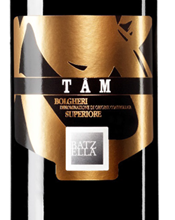
Wine #2 Batzella ‘Tam’ Bolgheri Rosso Superiore, 2017.

Producer: The Batzella winery is located in Bolgheri on the central Tuscan coast. It was founded in 2000 by Khanh Nguyen and Franco Batzella. The owners are committed to producing elegant and authentic wines, with personalities that best express the character of the region.

The wine is called Tâm, a Vietnamese term meaning passion, and reflects the passion that drives the owners in the search for a balance between power and elegance for this cuvée. The motif of the label was taken from the Chinese calligraphic representation which also means heart and passion.

The Wine:

  • Vintage: 2017
  • Composition/Varietal: 65% Cabernet Sauvignon and 35% Cabernet Franc
  • Region/appellation: Bolgueri DOC.
  • Vinification: The harvest, entirely manual, generally takes place in September for the red grapes. The wine ferments in stainless steel tanks at a controlled temperature for 12–18 days. The wine is aged for 24 months in French oak barriques and then at least 18 months in the bottle.
  • Alcohol: 14.5%

Tasting notes: Deep ruby red color, the nose has notes of ripe black fruits (blackberries), underbrush, smoke, mint, licorice, roasting.  In the mouth it has good structure, and concentration with balanced and elegant tannins and a long finish.

Rich, impenetrable ruby-purple. Opens on the nose with lots of dark berry fruit, cassis and tobacco and earthy notes in the background. Develops well on the palate with grippy, layered tannins, dark berry fruit and lots of tobacco, firm and grippy on the finish


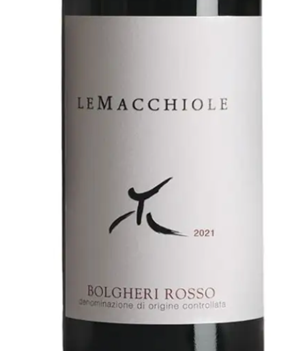
Wine #3. Le Macchiole Bolgheri Rosso DOC, 2021

Producer: Le Macchiole is one of the historic wineries in Bolgheri, dating back to the beginning of the 1980s, and over the years it has become a reference point for quality Tuscan wine. The founders Eugenio Campolmi and Cinzia Merli were among the region’s pioneers, and they contributed in a significant way to Bolgheri’s growing fame, thanks to their work in creating wines full of character and personality that have become a symbol of the region. The Estate is located in Bolgheri, on the on the Etruscan Coast between the hills and the sea. The characteristics of the land together with the dry, gently ventilated climate, the temperatures that are slightly lower than the rest of the Tuscan coast, and the unique brightness of the area all contribute to the definition of a typically Mediterranean environment particularly well-suited to growing varieties like Cabernet Sauvignon, Cabernet Franc, Merlot, and Syrah.

The Wine:

  • Vintage: 2021
  • Composition/Varietals: 50% Merlot, 20% Cabernet Franc, 20% Cabernet Sauvignon, 10% Syrah
  • Region/appellation: Bolgueri DOC
  • Vinification: Harvest period: from 3rd week of August to middle of September. Fermentation and maceration for about 15 days in steel tanks. Aged for 10 months, 70% in oak barriques 3rd and 4th use, 30% in concrete vats.
  • Alcohol: 14.5%

Tasting notes: Intense fresh fruity notes on the nose and a slimmer texture, with firm yet very gentle tannins and an acid backbone that brings an amazing balance to the wine.

On the nose, sweet, slightly tart aromas of cherries and blackberries are balanced by a stony, spicy earthiness. That interplay between tart fruit and sanguine earthiness continues on the palate, creating the sensation of a breath of fresh spring air after the rain, before chalky tannins and bright acid usher in a bitter, peppery finish.

Pure and expressive, this red wine features cherry, raspberry and blackberry flavors augmented by iron, spice and light herb accents. Sleek and elegant, with a succulent profile and excellent persistence on the finish.

Wine #4. Caiarossa Rosso di Toscana 2019 (IGT)

Producer: Caiarossa winery was created in 1998 on the rolling hillsides of Riparbella at Podere Serra All’Olio, situated southeast of the city of Pisa. The estate is part of an area owned for centuries by the De Medici family. The winery is located in the Val di Cecina region, on 16 hectares of mild slopes with views of the sea. From roughly 40 hectares of vines, it produces a range of regional Tuscan wines that largely fall under the Toscana IGT classification. The vines comprise three main vineyards: the original Podere Serra all’Olio at Caiarossa, Le Lame – the most southerly part- and an extensive parcel on the slopes of Monte di Nocola, known as Nocolino.

The estate’s flagship Caiarossa Toscana IGT wine was first produced in 2003 and is a blend of seven red grape varieties. In 2004, Caiarossa was acquired by Eric Albada Jelgersma, who was searching for an Italian counterpart for his prestigious historic estate in Margaux Cru Classé properties, Chateau Giscours and Chateau du Tertre.

The Wine:

  • Vintage: 2019
  • Composition/Varietals: 26% Syrah, 24% Cabernet Franc, 23% Merlot, 14% Cabernet Sauvignon, 7% Petit Verdot, 4% Sangiovese and 2% Grenache.
  • Region/appellation: Toscana IGT.
  • Vinification: The grapes are harvested by hand from the Podere Serra all’Olio vineyard from September 5th through the 21st. All the different plots and varieties are vinified separately in concrete tanks and wooden ‘truncated cones’ (troncoconici di legno), with slow fermentations and soft extractions.
  • Aging: Once the malolactic 
  • fermentation is completed, the wines selected for Caiarossa are blended. Then it ages approximately 14 months in French oak barriques prior to bottling.
  • Alcohol: 14.5%

Tasting notes: This Caiarossa vintage displays vibrant, concentrated fruit, framed by an elegant mineral note of ground limestone. The wine expresses aromas of black cherry and sweet blackberry, as well as presenting delicious notes of tobacco leaf and dried leather. But the notes of candied cherry and raspberry are revealed with such distinction, they highlight the warmth of this vintage. Tannins are very present but their texture is smooth and the finish long, extending over some beautiful sour notes.

The Caiarossa 2019 Caiarossa is a complex blend featuring Syrah, Cabernet Franc, Merlot, Cabernet Sauvignon, Petit Verdot, Sangiovese, and Alicante. The wine is balanced and fresh with thick layers of dark fruit, crushed stone, tobacco and exotic spice.

References:

https://italianwinecentral.com/region-province/toscana/

https://www.wine-searcher.com/regions-italy

https://winefolly.com/videos/super-tuscan-wines/

The Wine Bible, Karen MacNeil, Workman Publishing, New York, 2015.


  1. CV Members Rating

The tasting took place before revealing their prices. 15 participants rated them from Acceptable to Exceptional.
The combined results established the preference order during the tasting as 
follows:
–  Caiarossa Rosso di Toscana IGT, 2019 was rated the Best Wine and the white Terre di Talamo
–  ‘Vento Teso’, Viognier, 2022 the Best Buy. The Best Buy among the reds was Batzella Bolgheri ‘Tam’ Super Tuscan, 2017.

The following Table presents the details of ratings and combined
results.


.o0o.


Wine Jokes from WINCARTA

You know that red meat pairs well with an Amarone. You know that a Muscat complements a nice piece of fish. But, do you know what goes best with wine of any hue?

Laughter.

No matter the wine, it is best served with good times. In fact, we’d argue that nothing tastes better than that feeling you get with good company and good conversation. Lots of psychological factors affect the taste of wine. Perhaps a good joke will help too.

When the wine flows, so too does the conversation. But, if you find it running dry, here are some of our favorite wine jokes you can use to get back on track.

Your dad’s wine jokes

  1. What did the grape say when the elephant stood on it? Nothing, it just let out a little wine.
  2. I’ve trained my dog to bring me a glass of red wine. It’s a Bordeaux collie.
  3. I’m a wine enthusiast. The more wine I drink, the more enthusiastic I get.
  4. I was having wine with my wife when she said ‘I love you so much, you know. I      don’t know how I could ever live without you.’ I said, ‘Is that you or the wine talking?’ She said, ‘It’s me talking to the wine.’
  5. Love the wine you’re with.
  6. What do you call a wine hangover? The grape depression.
  7. What’s the secret to enjoying a good bottle of wine? Open the bottle to let it breathe. If it doesn’t look like it’s breathing, give it mouth-to-mouth.
  8. If you can drink away your hurt, it must have been champagne.
  9. Wine improves with age. I improve with wine.
  10. How do you decide how much wine to drink? Take it on case-by-case basis.
  11. What do you call a grape that is an anti-diuretic? Pinot More.
  12. Did you know wine doesn’t make you fat? It makes you lean…against tables, chairs, floors, walls and ugly people.
  13. It’s funny how 8 glasses of water a day seems impossible but 8 glasses of wine is a sign of a good meal.
  14. The first thing on my bucket list? To fill the bucket with wine.
  15. We have an open-door policy. Show up with wine, and we’ll open the door.

For a more serious approach to wine, check out our beginner’s guide to wine tasting.

.o0o.

Posted in Meeting Abstract, Wine - Vino - Vinho | Tagged , , , | Leave a comment

Tasting No 265 – May 28, 2024 – Campania’s Volcanic Wines, Italy

Tasting No 265 – May 28, 2024 – Campania’s Volcanic Wines, Italy

 Capri Ristorante, McLean VA


  1. Tasting Overview

The main objective of this tasting is to explore wines from the Campania region, particularly the unique and intriguing indigenous wines grown in the same volcanic soils that buried Pompeii.

Type of tasting: Open

Presenters: Cristian Santelices, Jorge Claro y Luis Uechi

Participants:     R. Arroio; M. Averbug; R. Connolly; C. Estrada; J. Estupiñán; J. García; A. and  Claudia Perazza; J. Requena; R Santiago; G. Smart; L. Uechi; R. Gutiérrez (guest) and E. Bernal-Labrada (guest).

These are the wines:

  1. Feudi di San Gregorio, Falanghina del Sannio DOC, 2021
  2. Mastroberardino, Lacryma Christi Del Vesuvio Rosso, 2022
  3. Donnachiara, Taurasi Aglianico DOCG, 2019
  4. Mastroberardino, Radici Taurasi Riserva DOCG, 2017


  1. Menu
  • Caprese Salad w/Garden Pesto on the side (Pairs particularly well with the aromatic and acidic Falanghina wine of Campania)
  • Traditional Lasagna (great to pair with Piedirosso and Aglianico)
  • Grilled lamb chops w/brown sauce (great to pair with Aglianico and Piedirosso)
  • Dessert, coffee, tea


  1. The Campania Wine Region

Campania – its name comes from “Campania felix”, a Latin phrase roughly meaning “fertile / happy land” – is the wine region that forms the shin of Italy’s boot, facing the Tyrrhenian Sea, best known for its impressive coastline and tourism. Tourists know Campania for the city of Naples (Napoli, the spiritual home of Pizza), the ruins of Pompeii, the towering Mount Vesuvius and its hillsides lined with lemon groves, olive trees and grapevines, the isle of Capri, and the beautiful Amalfi Coast.

Although this southern region doesn’t yet enjoy the same reputation for great wines as Tuscany, Piedmont, Lombardy, Veneto or Sicilia, Campania produces unique and intriguing indigenous wines, many of which are grown in the same volcanic soils that buried Pompeii.

Terroir and Production Areas. The region boasts a rich volcanic soil that is highly nutritious and perfect for grape cultivation. This soil is primarily made up of dark volcanic sand, pumice, and lapillus, which give the wine its smoky and mineral notes. It is also rich in potassium, which enhances the wine’s sweetness. To take full advantage of the sun’s rays, the vineyards are situated at an elevation of 400 – 700 meters above sea level. The region enjoys a Mediterranean climate, featuring hot and dry summers and mild, wet winters. The frequent breezes from the mountains and the Tyrrhenian Sea create the ideal microclimate for vines to flourish. The region’s soils and climate, with long warm growing season, combine to produce powerful and concentrated red wines and aromatic, minerally white wines from native varieties.

In 2022, Campania had 25,600 hectares of registered vineyards, producing almost 1.5 million hL of wine (49% white and 51% red) – 19% of it at the DOP and 11% at the IGT level. The region accounts only for a tiny fraction (~0.6%) of Italy’s DOP wine production, but includes 4 DOCGs (5% of Italy’s 77 official DOCG appellations); 15 DOC (4.5% of Italy’s 332 official DOC appellations) and 10 IGTs (8.5% of Italy’s 119 IGTs). (See more information regarding the various classifications of Italian wine labels in the following links: “Decoding Italian Wine Labels: Understanding BIO, IGP, DOP, IGT, DOC, DOCG, and VdT” and “The Pyramid of Italian Wines”.


The region’s 4 DOCGs are Taurasi and Aglianico del Taburno for red wines, and Fiano di Avellino and Greco di Tufo for whites. These highest quality designations are all around Avellino, where the soils are filled with tuff or volcanic rocks. Intriguing wines made from Falanghina and Piedirosso are also particularly noteworthy.

The main grapes are Aglianico, Piedirosso (reds), Falanghina, Fiano, Greco, Biancolella, Asprinio and Coda di Volpe (whites). White and rosé wines have aromas of almond, peaches, pineapple, and citrus, and are consumed young. Red wines need aging to develop mineral and smoky aromas and flavors of red fruit.

History of Viticulture in Campania. Campania has strong historical links to wine and vine, dating back to the 12th Century BC, and is one of Italy’s very oldest wine regions. The considerable influence of ancient empires, including the Greeks, Romans and Byzantines, means some of this region’s varieties have historical legends attached. The area was the playground of the Roman elite and famous for producing Falerno (Falernum), a strong white wine popular in the classical Roman period, produced from Aglianico grapes and one of the most ancient wines in Italy.

In this context, it is worthwhile a note on the Vesuvio sub-region – also known as Mt. Vesuvius- that is home to wines of explosive flavor and historical controversy: the area has an ancient winemaking tradition that thrived during the Roman Empire. The sub-region’s wines were exported outside Italy and favored by the Romans, especially the Emperors. Wine-making practices in the area improved during this period of enological splendor. Vesuvio’s legendary eruption of 79 AD destroyed the wealthy, coastal towns of Pompeii and Herculaneum, though vines and enological tradition remained rooted. Today, Lacryma Christi del Vesuvio DOC is the wine produced with the native grapes of Mt. Vesuvius, which were already being cultivated prior to ancient Roman times, and are red, white, or rosé with similar colors and flavors to classic Campania wines.

During the early part of the first millennium, the Villa Augustea situated at the foot of Mount Somma – near Mt. Vesuvio –  was a major center for wine production. Pagan farmers would gather at the hall of this location to ceremoniously stomp by feet communal grapes, which were then stored in “dolios”, amphora clay vessels, to age. Dolios of Vesuvio wine have been discovered in parts of northern Africa and even India, revealing that Vesuvio wine production was once prized throughout Europe and the known wine world. Vesuvius’s slopes were home to many vineyards which produced wine. This suggests that there was extensive cultivation in the area. Bacchus, the god of wine, was a common theme in many Roman art pieces, including frescoes found in houses of Pompeii that were preserved after the volcanic eruption. The DOP denomination comes from an emblematic place for the history of wine production in this area: ancient Pompeii. The archaeological remains are a testimony to its origins and great tradition. Currently there are sustained efforts to inspire a reawakening among Vesuvian producers by reestablishing traditional winemaking techniques, native grapes, and historic terroirs – for instance, the one leading by The Vesuvio Wine Protection Consortium.

Among the most prized Vesuvio wines, the tittle Lacryma Christi del Vesuvio is an ancient wine made popular by monks in the Middle Ages. With a history that dates back to ancient Roman times, there are many myths surrounding the name of this wine. One such legend relates the simple story of when Jesus ascended into heaven, and on casting his eyes over the beautiful Bay of Naples, he wept tears of joy, which fell upon Mount Vesuvius causing vines to grow. Another myth tells of Christ weeping onto the land over the casting out of Lucifer and the fallen angels. In a variation of this tale, angry that they were forced to leave, Lucifer and the fallen angels took a piece of Heaven with them which landed on Mount Vesuvius, leading to tears of sadness from God. The Lacryma Christi del Vesuvio received the DOC name only in 1983 despite its centuries-old history. Wine is produced with native grapes in the province of Naples within the Vesuvius National Park. The varieties Caprettone and Coda di Volpe are used (minimum 85%) for Lacryma Christi Bianco and other white grape varieties recommended for the province of Naples, and Piedirosso used for Lacryma Christi Rosé and Rosso (minimum 85%) and Aglianico.

Today’s wine styles: Aglianico is the dominant red grape variety (34% of total winegrape production) and Falanghina in its whites – can range from fruit forward and youthful to robust and well-structured. The whites are known for their aromatic characters, often redolent of the local flora. The reds have big personalities that require a little aging.

Despite being ensconced in tradition, dynamic and innovative methods have helped improve the quality of Campania’s wines, specifically through better vineyard management, harvesting methods and cellar techniques. A particularly notable name in the world of Campania wine is the Mastroberardino family (See more details on wines #2 and #4 below).

Reference

https://italianwinecentral.com/

https://www.totalwine.com/discover/learn/campania

https://www.wine-searcher.com/grape-varieties

https://vinepair.com/wine-geekly/intro-guide-campania-italian-white-wine-map/

https://grapecollective.com/articles/the-wine-that-blew-up-pompeii-ciro-giordano-of-cantine-olivella-on-vesuvio-wine


  1. Information on the Wines

Wine #1. Feudi di San Gregorio, Falanghina del Sannio DOC, 2021

The Producer: Feudi di San Gregorio winery was established in 1986 in Sorbo Serpico, a small village near Mount Vesuvius in Campania’s Irpinia region. They specialize in using indigenous grapes to create unique and modern Mediterranean flavors. The Falanghina wine, named after the ancient vine cultivation method in Sannio that used Falangs (“poles”), is perfect as an aperitif and can be paired with various appetizers, simple fish and vegetable dishes, and fresh cheeses.

The wine:

  • Vintage: 2021
  • Varietal: 100% Falanghina
  • Classification: Falanghina del Sannio DOC
  • Country/Region/Subregion: Italy – Campania – Sannio
  • Viticulture: The vine cultivation follows an ancient method that used Falangs (poles)
  • Vinification: Grape clusters carefully hand picked by hand and transported in 18kg crates to winery at 50°F (10°C); clusters gently pressed, cold settling process at 57° ̊F (14°C) that lasts for 24-48 hours. Cold fermentation for about 5 months in stainless steel vats between 61-64°F (16-18°C); no malolactic fermentation.  Aged for 5 months in stainless steel tanks in contact with its lees with an additional month in bottle prior to release.
  • Alcohol: 13%

Tasting Notes: Upon first sip, this wine has a medium-intensity mouthfeel accompanied by crisp minerality. Hints of spice, light almond, and a slightly bitter orange peel character can be detected. The pretty floral notes and soft fruit flavors are fresh throughout the finish, and they are in perfect balance with the mouthwatering acidity.

Style: crisp, fresh; aroma with floral notes, like white blossoms, and delicate apple and pear; Color is straw yellow with brilliant green reflections.

Reference:

https://www.uncorked.com/Feudi-di-San-Gregorio-Falanghina-2019/0022200102019.html

https://www.feudi.it/en/taste-our-wines/falanghina

https://www.vinology.com/falanghina/

Recommended Video on Falanghina: https://www.youtube.com/watch?v=EmuM0cKCtGk

Wine #2. Mastroberardino, Lacryma Christi Del Vesuvio DOC, 2022

The Producer: Mastroberardino Societá Agricola SRL is one of Campania’s most renowned wineries. It was established in the 1870s in the town of Altripalda and the family’s vineyards spread across several parts of Campania’s Irpinia region, near the base of Mount Vesuvius. Antonio Mastroberardino, the 9th generation of his family, brought international recognition to their winery in Irpinia. After returning home from World War II, he rebuilt his family’s business from ruins and dedicated plantings to three nearly extinct ancient Campanian grape varietals: Fiano, Greco, and Aglianico. His decision has since shaped all Campanian wine production efforts and sparked a resurgence in the production of high-quality red and white wines in Southern Italy. Today, the winery is recognized as the most important guardian of the viticultural and oenological heritage of the Roman age. The winery has been appointed by the “Presidenza della Repubblica” to reintroduce vine growing in the ancient city of Pompeii.

The wine:

  • Vintage: 2022
  • Varietal: 100% Piedirosso
  • Classification: Lacryma Christi Del Vesuvio DOC
  • Country/Region/Subregion: Italy – Campania – Vesuvio
  • Vinification: The grapes are carefully hand-harvested in October, are vinified with maceration on the skins for approximately 6 days, then fermented in stainless steel tanks at controlled temperatures (25°-28°C). The wine is aged for about 6 months in small oak barrels, and refined in the bottle for one month before release for sale.
  • Alcohol: 12.5%

Wine overview: Mastroberardino Lacryma Christi Del Vesuvio Rosso is a ruby-red wine, known for its intense aroma of cherries, plums, raspberries, and black pepper. The wine has refined light tannins and a bright acidity, which gives it a refreshing and fruity character.

Crafted by the renowned winemaker Massimo Di Renzo, this wine is an excellent representation of the Vesuvio DOC terroir. The vineyards are located below Mount Vesuvius and are nourished by the mineral-rich volcanic ash and lapilli. This results in loose soils rich in minerals and well-draining, which contributes to the unique characteristics of the wine.

Style: Dry, notes of cherries, plums, raspberries, and black pepper; Color is ruby-red.

Pairings: salumi, tomato, and meat-based sauces, or pizza Margherita.

Ref:

https://www.westchesterwine.com/wines/Mastroberardino-Mastroberardino-Lacryma-Christi-Del-Vesuvio-Rosso-2022-w31864741y

https://www.empirewine.com/wine/mastroberardino-lacryma-christi-rosso-2022-h55962/

https://www.wine-searcher.com/regions-vesuvio

Recommended Video on Lacryma Christi del Vesuvio: https://www.youtube.com/watch?v=ZLzpZ90ztXw

Wine #3. Donnachiara, Taurasi Aglianico DOCG, 2019

The Producer:  Taurasi Aglianico DOCG is a fine red wine produced by Donnachiara SRL, a female-led winery established in 2005 in Montefalcione. The company – with over 150 years of expertise and modern production since 2005 – has a family-driven commitment to quality and a deep sense of responsibility to unearth Irpinia’s potential. Donnachiara is a female-led winery established in 2005 in Montefalcione. The company has a family-driven commitment to quality and a deep sense of responsibility. With over 150 years of expertise and modern production since 2005, Donnachiara is more than just a business. Led by CEO Ilaria Petitto, the winery is focused on unearthing Irpinia’s winemaking potential.

The wine:

  • Vintage: 2019
  • Varietal: 100% Aglianico
  • Classification: Taurasi Aglianico DOCG
  • Country/Region/Subregion: Italy – Campania – Taurasi
  • Vinification: grapes are hand picked in November, carefully selected, and softly pressed. Maceration on the skins for  20 days followed by malolactic fermentation for about 12  months in French barriques, and refined in the bottle for 12 months before release for sale.
  • Alcohol content: 13.5%

Style: Dry, with elegant estructure and great persistence; aroma with notes of blackberry, blueberry, smoke, and coffee; Color is ruby-red with purple notes.

The grape overview: Aglianico is an ancient grape variety that originated in Italy where it was first planted near modern-day Pozzuoli. From there, it spread to other parts of Campania. Wine made from Aglianico was known as Falernian and was highly regarded by the Romans. Until the 15th century, the Aglianico grape was known as Elenico, which means Greek in Italian. The name was later changed to Aglianico, which might have come from the Latin phrase “vita hellenica,” meaning Greek wine. There are 3 biotypes of Aglianico: Taurasi, Vulture and Taburno (each sub-region has a decidedly different expression of the wine, but the volcanic soils are what ties them all together). Aglianico has an uncle-nephew relationship with Syrah. The Aglianico grape thrives in volcanic soil at altitudes of 300-500 meters. As a black, late-ripening grape, it is also used in Campania as a blending grape.

Tasting notes: The wine has blackberry, blueberry, smoke, and coffee notes. It will become a great wine with more bottle age and can last for 15 to 20 years. The 2019 vintage had great climatic conditions, a large crop, very good acidity, and won many awards.

There are many who believe that the three great grape varieties in Italy are Nebbiolo, Sangiovese and Aglianico. Wines made from the Aglianico grape are full-bodied with good fruit, tannins, and hints of blackberries, leather and smoke. Elegant structure with great persistence. Pair with pasta, steak, roast game, and long-aged cheese.

Reference

https://www.honestgrapes.co.uk/products/donnachiara-taurasi-2019

https://www.donnachiara.com/taurasi/

https://charlesscicolone.wordpress.com/2023/11/06/tasting-aglianico-taurasi-from-donnachiara-winery/

Recommended Video on Aglianico: https://www.youtube.com/watch?v=-oFGe7DM5-8&list=WL

 Wine #4. Mastroberardino, Radici Taurasi Riserva DOCG, 2017

The Producer: (See Wine #2)

The wine:

  • Vintage: 2017
  • Varietal: 100% Aglianico
  • Classification: Radici Taurasi Riserva DOCG
  • Country/Region/Subregion: Italy – Campania – Taurasi
  • Alcohol: 13.5%
  • Ageing: Grapes are manually picked at the end of October and early November. The vinification process is classic, with a maceration period of around 25 days on the skins, at a controlled temperature of 22° – 24°C. The wine is then aged for approximately 30 months in French and Slavonian oak barrels, followed by at least 40 months of aging in the bottle.

Wine overview: The 20 year “Mirabella Eclano vineyards” are South-West facing, at an altitude 500-650m. Deep and sandy loam soils include traces of limestone, clay, and some volcanic matter and are well-draining. The red wine is made using the classic vinification process.

Tasting notes: The wine is a deep ruby red with intense flavors of cherry, wild berries, spice, plum, black cherry, and strawberry. It pairs well with mature cheeses, truffles, mushrooms, ragout, and roasted red meats.

Style is full, complex estructure, this elegant wine has flavors of plum, black cherry, strawberry and intense spices; aroma notes of cherry, violet, wild berries, and a distinctive spicy aroma; color: Intense ruby-red

Reference:

https://artisan.wine/products/mastroberardino-radici-taurasi-riserva-docg-2017-750-ml-campania-italy-vm-94-js-93-ws-92#description

https://www.plummarket.com/store/2017-mastroberardino-radici-taurasi-riserva-docg-campania.html

https://ny.eatalyvino.com/wines/Mastroberardino-Taurasi-Radici-2017-w13777116g


  1. CV Members Rating

The tasting took place before revealing their prices. 13 participants rated them from Acceptable to Exceptional. The combined results established the preference order during the tasting as follows:

Mastroberardino, Radici Taurasi Riserva DOCG, 2017 was rated the Best Wine and the white Feudi di San Gregorio, Falanghina del Sannio DOC, 2021 the Best Buy. The Best Buy among the reds was Donnachiara, Taurasi Aglianico DOCG, 2019. The following Table presents the details of ratings and combined results.


.o0o.

Laughing a little:

Posted in Meeting Abstract, Member's Wine Ratings, Photos and Videos - Club del Vino, Video, Wine - Vino - Vinho, Wine Regions | Tagged , , , | Leave a comment

Tasting No 264 – April 30, 2024 – Wines from Piedmont

Tasting No 264 – April 30, 2024 – Wines from Piedmont

 

Capri Ristorante, McLean VA


  1. Tasting overview

The main objective of this tasting is to explore the wines from the Piedmont area, particularly the famous Barolo and Barbera wines.

Type of tasting: open.

Presenters: José Brakarz, Raimundo Arroio and Marcia Bebiano Simões

Participants:        S. Ardila; R. Arroio; M. Averbug; L. Bocalandro; J. Brakarz; R. Connolly; C. Estrada; J. García; A. and Claudia Perazza; C. Santelices; M. Simões; P. Turina; L. Uechi; and P. Belli (guest).

The Wines:

  1. Bruno Giacosa Roero Arneis, 2022
  2. D. Vajra Barolo Albe, 2019
  3. Paitin Barbaresco Serraboella, 2020
  4. Paolo Scavino Barolo Prapo, 2019.
  1. Menu

  • Portobello al Forno
  • Linguini Frutti di Mare
  • Beef Medallions with Brown Sauce and Sauteed Potatoes
  • Dessert, coffee, tea.
  1. The Piedmont Region

Located in the northwestern corner of Italy, Piedmont (“Foot of the Mountain”) is a region renowned for its exceptional wines. It is a picturesque area with a rich viticultural heritage.

Terroir and Production Areas:  Piedmont, the heart of Italian winemaking, has a diverse landscape— comprising hills (30.3%), plains (26.4%), and mountains (43.3%)—which creates a unique terroir that influences its wines.  

The region has a continental climate with cold winters and hot summers, along with significant temperature variations, which allows for late-ripening varieties like Nebbiolo to thrive.  Responsible for some of the most elegant and age-worthy wines in the world, Nebbiolo, named for the ubiquitous autumnal fog (called nebbia in Italian), is the star variety of the Piedmont region. Grown throughout the area, as well as in the neighboring Valle d’Aosta and Valtellina, it reaches its highest potential in the Piemonte’s villages of Barolo, Barbaresco and Roero.

Distinct Production Areas: of Italy’s 20 major wine regions, Piedmont ranks 6th in production volume. It is known for high quality and produces more DOCG designated wines than any other region. In Piedmont there are a total of 59 subregions (including Barolo, Gabiano, Barbera d’Asti, etc.) and the name of these subregions is listed prominently on Piedmont wine labels (often noted alongside the variety). These are some key production areas:

Langhe: Nestled between the provinces of Cuneo and Asti, the Langhe region produces some of Piedmont’s most iconic red wines:

  • Barolo DOCG: Known as the “King of Wines,” Barolo is made from Nebbiolo grapes. It boasts complex flavors, robust tannins, and aging potential.
  • Barbaresco DOCG: Another Nebbiolo-based gem, Barbaresco offers elegance, floral notes, and a slightly earlier maturation than Barolo.
  • Dolcetto d’Alba and Barbera d’Alba: These approachable reds showcase fruity profiles and pair wonderfully with local cuisine.

Roero: East of the Tanaro River, Roero is famous for its white wine:

  • Roero Arneis DOCG: Made from the indigenous Arneis grape, this crisp and aromatic white wine is a delightful companion to seafood and appetizers.

Monferrato: The largest production area in Piedmont, Monferrato spans the provinces of Alessandria and Asti. Notable wine appellations include:

    • Barbera d’Asti DOCG: A lively red with bright acidity, perfect for everyday enjoyment.
    • Gattinara DOCG: A Nebbiolo-based wine from the northern part of Piedmont.
  • Ruchè di Castagnole Monferrato DOCG: A rare red with floral and spicy notes.
  • Asti Spumante DOCG: A sweet sparkling wine made from Moscato grapes.
  • Gavi DOCG: Crisp and mineral-driven white wine crafted from Cortese grapes.
  • Timorasso Colli Tortonesi DOC: An intriguing white wine with depth and character.

Other gems include:

  • Alta Langa DOCG: Its sparkling wines compete with the best in the world.
  • Nizza DOCG: Produces robust Barbera wines.
  • Terre Alfieri DOCG: Known for its reds and whites.
  • Timorasso Colli Tortonesi DOC: An ancient grape variety making a comeback.

Piedmont’s wines reflect centuries of tradition, dedication, and a deep connection to the land. Whether you savor a bold Barolo or a refreshing Arneis, each bottle tells a story of passion and craftsmanship!

History of Viticulture in Piedmont.

The roots of Piedmont’s winemaking tradition can be traced back to ancient times. The Celtic-Ligurian peoples who inhabited the region around the 6th century BC, were the early vintners, tending to vineyards and nurturing the grapevines. These ancient inhabitants recognized the potential of Piedmonts’ soil and climate for wine production. The Romans cultivated native vines in this fertile land, which they aptly called Oenotrua (meaning “land of vines”).

As the Middle Ages unfolded, attention shifted toward defining the most suitable wine production areas. Barbesino, found its roots in the Monferrato region. Meanwhile, Nebbiolo vines took hold in Turin and Upper Piedmont. These early choices laid the groundwork for the iconic wines that would emerge centuries later.

Birth of Barolo and Barbaresco: In the 19th century, ‘Piemontese’ red wines began to evolve into their modern expressions: Barolo, based on Nebbiolo grapes, came into existence around 1830. The Marquises Falletti and Count Camillo Benso di Cavour played pivotal roles in its creation. Not long after, Barbaresco—another magnificent expression of Nebbiolo—was born. Domizio Cavazza, founder of the Cantine Sociali di Barbaresco, contributed to its legacy.

Challenges and Renaissance: The 20th century brought challenges – World Wars, rural exodus, and migration to the Americas – which led to a decline in viticulture. In the 1980s, the region experienced a renaissance. Inspired by Burgundy and Bordeaux, winemakers embraced modern techniques, aiming for more elegant and balanced wines.  

With its proximity to France, Piedmont has been influenced by French viticulture, particularly from regions like Burgundy.  This influence is evident today in the varietal styles of most Piedmonts’ wines, which often emphasize single grape varieties with minimal blending.

  1. Piedmont’s Main Wine Varieties (DOCG)

White and Sparkling Wines 

Although Piedmont is best known for its red varieties, there are some significant white wines produced in the region, such as: Gavi DOCG and the Roero Arneis DOCG (present in this tasting), the “Derthona” Colli Tortonesi DOCG obtained from Timorasso grapes; the Asti DOCG sparkling wine, Moscato d’Asti DOCG and the Arbaluce di Caluso DOCG.   Out of the many other denominations in the Piedmont area, the Roero DOCG wines, also made with Nebbiolo grapes, has a completely different identity, with its distinguishing aromatic characteristics given by geographical and climatic conditions, as well as vinification techniques. The geographical position and soil composition distinguishes Roero from its counterparts, as it is located on the left bank of the Tanaro River, while Barolo and Barbaresco are on the right margin. Usually, the left margin is more arid, and its soil has high limestone clay and sand. This composition gives the grapes a particular mineral terroir, highly appreciated for with wines.
BAROLO

Among the ‘Piemontese’ DOCG wines, Barolo is certainly the most iconic. Barolo was born in the Langhe region in the 19th Century, from the vineyards of the Marquis Tancredi Falletti and Giulia Colbert Falletti of Barolo thanks to Paolo Francesco Staglieno, who produced the estate’s first dry version Nebbiolo in 1830 and thus became the pioneer of ‘Piemontese’ enology.
Barolo immediately became a noble and appreciated wine, so much so that it became the spokesman of Piedmont and the Savoy in all the courts of Europe, also thanks to the support of Count Camillo Benso di Cavour and King Vittorio Emanuele II.

This iconic red wine is produced in the Province of Cuneo, near Barolo, Castiglione Falletto and Serralunga d’Alba and in part of the municipalities of La Morra, Monforte d’Alba, Roddi, Verduno, Cherasco, Diano d’Alba, Novello and Grinzane Cavour.

Barolo is produced from 100% Nebbiolo grapes and requires a minimum aging of 38 months (18 of which in wood barrels). It can add the mention “Riserva” after 5 years of aging. It is considered one of the longest-lived wines in the world, thanks also to the strong tannic component of Nebbiolo, and is expressed differently according to the areas, crus and vintages.

Generally, it appears as a garnet red wine, with intense and elegant aromas of flowers and ripe fruit, often with tertiary notes of spices and tar. In the mouth it has great intensity and persistence, all accompanied by a great acid-tannic balance.

Perfect in combination with well-structured dishes, Barolo is also an excellent meditation wine – a wine to be appreciated on its own – especially if dated and of a good vintage.

BARBARESCO 

Among the ‘Piemontese’ DOCG wines, Barbaresco is one of the most famous and appreciated in the world. Barbaresco DOCG is a ‘Piemontese’ red wine typical of the Langhe, produced in the province of Cuneo in the municipalities of Barbaresco, Neive, Treiso and in the hamlet of “San Rocco” in the Province of Alba. The terroir of this DOCG is typically hilly with calcareous-clayey soils where Nebbiolo is raised by the espalier with Guyot pruning.
Barbaresco is another great expression of the Nebbiolo grape.  It is produced from 100% Nebbiolo grapes and requires aging for 26 months, nine of which in barrels, and for at least 50 months to bear the mention “Riserva”.

Barbaresco, like Barolo, is a wine that fully reflects the terroir and expresses itself differently depending on the production area. It generally appears as a garnet red wine tending to orange with aging, with very intense and characteristic aromas. The taste is dry and harmonious, with balsamic tertiary notes, tar and roasting that develop with aging.

It is considered a roast wine par excellence, but it is also excellent in combination with typical ‘Piemontese’ dishes, and also with seasoned foods, mushrooms and truffles.


  1. The Wines for Today’s Tasting

Wine #1. Bruno Giacosa, Roero Arneis, 2022

The Producer: Roero Arneis 2022 is a fine white wine produced by Bruno Giacosa.

The wine:

  • Vintage – 2022
  • 100% Arneis
  • Roero Arneis DOCG
  • The vines are quite vigorous, with strong, straight shoots. The grapes ripen in late September.
  • Vinification: Stainless steel vats
  • Length of fermentation: 25-30 days
  • Refinement: 4 months in stainless steel vats + 1 month in bottle
  • 4 months in steel barrels.
  • 5 % APV

The Arneis grape variety is native to Piedmont region. This grape performs exceptionally well on the sandy hills of Roero, northwest of Alba. It is a very interesting expression of this often-underrated Piemontese grape variety, capable of expressing itself, with great elegance and minerality. 

The Arneis grape vines thrive throughout the Roero region and on the hills along the right bank of the Tanaro River.

Historical Journey: Arneis grapes were cultivated in Roero since the 15th century, but the wine made from them gained prominence in the 1970s. It saved Roero Arneis from possible disappearance.

Tasting notes: Straw Yellow, aromas of fresh fruit, citrus, and often hints of almonds. On the palate, it is fresh, full-bodied, with mineral notes and a persistent finish. The mineral-rich soils contribute to its bone-dry character and fresh acidity.


Wine #2. Paitin Barbaresco Serraboella 2020

Producer:  Azienda Agricola PAITIN di Pasquero Elia

The wine:

  • 2020
  • 100% Nebbiolo
  • Barbaresco DOCG
  • Organic with the sole use of sulfur and copper natural compound, manual or mechanic
  • Vinification and Aging. Grapes are pressed and destemmed, then fermented and macerate for 3 to 6 weeks in stainless steel. Then it finishes the maceration with the ancient technique of the submerged cap. Aged in wood barrels for around 18 to 24 months. Barrels’ volume varies between 25 to 50 hectoliters, made of Slavonian and Austrian oak.
  • Alcohol: 14.5%

Serraboella is the most famous Cru in the Southern Neive. A long hill exposed to West that gently bends towards South getting steeper. On this very side: the steepest and the warmest, this Barbaresco has a unique expression. The Paitin 2020 Barbaresco Serraboella is ethereal and luminous in appearance; however, the aromas offer strength and a bold character. This is an impeccably elegant wine.  

Tasting notes. Ethereal and luminous, the wine presents itself with grace; the initial impression is of vibrant berry fruit. Beyond the fruit, there are savory notes of licorice and iris root. An intriguing touch of teakwood or mahogany adds depth. Impeccably elegant, it offers a harmonious interplay of power and volume.

Only 10,000 bottles of this exceptional Barbaresco were made.

The Paitin Barbaresco Serraboella 2020 embodies the essence of Piedmont’s winemaking heritage—a symphony of flavors and elegance.


Wine #3. T G.D. Vajra, Barolo ‘Albe’ 2019

The Producer: G.D. Vajra. The Vajra family has farmed Bricco delle Viole, the highest cru in Comune di Barolo, since the 1880s. At the young age of 15, Aldo Vajra embraced the dream to revive his family legacy. Displaying a vision and commitment belying his young age he took over the estate in 1968, turning a new page.

The wine:

  • 2019
  • 100% Nebbiolo
  • Barolo DOCG
  • Grapes cultivated in high elevation vineyards. This wine comes from three vineyards with different exposures to the sun: southeast, south and southwest, catching all morning sun rises. This combination is reflected in the freshness of the wine, complexity of flavors and relatively high tannins.
  • Vinification and Aging: Grapes are harvested by hand with a rigorous grape selection process and then, in the winery, the best berries are re-selected. Fermentation is carried out at controlled temperature with a long maceration; as tradition dictates, the wine is aged for 36 months in large Slavonian oak barrels.
  • 14.5% APV.

Tasting notes. The 2019 Barolo Albe features a classic blood red color, with a very lively core. Taste of red berries, raspberries, and red currants also display a layer of sweet spices. Aromas of fresh cherries, wild strawberries, rose- buds, wild herbs, underbrush. On the palate it showcases the tart red fruits Nebbiolo is known for, but at a higher gear followed by more savory flavors finishing with well-integrated tannins and vibrant acidity. The mouthfeel opens with a good balance, lots of energy and refined tannins, and the aftertaste echoes the aromatics with lingering complexity.


Wine #4. Paolo Scavino, Barolo ‘Prapò’, 2019

The Producer: Paolo Scavino (founded in 1921).

The wine:

  • 2019
  • 100% Nebbiolo
  • Barolo DOCG
  • Viticulture and aging: Fruit harvested by hand. Skin maceration for 12 days, followed by a 20–30-day fermentation in stainless steel with indigenous yeast.
  • Aged in a combination of French barrique and large casks for 2 years prior to bottling.
  • Alcohol: 14.5% APV.

Tasting Notes. The 2019 Paolo Scavino “Prapò” Barolo is a captivating wine from the Barolo region. With the black label, this wine draws its fruit from Serralunga d’Alba, or the village that usually reveals the most structured and muscular expressions of Nebbiolo. Indeed, it is a deep wine characterized by an intense garnet red color, the texture is dense, rich and its tannins have a full and round grain. The nose of this Barolo reveals intriguing notes of dark fruit like figs and black cherries, spicy notes such as nutmeg and black pepper.  In the mouth, the Barolo Prapò is assertive and powerful, yet maintains an elegant balance.

It exemplifies rigor and consistency, showcasing the best of the Serralunga terroir. It is full- bodied and approachable, with refined, ripe tannins that gracefully embrace the pure fruitiness.


    1. CV Members Rating

      The tasting took place before revealing their prices. 14 participants rated them from Acceptable to Exceptional. The combined results established the preference order during the tasting.

Paolo Scavino, Barolo ‘Prapò’, 2019 was rated the Best Wine and the white Bruno Giacosa, ‘Roero’ Arneis, 2022 the Best Buy. The best buy among the reds was Paitin, Barbaresco ‘Serraboella’, 2020. The following Table presents the details of individual ratings and combined results.

References:

https://www.wine.com

Https://winefolly.com/deep-dive/piedmont-wine-map-of-italy

https://www.italysfinestwines.it/en/piedmont-wines/

https://www.paitin.it

https://www.mtouton.com/products/italy/piemonte/roero/5256-2021/bruno-giacosa-roero-arneis

https://www.decantalo.com/us/en/g-d-vajra-barolo-albe.html

.o0o.

Laughing Matter


.o0o.

Posted in Meeting Abstract, Wine - Vino - Vinho, Wine Regions | Tagged , , , , | Leave a comment

Jairo Sanchez 1941 2024

Jairo Sanchez 1941 2024


 

Jairo Sanchez  (1941-2024) our much appreciated Club del Vino Technical Director is not with us anymore. Here a few statements of Club del Vino members wrote about this beloved member. Follows the obituary printed in the Washington Post.

Maria Claudia Perazza:  Comparto con uds. la tristeza por el fallecimiento de nuestro querido amigo Jairo, nuestro director técnico emérito, siempre atento y disponible para ayudarnos con los temas del club. Vamos extrañarlo mucho.

Cecilio Augusto Berndsen:  Que lastima. Meu primeiro amigo no BID. Marcou sua participação no nosso Club del Vino pelo vasto conhecimento e pela sempre gentil e alegre presença. Nossa perda de uma pessoa que marcou seu caminhar pelo profissionalismo e amavel liderança.

José Brakarz:  Que gran Perdida la de Jairo, nuestro amigo y decano del club.  Lo conocía desde los tiempos del BID y siempre ha sido una excelente figura humana, además de buen profesional.  Lo vamos a extrañar inmensamente.

Jaime Estupiñan: Sentimos mucho el fallecimiento de nuestro querido amigo  y compañero del Club. Siempre se distinguió por su amabilidad y caballerosidad. Siempre estuvo atento a ofrecer sus conocimientos y comentarios para engrandecer nuestro Club del Vino. Que en paz descanse.

Ricardo Zavaleta: Sientiendo mucho el falecimiento de un buen amigo y caballero como lo era Jairo. Es una gran perdida para nuestro CV pue el siempe fue un excelente colaborador. Que en az descanse.

Michle Fryer:  What sad, unexpected news.  Jairo always brought a smile to the table and had kind words for all. He will be missed.

Cristian Santelices: Una pena terrible la partida de nuestro querido socio miembro de la Comisión Directiva del CV. Sus contribuciones en los temas técnicos de las distintas presentaciones siempre fueron excelentes. Jairo fue un gran colaborador, siempre con una nota elegante y de gran clase. Lo extrañaremos. Nuestros sentido pésame para su familia.

Juan Luis Colaicovo: Triste noticia. Acompañe la presencia de Jairo desde su incorporacion al CV hace unos 15 años. Muy grata presencia y muy buen amigo. Dedicado al tema del vino hizo buenas contribuciones al club.  Será muy recordado.

Laura Bocalandro:  So sorry to hear this news! And unexpected.

Gabriela Vega:  Excelente persona. Qué pena

Raimundo Aroio:  Realmente una tristísima noticia

Ricardo Santiago:  Jairo um gentleman querido por todos. Descanse em Paz!

Jorge Requena:  ¡Qué triste noticia! Es una gran pérdida para nuestro Club.  Lo conocí en el BID donde trabajamos juntos en varias oportunidades. Fue un excelente colega y un gran amigo.  Extrañaré mucho sus consejos y su amena conversación. Lamento no estar allá para acompañar a la familia en su despedida.

Sergio Ardila:  What a terrible news. He was such a gentleman, and an exemplary IDB employee. What a loss.

Ginger Smart:  I’m so sorry to learn of the loss of Jairo Sanchez. He’s been a very supportive and active member of the wine club for many years.

John Redwood:  This is very sad news indeed! Not only was dear Jairo a true gentleman as others have said and a longtime and very knowledgeable member of the club, he was also one of the members both Lucia and I have known longest from our days at the IDB, dating back to the mid-1980s in my case. He will be sorely missed. Please convey our sincerest condolences to his family on our behalf.

German Zincke Una gran pérdida para el Club y una mayor pérdida de un amigo querido
por todos.  Sus conocimientos técnicos sobre el vino fueron un valioso aporte para
todos nosotros.  Gran compañero, amable y comunicativo, ganó nuestro afecto y para
siempre estará en nuestro corazón. Jairo, descansa en paz.
Mis condolencias a su familia.

Marcello Averbug:  Notícia muy triste. Jairo era el tipo de persona cuya amistad siempre ha sido valiosa y fuente de afecto.

Jorge Claro: Es una gran pena perder a un amigo y colega tan querido como Jairo. Más aún cuando se trata de uno como él, con quien tuve la oportunidad de compartir momentos muy gratos, tanto en el BID donde trabajamos juntos por varios años, como posteriormente como amigo. No quiero ni pensar como será la pena de su familia y sobre todo de Aura, su señora. Es de lamentar que hemos perdido a amigos tan queridos como Jairo, Alfonso, Mario y otros en un espacio de tiempo tan corto. Se linda personalidad y sabio consejo se extrañará enormemente en las hermosas y entretenidas reuniones del Club del Vino.

Pedro Turina:  Con sorpresa y profundo pesar recibo en Chile la noticia del fallecimiento de Jairo, un conocedor profundo de los vinos y sus cualidades y amable contertulio, magnífica persona. Estaré de regreso para asistir a  misa en su memoria.

Jairo Sanchez Obituary

W. Post

Jairo Enrique Sánchez, age 82 of Washington, DC, formerly of Chiquinquirá, Colombia, passed away on Thursday, April 11, 2024. Born on December 21, 1941, Jairo was a devoted son to Ramón Sánchez (deceased) and Soledad (Méndez) de Sánchez (deceased), and brother to Óscar Ramon, Carlos Efraín (deceased), Mery Soledad (deceased), Daniel Alfonso, Martha Lucía, Álvaro Arturo (deceased), Clara Imelda, Cesar Guillermo, and Claudia Consuelo Sánchez.
Jairo had an endless curiosity and passion for learning that led him to the Universidad Nacional de Colombia where he earned his bachelor’s

degree in Civil Engineering and Universidad de Los Andes where he received a master’s degree in Economics. He lived his life grounded in his core values of education and generosity. In his professional life, he flourished working his entire career at the Inter-American Development Bank. There he held various leadership roles which brought him to live across multiple Latin American Countries including México, Ecuador, and Perú before settling in Washington, DC.
Jairo was a loving husband to his wife of 50 years, Aura; and a devoted father to his late son Jairo Enrique Jr., and daughter Ana Maria. He is survived by his wife Aura; his daughter Ana Maria, son-in-law Mark Keller; and granddaughter Pia Sánchez Keller. Jairo’s unstoppable energy, love of life, and love for people around him left a mark on all those who knew him. His open heart and mind will live on through his family and friends.
A memorial mass will be held at Church of the Little Flower in Bethesda, MD on Wednesday, April 24 at 12 noon.

Published by The Washington Post on Apr. 21, 2024.

.o0o.

Posted in Wine - Vino - Vinho | Leave a comment

Tasting No 263 – March 26, 2024 – Wines from Sardinia

Tasting No 263 – March 26, 2024 – Wines from Sardinia


           Capri Ristorante, McLean VA


  1. Tasting Overview


The main objective of this tasting is to explore wines from the Island of Sardinia, Italy

Type of tasting: Open/hybrid/blind

Presenter: Sergio Ardila

Participants:

S. Ardila; M. Averbug; L. Bocalandro; J. Brakarz; J. Entwistle; C. Estrada; J. García; N. Marzella; A and C. Perazza; J. and L. Redwood; R. Santiago; E. Silva; L. Uechi; G. Veja; and G.
Zincke.

 These are the wines:

  1. Pala ‘Stellato Vermentino di Sardegna’, 2022
  2. Pala ‘Cannonau di Sardegna’ Riserva, 2020
  3. Cantine Argiolas ‘Turriga Isola Dei Nuraghi’, 2017
  4. Agricola Punica ‘Barrua Isola Dei Nuraghi’, 2019.
  1. Menu

  • Cream of asparagus
  • Raviolis in cream sauce
  • Grilled NY steak
  • Dessert, coffee
  1. Wine production in Sardinia

Sardinia, 150 miles (240km) off the west coast of mainland Italy, is the second-largest island in the Mediterranean Sea, with a total population of 1.7 million in 2020 (Italian National Institute of Statistics). Covering roughly 9300 square miles, it is almost three times the size of French-owned Corsica, its immediate neighbor to the north, and only slightly smaller than Italy’s other major island, Sicily.

Sardinia boasts a rich viticultural history with traditions distinct from the mainland. Influenced by Spanish and French viticulture practices, Sardinian wines offer a unique blend of indigenous grapes and international varieties. Blessed with a warm Mediterranean climate, diverse soils, and stunning coastal landscapes, Sardinia presents a treasure trove for wine lovers. 

Over the centuries, Sardinia has belonged to various empires and kingdoms, which is reflected in its place names, architecture, languages and dialects, and its unique portfolio of wine grapes.

Since the mid-18th Century, Sardinia has been one of Italy’s five autonomous regions (the others being Sicily, Friuli-Venezia Giulia, Trentino-Alto Adige and the Aosta Valley), but its separation from the mainland has led to a culture and identity somewhat removed from the Italian mainstream. This is reflected in the Sardinian relationship with wine: it is much less culturally and historically engrained there than in the mainland regions. Wine production and consumption on any scale has developed only in the past few centuries. Viticulture is a minority enterprise in Sardinia, despite generous financial incentives from the government.

In the wine world, Sardinia is best known for red wines made from Cannonau (or Grenache) and white wines made from Vermentino, the main grape varieties produced here. The region makes twice as much red wine as white.

In terms of terroir, the combination of hills and plains, coastal regions and inland areas offers useful diversity of topography and mesoclimates. To further these benefits, the available soils and bedrocks vary from granite, limestone and sandstone to mineral-rich clays and free-draining sands and gravels.

Located between 38 and 41 degrees North, the island lies at the southern edge of European viniculture, but thanks to the cooling effects of the Mediterranean, the maritime climate here is more forgiving than in other regions at this latitude (e.g. Greece and Turkey).  

Sardinia’s wine production has fluctuated considerably from year to year, and 2022 was at its 10-year average of 684,000 hl, coming off 26,700 ha (66,000 acres) of vines .

Key characteristics of Sardinian wines are:

  • Powerful Reds: Cannonau leads the way with its full body, ripe fruit character, and hints of spice;
  • Aromatic Whites: Vermentino shines with its crisp acidity, citrus, and floral aromas; and
  • Indigenous Treasures: Nuragus, Monica, and other local grapes, which offer unique flavors.
  1. The grape varietals and denominations

In terms of grape varieties, the portfolio of varieties planted in Sardinian vineyards bears little resemblance to those in any other Italian wine region. The closest mainland wine regions to Sardinia are Tuscany and Lazio, and yet the key varieties used in these two (Sangiovese, Montepulciano, Barbera, Trebbiano) are not found in the island’s vineyards.

Instead, one finds varieties of French and Spanish origin, exemplified by Grenache (called Cannonau here), Carignan (and its distinct clonal variants Bovale di Spagna and Bovale Grande) and Cabernet Sauvignon.

The most “Italian” varieties here are Malvasia and Vermentino, but even Vermentino can only just be considered Italian, being more widely planted on Corsica and southern France – often under the name Rolle – than in its homeland, Liguria. Muscat Blanc (Moscato Bianco), ubiquitous all around the Mediterranean, further contributes to the pan-Mediterranean feel of Sardinian viniculture.

Aside from the better-known grape varieties mentioned above, the island makes use of several obscure varieties, including Torbato, Semidano, Niederra, Nuragus, Monica and Nasco. The latter three are showcased in their own variety-specific DOCs, all from Cagliari.

The Italian love of complex bureaucracy is clearly visible in Sardinia, which has more DOC and IGT titles than Calabria and Basilicata combined, despite having the lowest wine production per hectare of any Italian wine region. It has one DOCG, 17 DOCs, and 15 IGPs.

The majority of Sardinian vineyards lie on the western side of the island, which is also where most of its location-specific DOCs are found. They line the west coast, running from south to north: Carignano del Sulcis, Vernaccia di Oristano, Malvasia di Bosa, and Alghero.

Even the large Cagliari DOC, which covers a good proportion of the island’s southern half, is strongly biased towards the west coast. The exception to this westerly bias is Vermentino di Gallura, the island’s only DOCG, whose catchment area covers the island’s northeastern corner.

Nevertheless, the most familiar appellations to many drinkers are likely to be the five island-wide DOCs: Cannonau di Sardegna, Vermentino di Sardegna, Monica di Sardegna, Sardegna Semidano and Moscato di Sardegna.


  1. Information on the Wines

Wine #1. Pala Stellato Vermentino di Sardegna, 2022

The Producer. Azienda Agricola Pala (or Pala estate) is a well-respected producer known for its diverse range of wines, from Vermentino, Cannonau, Malvasia, Sarda, Monica and Nuragus. The winery was founded in 1950 with the first harvest done by Salvatore Pala, coming from the grapes of his own vineyards in the Serdiana countryside with the idea to make some good wine to be sold. The white wine was made from Nuragus grapes, while the red was made from Monica and Pascale grapes. Pala owns six different vineyard areas with a total of 68 hectares currently under vine. Each vineyard is planted with varietals that are chosen according to the microclimate and soil type of the individual site. Pala practices organic farming in the vineyard and does not use chemical pesticides or fertilizers.
The wine:

  • Vintage: 2022
  • Varietal: 100% Vermentino
  • Vermentino di Sardegna DOC (regional)
  • Sandy and clayey-calcareous rich in pebbles, medium hill, 150/180 m. above sea level
  • Must obtained by the soft pressing of the grapes after a first clean and the addition of yeasts selected in our own vineyards, ferments in stainless steel vats at a controlled temperature of 12° C.
  • The wine remains in contact with the fine lees for about five months, then it is bottled.
  • 13.5 %
  • Winemaker notes. Intense straw yellow colour with greenish tinges, brilliant. Intense, lingering aroma with vegetable and floral fragrances of maquis and summer fruits. Pleasant nose-palate harmony, warm and full of good depth and perky acidity, balanced.
  • Tasting review. Spiced and tropical character with notes of ripe mangoes, peach skins, honeysuckle and hints of marzipan. Medium- to full-bodied, creamy and dense with a concentration and richness to the fruit and a chalky, slightly phenolic finish (Robert Parker’s Wine Advocate).


Wine #2. Pala ‘Cannonau Riserva di Sardegna’DOC, 2020

The Wine

  • 2020
  • 100% Cannonau, single vineyard;
  • Cannonau di Sardegna DOC (regional);
  • Crabilis Vineyard in the hills of Serdiana;
  • Manual harvesting, maceration on the skins at controlled temperature for ten days; alcoholic fermentation followed by the malolactic one.
  • Refinement for twelve months in French oak barrels followed by three more months in stainless steel vats and four more months in bottle.
  • 14.5%
  • Pala Cannonau Riserva di Sardegna has received high ratings from critics. The wine has also won several awards, including a gold medal at the International Wine Challenge.
  • Winemaker notes. Ruby red, very dark, with intense notes of red berries, blackberry and red cherry together with fine spicy notes. Elegant with smooth tannins, full-bodied and a long finish. Delicious with grilled or braised meats, spicy food, and seasoned cheeses.
  • Tasting review. Wild strawberries, red plums, currants, licorice and orange peel on the nose. It’s juicy, round and spicy, with a medium body and succulent ripe red-berry fruit ( Suckling).

Wine #3. Cantine Argiolas ‘Turriga’, Isola Dei Nuraghi Rosso IGT, 2017

The Producer. Cantine Argiolas is widely regarded as the foremost wine estate on the island of Sardinia. It produces a large portfolio of award-winning wines, including this powerful, tannic, herbal noted Turriga Isola dei Nuraghi IGT, based on Cannonau from the rocky vineyard of the same name. The estate was founded and planted in 1938 by Antonio Argiolas, who is considered the father of modern winemaking in Sardinia. He died in 2009 at the age of 102, giving anecdotal weight to the idea that Sardinian wine is beneficial to longevity. Argiolas covers around 280 ha. of vineyards, divided across a handful of different estates in the gently rolling land to the north and east of the city of Cagliari. A wide range of varieties are grown in these vineyards, including the traditional Cannonau, Monica, Bovale Sardo (Graciano), Carignano, Vermentino and Malvasia Bianca, as well as several international ones. The Turriga Rosso is Argiolas’ flagship red wine, made from a blend of Cannonau, Carignano, Bovale Sardo, and Malvasia Nera grapes.
The Wine.

  • 2017
  • Cannonau, Carignano, Bovale Sardo, Malvasia Nera;
  • Isola dei Nuraghi IGT (covers the entire administrative region);
  • Careful selection of the grapes. Fermentation at controlled temperature 28- 32°C. Maceration for about 16-18 days with good use of the delestage technique;
  • aged for 18 to 24 months in new French oak barriques then bottle refinement for 12-14 months;
  • 14-14.5%;
  • Winemaker notes. The wine has a deep ruby color and a complex aroma of blackberries, cherries, spices, and tobacco. It is full-bodied and has a smooth, velvety texture. The flavors of blackberries, cherries, and spices are also present on the palate, along with hints of chocolate and vanilla. The wine has a long, lingering finish. This is a powerful and complex wine that is perfect for pairing with grilled meats, stews, and pasta dishes and aged pecorino. It is also a good wine to cellar for a few years. Best if served at 18-20o


Wine #4. Agricola Punica ‘Barrua’, Isola Dei Nuraghi IGT, 2019

The Producer. Agricola Punica (AgriPunica) is a joint venture between renowned Tuscan producer Tenuta San Guido (Sassicaia) and Cantina di Santadi, founded in 2002. The winery has 170 ha. in the Basso Sulcis area. Currently it produces two quality reds based on Carignano del Sulcis with exceptional results and one excellent white. The estates fall within the Carignano del Sulcis DOC. However, the wines are made under the Isola dei Nuraghi IGT rules to give more options when it comes to blending. Barrua is AgriPunica’s award winning flagship red wine.
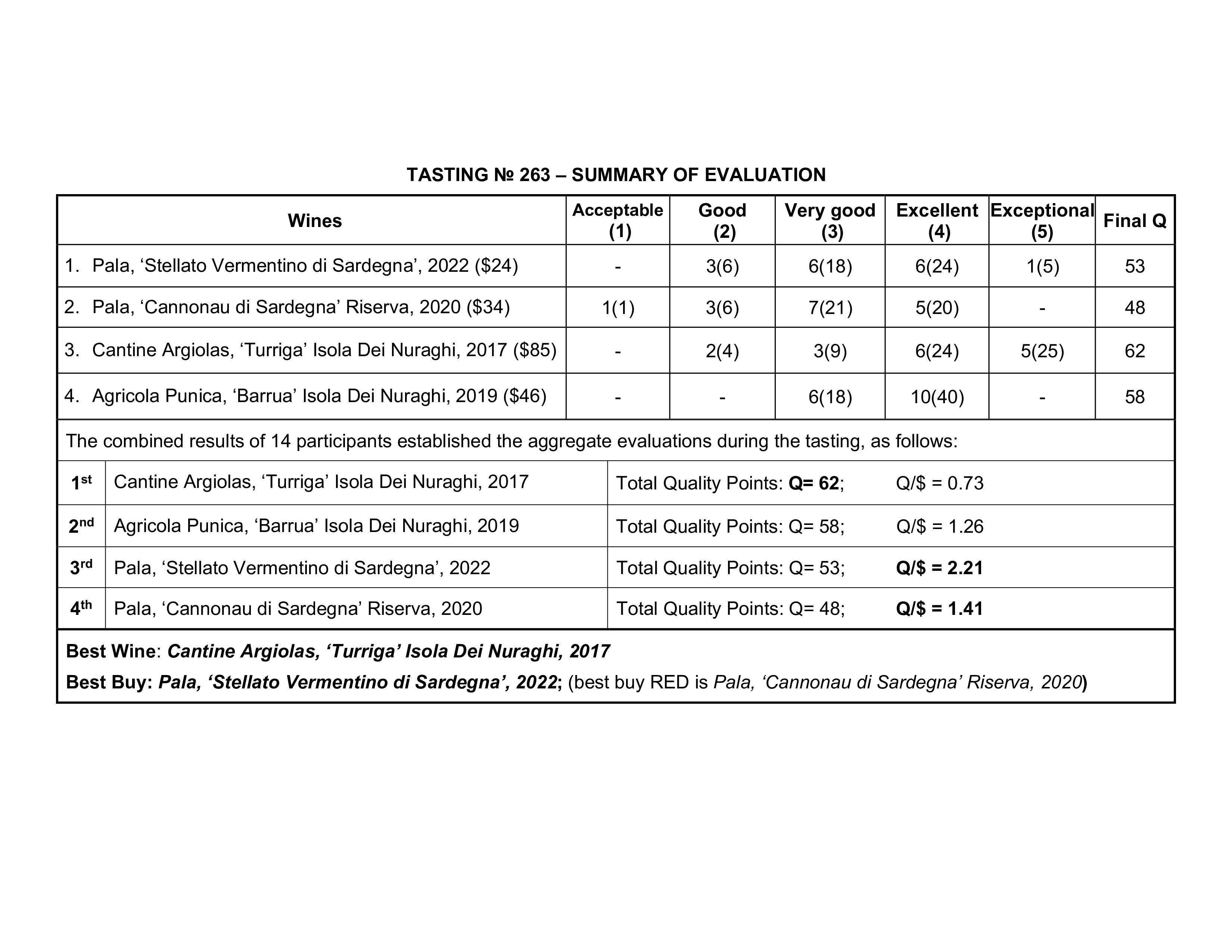

The Wine

  • 2019
  • 85% Carignano, 10% Cabernet Sauvignon, 5% Merlot.
  • Isola Dei Nuraghi IGT
  • The must ferments with the skins at a temperature between 25° and 28°C in temperature-controlled stainless-steel tanks for about 15 days. Periodically pumped over to facilitate the extraction of the compounds present in the skins. Malolactic fermentation confers smoothness to the wine.
  • 18 months in French oak barrels (40% new), then rests in bottle for at least 6 months.
  • 14.5-15%
  • 2019 AgriPunica ‘Barrua’ has received high ratings from critics, and also won several awards, including a gold medal at the Decanter World Wine Awards

Winemaker notes: the quality of the red Sulcitane grapes, not only in terms of color, but also for the smoothness of its soluble compounds – from the tannins to the consistently low and elegant acidity and the smoothness of its main components. Its polyphenolic apparel is of a distinguishably sweet, extremely delicate, round tannin weave chromatically embroidered with refined anthocyanins. Color is lively, deep ruby-red. Complex scent of ripe red fruit (mainly black cherry), spices, notes of licorice and hints of myrtle. An elegant wine that shows an impeccable workmanship, with notes of sage and myrtle with aromas of ripe red fruits and pepper in a persistent and harmonious finish. Typically, the wine combines ripe red fruit with aromas of herbs and spices.


Sources’ References:

Wine-Searcher editorial · Last updated 16-Feb-2023

https://www.pala.it/en/wines/stellato-vermentino/

https://www.pala.it/en/wines/cannonau-riserva/

https://www.uritalianwines.com/turriga-2017-P1234.htm

https://www.kobrandwineandspirits.com/product/agricola_punica_barrua_isola_dei_nuraghi_igt/


  1. CV Members Rating

The tasting took place before revealing their prices. 16 participants rated them from Acceptable to Exceptional. The combined results established the preference order during the tasting.
Cantine Argiolas ‘Turriga’ Isola dei Nuraghi, 2017 was rated the Best Wine. The white Pala
‘Stellato Vermentino di Sardegna’, 2022 the Best Buy.
The best buy among the reds was Pala,
‘Cannonau di Sardegna’ Riserva, 2020. The following Table presents the details of individual ratings and combined results.

.o0o.

Just for Laughs

I miss my early years so much…
Ai que saudades da minha infância


.o0o.

Posted in Meeting Abstract, Wine - Vino - Vinho, Wine History, Wine Regions | Tagged , , , , | Leave a comment

Tasting No 262 – February 27, 2024 – Wines from Sicily

Tasting No 262 – February 27, 2024 – Wines from Sicily

 Capri Ristorante, McLean VA

Source: https://www.winetourism.com/wine-maps/#Wine-maps-of-Italian-wine-regions


  1. Tasting Overview

The main objective of this tasting is to explore wines from the Sicily in Italy. The tasting will include one white wine and three reds. All wines for this tasting are Denominazione di Origine Controllata (literally Controlled Designation of Origin) – a certification applied to Italian wines that have distinctive features of superior quality, determined by the grape varietal and the production area as well as the techniques for processing and aging.

Type of tasting: Open

Presenters:     Clara Estrada and Jorge García

Participants:

S. Ardila; M. Averbug; J. Brakarz; J. Claro; R. Connolly; C. Estrada; M. Fryer; J. García; N. Marzella; O. Mason; C. Perazza; J. and L. Redwood; J. Sanchez; R. Santiago; E. Silva; L. Uechi; G. Zincke and Patricia Uribe Mallarino (guest).

These are the wines:

  1. Tornatore Etna Bianco 2019
  2. Tornatore Etna Rosso 2019.
  3. Tornatore Etna Rosso Pietrarizzo 2019.
  4. Cottanera Etna ‘Diciassettesalme’ Rosso 2019.


  1. Menu

  • Arancini (rice balls stuffed with ground beef)
  • Linguini with tomato and clams
  • Pork loin with herbs
  • Coffee and dessert
  1. The Sicily Region

Sicily has a warm Mediterranean climate, tons of sunshine, and lots of heat. The red and white wines are fresh, and high in acid. Let’s figure out how the terroir of Sicily helps create this exuberant tapestry.

Grapes planted at higher altitudes can produce fresher styles of wine because the grapes have more acid and fresher fruit flavors. Carricante, Catarratto and Nerello Mascalese all thrive at these higher altitudes, found throughout the island. The higher elevation means higher levels of aromas, fresh fruit flavors, lower alcohol levels, and higher levels of acid. That’s because for every 328 feet (100 m) in elevation, the temperature drops 1°F (0.6°C). And with some vineyards sitting above 3300 feet (1000 m), the average temperature can go from 22°C to 16°C. That’s like going from the Central Valley in California, to Willamette Valley in Oregon! The climate goes from really warm, to cool, pretty quickly.

 (https://sicily.guides.winefolly.com/terroir/)

The region benefits from Sicily’s ample sunshine, but Mt. Etna’s high elevation also provides greater rainfall, moderating breezes and cooler temperatures. Etna’s unique nature means soils, microclimates and exposures change dramatically from site to site, creating a panorama of characteristics and possibilities in the vineyards.

The wines are from the Etna DOC, which is a stunning wine appellation that covers the slopes of Sicily’s Mount Etna. The appellation is famous for its unique volcanic terroir and distinctive wines.


  1. The grape varietals

ITALY, SICILY, ETNA: “THE BURGUNDY OF THE MEDITERRANEAN”

Carricante

The Etna Bianco is born from the skillful vinification of the white grape vines Carricante, cultivated in volcanic soils with a high vocation and arranged in terraces at an altitude of 650 meters above sea level, in the northern slope of the volcano. Straw yellow colored wine with light green shadow that offers mineral notes with menthol scents typical of high wines, green apple with primary aromas characteristic of the variety. (https://tornatorewine.com/vini/etna-bianco-tornatore/).

 Carricante is an ancient white wine grape variety from eastern Sicily. It is thought to have been growing on the volcanic slopes of Mt Etna for at least a thousand years. There are around 200 hectares (500 acres) of plantings on the island. Very few vines are found elsewhere. The grape’s synonyms are Catanese Bianco and Catarrato.

Carricante is the key grape behind white wines made under the Etna DOC title. It is required in all of the denomination’s white wines: 60 percent minimum in the standard Etna Bianco and 80 percent in Etna Bianco Superiore. The most common blending partner here is Catarratto, a variety for which Carricante is often confused.

The variety is known for its marked acidity, and the high yields which gave rise to its name (carica means “load” in Italian). The best examples come from vines grown in volcanic soils, at high altitude (Etna’s vineyards stretch up as high as 1,200 meters/3,940ft). Well-adapted to their environment, Carricante vines respond well to the high diurnal temperature variations that characterize the climate around Mt. Etna. The grapes ripen slowly and steadily throughout the long growing season, retaining their trademark high acidity well into September. If harvested too early, this acidity is all too apparent in the wine, and is sometimes countered by lees [1] contact and malolactic fermentation and/or partial barrel aging. In cooler seasons, Carricante grapes can still be seen on the vines into early October.

On the whole, Carricante wines offer a broad range of refreshing citrus aromas – anything from lemon and lime to grapefruit to orange – alongside cooling herbal notes such as mint and aniseed. An underlying mineral, slatey character is also to be found in the finest examples.

When aged in stainless steel and without lees contact, notes of tart green apple shine through – a searing reminder of the variety’s naturally high acidity. Weightier Carricante wines (particularly later-harvested examples) are complemented by honeyed hints and the creamy texture that results from lees contact.

Wine Folly calls the Carricante grape Sicily’s answer to dry Riesling . When tasting this grape, look for aromas of citrus, green apple, orange blossom, and peach, with mineral notes of crushed rocks and salty air. The tasting notes on the wine I tried mentioned white peach, orange peel, crushed thyme and subtle, smoky flavors that mix well with fresh and dried-herb notes. I was thrilled to read these notes, because I quickly picked up on the smokiness and dried herbs. Had I not had those notes, I wouldn’t have been able to name what I was experiencing. https://www.wine-searcher.com/grape-989-carricante ; https://bettyswinemusings.com/what-a-treat-to-try-carricante/ ]

Nerello

Nerello comprises two varieties of red wine grapes grown primarily in Sicily and Sardinia.

  • Nerello Mascalese. It is named after the Mascali area in Catania where the grape is thought to have originated. It is grown mainly on the northeastern side of Sicily and is thought to be superior in quality to the Nerello Cappuccio. While it can be used for blending, the grape is often made into varietal wine. Recent DNA testing has confirmed that the variety is the offspring of Italy’s famous Sangiovese grape variety and Mantonico Bianco.
  • Nerello Cappuccio. It is widely used in the Etna DOC as a blending grape that adds color and alcohol to the wine. The grape is less prominent and used in smaller proportions, although it can contribute darker fruit flavours, more structure, and deeper colour to the final wine. This is the most common blending partner for Nerello Mascalese, being a small proportion of the blend.

The two varietiess have gained attention in recent years for their role in delivering high-quality, unique wines that reflect their volcanic terroir. Synonyms for the Nerello grapes are Niureddu and Negrello.

Nerello Mascalese is grown predominantly in Sicilia (91%) in an area of about 2,900 has. The area extends across the variable volcanic soils of the slopes of Mt. Etna at some of the highest vineyard altitudes in all of Europe—up to 3,300 feet. The plantings easily exceed the plantings of Nerello Cappuccio. A small portion of older vines predate the phylloxera epidemic of the 1880s Nerello Mascalese is one of Sicily’s most noble red varieties. It makes a beautifully aromatic, firm, cellar-worthy but pale-hued red often comparable to a fine Burgundy or Barbaresco. Nerello Mascalese takes its name from the black color of its grapes, nerello, and the Mascali plain between Mt. Etna and the coast where it is believed to have originated.

The organoleptic characteristics of the monovarietal Nerello Mascalese generally are a ruby red color, with subtle grenade tones; a strong fruity scent of red berry fruits, with slight floral shades, a spicy hint, and a delicate effusion of vanilla and tobacco, with a persistent trace of licorice; and a dry, tannic, persistent and harmonic taste, with a strong body. At sight, the wine seems surely more mature than it appears when smelled or tasted. Treating this vine variety in a traditional way, it can produce a wine presenting the above-described characteristics.

https://en.wikipedia.org/wiki/Nerello https://www.bbr.com/grape-nr-nerello

https://www.wine.com/product/tornatore-etna-rosso-2019/912755#closePromoModal

https://italianwinecentral.com/variety/nerello-mascalese/

https://www.wine-searcher.com/grape-1727-nerello-mascalese

  1. The Wines and Their Producers

The Producer #1. Azienda Agricola Tornatore

The Tornatore, one the oldest wine growing families on Mt. Etna, have lived in Sicily since 1680 and trace their Etna grape growing back to 1865. In 1910 the Grandfather Giuseppe built a house with a millstone in the district of Piano Fiera with adjacent 2 hectares of vineyards in addition to other two hectares on the North side of the Etna, in the district of Piano Felci at 1,000 m above sea level. That heritage and the Tornatore’s profound respect and understanding of the land is showcased in wines that capture the essence of Etna, balancing concentrated flavors, complexity, freshness and refinement.  The Tornatore’s Etna roots have long grounded them in the flavors and patterns of their region, and it was this knowledge that inspired Francesco Tornatore to found his family’s winery in the town of Castiglione di Sicilia in 2010, nearly a century and a half after his great grandfather first planted vineyards on Mt. Etna.

Tornatore blends artisan and modern winemaking to craft wines such as the Bianco and Rosso that display the full range of fruit and complex personality of Etna terroir, and single vineyard wines—Pietrarizzo with its high elevation and Trimarchisa with 40-year-old vines—that express the beauty and distinct character of their exceptional sites.

The winery lies in the northern side of Mount Etna, where the soils have volcanic origin and are derived from the disintegration of the masses of lava, ashes and lapilli. Generally, these soils are formed on site (native) or carried by rainwater which, in some flat areas on the slopes of the volcano, resulted in large black valleys, deep and very fertile. The climate on the northern side of the Etna is characterized by mild temperatures, reflecting the influence of the mountain reliefs from that side (Nebrodi). The result is a late maturing environment due to the exposure and the predominant altitude that promotes strong thermal excursions. The combination of soil, climate and the skill of the winemakers, have made the northern slope of Etna an ideal area for the production of high-quality wines.

The Company owns 110 hectares of which 60 hectares of vineyards, making the Tornatore’s vineyards one of the largest in the Etna DOC production area. Tornatore’s vineyards count several locations in different districts: among them the remarkable contrade (districts or parcels of vineyard land that have been known by recognized names for a long time) of Bragaseggi, Piano dei Daini, Zottorinotto, Pietrarizzo, Malpasso, Pietramarina, Torre Guarino, Carranco and Trimarchisa, all in the Castiglione di Sicilia Municipality. The altitude ranges from 550 to 700 meters above sea level and the age of the vineyards varies from 3 to 40 years for the Reds and 3 to 10 years for the Whites.

The winery’s vineyards have recently been reorganized in order to improve the quality standards, with particular attention to the the vineyards management. A high number of vines per hectare (approx. 6,000) has been maintained. The existing vines are Etna’s native in compliance with the rules of Etna DOC wine production, in particular Red Berry Nerello Mascalese and Nero Cappuccio and White Berry Carricante and Catarratto.

Harvest and winemaking: grape harvest is done by hand. Subsequently transported in special crates, the grapes are vinified maintaining high standards of quality, with maximum respect for tradition. The grapes are selected and processed manually to enhance the characteristics of each vineyard. Wines are aged in oak barrels located in a completely buried rooms, with insulation made of Etna basalt blocks arranged on walls and floor of the cellar in a workmanlike manner. 

The winery has the latest modern equipment with low environmental impact, maximum respect for the surroundings, including the use of renewable energy sources for its operation. (https://tornatorewine.com/company/?).

TheProducer #2. Cottanera.

The story of Cottanera starts with Francesco Cambria, who, in 1962 bought 100 hectares of vines and hazelnut groves near his birthplace in Randazzo. With the arrival of DOC status for Etna in 1968 and hazelnuts losing market share, he decided to focus on grape growing for bulk wine production, replanting the hazelnut groves to vines. In the late 1980s, Francesco’s son Guglielmo decided to build a winery to make his own wine, rather than selling the grapes, and he was quite successful selling it in demijohns to local consumers and restaurants. The initial success of these wines pushed Guglielmo to progress to quality wine production, so in the mid-1990s, he improved his father’s vineyards and embraced lower yields, and he labeled the first wines as Cottanera. In the mid-1990s the family started focusing on producing premium wines and launched the Cottanera label. Today Cottanera is one of the largest vineyards in Etna, at roughly 65 hectares, with vineyards located in five different parcels on the northern slope of Etna where most of the volcano’s best-known wineries are located. The business focuses on the Etna Rosso, Bianco and single parcel wines that are now gathering most of the attention and which have been known by recognized names for a long time.


6. The Wines

Wine #1. Tornatore Etna Bianco 2019

  • Year – 2019
  • Composition: 100% Carricante
  • 12.5 %
  • 4-6 months in steel and concrete tanks
  • Critical Acclaim, awards: Gold from the Sommeliers Choice Awards (2019 vintage)
  • Winemaker’s notes: Pale straw yellow with intense greenish reflections at the sight; pleasant hints of green apple, grapefruit, white peach and aromatic herbs, mark the nose of this wine which shows its true identity on the palate with a very pleasant flavor and freshness completed by an extraordinary minerality; exclusive notes that invite a second glass.
  • Critic notes. “The nose on this Etna white is like walking through a lavender field on a sunny afternoon—fresh and floral and warming—before blooming with more flowers, from lily of the valley to peach blossoms, and saline notes of sea air. The palate walks the same path through flower fields to the waterfront, salty and floral, with peach and pear notes as well, balancing depth and delicacy”. (Danielle Callegari – 91/100, Wine Enthusiast).


Wine #2. Tornatore Etna Rosso, 2019  

  • Vintage: 2019
  • Varietal: 95% Nerello Mascalese; 5% Nerello Cappuccio
  • 13.5-14%
  • 6 months in big wood barrels and 3 months in bottle
  • Awards: Ranked among the top 10 wines from the region with respect to number of awards won: the 2019 vintage was awarded Gold from The TEXSOM International Wine Awards, and the 2017 vintage was awarded Gold from the Sommeliers Choice Awards.

(92 pts. Wine Spectator; 91 pts Wine Advocate)

  • Winemaker notes. “Ruby red with faint purple, typical of this variety which is not very rich in color. Clear hints of red berries, morello cherry and black cherry on the nose. The taste is characterized by its typical balanced tannins and a surprising fullness, flavor and persistence.”
  • Critic notes. “The Tornatore 2019 Etna Rosso is a blend of Nerello Mascarello with a 5% touch of Nerello Cappuccio added to give a bit more color to the wine. In fact, “Nerello” is a diminutive of the word “nero” (or “black”) and underlines the grape’s light appearance. This entry-level wine is aged in oak for eight months to show dark cherry, spice and blue flower. Fruit comes from young vines that are 10 years old. Drink: 2023-2027”. (91/100 pts. Monica Larner @ Wine Advocate)


Wine #3. Tornatore Etna Rosso, ‘Contrata Pietrarizzo’, 2019

  • Vintage: 2019
  • Varietal: 100% Nerello Mascalese
  • 14-14.5%
  • One year+ in 25 hl. wood barrels and cement tanks; 3 months in bottle.
  • Winemaker notes. Ruby red, delicate and incredibly balanced on the nose, clear hints of red berries, flowers, perfectly integrated to a minerality and evolution worthy of a great wine. Great structure on the mouth with a surprising drinkability and elegance. Serving temperature 18 °C.
  • Critics notes. “A graceful, medium-bodied red, with bright acidity and fine, creamy tannins, which buoy a pleasing range of baked strawberry, star anise, graphite and red licorice notes. A subtle overtone of herbs and mineral pushes through and lingers on the lightly chewy finish. Drink now through 2032”.( 93 pts. Wine Spectator)
  • “Etna Rosso “Contrada Pietrarizzo” by Tornatore is a full-bodied and pleasent persistent red wine. The nose is fruity, rose spirit, elegant and mineral spices. On the palate it is juicy, balanced and soft, with tannins provided a pleasant persistence”. https://www.callmewine.com/en/etna-rosso-contrada-pietrarizzo-tornatore-2019-P43050.htm

Wine #4. Cottanera Etna ‘Diciassettesalme’ Rosso, 2019

  • Vintage: 2019
  • Varietal: 100% Nerello Mascalese
  • 8 months in French oak barrels
  • 14%
  • Critic notes. “Aromas of French oak, toasted nuts and spearmint lead the nose. The aromas follow over to the linear palate along with coffee bean, licorice, salty notes and blood orange before close-grained tannins sneak in and dry out the close”. (Kerin O’Keefe” – 89/100, Wine Enthusiast).
  • 7.CV Members Rating 

The tasting took place before revealing their prices. 16 participants rated them from Mediocre to Excellent.

The combined results established the preference order during the tasting.
Tornatore ‘Etna Bianco’ DOC, 2019 and Cottanera ‘Etna Rosso Diciassettesalme’, 2019 were both rated the Best Wines and the Tornatore ‘Etna Bianco’, 2019 the Best Buy. The following Table presents the details of individual ratings and combined results.

.o0o.


Laughing matter:

*

.o0o.

Posted in Wine - Vino - Vinho | Tagged , , , , , , | Leave a comment

Tasting #261 – Jan 30, 2024 – Northern Italian Sparkling Wines

Tasting No 261  Jan 30, 2024 Northern Italian Sparkling Wines

Capri Ristorante  McLean VA


2024 Wine Tasting Calendar  < click here to the newest version of the calendar. 


 1. Tasting Overview


The main objective of this tasting is to explore different types and offerings of Northern Italian Sparkling Wines. The first tasting of the year will be of the best Italian Sparkling Wines and allow us to sample top sparkling wines in a variety of grapes, production methods, terroirs and acidity/sugar content. This should bring cheers with the bubbles and the new year.


Type of tasting: Open

Presenter: Laura Bocalandro

Participants:

S. Ardila; M. Averbug; L. Bocalandro; J. Brakarz; J. Entwistle; C. Estrada; M. Fryer; J. García; N. Marzella; J.&amp;L. Redwood; R. Santiago; J. Sanchez; E. Silva; P. Turina; L. Uechi; R. Zavaleta.

Wines:

  1. Cantina della Volta, Lambrusco di Sorbara, Rosé Brut Spumante, DOC, 2017
  2. Ferrari, Sparkling Wine Brut, Trento DOC, NV
  3. Adriano Adami, Bosco di Gica, Prosecco Superiore, Valdobbiadene, DOCG, NV
  4. Cá del Bosco, Anna Maria Clementi, Franciacorta Riserva, DOCG, 2014


  1. Menu (the wines will be served all at once)

  • Seafood Salad
  • Fettuccine with Aurora Sauce
  • Salmon Grille with broccoli and green beans
  • Dessert


  1. The Sparkling Wines of Northern Italy

The sparkling wines of northern Italy have a long tradition of producers, production methods and more recently quality controls and certifications.

Sparkling wines benefit from a series of  institutions that safeguard the production, designation and quality, as well as promote the different Italian sparkling wines. The Consorzio per la Tutela del Franciacorta was created in 1990 and the Consorzio per la Tutela del Prosecco was established in 2009, shortly after the date on which Prosecco was recognized as a wine with a Controlled Designation of Origin. These Consortia aim to voluntarily associate winemakers, winemakers and sparkling wine producers to guarantee the development of the Denomination and compliance with the rules set out in the Production Regulations.

In addition, the concern for the certification of origin and quality control led to the creation in 1979 of the Federdoc, the National Confederation of Voluntary Consortia for the Protection of the Designations of the Italian Wines. This organization represents almost all the universe of the Italian Designations and their Consortia, and it supports them on an institutional, legal and legislative level. Federdoc: “the designation of origin” of Italian consortia.

Production methods:

There are two production methods for sparkling Italian wines: the Charmat/Martinotti method and the traditional method or metodo classico.

  1. Metodo Charmat: Primary and secondary fermentation in stainless steel, filtered into a tank and bottled. Also known as: Tank method, metodo Italiano, Martinotti method or autoclaves. Examples could be a Prosecco or a Lambrusco di Surbara.

It is used to produce spumante and frizzante sparkling wines with distinctive floral and fruity notes, through a natural second fermentation process in large, sealed tanks (autoclaves). Dr. Antonio Carpenè, one of the founding members of the Conegliano School of Winemaking, was the first person to use this method to produce sparkling Prosecco wine with the characteristics that are so well known today. Prior to this, the wines were produced using second fermentation in the bottle.The autoclave, or closed tank fermentation, was first invented by the French chemist Edme-Jules Maumené in 1852, adapted for commercial use by the Italian Federico Martinotti, and perfected for use with stainless steel by another Frenchman, Eugene Charmat, in 1907. The process of using a large tank for secondary fermentation is referred to as the Martinotti process in Italy and the Charmat process elsewhere.

2. Metodo classico: The second fermentation takes place in the bottle, with the wine resting on its yeast lees. Also known as: Traditional method, Méthode Champenoise, Méthode Traditionnelle. The main example in Italy is Franciacorta.

Under the metodo classico, the yeast that is in contact with the wine in the bottle during the second fermentation adds a wonderful flavor. This is called “autolysis” and the longer you leave the wine in contact with the yeast lees, the better, up to a point. Also, the bubbles, or perlage, in this fermentation process are finer and last longer in the glass.

The Prosecco: its origins date back at least 2000 years. It was known in Roman times as Pucino (1st century AD – Pliny the Elder). It originated as a still, dry wine produced near Trieste, taking its name from the village of Prosecco. The bubbles first appeared with second fermentation in bottles at the end of the 19th century and then in autoclaves (tanks) in the early 1900s. Today it is made in a very large area covering the Veneto and Friuli Venezia Giulia regions. Sparkling Prosecco was introduced to the US by Mionetto in 2000, and sales have since exploded.

Prosecco can be either still or sparkling. It can be made either using the Charmat/Martinotti process or the methode traditionelle (methode champenoise). The wines range in sweetness from Zero Dosage to Brut (0-12 g/L RS), Extra Dry (12-17 g/L RS), and Dry (17-32 g/L RS). Prosecco wines have become less sweet over time, and Brut (our wine) is about 40 percent of production. Prosecco is lightly effervescent with about 4 atmospheres of pressure, similar to French Cremant, compared to 6-7 for Champagne.

There are five quality levels of Prosecco. Major changes in the categories were introduced in 2009 with the creation of three DOCGs and the designation of Prosecco as a growing region rather than the name of the grape, which is now only referred to as the Glera grape.

The Glera grape is native to Northeastern Italy, and it is the traditional grape variety used for Prosecco. The native Glera grape must represent a minimum of 85% of all grapes used, and the Verdiso, Bianchetta Trevigiana, Perera, Glera Lunga, Chardonnay, Pinot Bianco, Pinot Grigio and Pinot Nero grapes, vinified off the skins, may also be used up to 15% overall.


The Franciacorta: The sparkling wines of Franciacorta are frequently compared to premium cuvée of Champagne in terms of quality. They are made the same way (méthode champenoise), use the same grape varieties, employ reserve wines to blend across vintages, and do small scale fermentation of different vineyard plots that are later blended into the final cuvée. Unlike Champagne, most Franciacorta producers are also growers. An important part of the Franciacorta ethos is their respect for the environment while championing sustainability and high quality production.  The wines are “spectacularly good” and an alternative to other premium sparklers for holiday toasts.

The name Franciacorta most probably comes from the 1100s when the land was known as Francae Curtes, or land free of taxes where the first vines were cultivated. The Franciacorta is a young sparkling wine and it is relatively small with just 106 producers. Its international visibility is limited by the wine’s popularity in Italy, leaving little for the rest of the world. However, some 20 producers now export Franciacorta, giving those living outside Italy the opportunity to experience this delicious sparkling wine. Franciacorta sparkling wines are made from grapes cultivated in 19 communes located in the Province of Brescia, Lombardy. These are grown on hillsides located south of Lake Iseo, which was created by Europe’s last ice age. The glaciers that created the valley ending at Lake Iseo left moraines south of the lake and gave the vineyards of Franciacorta their glacial alluvial soils.

Since the first bottling in 1961, the quality of Franciacorta sparkling wines has impressively improved, in good part due to the creation of the Consorzio per la Tutela del Franciacorta in 1990. The Consorzio has implemented rules delimiting the varieties grown (predominantly Chardonnay and Pinot Noir), production methods (hand harvesting, bottle aging requirements), and yields (60 hectoliters/hectare), some of the lowest in the world. In addition, growers changed their trellising from the traditional pergola to Guyot and spurred cordon, reduced yields with low vigor rootstocks, and planted at higher densities (4-5 thousand vines/ha). These measures significantly improved the quality and reputation of the wines and, also, resulted in Franciacorta being given DOCG status in 1995. Currently, Franciacorta produces about 10 million bottles annually.

There principal producers of Franciacorta are:  Bellavista, Ca’ del Bosco, Enrico Gatti, Ferghettina, and Montenisa. And there are five types of sparkling Franciacorta:

  • Non-Vintage: Must be aged on the lees at least 18 months. (This is a higher threshold than Champagnes which require only a 12 month minimum).
  • Satèn: Non-vintage must be aged at least 24 months; usually 100% Chardonnay. The bottle pressure must be less than 5 atm.
  • Rosé: A minimum 35% Pinot Nero is required; the non-vintage rosé must be aged on the lees at least 24 months.
  • Millesimato: A vintage wine with at least 85% of the wine coming from the stated vintage; up to 15% can come from reserve wines. Must be aged at least 30 months.
  • Riserva: A Millesimato, Satèn or Rosé that spends at least 60 months on the lees in bottle.


  1. Information on the Wines

Wine #1: Cantina della Volta, Lambrusco di Sorbara, Rosé Brut Spumante, DOC, 2017

100% Lambrusco di Sorbara grapes, cultivated on alluvial soil of the Secchia river in the heart of the Emilia Romagna region.

Selection of the best Sorbara grapes entirely gathered in small cases (15kg. max); manual harvesting in order to ensure that each grape remains whole, then softly pressed.

After remaining at least six months inside the tanks for maturation process, the wine receives selected yeasts, prior to being bottled. The bottles are then stored horizontally for the long re-fermentation process and maturation, at temperature constantly  kept at 12°C.

The following steps are remuage, disgorgement and liqueur d’expédition addition.

Dosage 5.5 g/L. ; Alcohol content is 12.5% by vol.

Producer notes: “Beautiful pale pink dress” covered by gentle, soft foam with fine, tiny and persistent perlage. At the nose, a magic sensation of full aromatic perfumes of raspberry and wild berry well combined with ancient rose and pomegranate tones, grapefruit, face powder. Perceivable acidity, balanced with good salty texture. Structured body, brightened by its unique “acid-savory” synergy, which enhances its floral scent. Elegant and persistent.”

“Red berry, violet and a whiff of brioche form the enticing nose on this lovely sparkler. Dry and savory, the elegant palate features pomegranate, orange zest and bread crust alongside fresh acidity and an extremely refined perlage.” (Wine Enthusiast– 92 pts.).


Wine #2: Ferrari, Sparkling Wine Brut, Trento DOC, NV (Italy Modern)

The Producer: Italy’s celebrated Ferrari winery located just outside the city of Trento has been producing this NV TrentoDoc Brut sparkling wine since 1902. All of their wines are TrentDoc produced exclusively from grapes grown in Trentino at high altitudes using sustainable farming methods.

Ferrari Trento is managed by the grandchildren of Bruno Lunelli who bought the estate in 1952 from Giulio Ferrari. Since 2021 the house of Ferrari Trento are the podium sponsors of the F1.

The vineyards include communes in the Val d’Adige, Val di Cembra and Valle dei Laghi, with S.E. and S.W. exposure the slopes of the mountains of Trentino at an altitude between 200 and 900m over sea level. The climatic variation helps this wine with the cold streams from the Dolomites and the mild temperatures of Lake Garda, thus the grapes develop a higher acidity and aromatic complexity.

The wine: This Ferrari Trento DOC is produced by the metodo classico with more than a hundred years of history. It  is produced from 100% Chardonnay grapes with a minimum stay on lees for at least 15 months, which extends to 24 for the Millesimato, and 36 for the Riserva. Our wine has 12.5% alcohol/volume and between 6-12 RS/L sugar residue.

Tasting notes: This wine is a luminous sparkler of pronounced finesse, made with 100% Chardonnay grapes. It is straw yellow with slight green reflections in color. Clean and balanced in taste, with a slight and pleasant finish of ripe fruit and a hint of bread-crust. Aromas of white spring flowers, white orchard fruit and a whiff of brioche lead the way. On the crisp palate, an elegant perlage (bubbles) accompanies creamy yellow apple, pear and lemon drop.

Its straightforward and confident bouquet delivers a clear and precise message of good cheer and easy-drinking appeal. This is the quintessential Italian aperitivo wine. Perfectly served as an aperitif or with lighter dishes, especially seafood.


Wine #3: Adriano Adami, Bosco di Gica, Prosecco Superiore, Valdobbiadene, DOCG, NV

The Producer: Adriano Adami, the producer of our Prosecco Superiore, has been making Prosecco since 1933. The Bosco di Gica denomination  comes from the old name of the area where the family had its first vineyards. For over 90 years Adami has produced only Prosecco Valdobbiadene DOCG and Prosecco DOC Treviso in its various types and expressions, both traditional and more modern, linked to the diversity of each single hill. They are Prosecchi specialists whose first single vineyard selection in 1933 is still the benchmark for the Prosecco today. Adami now produces 750,000 bottles with grapes from 50 hectares of vineyards.

Milan Fashion Week has adopted this Prosecco as its official sparkling wine.

The Wine: This sparkling wine comes from the appellation known as the Cornegiano Valdobbiadene region, which includes the provinces of Treviso, Venice, Vicenza, Padua, Belluno, Gorizia, Pordenone, Trieste and Udine. The land is alluvial in origin and has mainly clay-loam soil, rich in minerals and micronutrients, with a southern exposure and an altitude of 180-300 m above the sea level.

Our wine is made by the Martinotti/Charmat method discussed above. It contains 7-10 RS/L and 11% alcohol by volume. The bottle label includes the Conegliano Valdobbiadene seal with an identification of origin and quality guarantee (DOCG). This label guarantees total compliance with the official product specification, with quality also certified through application of the Government Identification mark (band).


Wine #4: Cá del Bosco, Anna Maria Clementi, Franciacorta Riserva, DOCG, 2014

The Producer:  The tiny appellation of Franciacorta was originally created in 1968, Ca’ del Bosco’s first vintage. Ca’ del Bosco is in the top tier of Franciacorta and Maurizio Zanella (owner family) is a perfectionist where nothing is left to chance; its wines are a masterpiece of precision.

In 1988 this Franciacorta took the name of the founder’s mother, Anna Maria Clementi, and became a Zero Dosage sparkling wine to exalt the wine’s purity and integrity.

The Wine: This Franciacorta is produced following the metodo classico.

A blend of 76% Chardonnay, 15% Pinot Nero and 9% Pinot Bianco, it was fermented in small oak casks for six months and matured on the lees for eight long years. This 2014 vintage wine was disgorged in the winter 2021-2022.

12.8% per volume alcohol; zero dosage with a minimum amount of sugar residue (0-3g/L SR).

The bouquet is immediately beautiful with baked apple, brioche, pastry cream and something a little spicy, like a pinch of saffron, that gives extra pop. It shows a mid-weight mouthfeel with a whole other set of almond and bitter lemon flavors. This elegant Franciacorta manages a careful dance between nose and palate.” (95 pts. Wine Advocate)

Sparkling Wines of Northern Italy
Comparing Tasted Wines  

    1. CV Members Rating: 

The tasting took place before revealing their prices. 14 participants rated them from Acceptable to Exceptional.
The combined results established the preference order during the tasting.
Cá del Bosco, Anna Maria Clementi, Franciacorta Riserva, DOCG, 2014 was rated the Best
Wine . Adriano Adami, Bosco di Gica, Prosecco Supperiore, Valdobbiadene, DOCG, NV the Best Buy.
The following Table presents the details of individual ratings and combined results.


Sources/References: These notes draw heavily from some of the following sources.

Franciacorta/ Italy’s Luxury Sparkling Wines Review – International Wine Review.

International Wine Review. Report #14 The World of Sparkling Wines and Champagne.

10 of the best Italian sparkling wines, and best prosecco brands (italybest.com)

The Sparkling Wines of Italy | Sparkling Winos

A guide to Italy’s sparkling wines | The Wine Society

https://winefolly.com/deep-dive/sparkling-italian-wine/
Home – Prosecco.it — Conegliano Valdobbiadene DOCG

Consorzio Tutela Prosecco DOC | Il segreto sta nell’essere geniali

Consorzio tutela del Franciacorta, Strada del Franciacorta

Consorzio dell’Asti DOCG

https://i-winereview.com/blog/index.php/2017/11/13/prosecco-prosecco-superiore-cartizze-incredible-values-from-the-best-producers/

https://wine.com

https://Vino.com

https://ferrari.com

https://adamiprosecco.com

https://cadelbosco.com

https://cantinadellavolta.com

.o0o.

Italiano Vero

L’italiano       Toto Cutugno
Lasciatemi cantare
Con la chitarra in mano
Lasciatemi cantare
Sono un italiano
Buongiorno Italia, gli spaghetti al dente
E un partigiano come presidente
Con l’autoradio sempre nella mano destra
Un canarino sopra la finestra
Buongiorno Italia con i tuoi artisti
Con troppa America sui manifesti
Con le canzoni, con amore, con il cuore
Con più donne sempre meno suore
Buongiorno Italia, buongiorno Maria
Con gli occhi pieni di malinconia
Buongiorno Dio
Lo sai che ci sono anch’io
Lasciatemi cantare
Con la chitarra in mano
Lasciatemi cantare
Una canzone piano piano
Lasciatemi cantare
Perché ne sono fiero
Sono un italiano
Un italiano vero
Buongiorno Italia che non si spaventa
Con la crema da barba alla menta
Con un vestito gessato sul blu
E la moviola la domenica in TV
Buongiorno Italia col caffè ristretto
Le calze nuove nel primo cassetto
Con la bandiera in tintoria
E una Seicento giù di carrozzeria
Buongiorno Italia, buongiorno Maria
Con gli occhi pieni di malinconia
Buongiorno Dio
Lo sai che ci sono anch’io
Lasciatemi cantare
Con la chitarra in mano
Lasciatemi cantare
Una canzone piano piano
Lasciatemi cantare
Perché ne sono fiero
Sono un italiano
Un italiano vero
Lasciatemi cantare
Con la chitarra in mano
Lasciatemi cantare
Una canzone piano piano
Lasciatemi cantare
Perché ne sono fiero
Sono un italiano
Un italiano vero
See translation
Songwriters: Salvatore Cutugno, Cristiano Minellono.
.o0o.
Posted in Meeting Abstract, Video, Wine - Vino - Vinho, Wine Regions | Tagged , , , , | Leave a comment