En estos días hemos disfrutado en el área de Washington de un invierno benigno, sin nevadas y con temperaturas similares a las de marzo o abril en vez de las de enero y febrero. Aunque el tema de las causas del cambio climático es aun controversial (influencia o no de la actividad humana en el mismo) lo que si está documentado es que las temperaturas medias están subiendo en los últimos años en muchas regiones vitivinícolas con efectos en la calidad o en el costo de producción de los mismos. Hace algún tiempo leí que algunos productores de uvas blancas en Alsacia (Riesling, Silvaner, Gewürstraminer, Pinot Blanc, etc.) que requieren temperaturas frías para alcanzar su grado óptimo de madurez las están sustituyendo con Syrah que tolera temperaturas más cálidas.
El problema con la maduración temprana es que las uvas alcanzan un contenido de azúcar muy alto (que se vuelve alcohol durante la fermentación) antes de que logren la acidez y mineralidad deseadas en un blanco bien balanceado. Del mismo modo la maduración temprana de las uvas tintas resulta en vinos con demasiado alcohol e insuficiente concentración de fruta y taninos para balancearlo. Para salvar su producción algunas bodegas han que apelado a intervenciones muy fuertes durante la elaboración de los vinos para reducir el alcohol tales como como interrupción mediante frío de la fermentación natural (que deja azúcar residual y un vino dulzón y empalagoso) o filtración de los mostos mediante ósmosis reversa o el uso de columnas de conos giratorios (evaporación en vacío del alcohol). Muchos aficionados al vino consideran inaceptable esta “manipulación” del vino.
Leí[1] recientemente que los vinos de cosecha tardía (ice wine) en el Canadá y la región noreste de USA sufrieron enormemente en el 2011 por la falta de frío (17o F o menos) para congelar las uvas al menos parcialmente y vendimiarlas en ese estado. Como sabemos estas son uvas que se dejan en la parra después de la cosecha normal a veces hasta noviembre para que se congelen y se disequen lo que resulta en bajos rendimientos de jugos muy dulces y de sabores muy concentrados. Para que un vino de esta clase se pueda denominar “ice wine”, al menos la mitad de las uvas deben cosecharse congeladas. Por ello se vendimian preferiblemente en noches muy heladas para evitar temperaturas altas en el día. El jugo se deja fermentar hasta el nivel deseado de alcohol y azúcar residual y en ese punto se para el proceso enfriando el mosto suficientemente (en los vinos fortificados como el Oporto esto se hace agregando alcohol al mosto por lo que su contenido de alcohol es mas alto).
Si las uvas se dejan pasar de un cierto punto el redimiendo de mosto puede bajar hasta en un 40% y además son víctimas de los animales silvestres que se las comen con mas voracidad mientras mas avanzado esté el invierno. Pues este año al parecer en algunos lugares del Canadá (Ontario) solo hubo una ventana de una noche el 29 de diciembre suficientemente fría y los productores recolectaron lo que pudieron esa noche.
O sea amigos del Club del Vino amantes de los “late harvest” que preparemos las billeteras si queremos disfrutarlos si es que acaso se consiguen fácil. Y a cuidar el medio ambiente!!
[1] Artículo de John Flesher en la sección de vinos del Huffpost.
No corkscrew? No problem You can do it in less than 40 seconds!
Estimados socios y amigos del Club, me pareció muy interesante e útil para cuando se encuentren sin sacacorchos, un método sencillo y que en apuros puede servir
Estos fueron los vinos preferidos por los socios en 2011
Reunión – Tema
El Vino
Puntaje
Precio
116Enero 6.
Espumantes
Viticcio 2006 “Riserva” Chianti Classico (Sangiovese)(Aun cuando el tema era espumantes se decidió incluir este tinto italiano para efectos de maridaje con el menú) Muy bien balanceado, final largo, frutas negras, taninos suaves, fuerte, hermoso color, chocolate, ciruelas, moras, sabor rico y duradero en el paladar, excelente vino.
92.4
$29
Paul Goerg Champagne Brut Premier Cru Blanc de Blanc NV(El espumante mejor claificado No muy seco, buen sabor, burbujas pequeñas y persistentes, típico champagne francés, muy buen final)
89.8
$29
117Enero 31
USA Paso Robles y Russian River
Rosemblum 2006 Zinfandel-Richard Sauret Vineyard Estructurado, chocolate, frutas negras, taninos, buen aroma, oscuro, red púrpura, se siente el alcohol, mucho cuerpo, aromático, excelente, mejoró con la aireación.
89.6
$22
118Febrero 24
Argentina Regiones austral y otras fuera de Mendoza
Bodega Calome Malbec 2008-Valle Calchaqui Provincia de Salta Color púrpura, mucho cuerpo, aromas de frutos del bosque, bouquet a madera, sabor chocolate y frutas negras, taninos acentuados, final largo y duradero, bien balanceado, a pesar de tener mucho alcohol se siente equilibrado.
90.7
$25
119Marzo 31
Priorat, España
Akiles Priorat 2008.Bodegas y Viñedos Ithaca. Aterciopelado, taninos suaves final largo. Color cereza negra. Buen bouquet aroma y sabor: muy bueno.
90.3
$27
120Abril 28
Nueva Zelanda
Gevrey- Chambertin Bougougne 2008- Gerard Seguin 1er Cru Craipillot(Este vino se usó como referencia para comparar los Pinot Noir del viejo y el nuevo mundo) Rojo muy intenso y transparente en los bordes, aterciopelado redondo, final prolongado, joven. Muy caro, no vale la pena el precio.
87.9
$65
Kemblefield Zinfandel 2007, Hawkes BayVino equilibrado, suave, buen final, muy alcohólico, color rojo granate intenso, pero transparente. Mucha madera, ciruelas rojas.
89.3
$13
121Mayo 26
Alemania y Alsacia
Trimbach 2007 Gewurztraminer Alsacia –Francia Buen color, amarillo pálido, aroma excelente a pimentón y vainilla, acidez marcada, frutos cítricos, especias, liviano, redondo en boca, final algo amargo
89.1
$20
122Junio 30
Chile Regiones fuera de Casablanca y Maipo
Mont Gras 2008- Cabernet Sauvignon 60 %, Syrah 40 % Color rubí profundo con notas purpuras, aromático, muy frutal, ciruelas, duraznos, chocolate. Taninos suaves, balaceado muy joven, se nota el alcohol.
87.8
$10
123 Julio 28
España – Castilla y León
Tinto-Pesquera 2007- Tempranillo-Ribera del Duero Color rubí oscuro, aromas a chocolate, tabaco y cuero, complejo elegante, bien estructurado, final largo, balanceado, excelente
90.4
$29
124 Agosto 25
Sur África
Faithfull Hound-Blend 2006 – Mulderbosch Vineyards Relativamente grueso, con algún cuerpo, aromas y sabores a humo, chocolate, especias. Buen Vino. Olor a cuero, algo de azúcar. Rubí oscuro, complejo, buen final, balanceado, muy buen sabor. Caro por su calidad..
88.2
$25
125 Septiembre 29 Loire – Cote du Rhone
Chateauneuf do Pape 2006 -Grand Classiques – Rhone Valley Aroma a frutas rojas, muy balanceado, chocolate, taninos suaves, final largo, cuerpo medio, muy buen final, excelente. Uno de los mejores degustados en el CV.
91.9
$35
126 Octubre 27
Grecia
Boutari Grand Reserve 2004-Uva Xinomavro Color rojo rubí intenso, aroma frutal, frutas rojas, ciruela, chocolate, final largo y algo astringente ( taninos marcados), complejo, buena acidez , sabores a humo, cuero?, balanceado.
89.8
$25
127 Noviembre 17 Burdeos, Gaves y Sauternes
Chateau La Croix de L’Esperance 2005 -Lusac Saint Emilion Color rubí oscuro ,opaco (rojo marrón?), aromas a frutas rojas y negras, vainilla., sabor y aromas separados (no coinciden), buen bouquet , seco ,balanceado, final largo y equilibrado, elegante ,bastante cuerpo , sedoso agradable
91
$25
128 Diciembre 12 Sicilia
Lamuri Nero D’Avola 2009 – Tasca D’Almerita Aromas a tabaco y cuero, color rubí claro (light plum color), sabor a frutas, black berries, buen cuerpo ligeramente tánico, balanceado, alcohol explicito, sabor residual medio. Sabor muy parecido al Cabernet Sauvignon. Bueno para tomar entre el 2012 y el 2019.Cuatro participantes evaluaron el vino de postre de esta reunión Marsala Fine I.P.Ambra Sweet y le dieron 89 puntos en premedio.
Cabernet Sauvignon – Blind Tasting # 129 January 26, 2012, Da Domenico Ristorante Italiano, 12:30
This Post Contents:
I – The Wines
II – Menú del Almuerzo
III – Opinión de los miembros acerca de los vinos catados
IV – La Uva Cabernet Sauvignon, Alfonso Sanchez
V – Definition: Cabernet Sauvignon
VI – Wikipedia info on Cabernet Sauvignon
VII – Short video by Jane Nickles on the virtudes of Cabernet Sauvignon
VIII – Birthdays to Celebrate in January; Happy Birthday to You
IX – Is your address correct?
X – Cabernet Sauvigon 4000 anos antes de Cristo?
I – The Wines
(the blind tasting does not follow this sequence)
Alvaro Lopez and Juan Luis Colaiacovo promise a memorable blind tasting on January 26. The Cabernet Sauvignon wines come from France, Napa and Chile. There is also a dessert wine from Italy. It must be good!
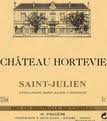
Chateau Hortevie St. Julien, 2005 Cabernet Sauvignon
from BeltwayFineWine, Towson MD the wine seller: Elegant, Cassis, Spice, Cedar, Medium-Bodied
Wine Advocate 88 – St Julien, Bordeaux, France- “Herbal, black cherry, cedar and cassis notes…succulent, full-bodied, seductive, plush. Impressively endowed with beautiful purity, and notes of cassis fruit intermixed with licorice, tar, pepper, and crushed rocks, this is fresh, tannic, vibrant,…amazing.”
International Cellar (quoting Wine Advocate): “Owned by Mr. Bruno Borie and made by the Ducru Beaucaillou team, this wine has really improved in quality over the last three years. Last year I said the 2005 was the best Hortevie ever produced, I now believe the 2006 is better! Rich ripe black fruits, sweet oak, and a touch of herbs. Classy and less rustic then in the past with a great balance of texture and length. Chris Lano
In 2006 Wine Advocate gives 87 points and writes: Made by Bruno Borie at Ducru-Beaucaillou, this offering is an exclusive of the famous negociant, Nathaniel Johnston founded in 1734, by the way. It exhibits sweet black currant and ripe cherry fruit along with notions of herbs, damp earth, and spice box. Sensual and round, it is ideal for drinking over the next 5-6 years.
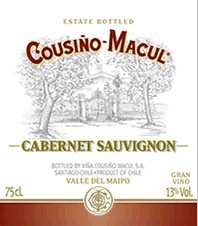
Cousino-Macul Finis Terrae – Cabernet Sauvignon–2008, Chile
Product Information: Blend: 100% Cabernet Sauvignon Region: Maipo Valley Chile
Alcohol by volume: 14.4% About USD $ 23.00 + tax
89 Points by Wine Enthusiast
Winemaker’s notes:
This Antiguas Reservas’ vintage shows an intense red color with hints of violet and burgundy. It has an expressive nose, with aromas of red berries and black cherries. In mouth, it is nice and fruity, with notes of ripe plum. Its rich acidity and soft tannins makes it a well structured and elegant wine.
It is an ideal wine to accompany red meats like steak with mushrooms, stewed lamb, doves, partridges and kidneys in sherry.
Critical acclaim:
“True Maipo aromas of tobacco, eucalyptus, earth and herbal berry lead to a full and rugged palate with plenty of tannic grip and loads of black fruit, cassis and chocolate flavors. Long and more chocolaty on the finish, with a touch of medicinality.”
2007 Edgewood Estate Cabernet Sauvignon, Napa Valey, California
About USD $ 23.00 before tax
Cellar Tracker reports:
Community Tasting Notes (average 89.4 pts. and median of 90 pts. in 22 notes) – hiding notes with no text
— Tasted by CousinGreg on 5/26/2011 & rated 74 points: I’ve had better boxed wine. (1218 views)
— Tasted by Kentw on 2/12/2011 & rated 89 points: Classic Cali Cab. 07 vintage shows well compared to 05. Initial opening, full bodied with a lush mouth feel. Mocha, dark chocolate and tobacco notes with blackberry. Some oak present. Finish dry with some tannins. Second day, opened up a bit, some blueberry evident and tannins a bit softer. Ready to drink now but I think a couple of years cellaring will improve further. Fairly smooth and easy drinking, especially with cheeses and red meat. Great QPR for $15. Will get more. (1483 views)
— Tasted by Snoman on 11/24/2010 & rated 89 points: Amazing QPR for a $10 Napa Valley cabernet…..Dark purple in glass, nearly opaque, with nose of cassis, smoke and black fruit, carries to palate with support of medium tannic structure. Not terribly complex, but very enjoyable with a classic flavor profile. (1983 views)
— Tasted by THaas on 9/24/2010 & rated 88 points: Decent cab. Opened up one-dimensional, with lots of fruit (cassis and cherry) and no structure. As the bottle breathed, the tannins become more evident, showing up as a bit of cedar/tobacco in the second glass. (2076 views)
Osborne– Manzanilla Fina
Country: Spain Region: D.O. Jerez
Varietal: Manzanilla 750ml USD $12.99
•Perfect aperitif for tapas •Serve chilled 87 Points – “Petrol and crisp sea air control the nose, while the palate has saline, lemon and bitter almond flavors. Chalky and tight on the finish, with some mushroom and vanilla nuance.” -Wine Enthusiast
TASTING NOTES: “Elegant yet persistent, this outstanding Sherry combines a broad structure with subtle and lingering mineral, flint, petrol and vanilla flavors. Quality this high at a price this low is increasingly rare, enjoy.” -Wine Spectator
from Chris Shanahan’s blog: posted 24 of February of 2008:
Manzanilla, from Sanlucar de Barrameda, Andalucia, is the lightest and finest of Spain’s fino sherries. It’s at its best when freshly bottled, like this just-landed Osborne – imported by Coles for Vintage Cellars and 1st Choice. At 15 per cent alcohol it’s only marginally stronger than your typical Aussie chardonnay but, of course, it has that tangy sherry edge that you’ll either love or hate. The colour’s pale and the palate is beautifully fresh, bone dry and permeated by the sherry tang – a product of controlled oxidation during maturation under a film of yeast cells in oak for three and a half years. The savoury tang works well with many foods – for example char-grilled seafood, olives and smoked meats.
Dessert Wine:
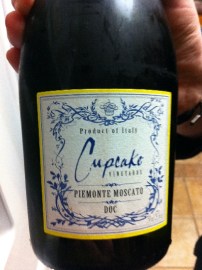
Cupcake Vineyards. DOC Piemontese Moscato. 2010
Country: Italy (sold by Cupcake from Napa, CA) Content: 5.5% alcohol.
Vibrant and expressive floral notes dominate with hints of peach and flavors of tropical fruits and lychee. It is a soft and luscious wine with just a hint of effervescence to tickle the palate and balance the sweetness. With bright fruit flavors and finesse, it’s reminiscent of a pineapple rightside up cupcake.
Here is a Moscato that the White Wine Wino picked up today. Comes from Cupcake Vineyards in Italy. Sweet taste… Sweeter than other Moscatos we have tried. Both Winos agreed on a Good Rating. Will buy it again in the future.
II – Menú del Almuerzo
1 – Entrada : Carpaccio di Manzo
2 – Primer Plato: Gnocchi Pomodoro
3 – Segundo Plato a seleccionar de: a- Tonno Grigliano
b- Scallopine di Vitello Porcini
c- Petto di Pollo Marsala
4 – Postre
___________________________
III – Opinión de los miembros acerca de los vinos catados
Hugo Benito
La degustación fue ciega es decir a botella cubierta. Las botellas fueron numeradas y al destaparlas al final del almuerzo resulto que el numero 1 correspondió al vino de California, el 2 al de Chile, y el 3 al de Francia. Al llenar la planila de evaluación algunos socios cambiaron la secuencia en que fueron presentados los vinos lo que complico bastante el calculo de los resultados.
Aperitvo : Osborne Manzanilla Fina.Se omite el calculo de los resultados pues solo 3 asistentes la evaluaron.
Vino Numero I – Edgwood Estate-Cabernet Sauvignon 2007-Napa Valley California – Evaluaron este vino 16 personas con un promedio de 89.2 puntos. Hubo una concentracion (14 pers.) entre 89 y 90 puntos. Aromas a frutas negras, color rubi oscuro y brillante, taninos suaves. La acidez y la fruta balanceados; final de medio a corto. Se trata de un vino agradable y balanceado
Vino Numero 2 – Cousin’o Macul – Finis Terrae– Cabernet Sauvignon .Maipo Valley-Chile. Evaluaron este vino 16 personas con un promedio de 88.8 puntos. Hubo una concentracion (7 persomas) entre 89 y 90 con un promedio de 89.5 puntos. Aromas suaves, color rubi oscuro, full body sabor a frutas, moca, chocolate, taninos moderados, acidez adecuada lo mismo que el azucar. Fuerte pero agradable al paladar, balanceado, buen final.
Vino Numero 3 – Bordeax Blend-Cabernet Sauvignon 2005 -Apellation Saint Julien-Chateau Hortevie. Evaluaron este vino 16 personas con un promedio de 88.7 puntos. Hubo una concentracion (12 personas) entre 88 y 90 con un promedio de 89.1 puntos. WA 88 puntos. Rojo oscuro con tonos de ladrillo en los bordes, aroma a madera,mas astringente,menos cuerpo y aroma quie el Numero 2, buen sabor ,equilibrado, balanceado, buen final sabor suave,a gradable. Caro por la calidad.
Se considera que la degustacion ciega en esta oportunidad ha sido sumamente instructiva. Interesante que los tres vinos tuviero una evluacion promedio muy similar.
La Cabernet Sauvignon es una de las variedades viníferas más importantes y famosas si no la más en la elaboración de vinos en el mundo. Se desarrolló en Burdeos y comenzó a denominarse por su nombre entre los siglos 18 y 19 y se encuentra en casi todas las regiones productoras de vino en mayor o menor grado. Se cultiva en las regiones más cálidas debido a su lenta maduración que requiere temperaturas cálidas durante el prolongado ciclo de maduración. Pero ello le da más concentración y no demasiado alcohol. La variedad no es apta para climas fríos ya que si no madura bien adquiere un sabor herbáceo parecido a la Sauvignon Blanc (otra pariente) o a la Cabernet Franc. Por el contrario si madura demasiado puede producir vinos faltos de acidez y dulzones.
Se caracteriza por ser una variedad de rendimientos bajos por lo tanto se usa solo en vinos cuya calidad es el objetivo central. Los granos son pequeños de cascara gruesa y purpura muy oscura hasta casi negra, con una alta relación de sólidos colorantes y tánicos a jugo. Por lo tanto sus mostos son oscuros y astringentes (sólo la uva Tanat la supera en taninos) lo que favorece su mezcla con otras variedades para suavizar su astringencia, mejorar el color y resaltar los sabores. Las mezclas más corrientes son con su pariente la Cabernet Franc (de maduración más rápida y gran fragancia), con la Petit Verdot y con la Merlot para suavizar los taninos dando lugar a las mezclas tipo Burdeos. Muchos prefieren estas mezclas sobre los vinos estrictamente varietales (100% Cabernet Sauvignon) que pueden resultar muy austeros o sobrios a algunos consumidores. En Australia han desarrollado excelentes mezclas con Shiraz que es una variedad más especiada.
Los vinos de esta variedad son de un color rojo oscuro a púrpura profundo con tintes violáceos cuando el vino es joven que adquiere con visos color naranja profundo o ladrillo a medida que el vino envejece. Sus aromas cuando joven son predominantemente a casis o arándanos (black berries) y cuando está mas añejo a madera de roble, café, vainilla y aún a tabaco. Los sabores de los vinos jóvenes tienden a ser tánicos y ásperos pero estos se suavizan gracias al almacenamiento en barriles de roble nuevos alcanzando un delicado balance entre la fruta, el tanino y los ácidos con sabores a frutas negras (ciruelas y casis), roble, y vainilla. Este balance es la característica de los grandes Cabernet Sauvignon. Los mejores vinos pueden envejecer hasta 15 o 20 años y mejorar en el proceso.
REGIONES
La Cabernet Sauvignon es la espina dorsal de los vinos de la rivera izquierda del rio Gironda en Burdeos mezclado con Merlot, Cabernet Franc y Petit Verdot, allí están las DDOs de altísima reputación como Médoc, Pauillac, St. Julien, Margaux, Haut Médoc y Graves. En Provenza se mezcla con Sirah para producir vinos que envejecen extremadamente bien. En Italia se usa para producir los famosos Super Toscanos (mezclada con Sangiovese) y también en el Piemonte y en Sicilia con sus nativas Nebiolo y Nero dÁbola. La Cabernet Sauvignon es muy importante en los vinos de Europa del Este (Moldava, República Checa, Ucrania, Bulgaria, Rumania). Sin embrago los vinos de estas regiones tienden a ser mas afrutados con sabor a frutas rojas más que negras y menos madera y menos refinados que los franceses. Es España su usa para cortar la Tempranillo (Rioja, Rivera del Duero y Navarra) y la Garnacha (Priorat y Penedés).
En el nuevo mundo son notables los cabernets de Napa y Sonoma en California, muy apetecidos y más afrutados que los del viejo mundo y que tienen un envejecimiento mas corto. En Sur América son famosos los Cabernets Chilenos (Concha y Toro es reconocido como el mayor propietario de cultivos de Cabernet Sauvignon) afrutados y menos especiados que los demás del nuevo mundo aún plantados en sus cepas originales no afectadas por la phyloxera. En Argentina se producen Cabernets de altura de buena calidad en Mendoza. En Australia la región de Coonawarra en el sur y Hunter Valley producen excelentes Cabernets de gran cuerpo frecuentemente combinados con Shiraz.
Cabernet Sauvignon, often referred to as the “King of Red Wine Grapes,” originally from Bordeaux, with a substantial foothold in California’s wine races, has the privilege of being the world’s most sought after red wine. Cabernet Sauvignon grapes tend to favor warmer climates and are often an ideal wine for aging, with 5-10 years being optimal for the maturation process to peak. Because Cabs take a bit longer to reach maturation, allowing their flavors to mellow, they are ideal candidates for blending with other grapes, primarily Merlot. This blending softens the Cabernet, adding appealing fruit tones, without sacrificing its innate character.
Flavor Profile
Cabs range from medium-bodied to full-bodied and are characterized by their high tannin content which serves to provide structure and intrigue while supporting the rich fruit characteristics. The flavor profile includes plum, cherry, blackberry, blueberry, warm spice, vanilla, tobacco and sometimes leather aromas and or flavors.
Food Pairings: red meats, flavorful and heartier (red) pastas, lamb, strong-flavored cheese, and chocolates (especially dark).
Despite its prominence in the industry, the grape is a relatively new variety, the product of a chance crossing between Cabernet franc and Sauvignon blanc during the 17th century in southwestern France. Its popularity is often attributed to its ease of cultivation – the grapes have thick skins and the vines are hardy and resistant to rot and frost – and to its consistent presentation of structure and flavours which express the typical character (“typicity“) of the variety. Familiarity and ease of pronunciation have helped to sell Cabernet Sauvignon wines to consumers, even when from unfamiliar wine regions. Its widespread popularity has also contributed to criticism of the grape as a “colonizer” that takes over wine regions at the expense of native grape varieties.[2]
____________________________
VII – In YouTube there is this 2 minute video on Cabernet Sauvignon that is short and precise. The expert is Jane Nickles. She is the author of “Wine Speak 101”, and wine writer for “The Texas Wine and Food Gourmet”, and “Eat and Drink Magazine”. More wine videos by Ms. Nickles are available at Expert Village (http://www.youtube.com/user/expertvillage?feature=watch) (note: at the ExpertVillage site, on the search channel you must put “wine”)
___________________________
VIII – Birthdays to celebrate in January:
Luis Carlos (Lula) Danin Lobo: 2
Bolivar Cobos: 14
Clarita Estrada: 14
Atilio Nieto: 17
IX – Is your address correct? Telephone? Mobile? E-mail? Day of birth? The membership directory is not complete. Please revise it and send the corrections to Hugo Benito, Clara Estrada, Geman Zincke e Cecílio Augusto Berndsen Check it out in the right top of the blog under “Directory-Addresses” password protected.
_____________________________________________
X – Cabernet Sauvignon de 4000 Anos Antes de Cristo?
Cientistas descobrem primeira vinícola, com “safra 4000 a.C.”
Arqueólogos encontraram, na Armênia, restos de uva, sementes e até uma caneca. Arqueólogos divulgaram na terça-feira (11) a descoberta daquela que pode ter sido a primeira vinícola da história da humanidade, com mais de 6.000 anos de idade.
Os restos da instalação foram encontrados em uma escavação na Armênia,
próxima à fronteira com o Irã.
“Esta é, até hoje, a maior instalação para produção de vinho
relativamente completa, com as fases de esmagamento das uvas,
fermentação e armazenamento in situ [no próprio local]”, afirma Hans
Barnard, autor do artigo sobre o estudo, publicado na terça-feira no
“Journal of Archaeological Science”.
“Era uma instalação relativamente pequena. Para consumo diário de vinho, deveria haver prensas maiores”, diz George Areshian, codiretor
da escavação e diretor-assistente da Universidade da Califórnia em Los
Angeles.
Entre os resíduos, também foi possível identificar sementes de uvas,
restos da fruta esmagada, pedaços de cerâmica com vestígios de vinho e
até uma caneca.
A equipe deduziu que os tipos de vinho produzidos no local eram
“merlot” e “cabernet sauvignon“, espécies de uvas típicas da região de
Bordeaux, na França, usadas na fabricação de vinhos tintos.
No mesmo local, aliás, foi encontrado, em junho de 2010, o sapato mais
velho do mundo, de 5.500 anos.
Pela quantidade de átomos de carbono presentes nos resíduos orgânicos,
os cientistas foram capazes de estimar a data de construção da antiga
vinícola, instalada entre 4100 e 4000 a.C.
Segundo Areshian, a comprovação de que havia fabricação de vinho no
local veio da presença da malvidina, substância encontrada na uva e um
dos principais corantes do vinho tinto. Também foi encontrada grande
quantidade de ácido tartárico, presente na bebida, mas também em
diversas plantas.
Juan Luis finds an interesting place, let’s check it out and feedback
You most certainly have seen the message from Juan Luiz Colaiacovo (6/Jan/12) on the Northside Social a place at 3211 Wilson Boulvard, Arlington VA. Telephone 703-4650145.
New York Wine and Food Experience Thursday January 12th 7:00 pm
Brooklyn Oenology (EN-ology, or simply ‘BOE’) is a woman-owned winery based in Williamsburg, Brooklyn founded by winemaker Alie Shaper in 2006. BrooklynOenology works to present the flavor of our region by sourcing grapes exclusivelyfrom local New York State vineyards and by placing the exciting work of NewYork City artists on our labels. BOE works with local restaurants, markets, food producers and art organizations, and has become an exciting part of the Brooklynand New York City culinary scene.
Join Winemaker Alie Sharper and Sommelier Alison Christ Wine Bar at Northsidefor this fun wine tasting.$40 per person including five wines and New York influenced small plates.
Gracias al buen trabajo de Cecilio con el Blog fue posible desarrollar la tabla adjunta con los vinos que los socios del club claificaron en promedio como los mejores en cada reunión. Aún faltan los informes de evaluación de los tres mese finales del año. Los comentarios sobre cada vino provienen de los resumenes que tan diligentemente prepararon Hugo y Germán. Hasta ahora va ganando un tinto (Sangiovese italiano) que tomamos en enero que fue calificado con 92.4 puntos – Viticcio 2006 Riserva Chianti Classico. Como en cuestión gustos no hay disputas ni puede haber uniformidad (menos en el vino), esta tabla refleja el promedio del grupo y no necesariamente las preferencias de cada uno de nosotros (p.e. sé que a Juan Luis no lo impresionan los vinos italianos con algunas excepciones). Los vinos mejor calificados cuestan todos por encima de $20 con excepción del Kemblefield Zinfandel de Nueva Zelanda ($13) y el Mont Gras Cabernet Sirah 2008 de Chile ($10)
Me parece que en el 2011 hicimos un recorrido extenso y representativo por regiones notables por sus vinos en todo el mundo. Creo que por falta de tiempo no incluimos Australia.
El Plan es completar la tabla una vez tengamos todos los informes del año. Un abrazo
Recommended by Ricardo Zabaleta here we have a smart collection of historic aphorisms on the consumption of wine. Click the link to see the slide show.
Una colección de aforismos a cerca del vino con bellas ilustraciones alusivas al tema.
Reunión 128-Diciembre 12 2011- 12:30 ………… Vinos de Sicilia …… Da Domenico Ristorante Italiano
Contents of this post:
I – Members participating in the tasting and guests
II – List and brief description of wines
III – Menu of the tasting #128
IV – Opinión de los miembros acerca de los vinos catados
V – La Región Productora: Sicilia, Italia
VI – History and More of Sicilian Wine
VII – List of Members with Birthday in December
VIII – Very Merry Christmas – Songs with wishes of a Great Season for you and your family!
I – Members participating in the tasting and special invited guests:
Alfonso Munevar, Clarita Estrada, Juan Luis Colaiacovo, Rolando Castaneda, Pedro Turina, Albertina Frenkel, Alfonso Sanchez, Alvaro Lopez, Cecílio A. Berndsen, Jairo Sanchez, Italo Mirkow, Mario Aguilar, Orlando Mason, Marcello Averbug, Hugo Benito, Jaime Estupiñan, Ricardo Zavaleta, Alfonso Caycedo, Rene Meza, Wilson Moreira.
Special Invited Guests: Rosa Eugenia Mesa, Guadalupe Mayorga Vda de Rodriguez, Esther Diamond.
II – Wines from Sicilia presented by: Ítalo Mirkow & Jairo Sanchez,
Mr. Mirkow presents wines 1, 2 and 3; Mr. Sanchez presents wines 4 and 5. These wines will be tasted in the order to be determined by the presenters.
1 – Lamuri Nero D’Avola 2009 Tasca D’Almerita
Category: Red Wine Varietal Nero d’Avola
Region Italy: Sicily Producer: Tasca d’Almerita
Description by Tasca d’Almerita
Intense ruby-red in color, Lamùri offers lush aromas of blackberry, mulberry and cherry. On the palate, this wine is incredibly rich, with velvety tannins and a refreshing acidity. Recommended with Mediterranean fare, such as pasta, roasted lamb and barbecued kebabs or ribs. Wine Advocate assessment: The 2009 Lamuri is Tasca’s mid-range Nero d’Avola, although it is a wine that regularly overdelivers for its price. Sweet candied fruit, herbs and flowers meld together nicely in this polished, mid-weight red. The 2009 is a somewhat firm Lamuri that will require at least 6-12 further months in bottle. I especially like the intensity and drive of the finish. Anticipated maturity: 2012-2019. Score: 91. —Antonio Galloni, June 2011
2 – Tenuta Delle Terre Nere Etna Rosso 2010
Vintage: 2010 Type: Red Producer: Tenuta delle Terre Nere Variety: Nerello Mascalese Designation: Rosso Region: Sicily, Italy Appellation: Etna DOC
This little beauty comes to us from Etna, the active volcano in Sicily, from vineyards that sit at their lowest 2,100 feet to their highest of 3,200 feet above sea level. It’s made up of 98% Nerello Mascalese and 2% Nerello Capuccino. The vineyard has begun to undergo changes to organic viticulture starting in 2007 and by 2010 will have its certification. The vines vary in age from 40 to 100 years old.
Tenuta delle Terre Nere makes the rosso as a blend of their youngest vines from their 3 “cru” vineyard sites: Guardiola, Calderara and Feudo di Mezzo on Etna. Unlike the rather rustic scene you think of when conjuring up what vines might look like on the side of a volcano, the wine is elegant, beautiful and fruity, yet perfumed. Comparisons to Burgundy and Barolo are not uncommon.
The 2009 Rosso is mid-weight and elegant, not heavy, but lush. The nose is full of fresh raspberries and strawberries with a hint of minerals. It also extends a perfume-y quality that lends to a more complex nose than it should at this price. The palate is just the same – fresh fruits that have lots of lush flavor.
It’s just mid-weight and almost weightless. NOT light or flimsy, just subtle. Unfortunately, it’s limited, so get in here and take some home! (www.centralbottle.com)
3 – Marsala Fine I. P. Ambra Sweet – Dessert Wine
Every new vintage evokes a new emotion. The goal of any vintner should be to describe, interpret, and enhance the peculiarities of the territory, even if it is but one hectare, or one grape. That’s the belief of the Paladino family, owner of the Alcesti brand and of 30 hectares (around 74 acres) of vineyards located between the cities of Marsala, Mazara and Salemi. These vineyards express the typical Sicilian terroir, thanks to the respect paid to the land and the non-invasive cultivation. The cellar represents a dream come true for the Paladino family and was built in 2003 just a few kilometers from Marsala. The family mission statement is to combine innovative and traditional winemaking in total respect for the environment. The decision to allocate the family vineyards to the cultivation of native grapes, allowed Gianfranco Paladino, the brand manager of the estate, to become the ambassador of “Sicilianism”, producing wines that are tightly related to a territory, or to a family. Gianfranco, his sister Valeria, and his father Leonardo are convinced that in today’s wine world there is no need to “surprise,” but rather “bring to mind” true sensations, as only a good quality wine can do. Information on this wine to be posted soon. From Xwine Site Additional information on the producer may be found in its website: Alcesti Wineri, Italy
The label is not the Marsala Ambra Sweet – Alcesti that we are tasting. This is of another dessert wine by Florio of the same Sicilian region.
Jairo Sanchez presents these wines:
4 – Pozzi Sicilia Rosso 2009 Nero d’Aveda
Grape type: Nero d’Avola Sicily, Italy, Winery: Pozzi Alcohol: 13.5% about $ 13 Total Wine
This 2009 Sicilian Rosso, made from just one typical Sicilian grape Sicilian Nero d’Avola IGT, matures in large oak casks. A gentle floral nose is followed by a softly muted palate of ripe plums and big cherries culminating in a delicious tannic leather and asphalt finish. It exhibits far more balance, body and structure than most Italian Regional Reds. The color is intense ruby, mild aroma and fruity soft taste with gentle tannins and a long aftertaste. It’s an ideal partner for tasty dishes and mature cheeses, as well as with light party fare and typical Southern Italian and Sicilian Cuisine. Can be cellared for a few years.
5 Stars Delicious anytime By Newlen14173564, November 18, 2011: This wine is great to sip, to have with dinner, or cheese and crackers. It is so good. Only problem is I have a hard time accessing it at my local wine store for it is usually out of stock.
5 Stars Best everyday red I’ve tasted so far By Wine11897680, December 18, 2005: Growing up Italian I have tasted many red wines, homemade and store bought. Pozzi Sicilia Rosso has a mild fruity taste, lite tannins, nice mild aroma and just plain and simple good everyday drinking wine. Sure I tasted more expensive wines that were GREAT but for the money and everyday Pozzi Sicilia has 5 stars in my book.
This medium body blend of indigenous grapes offers notes of lemon rind, orange skin and apples On the palate it is crisp, medium-body, fresh fruity and ripe.
Grillo is a Sicilian varietal that once was the base of Marsala. It delivers citrus flavors, body and earthiness
Reviewed by ABCWineReviews Deep gold in color, this wine exhibits aromas of peach and melon with distinct notes of honey and spice. Rich and full-bodied on the palate, the expressive fruit flavors have considerable complexity and depth. The finish is long; with characteristics of oak cellaring (though according to the winemaker none was used).
Our rating: This is a most interesting wine. The grapes are native to Sicily and produce a wine that is likely quite unfamiliar to American palates. Pair this wine with roasted chicken and potatoes, as we did, or dishes that have richly flavored sauces, and serve just barely chilled. We rate it Above Average, nearly Excellent.
Taste profile from the winemaker: “Colore: Giallo paglierino, con riflessi dorati (straw yellow with golden reflections). Sapore: Equilibrato ed armonico, sapido, fruttato. Tipici sentori delle uve di provenienza (balanced and harmonious, full-bodied, fruity; typical aromas of the varietal grapes).”
III – Menu to be served at the tasting
Aperitivo: Cozze Napolitano (mussels in white wine, garlic , olive oil ,parsley)
Primer Plato: Eggplant Parmigiana (layers of eggplant with musarella, marinara sauce served with pasta)
Segundo Plato: Pork Chops-Mash Potatoes (brown sauce with port wine and fresh herbs)
Postre: Tiramisu o Mixed Berries with Zabaglione
___________________________
IV – Opinión de los miembros acerca de los vinos catados
Hugo Benito
Contestaron la hoja de evaluiacion 19 personas.Como es norma no se consideraron los valores exremos.
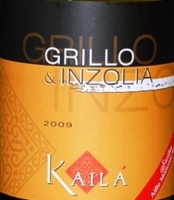
Vino Numero 1 – Kaila Sicilia 2010,Grillo & Inzolia – Alcohol Precio $14.0. Este vino fue evaluado por 17 personas con un promedio de 87.7 puntos. Hubo una concentracion (14 pers.) entre 87 y 90 con un promedio de 88,2 puntos. Buen aroma, color amarillo palido muy bonito, sabor a citricos y a manzana verde, balanceado entre la acidez y el azucar, final largo ligeramente amargo. Buen aperitivo
Vino Numero 2 – Pozzi Sicilia Rosso Nero D’Avola – Alcohol 13.5% Precio $13.65 . Evaluaron este vino16 personas con un promedio de 88.2 puntos. . Hubo una concentracion (15 pers) entre 87 y 90 puntos con un promedio similar 88.4. Color rubi brillante (burgundy) aroma a frutas, sabor a frutos rojos y negros,hierbas, especias; Balanceado aunque con azucar residual alto. Taninos suaves aunque algo astringente Good finish, long afertaste.
Vino Numero 3 – Lamuri Nero D’Avola 2009 Tasca D’Almerita. – Evaluaron ese vino 15 personas con un promedio de 88.3 puntos. Hubo una concentracion (12 Pers.) entre 88 y 90 con un promedio de 88.9 puntos. Siete personas le dieron 89 puntos. Aromas a tabaco y cuero, color rubi claro (light plum color),sabor a frutas, black berries, buen cuerpo ligeramente tanico, balanceado, alcohol explicito,sabor residual medio. Sabor muy parecido al Cabernet Sauvignon. Bueno para tomar entre el 2012 y el 2019.
Vino Numero 4 – Tenuta Delle Terre Etna Rosso 2010 – Evaluaron este vino 14 personas con un promedio de 86.8 puntos. No hay una zona de concentracion marcada, por ejemplo cuatro personas le dieron 85 puntos y otras cuatro le dieron 89 puntos. Color rubi claro transparente ,aromas limitados, poco cuerpo .Presencia de taninos y acidez en su largo final.
Vino Numero 5 – Marsala Fine I.P.Ambra Sweet-Dessert Wine. Ese vino solo fue evaluado por 4 personas con un promedio de 89 puntos. Buen aroma, multiplicidad de sabores y a ciruelas y chocolate. Excelente vino de postre., mucho cuerpo.
__________________________________________
V – La Región Productora: Sicilia, Italia
Alfonso Sánchez
Sicilia produce unos 930 millones de botellas al año (Burdeos produce 850 millones), sin embargo este volumen es un 70 por ciento de lo que se producía en 1990. La reducción se debe a que los sicilianos se han concentrado en los últimos años a producir más calidad y menos cantidad. Mientras en los 80s se producían vinos caseros de calidad baja y mostos para exportación principalmente al norte de Italia para cortar los vinos de esa región, ahora se producen vinos con calidad de exportación, la que ha crecido considerablemente en los últimos años.
Sicilia cuenta con una gran variedad de uvas y suelos y un clima muy seco y cálido lo que favorece las variedades que producen vinos con alto contenido de azúcar y mucho cuerpo (de allí su uso para vinos fortificados y como mostos de corte para las variedades del norte). Por otro lado los sicilianos se han concentrado en mejorar la calidad de las cepas nativas y menos en la de adaptación de cepas importadas. Se sabe que desde al menos el siglo V AC los griegos fabricaban vino en Sicilia, sin embargo a pesar de que la isla era un centro de comercio y de llegada de los barcos mercantes en el Mediterráneo, no llegaron cepas foráneas en cantidades apreciables. No obstante que hubo algunas influencias importantes extranjeras. Por ejemplo, los árabes (que ocuparon a Sicilia desde 823 hasta 1123 DC), introdujeron en la isla de Pantelleria la Moscatel de Alejandría e introdujeron la técnica de pasificación de las uvas. Esta variedad se conserva con el nombre Zibibbo y es usada para vinos secos o de postre. Se sabe que esta uva es también la progenitora de la Torrontés mediante el cruce con otras variedades.
El noventa por ciento de la producción de Sicilia son vinos dulces. El más famoso es el Marsala que se hizo muy famosa a partir de 1700 cuando un comerciante inglés, John Woodhouse, probó junto con su tripulación el vino local, fuerte y robusto, y lo encontró de su gusto. Woodhouse expidió el vino en 50 barricas hacia Inglaterra, pero añadiendo a cada recipiente aguardiente de vino para evitar que se oxidase durante el trayecto por mar. El Marsala tuvo un gran éxito. Sin embargo su calidad decayó y hacia los 1950 estaba relegado a un vino de cocina. En 1986 el gobierno italiano produjo unas nuevas normas para el Marsala parecidas a las que tiene Portugal para sus Oportos y hoy se producen excelentes Marsalas dulces para postre, aperitivos así como secos.
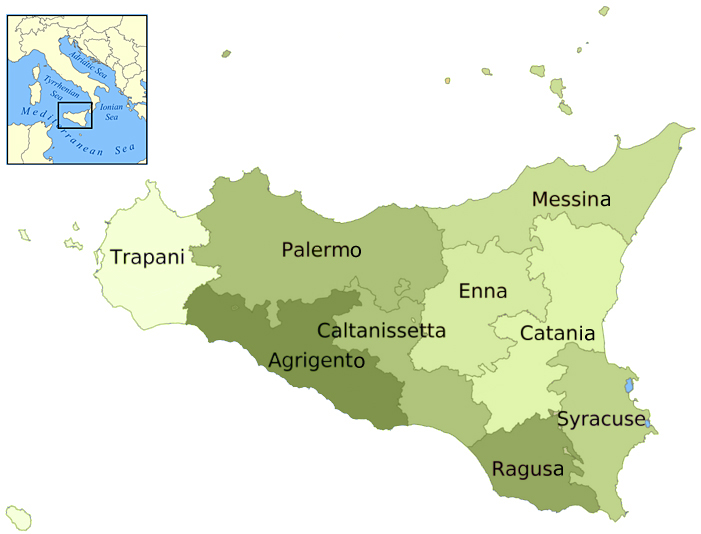
La tierra del Marsala (Trapani) al oeste es la que más vino produce pero es en Catania al este donde se encuentran la mayoría de las AOCs (denominaciones de origen). Los sicilianos no son muy apegados a las AOC y la mayoría de los vinos se producen por fuera de ellas.
Las Variedades
Las variedades más importantes nativas de Sicilia son:
Las blancas Grillo, Inzoila y Catarratto;
Las tintas Nero D’Abola (38 5 de la superficie cultivada) llamada también Calabrese (calabrese) que da vinos de color intenso y fuertes taninos parecidos a los del Syrah y las variedades, Nerello Mascalese (laderas del Aetna), Nerello Cappuccio, Frappato di Vittoria.
Las Moscatel: Moscato di Notto, Moscatto di Siracuso, Zibibbo, Mocatto de Alexandria, Moscatto de Pantellera.
Las Importadas: Pinot Grigio , Pinot Blanc and Sauvignon Blanc, Malvasía, Merlot, Cabernet Sauvignon, Malbec y Tanat.
Marsala. El más famos de Sicilia. Vino fortificado hecho de Inzoila, Catarratto ó Grillo. Se produce en los tipos dorado (oro), ámbar (ambra) y rojo (rubino) y dependiendo del añejamiento es superiore (2 años), superiore riserva (3 años) o vergine( 5 años).
Zibbibo. Hecho con la variedad Moscatto de Pantelleira que también sirve para producir vinos secos y Grappas
Nero D’Avola: Vinos atractivamente oscuros, suaves pero robustos, y que envejecen bien con roble.
Frappato Nero: Suave, bajo en taninos, frecuentemente cortados con con la Nero d’Avola, Nerello y Nocera
Moscatos de Pantelleira, de Siracusa y de Notto. Vinos fortificados de postre, aromáticos y licorosos.
Malvasía de Lipari. Producido cerca de Messina en las modalidades de mesa (según el proceso para vino blanco) o el passito con base en uvas pasas de vendimia tardía.
_________________________________
VI – History and more of Sicily Wine
Jairo Sanchez
Jairo Sanchez
Sicily (Sicilia to its Italian-speaking population) is an autonomous region of Italy, and the largest island in the Mediterranean Sea. At its widest point, between Messina and Marsala, the island measures 175 miles (280km) east to west, and about one third that distance north to south. Its roughly triangular shape led the island to be dubbed Trinacria (the triangle) during the Middle Ages, and is reflected in the triskelion at the center of the regional flag.
For more than 2500 years Sicily has been a significant centre of viticulture in the Mediterranean, although its reputation is not as immaculate and widespread today as it once was. Blessed with consistently bright sunshine and reliably moderate rainfall, the classic Mediterranean climate here is ideally suited to the needs of wine-bearing grape vines. Add to that the paucity of the island’s soils and the hilly landscape in which they sit, and the resulting terroir is almost perfect for growing not just vines but also the cereals, olives and citrus fruits which remain the island’s key exports today.
The apparent perfection described above has played an ironic role in diminishing the luster once worn by Sicilian wines, as it facilitated government-driven schemes pushing for higher productivity on the island during the late 20th century. Where once Sicily’s wines came from traditional goblet-trained vines, they now come mostly from the higher yielding tendone or guyot training methods, the costs of the transition being heavily subsidized by central government. Higher yields led to over-production and lower quality wines, which have in turn led to low consumer confidence, even lower revenues and a reputation so tarnished it may take decades to fully restore its shine. Fortunately the dramatic surges which have taken place in wine consumption since the 1980s, and the changing quality-focused attitudes of wine consumers, have led to glimmerings of Sicily’s potential which are now just beginning to be noticed.
The soils, and the mountains from which they came, are of particular interest when it comes to studying Sicilian viticulture. Mount Etna, Europe’s tallest active volcano at 10,930ft (3,330m), dominates the island’s eastern skyline and is responsible for the mineral-rich, dark soils which characterize the Etna DOC. Vineyards are now being planted higher up on the volcanic slopes, the idea being to capitalize on the cooler air and richer soils there. 50 miles (80km) south of this, the Iblei Mountains have also had their say in eastern Sicilian wine. On their lower slopes, and on the coastal plains below them, the DOCs of Siracusa, Noto, Eloro and Vittoria sweep from east to west, forming a crescent which mirrors the arcing coastline here. In the western Sicily, the volcanic hills are less individually dramatic, but are just as important to the soil types there. The western fifth of the island is covered by the Marsala DOC, and also within this area also fall the DOCs Alcamo, Contessa Entellina, Delia Nivolelli, Erice, Menfi, Monreale, Salaparuta, Santa Margherita di Belice, and Sciacca. Also of note is the small Sambuca di Sicilia DOC, whose wines are not to be confused with the potent anise-flavored liqueur with which they share their name.
The key grape varieties used in Sicilian viticulture are a combination of ‘native’ varieties (those which have historically been cultivated on the island) and newer, more fashionable imports. Nero d’Avola and Catarratto are the most important natives, occupying about 16 per cent and 32 per cent of Sicily’s vineyard area respectively in 2008. The sheer volume of Catarratto juice created each year means that much of the juice is shipped to cooler Italian wine regions, where it is used to increase the body and weight of otherwise thin, over-acidic wines; chaptalization is prohibited under Italian wine law. A large proportion of what remains on the island is used to make Marsala, for which it is joined by two other white varieties Grillo and Inzolia. Although less famous than Marsala, another sweet wine of significance to the island is Moscato di Pantelleria, the Moscato grape in question being Muscat of Alexandria. In terms of red wine varieties, next most common after Nero d’Avola is Grecanico, accompanied by small quantities of Alicante (Grenache Noir), Perricone, Nocera, and Frappato, the latter being the key ingredient in Sicily’s only DOCG wine Cerasuolo di Vittoria. Sibling varieties Nerello Mascalese and Nerello Cappuccio (aka Nerello Mantellato) are also small players in terms of volume, but are of vital importance around Mount Etna. Syrah has been brought here from its home in southern France, where hot summer sunshine and sandy, rocky soils are also key components of the terroir. The robust red Rhone Valley variety shows every sign of adapting well to the Sicilian heat, and certainly better than Chardonnay, which has proved less able to produce balanced wines here. Trebbiano, the ubiquitous, high-yielding white variety found all over Italy, is also present in the wines of Sicily, although it has no role of particular distinction among them.
The island’s topography has affected more than just how, and where, Sicilian wines are created; it has also had a significant impact on the way commerce and customs have developed on the island. In the late Middle Ages Palermo was one of the largest city populations in Europe, and had a correspondingly voracious wine appetite. Despite large quantities of wine being made in the east of Sicily, Palermo’s wine supplies came as much from Campania and Lazio as they did from the other end of the island, so mountainous is the landscape which surrounds the port city. Given the frequent contact Palermo had with the central western coast of Italy, and the proximity of Messina to southern Italy (it is separated from southern Calabria by the Strait of Messina, just 2 miles wide), these two key Sicilian cities were more influenced by the mainland at this time than they were by one another. And while Palermo was importing Italian wines, Messina was actually exporting eastern Sicilian wines to Africa and the eastern Mediterranean. Modern transportation and communication technologies mean that Sicily’s dramatic, volcanic landscape has less of an impact on the region’s social and cultural structures. They remain, however, a vital part of its viticulture and winemaking, and may prove to be its unique selling point in the modern wine world.
_______________________________________________
VII – Happy Birthday! Members with Birthday on the Month of December
Emilio Bernal-Labrada 6, Ruth Connolly 13, Ricardo Zavaleta 17, Jairo Sanchez 21, and Cecílio Augusto Berndsen 31.
VIII – Season Greetings Boas Festas Buenísimas Fiestas
Jose Feliciano, Nat King Cole, Dean Martin, Bing Crosby and many other are here to whish you a Very Merry Christmas and a Super 2012 for you and your family!
There are so many great Christmas songs, but these are the top 15 that I think best capture the essence of this joyous season. Sit back and enjoy the wonderful music of Christmas. Which Christmas song is your favorite? The Top 15 Christmas Songs by PrincessFiana. Press the arrow in the center of the box, increase the volume, sit back and enjoy!

 Enero 29, 2102
 El problema con la maduración temprana es que las uvas alcanzan un contenido de azúcar muy alto (que se vuelve alcohol durante la fermentación) antes de que logren la acidez y mineralidad deseadas en un blanco bien balanceado. Del mismo modo la maduración temprana de las uvas tintas resulta en vinos con demasiado alcohol e insuficiente concentración de fruta y taninos para balancearlo. Para salvar su producción algunas bodegas han que apelado a intervenciones muy fuertes durante la elaboración de los vinos para reducir el alcohol tales como como interrupción mediante frío de la fermentación natural (que deja azúcar residual y un vino dulzón y empalagoso) o filtración de los mostos mediante ósmosis reversa o el uso de columnas de conos giratorios (evaporación en vacío del alcohol). Muchos aficionados al vino consideran inaceptable esta “manipulación” del vino.
 Leí[1] recientemente que los vinos de cosecha tardía (ice wine) en el Canadá y la región noreste de USA sufrieron enormemente en el 2011 por la falta de frío (17o F o menos) para congelar las uvas al menos parcialmente y vendimiarlas en ese estado. Como sabemos estas son uvas que se dejan en la parra después de la cosecha normal a veces hasta noviembre para que se congelen y se disequen lo que resulta en bajos rendimientos de jugos muy dulces y de sabores muy concentrados. Para que un vino de esta clase se pueda denominar “ice wine”, al menos la mitad de las uvas deben cosecharse congeladas. Por ello se vendimian preferiblemente en noches muy heladas para evitar temperaturas altas en el día. El jugo se deja fermentar hasta el nivel deseado de alcohol y azúcar residual y en ese punto se para el proceso enfriando el mosto suficientemente (en los vinos fortificados como el Oporto esto se hace agregando alcohol al mosto por lo que su contenido de alcohol es mas alto).







 Los vinos de esta variedad son de un color rojo oscuro a púrpura profundo con tintes violáceos cuando el vino es joven que adquiere con visos color naranja profundo o ladrillo a medida que el vino envejece. Sus aromas cuando joven son predominantemente a casis o arándanos (black berries) y cuando está mas añejo a madera de roble, café, vainilla y aún a tabaco. Los sabores de los vinos jóvenes tienden a ser tánicos y ásperos pero estos se suavizan gracias al almacenamiento en barriles de roble nuevos alcanzando un delicado balance entre la fruta, el tanino y los ácidos con sabores a frutas negras (ciruelas y casis), roble, y vainilla. Este balance es la característica de los grandes Cabernet Sauvignon. Los mejores vinos pueden envejecer hasta 15 o 20 años y mejorar en el proceso.




















 Club del Vino - Washington DC area