
 Degustación # 130 23 febrero 2012 Da Domenico Ristorante Italiano

Post Content:
- I. Encargados de la Degustación, los Vinos y el Menu
- II. Socios com participación confirmada
- III. Los Cumpleaños de Febrero
- IV. Descripción de la Region Productora de los vinos
I. Encargados de la Degustación, los Vinos, el Menu

Orlando Mason

Bolivar Cobos
La degustación de febrero tiene vinos de España de las regiones de Castilla-La Mancha Almansa –Valdepeñas. Organización de la desgustación y seleción de los vinos a cargo de Orlando Mason y Bolivar Cobos.
Los Vinos:
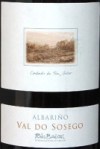 Aperitivo: Blanco: 2010 Val de Socego Alabariño Rias Baixas, Rias Baixas, Galicia, Spain; 100% Albarinõ, Alcohol 12.5%, $ 15
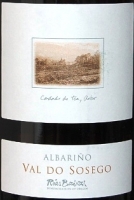
Acclaim:  Deep straw color, pretty dark for an Albariño. It has an inviting nose of citrus and tangerine, along with a hint of peach, that becomes more intense as the wine warms up. Medium bodied, dry, silky and crisp; as I was guessing from its color, it has more body than the average Albariño. The palate reflects the nose, however the lemon is dominant and it highlights the acidity of this wine. The finish is lingering, up to 1 minute. I really enjoyed it with grilled spicy shrimp skewers. ” (adega.com)
Elegant, Citrus, Medium-bodied
Wine & Spirits – Rias Baixas, Spain- “Bright scents of green apple deepen to green olive in this crisp and robust wine. There’s tension in the mineral finish, with a pleasantly abrasive edge…”
o Tinto: 2008 Higueruela Cosecha Almansa-Bodegas Tintoralba -Castilla La Mancha, Spain:  Granache , 87/100,, Concours Mondial de Bruxelles, 2009: Silver Alcohol 13%, $ 11.00

The predominant grape variety is a type of Garnacha known as Garnacha Tintorera, one of the few red fleshed grapes yielding colored juice immediately after crushing. The site of the vineyards is at an altitude of between 2,952 and 3,608 feet above sea level, which has proven ideal for this special clone of Garnacha as well as maintaining a surprising amount of acidity from this warm corner of Spain. The climate is dry and arid, with cold winters and warm summers. The low-organic matter soil and the climate contribute to low yielding vines.
Higueruela is made using a cold maceration technique, whereby the de-stemmed grapes are treated with a dry ice at low temperatures and macerated for 8-10 days. A small proportion (5%) of young vines fruit proceeds through carbonic maceration. Both techniques are used to obtain a wine with less astringency and more aromatic complexity. The wines are made using a long and slow fermentation. No oak, aged for 4 months in tank. ( Vinopedia.com)
 Vino 1: 2001 Bodegas Navalon Valdepeñas Anciano Gran Reserva Valdepeñas, Castilla-La Mancha, Spain, 88 a 90 puntos Alcohol 13%, $ 11
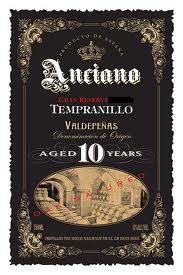
“”This was the consensus favorite for the evening. Light color for a Tempranillo. Nose of red fruit with earth. Palate of soft, very soft, red fruits with leather and chocolate finish. Hints of tobacco on mid-palate. Short finish. A crowd pleaser!””
Tempranillo is the premium red wine grape variety from the Rioja and Ribera del Duero region in Spain. Tempranillo’s aromas and flavors often combine elements of berryish fruit, herbaceousness, and an earthy-leathery minerality. Being low in acidity and sugar content, it is commonly blended with Carignan (Mazuela), Grenache (Garnacha), Graciano, Merlot and Cabernet Sauvignon.
Valdepeñas has been linked to wine since immemorial time. It is the second Spanish designation of origin in terms of spontaneous knowledge, it always occupies one of the privileged positions in sales and is one of the oldest in Spain, since it was first recognized in 1932.
Pair older-style Rioja with simple meats like chicken, leg of lamb, and pork loin. However, the newer style of Rioja and Ribera del Duero works especially well with bolder meat dishes or an aged Spanish cheese like Manchego or Idiazabal. (cellartracker.com)
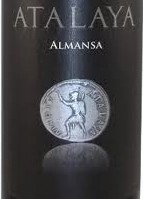 Vino 2- 2008 Atalaya – Almansa, Almansa, Castilla de La Mancha, Spain; Red, Alcohol 14%, $ 11
R. Parker comment: 90 points – The 2008 Atalaya is a blend of Monastrell, Garnacha Tintorera (Alicante Bouschet), and other unspecified varieties. It was aged for 8 months in French oak. Deep crimson-colored, it displays an aromatic array of cedar, spice box, violets, blueberry, and blackberry with a hint of licorice in the background. On the palate it has layers of savory fruit, excellent concentration, and a long, fruit-filled finish. It is likely to evolve for 1-3 years but can be enjoyed now. This outstanding value over-delivers in a big way.
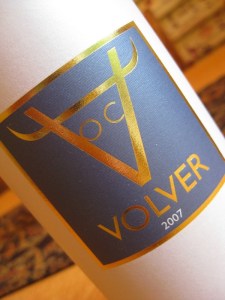 Vino 3- 2009 Bodegas Volver Tempranillo – La Mancha, Spain; 100% Tempranillo, Alcohol 15%, $ 17, Wine Advocate: 92/100, International Wine Cellar: 90/100
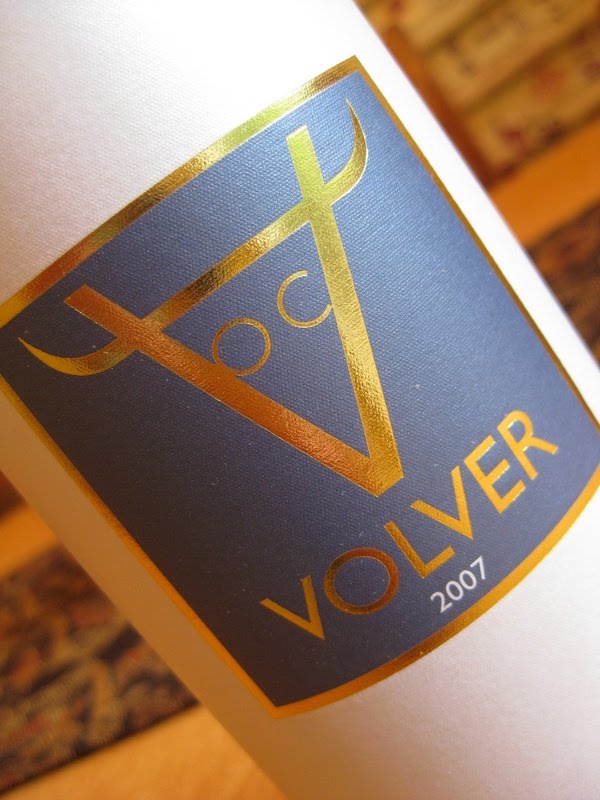
Winemaker’s notes:
Very dark purple with lots of black hues. Big sweet nose (some may call it candified) of dark plums, black cherries, sweet smoky oak, tobacco, and funky tree bark. Forward gush of dark fruit that also has some helpful tangy red currants along with tobacco, smoke, and earth. Medium-low acid, soft tannins.
Critical Acclaim:
“Robert Parker doesn’t write the Spanish reviews these days for Wine Advocate as he has given that job to Jay Miller. However, Mr. Parker does still drink Spanish wines and reviews them “informally” in his Hedonist’s Gazette. In July Parker wrote about a great Spanish feast where he enjoyed a short list of excellent Spanish wines including Volver 2009. The review was glowing as Parker gave the wine 92 points noting, “A great value that I would unquestionably drink as a house wine, the 2009 Volver from La Mancha. Made from 50-year old Tempranillo vines…” ”
“Bright purple. Dark berries, cherry pit, licorice and tobacco on the nose. Slowly unfolds to offer sappy cassis and bitter cherry flavors lifted by tangy acidity and complicated by a peppery, spicy quality. Finishes gripping and long, with resonating cherry and spice notes. Give this some aeration or a couple more years of bottle age. The Wine Advocate.
The 2007 Volver (ours is 2008) is a single vineyard wine made from 100% Tempranillo from the La Mancha area of central Spain. The wine is aged for 14 months in new French oak. This is another wine imported by Jorge Ordonez and is a good example of the great quality wines that can be made from the Tempranillo grape. The wine has a deep purple color with a lovely nose of black cherry, raspberry, smoke and vanilla. On the palate it is a full-bodied wine with of ripe black plum, blackberry, cherry jam, ground coffee and a touch of oak. This wine is very “New-World” with a rich mouth-feel, bold fruit, abundant creamy tannins and a long, balanced finish. The 2007 Volver is delicious now, but should continue to develop with a few years in the cellar. International Wine Cellar
La Comida:
Apetizer : Calamari con Zucchini
Pasta: Papardelle Bolognese
Entrees: A seleccionar de:
1- Petto de Pollo Toscana
2- Scalopini di Vitello Portini (Or Lombata di Vitello if it can be included)
3- Fruto di Mare
Postre: TBA
_____________________________
II – Socios con participación confirmada:
- Juan Luis Colaiacovo
- Ricardo Zavaleta
- Cecilio Augusto Berndsen
- Luis Carlos Danin Lobo -Lula
- Ruth Connolly
- Bolivar Cobos
- Orlando Mason
- Hugo Benito
- Alvaro Lopez
- Pedro Turina
- Francisco Uribe (Invitado de Pedro)
- Rolando Castaneda
- Italo Mirkow
- Jaime Esupinan
- Marcello Averbug
- Rene Meza
- Jairo Sanchez
III. Cumpleaños de febrero

Euro Alves – 2
Carlos Paldao – 11
Walter Gutierrez – 12
Jorge Omar Rodrigues – 21
Oscar Guerra – 24
___________________________________________________
LA REGIÓN: Castilla la Mancha
Alfonso Sánchez
La tierra de Don Quijote, un lugar de la cual Cervantes no quería acordarse, está localizada  en la meseta que lleva su nombre unos 150 KM al sur de Madrid en el centro de España y con una extensión plantada en viñedos comparable a la de Australia que comprende dos tercios del total plantado en España (192.000Ha/474,000 acres registrados y otro tanto no registrados).
Los monjes cistercienses fueron los que impulsaron inicialmente el cultivo de la vid en la región que sufrió altibajos durante la ocupación de los árabes que terminó con la reconquista en el siglo XII. Después vino una gran expansión favorecida por el establecimiento por Felipe II de la sede real en Madrid en 1513 que como consecuencia se volvió un centro de consumo muy importante.
 Inicialmente su producción era de calidad mediocre y estaba basada en la variedad blanca Airén alrededor de la zona de Valdepeñas al sur de la meseta. Los vinos eran blancos fuertes, algunos teñidos con variedades tintas. Esta situación cambió radicalmente a partir de los 90s cuando los cultivadores empezaron a plantar viñas para tinto principalmente variedades de Tempranillo (Cencibel), Monastrell, Bobal, Mencia, Garnacha, Cabernet, Syrah, Petit Verdot y Merlot. Hoy los vinos blancos se elaboran con base en la Airén, Viura, Sauvignon Blanc, Chardonnay, Verdejo Viognier, Pedro Ximenes y Torrontes y otras de menor importancia. En la actualidad hay más de 600 bodegas en la Región y 9 DOs: Jumilla, Manchuela, Ribera del Juncal, Uclés, La Mancha, Méntrida, Mondéjar, Valdepeñas y Almanza.
Debido a las condiciones climáticas, los viñedos se plantan con alta densidad y los rendimientos son muy bajos (1.4 tons/acre comparadas con 2.5 autorizadas en Francia y 3  a 5 toneladas en otros países.) lo que resulta en vinos de alta concentración. Los tintos tienen alrededor de los 13 a 14 grados de alcohol y los blancos entre 10 y 12. Por otro lado dado el bajo precio de la mano de obra, se ha logrado mantener costos y por ende precios relativamente bajos para los vinos. Se dice que estos vinos tienen la mejor relación entre precio y calidad de España. Además de los vinos, la región es un importante productor de alcohol destilado de uva que se envía a Jerez para la elaboración de sus vinos fortificados.
Merecen mención especial los vinos de Marqués de Griñón de Dominio de Valdepusa en Malpica a unos 50 Km de Toledo. Este viñedo que se ha mantenido en estado “experimental” (para poder usar riego por goteo y otras técnicas no autorizadas en la DO regional) es uno de los más altos de España en suelos calcáreos muy similares a los de Borgoña produce vinos de gran concentración y alta reputación. Ver video corto muy bonito y educativo en (no se lo pierdan) http://www.youtube.com/watch?v=4bLs7czC_HU
El Clima
El clima de la región es continental cálido por lo que hay que empezar la vendimia en mitad de agosto o sea mas temprano que en otras regiones. Las temperaturas alcanzan a los 104º F en verano mientas los inviernos son extremadamente fríos con heladas extensas y prolongadas. Las lluvias son impredecibles y promedian los 300 a 400 mm por año. Debido a la sequedad prácticamente no hay pestes u hongos que afecten los viñedos.








 Club del Vino - Washington DC area