
 Tasting No 286 – February 24, 2026
Mediterranean, Atlantic and Etna, three terroirs in contrast
-
Tasting Overview
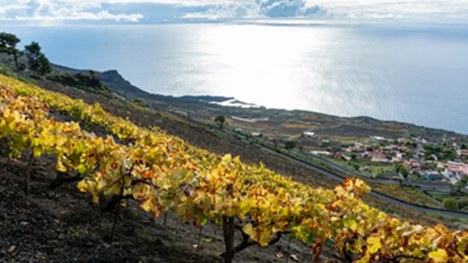
The selection of Sicily (Etna), the Canary Islands (Valle de la Orotava), and Priorat aims to compare wines produced in extreme territories, where soil and climate profoundly shape their character. Although these regions are very different, they share something in common: an intense mineral expression.
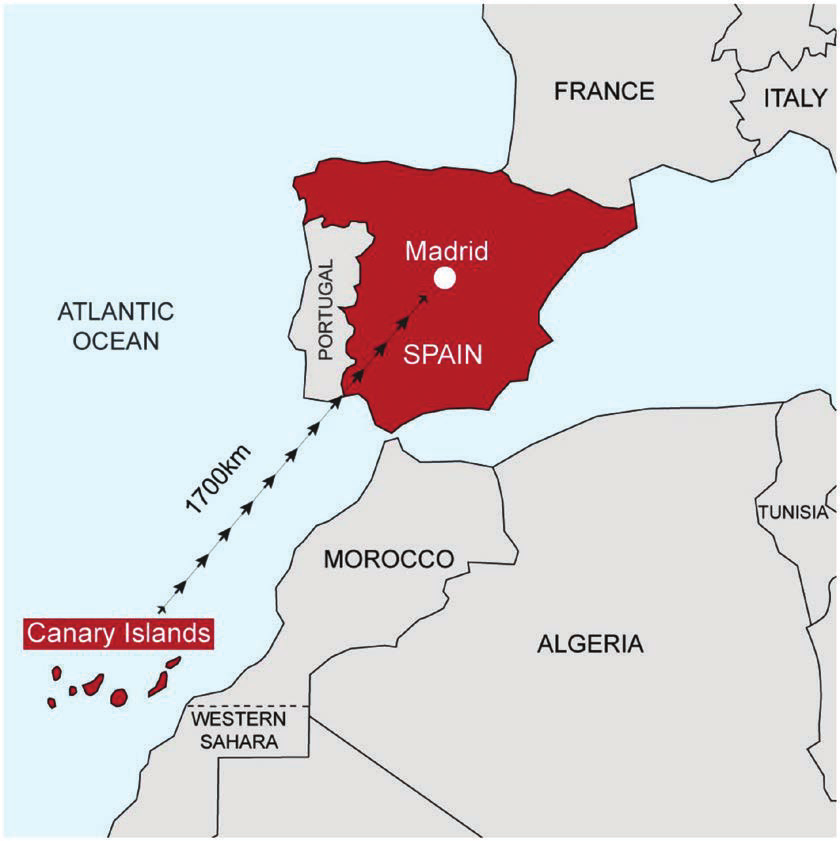
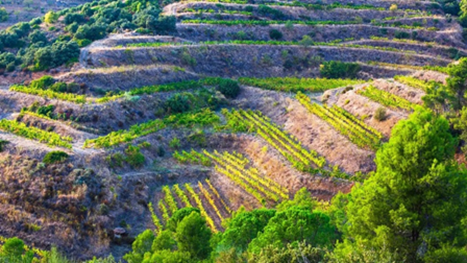 Despite not being part of the Mediterranean, the Canary Islands were included for the following :
- We haven’t had a tasting of wines from the Canary Islands at the Club, notwithstanding having a winemaking tradition of high‑quality wines.
- Their volcanic origin creates a natural dialogue with Sicily, while their lightness contrasts with the power of Priorat, enriching the comparison.
Type of tasting: open
Presenters: Clara Estrada and Jorge García-García
Participants: R. Arroio; J. Brakarz; Y. Cutler; J. Entwistle; C. Estrada; J. Estupiñan; C. Falconi; M. Fryer; G. García; N. Marzella; A. and C. Perazza; J. and L. Redwood; R. Santiago; G. Smart; L. Uechi; and G. Zincke.
These are the wines:
- Tenuta delle Terre Nere, Etna Bianco DOC, Sicily, 2024
- Envínate, Migan Tinto, Valle de la Orotava, Canary Islands, 2022
- Vall Llach, ‘Embruix’, Priorat DOCa, 2022
- Vall Llach – Porrera Vi de Vila, Priorat DOCa, 2022
The Menu
- Mediterranean citrus calamari salad
- Mushroom risotto
- Braised beef short ribs in a red wine reduction
- Dessert, coffee and tea
-
The Wine Regions
The Canary Islands: Viticultural History and Mediterranean Connection
Viticulture in the Canary Islands began after the European conquest of the archipelago in the 15th century, when settlers, merchants, and religious orders—mainly from the Iberian Peninsula, Portugal, and other Mediterranean regions—introduced Vitis vinifera varieties. Many of these grapes, common in the Mediterranean—such as Malvasia, Listán, and others now extinct in continental Europe—found in the volcanic soils and mild climate of the islands an exceptional environment for adaptation. From the beginning, vine cultivation in the Canaries was closely linked to Mediterranean and Atlantic trade routes, with the archipelago acting as a bridge between the two worlds.
 During the 16th and 17th centuries, the Canary wine industry flourished thanks to the production of sweet wines, especially those made from Malvasia, which were exported massively to England, Flanders, and the Americas. These wines, internationally known as Canary Sack or Malmsey, enjoyed great prestige and were widely cited in European literature of the time. This golden age positioned the Canaries as one of the major wine centers of Atlantic trade, in direct dialogue with other Mediterranean regions producing sweet and fortified wines.
A vast range of indigenous grapes are grown for wine, and international varieties are largely absent. Listan Blanco (Palomino), Malvasia, Marmajuelo, Listan Negro and Tintilla are some of the authorized grapes. The local varieties are suited to the sub-tropical climate and achieve high must weight, a reason the trend has been to produce sweet wines, including fortified ones aged oxidatively.
A key feature distinguishing Canary vineyards is that the islands were never affected by phylloxera in the 19th century, allowing the preservation of pre-phylloxera varieties and traditional cultivation systems that disappeared in much of continental Europe.
In the late 20th and early 21st centuries, a new generation of wine growers revived these varieties and historical practices, leading to a renewal of the Canary wine industry. Today, Canary wines are valued for their strong identity, marked volcanic minerality, and their ability to express a unique terroir that resonates with both Mediterranean heritage and Atlantic influence.
Appellations: The Canaries’ largest island, Tenerife, houses half of the region’s DOs: Abona, Tacoronte-Acentejo, Valle de Guimar, Valle de la Orotava and Ycoden-Daute-Isora. The remaining designations cover the islands (in their entirety) of El Hierro, Gran Canaria, La Gomera, La Palma and Lanzarote. Each area has a unique microclimate and soil composition, lending to distinctive wines with signature mineral notes.
Etna DOC, Sicily: “The Burgundy Of The Mediterranean”
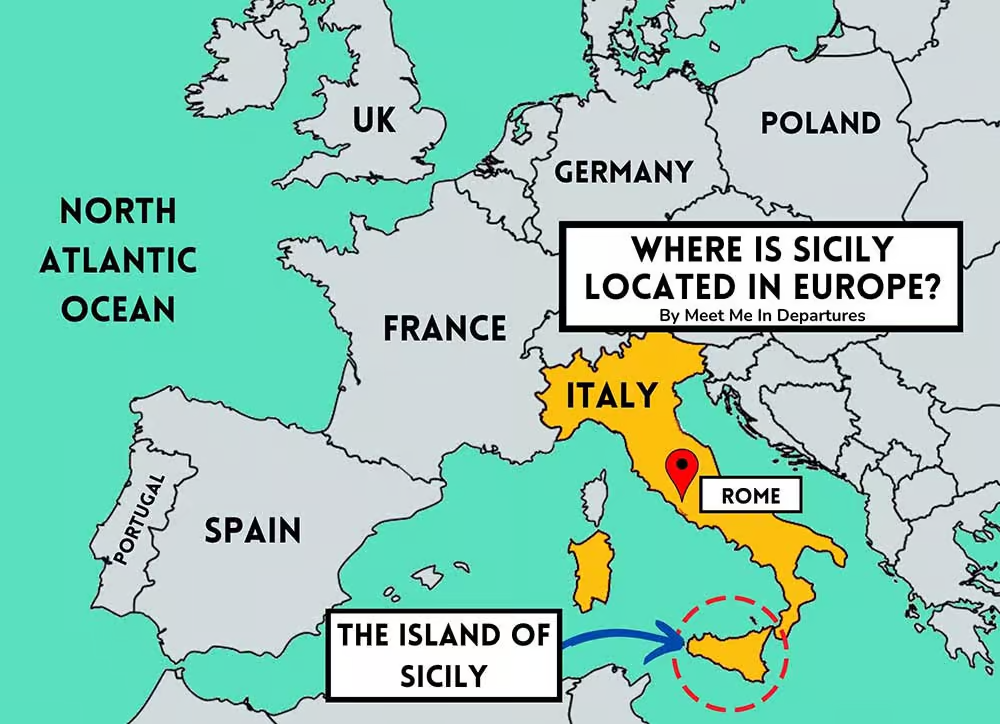 Sicily as a whole enjoys ample sunshine and lots of heat. However, Mt. Etna’s high elevation also provides greater rainfall, moderating breezes and cooler temperatures. Etna’s unique nature means soils, microclimates and exposures change dramatically from site to site, creating a panorama of characteristics and possibilities in the vineyards. Etna DOC is a stunning wine appellation that covers the slopes of Sicily’s Mount Etna. The appellation is famous for its unique volcanic terroir and distinctive wines. More details about wines from Sicily, and Etna DOC in particular can be found in our blog post from February, 2024 (https://clubvino1.com/2024/02/22/tasting-no-262-february-27-2024-wines-from-sicily/).
Priorat DOP, Spain: “Some of Spain’s most powerful red wines come from this small, geographically inhospitable wine region”
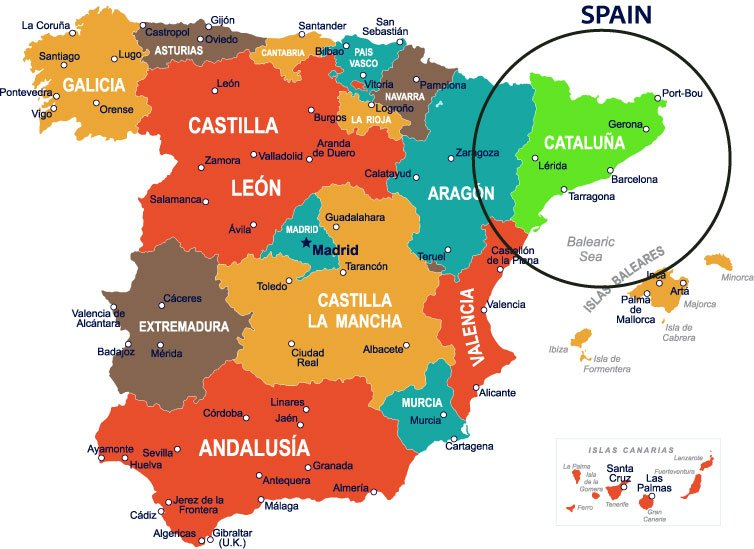 The Priorat wine DOP is located in the Catalonia region, just inland from the Mediterranean port city of Tarragona. The Montsant mountain chain dominates the region, with vineyards situated between 330 feet above sea level in the valleys of Bellmunt del Priorat and el Molar up to 2,500 feet above sea level on the slopes of La Morera de Montsant and Porrera. Many vineyards are located on costers (Catalan for “steep slope”), so terracing is common, and vineyards are often too steep and narrow for machine-harvesting. The slate soil on the slopes is known as llicorella due to its dark color and is the main feature of the soil’s terroir and the success of its native grapes: Ganarcha and Cariñena.
For more information, see our blog post from May, 2022 (https://clubvino1.com/2022/05/20/tasting-241-may-31-2022-1230pm-priorat-and-penedes-catalonia-wine-region/ ).
-
Climate and Terroir
Etna Bianco and the Canary Islands: volcanoes, altitude, and salinity
Both Etna Bianco and Migan come from volcanic soils.
– In the Etna DOC area, vineyards sit between 600 and 900 m on slopes of ash, pumice, and volcanic sands. This produces tense, saline wines with marked acidity.
– In the Canary Islands, especially in the Valle de la Orotava DO, volcanic soils mix ash, lapilli, and basalt, giving light, aromatic wines with a characteristic smoky minerality.
Both regions share volcanic origin, vibrant acidity, saline or smoky minerality, and climates moderated by the sea (the Mediterranean in Sicily, and the Atlantic in the Canaries).
Priorat: slate, Mediterranean heat, and concentration
Priorat contrasts with Sicily and the Canary Islands in almost every way:
– Llicorella soil (black slate and quartz), which contributes graphite notes and a dry, mineral texture.
– A continental‑influenced Mediterranean climate, warmer and drier, producing dense, ripe, structured wines.
– Old‑vine Cariñena and Garnacha, which yield deep and powerful wines.
-
The Grapes
Carricante and Catarratto
Carricante is native grape grown only on the volcanic slopes of Mt Etna and must make up at least 60% of Etna Bianco wines. It is the backbone of the Etna Bianco DOC wines, providing high acidity, tension, and longevity. Catarratto (20–25%) is added to the blend, to add body and herbal notes. Other native grapes are used in smaller amounts: Grecanico (5–10%), which contributes freshness and citrus aromas; and Minnella (5%) that gives softness and white fruit. All are native varieties are deeply tied to Etna’s terroir.
Listán Negro
An indigenous variety from the Canary Islands, it is widespread in Tenerife and La Palma. The grape produces light, aromatic wines with red fruit, pepper, and a distinctive volcanic character. It is the perfect grape to express Atlantic freshness and smoky minerality.
Garnacha (Grenache)
A classic Mediterranean grape, originally from Aragón and widely spread in Spain, France (as Grenache), and the southern Rhône. It produces wines with ripe red fruit, high alcohol, and silky texture. In Priorat it is key for bringing sweet fruit, breadth, and warmth.
Cariñena (Carignan)
Originally from Aragón, now common in Catalonia and southern France. A grape with high acidity, firm tannin, and deep color. In Priorat—especially in Porrera—old‑vine Cariñena provides structure, tension, and dark minerality.
International grapes
One of the red wines from Priorat in this tasting is a blend using international grapes in addition to the native varieties, such as: Merlot (28%), to soffen the tannins, and add roundness and plum notes; Syrah (12%), which adds spice, color, and a floral touch; and Cabernet Sauvignon (12%) brings structure, firm tannin, and cassis notes. Together, these varieties make Embruix more approachable, rounded, and aromatic than Porrera.
-
Information on the Wines
Wine #1. Tenuta delle Terre Nere – Etna Bianco DOC, Sicily, 2024
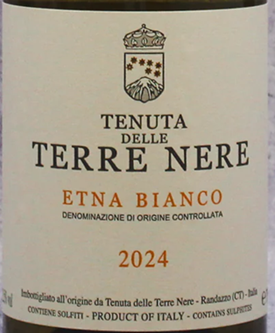 – Producer: Tenuta delle Terre Nere is one of Etna’s benchmarks, a pioneer in parcel‑based vinification and in showcasing the purity of volcanic terroir. Terre Nere’s vineyards encompass 55 hectares (135 acres) in four different subregions across the island. Altitude here ranges from 1960 to 3280 feet (600 to1000m) above sea level, creating steep slopes within an undulating landscape. The steepest gradients are closely terraced and require manual farming practices. Many vines are approaching 100 years old with a handful of plots over 130 years having been planted prior to the phylloxera epidemic of the late 19th Century.
– The wine: Its style: tense, mineral, saline white with vibrant acidity. Nose-floral, reminiscent of linden blooms; Palate: fresh and salty, mineral essence.
Critics’ notes: (a) Vinous: bouquet of flowers, ginger, and green apple; stimulating acidity and long finish; (b) Wine Advocate: transparent expression of the volcano, with flint, melon, and white peach.
Suggested pairings: white fish, seafood, lemon risotto.
Wine #2. Envínate ‘Migan’ Tinto, Valle de la Orotava, Canary Islands, 2022
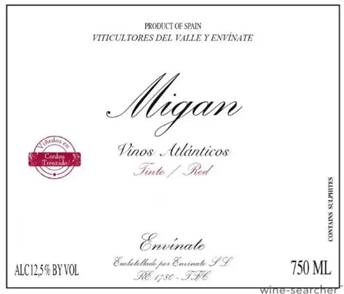 – Producer: Bodega Envínate is one of Spain’s most influential projects, focused on minimal‑intervention wines with strong terroir identity. In the Canaries, Envínate is a highly regarded winery situated in the Tenerife Island, known for its terroir-driven, low-intervention wines made from ancient, indigenous grape varieties. The project, founded in 2008 by four enology graduates—Roberto Santana, Alfonso Torrente, Laura Ramos, and José Martínez—focuses on expressing the unique volcanic landscapes of the Canary Islands, particularly in the Valle de la Orotava, where the Migan Tinto is produced, and the Taganana region.
– The wine: The style is light, aromatic red with fine tannin and volcanic minerality.
Critics’ notes: (a) Wine Advocate: very volcanic, with notes of pumice stone, pepper, and fresh red fruit; (b) Vivino (user profile): smoke, minerals, cherry, and spices.
Suggested pairings: roast chicken, fatty fish, soft cheeses.
Wine #3. Vall Llach, ‘Embruix’, Priorat DOCa, 2022[1]
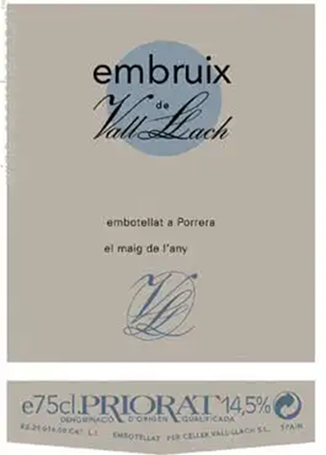 – Producer: Founded by Lluís Llach, Celler Vall Llach is one of the emblematic names of modern Priorat, and specialist in old‑vine Cariñena and Garnacha in Porrera. Their “trossos” (plots of land) are centenary farms, with vineyards between 90 and 110 years old of Carignan and Grenache. Their slopes are impressive and don’t allow mechanized work. They ensure we have an exclusive must for our selections. These vineyards are supplemented with others, chosen for their quality among the oldest and most famous in the villages of Porrera and Torroja, all cultivated by farmers who work on a regular basis with the winery. In addition, to further ensure the complexity of our wines, the winery planted a series of vineyards with grape varieties such as Cabernet Sauvignon, Merlot, Syrah and Viognier.
– The Wine: The Style: Balanced, approachable Mediterranean red with ripe fruit and minerality.
Critics’ notes: (a) Wine Advocate: ripe fruit, sweet spices, fine tannins, velvety palate; (b) Vinous: red fruit, reactive tannins, intense but accessible character.
Suggested pairings: white meats, pasta with ragù, semi‑cured cheeses.
[1] DOCa is the Spanish (Castillian) version of the title DOQ which is the official title in Catalan and the most commonly seen in the labels. Priorat was elevated to this status by the Catalan government in 2000. DOQ stands for Denominació d’Origen Qualificada. DOP, on the other hand, is the acronym for the Catalan Denominació d’Origen Protegida. Priorat is, together with La Rioja the two regions in Spain with the DOQa classification, the highest level for a wine region.
Wine #4. Vall Llach, ‘Porrera Vi de Vila’, Priorat DOCa, 2022
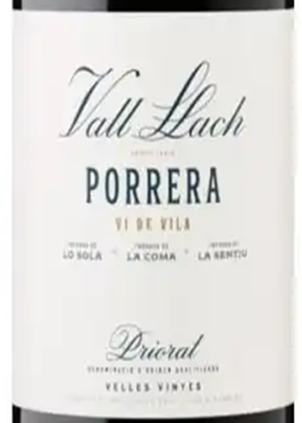 – The Wine: from the same producer, its Style: Deep, powerful, mineral red with firm tannin.
Critics’ notes: (a) Vinous: cherry and balsamic aromas, reactive tannins, intense wine; (b) Wine.com (description): black fruit, graphite, chocolate, and a very long finish.
Suggested pairings: lamb, red meats, aged cheeses.
Table A. Technical Sheet and Tasting Order

Table B. Structural and Sensory Comparison

6. Members Rating
The wine tasting took place before revealing their prices, with 17 participants rating them individually from Acceptable to Exceptional. The combined scores determined the ranking order, as shown in the following Table. In the final results, Vall Llach – Porrera Vi de Vila, Priorat DOCa, Spain, 2022was the Best wine, while Vall Llach, ‘Embruix’, Priorat DOCa, 2022 was the Best Buy.

.o0o.
The value we give to everything (people included)


 Club del Vino - Washington DC area