

Tasting No 277 – May 27, 2025
Pinot Noir from around the world
-
Tasting Overview
The objective of this tasting is to explore Pinot Noir wines from different regions of the world. We will taste Pinot Noirs from France, the United States, New Zealand and Chile. This is an open tasting.
Presenters: Yacsire Cutler and Orlando Mason
Participants: TBA
These are the wines
- Wairau River Pinot Noir, New Zealand, 2022
- Antonin Rodet, Pinot Noir ‘Grande Selection’, France, 2023
- Schug Carneros Pinot Noir, California, 2022
- Leyda Lot 21, Pinot Noir, Chile, 2018
The Menu
- Roasted beet with goat cheese
- Raviolis stuffed with mushrooms
- Grilled trout with mixed vegetables.
- Dessert, coffee or tea.
-
Brief History of Pinot Noir around the world
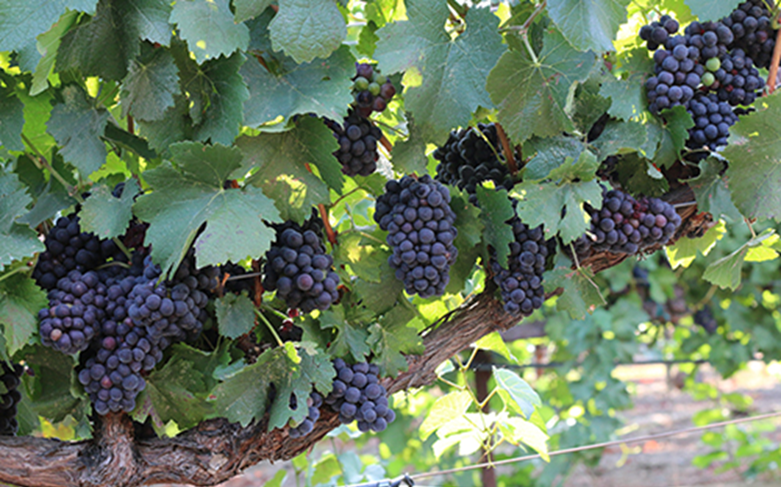
Pinot Noir is one of the oldest and most celebrated grape varieties in the world, known for producing elegant, complex red wines. It is believed to be over 2,000 years old, making it one of the oldest known grape varieties still in use. It likely originated in northeastern France, possibly around Burgundy, and there are records of being cultivated during the first century A.D. The name “Pinot” comes from the French word “pin” (pine), referencing the grape’s tightly clustered, pinecone-shaped bunches. “Noir” means black, referring to the color of the grape.
The Burgundy region of France is therefore considered the birthplace of Pinot Noir. Monks in the Middle Ages, were crucial in refining the cultivation of Pinot Noir in Burgundy, identifying the best vineyard sites. Burgundy’s deep association with the concept of terroir—how soil, climate, and vineyard location affect the wine—was largely shaped by Pinot Noir cultivation.
Pinot Noir has been know as known to be a “temperamental” grape. It prefers cool to moderate climates, heat cam mute its finesse and freshness. It is difficult to cultivate and vinify consistently due to its delicacy and susceptibility to mutation and rot. Because of its thin skin it doesn’t stand up as well to high heat, too much sun, hail or too much rain as hardier, thicker-skinned grapes; in addition, the grapes in the clusters are close together, making them more prone to mildew and rot in very damp conditions. Its prone to millerandage (uneven grape development). Pinot noir is highly reflective of the soil and climate where it is grown (especially in Burgundy.).
Pinot Noir primary flavors are red fruit – cherry, strawberry, raspberry. It often shows earthy, floral, and herbal tones—such as mushroom, rose petal, forest floor, tea leaves, clove and cinnamon. Younger Pinot is bright and juicy. Aged Pinot Noir: Can develop complex flavors like dried fruit, leather, game, and truffle.
Pinot Noir wines are generally light to medium bodied, low to medium tannins with a silky or soft texture, and naturally high acidity with helps it age and pair well with food. Alcohol content is typically moderate (12-14.5%.) Its color is pale to medium ruby or garnet. It is one of the lightest red wines in appearance.
In the 19th–20th centuries Pinot Noir began spreading to other parts of the world. Globally, Pinot Noir is one of the major red grape varieties, but it ranks behind more widely planted and robust varieties, such as Cabernet Sauvignon and Merlot. In total plantation, Pinot Noir is about 1/3 of Cabernet Sauvignon and less than Merlot, Tempranillo and Shiraz.
Notable Pinot Noir producing countries are:
- France (especially Burgundy) – benchmark quality, limited volume;
- USA (especially Oregon, California) – growing in prestige;
- Germany – surprisingly one of the largest producers (Spätburgunder);
- New Zealand – notable for vibrant, fruit-driven styles; and
- Chile – rising production in coastal cool zones.
-
Regions of production
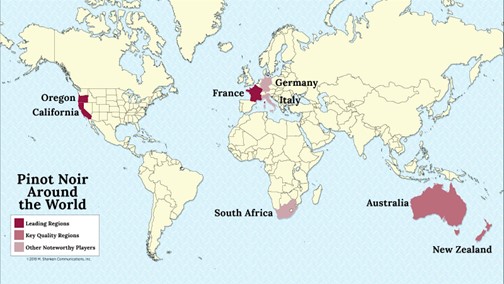
The wines to be tasted come from France (Burgundy), United States (Carneros), New Zealand (Central Oyago), and Chile (Valle Leyda.).
FRANCE – The real turning point for Pinot Noir came during the Middle Ages, when Cistercian and Benedictine monks in Burgundy began carefully cultivating and documenting vineyards. These monks were meticulous in observing how different vineyard plots—called “climats”—produced different expressions of the same grape. Their efforts laid the foundation for Burgundy’s terroir-based winemaking tradition. In 1395, Duke Philip the Bold of Burgundy famously issued a decree banning the lower-quality Gamay grape from Burgundy in favor of “the noble Pinot”. This marked the first formal attempt to protect and promote Pinot Noir, reinforcing its prestige in the region. Through the centuries, Burgundy’s reputation grew, especially among royalty, clergy, and nobility. Pinot Noir from top vineyards like Romanée-Conti became legendary. The 18th and 19th centuries saw continued refinement, and the Napoleonic inheritance laws later led to the fragmentation of vineyard ownership—contributing to the complexity of Burgundy’s wine labels today. In the 20th century, the AOC system was introduced to formalize vineyard classifications. Pinot Noir became almost exclusively linked with red Burgundy wines.
Two things make Pinot Noir from France unique: soil and climate. In terms of the soil, going back around 200 million years, France was part of a large, tropical sea. Over time, the seabed became limestone soils. These soils are behind the trademark zesty minerality of French wines, especially pinot noir. Because France has a cooler climate than other pinot noir wine regions, French pinot noir is delicate and light-bodied. Rather than bold, heavy flavours, you’ll catch the citrusy taste of orange peel and the fruity taste of cherry. You might also notice a smooth and sweet chocolate flavour.
UNITED STATES – Pinot Noir was first introduced to the U.S. in the mid-19th century, primarily by European immigrants bringing vine cuttings with them. Initial plantings were scattered and experimental, and the grape didn’t gain immediate traction due to its sensitivity to climate and soil. In the early 20th century, California saw some of the earliest serious attempts at cultivating Pinot Noir, particularly in areas like the Santa Cruz Mountains and later in Sonoma and Napa. However, it wasn’t until after Prohibition that efforts really picked up again. A major turning point came in the 1960s when planting Pinot Noir began in Oregon’s Willamette Valley. By the 1980s and 1990s, both Oregon and cooler parts of California were producing world-class Pinot Noir. The grape became known for its elegance, complexity, and expression of terroir. American Pinot Noirs gained further credibility on the world stage after Eyrie’s 1975 South Block Reserve placed well in international tastings. Pinot Noir is now one of the most prestigious and sought-after varietals in the U.S. Willamette Valley is widely considered one of the top Pinot-producing regions in the world, and California continues to innovate with diverse styles ranging from bold to delicate. Stylistically, these wines range from types similar to Burgundy’s (leaner, with firmer tannins and earth and mineral accents) to plusher and riper versions with rich dark fruit and spice notes, and styles in between
Specifically Carneros covers an area of 90 square miles on the southernmost foothills of the Mayacamas and Sonoma mountain ranges. This location sits between America’s two most famous wine-producing regions – the eastern half in Napa, the western half in Sonoma. In the 1880’s the Stanly Ranch in Carneros, with over 300 acres, was one of the largest vineyards in California and had significant Pinot Noir plantings.. The topography here – and the cool, windy mesoclimate it creates – is intimately connected with the style of wine produced here. This gives Carneros a much cooler, wetter climate than that found further north in the sheltered valleys. Carneros Pinot Noir has traditionally been lighter and tighter than those from other Californian regions, with notes of berries and herbs, rather than anything deeper and more opulent.
NEW ZEALAND – The history of Pinot Noir in New Zealand is relatively young, but it’s a story of rapid rise and global acclaim. In just a few decades, New Zealand has established itself as one of the premier Pinot Noir producers in the Southern Hemisphere, known for purity, elegance, and vibrant fruit. The earliest vine plantings in New Zealand go back to the 1800s, brought by European settlers, but it didn’t catch on due to lack of wine infrastructure, limited viticultural knowledge, and inappropriate vineyard sites. It is only in the 1970s, that the modern New Zealand wine industry began to take shape, particularly in regions like Martinborough, Canterbury, and Central Otago, where the first producer recognized that the cool, dry climate and free-draining soils mirrored conditions in Burgundy The current trends are: greater focus on single-vineyard bottlings and sustainable practices; use of native yeasts, whole-bunch fermentation, and minimal intervention; and increasing comparisons to Burgundy, especially from Martinborough and Central Otago.
New Zealand Pinot Noirs are noted for bright cherry and berry fruit, silky tannins, balanced acidity and transparency of terroir. In particular Central Otago, with its high-altitude vineyards, continental climate, and dramatic temperature swings, is considered ideal for Pinot Noir wines that are characterized as bold, structured and fruit forward.
CHILE – Pinot Noir likely arrived in Chile in the 19th century, brought by European settlers. However, it was not widely planted or seriously cultivated mainly because Chile’s central wine regions were too warm for Pinot to thrive. In the 1990s, Chilean winemakers began exploring coastal regions, realizing the cooling influence of the Pacific Ocean and Humboldt Current could support delicate grapes like Pinot Noir. Regions like Casablanca Valley, San Antonio Valley (especially Leyda), Limarí Valley, Bio-Bío and Itata in the south began to produce higher-quality, cooler-climate Pinot Noir. Winemakers started to use better clones of Pinot Noir (especially Dijon clones from Burgundy); implement lower yields and more precise vineyard management; and experiment with oak aging, whole-cluster fermentation, and minimal intervention techniques.
The Leyda Valley region enjoys the effects of the cold Humboldt Current of the Pacific Ocean. The first vignerons appeared in Leyda in the late 1990s, attracted by a terroir that was almost perfect for the production of premium grapes, save for the lack of an abundant source of water for irrigation. A significant investment by a wine-producing family in the area saw the construction of a pipeline five miles (8km) long to channel water from the Maipo River in the south.The close proximity to the coast is what is driving growers to Leyda. Cold ocean breezes and morning fog moderate the overall temperatures, and the valley is therefore significantly cooler than its low latitude might suggest. These cool temperatures are complemented by warm sunshine during the long growing season, letting grapes ripen fully and develop complexity while still retaining acidity. Leyda Valley’s soils are largely clay and loam over a granite base with moderate drainage. These low-fertility soils are good for the production of premium grapes because they make the vines struggle for survival. This results in vines that put all their energy into producing small, concentrated grapes rather than leafy foliage. Wines produced from these grapes tend to be structured and complex and Leyda Pinot Noir wines style is bright red fruit, floral, and elegant.
-
Information on the Wines
Wine #1. Wairau River Pinot Noir, New Zealand, 2022
 The producer: Wairau River Wines is a family-owned winery located in the Marlborough region of New Zealand’s South Island. Established in 1978 by Phil and Chris Rose, the winery has grown to become one of Marlborough’s most respected producers, known for its commitment to quality and sustainability.
The wine
Grapes: 100% Pinot Noir
Alcohol: 13%
Tasting Profile:
Aromas: Notes of ripe cherry, pomegranate, and red berry, complemented by hints of white pepper, anise, and a subtle earthy undertone.
Palate: Bright and fresh with concentrated flavors of raspberry and red cherry. The wine exhibits a soft, generous mouthfeel, with delicate wild berry nuances and a touch of savory complexity. Fine, elegant tannins provide structure and depth, leading to a lingering finish.
Oak Influence: Aged for nine months in French barriques, imparting subtle toasty oak characteristics that enhance the wine’s complexity without overpowering the fruit profile.
The 2022 Wairau River Pinot Noir from Marlborough, New Zealand, is a vibrant and expressive red wine that showcases the distinctive characteristics of the region’s cool-climate terroir.
Wine #2. Antonin Rodet, Pinot Noir ‘Grande Selection’, France, 2023
 The producer: Antonin Rodet is a historic wine producer and négociant based in Mercurey, in the Côte Chalonnaise region of Burgundy, France. Founded in 1875 by Antoine Rodet, the house has been instrumental in promoting the wines of southern Burgundy, particularly those from Mercurey.
The wine
Grapes: 100% Pinot Noir.
Vinification: The mechanically harvested grapes went through a pre-fermentary maceration period giving brighter color and fresh fruity aromas to the wine. After that 4-days period, the plots were vinified separately with a long fermentation of at least 3 weeks. The tank fermentation process ended with a post-fermentary maceration of 7 days at hot temperature to refine the tannins. The wine was then aged for 4 months on fine lees, under wood for a quarter to bring a subtle structure and in stainless steel tanks to keep the fruit and freshness of the grape.
Tasting Profile:
Appearance: Bright garnet red.
Aromas: Delicate notes of cherry and coffee, complemented by subtle toasted nuances.
Palate: Fruity and appealing, with flavors of chocolate and a hint of menthol. The wine is medium-bodied, featuring silky tannins and a long finish with assorted fruit flavors and a fine touch of oak.
Accolades:
- Silver Medal: Global Pinot Noir Masters, March 2024.
- Bronze Medal: International Wine & Spirit Competition, May 2024.
- Bronze Medal: International Wine Challenge, May 2024.
Wine #3: Schug Carneros Pinot Noir, California, 2022
 The producer: Schug Carneros Estate Winery is a family-owned winery situated in the Carneros regiom of Sonoma County, California. Founded in 1980 by German-born winemaker Walter Schug, the estate is renowned for its European-style Pinot Noir and Chardonnay wines.
The wine
Grapes: 100 % Pinot Noir
Alcohol: 14%
The classic Carneros region Pinot Noir offers a wide range of flavors and aromas, intyhe tradition of the finest red Burgundies of France. “Clonal diversity” is achieved by carefully blending several vineyard lots, each retaining its own unique clonal signature in the blend.
Tasting profile:
The result is a complex wine with a rich bouquet of cherries, berries and hints of spicy new oak. It has flavors reminiscent of black cherry, currant and strawberry, followed by a rich, spicy texture and a long silky finish.
Wine#4: Leyda, Lot 21 Pinot Noir, Chile, 2018
 The producer: Viña Leyda is a Chilean winery located in the Leyda Valley, approximately 90 kilometers west of Santiago. Renowned for its cool coastal climate, the Leyda Valley benefits from the Humboldt Current, which brings cold ocean breezes that moderate temperatures, allowing for a slow and balanced grape ripening process.
Viña Leyda emphasizes minimal intervention in both vineyard and cellar practices to authentically express the character of its coastal terroir. The winery employs sustainable viticulture methods and prefers fermenting in concrete tanks, casks, and stainless steel over extensive oak aging. This approach preserves the wines’ freshness, minerality, and elegance – hallmarks of their style .
The wine:
Grape: 100% Pinot Noir
Alcohol: 13.5%
Soils: The soils are mostly made up of clay and loam, with a granite base.
Wine making: Early harvests is implemented to guarantee a fresh-fruit profile of herbal character with low alcohol. Gentle vinification is carried out, avoiding over extraction in reds. Little barrel aging is used, with a preference for casks, concrete tanks, and stainless steel.
Tasting Notes: This wine presents a ruby red hue with floral and fresh red fruit aromas, incluidas cherry, redcurrant, and raspberry. Subtle notes of mushrooms and earthy tones add complexity. On the palate, it is bright and juicy. The wine features soft and silky tannins, contributing to its elegant mouthfeel. The balance between acidity and fruitiness provides a refreshing and lingering finish.
Accolades: The Lot 21 Pinot Noir is recognized for its elegance and depth. It was featured in Wine Enthusiast’s Top 100 in 2023.
-
CV Members Rating (TBA after the tasting)
References:
https://michelegargiulo.com/blog/history-of-pinot-noir
https://wine-searcher.com/regions-leyda-valley
https://vinepair.com/wine-blog/the-king-of-burgundy
www.wine-searcher.com/regions-Carneros
www.winehistorytours.com/the-rise-of-pinot-noir-in-Chile
www.princeofpinot.com/article/787
www.princeofpinot.com/article/214
A Complete Guide To Pinot Noir – Pinot Days
About Us – Tasting Meeting Synopses – Annual Tasting Programs – Membership and Operations – Talks About Wine-Members Corner – Club Members – Moments Some Club del Vino History in Pictures
.o0o.
Que Vinazo
.o0o.

 Club del Vino - Washington DC area