 Tasting No 285 – January 29, 2026 Tasting Champagne: Non-Vintage Brut and Rosé
Tasting date changed to January 29 due Snow Storm, please reconfirm your participation
Scroll to the bottom of this post for a MS Power Point presentation of this content.
- Tasting Overview
The objective of this tasting is to compare and contrast Non-vintage (NV) Brut and Rosé versions of Champagne wines produced by two famous estates: Veuve Clicquot and Moët & Chandon. Specifically, to compare two NV Brut, compare two Rosé and compare the NV with the Rosé of each House. Also, Participants may discuss aspects of champagne-making, such as terroir, the méthode champegnoise, types of champagne, the service, among others.
Type of tasting: Open
Presenters: Ricardo Santiago
Participants: R. Arroio; M. Averbug; L. Bocalandro; J. Brakarz; R. Connolly; C. Estrada; M. Fryer; N. and R Gochicoa; R. Gutierrez; O. Mason; P. Meduña; A. and C. Perazza; C. Santelices; R. Santiago; E.
Silva; L. Uechi; and S. Santiago (guest).
These are the wines:
- Veuve Clicquot, Yellow Label NV, Brut, Champagne
- Moët & Chandon, Impérial NV, Brut, Champagne
- Veuve Clicquot, Rosé NV, Brut, Champagne
- Moët & Chandon, Impérial Rosé NV, Brut Champagne.
The Menu
- Lobster bisque
- Grilled cod with spinach and lemon
- Grilled lamb with vegetables
- Dessert, coffee and tea.
- Types, Main Grapes and Tasting Champagne
- The Producers
- Winegrowers: more than 16,200 who, together, own 90% of the vineyards.
- Cooperatives: first cooperative was set up in 1921.
- Champagne Houses: historically been at the origin of the reputation and prestige of Champagne’s wines. Houses make and sell two-thirds of the Champagne under different brands.
- Professional Categories:
- NM: Négociant Manipulant (Merchant Producer)
- RM: Récoltant Manipulant (Grower Producer)
- RC: Récoltant Coopérateur (Cooperative members with own label)
- CM: Coopérative de Manipulation (Cooperative Producer)
- ND: Négociant Distributeur (Merchant distributor)
- MA: Marque d’Acheteur (Private label/store brands)
- Professional Categories:
- Types of Champagne
- Non-Vintage Brut
- Blanc de Blancs
- Blanc de Noirs
- Vintage Champagne
- Rosé Champagne
- Champagne from specific localities or plots
- The Three Main Grapes in Champagne
- Pinot Noir
- Brings body
- Aromas of red fruit and flowers (rose, violet)
- Gives wines structure
- Chardonnay
- Delicacy
- Aromas of white flowers and citrus fruit
- Freshness
- Meunier
- Supple and fruity
- Aromas of yellow fruit
- Tasting Champagne
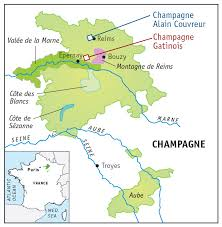
- Champagne is tasted in the same way as any other wine, with one difference: the opening of the bottle and the bubbles add a sound component. In this way, Champagne can be said to stimulate all the senses.
- Appearance:
- Color
- Intensity
- Nose
- Intensity
- Aromas of youth/Primary
- Aromas of Maturity/Secondary
- Aromas of Fullness/Tertiary
- Taste
- Effervescence
- Sweetness
- Liveness
- Body
- Flavors
- Finish
- Conclusion
- Complexity
- Recommendation
- Food Pairing.
- The Champagne Houses
“A Champagne House is an agricultural and/or industrial and commercial business that commands the human and natural resources required to produce Champagne for distribution worldwide.”
The Champagne Houses are the cornerstone of the success of Champagne wines, building an international reputation that has given Champagne legendary status. They have cuvées that perpetuate the characteristic style of each brand.
Veuve Clicquot
- Founded in 1772 by Philippe Clicquot.
- The widow Barbe Nicole Clicquot Ponsardin, born in 1777, assumed in 1805 the head of the company founded by her father-in-law.
- She is responsible for many firsts in Champagne: the first known vintage champagne (The Comet Vintage 1811), the invention of the riddling table; and the first known blended rosé.
- Motto of the House: “Only one quality, the finest”.
- A lineage of just 11 Cellar Master ensuring the quality of the style: strength and complexity.
- Only the juice from the cuvée (the first and most noble pressing) is used.
- Has the largest and most varied collection of reserve wines (400 wines, aged up to 30 years).
Moët & Chandon
- Founded in 1743, in the heart of champagne country with the most extensive estates in the region.
- The House has 1,300 hectares (3,212 acres) of rich chalk soil, 50% are Grands Crus and 25% are Premiers Crus.
- The grapes come from vineyards in all the five main areas of Champagne, from 280 of the 323 crus in the region.
- This wide-ranging diversity of fruits and vineyards ensures the optimum selection of grapes, maintaining the constancy and originality of Moëtchampagnes.
- The Wines
Wine #1. Veuve Clicquot, Yellow Label NV, Brut, Champagne
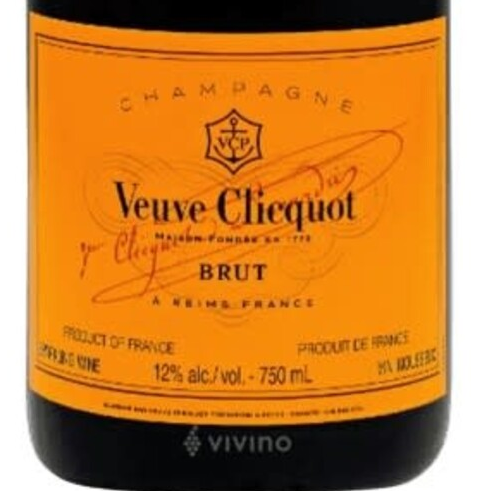
- The House’s signature champagne.
- Veuve Clicquot style: freshness, strength, aromatic richness and silkiness.
- Predominance of Pinot Noir (50%) provides the structure that is so typically Veuve Clicquot. A touch of Meunier (20%) rounds out the blend and Chardonnay (30%) adds the elegance and finesse essential in a perfectly balanced wine.
- The blend can be created with up to 45% reserve wines.
- Yellow Label Brut is structured by Pinot Noir, the true backbone of the wine.
- Yellow Label Brut cuvée reveals an aromatic profile dominated by notes of white and yellow fruits like pear, apple, and peach. Hints of citrus fruits like mandarin and grapefruit blend harmoniously with gourmand aromas of brioche.
- Dosage: Brut 9 g/l.
- Alcohol: 12.5%.
Wine #2. Moët & Chandon, Impérial NV, Brut, Champagne
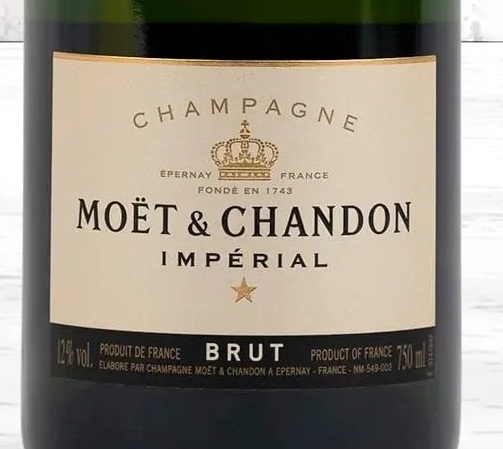
- Moët Impérial is the House’s iconic champagne. Created in 1869, it embodies Moët & Chandon’s unique style, distinguished by its bright fruitiness, seductive palate and its elegant maturity.
- Created from more than 100 different wines, of which 20 to 30% are reserve wines specially selected to enhance its maturity, complexity and constancy, the assemblage reflects the diversity and complementarity of the three grapes varietals.
- The body of Pinot Noir (30 to 40%), the suppleness of Meunier (30 to 40%) and the finesse of Chardonnay (20 to 30%).
- A sparkling bouquet: the vibrant intensity of green apple and citrus fruit, the freshness of mineral nuances and white flowers, and the elegance of blond notes (brioche, cereal, fresh nuts).
- Dosage: Brut 7 g/l.
- Alcohol: 12.5%.
Wine #3. Veuve Clicquot, Rosé NV, Brut, Champagne
- Veuve Clicquot Rosé is the result of a blending of grapes from 50 to 60 different crus and is composed of up to 45% reserve wines. The cuvée is based on the traditional Yellow Label blend and completed with Pinot Noir red wine.
- The Brut Rosé offers a rich aromatic profile, combining red and black fruits (cherry, strawberry, raspberry, blueberry), spices (white pepper, saffron, licorice), pastries (biscuit, croissant), all enhanced by accents of toast, orange peel, and gingerbread linked to aging on lees.
- The blend is structured by Pinot Noir, the true backbone of the wine. The addition of 12% red wine from Bouzy brings depth and power on the palate. A harmonious balance of freshness and structure with aromas of red fruits, biscuit, pastry, and a long, elegant finish.
- Dosage: Brut 9 g/l.
- Alcohol: 12.5%.
Wine #4. Moët & CVhandon, Impérial Rosé NV, Brut, Champagne
- Brut Impérial Rosé embodies the vibrant essence of champagne rosé at its finest. This radiant expression of Moët & Chandon style captivates with bright red fruit notes and seductive amber highlights.
- Every bottle of Champagne Brut Impérial Rosé embodies our savoir-faire, where three noble grape varieties unite in perfect harmony. This artful assemblage creates the signature radiance and romantic expression that defines our Brut Rosé.
- Each cépage contributes its distinct character, carefully balanced by our cellar masters: the intensity of Pinot Noir (40 to 50%), the roundness of Meunier (30 to 40%), and the elegance of Chardonnay (10 to 20%).
- Dosage: Brut 7 g/l.
- Alcohol: 12.5%.
- CV Members Rating (after the tasting)
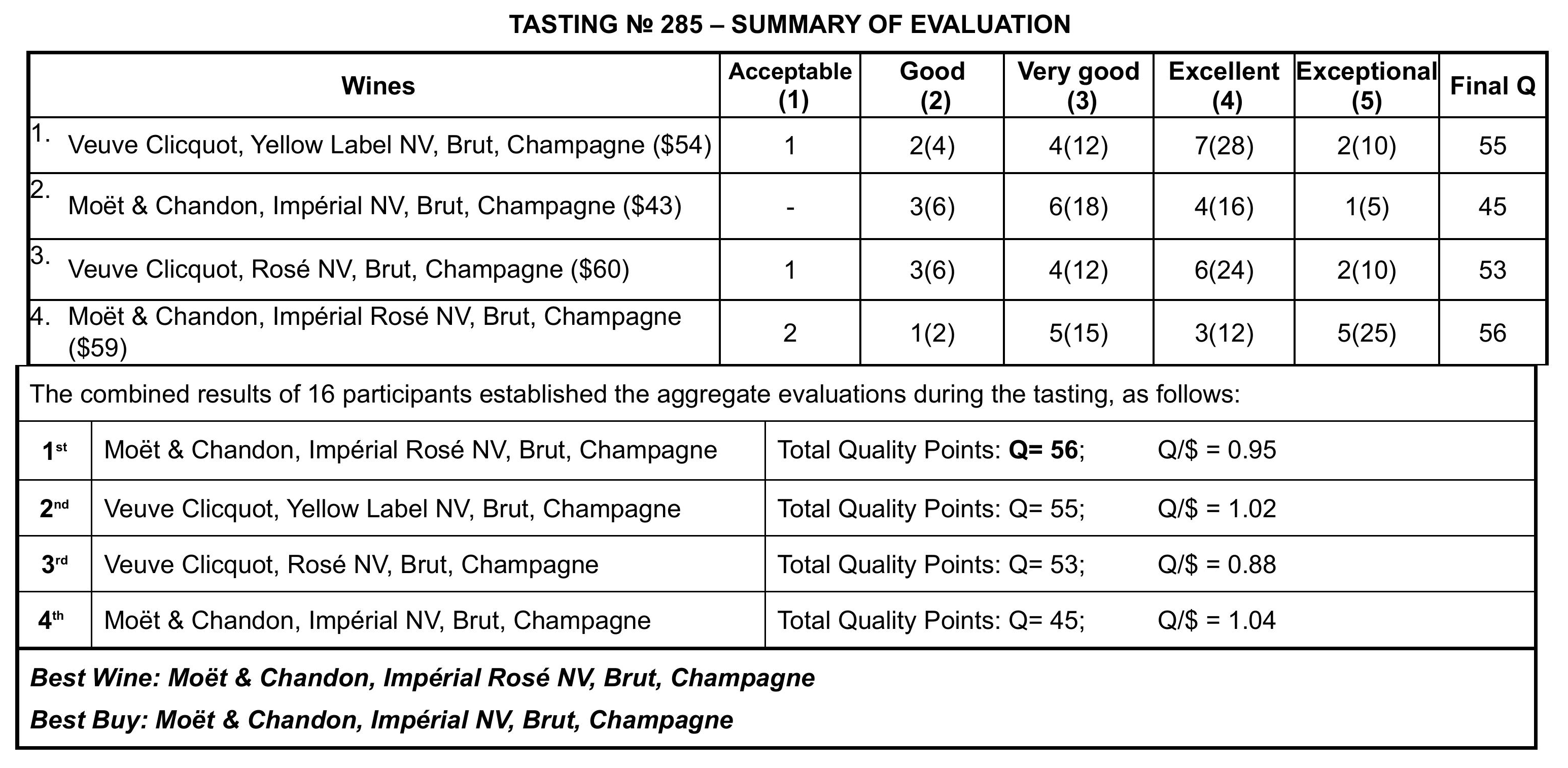
The wine tasting took place before revealing their prices, with 16 participants rating them individually from Acceptable to Exceptional.
The combined scores determined the ranking order, as shown in the following Table. In the final results, three of the wines were rated very
closely; nominally, Moët & Chandon, Impérial Rosé NV, Brut, Champagne was the Best wine, while Moët & Chandon, Impérial NV, Brut, Champagne was the Best Buy.
Notes and References
- Section II is based on Understanding and Recommending Champagne, Comité Champagne, 2025.
- Sections III and IV summarizes the information from the producers Veuve Clicquot and Moët & Chandon (Veuve Clicquot, a champagne house beyond the luxury brand; Discover our Champagnes Moët & Chandon | Moët & Chandon )
- To learn about the story of Veuve Clicquot see the film Widow Clicquot. Directed by Thomas Napper, 2023 (available in Netflix).
- To expand your knowledge about Champagne you can train online for free: Champagne wines training | Champagne Education
- Additionally, the Comité Champagne promotes a presential “Champagne Specialist” training course leading to a recognized certification with an exam consisting of three tests (multiple-choice, short written answers and tasting tests): Champagne Specialist : Understanding and recommending Champagne | Champagne Education)
.o0o.

 Club del Vino - Washington DC area