
 Tasting 283 November 18, 2025 Pinot Noir

-
Tasting Overview
The main objective of this blind tasting is to compare and contrast Pinot Noir wines produced in different regions of the world. The presentersm have chosen wines that are distinctive, from the same vintage, in the same price range. The wines were served in a random order all at the same time. At the end, all participants ranked the wines before revealing them and their prices. The wines are from the following regions: Argentina (Uco Valley), Chile (Limari Valley), New Zealand (Malborough) and USA (Virginia).
Type of tasting: Blind
Presenters: Erico Silva and Ricardo Santiago
Participants: S. Ardila; M. Averbug; J. Brakarz; R. Connolly; C. Estrada; J. Estupiñan; C. Falconi; M. Fryer; J. García; R. Gutierrez; O. Mason; C. and A. Perazza; J. and Redwood; J. Requena; C. Santelices; R. Santiago; E. Silva; G. Vega; and Marilda Averbug (guest).
These are the wines:
- Cloudy Bay, Pinot Noir, Marlborough, 2022
- Domaine Nico, La Savante, Pinot Noir, Valle de Uco, Mendoza, 2022
- Ankida Ridge, Pinot Noir, Virginia, 2022
- Concha y Toro, Amelia, Pinot Noir, Valle del Limari, 2022
- Menu
- Calamari fritti with mild fra-diavolo sauce
- Ravioli de Vitello in aurora sauce
- Salmone alla griglia con funghi
- Dessert, coffee and tea.
-
Brief History of Pinot Noir Around the World
Yacsire Cutler and Orlando Mason presented an excellent brief history of Pinot Noir for their Tasting No 277 presentation, which we are including here for context and reference:
“Pinot Noir is one of the oldest and most celebrated grape varieties in the world, known for producing elegant, complex red wines. It is believed to be over 2,000 years old, making it one of the oldest known grape varieties still in use. It likely originated in northeastern France, possibly around Burgundy, and there are records of being cultivated during the first century A.D. The name “Pinot” comes from the French word “pin” (pine), referencing the grape’s tightly clustered, pinecone-shaped bunches. “Noir” means black, referring to the color of the grape.
The Burgundy region of France is therefore considered the birthplace of Pinot Noir. Monks in the Middle Ages, were crucial in refining the cultivation of Pinot Noir in Burgundy, identifying the best vineyard sites. Burgundy’s deep association with the concept of terroir—how soil, climate, and vineyard location affect the wine—was largely shaped by Pinot Noir cultivation.
Pinot Noir has been know as known to be a “temperamental” grape. It prefers cool to moderate climates, heat can mute its finesse and freshness. It is difficult to cultivate and vinify consistently due to its delicacy and susceptibility to mutation and rot. Because of its thin skin it doesn’t stand up as well to high heat, too much sun, hail or too much rain as hardier, thicker-skinned grapes; in addition, the grapes in the clusters are close together, making them more prone to mildew and rot in very damp conditions. Its prone to millerandage (uneven grape development). Pinot noir is highly reflective of the soil and climate where it is grown (especially in Burgundy).
Pinot Noir primary flavors are red fruit – cherry, strawberry, raspberry. It often shows earthy, floral, and herbal tones—such as mushroom, rose petal, forest floor, tea leaves, clove and cinnamon. Younger Pinot is bright and juicy. Aged Pinot Noir: Can develop complex flavors like dried fruit, leather, game, and truffle.
Pinot Noir wines are generally light to medium bodied, low to medium tannins with a silky or soft texture, and naturally high acidity which helps it age and pair well with food. Alcohol content is typically moderate (12-14.5%.) Its color is pale to medium ruby or garnet. It is one of the lightest red wines in appearance.
In the 19th–20th centuries Pinot Noir began spreading to other parts of the world. Globally, Pinot Noir is one of the major red grape varieties, but it ranks behind more widely planted and robust varieties, such as Cabernet Sauvignon and Merlot. In total plantation, Pinot Noir is about 1/3 of Cabernet Sauvignon and less than Merlot, Tempranillo and Shiraz.”
The top dozen Pinot Noir producing countries by area, in 2023 are: France; USA; Germany; Italy; Australia; New Zealand; Chile; Switzerland; Romania; Argentina; Moldova; and South Africa.
-
The Countries for this Tasting
We have selected wines from three small producing countries New Zealand, Argentina, and Chile, and the United States. In the case of the United States, we selected a wine from Virginia, an exceedingly small producer of Pinot Noir.
 NEW ZEALAND – The history of Pinot Noir in New Zealand is relatively young, but it’s a story of rapid rise and global acclaim. In just a few decades, New Zealand has established itself as one of the premier Pinot Noir producers in the Southern Hemisphere, known for purity, elegance, and vibrant fruit. The earliest vine plantings in New Zealand go back to the 1800s, brought by European settlers, but it didn’t catch on due to lack of wine infrastructure, limited viticultural knowledge, and inappropriate vineyard sites. It is only in the 1970s, that the modern New Zealand wine industry began to take shape, particularly in regions like Martinborough, Canterbury, and Central Otago, where the first producer recognized that the cool, dry climate and free-draining soils mirrored conditions in Burgundy The current trends are: greater focus on single-vineyard bottlings and sustainable practices; use of native yeasts, whole-bunch fermentation, and minimal intervention; and increasing comparisons to Burgundy, especially from Martinborough and Central Otago.
New Zealand Pinot Noirs are noted for bright cherry and berry fruit, silky tannins, balanced acidity and transparency of terroir. In particular Central Otago, with its high-altitude vineyards, continental climate, and dramatic temperature swings, is considered ideal for Pinot Noir wines that are characterized as bold, structured and fruit forward.
 ARGENTINA – Pinot Noir in Argentina is a niche production, with about 2,000 hectares of cultivation. Making great Pinot Noir is often seen as the holy grail of winemaking, a quest that Argentine Producers have been chasing for decades. The earliest Pinot Noir success in Argentina was actually as sparkling wine and many of the Pinot Noir clones available in Argentina are Champagne clones used for sparkling wine rather than still reds. Since the 2000’s producers have changed their genetic selection and red Pinot Noir wines have improved greatly. The best Pinot Noir comes from the cooler regions of high altitude Uco Valley (notably Galtallary) and low altitude Rio Negro [Barnes, 2022].
 UNITED STATES – Pinot Noir was first introduced to the U.S. in the mid-19th century, primarily by European immigrants bringing vine cuttings with them. Initial plantings were scattered and experimental, and the grape didn’t gain immediate traction due to its sensitivity to climate and soil. In the early 20th century, California saw some of the earliest serious attempts at cultivating Pinot Noir, particularly in areas like the Santa Cruz Mountains and later in Sonoma and Napa. However, it wasn’t until after Prohibition that efforts really picked up again. A major turning point came in the 1960’s when planting Pinot Noir began in Oregon’s Willamette Valley. By the 1980’s and 1990’s, both Oregon and cooler parts of California were producing world-class Pinot Noir. The grape became known for its elegance, complexity, and expression of terroir. American Pinot Noirs gained further credibility on the world stage after Eyrie’s 1975 South Block Reserve placed well in international tastings. Pinot Noir is now one of the most prestigious and sought-after varietals in the U.S. Willamette Valley is widely considered one of the top Pinot-producing regions in the world, and California continues to innovate with diverse styles ranging from bold to delicate. Stylistically, these wines range from types similar to Burgundy’s (leaner, with firmer tannins and earth and mineral accents) to plusher and riper versions with rich dark fruit and spice notes, and styles in between.
Specifically Carneros covers an area of 90 square miles on the southernmost foothills of the Mayacamas and Sonoma mountain ranges. This location sits between America’s two most famous wine-producing regions – the eastern half in Napa, the western half in Sonoma. In the 1880’s the Stanly Ranch in Carneros, with over 300 acres, was one of the largest vineyards in California and had significant Pinot Noir plantings.. The topography here – and the cool, windy mesoclimate it creates – is intimately connected with the style of wine produced here. This gives Carneros a much cooler, wetter climate than that found further north in the sheltered valleys. Carneros Pinot Noir has traditionally been lighter and tighter than those from other Californian regions, with notes of berries and herbs, rather than anything deeper and more opulent.
 CHILE – Pinot Noir likely arrived in Chile in the 19th century, brought by European settlers. However, it was not widely planted or seriously cultivated mainly because Chile’s central wine regions were too warm for Pinot to thrive. In the 1990s, Chilean winemakers began exploring coastal regions, realizing the cooling influence of the Pacific Ocean and Humboldt Current could support delicate grapes like Pinot Noir. Regions like Casablanca Valley, San Antonio Valley (especially Leyda), Limarí Valley, Bio-Bío and Itata in the south began to produce higher-quality, cooler-climate Pinot Noir. Winemakers started to use better clones of Pinot Noir (especially Dijon clones from Burgundy); implement lower yields and more precise vineyard management; and experiment with oak aging, whole-cluster fermentation, and minimal intervention techniques.
The Leyda Valley region enjoys the effects of the cold Humboldt Current of the Pacific Ocean. The first vignerons appeared in Leyda in the late 1990s, attracted by a terroir that was almost perfect for the production of premium grapes, save for the lack of an abundant source of water for irrigation. A significant investment by a wine-producing family in the area saw the construction of a pipeline five miles (8km) long to channel water from the Maipo River in the south.The close proximity to the coast is what is driving growers to Leyda. Cold ocean breezes and morning fog moderate the overall temperatures, and the valley is therefore significantly cooler than its low latitude might suggest. These cool temperatures are complemented by warm sunshine during the long growing season, letting grapes ripen fully and develop complexity while still retaining acidity. Leyda Valley’s soils are largely clay and loam over a granite base with moderate drainage. These low-fertility soils are good for the production of premium grapes because they make the vines struggle for survival. This results in vines that put all their energy into producing small, concentrated grapes rather than leafy foliage. Wines produced from these grapes tend to be structured and complex and Leyda Pinot Noir wines style is bright red fruit, floral, and elegant.
-
The Wines
Wine #1. Cloudy Bay, Pinot Noir, Marlborough, 2022, New Zealand
Marlborough Pinot Noir is produced in areas such as the Wairau and Southern Valleys, which feature varied soils and a climate that is both cool and sunny. The cool but high-sunshine climate with cool nights is ideal for Pinot Noir’s complex flavor development. Soils vary by subregion, including gravelly riverbed soils in the Wairau Valley, and heavy clay soils in the Southern Valleys, which contribute to different wine styles.
The Producer: Cloudy Bay is a New Zealand winery founded in 1985, famous for putting Marlborough Sauvignon Blanc on the world map. Located in the Wairau Valley, the winery has a diverse portfolio that now includes Chardonnay, Pinot Noir, and Pelorus sparkling wines, and is a part of the LVMH group.
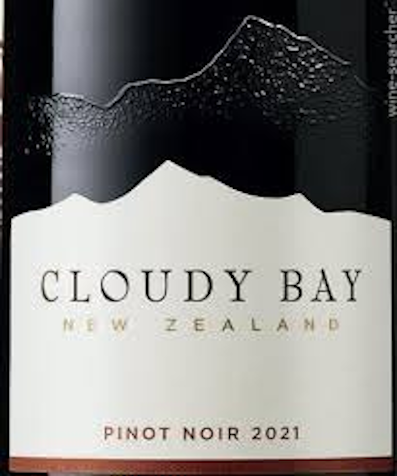 The wine – Vineyard & winemaking: this wine comes from the cool clay soils and rolling north facing slopes of Marlborough’s Southern Valleys region. The aged alluvial gravels and dense clay subsoils balance drainage and water availability to yield the region’s best Pinot Noir grapes. The key vineyards for this variety are Mustang, Delta and Barracks.
The fruits are sorted using an optical sorter before being gravity fed into open topped tanks. The skins were gently plunged with an average of 21 days of skin contact, followed by malolactic fermentation. Maturation in French oak for 11 months, of which 30% were new.
Technical data:
- 100% Pinot Noir
- Alcohol: 13.5%.
Producer’s Tasting Notes: Open and expressive on the nose, with notes of wild hedgerow fruits, crushed rose petals and sun-warmed red cherry. The palate is finely tuned, with silky tannins and a pure dart of acidity framing and balancing out a core of summer berries, soft spices and a touch of biscuity vanilla. Long on the finish, this wine evokes warm summer evenings, strawberries nestled under shaded leaves and the lingering scent of barbecue smoke.
Wine #2 Argentina – Domaine Nico, La Savante, Pinot Noir, Valle de Uco, 2022, Mendoza, Argentina
Jairo Sanchez and Jorge Requena provided an excellent overview of the Uco Valley region for Tasting No 254 – Valle del Uco, which you can find below.
Valle de Uco is located 88 km to the south of the City of Mendoza, in the foothills of the Andes, the Uco Valley spans the departments of Tunuyán, Tupungato and San Carlos. The wines from there are often labelled with one of these three place names.
Whereas in 2005 the valley had 16,800ha under vine, today it contains 28,600ha, representing 19% of all the vineyards in Mendoza. Almost one in five bottles produced in Mendoza, comes from the valley.
Because the region is so large, in recent years producers have been carrying out detailed analysis to identify smaller Geographic Indications (GIs). Paraje Altamira, Los Chacayes and San Pablo are some of the most famous, together with Gualtallary, and all contain vineyards set at altitudes of between 900m and 1,500m. Irrigation water comes from the glaciers above, mainly channelled by the Tunuyán and Las Tunas rivers.
The climate is continental: dry with plenty of sun, low rainfall, cold winters and warm summers with a large thermal range. The point of difference is the altitude, which defines the temperature (on average, it drops 1°C every 150m higher up you go) and the cool climate has lured many producers away from warmer areas further down. All these different factors result in expressive, tense reds and vibrant whites.
The proximity and exposure to the Andes make for alluvial, rocky soils with widely varying mixtures of sand, limestone and clay in unique combinations that produce memorable wines. Within the 50km (30 miles) Valle de Uco region there are smaller wine regions with slightly different wine styles: Tupungato, Tunuyán and San Carlos.
Tupungato is well-known among collectors because of an unofficial growing area called Gualtallary with calcareous soils. You’ll find fresher styles of Malbec, Chardonnay, and Cabernet Franc because vineyards are as high as 5,250 feet (1600 meters).
The Gualtellary subregion of Tupungato is becoming one of the most famous subregions of Argentina. Some of the most expensive and idolized wines come from Gualtellary, which is quite remarkable considering that there were barely any vines here 30 years ago. It produces some of the best white wines in Argentina. Red wines, from Pinot Noir to Cabernet Sauvignon are also making waves and Gualtellary is now equally as well known for its incredibly fresh and vibrant red wines. The subregion altitude varies from 1080 to 1600 m.a.s.l. However, it isn’t just the cooler temperature that makes Gualtellary distinctive – but also the soils. Pockets of calcareous deposits which are considered the holy grail of wine terroir, have been discovered in Gualtellary [ Barnes, 2022].
The Producer: Domaine Nico was founded by Dr. Laura Catena (of the Catena wine producing family) to produce high-altitude Pinot Noir wines, named after her daughter Nicola. The winery is known for its single-parcel vineyards (Grand Père and Grand Mère in Villa Bastías, Histoire d’A and La Savante in Gualtallary, and Le Paradis in Gualtallary Alto) all within the Tupungato region of the Mendoza province in Argentina.
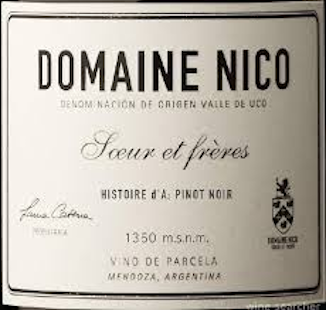 The Wine – Vineyard & winemaking: The vineyard soils are described as follows: depths of 0-40 cm: loose, sandy, loamy soil; between depths of 40-60 cm: reddish-hued compact calcium carbonate. Between depths of 60-110 cm: 90% boulder debris 5 cm in thickness, with dispersed calcium carbonate. Vineyard located in Gualtallary, Tupungato, elevation of 1450 m.s.n.m. (4757 feet). Fermentation is in roll-fermentor and 24 hL stainless steel tanks with 50% whole cluster. Fermented at an average temperature of 22ºC for 12 days. Aged 12 months in French oak (100% François Frères), 15% new barrels, 35% second-use and 50% third-use barrels.
Technical Data:
- 100% Pinot Noir
- Alcohol: 12.5%
Producer Tasting Notes: Red-mineral fruit, with slight reduction and a touch of citrus. Orange peel. Earthy character. High Acidity and low alcohol content. Vertical wine. Layered tannins.
Wine #3 – Ankida Ridge, Pinot Noir, Virginia, 2022, USA
Pinot Noir production in Virginia is a challenging niche, limited by the state’s warm and humid climate, which requires careful site selection and diligent vineyard management. Producers often choose high-elevation sites in the Blue Ridge or Shenandoah Valley and sometimes harvest early to make sparkling wine. Despite the difficulties, Virginia winemakers like Ankida Ridge and 12 Ridges are creating high-quality, nuanced Pinot Noirs that are gaining recognition for their acidity and structure.
The producer – Ankida Ridge is a high-elevation, family-owned micro-boutique vineyard located on the Blue Ridge Mountains in Amherst County, Virginia. Known for its stunning mountain views and unique cool-climate microclimate that produces distinctive, high-quality wines, especially Pinot Noir and Chardonnay. It is also known for its environmentally sensitive viticulture practices, such as using sheep for vineyard management.
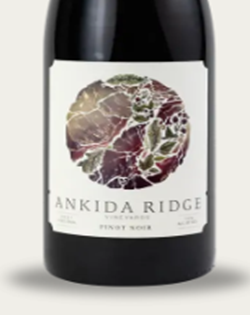 The Wine – Vineyard & winemaking: the wine maker describes the soil of the vineyard, located in a steep slope on Chestnut Ridge, at a high elevation (around 1,800 feet), as weathered igneous rock of charnockite granite containing a complexity of quartz, pyroxene, feldspar converting to clay and other minerals. This wine is aged for 11 months in French oak barrels. (30% new French oak, with the remaining in neutral French oak).
Technical Data:
– 100% Pinot Noir
– Alcohol: 13.8.
Producer Tasting Notes: Balanced acids, fruits and tannins, elegant, luxurious mouthfeel, lightly spiced, dark fruit, tea. Wild blackberries, dark cherries, vanilla, forest floor.
Wine #4. Concha y Toro, Amelia, Pinot Noir, Valle del Limari, 2022, Chile
Pinot Noir in Chile’s Limarí Valley benefits from a unique climate and soil combination: coastal breezes, morning fog, and a semi-desert climate. The cooling breeze of the Pacific Ocean doesn’t directly affect the dry and hot weather of the Limari wine region, but it influences the vineyards through the Camanchaca, a cooling fog that, every morning, enters the valley from the west and retreats as the sun. The soil is very rich in minerals, consisting mainly of clay, silt and chalk. Vine rows are mainly watered with a drip irrigation system.
The producer: Viña Concha y Toro, founded in 1883, is Latin America’s leading producer and occupies an outstanding position among the world’s most important wine companies, currently exporting to 140 countries worldwide. Uniquely, it owns more than 12,000 hectares of prime vineyards in Chile, Argentina and the United States.
 The wine – Vineyard & winemaking: The wine is produced from fruits from the Quebrada Seca vineyard (Block 5 and Block 15) which is situated on the northern bank of the Limarí River at an altitude of 190m above sea level, just 22 kilometres from the Pacific Ocean. The soils are clay and rich in calcium carbonate; the temperatures are cool and the mornings cloudy, so the fruit ripens slowly, producing fresher wines. Block 5 is associated with the Santa Cristina soil series. They are of colluvial origin with angular stones and a high percentage of rusted iron-rich red clay and calcium carbonate in the subsoil. Block 15 is associated with the Quebrada Seca soil series. These are of colluvial origin, without angular stones and have a high percentage of rusted iron-rich clay and calcium carbonate. It has a semi-arid coastal climate. The proximity to the ocean and the cool sea breezes that blow directly towards the valley cool off and moderate the temperatures at the vineyard and this, together with the morning fog, results in slow, prolonged fruit ripening, making for fresher wines.
The clusters are hand-harvested and selected. The grapes are carried to stainless steel tanks and 50% go into the tank as whole clusters, while the rest are carefully destemmed so as not to crush or break the berries. The grapes are gravity-fed into the tanks, avoiding the use of pumps. The temperature is reduced to 7°C-8°C and the grapes undergo a cold soak for 7 days with daily punch-downs in order to achieve an even temperature and delicate extraction. As the batches are fermenting, the wine is racked off its skins and into a selection of barrels, where the malolactic fermentation takes place naturally. The wine is aged for 12 months in French oak barrels (10% new and 90% second use).
Technical Data:
- 100% Pinot Noir
- Alcohol: 14.5%
Producer Tasting Notes: Intense ruby red colour. This wine is complex with multiple layers led by red cherries and a hint of black tea leaves. It combines the structure of red clay very well with the minerality of the soil. It’s long and refreshing on the palate, with a very persistent finish.
-
CV Members Rating
The wine tasting took place before revealing their prices, with 17 participants rating them in order of preference. Two wines were considered either very good or excellent by the majority of the participants, while the other two were rated from mediocre to very good by the majority. The overall conclusion is that Concha y Toro, ‘Amelia’ Pinot Noir, Valle del Limari, 2022, CH was, by far, the Best Wine, followed by Cloudy Bay, Pinot Noir, Marlborough, 2022, NZ.
References
https://winetrailsandwanderlust.com/2025/04/30/pinot-noir-virginias-most-underrated-grape/
Barnes, A. The South America Wine Guide, 2022.
Wineries:
https://www.cloudybay.com/en-us/our-wines/pinot-noir/pinot-noir-2022/
https://domainenico.com/en/la-savante/
https://ankidaridge.com/explore-our-wines/
https://conchaytoro.com/vinos/amelia-pinot-noir/
.o0o.
Something to think about (an heresy statement in a Wine Club):
The finest wine is made better by the company it keeps.
.o0o.

 Club del Vino - Washington DC area