
 Tasting No 281 – September 30, 2025, 12:30 pm
Discovering Tannat From the Americas
-
Tasting Overview
The objective of this tasting is to explore the variety of Tannat wines being produced across regions in the Americas. In addition to three wines of the Tannat varietal, the tasting included one white wine.
Type of tasting: Blind
Presenters: Jose Brakarz and Jorge Requena
Participants: (to be completed after the tasting)
These are the wines:
- Cloudy Bay, Sauvignon Blanc, Marlborough, New Zealand, 2020.
- Bodega Garzón, Single Vineyard Tannat, Maldonado, Uruguay, 2022.
- Aranjuez, Tannat Origen, Bolivia, 2023.
- Allegretto, ‘Tannat’, Paso Robles, California, 2019.
-
Menu
- Green salad w/hearts of palm
- Ravioli di Vitello on red sauce
- Filet Mignon with roated potatoes
- Desert
-
The History of Tannat Wines
Tannat’s origins in France
- Origins: The Tannat grape originated in southwestern France and later found its second home and global identity in Uruguay. Once a minor, intensely tannic grape, modern winemaking techniques and its successful adaptation in the New World have transformed it into a more pleasant wine. Some sources say that the name Tannat derives from a word in the Béarn dialect meaning “tanned,” referring to its deep color, but more accepted is the relation to the grape’s high tannin content.
- Basque heritage: The Tannat grape is believed to have originated in the Basque region, specifically in the foothills of the Pyrenees Mountains in southwestern France.
- France’s Madiran region: Tannat’s association with French winemaking dates to at least the 17th and 18th centuries in the Madiran region. Historically, Tannat was known for producing powerful, high-tannin wines. Appellation laws in Madiran required it to be blended with grapes such as Cabernet Sauvignon or Cabernet Franc to soften its intense and rustic character.
- Smoothing the tannins – development of micro-oxygenation: The quest to tame Tannat’s tannins led to a significant winemaking innovation. In 1991, Madiran winemaker Patrick Ducournau pioneered micro-oxygenation, a process that exposes fermenting wine to tiny, controlled amounts of oxygen to soften tannins. This technique is now used globally.
The move to Uruguay.
- In 1870, a Basque immigrant named Pascual Harriague brought Tannat cuttings to Uruguay. The grape adapted perfectly to Uruguay’s Atlantic-influenced, humid climate, which is similar to its home in the Pyrenees. It emerged as a national grape, known as “Harriague” in Uruguay.
Tannat around the New World
- From Uruguay, Tannat was introduced to other regions in South America and the United States, including California, Texas and Virginia. And even Bolivia, were it adapted very well to the mountainous geography of the Tarija region.
A perceived health benefit:
- The grape’s thick skin and numerous seeds give Tannat wines very high levels of antioxidants, particularly procyanidins. This has contributed to its recent popularity, with some researchers correlating the consumption of Tannat-rich Madiran wines with longer lifespans in the region.
- Production Regions in the Americas
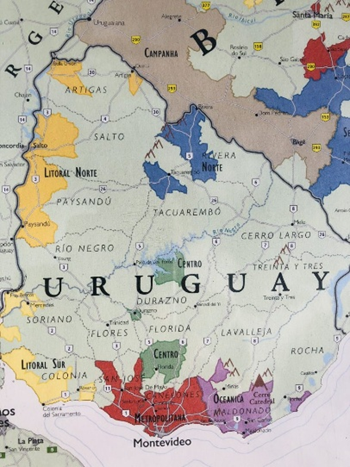
- Tannat in Uruguay
- The grape was Introduced in the country around 1870 by a basque immigrant.
- Survived Phylloxera: While Phylloxera decimated French vineyards in the mid-19th century, Tannat plantings in Uruguay survived. The grape continued to gain popularity, eventually becoming the country’s “national grape” and its most-planted variety.
- Uruguayan style: In contrast to the traditional robust French style, Uruguayan Tannats often have smoother, riper tannins and more dominant black fruit flavors. They are also lighter in body and low in tannins. This is due to clonal selection and winemaking techniques that emphasize approachability.
- It is planted in low altitudes, mainly in the departments of Canelones and Montevideo, which are coastal areas.
- Currently: Plantings of Tannat (also known in Uruguay as Harriague) have been increasing in Uruguay each year as that country’s wine industry develops. Currently Tannat is the most common variety planted in the country (36% of all types).The Tannat wines produced here are characterized by more elegant and softer tannins and blackberry fruit notes. Vineyards in Uruguay have begun to distinguish between the “old vines” that are descendants from the original cuttings brought over from Europe and the new clones being produced today. The newer vines tend to produce more powerful wines with higher alcohol levels but less acidity and complex fruit characteristics.

- Tannat in Bolivia – Tarija
- Location: Wine production in Bolivia is located between 21- and 23-degrees south latitude and between 1,600 and 2,000 meters above sea level. Bolivian farmers cultivate crops brought to the country hundreds of years ago by Jesuit missionaries. There are some 5,000 hectares of grape plantations in the region.
- Altitude: The altitude means a smaller ozone layer, which filters out the rays, so the incidence of ultraviolet rays is greater at higher altitudes, and this generates a response from the plant. As a result of the effects of these rays the plant produces a thickening of the grape skin and a higher content of resveratrol, a phenol that protects the cardiovascular system.
- Cultivation: Grape vines need a temperate climate, with seasons, to produce fruit worthy of wine production. Specific to Bolivia, high altitude leads to lower temperature, which, in the winter months, creates low enough pressure to pull even more cold air from the plains of Patagonia. This combination creates a winter cold enough to force the vines to go dormant, an absolute necessity to growing fine wine grapes.
- This high altitude has other advantages. For one, the intensity of the sunlight, much like Mendoza in Argentina, allows grapes to ripen more quickly during the day than they would at the same temperature at a lower altitude. The temperature drops so quickly, and so low, at night, that the grapes essentially shut down. This combination preserves acidity, without sacrificing the complexity that comes from good ripeness.
- Characteristic of High altitude wines: The high-altitude variety differs greatly from other regions as it generates an interesting concentration of aromas and a distinctive color. The maturation of the tannins is very gentle that ends up with grapes that have very ripe and very soft seed tannins.
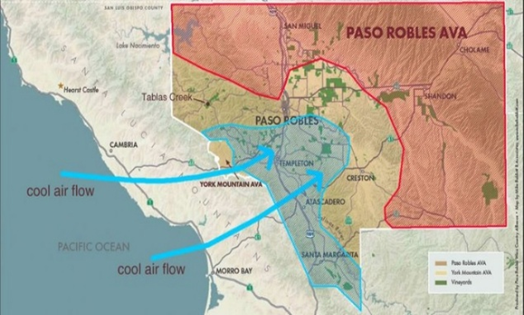
- Tannat in the USA – Paso Robles, CA
- The Region: The Paso Robles Willow Creek District, for well over 100 years, has been the home of vineyards, Mennonite families, and walnut orchards. It was an area early identified with agricultural potential that was confirmed by years of cultivation and science. Many popular and burgeoning brands from the Paso Robles AVA have made their home in the Willow Creek District and fruit from the AVA is in high demand. It is an area of Paso Robles with immense beauty and color.
- Wines form the Area: Paso Robles wines are known for being bold, opulent, and high-alcohol red wines, particularly Cabernet Sauvignon and Rhône-style blends, along with Zinfandel. The region’s diverse soils, microclimates, and creative winemaking approach allow for this variety, producing wines with rich complexity, ripe fruit, and a firm backbone of acidity that can be enjoyed young or aged.
- Cultivation: The Allegretto Wines (current tasting) utilizes sustainable practices in both vineyards by emphasizing biodynamic farming practices that provide optimal times for sowing, transplanting, cultivation, and harvesting using biodynamic preparations. These practices promote the forces that work dynamically within the soil, compost, and plants to ultimately provide healthier vines, earth, and health.
- Allegretto Wines encompasses two vineyards within two different sub-appellations of Paso Robles. The estate and single vineyard wines are sourced from the vineyards that surround the Allegretto Resort in the Estrella District, as well as the westside vineyard in the Willow Creek District.
-
Information about the Wines
Wine #1. Cloudy Bay, Sauvignon Blanc, Marlborough, NZ, 2024
 The Producer: Cloudy Bay Vineyards, established in 1985, is today a partnership with champagne house Veuve Clicquot. The winery and vineyards are situated in the Wairau Valley in Marlborough at the northern end of New Zealand’s South Island. This unique and cool wine region enjoys a maritime climate with the longest hours of sunshine of any place in New Zealand.
Terroir: Free-draining gravelly soils and the valley’s maritime climate come together in harmony to create the perfect conditions for growing Sauvignon Blanc grapes. The resulting wines are pure, vibrant and full of concentrated stone fruit, citrus and subtle tropical characters. This is the Cloudy Bay benchmark style. Quality and Reputation: Cloudy Bay became an iconic brand and a standard-bearer for the Marlborough region, setting a new benchmark for Sauvignon Blanc globally.
The Wine: Cloudy Bay’s Sauvignon Blanc pioneered a fresh, exuberant, and easily recognizable style with notes of gooseberries, kiwi fruit, and tropical fruits, a vibrant acidity, and pungent aromas. This unique character helped elevate New Zealand’s reputation in the wine world, with Cloudy Bay’s 1996 Sauvignon Blanc being the first New Zealand wine to make the Wine Spectator Top Wines of the World list.
- Grape: 100% Sauvingnon Blanc
- Viticulture: Grapes are sourced from prime locations in Marlborough’s Wairau Valley, known for free-draining gravelly soils and a favorable maritime climate. Hand-Harvesting: Grapes are hand-picked to select only the best fruit. Harvesting occurs during the cooler nights and early mornings to retain the rapes’ freshness.
- Vinification: Hand-harvesting grapes from Marlborough’s Wairau Valley at optimal ripeness; De-stemming and crushing are followed by a gentle pressing to extract juice; cold settling the juice for 48-72 hours and fermenting it in stainless steel tanks at controlled, cool temperatures to preserve fresh, fruity, and floral aromas. A small portion may be fermented in old oak barrels for complexity, and the wine is then aged on its lees to enhance aroma and structure, with careful blending from separate vineyard parcels to ensure quality and consistency.
- Aging: The wine is aged in stainless steel tanks, sometimes resting on fine lees to build texture and flavor complexity.
- Alcohol: 13.5% ABV
- Blending: Each parcel of fruit is fermented separately before being carefully blended by the winemakers to achieve the signature Cloudy Bay quality and consistency.
- Terroir: Free-draining gravelly soils and the valley’s maritime climate come together in harmony to create the perfect conditions for growing Sauvignon Blanc grapes. The resulting wines are pure, vibrant and full of concentrated stone fruit, citrus and subtle tropical characters. This is the Cloudy Bay benchmark style. Quality and Reputation: Cloudy Bay became an iconic brand and a standard-bearer for the Marlborough region, setting a new benchmark for Sauvignon Blanc globally.
Terroir: Free-draining gravelly soils and the valley’s maritime climate come together in harmony to create the perfect conditions for growing Sauvignon Blanc grapes. The resulting wines are pure, vibrant and full of concentrated stone fruit, citrus and subtle tropical characters. This is the Cloudy Bay benchmark style. Quality and Reputation: Cloudy Bay became an iconic brand and a standard-bearer for the Marlborough region, setting a new benchmark for Sauvignon Blanc globally.
Tasting Notes: Quite restrained on the nose and less tropical than other vintages. It unfurls in the glass to reveal profound and attractive notes of citrus, lime leaf, apricot and orange blossom. The palate shows intense flavor, with subtle-but-juicy passionfruit notes melding with those of citrus, white stone fruit, makrut lime, hibiscus and grapefruit. Throughout, there is a freshening saline edge and a fresh-squeezed lemon acidity that carries a long, concentrated and complex finish.
Wine #2. Bodega Garzon, Single Vineyard Tannat, Maldonado UR, 2022
The Producer: located close to Uruguay’s ‘Riviera’ at Punta del Este and the fashionable fishing village of José Ignacio, the Bodega Garzón winery may only have opened in 2016, but it is already spearheading the Uruguayan wine scene. Blessed with some of the world’s oldest granitic soils (dating back 2,500 million years), the estate covers 2,200 hectares with a vibrant biodiversity that includes untouched native forests and palm trees. Striking examples of the ancient rocks protrude into the underground cellars, forming part of the very architecture, and the entire estate holds a Silver LEED certification (Leadership in Energy and Environmental Design), built with sustainability in mind.
 The Wine:
- Grape: 100% Tannat
- Vinification: Harvesting: Grapes are handpicked at optimal ripeness; the grapes are destemmed, lightly crushed, and may undergo a pre-fermentation cold soak to extract fruit character and maintain freshness. Fermentation takes place in large concrete tanks, using natural yeasts. The wine is kept on skins for a limited time (around 7 days) to avoid over-extraction of tannins. Techniques like pumping over or punching down the cap are often avoided.
- Aging: 12 – 18 months in untoasted French oak barrels.
- Alcohol:14.5% ABV
Terroir: The cool Atlantic breezes and coastal influence help maintain acidity and freshness in the grape.
Tasting Notes: Deep purple in color, this powerful Tannat presents an elegant nose, with aromas reminiscent of red fruits such as cherries and strawberries, black plums, tobacco, and dark chocolate on a spicy background. On the palate, it is juicy and fresh, with a rich body and a very pleasant aftertaste, and a long, vibrant finish.
Wine #3. Aranjuez, Tannat Origen, Bolivia, 2023.
The Producer: Vinos Aranjuez was founded on March 31, 1976, when Milton Castellanos Espinoza, an engineer, and his wife, Ana Hebe Cortez Vaca Guzmán, decided to make the winery’s first bottle a reality. Since then, it has remained a family business to this day. Located in southern Bolivia and nestled among the mountains, the central valley of Tarija is home to the largest number of grapes, wines, and singanis in the country. All the winemaking takes place above 1,600 meters (about 5249.34 ft) above sea level. This valley boasts a distinct temperature range that allows for an optimal viticultural cycle.
 The Wine:
- Grape: 100% Tannat
- Viticulture: Tannat Origen, made exclusively with grapes from lot 40, 6-hectare vineyard at an altitude of 1,950 meters (about 1.21 mi), where Tannat was first planted in Bolivia in 1999.
- Vinification: Hand-picked bunches from the first Tannat vineyard planted in Bolivia. Temperature-controlled fermentation. Manual bunch selection at the winery.
- Aging: Aged for 12 months in new French oak barrels, followed by the same amount of time in the bottle.
- Alcohol: 14.2% ABV.
Tasting notes: Intense garnet red color with marked violet tones.On the nose, it presents aromas of blackberries, plums, and ripe blueberries, accompanied by subtle notes of vanilla and cocoa, contributed by its oak aging. On the palate, its sweet and delicate tannins stand out, balanced by very good acidity, rounding out the body of this noble and elegant wine.
“This wine has been produced since 2015 and comes from lot 40, the first of the Tannats planted in Bolivia around 1999. From clayey and silty soils, this wine has been aged for a year in lightly toasted barrels and offers a wealth of red and black fruit, all very ripe. The tannins of the Tannat, always robust, here behave like apartment kittens, docile and gentle. A perfect wine to cellar or to open with meat-filled empanadas”. (Patricio Tapia – Descorchados)
Wine #4, Allegretto, ‘Tannat’, Paso Robles, CA, 2019.
The Producer: Allegretto Vineyard Resort is located in the Estrella AVA, located on the east side of Paso Robles, California. The Estrella District is known for warm summer days are cooled by modest maritime sea breezes through the Templeton Gap effect, as well asdownslope winds from the eastern ranges, which are reflected by early morning fog in the summer. The soils in the Estrella are predominantly alluvial, ranging from fine sandy loams to the more substantial clay loam. The terroir is quite perfect for the cultivation of premium winegrapes, warm days that do lead to cool nights, moderate soil rooting depths control vigor in vines, and tempered water stress produce complex fruit flavors. Estate-grown and single vineyard wines are sourced from the vineyards that surround the estate.
 The Wine
- Grape: 100% Tannat
- Region/appellation: Paso Robles Central
- Viticulture: grapes are from Allegretto Vineyard, emphasizing biodynamic farming, to promote healthy soil and plants for healthier wines.
- Vinification: After harvesting, the grapes are destemmed and lightly crushed. The crushed grapes are fermented in stainless steel tanks.
- Aging: The wine is then aged for approximately 40 months (about 3 and a half years) in American oak barrels, with a significant portion, about 35%, being new oak to enhance its structure and flavors.
- Alcohol: 14.3% ABV.
Tasting notes: deep dark hue, deep black cherry color. On the nose, the 2019 Tannat presents an intense nose with aromas of black currant, blueberry and exotic spices like anise and cardamom. On the Palate, layers of blackcurrant, plum, and spice, interwoven with earthy and peppery flavors. It offers a powerful and structured profile with firm tannins, a balance of dark.
“The bottle age is helping this dense wine find a solid expression, as the nose offers subtly integrated aromas of stewed strawberry, baking spice and sumac. The palate is framed by tannins that remain firm enough to wrap around the black currant, pepper and turned-earth flavors”.
Members Evaluation of the Wines – to be published after the tasting
References :
https://en.wikipedia.org/wiki/Uruguayan_wine#Grape_varieties
https://www.cloudybay.com/en-us/our-wines/sauvignon-blanc/sauvignon-blanc-2024/
https://www.vinosaranjuez.com/vinos/vino-tannat-origen/
https://bodegagarzon.com/en/wine/tannat-2023-2/
(https://pasowine.com/member/allegretto-wines/?refer=winery)
.o0o.
Laughing matter
A question of abstinence

.o0o.

 Club del Vino - Washington DC area