

Tasting No 274 – February 25, 2025 Shiraz/Syrah from Australia and France
-
Tasting Overview
The main objective of this tasting is to explore Shiraz wines by comparing those from Australia with those produced by France. The following are the reasons for selecting Shiraz wines from these two countries:
Australia
Importance: Shiraz plays a significant role in Australia’s wine industry. 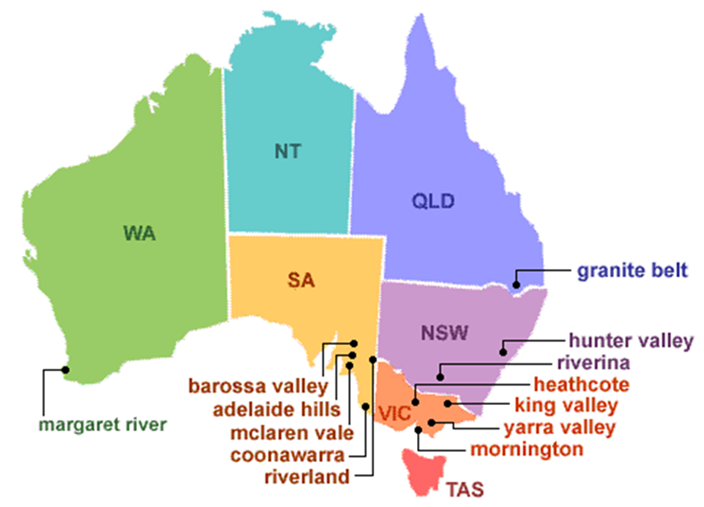
- It is the most planted winegrape variety and is grown almost everywhere, from the Barossa Valley to Hunter Valley.
- Shiraz wine grapes can adapt and thrive in various climates.
- The area planted represents nearly half of Australia’s red wine grape plantings.
- Shiraz has gained a strong reputation globally and contributes significantly to wine exports
- Australia is home to some of the world’s oldest continuously productive Shiraz vines, some dating to the mid-19th century.
Quality: It varies widely
- From affordable, everyday drinking wines to some of the most sought-after, collectible fine wines.
- Shiraz wines are known for their medium to full-bodied character, with varying flavor profiles depending on the region, climate, and winemaking techniques.
- The use of different oak types for maturation and the trend of co-fermenting Shiraz with Viognier have added complexity and diversity to the styles.
France
Importance: Shiraz, known as Syrah in France, plays a significant role in French wine production. particularly in the Rhône Valley.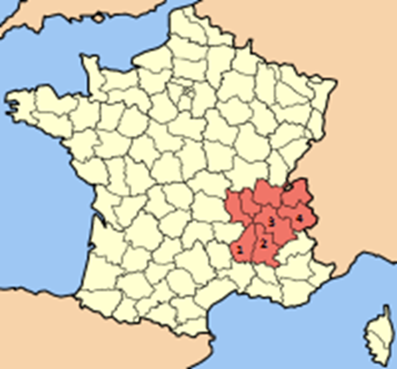
- It is the main red grape variety used in the Rhône Valley, either as a single varietal or as part of a blend, adding depth and complexity to Rhone wines.
- Its production is crucial to the wine industry, contributing to some of the most esteemed wines in the world.
Quality: Syrah wines from France have exceptional quality.
- The northern Rhône, with its cool climate and granite-based soils, produces wines with elegant structure, intense aromas, and a distinct peppery character.
- Their high acidity and tannin levels favor their aging potential.
Type of tasting: Open
Presenters: Jorge García and Clara Estrada
Participants: S. Ardila; R. Connolly; J. Entwistle; M. Fryer; J. García; P. Meduña; C. Perazza; L. and J. Redwood; E. Silva; G. Smart; P. Turina; L. Uechi; G. Vega; and G. Zincke.
These are the wines:
- Tyrrell’s Semillon, Hunter Valley, Australia, 2023
- Penfolds Bin 28 Kalimna Shiraz, South Australia, 2020
- d’Arenberg The Dead Arm Shiraz, McLaren Vale, Australia, 2018
- Domaine de Remizieres, Hermitage Cuvée Emilie, Rhone, France, 2019
The Menu:
- Mussels in white wine sauce
- Grilled Portobello mushrooms with zucchini
- Beef tenderloin with baked potatoes
- Dessert, coffee and tea.
-
Geography of wine production in Australia and Rhône Valley
Hunter Valley, New South Wales: located in New South Wales, Australia, it is one of the country’s oldest and most renowned wine regions. Overall, the geographic characteristics of Hunter Valley create an ideal environment for producing high-quality white Semillon wines that are both refreshing and capable of aging beautifully:
- Climate: Warm, humid with long sunny days and cool nights, perfect for Semillon grapes.
- Soil: Alluvial and volcanic, providing excellent drainage and nutrients.
- Topography: Hills and mountains moderate temperature and protect vineyards.
- Proximity to the Coast: Cooling sea breezes balance the warm climate.
Key Aspects of Semillon Production:
- Acidity and Freshness: Maintained by cool nights and sea breezes.
- Ripening: Warm days ensure full ripeness and complex flavors.
- Aging Potential: High acidity and balanced flavors allow for graceful aging.
- Minimal Intervention: Winemakers rely on natural characteristics of grapes and terroir.
McLaren Vale, South Australia: it is renowned for its exceptional Shiraz wines. McLaren Vale is home to some of the oldest vines in the country, dating as far back as 1850. McLaren Vale also excels in producing ultra-premium Grenache and Cabernet, as well as other Mediterranean red varieties such as Vermentino, Tempranillo, Sangiovese. Overall, these geographic characteristics of McLaren Vale create an ideal environment for producing some of the finest Shiraz wines in the world:
- Climate: Mediterranean with warm, dry summers and mild, wet winters.
- Soil: Diverse range including sandy loam, clay, and terra rossa.
- Topography: Situated between Mount Lofty Ranges and Gulf St Vincent, creating microclimates.
- Proximity to the Coast: Cooling sea breezes moderate temperatures.
Key Aspects of Shiraz Production:
- Ripening: Warm climate ensures optimal ripeness.
- Acidity and Structure: Maintained by cooling sea breezes and diverse soils.
- Terroir: Unique sense of place expressed in wines.
- Variety of Styles: From fresh and fruity to rich and complex.
Rhône Valley, France: is a renowned wine-producing region located in Southeastern France; it is divided into two sub-regions: the Northern Rhône and the Southern Rhône. Its geographic characteristics in both sub-regions make them ideal for producing Shiraz (Syrah) wines:
- Climate: Northern Rhône has a continental climate; Southern Rhône has a Mediterranean climate.
- Soil: Northern Rhône has granite and schist soils; Southern Rhône has clay, limestone, and alluvial soils.
- Topography: Northern Rhône has steep slopes; Southern Rhône has flatter terrain with rolling hills.
- Proximity to the river: the Rhône River moderates temperatures and provides water.
Key Aspects of Syrah Production:
- Ripening: Warm climates ensure full ripeness.
- Terroir Expression: Diverse soils and topography showcase unique characteristics.
- Quality and Prestige: Northern Rhône produces prestigious Syrah wines; Southern Rhône produces high-quality Syrah often blended with Grenache and Mourvèdre, such as Châteauneuf-du-Pape.
- Variety of Styles: From structured and complex to fruit-forward and approachable.
- The Shiraz/Syrah grape varietal
In 1999, it was discovered that Syrah was the offspring of two obscure grapes from southeastern France, Dureza and Mondeuse Blanche. Syrah should not be confused with Petite Sirah, a cross of Syrah with Peloursin dating from 1880. Dureza is believed to have originated in the Ardèche (#1) in the southwest and moved east/northeast into Drôme (#2) and Isère (#3). Somewhere in this area, most likely in Isère, the vine crossed with Mondeuse Blanche, a variety native to the Savoie region (#4), to produce Syrah.
- Information on the Wines
Wine #1. Tyrrell’s Semillon, Hunter Valley, Australia, 2023
 – The Producer: The Tyrrell’s estate, nestled in the foothills of the Brokenback Range in the Australia’s Hunter Valley, is a unique patchwork of vineyards. Edward Tyrrell founded the winery in 1858 by taking a concessional allotment of 320 acres of prime Hunter Valley land, in what is considered Australia’s first grape-growing wine region. He began to plant Shiraz and Semillon vines and harvests the grapes for his first vintage in 1864. Several generations of the Tyrell family have continued growing and winemaking in the Hunter Valley for more than 160 years, amassing an immense knowledge of the Valley. Thriving in a diverse range of soils, from sandy loams lying on ancient creek beds to heavier red clays over limestone, these vineyards produce some of the most distinctive and refined wines in the world. All the estate parcels are well established, with many sites bearing vines that are more than 100 years old. Their Vat 1 Semillon is Australia’s most awarded white wine, having won almost 5,500 medals and more than 330 trophies.
– The wine:
- Vintage: 2023
- Grape: 100% Semillon
- Viticulture: Sourced from a small selection of some of our top Semillon vineyards. Most of the vineyards are dry grown and have an average age of 40 years;
- Fermentation in stainless steel tanks followed by a short period on yeast lees to gain complexity and mouth feel.
- 8% APV
Winemaker’s notes: Classic Hunter Valley Semillon from another strong vintage. The nose is vibrant with an abundance of citrus fruits and floral elements. The palate is medium bodied, yet intense, with great length and a brisk acidity.
Wine #2. Penfolds Bin 28 Kalimna Shiraz, South Australia, 2020
– The Producer. After the success of early sherries and fortified wines, 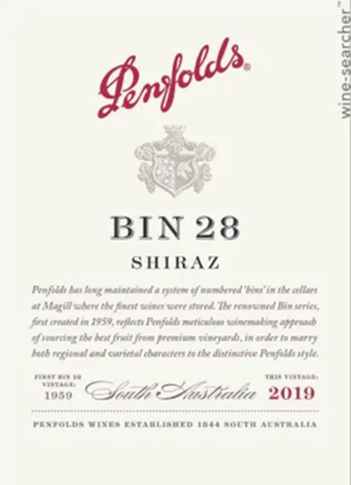 founders Dr. Christopher and Mary Penfold planted their vine cuttings in 1844 and the vineyard was officially established as the Penfolds wine company at Magill Estate. From the beginning in 1844 to today, the merging of science, art and innovation has driven Penfolds to become one of Australia’s most famed and respected winemakers.
– The Wine: Bin 28 offers a showcase of warm climate Australian shiraz – ripe, robust and generously flavored. First made in 1959, Bin 28 was originally named after the famous Barossa Valley Kalimna vineyard purchased by Penfolds in 1945 and from which the wine was originally sourced. Today, Bin 28 is a multi-region, multi-vineyard blend, with the Barossa Valley always well represented.
- Vintage: 2023
- Grape: 100% Shiraz
- Region: McLaren Vale, Barossa Valley, Padthaway, Clare Valley -South Australia
- Viticulture: multi-region; multi-vineyard blending;
- Matured for 12 months in seasoned American oak hogheads with 16% new oak.
- 5% ABV
- Wine Bronze, 2020 vintage (International Wine&Spirit Competition)
Vintage conditions: South Australia experienced the second consecutive year of winter drought. Spring was cool and dry, conditions that continued well into November delaying flowering and fruit-set. With soil moisture levels well below average, irrigation was vital. The 2019 calendar year was the driest on record in the Barossa Valley. While bunch weights and berry numbers were generally low across the regions, the harvest produced some outstanding parcels of shiraz.
Winemaker’s notes. Color is black ruby plum, magenta rim with black core; the Nose is benchmark penfolds shiraz: a generous kaleidoscope of warm-climate aromatics; blackcurrant, black plum, ironstone, cocoa powder, dark chocolate, cola; chocolate gateau, adorned with candied cherries. Earthy north African spices: ‘Ras el Hanout’ – paprika, cinnamon, pepper, cloves, fennel. On the Palate, always honest, warm, approachable. Chocolate mud cake dense, rich, opulent. Cinnamon syrup poached red cherries. Coconut shavings, milk chocolate… wait, a Bounty bar! Summer plum pudding with currants and crème anglaise. Bone marrow broth, Vietnamese Phò – layered complexity and texture. Turmeric, cinnamon, and star anise clove. Cola with a suggestion of Chinotto bitterness. Sweet, layered fruit with earthy spices. Mouthcoating, chewy tannins. Cherry pip acidity. Peak drinking: now-2040.
Wine #3. d’Arenberg ‘The Dead Arm’ Shiraz, McLaren Vale, Australia, 2018
– The Producer: d’Arenberg is a wine producer located in the McLaren 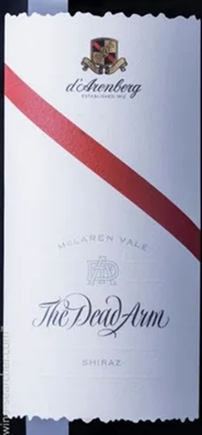 Vale subregion of South Australia. The 60-plus wines in the portfolio are known as much for their quirky names as they are for their quality – d’Arenberg’s flagship wine is called the Dead Arm. The estate was established in 1912 by Joseph Osborn, who initially sold grapes from the vineyards to other wineries in the region. The d’Arenberg winery was built in 1927, and today, the estate is run by fourth-generation Chester Osborn and his father. This is one of the only wineries in Australia to basket-press both white and reds wines, a labor-intensive process, and the quality of the results makes this worthwhile. From entry level to iconic, all d’Arenberg wines are basket pressed.
– The Wine: The name Dead Arm comes from a vine disease caused by the fungus Eutypa lata that causes one arm of the vine to die. The affected vines often are severely pruned or replanted. One half, or an ‘arm’ of the vine slowly becomes reduced to dead wood. That side may be lifeless and brittle, but the grapes on the other side, while low yielding, display amazing intensity.
- Vintage: 2018
- Grape: 100% Shiraz
- Region: McLaren Vale, South Australia
- Vinification: small batches of grapes are gently crushed and then transferred to five tons headed down open fermenters. These batches remain separate until final blending. Foot treading is undertaken two thirds of the way through fermentation. The wine is then basket pressed and transferred to a mixture of new and used French oak barriques to complete fermentation. The barrel ferments are aged on lees for 18 months. There is no racking until final blending and no fining or filtration.
- 14-15% ABV
- Awards: Bronze, 2018 vintage (International Wine Challenge; International Wine&Spirit Competition); Silver, 2018 Vintage (London Wine Competition).
Tasting notes: brooding and alluring, plum, blackberry, licorice and spice entwine with a raft of dark, earthy notes. More savory than previous Dead Arms, the 2018 begins with dark fruits, damson plum, and lovely fennel seed twists. Rich balsamic glazed beets, roasted meats and jus give layers of complexity unlike anything we’ve ever seen. Superb balance. Slaty, persistent, mineral-like tannins bring a generous framework for decades of cellaring. This is a wine of history and provenance. Highly collectable, The Dead Arm is considered by many to be one of the top Shiraz in Australia.
“Rich, heady aromas of mint, mocha, ground pepper, plum and black currant preserves lead to an equally powerful, dense palate that’s wound in muscular, dusty tannins. This is a massive wine now, but everything is in place for it to go the distance—a decade, at least” (Wine Enthusiast).
Wine #4. Domaine de Remizieres, Hermitage Cuvée Emilie, Rhone, France, 2019
– The Producer: Domaine des Remizières is a family winery that has been 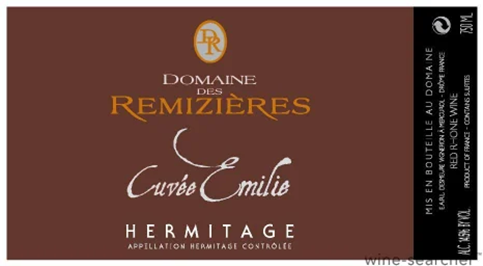 passed down through three generations. Initially, the vineyard covered approximately 4 hectares, with part of the production delivered to the cooperative cellar. Since 1973, vinification has been entirely conducted on the property, which has now expanded to 38 hectares. The vineyards have an average age of 40 years and its vines are planted on granitic hillside soils, facing to the South. The vineyard has small parcels in several villages, and each parcel has its characteristic that are respected, to be able to exploit its “terroir”. To separate the wine coming from different terroirs the domaine vinifies in vats of small volumes. This diversity allows the winery to vinify grapes from several different but complementary terroirs, bringing a lot of complexity to their different cuvées. The respect for the terroir has earned the winery its HVE certification (High Environmental Value).
– The Wine:
- Vintage: 2019
- Grape: 100% Shiraz
- Appellation: Hermitage Red
- Viticulture: high-density goblet pruning -bush vine training- which can lead to competition for resources but also promotes a microclimate that can be beneficial for certain grape varieties. This method is often used for old-vine vineyards and can contribute to the production of high-quality wines.
- Vinification and aging: traditional winemaking process with closed tanks and controlled temperature (28-30o C) for 28-30 days. Aging in new oak barrels for 15-18 months.
- 5% ABV.
Tasting notes: Full-bodied wine with a lot of sweetness, good acidity, and some pleasant bitterness. Color is Steady – colored wine, very tannic (round and delicate tannins). Tannins are described as supple and soft tannic. On the nose, red fruits aromas when it is young, spices aromas after a few years. The wine is described as having an inky, licorice scent. On the palate, this Syrah offers flavors of boysenberry, black fig, and black currant, with hints of mesquite, vanilla, and clove. The wine also has a smoky, earthy undertone. It is expected to improve with cellaring and can be enjoyed up to at least 2035.
-
CV Members Rating
The wine tasting took place before revealing their prices, with each of the 15 participants rating them individually from Acceptable to Exceptional.
The combined scores determined the ranking order, as shown in the following Table.
In the final results,
– Domaine de Remizieres ‘Hermitage Cuvée Emilie’, France, 2019 was the Best Wine,
– while Tyrrell’s Semillon, Hunter Valley, Australia, 2023 was the Best Buy.

References:
-Wikipedia, Syrah Wikipedia, Dureza – Wikipedia, Mondeuse blanche – Wikipedia for description and references about this varieties.|
-Jancis Robinson (ed), “The Oxford Companion to Wine, Third Edition, p.627, Oxford University Press 2006.
-Semillon: The Crown Jewel of Hunter Valley Whites – Made in Pokolbin
-Exquisite Shiraz,… | McLaren Vale Wine Region | South Australia
-https://www.darenberg.com.au/
-https://www.domaineremizieres.com/en/presentation-2
.o0o.
The unpretentious wine taster:

.o0o.

 Club del Vino - Washington DC area