

Tasting No 268 – August 27, 2024 – Wines of Northwest Veneto: Valpolicella and Soave
-
Tasting Overview
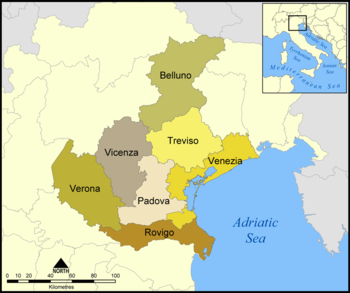
The objective of this tasting is to explore wines from historic wineries in the northwest area of Veneto Region that the presenters visited during a wine tasting tour in June, more specifically in the Verona Province.

Type of tasting: Open
Presenters:
John and Lucia Redwood with Michelle Fryer
Participants:
S. Ardila; R. Arroio; M. Averbug; L. Boccalandro; J. Brakarz; Y. Cutler; M. Fryer; N. Marzella; O. Mason; A and C. Perazza; J and L Redwood; J. Requena; C. Santelices; E. Silva; P. Turina; L. Uechi; and M. Averbug (guest).
The wines:
- Tenuta Santa Maria de Gaetano Bertani, ‘Vintage Edition’ Soave, 2019
- Tenuta Santa Maria de Gaetano Bertani, Valpolicella, 2021
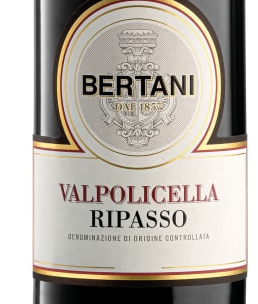
- Tenuta Santa Maria de Gaetano Bertani, Valpolicella Ripasso, 2020
- Masi, ‘Riserva Costasera’, Amarone della Valpolicella Classico DOCG, 2018
Menu
- Beet Salad
- Mushroom Risotto
- Grilled Veal with Vegetables
- Cheese Plate, Coffee and Tea.
-
Veneto Wine Region
Veneto stretches from the river Po to the sheltering Alps on the Austrian border, between Lake Garda to the west and Fruli-Venezia Giulia to the east. It is slightly smaller than Italy’s other main wine-producing regions: Piedmont, Tuscany, Lombardy, Puglia, and Sicily. However, it generates more wine than any of them. In terms of geography, culture and wine styles, it represents a transition between the alpine, Germano-Slavic end of Italy and the warmer, drier, more Roman lands to the south.
Veneto is now the first Italian region in wine production, because it is home to Pinot Grigio and Prosecco. These two interregional appellations, widely planted in flat alluvial lands, are increasingly successful and have supported the growth of Italy as a major wine exporting country. On the other hand, beautiful and dramatic hillside vineyards with a cooler climate provide the crisp Cartizze, the mineral whites of Soave and Durello, the fruity Bardoline, and the salty Valpolicella, a trailblazer in the development of hugely appreciated style of wine from dried grapes (Amarone and Recioto) and second fermentation (Ripasso). Veneto is also a vital basin for indigenous grape varieties such as the whites Glera (mainly for Prosecco), Garganega, Tebbin di Soave, Lugana, and Durella, and reds Corvina, Corvinone, Rondinella, and Raboso. With fruity red Valpolicella complementing its intense Amarone and sweet Recioto counterparts, Veneto is armed with a formidable portfolio of red wines to go with its refreshing whites, such as Soave and sparkling Prosecco.
Although much of the new vineyard area that supported Veneto’s increased wine output was of questionable viticultural quality, today more than 25% of the region’s wine is made and sold under DOC/DOCG titles. As of 2020, total area under vine in Veneto was 94,291 hectares, of which 89,190 Ha. (or just under 95%) were IGP/DOC/DOCG area. Total production was 9.7 million hectoliters, or which 7.1 million (45% red and 55% white) were IGP/DOC/DOCG.
The Veneto region can be roughly split into three geographical areas, distinguished by their topography and geology: Northeast, Central and Northwest Veneto, with this presentation focusing only on the latter.

Northwest Veneto
In this area, the foothills of the Alps descend along the eastern edge of Lake Garda, their path mirrored by the Adige River as it descends from the heights of Alto Adige. Here in the cooler, alpine-influenced climate, fresh, crisp whites are made under the Bianco di Custoza and Garda titles, while refreshing, unassuming Bardolino from the shores of Lake Garda makes the case for Veneto’s lightest reds.
The hills stretching from Soave town westwards to Lake Garda have such fertile volcanic soil that vegetation grows uncontrollably; the vine runs riot on every terrace and pergola, among villas and cypresses that are the image of Italian grace – not always reflected in the wine they produce: high yields with an official limit of 05hl/ha, are the bane of quality, especially in Soave DOC, as almost 80% of the of the vineyards are cultivated by growers that deliver their grapes direct to the local co-op with no personal reputation for quality to uphold.
Wine styles and denominations.
Just east of Lake Garda and north of Verona is Valpolicella DOC and its sub-zone Valpantena. The fabled “Valley of Many Cellars” produces 500,000 hectoliters of fruity red wine each vintage. In terms of production volume, Valpolicella is the only DOC to rival Tuscany’s famous Chianti. The grape varieties Corvina, Corvinone (for a long time confused with the former though they have distinct DNA profiles), and Rondinella are behind the vast majority of reds here.
Immediately east of Valpolicella is the Soave DOC, home to the eponymous dry white wine that now ranks among Italy’s most famous products. The DOC title covers wines made from Garganega grapes grown in hillside vineyards east of Verona. Beyond that, the Gambellara DOC serves as an eastern extension of Soave, both geographically and stylistically. Garganega and Trebbiano are their key white wine grape varieties.
The Soave DOC is arguably the most famous white wine denomination in Italy. Granted in 1968, the DOC title covers wines made from Garganega grapes grown in hillside vineyards east of Verona. A dry, crisp, fruity white wine, Soave’s naturally refreshing appeal led it to phenomenal popularity in the second half of the 20th Century. As with all Soave appellations, the wine must be at least 70% Garganega to which Trebiano, Chardonnay, and up to 5% other local varieties may be added. Most Soave is made in an easy-to-drink style, light bodied and rather neutral; however, an increasing number of producers seek a more ambition and terroir-driven style. Soave DOC may be produced and sold as a spumonte although a classic Soave is definitely a dry still wine.
Soave cohabits with Valpolicella DOC, whose growing zone has been extended far beyond the original Classico zone until it reaches the boundaries of Soave. The improving Valpantena sub-zone is dominated so far by Bertani winery and the local co-op.
For Valpolicella, vines are being planted on white-pebbled terraces at much higher densities and vertically trained to extract more flavor from every grape, above all, late-ripening Corvina, the best of the region. Neutral Rondinella and the relatively tart (and optional) Molinara can also play a part. There is also experimentation with rarer indigenous grapes such as Oseleta and Corvinone. Valpolicella wines are always blends from 45 to 95% Corvina and/or Corvinone, with the possible addition of 5 to 30% of Rondonella and 25% of other authorized grape varieties. There are an increasing number of wines that are full of cherry-fruit flavors and have light body and supple tannins balanced by a refreshing acidity.
Two subzones are recognized by the Valpolicella DOC: Classico, which covers the historical vineyards, and Valpantena for the vineyards around Quinto in the center of the Valpolicella district. Valpolicella Superiore wine is also made and must reach an alcohol by volume of 12%, compared with 11% for the standard rosso, with a minimum one-year aging requirement. Plain Valpolicella should have a lovely cherry color and flavor, lively acidity, a gentle sweet smell, and just a trace of almond bitterness. Most superior Valpolicella is grown in the Classico zone on four fingers of higher-altitude vineyards sheltering the towns of Fumane, San Ambrogio, and Negrar.

Passito, Amarone, Recioto, Ripasso. Because standard Valpolicella wines have traditionally tended towards the lighter end of the spectrum, local winemakers have employed various techniques to achieve greater depth and complexity in their cuvees. Standard Valpolicella is quite different from the district’s Amarone (“big bitter”), Recioto (“little ear”) and Ripasso (“re-pass”) wines. The passito and ripasso methods have been so successful that both techniques now have dedicated DOC or DOCG designations.
The amarone developed as Veneto’s winemakers searched for a way to increase the body, complexity and alcohol content of their wines. The grapes are dried (passito) for weeks or even months prior to fermentation, during which time their natural sugars and flavors become sufficiently concentrated to produce deeper, more alcoholic wines. Such heady productions are the direct descendants of the Greek wines shipped by the Venetians in the Middle Ages. This “passito” technique in Valpolicella proved very successful, although initially it was used to produce sweeter (occasionally fizzy) styles of wine, known here as Recioto della Valpolicella. The early amarone wines were seen as mistakes – recioto left to ferment for too long – but eventually the style gained recognition and respect.
Amarone della Valpolicella DOCG – Formerly part of Valpolicella DOC, Amarone della Valpolicella was established as a separate DOC in 1990 and was granted DOCG status in 2009. Amarone is a derivative of Recioto della Valpolicella wine with a similar deep color but in a dry or off-dry style, which seems to make the flavors more powerful and chocolaty-spicy with a distinctly bitter finish, once described as a “bruised sourness”. Amarones are made with the signature grape, Corvina (45-95%, of which up to 50% can be substituted with Corvinone), Rondinelle (5-30%), and other approved red grape varieties (up to 25%). For making Amarone wines, after late harvest the grapes are dried under controlled conditions (a process called appassimento) for at least two months and up to 120 days, depending on the winery, long maceration during the wintertime, and long cask ageing (at least two years). If fermentation is stopped early, the resulting wine will contain residual sugar, producing the sweeter wine Recioto della Valpolicella. The final result is a very ripe “raisiny”, full-bodied wine with very little acid. Alcohol content easily surpasses 15% (the legal minimum is 14%) and the wine is rarely released until five years after the vintage. The pomace left over from pressing off the grapes for Amarone is used in the production of Ripasso Valpolicellas. “Amarone is often the climax of a Veronese feast” (From the World Atlas of Wine, 7th edition, 2013).
Amarone wines are brilliant and intense ruby red color, their taste is complex and rounded as well as fruity and fresh, especially towards the end. The older the wine is, the better it tastes. Its aromas can be described as a strong mixture of blackberries, black cherries, and plums.
Amarone is the perfect wine to pair with game, braised meats, and stronger cheeses. It also pairs well with traditional Italian recipes such as risotto and many types of pasta. Although Amarone is not usually recommended for menus including fish, many people seem to believe that it is a great match for dishes like sushi.
Valpolicella Ripasso DOC – Ripasso (re-passed) wine has long been traditional in the Valpolicella denomination. The best young Valpolicella wine is put into tanks that still contain some of Recioto or Amarone for which they were previously used. The old practice of Ripasso strengthens Valpolicella by refermenting it on the pressed grape skins, preferably of Corvina, after an Amarone or a Recioto has finished fermentation, in which case it may qualify as Valpolicella Superiore or Ripasso, constituting a sort of “Amarone Lite”. The result is a wine that combines the freshness and the brightness of a dry Valpolicella with riper, sour cherry-fruit profile and soft ‘recioto-like’ tannins. For more than a decade, Ripasso has represented an important category in several key export markets.
The red grapes of Valpolicella:
Corvina:
Phenology and Cultivation: Valpolicella’s main cultivar, its oval fruit has thick skin and is particularly suitable to the Appassimento method. It is an exceptionally delicate grape in terms of sensitivity to diseases, humidity, and sun exposure and has a potential for large yields that are kept in check with Guyot management. It is planted with medium density on Arbizzano’s deep limestone soils medium-rich in organic matter. It requires some irrigation in very dry years as it is also very sensitive to drought.
Aromatic Profile: When correctly macerated and fermented at low temperature, Corvina is able to develop a wide aromatic complexity of red fruit aromas such as cherry, raspberry and wild berries, sweet spices, herbs and balsamic notes over fine tannins. With Appassimento and long ageing, macerated fruit aromas are developed over an even finer structure and integrated enveloping glycerine.
Winemaking: Corvina is rarely used alone. Instead, blend between 60% to 80% with more tannic cultivars like Corvinone and Osceleta, which contribute to the structure of the wine.
Corvinone:
Phenology and Cultivation: Originally considered a clone of Corvina, it has been considered a different biotype since 2003. It is cultivated separately at a medium density Guyot or Spurred Cordon system on terraced slopes exposed to the sun where it produces lower yields than Corvina. The soil has a high percentage of limestone and low organic matter. The bunches are large but loosely packed with deep blue ellipsoidal berries, well-suited to the Appassimento method.
Aromatic Profile: Characterized by an intense cherry character, with compelling floral notes of violets and additional fruity notes of raspberry and blackberry. When compared with Corvina, it has a lower alcohol potential and usually light vegetal notes if picked in a later harvest. Spicy notes of cocoa and tobacco emerge in aged wine. It has an important tannic structure.
Winemaking: Corvinone is never used as single varietal in wines, but we usually blend between 15% and 25% to support the less tannic indigenous cultivars such as Corvina and Rondinella.
Rondinella:
Phenology and Cultivation: Rondinella is easily recognized in the vineyard for its smaller, curved, and compact bunches (compared to Corvina and Corvinone) and or its distinctive leaf. The berries are a very dark color, like a swallow’s feathers (Rondinella translates to swallow). It has a constant production and is less sensitive to cold, dry, and humid years and exposure to the sun. The thick skin is resistant to mold and suitable for late harvests or a more prolonged Appassimento to achieve a higher sugar content.
Aromatic Profile: The cultivar produces wines of an intense ruby color with an interesting herbal and tobacco character, delicately fruity with hints of cherries. It is medium-bodied, has a good acidity and delicate tannins. It strongly contributes to Recioto’s character, as when dried it expresses peculiar prune, date, and black walnut aromas.
Winemaking: Rondinella is rarely used as single varietal, usually blended between 5% and 15% in Amarone Classico Riserva and up to 30% in the Recioto Classico, as it is particularly rich in sugars and suited to longer drying.
Oseleta:
Phenology and Cultivation: Very compact with small bunches and a high number of pips. Oseleta has a very low yield with little juice compared to the other varietals. The low juice content becomes even more apparent with the Appassimento method, where the cultivar has a faster evaporation rate and is often pressed earlier than the other cultivars when making Amarone or Recioto. It is fairly resistant to disease and is cultivated on site in plots with more gravel and sand.
Aromatic Profile: Deep purple in color with ruby reflections, delicate violet aromas, intricate fresh herbal notes, blackberry flavors, cinnamon and when aged in the bottle, show some tar and petrol character. It is notably tannic and if not harvested when it is sufficiently ripe, it can present an invasive unripe character.
Winemaking: When used as a single varietal, Oseleta produces wines that have a very complex and interesting tannic structure. It is used in a lower percentage in Amarone Classico (5-7%) and in higher percentages in younger wines, bringing noteworthy elegance and complex aromas.
3. Information about the wineries visited
A, -Tenuta Santa Maria de Gaetano Bertani.
This winery is owned by Gaetano Bertani and includes two estates as well as vineyards in Valpantena:
Arbizzano di Negrar Estate, that we visited, is where the winery’s headquarters is located, the Villa Mosconi di Giovanni e Guglielmo Bertain, an elegant residence constructed in Venetian Neoclassic style in 1735, and whose historic cellars witnessed the birth of Amarone in 1936. The estate lies in the picturesque village of Arbizzano di Negrar in the heart of Valpolicella Classica, in a luscious valley, just minutes from Verona and about 20 km from Lake Garda, where the vineyards find an ideal location in terms of microclimate, exposure and soil. The estate itself offers a unique example of a walled vineyard or brolo, drying lofts for apassimento, areas for vinification, and cellars dating back to the 16th century, all dedicated to the production of fine wines. The first record of the family’s winemaking activity in Valpolicella was in 1567. High-density Corvina was planted using the Guyot method in 1883, and, to this day, Amarone and Valpolicella wines are produced from grapes which are grown in these historic vineyards.

Villa Mosconi di Giovanni e Guglielmo Bertani, Arbizzano di Negrar, Verona

Vineyards at the Arbizzano de Negrar Estate
Santa Maria alla Pieve estate.
This estate is the historic property of Gaetano Bertani’s family that became part of the family’s holdings in 1850. It is located in the village of Colognola ai Colli, in the southernmost part of the Illasi Valley, with the Valpolicella DOC to the west and the Soave DOC to the east. The roots of the vineyards are sunk deep into a terrain alluvial in origin, composed of layers of limestone clay and river stones. The property is situated in a charming hamlet of Roman origins, about 14 kilometers outside Verona. The stately 16th century farmhouse and over 20 hectares of surrounding vineyards represent a span of nearly two Roman centuria, as evidenced by the discovery of a cadastral survey of the time, a tax map showing details of ownership and land values. Here they grow the Merlot for the production of ‘Decima Aurea’, Chardonnay for the elegant ‘Torre Lepiga’, and Garganega for their ‘Lepiga’ Soave DOC.
Masi/Serego Alighieri Winery.
Serego Alighieriis an Italian wine producer located in the Valpolicella Classico zone of Veneto. In 1353, this charming estate was bought by Pietro Alighieri, son of Dante the poet, who had followed his father into exile in Verona. For 21 generations, descendants of Dante have lived in this place, where winemaking has taken place uninterrupted since the 1500s. Since 1973, the Serego Alighieri has been collaborating with the well-known Veneto wine producer Masi Agricola.The Masi winery shares its great love of the land working together with the Serego Alighieri family producing prestigious wines of an ancient, noble, and expert winemaking tradition.
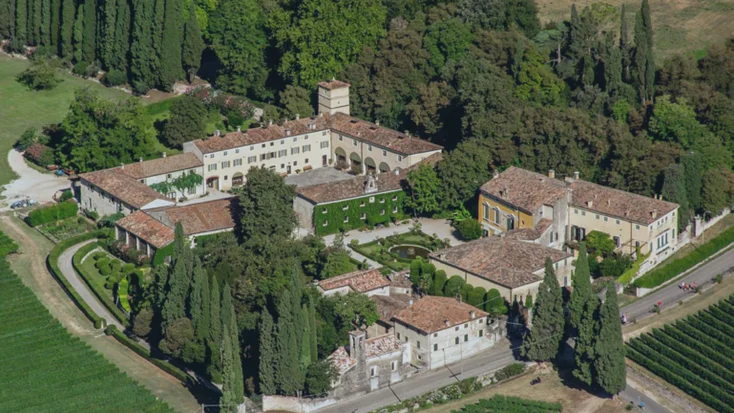
Possessioni Serego Alighieri, Sant’Ambrogio di Valpolicella, Verona
Information on the Wines
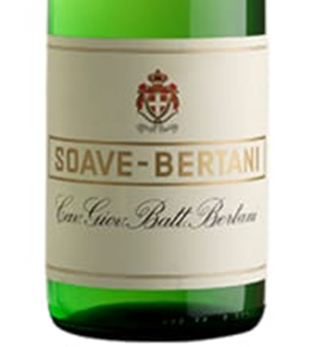
Wine #1. Bertani Vintage Edition ‘Cav Giov. Batt. Bertani’, Soave Classico, 2019
-
-
- Vintage: 2019
- Composition: 100% Garganega
- Region/appellation: Soave Classico, Veneto
- Viticulture: 40% of the grapes harvested at peak freshness; remaining grapes staying on the vines for an extra month, followed by a longer maceration of the skins.
- 12.5 APV %
-
Winemaker notes: Intense straw-yellow color with gold highlights. The nose hints at peach, pear and apricot. The palate is soft and mouth-filling and persistent.
“This classy wine shines in the glass with a mix of bright apple aromas that give way to ripe peach, magnolia and orange peel. Vibrant apricot flavors engage the palate then turn to tart green apple skin and lemon zest notes, finishing with length and serious minerality”. (Wine Enthusiast, 2021 vintage).
“Intense notes of white flowers and gooseberry bring to mind something original. It continues with notes of peach and apricot, suggesting its complexity and surprising personality. On the palate the acidity is vibrant, softened by intense notes of gooseberry, peach, and apricot, all accompanied by a richness of taste that makes the aftertaste long and lingering.” (Wine.com).
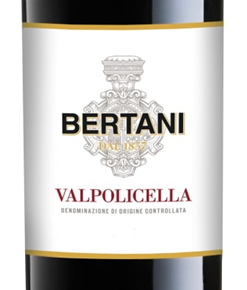
Wine #2. Bertani, Valpolicella, 2021
-
-
- Vintage: 2021
- Composition: Volpolicella blend
- Region/appellation: Valpolicella DOC
- 12% APV
-
Winemaker notes: Bright hints of redcurrants, plums, raspberries, balanced by spicy notes reminiscent of pepper and cinnamon. On the palate it is approachable, fresh and pleasant, thanks to good balance between acidity savory notes, and richness of flavor. It is excellent with strong flavored pasta dishes, grilled, roast and stewed meat and medium matured cheese.
“Intense red with delicate violet reflections. On the nose, notes of small red fruits, followed by hints of cinnamon, black pepper and undergrowth. The taste is equally delicate, fine, fresh and juicy with a medium finish”. (Fallstaff).
Wine #3. Bertani, Valpolicella Ripasso, 2020
-
-
- Vintage: 2020
- Composition: 80% Corvina; 15% Rondinella; 5% Merlot
- Appellation: Valpolicella Ripasso DOC.
- 13.5% APV
-
Winemaker notes: Notes of ripe red cherry and underbrush, accented by spice and chocolate. It is velvety and well-balanced, full and round while maintaining a lively and intense grip. This dense Ripasso can be easily matched with different Italian dishes: flavorsome pasta and rice dishes such as risotto with porcini mushrooms, grilled and roast meats, and medium mature cheeses.
“This supple red is balanced and elegant, with a pleasing juiciness to its flavors of cherry and wild strawberry. A medium-bodied version, offering light, creamy tannins and fragrant accents of dried thyme, lavender and paprika. Corvina, Rondinella and Merlot. 10,000 cases made, 3,000 cases imported. Drink now through 2027”. (Wine Spectator).
Wine #4. Masi – Riserva Costasera Amarone della Valpolicella Classico DOCG Riserva 2018

-
-
- Vintage: 2018
- Composition: Blend of Corvina, Rondinella, Oseleta, and Molinara
- Appellation: Amarone della Valpolicella Classico DOCG
- Viniculture: prolonged appassimento process on bamboo racks during winter months, and long aging in fine wooden casks, which “elevate Costanera to Riserva status, for an even more refined expression of Amarone, enriched by the addition of the unique Oseleta, a grape recently discovered by Masi.”
- 15% APV.
-
Winemaker notes: Proud, majestic, complex and exuberant: this is a special cru version of Masi’s gentle giant, Costasera. A benchmark for the Amarone category, which, together with Barolo and Brunello, makes up the aristocracy of the Italian wine world. Opaque dark red. Intense, super-ripe fruit, cinnamon and vanilla aromas. Warm and satisfying, baked fruit, sweet spices, cooked cherries, cloves, dry and long finish. deal with red meat, game and mature cheeses. Fine after-dinner drink.
“A well-knit red, with fine tannins swathed in a silky texture, carrying flavors of plumped cherry and blackberry fruit, dried thyme and lavender, ground coffee and pepper. Fresh and focused through the lingering finish. Corvina, Rondinella, Oseleta and Molinara. Drink now through 2034. 4,200 cases made, 700 cases imported”(Wine Spectator).
References:
https://www.wine-searcher.com/
-
CV Members Rating
The tasting took place before revealing their prices. 18 participants rated them from Acceptable to Exceptional. The combined results established the preference order during the tasting as follows:
The red Masi ‘Riserva Costasera’, Amarone della Valpolicella Classico DOCG, 2018 was the Best Wine; Tenuta Santa Maria de Gaetano Bertani, Valpolicella Ripasso DOC, 2020, and Bertani, Valpolicella DOC, 2021 were tied as Best Buy. The following Table presents the details of ratings and combined results.

.o0o.
Laughing mater:
Did this happen with a Club del Vino distinguished member?… …To be confirmed

May your husband come out and play with us?
.o0o.

 Club del Vino - Washington DC area