

Tasting No 254 – June 27, 2023 – Valle de Uco, Argentina
-
Tasting Overview
Valle de Uco is a viticultural region southwest of Mendoza, in Argentina. Situated along the Tunuyán River, the Uco Valley is widely considered one of the top wine regions in Mendoza, and all of Argentina. The main objective of the tasting is to present four of the most significant types of wine produced in Valle de Uco.
Type of tasting: Open
Presenters: Jairo Sanchez and Jorge Requena
Participants: To be announced
These are the wines:
- Catena Zapata, Catena Alta, Chardonnay, 2018
- Domaine Nico, La Savante, Pinot Noir, 2020
- Salentein Numina Gran Corte, Bordeaux Red Blend, 2019
- Zuccardi, Jose Zuccardi, Malbec, 2018
The Valle de Uco Region
Argentina is one of the most important wine-producing countries in the New World, and vies with Chile for the position of largest producer of wine in South America. The high altitude deserts of the eastern Andes mountains have given rise to a high quality wine industry.
Mendoza is Argentina’s largest and best-known wine regions, often producing great wines to critical acclaim. Here, desert landscapes and high altitudes combine to make a very stable climate and a terroir that gives rise to aromatic, intensely flavored reds. Three-quarters of Argentinian wine production takes place in Mendoza. Furthermore, Mendoza Malbec accounts for 85 percent of the Malbec made in the country. There is more Malbec planted in Mendoza than anywhere in the world.
Valle de Uco is located 88 km to the south of the City of Mendoza, in the foothills of the Andes, the Uco Valley spans the departments of Tunuyán, Tupungato and San Carlos. The wines from there are often labelled with one of these three place names.
Whereas in 2005 the valley had 16,800ha under vine, today it contains 28,600ha, representing 19% of all the vineyards in Mendoza. Almost one in five bottles produced in Mendoza, comes from the valley.
Because the region is so large, in recent years producers have been carrying out detailed analysis to identify smaller Geographic Indications (GIs). Paraje Altamira, Los Chacayes and San Pablo are some of the most famous, together with Gualtallary, and all contain vineyards set at altitudes of between 900m and 1,500m. Irrigation water comes from the glaciers above, mainly channelled by the Tunuyán and Las Tunas rivers.
The climate is continental: dry with plenty of sun, low rainfall, cold winters and warm summers with a large thermal range. The point of difference is the altitude, which defines the temperature (on average, it drops 1༠C every 150m higher up you go) and the cool climate has lured many producers away from warmer areas further down. All these different factors result in expressive, tense reds and vibrant whites.
The proximity and exposure to the Andes make for alluvial, rocky soils with widely varying mixtures of sand, limestone and clay in unique combinations that produce memorable wines.
Within the 50km (30 miles) Valle de Uco region there are smaller wine regions with slightly different wine styles:
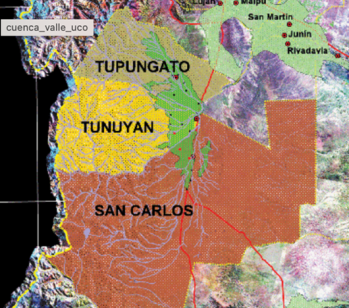 Tupungato is well-known among collectors because of an unofficial growing area called Gualtallary with calcareous soils. You’ll find fresher styles of Malbec, Chardonnay, and Cabernet Franc because vineyards are as high as 5,250 feet (1600 meters).
Tunuyán contains the Vista Flores appellation. The area has sandy soils which produce elegant and aromatic styles of Malbec with minty notes. You’ll also find some Cabernet Franc and even Pinot Noir here.
San Carlos has alluvial soils with more loamy-clay which creates a lush, chocolately palate. The region also sits a bit lower at around 3770 feet (1150 m) which softens the acidity. Expect to find lush, rich styles of Malbec and Cabernet Franc.
 Wine selection. The selected wines – Malbec, Red Blend, Chardonnay and Pinot Noir – are representative (about 75%) of the wines produced in the Uco Valley.
-
Information about the wines
Wine #1. Catena Zapata ‘Catena Alta’ 2018, Chardonnay, Mendoza, Argentina
Producer: Catena Zapata is one of the foremost wine estates in Mendoza, Argentina. Founded in 1902 and still in family hands, it is particularly known for its rich, full-bodied red wines produced from Malbec. The estate is made up of six vineyards in the Luján de Cuyo, Tupungato and San Carlos sub-regions of Mendoza, at altitudes ranging from 3000 to 4750 feet (920 to 1450 meters) above sea level.
The Wine: Vintage: 2018 Varietal: 100% Chardonnay
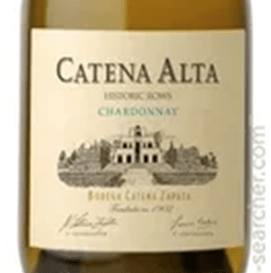 Regions: Gualtallary District, Tupungato Region, Uco Valley, 1,450m average elevation
Vinification: Hand-harvested. Whole clusters are pressed, and then 100% fermented in 500 L French oak barrels with natural yeasts at low temperatures. Wild yeasts. Aged for 14 months in French oak. 30% does not undergo malolactic fermentation. First, second and third use barrels used.
Alcohol: 13.8% Total Acidity: 7.05 grams/liter pH: 3.25
Tasting notes: This chardonnay’s clonal material often gives way to rot from botrytis (the fungus that produces sweet wines), which is here manifested in that sweetness, although without compromising the wine’s tension and freshness. It also adds tremendous complexity, candied aromas in the midst of ripe fruits, and all accompanied by a very-Gualtallary acidity. Very much a mountain wine. (Patricio Tapia 94)
Rich but fresh aromas of lemon zest, orange and rose blossom. Also smoke and caramel. Rich, viscous and well structured on the palate. Lots of citrus. Elegant spice and a juicy, supporting acidity (Vinum Wine Magazine 17/20).
Wine # 2. Domaine Nico La Savante Pinot Noir 2020
Producer: Domaine Nico lleva el nombre de la hija de Laura Catena, Nicola, que a su vez rinde homenaje a su bisabuelo, Nicola Catena, fundador de la bodega Catena Zapata en el año 1902
 The wine: Vintage: 2020 Varietal: 100% Pinot Noir
Vineyard Location: Gualtallary, Tupungato Elevation: 1450 m.s.n.m. (4757 feet) Planted: In 1994, Dijon clones: 115 and 777
Vinification: The fermentation was in roll-fermentor and small stainless-steel tanks. Clone 115 was fermented with 40% whole cluster and clone 777 with 30% whole cluster. Max. Fermentation temperature: 24° C, 7 days maceration. Aged 15 months 30% new barrels, 30% second-use and 40% third-use. All french oak
Alcohol: 13.5% pH: 3.46
Tasting Notes: Red fruit with presence of herbs such as thyme, spices, and clove. Medium-high acidity, low alcohol, slight minerality alongside integrated oak and grainy tannins.
Wild smoky raspberries, brambleberries and oyster shells on the nose. Medium-bodied with vibrant acidity and taut, mineral character. Tense and elegant with a fine frame of tannins. Tightly wound. Drink after 2024. (James Suckling 95)
2020 was a warmer year, and the wine shows it when you taste it next to the 2021, which is cooler. This is a little rounder, with 13.5% alcohol and mellow acidity, with more cherry than flowers, tasty and juicy. It finishes dry and chalky. Best after 2022. (Robert parker 95).
Wine # 3. Salentein Numina Gran Corte 2019
The producer: The Bodega Salentien is located at an elevation of 1.200 meters (4.000 feet), right in the vineyard’s center. More than 49 hectares (121 acres), of native desert habitat were preserved and are a part of the bodega’s everyday landscape. The western horizon is dominated by the close snowy Andes.
The wine: Vintage: 2019
 Varietal Composition: 65% Malbec, 14% Cabernet Sauvignon, 8% Petit Verdot, 8% Merlot and 5% Cabernet franc.
Region: Tunuyán, Valle de Uco, Mendoza
Vinification: Hand harvested, fermentation in 7,000-liter oak casks. The varieties of this blended were made separately and after 6 months aged in barrels, the barrels were emptied and the blend was made, which came back to the oak barrel to finish the ageing process. The total ageing time was 16 months.
Alcohol: 14.5% pH: 3.79
Tasting notes: It displays a bright, intense and deep purplish color. Is aroma is complex and elegant with notes of tobacco, cassis, blueberries, spices as well as notes vanilla and caramel. In the mouth, it is a wide and intense wine with full body and tannic structure and a long finish
Salentein Numina Gran Corte displays a bright, intense and deep purplish red color. Its aroma is complex and elegant with notes of tobacco, cassis, blueberries, spices as well as notes of vanilla and caramel. In the mouth, it is a wide and intense wine with full body and tannic structure as well as a long and lingering finish (Winemaker Notes)
Purple in the glass. The complex nose offers clearly defined notes of cigar box, vanilla, fresh plum, blackcurrant and bay leaf with hints of ash. Lean and juicy in the mouth with refined tannins, the flavors are driven by the oak (Vinous 94).
Wine # 4. Zuccardi Jose Zuccardi Malbec 2018
The producer: Familia Zuccardi is a family-run winery based out of the Bodega Santa Julia in the Mendoza region. The company has numerous brands, each with a wide range of wines, covering classic Argentinian varieties as well as numerous styles including sweet and sparkling wines.
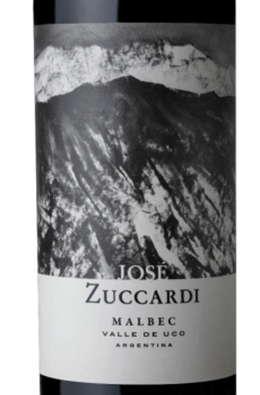 The wine: Vintage: 2018
Varietal Composition: 95% Malbec, 5% Cabernet Sauvignon
Vineyard Location: Malbec from IG Paraje Altamira (San Carlos), Cabernet Sauvignon from IG Gualtallary (Tupungato)
Vinification: Cluster selection, fermentation with native yeasts in concrete tanks. Aging for 24 months in large casks (2500 liters) and barrels (500 liters)
Alcohol: 14.5% pH: 5.69 g/l
Tasting notes: Blackberries, graphite, bla
ck pepper and crushed berries on the nose. Full-bodied, very tight and focused with bolted-down tannins that give it fantastic potential for aging. A little cabernet sauvignon here, too. Try after 2023 (James Suckling 96).
Balances muscle with grace, showing notes of molasses, ripe black cherry and black plum that offer nice richness, while a thread of plumeria picks up the trail midpalate. Reveals stony tannins, peppery elements and notes of espresso and orange peel on the lengthy finish. Drink now (Wine Spectator 94).
The 2018 José Zuccardi mixes Malbec from different regions in the Valle de Uco (today, Altamira and Gualtallary) all with limestone soils. It always has a touch of Cabernet Sauvignon (only 5% to 10%), which is not mentioned on the label, and is now matured in foudre for two years. I tasted this next to the 2019, where there are no differences other than the nuances from the year, with similar alcohol and acidity, but the sensation is of a little wider and powerful in the 2018. The wine feels very stable and harmonious after the long élevage, but there are no traces of oak (Robert Parker’s Wine Advocate 94).
-
Menu (and wine pairing)
- Seafood salad (Chardonnay)
- Chicken grilled meat with vegetables (Chardonnay, Pinot Noir)
- Grilled sirloin strip steak with cooked potatoes (Malbec, Malbec Blend)
- Dessert, coffee, tea
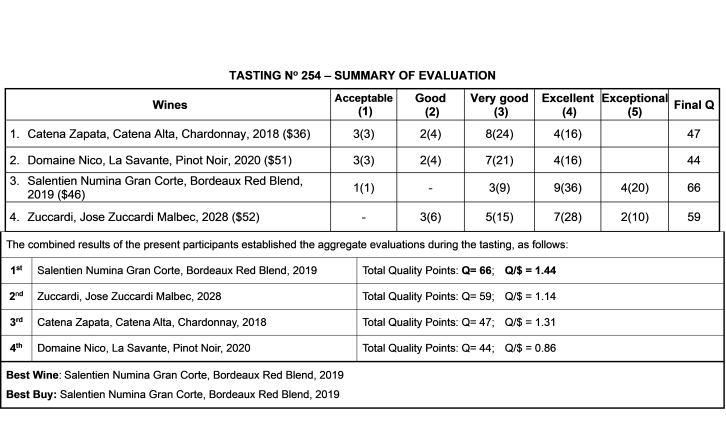
- CV Members Rating :
References:
https://daily.sevenfifty.com/exploring-argentinas-high-elevation-uco-valley/
https://timatkin.com/cork-talk/uco-valley/
https://www.winemag.com/2018/10/05/uco-valley-wine/
https://www.tangol.com/blog/eng/the-19-most-outstanding-wineries-in-valle-de-uco_post_164
https://www.decanter.com/wine-reviews-tastings/uco-valley-wines-12-essential-ones-to-try-446346/
https://catenazapata.com/catena-alta-chardonnay.php
https://domainenico.com/english/la-savante-eng.html
http://www.bodegasalentein.com/en/bodega/lineas.html
https://zuccardiwines.com/en/vinos-de-viticultor/#jose-zuccardi
.o0o.
Qual a Quantidade Certa de Vinho na Taça?
What is the right amount of wine to pour in the glass?
.o0o.

 Club del Vino - Washington DC area